

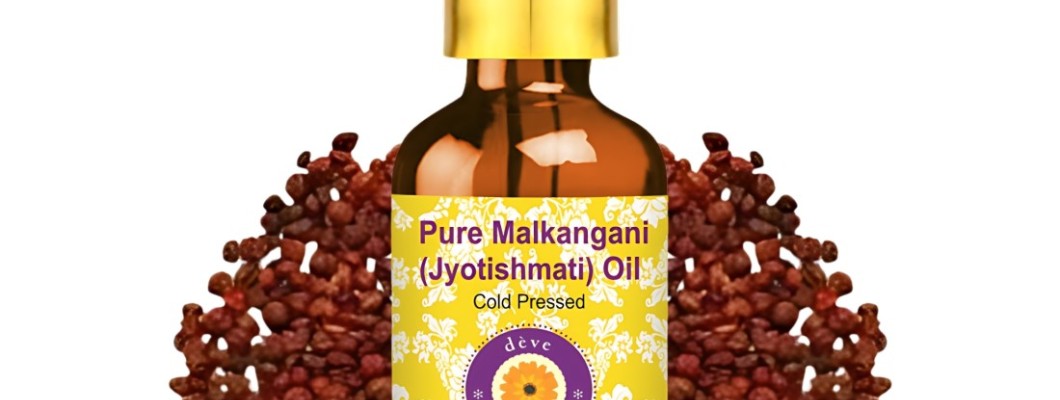
If you are searching for pure malkangani oil, the label alone will not tell you everything. Also known as jyotishmati oil, this seed oil from Celastrus paniculatus has a long place in Ayurvedic daily care, which is exactly why diluted, blended and heat-extracted versions are so common. This checklist shows you what to look for before you buy, based on how we source, press and pack oils at Deve Herbes.
What Is Jyotishmati Oil?
Malkangani (Celastrus paniculatus) is a climbing shrub native to India. Its small orange-red seeds are pressed to yield a thick, deep-coloured oil, traditionally called Jyotishmati Tailam. In Ayurvedic routines it is commonly used for scalp massage, body massage blends and general wellness practices.
Because the oil comes from a small seed with a modest yield, genuine natural malkangani oil costs more to produce than common carrier oils. That price gap is the main reason adulteration happens, so a careful buyer pays attention to a few specific details.
Why Cold-Pressed Malkangani Oil Is Worth Choosing
The extraction method shapes almost everything about the final oil. In cold pressing, seeds are crushed mechanically at low temperatures without solvents. Hot-pressed or expeller oils are produced at higher heat to squeeze out more volume, and solvent-extracted oils use chemicals such as hexane to pull out the last traces.
Cold-pressed malkangani oil tends to keep more of the seed's natural character: its colour, its distinctive aroma and its natural fatty acid profile. The trade-off is a lower yield, which is why it costs more. If a seller does not state the extraction method at all, treat that as your first warning sign.
The 7-Point Quality Checklist for Pure Malkangani Oil
1. The Botanical Name Is Printed Clearly
A trustworthy label names Celastrus paniculatus. Regional names vary (malkangani, malkangni, jyotishmati), so the botanical name is the most reliable way to confirm you are buying the right seed oil.
2. Cold-Pressed Extraction Is Stated, Not Implied
Look for the words "cold pressed" in plain language. Terms like "natural," "herbal" or "premium" say nothing about how the oil was made.
3. Colour and Texture Look Right
Genuine malkangani oil is typically deep amber to reddish brown and noticeably thick. An oil that is pale, watery or almost colourless may be heavily diluted with a cheaper base oil.
4. The Aroma Is Strong and Earthy
Pure oil carries a strong, earthy and slightly bitter smell that some people find intense at first. A neutral smell, or a perfumed one, suggests dilution or added fragrance.
5. A Single Ingredient on the Label
For pure oil, the ingredient list should show one item: Celastrus paniculatus seed oil. Hair oil blends that contain some malkangani can be useful products, but they are not the same as pure oil, and the label should say so honestly.
6. Protective Packaging
Light and air gradually break down natural oils. Small sizes should come in amber glass, and larger sizes in sturdy, well-sealed containers. Clear plastic bottles kept on bright shelves are best avoided.
7. Brand Transparency and Support
A reliable seller shares sourcing details, packaging information, honest usage guidance and a way to ask questions before you buy. Genuine customer reviews and a clear returns policy add another layer of trust.
Quick buyer's tip: Start with a small bottle. Check colour, texture and aroma against this checklist, then move to a larger size once you are happy with the quality.
How to Use Malkangani Oil for Hair and Massage
Malkangani oil for hair is one of the most popular ways to bring this oil into a weekly routine. Because it is thick and strongly scented, most people prefer to blend it rather than use it alone.
Simple Scalp Massage Blend
- Mix 1 part malkangani oil with 3 to 4 parts of a lighter carrier oil.
- Warm the blend slightly by placing the bottle in a bowl of warm water for a minute.
- Section your hair and massage a few drops into the scalp with your fingertips for 5 to 10 minutes.
- Leave it on for 1 to 2 hours or overnight, then wash with a mild shampoo.
A Light Carrier Oil to Pair With It
Our malkangani product page itself suggests pairing it with almond oil for a soothing massage blend. Pure Almond Oil is cold pressed, light in texture and mild in aroma, so it balances malkangani's richness and spreads easily across the scalp and body. Explore more options in our carrier oils collection.
A Ready-to-Use Hair Oil for Busy Days
If you prefer a pre-made option, Pure Brahmi Amla Hair Oil is a popular choice in Ayurvedic-inspired hair care. Many customers keep both on their shelf: the malkangani blend for relaxed weekend scalp massages and Brahmi Amla for quick weekday oiling. Browse the full hair care range for more.
Safety Tips Before You Use It
- Patch test first: apply a small amount of diluted oil to your inner forearm and wait 24 hours.
- Dilute for skin and scalp, especially if your skin is sensitive.
- Keep it away from the eyes and out of reach of children.
- If you are pregnant, nursing, taking medication or have any health concern, speak with a qualified healthcare professional before use.
- Store the bottle tightly closed in a cool, dark place.
Why Choose Deve Herbes Cold-Pressed Malkangani Oil
Our Pure Malkangani (Jyotishmati) Oil is made to meet every point on the checklist above:
- Botanical name on the label: Celastrus paniculatus
- Extraction: cold pressed, not cheap expeller or hot-pressed oil
- Purity: 100% pure and natural, single ingredient
- Packaging: high quality amber glass for 15 ml to 100 ml (with a plastic Euro dropper or glass dropper), PET bottle for 200 ml, and virgin aluminium bottles for 300 ml to 1250 ml
- Trusted worldwide: highly satisfied customers in over 100 countries
Sizes start at 15 ml (from ₹199), so you can check the quality before stocking up, while larger sizes suit regular users and wholesale buyers.
Ready to Choose a Better Oil?
Now you know what pure malkangani oil should look, smell and feel like. Shop Pure Cold-Pressed Malkangani Oil at Deve Herbes and pair it with Pure Almond Oil for your next scalp massage. Have a question first? Contact our team or WhatsApp us at +91 93551 12020. For more natural care guides, visit the Deve Herbes blog.
Frequently Asked Questions
1. How can I tell if malkangani oil is pure?
Check four things: the label names Celastrus paniculatus, it states "cold pressed," the ingredient list shows a single oil, and the oil itself is thick, deep amber to reddish brown, with a strong earthy aroma. A pale, thin or perfumed oil is likely diluted or blended.
2. Are malkangani oil and jyotishmati oil the same thing?
Yes. Malkangani is the common Hindi name and Jyotishmati is the traditional Sanskrit name for oil pressed from Celastrus paniculatus seeds. You may also see it spelled malkangni or sold as Jyotishmati Tailam.
3. Why is cold-pressed malkangani oil more expensive?
Cold pressing uses low heat and no solvents, so it yields less oil from the same quantity of seeds. Buyers choose it because it retains more of the seed's natural colour, aroma and character than hot-pressed or solvent-extracted oil.
4. How do I use malkangani oil for hair?
Blend 1 part malkangani oil with 3 to 4 parts of a light carrier oil such as almond oil, warm it slightly, and massage it into the scalp for 5 to 10 minutes. Leave it on for 1 to 2 hours or overnight, then wash with a mild shampoo. Do a patch test before first use.
5. How should I store natural malkangani oil?
Keep the cap tightly closed and store the bottle in a cool, dark place away from direct sunlight. Amber glass helps protect the oil from light. If the oil develops a sharp, sour or rancid smell, it is past its best and should be replaced.
Disclaimer: This article is for general information and product education only. It is based on traditional use and is not medical advice. Deve Herbes products are not intended to diagnose, treat or prevent any condition. Please consult a qualified healthcare professional before use, especially if you are pregnant, nursing or taking medication. For external use only.
297 Comment(s)
I think the admin of this website is really working hard in support of his web page, for the reason that here every material is quality based material.
https://www.facebook.com/nohu909games/
https://www.youtube.com/@nohu909games
https://www.tumblr.com/nohu909games
https://www.twitch.tv/nohu909games/about
https://www.pinterest.com/nohu909games/_profile/
https://github.com/nohu909games
https://pixabay.com/users/nohu909games-57821283/
https://gravatar.com/nohu909games
https://www.notebook.ai/@nohu909games
https://wakelet.com/@nohu909games
https://leetcode.com/u/nohu909games/
https://files.fm/nohu909games/info
https://bit.ly/m/nohu909games
https://profile.hatena.ne.jp/nohu909games/profile
https://gitlab.com/nohu909games
https://wefunder.com/nohu909games
https://500px.com/p/nohu909games
https://tooter.in/nohu909games
https://www.magcloud.com/user/nohu909games
https://writexo.com/share/b6438b08ff84
https://disqus.com/by/nohu909games/about/
https://heylink.me/nohu909games/
https://pumpyoursound.com/u/user/1697871
https://slideslive.com/nohu909games?tab=about
https://bandori.party/user/1782535/nohu909games/
https://fabble.cc/nohu909games
https://blender.community/nohu9096/
https://www.giveawayoftheday.com/forums/profile/2160488
https://xtremepape.rs/members/nohu909games.721538/#about
https://dreevoo.com/profile_info.php?pid=2455133
https://www.mellow-fan.com/user/nohu909games/about
https://maxforlive.com/profile/user/nohu909games?tab=about
https://app.talkshoe.com/user/nohu909games
https://www.rcuniverse.com/forum/members/nohu909games.html
https://www.adpost.com/u/nohu909games/
https://matkafasi.com/user/nohu909games
https://freeimage.host/nohu909games
https://portfolium.com/nohu909games
https://ask.mallaky.com/?qa=user/nohu909games
https://forum.skullgirlsmobile.com/members/nohu909games.268742/#about
https://www.chordie.com/forum/profile.php?id=2683604
https://igli.me/nohu909games
https://www.intensedebate.com/people/nohu909game
https://participacion.cabildofuer.es/profiles/nohu909games/activity
https://motion-gallery.net/users/1066742
https://raovat.nhadat.vn/members/nohu909games-351098.html
https://forum.aceinna.com/user/nohu909games
https://backloggery.com/nohu909games
http://freestyler.ws/user/706833/nohu909games
https://www.checkli.com/nohu909games#/a/process
https://www.speedrun.com/users/nohu909games
https://ctxt.io/3/rBNmCuD3W
https://snippet.host/hfphtz
https://protocol.ooo/ja/users/nohu90-5df938f2-389c-4a3a-b5e5-ea3adfd4a41d
https://able2know.org/user/nohu909games/
https://fanclove.jp/profile/rKJyNevZWe
https://marshallyin.com/members/nohu909games/
https://www.longisland.com/profile/nohu909games
https://paste.toolforge.org/view/203e2cff
https://buyerseller.xyz/user/nohu909games/
https://www.anibookmark.com/user/nohu909games.html
https://cofacts.tw/user/nohu909games
https://feyenoord.supporters.nl/profiel/183622/nohu909games
https://writeablog.net/7t9i3wwcq2
https://www.foriio.com/nohu909games
https://pubhtml5.com/homepage/ggzzn/
https://www.rctech.net/forum/members/nohu909games-571114.html
https://connect.gt/user/nohu909games
https://joy.link/nohu909games
https://www.skool.com/@no-hu-7227
https://sciencemission.com/profile/nohu909games
https://hub.docker.com/u/nohu909games
https://qiita.com/nohu909games
https://activepages.com.au/profile/nohu909games
https://www.france-ioi.org/user/perso.php?sLogin=nohu909games
https://www.iglinks.io/mdtarifislam80714274-crx?preview=true
https://lifeinsys.com/user/nohu909games
https://www.plotterusati.it/user/nohu909games
https://gravesales.com/author/nohu909games/
https://www.servinord.com/phpBB2/profile.php?mode=viewprofile&u=813712
https://www.iniuria.us/forum/member.php?729224-nohu909games
https://bbs.airav.cc/home.php?mod=space&uid=5020386
https://www.dibiz.com/mdtarifislam80714274
https://logicmastersindia.com/forum/view-profile.asp?action=view&uid=48930
https://sketchersunited.org/users/354589
https://anyflip.com/homepage/gxtqf
https://comunitat.canodrom.barcelona/profiles/nohu909games/activity
https://searchengines.guru/ru/users/2258824
https://www.band.us/band/104666045/intro
https://leakedmodels.com/forum/members/nohu909games.743641/#about
https://runtrip.jp/users/853485
https://www.behance.net/nohu9017
https://justpaste.it/drh50
https://linksta.cc/@nohu909games
https://b.hatena.ne.jp/nohu909games/bookmark
https://beatsaver.com/playlists/1279820
https://indiestorygeek.com/user/nohu909games
https://www.betting-forum.com/members/nohu909games.187359/#about
https://interestpin.com/user/136302/nohu909games
https://forums.autodesk.com/t5/user/viewprofilepage/user-id/19574035
https://pxhere.com/en/photographer/5149706
https://raovatonline.org/author/nohu909games/
https://www.lookingforjob.co/profile/nohu909games
https://www.growkudos.com/profile/nohu_90_18
https://fortunetelleroracle.com/profile/nohu909games
https://codimd.fsrvi.de/s/Xu2RTXPXW6
https://forums.digitalpool.com/member.php?action=profile&uid=27381
https://galleria.emotionflow.com/215523/profile.html
https://portfolium.com.au/nohu909games
https://mez.ink/nohu909games
https://www.hardmcasual.net/user/5368/
https://xn----8sbgkqlrzglf.xn--p1ai/forums/users/nohu909games/
https://videos.benjaminbrady.ie/accounts/nohu909games/about
https://talkmarkets.com/profile/nohu-90-261001-135447
https://userstyles.world/user/nohu909games
https://road-to-eden.com/index.php?nohu909games
https://www.fanart-central.net/user/nohu909games/profile
https://congdongmassage.com/members/nohu909games.179856/#about
https://openwhyd.org/u/6abe691cefbb24ef76d3a850
https://www.thepetservicesweb.com/board/board_topic/2635323/9052866.htm
https://ezzattech.com/ez/nohu909games
https://www.storenvy.com/nohu909games
https://www.kwlt.net/profile/mdtarifislam807142748365/profile
https://scrapbox.io/nohu909games/NOHU90
https://land-book.com/nohu909games
https://www.devglan.com/user/public/mdtarifislam807142741
https://teletype.in/@nohu909games
https://undrtone.com/nohu909games
https://homepage.ninja/nohu909games
https://gitlab.vuhdo.io/nohu909games
https://etextpad.com/qpnw6imeks
https://www.freedomteamapexmarketinggroup.com/board/board_topic/8118484/9053028.htm
https://www.vnbadminton.com/members/nohu909games.103311/
https://www.driedsquidathome.com/forum/topic/245563/nohu90
https://safechat.com/u/nohu90.703
https://www.nicovideo.jp/user/145553971
https://codimd.liujiarong.top/s/N5OjeQq4j
https://linkmate.mn.co/members/41992850
https://ntsr.info/forum/user/150961/
https://pibelearning.gov.bd/profile/nohu909games/
https://shareshortcuts.com/u/nohu909games/
http://www.daojianchina.com/home.php?mod=space&uid=1481544
https://peatix.com/user/30646272/view
https://brain-market.com/u/nohu909games
https://expathealthseoul.com/profile/nohu909games/
https://forum.ircam.fr/profile/nohu909games/
https://jerseyboysblog.com/forum/member.php?action=profile&uid=141589
https://www.goodreads.com/user/show/204715894-nohu90
https://potofu.me/nohu909games
http://jobboard.piasd.org/author/nohu909games/
https://aboutsnfjobs.com/author/nohu909games/
https://kaeuchi.jp/forums/users/nohu909games/
https://justpaste.me/CKGr1
https://biashara.co.ke/author/nohu909games/
https://fliphtml5.com/home/nohu909games
https://notepad.pw/markdown/4w3q82rqg
https://forum.cnnr.fr/user/nohu909games
https://tapas.io/mdtarifislam807
https://vcook.jp/users/147561
https://advego.com/profile/nohu909games/
https://divisionmidway.org/jobs/author/nohu909games/
https://www.bloggportalen.se/BlogPortal/view/ReportBlog?id=340887
http://linoit.com/users/nohu909games/canvases/nohu909games
https://gitlab.haskell.org/nohu909games
https://routinehub.co/user/nohu909games
https://luvly.co/users/nohu909games
https://www.maanation.com/nohu909games
https://slides.com/nohu909games
https://forumton.org/members/nohu909games.46853/#about
https://aboutcasemanagerjobs.com/author/nohu909games/
https://www.annuncigratuititalia.it/author/nohu909games/
https://nohu909games.stck.me/
https://tempel.in/view/yHTgBjBz
https://speakerdeck.com/nohu909games
https://www.bitchute.com/channel/wBl89ufPPy9f
https://www.outdooractive.com/en/member/nohu-90/354306250/
https://fr.blurb.ca/user/nohu909games
https://log.concept2.com/profile/3074204
https://naijamatta.com/nohu909games
https://www.nongkhaempolice.com/forum/topic/283036/nohu90
https://www.dideadesign.com/forum/topic/112328/nohu90
https://old.bitchute.com/channel/wBl89ufPPy9f/
https://freekashmir.mn.co/members/41994765
https://playlist.link/nohu909games
https://findpenguins.com/1bjjr16c1itd2
https://hackaday.io/nohu909games?saved=true
https://calisthenics.mn.co/members/41994751
https://myanimelist.net/profile/nohu909games
https://outdoor.surselva.info/en/member/nohu-90/354306250/
https://songdew.com/nohu909games
https://phat4life.mn.co/members/41994747
https://www.freelistingusa.com/listings/nohu90-83
https://www.fundable.com/user-1380679
https://artist.link/nohu909games
https://www.anime-planet.com/users/nohu909games
http://www.biblesupport.com/user/911408-nohu909games/
https://www.investagrams.com/Profile/nohu909games
https://www.blackhatprotools.info/member.php?318428-nohu909games
https://www.jointcorners.com/nohu909games
https://desksnear.me/users/nohu90-6eebd3
https://www.pintradingdb.com/forum/member.php?action=profile&uid=160086
https://ja.cofacts.tw/user/nohu909games
https://www.themirch.com/blog/author/nohu909games/
https://hashnode.com/@nohu909games
https://www.producthunt.com/@nohu909games
https://cdn.muvizu.com/Profile/nohu909games/Latest
https://idol.st/user/243300/nohu909games/
https://propterest.com.au/user/106395/nohu909games
https://pods.link/nohu909games
https://www.muvizu.com/Profile/nohu909games/Latest
https://galgame.dev/user/nohu909games
https://www.rcmx.net/userinfo.php?uid=34460
https://videos.muvizu.com/Profile/nohu909games/Latest/
https://aboutnursepractitionerjobs.com/author/nohu909games/
https://devfolio.co/@nohu909games/readme-md
https://www.walkscore.com/people/267152047574/nohu90
https://mylink.page/nohu909games
https://www.hulkshare.com/nohu909games
https://app.brancher.ai/user/SrsU26gihd_u
https://pictureinbottle.com/r/nohu909games
https://dev.muvizu.com/Profile/nohu909games/Latest/
http://forum.orangepi.org/home.php?mod=space&uid=7055815
http://iawbs.com/home.php?mod=space&uid=989239
https://www.hentai-foundry.com/user/nohu909games/profile
https://song.link/nohu909games
https://www.mapleprimes.com/users/nohu909games
https://decidim.calafell.cat/profiles/nohu90/activity
https://www.teeraindustry.com/forum/topic/143066/nohu90
https://album.link/nohu909games
https://www.hyperlabthailand.com/forum/topic/963638/nohu90
https://git.disroot.org/nohu909games
https://jobs.host-panel.com/author/nohu909games/
https://odesli.co/nohu909games
https://akwatik.com/nohu909games
https://doc.asta.rwth-aachen.de/s/ZMQ89rvoMb
https://buzzingchat.com/profile/nohu909games
https://camp-fire.jp/profile/nohu909games
https://slidehtml5.com/homepage/afbj#About
https://marshmallow-qa.com/nomdes8leetue77?t=EmKGmj&utm_medium=url_text&utm_source=promotion
https://www.hostboard.com/forums/members/nohu909games.html
https://bookmeter.com/users/1782081
https://gitstud.cunbm.utcluj.ro/nohu909games
https://gitlab.hk/nohu909games
https://smallseo.tools/website-checker/nohu909.games
https://www.flyingv.cc/users/1497940
https://www.prodesigns.com/wordpress-themes/support/users/nohu909games
https://www.donchillin.com/space-uid-528020.html
https://monviet88.com/profile/nohu909games/
https://mem168new.com/home.php?mod=space&uid=4461980
https://umczdt.ru/forum/?PAGE_NAME=profile_view&UID=171688
https://www.longislandjobsmagazine.com/board/board_topic/9092000/9053443.htm
https://forum.risingko.net/members/nohu909games.126807/#about
https://www.freelistinguk.com/listings/nohu90-6
https://monkeytype.com/profile/nohu909games
https://www.smartsmiledentalplace.com/forum/topic/44659/nohu90
https://miso-game.com/linemf/index.php?nohu909games
https://hedgedoc.l.rexo.top/load.php?note=895490e4
https://www.notariosyregistradores.com/web/forums/usuario/nohu909games/
https://www.abclinuxu.cz/lide/nohu909games
https://help.orrs.de/user/nohu909games
https://belgaumonline.com/profile/nohu909games/
https://forum.fakeidvendors.com/user/nohu909games
https://www.davidrio.com/profile/mdtarifislam8071427410106/profile
https://lynk.id/nohu909games
https://hieuvetraitim.vn/members/nohu909games.168754/
https://forum.jatekok.hu/User-nohu909games
https://4portfolio.ru/blocktype/wall/wall.php?id=3591615
https://turcia-tours.ru/forum/profile/nohu909games/
https://www.ooyy.com/nohu909games
http://www.jbt4.com/home.php?mod=space&uid=8687281
https://docs.erraticbits.ca/s/rb7LTAihpb
https://mwe-kosin.makewebeasy.co/forum/topic/28382/nohu90
http://kjtr.grrr.jp/kjtr/?nohu909games
https://www.ontime.co.th/forum/topic/964102/nohu90
https://writeupcafe.com/author/nohu909games
https://teletype.link/nohu909games
https://www.beamng.com/members/nohu909games.836936/
https://novel.daysneo.com/author/nohu909games/
https://share-md.com/view?id=43ccc294-71e1-4c9a-aae5-1340d179be28
https://pod.beautifulmathuncensored.de/people/0eb76e409f71013f9c8e619fc73cda9a
https://b.cari.com.my/home.php?mod=space&uid=3432977&do=profile
https://photouploads.com/nohu909games
https://it.quora.com/profile/NOHU90-4
https://en.islcollective.com/portfolio/13054208
http://forum.vodobox.com/profile.php?id=94181
https://www.kingmods.net/en/profile/nohu909games
https://mforum.cari.com.my/home.php?mod=space&uid=3432977&do=profile
https://fr.quora.com/profile/NOHU90-4-1
https://failiem.lv/nohu909games/info
https://beteiligung.hafencity.com/profile/nohu909games/
https://www.natthadon-sanengineering.com/forum/topic/192677/nohu90
https://website.informer.com/nohu909.games
https://www.myminifactory.com/users/nohu909games
https://www.thitrungruangclinic.com/forum/topic/282936/nohu90
http://palangshim.com/space-uid-5575441.html
https://www.fw-follow.com/forum/topic/213826/nohu90
https://tophatsec.com/forum/member.php?action=profile&uid=20236
https://www.zazzle.at/mbr/238141765485086249
https://freesaloneducation.mn.co/members/41994743
https://congdongx.com/thanh-vien/nohu909games.68641/#about
https://unityroom.com/users/nohu909games
https://www.4shared.com/u/usXtpHM8/mdtarifislam80714274.html
https://www.navacool.com/forum/topic/664357/nohu90
https://mforum3.cari.com.my/home.php?mod=space&uid=3432977&do=profile
http://vetstate.ru/forum/?PAGE_NAME=profile_view&UID=298713&backurl=%2Fforum%2F%3FPAGE_NAME%3Dprofile_view%26UID%3D272563
https://hu.gravatar.com/nohu909games
https://www.tripadvisor.com.vn/Profile/nohu909games
https://hosted.weblate.org/user/nohu909games/
https://kktix.com/user/10389158
https://opencollective.com/incognito-3942c898
https://rentry.co/nohu909games
https://guestboard.co/events/nohu90-12/details
https://www.insanelymac.com/forum/profile/2761038-nohu909games/?tab=field_core_pfield_13
https://starlet.db0.company/user/14827/nohu909games/
https://telegra.ph/nohu909games-10-01
https://pbase.com/nohu909games/root
https://blogfreely.net/nohu909games/
https://schoolido.lu/user/nohu909games/
https://cboj.ca/user/nohu909games
https://mx.enrollbusiness.com/BusinessProfile/7983952/
https://coub.com/nohu909games
https://paper.wf/nohu909games/
https://hedgedoc.k8s.rexo.top/load.php?note=b661e476
https://sub4sub.net/forums/users/nohu909games/
https://hedge.f.rexo.top/load.php?note=802d0d76
http://qa.doujiju.com/index.php?qa=user&qa_1=nohu909games
https://beteiligung.amt-huettener-berge.de/profile/nohu909games/
https://mygamedb.com/profile/nohu909games
https://7tdmjpf5yuwu.jobboard.io/profiles/8793315-nohu90
https://www.zazzle.pt/mbr/238141765485086249
https://www.pozible.com/profile/nohu90-126
https://www.instapaper.com/p/nohu909games
https://viblo.asia/u/nohu909games/contact
https://www.designspiration.com/nohu909games/saves/
https://www.transfur.com/Users/nohu909games
https://www.elephantjournal.com/profile/nohu909games/
https://fi.files.fm/nohu909games/info
https://beta.cent.co/nohu909games/+nv11kr
https://independent.academia.edu/NOHU9011
https://www.directorylib.com/domain/nohu909.games
https://gt.enrollbusiness.com/BusinessProfile/7983952/
https://malt-orden.info/userinfo.php?uid=481361
https://www.play56.net/home.php?mod=space&uid=6573849
https://substance3d.adobe.com/community-assets/profile/org.adobe.user:255E88C36ABDF2240A495C6E@AdobeID
https://3dwarehouse.sketchup.com/by/nohu909games
https://biomolecula.ru/authors/198913
https://chyoa.com/user/nohu909games
https://beteiligung.stadtlindau.de/profile/nohu909games/
https://hub.vroid.com/en/users/129843981
https://kooperation.winterthur.ch/profiles/nohu909games/activity
https://ac.db0.company/user/55731/nohu909games/
https://www.zazzle.com/mbr/238141765485086249
http://www.askmap.net/location/7964658/vi%E1%BB%87t-nam/nohu90
https://docs.kliemax.com/s/WSro-6hIdp
https://sv.enrollbusiness.com/BusinessProfile/7983952/
https://beteiligung.tengen.de/profile/nohu909games/
https://letterboxd.com/nohu909games/
https://www.quora.com/profile/NOHU90-4-1
https://ch.pinterest.com/nohu909games/_profile/
https://ua.files.fm/nohu909games/info
https://www.japaaan.com/user/135611
https://es.islcollective.com/portafolio/13054208
https://adhocracy.plus/profile/nohu909games/
https://fr.pinterest.com/nohu909games/_profile/
https://beteiligung.arnsberg.de/profile/nohu909games/
https://bbs.mofang.com.tw/home.php?mod=space&uid=2684995
https://skr.gravatar.com/nohu909games
https://es.files.fm/nohu909games/info
https://www.zazzle.se/mbr/238141765485086249
https://ru.islcollective.com/portfolio/13054208
https://uiverse.io/profile/mdtarif_6482
https://te.legra.ph/nohu909games-10-01-2
https://stepik.org/users/1406036055/profile
https://ncnews.co/profile/nohu909games
https://forum.dmec.vn/index.php?members/nohu909games.258937/
https://www.99freelas.com.br/user/nohu909games
https://simblr.cc/user/22690-nohu909games/
https://tabelog.com/rvwr/nohu909games/prof/
https://vs.cga.gg/user/257732
https://forum.hiv.plus/user/nohu909games
https://forum.euro-pvp.com/user/627554-nohu909games/
https://webcamscenter.com/user/nohu909games
https://californiafilm.ning.com/profile/NOHU90766
https://hmsay.com/members/nohu909games/
https://de.islcollective.com/portfolio/13054208
https://bn.quora.com/profile/NOHU90-4-1
https://zzb.bz/HbnjBj
https://graph.org/nohu909games-10-01-3
https://www.newgenstravel.com/forum/topic/111638/nohu90
https://iplogger.org/vn/logger/VyaG511oTJ7m/
https://meta.decidim.org/en/profiles/nohu909games/activity
https://linkmix.co/60284429
https://securityheaders.com/?q=https%3A%2F%2Fnohu909.games%2F&followRedirects=on
https://www.bonback.com/forum/topic/664549/nohu90
https://www.zazzle.fr/mbr/238141765485086249
https://www.sonorancareerlink.com/employers/4346264-nohu90
https://gamelet.online/user/nohu909games/about
https://wirtube.de/a/nohu909games/video-channels
https://medibang.com/author/29023803/
https://mail.tudomuaban.com/chi-tiet-rao-vat/3042647/nohu909games.html
https://rant.li/nohu909games/
https://shambaza.com/profile/nohu909games/
https://gitea.com/nohu909games
https://web.bikemap.net/u/nohu909games
https://md.chaosdorf.de/s/D81Rh2Vzn4
https://postheaven.net/nohu909games/nohu90
https://beteiligung.einbeck.de/profile/nohu909games/
https://forum.epicbrowser.com/profile.php?id=188582
https://eo-college.org/members/nohu909games/
https://community.atlassian.com/user/profile/71712104-8b62-4b3e-87ec-2d61d6f05fdb
https://cv.viblo.asia/preview-cv/ebeba752-4973-42f9-ba00-9bf72c0eac63
https://www.zazzle.ch/mbr/238141765485086249
https://luma.com/user/nohu909games
https://tudomuaban.com/chi-tiet-rao-vat/3042647/nohu909games.html
https://mforum2.cari.com.my/home.php?mod=space&uid=3432977&do=profile
https://fr.islcollective.com/portfolio/13054208
https://nz.enrollbusiness.com/BusinessProfile/7983952/
https://www.zazzle.co.uk/mbr/238141765485086249
https://awan.pro/forum/user/224839/
https://globalaffairs.mn.co/members/41984414
https://www.democracylab.org/user/66056
https://ionpron.net/profile.php?mode=viewprofile&u=1639689
https://www.haikudeck.com/presentations/nohu909games
https://newspicks.com/user/12842466/
https://its-my.link/@nohu909games
https://pastelink.net/gcvspvde
https://skrolli.fi/keskustelu/users/mdtarifislam80714274/
https://bpa-mastery.mn.co/members/41984602
https://ru.myanimeshelf.com/profile/nohu909games
https://us.enrollbusiness.com/BusinessProfile/7983952/NOHU90-Car-Nicobar-Andaman-and-Nicobar-Islands
https://www.minecraft-servers-list.org/details/nohu909games/
https://www.siasat.pk/members/nohu909games.291077/#about
https://theresanaiforthat.com/@nohu909games/
https://www.spoofee.com/forums/members/nohu909games.115692/#about
https://all4.vip/p/page/view-persons-profile?id=151448
https://myanimeshelf.com/profile/nohu909games
https://trakteer.id/nohu909games
https://notionpress.com/author/1590520
https://www.cardanocube.com/community/nohu909games
https://www.shippingexplorer.net/en/user/nohu909games/350893
https://kitsu.app/users/1763987
https://slackcommunity.com/u/mjbdnh/#/about
https://circleten.org/a/441208?postTypeId=whatsNew
https://coolors.co/u/nohu909games
https://cloudburstmc.org/members/nohu909games.97803/#about
https://www.pexels.com/@nohu-90-2164582289/
https://maiotaku.com/p/nohu909games/info
https://www.are.na/nohu-90-aws5xpo_qro
https://makerworld.com/en/@nohu909games
https://opensea.io/nohu909games
http://bbs.medicalforum.cn/home.php?mod=space&uid=2581370
http://forum.modulebazaar.com/forums/user/nohu909games/
https://protospielsouth.com/user/179903
https://aoezone.net/members/nohu909games.208722/#about
https://www.youyooz.com/profile/nohu909games/
https://chodilinh.com/members/nohu909games.359150/#about
https://chanylib.ru/ru/forum/user/49768/
https://issuu.com/nohu909games
http://www.genina.com/user/editDone/5628502.page
https://daily.dev/nohu909games
https://www.vrwant.org/wb/home.php?mod=space&uid=5226858
https://volleypedia.org/index.php?qa=user&qa_1=nohu909games
https://quomon.es/Profile/nohu909games/
https://www.aersia.net/members/nohu909games.26327/
https://activeprospect.fogbugz.com/default.asp?213099_us7nv6ht7dup92ic
https://www.xiuwushidai.com/home.php?mod=space&uid=2913328
https://mail.protospielsouth.com/user/179903
https://destaquebrasil.com/saopaulo/author/nohu909games/
https://www.instructorsnearme.com/author/nohu909games/
https://forum.issabel.org/u/nohu909games
http://jobs.emiogp.com/author/nohu909games/
https://participation.touraine.fr/profiles/nohu909games/activity
https://cinderella.pro/user/321802/nohu909games/
https://www.commudle.com/users/nohu909games
https://mysound.ge/profile/nohu909games
https://hostndobezi.com/nohu909games
https://www.mightycause.com/profile/nohu909games
https://rekonise.com/nohu90-gel4v
https://xmrbazaar.com/user/nohu909games/
https://sdelai.ru/members/nohu909games/
https://pika-network.net/members/nohu909games.434391/#about
https://onespotsocial.com/nohu909games
https://www.simplexthailand.com/forum/topic/86527/nohu90
https://www.adproceed.com/author/nohu909games/
https://biolinky.co/nohu-909-games
https://www.airportcitygame.com/members/nohu909games.44438/#about
https://www.xmonsta.com/forums/users/nohu909games/
http://vintagemachinery.org/members/detail.aspx?id=192612
https://www.speedway-world.pl/forum/member.php?action=profile&uid=571620
https://www.allmyusjobs.com/author/nohu909games/
https://www.getlisteduae.com/listings/nohu90-43
https://coinfolk.net/user/nohu909games
https://www.slideshare.net/mdtarifislam80714274?tab=about
https://fairygodboss.com/users/profile/tGqZByhVsg/Mdtarif-Islam
https://creator.nightcafe.studio/u/nohu909games
https://freeicons.io/profile/989926
https://entre-vos-mains.alsace.eu/profiles/nohu909games/activity
https://participa.gijon.es/profiles/nohu909games/activity
https://www.tripadvisor.com/Profile/nohu909games
https://hkgay.net/member.php?action=profile&uid=535094
https://formulamasa.com/elearning/members/nohu909games/
https://participationcitoyenne.rillieuxlapape.fr/profiles/nohu909games/activity
https://www.popdaily.com.tw/user/558958
http://newdigital-world.com/members/nohu909games.html
https://poipiku.com/14507266/
https://nhatkythuthuat.com/members/nohu909games.85614/#about
https://gifyu.com/nohu909games
https://www.canadavisa.com/canada-immigration-discussion-board/members/nohu909games.1389198/#about
https://www.goldposter.com/members/nohu909games/profile/
https://www.pearltrees.com/nohu909games/item828004418
https://www.inkitt.com/nohu909games
https://velog.io/@nohu909games/NOHU90
https://www.halaltrip.com/user/profile/395023/nohu909games/
https://sfx.thelazy.net/users/u/nohu909games/
https://www.skypixel.com/users/djiuser-pkd1afgpb5vr
https://onlinevetjobs.com/author/nohu909games/
https://participer.loire-atlantique.fr/profiles/nohu909games/activity
https://www.mateball.com/nohu909games
https://challonge.com/nohu909games
https://www.clickasnap.com/profile/nohu909games
https://audio.com/nohu909games
https://www.1001fonts.com/users/mdtarif-islam/
http://delphi.larsbo.org/user/nohu909games
https://nohu909games.gumroad.com/
https://www.edna.cz/uzivatele/nohu909games/
https://www.webmastersun.com/members/nohu909games.182997/#about
https://matters.town/@nohu909games
https://bresdel.com/nohu909games
https://hedgedoc.envs.net/s/vFcDBk7JF
https://profile.sampo.ru/nohu909games
https://www.weddingbee.com/members/nohu909games/
http://belobog1.freehostia.com/phpBB2/profile.php?mode=viewprofile&u=233806
https://www.trackyserver.com/profile/283659
https://pledgeme.co.nz/profiles/374108
https://pinshape.com/users/9076535-nohu909games?tab=designs
https://espritgames.com/members/52973229/
https://zumvu.com/nohu909games/
https://fora.babinet.cz/profile.php?section=personal&id=148814
https://pastebin.com/u/nohu909games
https://co-roma.openheritage.eu/profiles/nohu909games/activity
https://pad.fablab-siegen.de/s/3reJoHwbgK
https://truckymods.io/user/559571
https://app.readthedocs.org/profiles/nohu909games/
https://egl.circlly.com/users/nohu909games
https://www.moshpyt.com/user/nohu909games
https://www.rossoneriblog.com/author/nohu909games/
https://iszene.com/user-377035.html
https://phijkchu.com/a/nohu909games/video-channels
https://doc.ahilbig.de/s/Fly0ExqdsG
https://expatguidekorea.com/profile/nohu909games/
https://chaloke.com/forums/users/nohu909games/
https://ivpaste.com/v/5tR7lflvn1
https://adept.missouri.edu/members/nohu909games/
https://www.greencarpetcleaningprescott.com/members/profile/3873885/nohu909games.htm
https://l2top.co/forum/members/nohu909games.249715/
https://pad.codefor.fr/s/Gr-lCygjJ4
https://sfx.k.thelazy.net/users/u/nohu909games/
https://rnmanagers.com/author/nohu909games/
https://pantip.com/profile/9456935
https://www.grepmed.com/nohu909games
https://zenwriting.net/nohu909games/nohu90
https://faceout.mn.co/members/41991295
https://aboutpharmacistjobs.com/author/nohu909games/
https://discuss.machform.com/u/nohu909games
https://notes.stuve.fau.de/s/TrsKh3WkB3
http://galeria.farvista.net/member.php?action=showprofile&user_id=92183
https://chatclub.mn.co/members/41991423
https://zepodcast.com/forums/users/nohu909games/
https://doc.anagora.org/s/aj1nZGBbJ
https://www.lingvolive.com/en-us/profile/f8639919-4070-48bd-ba9f-866eac9b5a29/translations
https://nogu.org.uk/forum/profile/nohu909games/
https://friendtalk.mn.co/members/41991459
https://nilechronicles.com/profile/nohu909games
https://aboutnursernjobs.com/author/nohu909games/
https://devbest.com/members/nohu909games.168750/#about
https://beteiligung.harburg.de/profile/nohu909games/
https://reactormag.com/members/nohu909games/
https://hedgedoc.eclair.ec-lyon.fr.rexo.top/load.php?note=8e4899d6
https://www.ptwmonksupply.com/forum/topic/143100/nohu90
https://jobs.caregiver.ca/employers/4346705-nohu90
https://en.cofacts.tw/user/nohu909games
https://gochat.center/nohu909games
https://gratisafhalen.be/author/nohu909games/
https://www.bilderberg.org/phpBB2/profile.php?mode=viewprofile&u=19525
https://say.la/nohu909games
https://gourmet-calendar.com/users/nohu909games
https://www.tripadvisor.in/Profile/nohu909games
https://expressafrica.net/nohu909games
https://twitback.com/nohu909games
https://bbs.darkml.net/home.php?mod=space&uid=288526
https://controlc.com/k69azjep
https://www.myconcertarchive.com/en/user_home?id=146147
http://bbs.yongrenqianyou.com/home.php?mod=space&uid=4425304&do=profile
https://www.sciencebee.com.bd/qna/user/nohu909games
http://julia4tied.de/member.php?action=profile&uid=267136
https://www.blockdit.com/nohu909games
https://lankadevelopers.lk/user/nohu909games
https://infinitebacklog.net/users/nohu909games
https://www.myebook.com/user_profile.php?id=nohu909games
https://blogosm.com/profile/nohu909games
https://medium.com/@nohu909games/about
https://www.gamerlaunch.com/community/users/blog/6788483?gl_user=6788483&gid=535
https://www.euskalmarket.com/author/nohu909games/
https://janitorai.com/profiles/f8fe6961-de2c-4e29-a9fa-6773ed9682d9_profile-of-nohu-909-games
https://bbcovenant.guildlaunch.com/users/blog/6788483?gl_user=6788483&gid=97523
https://swag.live/u/nohu909games
https://uccle.monopinion.belgium.be/profiles/nohu909games/activity
https://www.8a.nu/user/noh-u90
https://niflheim.world/members/nohu909games.61893/about
https://baskadia.com/user/hsnh
https://paste.lightcast.com/view/54b218db
https://www.ironlifting.it/forum/member.php?u=448685
http://worldchampmambo.com/UserProfile/tabid/42/userId/524968/Default.aspx
https://shareyoursocial.com/nohu909games
https://hoo.be/nohu909games
https://www.tripadvisor.co.uk/Profile/nohu909games
https://www.rueanmaihom.net/forum/topic/180260/nohu909games
https://www.ttlxshipping.com/forum/topic/665384/nohu909games
https://socialvias.com/profile/nohu909games
https://www.atozed.com/forums/user-106892.html
https://www.bookingblog.com/forum/users/nohu909games/
https://apptuts.bio/nohu90-310648
http://dtan.thaiembassy.de/uncategorized/2562/?mingleforumaction=profile&id=571691
https://www.prshine.com/profile/nohu909games
https://nous.malakoff.fr/profiles/nohu909games/activity
https://mitwirken.stadt-zuerich.ch/profiles/nohu909games/activity?locale=en
https://www.codementor.io/@mdtarifislam
https://forums.alliedmods.net/member.php?u=501172
https://reactos.org/forum/memberlist.php?mode=viewprofile&u=218673
https://thewion.com/nohu909games
https://www.proko.com/@nohu909games/activity
https://booklog.jp/users/nohu909games/profile
https://www.fanfiction.net/~nohu909games
https://businesslistingplus.com/profile/nohu909games/
https://phatwalletforums.com/user/nohu909games
http://www.orangepi.org/orangepibbsen/home.php?mod=space&uid=7055815
https://ncon.edu.sa/profile/nohu909games/
https://www.bangyaimaterial.com/forum/topic/233523/nohu909games
https://topkif.nvinio.com/nohu909games
https://doks.komun.org/s/kGTHO2EG_4
https://www.bahamaslocal.com/userprofile/1/331425/nohu909games.html
https://vimeo.com/nohu909games
https://community.cisco.com/t5/user/viewprofilepage/user-id/2116275
https://www.okaywan.com/home.php?mod=space&uid=851323
https://rumble.com/user/nohu909games/about
https://www.hogwartsishere.com/profile/1882761/
https://nohu909games.fitnell.com/84440887/nohu90
https://thanadetsacchua.makewebeasy.co/forum/topic/38073/nohu909games
https://www.thepartyservicesweb.com/board/board_topic/3929364/9053406.htm
https://www.facer.io/u/nohu909games
https://www.pageorama.com/?p=nohu909games
https://filesharingtalk.com/members/649821-nohu909games
https://spinninrecords.com/profile/nohu909games
https://social.japrime.id/nohu909games
https://devpost.com/mdtarifislam80714274?ref_content=user-portfolio&ref_feature=portfolio&ref_medium=global-nav
https://newdayrp.com/members/nohu909games.96320/#about
https://builtbybit.com/members/nohu909games.945541/#about
https://kenhrao.com/members/nohu909games.134149/#about
https://selficlub.com/nohu909games
https://www.spoonflower.com/profiles/nohu909games?sub_action=shop
https://www.zubersoft.com/mobilesheets/forum/user-166316.html
https://foss.heptapod.net/nohu909games
https://www.aviacionargentina.net/user/nohu909games
https://forum.aigato.vn/user/nohu909games
https://www.bestloveweddingstudio.com/forum/topic/160649/nohu909games
https://goodandbadpeople.com/nohu909games
https://md.yeswiki.net/s/1KeDn1dTsP
https://www.ekdarun.com/forum/topic/231970/nohu909games
https://tannda.net/nohu909games
https://oye.participer.lyon.fr/profiles/nohu909games/activity
https://scenarch.com/userpages/51987
https://www.huntingnet.com/forum/members/nohu909games.html
http://pcsq28.com/home.php?mod=space&uid=2622064
https://infiniteabundance.mn.co/members/41993066
https://boss.why3s.cc/boss/home.php?mod=space&uid=312773
http://www.fromeyes.cn/bbs/home.php?mod=space&uid=66725
https://vishalbharat.in/nohu909games
https://collectednotes.com/nohu909games/unknown
https://bsky.app/profile/nohu909games.bsky.social
https://3ddd.ru/users/nohu909games
https://www.scener.com/@nohu909games
http://app.gxbs.net/home.php?mod=space&uid=2270484
https://jo-el.es/user/nohu909games
https://stardust.run/user/192180/nohu909games/#preferences
https://tuscl.net/member/928933
https://www.joomla51.com/forum/profile/114879-nohu909games
https://community.bemeapps.com/user/nohu909games
https://rndirectors.com/author/nohu909games/
https://www.ourhome4.net/member.php?action=profile&uid=14496
https://maps.arosalenzerheide.swiss/en/member/nohu-90/354306250/
https://mathlog.info/users/tzKdlr9JpjXWsdFaXklmEVZrniH2
https://pets4friends.com/profile-1733009
https://pad.karuka.tech.rexo.top/load.php?note=c4542c2f
https://www.buymusic.club/user/nohu909games
https://forum.herozerogame.com/index.php?/user/191183-nohu909games/
https://www.milliescentedrocks.com/board/board_topic/2189097/9052907.htm
https://forum.uookle.com/home.php?mod=space&uid=1815190
https://experiment.com/users/nnohu9021
https://www.freelistingindia.in/listings/nohu90-10
https://tealfeed.com/nohu909games
https://www.lantac-usa.com/single-post/2019/11/22/custom-glock-pistols-available-now
https://www.lamiamamma.co.uk/post/mamma-it-londra-apre-la-mia-mamma-nel-ristorante-lavorano-donne-italiane-emigrate-e-non
https://www.bentoncounty.in.gov/post/free-covid-testing
https://www.suarakeadilan.my/post/program-myfuturejobs-bersama-ahli-majlis-petaling-jaya-bryan-ng
https://www.cvhumane.org/post/cvhs-is-breaking-ground-on-a-new-adoption-center
https://www.arkansasmarijuanacard.com/post/know-your-cannabis-concentrates
https://www.tecware.co/post/introducing-tecware-spectre-mechanical-gaming-keyboard
https://www.rojos.com/post/era-mi-sue%C3%B1o-m%C3%A1s-grande
https://www.padelzone.at/post/vienna-padel-open-diese-namen-muss-man-kennen
https://www.monkeybarrelcomedy.com/post/the-studio-is-back-in-action
https://www.buildvolume.co.za/post/ultimaker-what-are-flexible-filaments-and-which-one-should-you-choose
https://www.rmpuppyrescue.org/post/adoption-event-september-9-2023
https://www.brokengoblet.com/post/creating-mutual-respect-part-1-of-parking-lots-and-pizza
https://www.dallascup.org/post/girls-divisions-continue-rapid-growth-as-international-teams-set-sights-on-dallas-cup
https://www.motherearthbrewco.com/post/we-re-bearing-our-teeth-with-our-latest-project-x-release-conditioned-reflex-hipa
https://www.totallyreliable.com/post/pc-t-r-d-s-2-0-patch-notes-2-00-02
https://www.kbn.university/post/naye-qalmkaaroun-se-mulaqaat
https://www.solarkobo.com/post/5kw-system-rectification-work
https://www.secretgardensmiami.com/post/looking-for-a-perfect-outdoor-wedding-venue
https://www.thegeostrata.com/post/gandhi-s-cosmopolitan-ethic-from-swaraj-to-world-family
https://www.stoausa.org/post/the-first-foundational-pillar
https://www.bklabprep.org/post/opportunity-grows-in-brooklyn-how-one-high-school-rebounded-from-covid-re-engaging-students-rest
https://www.lariviera.co/post/consumidores-online-consigue-m%C3%A1s-clientes-con-menos-esfuerzo
https://careers.wix.com/post/why-we-have-zero-tolerance-for-assholes
https://www.nutrisari.co.id/post/sambal-gandaria
https://www.celebranteubatuba.com/en/post/how-long-does-a-wedding-ceremony-last
https://www.poilsetplumes.be/post/comment-aider-les-oiseaux-pendant-l-%C3%A9t%C3%A9
https://www.quino.com.ar/post/mafalda-llega-a-la-casa-argentina-en-roma
https://www.haupcar.com/en/single-post/one-day-trip-bangkrachao-the-bangkok-s-green-lung
https://www.epnewsleader.com/post/honduran-national-convicted-of-murder-arrested-by-carrizo-springs-bp-agents
https://www.ryanfernando.in/post/that-protein-shake-needs-a-closer-look-here-s-why
https://www.kmcpa.com/post/mohs-micrographic-surgery
https://www.nessundormacinqueterre.com/post/nessundormaedition
https://www.americangirldollnews.com/post/rumored-american-girl-barbie-collector-doll
https://www.bowhayestrees.co.uk/post/how-to-plant-and-care-for-a-rowan-tree
https://www.desenvolvecidade.com.br/post/avan%C3%A7o-digital-plataforma-de-licenciamento-para-empreendedores-brasileiros
https://www.newvisionschool.edu.ec/post/la-importancia-de-business-education-educaci%C3%B3n-financiera-en-los-colegios
https://www.lasallesancristobal.edu.mx/post/dejar-ir-pero-no-olvidar
https://www.orkhonschool.edu.mn/single-post/celebrating-excellence-top-student-of-2024-4
https://www.neo.edu.pl/post/komercjalizacja-noworodkowych-przeszczep%C3%B3w-nerek
https://www.sadaacademy.edu.sa/post/sada-stakeholder-engagement-program-saipem-management-team-visit-sada
https://www.concentra.edu.do/post/c%C3%B3mo-crear-un-plan-maestro-de-capacitaci%C3%B3n-en-la-organizaci%C3%B3n
https://www.divinagracia.edu.ec/single-post/2017/09/20/inauguraci%C3%B3n-a%C3%B1o-lectivo-2017-2018
https://www.ffassis.edu.br/single-post/fasb-marca-presen%C3%A7a-na-feira-de-neg%C3%B3cios-e-conex%C3%B5es-do-extremo-sul-fenec-e-refor%C3%A7a-compromisso-com
https://www.aoth.edu.gr/post/nobel-economy-2018
https://www.bourchierps.vic.edu.au/post/classroom-learning-environment
https://tsc.nccu.edu.tw/post/2014/04/22/multimarket-contact-competition-and-broadband-provider-entry
https://blog.humanitas.edu.br/post/da-sala-de-aula-%C3%A0-sala-de-cirurgia-como-a-pr%C3%A1tica-transforma-a-forma%C3%A7%C3%A3o-m%C3%A9dica
https://www.conalepslp.edu.mx/post/inicia-la-26%C2%AA-semana-conalep-en-la-comunidad-que-convoca-la-participaci%C3%B3n-de-estudiantes-de-313-plan
https://www.ulsachihuahua.edu.mx/post/estudiantes-de-u-la-salle-chihuahua-visitan-la-planta-de-bimbo-para-fortalecer-su-aprendizaje-organ
https://www.imics.nccu.edu.tw/post/application-for-2024-25-international-student-admission-begins-on-feb-15
https://www.baringass.vic.edu.au/post/buses-running-as-normal
https://www.aeliapath.edu.gr/en/post/what-is-edu-larp
https://www.institutoeducatie.edu.br/post/blogujte-ze-sv%C3%A9ho-zve%C5%99ejn%C4%9Bn%C3%A9ho-webu-a-z-mobilu
https://www.ihd.ucu.edu.ua/post/%D0%B4%D1%80%D1%83%D0%B3%D0%B8%D0%B9-%D0%B2%D0%B8%D0%BF%D1%83%D1%81%D0%BA-%D0%BF%D0%B5%D1%80%D1%96%D0%BE%D0%B4%D0%B8%D1%87%D0%BD%D0%BE%D0%B3%D0%BE-%D0%B6%D1%83%D1%80%D0%BD%D0%B0%D0%BB%D1%83-dignitas-%D1%84%D0%B0%D0%BA%D1%83%D0%BB%D1%8C%D1%82%D0%B5%D1%82%D1%83-%D1%81%D1%83%D1%81%D0%BF%D1%96%D0%BB%D1%8C%D0%BD%D0%B8%D1%85-%D0%BD%D0%B0%D1%83%D0%BA
https://www.winstonchurchill.edu.mx/post/amor-propio
https://www.iejuanmanuelgonzalez.edu.co/single-post/faltan-6-semanas
https://www.fin.ukma.edu.ua/post/design-basics-materials
https://www.adef.edu.ar/post/autismo-y-actividad-f%C3%ADsica-1
https://www.kidscountryhouse.edu.co/post/familia-mateo-monrroy
https://www.rochester.edu.co/post/cultivando-el-bienestar-desde-la-elecci%C3%B3n-consciente
https://www.tmc.edu.sg/post/why-tmc-academy-singapore
https://www.cesuver.edu.mx/post/alumnos-de-la-licenciatura-en-derecho-ganan-primer-lugar-en
https://wis.edu.na/post/presence
https://www.ges.edu.kw/post/fundraising-initiative
https://www.portal.uasj.unpa.edu.ar/single-post/compostera-comunitaria
https://www.mlmvlab.bime.ntu.edu.tw/post/%E4%BB%A5%E4%B8%89%E7%B6%AD%E5%BD%B1%E5%83%8F%E9%87%8D%E5%BB%BA%E9%87%8F%E5%8C%96%E6%B0%B4%E7%A8%BB%E6%A0%B9%E7%B3%BB%E5%9E%8B%E6%85%8B%E7%89%B9%E5%BE%B5
https://www.ati.edu.my/post/unduk-ngadau-kaamatan-2024
https://www.sjbarok.catholic.edu.au/post/grow-your-blog-community
https://www.artisanacademy.edu.sg/post/not-just-a-job-but-a-craft-how-certification-elevates-you-from-worker-to-professional
https://www.aac.edu.sg/post/3-tips-to-prepare-yourself-for-the-oet-examination
https://www.edway.edu.au/post/who-needs-the-advanced-rcg-course-and-why-it-s-critical-for-venue-leaders
https://www.smartsmiledentalplace.com/forum/topic/44358/nohu909games
https://www.nongkhaempolice.com/forum/topic/282698/nohu909games
https://www.newgenstravel.com/forum/topic/111428/nohu909games
https://www.ptwmonksupply.com/forum/topic/142403/nohu909games
https://www.dideadesign.com/forum/topic/112196/nohu909games
https://www.driedsquidathome.com/forum/topic/244970/nohu909games
https://www.teeraindustry.com/forum/topic/142404/nohu909games
https://www.autopro.co.th/forum/topic/55916/nohu909games
https://www.boygeorgefever.com/board/board_topic/9134313/9048863.htm
https://www.ontime.co.th/forum/topic/963313/nohu909games
https://www.hyperlabthailand.com/forum/topic/963314/nohu909games
https://www.simplexthailand.com/forum/topic/86197/nohu909games
https://www.bangyaimaterial.com/forum/topic/233213/nohu909games
https://thanadetsacchua.makewebeasy.co/forum/topic/37809/nohu909games
https://www.ttlxshipping.com/forum/topic/663987/nohu909games
https://www.newazmagic.simplysmartwebs.com/board/board_topic/8097541/9048864.htm
https://www.rueanmaihom.net/forum/topic/179751/nohu909games
https://www.natthadon-sanengineering.com/forum/topic/192556/nohu909games
https://www.thepartyservicesweb.com/board/board_topic/3929364/9048866.htm
https://www.longislandjobsmagazine.com/board/board_topic/9092000/9048892.htm
https://www.milliescentedrocks.com/board/board_topic/2189097/9048865.htm
https://www.freedomteamapexmarketinggroup.com/board/board_topic/8118484/9048868.htm
https://www.crossroadsbaitandtackle.com/board/board_topic/9053260/9048867.htm
https://www.ekdarun.com/forum/topic/231521/nohu909games
https://mwe-kosin.makewebeasy.co/forum/topic/28209/nohu909games
https://www.fw-follow.com/forum/topic/213672/nohu909games
https://www.gclass-gc.com/forum/topic/22790/nohu909games
https://www.spaglo.com/board/board_topic/8985930/9048869.htm
https://www.therestaurantsweb.com/board/board_topic/7454737/9048870.htm
https://www.jmtest1.citymax.com/board/board_topic/9165644/9048871.htm
https://namakewebeasy.makewebeasy.co/forum/topic/55917/nohu909games
https://www.bestloveweddingstudio.com/forum/topic/160240/nohu909games
https://www.phuwarinlawyer.com/forum/topic/46174/nohu909games
https://dealxprewithmcp.makewebeasy.co/forum/topic/6832/nohu909games
https://www.navacool.com/forum/topic/663990/nohu909games
https://www.bonback.com/forum/topic/663991/nohu909games
https://www.singsaiyok.go.th/forum/topic/963315/nohu909games
https://doc.anagora.org/s/u0fLLMxJTmWOMaMPzZ5_KA
https://md.coredump.ch/s/v11rzeVlRX-L7gECjNlO6Q
https://pad.codefor.fr/s/vUjgFWG-S-WNs3lA6lmOLA
https://pad.public.cat/s/IMpBaPTkQ-OImqr9DrJFRw
https://md.picasoft.net/s/WerXYF0YT6eFalNOxIKrxQ
https://chaos.mimoja.de/s/N19ztR9xQVy6ulJrwj_Vkg
https://md.sigma2.no/s/Qg55hDDsSkSaxbQ8ED8jCw
https://md.linksjugend-solid.de/s/Y1tYzeexTJ6XU_qsAbog-Q
https://md.darmstadt.ccc.de/s/4byZ8_HiRDigdh7qHdVReA
https://hackmd.diverse-team.fr/s/O60RRLvbQgGKPdJsZ94HiQ
https://notepad.rhizome.org/s/HS9h-wvVQm2t0bEtBsm_Vg
https://hedgedoc.envs.net/s/Fqg3ozavTGCF6voqExRmLw
https://notes.medien.rwth-aachen.de/s/xJS5rOAESh-cpwfLC5aS-Q
https://write.frame.gargantext.org/s/OZWokDgHT3m9EScs7fYlHA
https://md.chaospott.de/s/CLKYeq7sQ-aNZP9A_IktRA
https://pad.eisfunke.com/s/VLmgToSEQi-lHtVrvcBGeA
https://pad.fablab-siegen.de/s/fR_98DDIRvy6yTTyJtCXIQ
https://collab.0x20.eu/s/u3V9QySNQCGa08nlmrhkhw
https://notes.ip2i.in2p3.fr/s/f8xasq0eR6m9_Cdx7-I_IQ
https://docs.monadical.com/s/SmjSHxYLQdivEG3WAHAQdw
https://codi.ide3.de/s/RaflVksSSAuP4lZzoctZfQ
https://pad.stuve.de/s/Xu6SWrucRSuVd7hLMFVmHQ
https://hackmd.diverse-team.fr/s/0X1eCT1NSRe_dqjZmfu5Hg
https://pad.p2p.legal/s/3NZLbn1bToKEfY4Dt3jOOw
https://docs.kliemax.com/s/DODE6bBKSUOYpE6D6nyAhg
https://pad.koeln.ccc.de/s/bpbloCLKRVqTCpfuChnoQQ
https://www.singsaiyok.go.th/forum/topic/963482/nohu909games
https://codimd.camba.coop/s/6v_F37njRqW2rAt8TQqKMQ
https://note.witchayut.com/s/V1m6ekZ2RsSEl7SGDSBj6Q
https://hedgedoc.obermui.de/s/HBwazYChTC-Grtvb8pL8LA
https://hedgedoc.musikinformatik.net/s/iov9_uHRQI65LA_qHrTAQQ
https://pad.medialepfade.net/s/UrRI5CLrRs-nwPukdO55uQ
https://docs.localcharts.org/s/3pycXLnWSZmfFyAUa1uZ-w
https://doc.imaginaerraum.de/s/83u8ekMQRXOIh1zGVeyH_A
https://doc.slibre.org/s/tB-IgYicQe6ZY1P6v42gdg
https://md.yeswiki.net/s/4quRnS5yR5C5YfZAt397Fw
https://md.sigma2.no/s/Gvt1o7klT1WPCRgcKkZq1w
https://pad.flipdot.org/s/Si_AcRuzQHuUhq66SAIhDQ
https://doc.vorbild.top/s/NSGDPtsvRim2WNPRQBqEHg
https://doc.interscalar.eu/s/50o2vwZtRtWlZhukvuE42w
https://notes.simeonreusch.com/s/2jNeb5_lRiOXcNUbZw5zgQ
https://md.chaosdorf.de/s/VANCMH9OQGSayWkyZCZI6w
https://doc.cheunghin.space/s/AHhymaMcTnG95wvZz0hctg
https://pad.deckenpfronn.info/s/dmwgqsBESEqiE1K-_0MX8Q
https://doc.itkonzept.at/s/Jqyw1N28RTm2SSq1DkVL2g
https://codimd.fsrvi.de/s/vTVT1J91R96cAUrkkesE9g
https://codi.hostile.education/s/2s_FlkoRTfujPZOr50m8FQ
https://codimd.syssec.org/s/3it4VGcoRRm_sHVT-E4XaQ
https://graffiti-pagee.de.tl/Forum/topic-6429-1-NOHU909GAMES.htm
https://gut-betreut.de.tl/Forum/topic-4652-1-NOHU909GAMES.htm
https://sherinspage.de.tl/Forum/topic-4288-1-NOHU909GAMES.htm
https://ayranfm.de.tl/Forum/topic-3683-1-NOHU909GAMES.htm
https://gsi-club-pfalz.de.tl/Forum/topic-4377-1-NOHU909GAMES.htm
https://guadagnafree.it.gg/Forum/topic-8342-1-NOHU909GAMES.htm
https://barbarahomepage.de.tl/Forum/topic-3853-1-NOHU909GAMES.htm
https://bennyhofmann.de.tl/Forum/topic-3624-1-NOHU909GAMES.htm
https://rg-guides-wotlk.de.tl/Forum/topic-3431-1-NOHU909GAMES.htm
https://lepke-tuning.de.tl/Forum/topic-4423-1-NOHU909GAMES.htm
https://mainfranken-racing-company.de.tl/Forum/topic-3187-1-NOHU909GAMES.htm
https://elitegarde.de.tl/Forum/topic-2689-1-NOHU909GAMES.htm
https://feuer-redaction.de.tl/Forum/topic-4275-1-NOHU909GAMES.htm
https://atakandanhaberler.tr.gg/forum/topic-11816-1-NOHU909GAMES.htm
https://googleads.g.doubleclick.net/pagead/html/r20260929/r20190131/zrt_lookup_fy2021.html#RS-0-&adk=1812271808&client=ca-pub-5462780020760333&fa=8&ifi=3&uci=a!3
https://robbywing.de.tl/Nordhessens-Motorrad-und-Trike-Forum/topic-15193-1-NOHU909GAMES.htm
https://mymali1.page.tl/Forums/topic-15979-1-NOHU909GAMES.htm
https://www.bestloveweddingstudio.com/forum/topic/160315/nohu909games
https://www.buzzsprout.com/admin/2292125/episodes/19895694-nohu909gamesp1
https://www.buzzsprout.com/admin/2292125/episodes/19895701-nohu909gamesp2
https://podcastindex.org/podcast/6728135?episode=61116928030
https://podcastindex.org/podcast/6728135?episode=61116928029
https://podcastaddict.com/episode/https%3A%2F%2Fwww.buzzsprout.com%2F2292125%2Fepisodes%2F19895694-nohu909gamesp1.mp3&podcastId=6467444
https://podcastaddict.com/episode/https%3A%2F%2Fwww.buzzsprout.com%2F2292125%2Fepisodes%2F19895701-nohu909gamesp2.mp3&podcastId=6467444
https://podcastaddict.com/seo-backlink/episode/239230198
https://podcastaddict.com/seo-backlink/episode/239230197
https://www.bubbl.fm/episode/61116928030
https://www.bubbl.fm/episode/61116928029
https://pca.st/ptzwjy8w
https://pca.st/em0veov7
https://pocketcasts.com/podcast/seo-backlink/6a9cb2e0-8361-013c-dc9e-0e76ec147af9/nohu909gamesp1/01348406-0204-4d6c-966f-bf59a4647de3
https://pocketcasts.com/podcast/seo-backlink/6a9cb2e0-8361-013c-dc9e-0e76ec147af9/nohu909gamesp2/b76acea8-4acb-49bc-9666-c9c62350acad
https://podcasts.apple.com/us/podcast/nohu909gamesp2/id1722718869?i=1000792615178
https://podcasts.apple.com/us/podcast/nohu909gamesp1/id1722718869?i=1000792615179
https://pocketcasts.com/podcast/seo-backlink/6a9cb2e0-8361-013c-dc9e-0e76ec147af9/nohu909gamesp1/01348406-0204-4d6c-966f-bf59a4647de3
https://pocketcasts.com/podcast/seo-backlink/6a9cb2e0-8361-013c-dc9e-0e76ec147af9/nohu909gamesp1/01348406-0204-4d6c-966f-bf59a4647de3?hl=pt
https://pocketcasts.com/podcast/seo-backlink/6a9cb2e0-8361-013c-dc9e-0e76ec147af9/nohu909gamesp1/01348406-0204-4d6c-966f-bf59a4647de3?hl=ru
https://pocketcasts.com/podcast/seo-backlink/6a9cb2e0-8361-013c-dc9e-0e76ec147af9/nohu909gamesp1/01348406-0204-4d6c-966f-bf59a4647de3?hl=it
https://pocketcasts.com/podcast/seo-backlink/6a9cb2e0-8361-013c-dc9e-0e76ec147af9/nohu909gamesp1/01348406-0204-4d6c-966f-bf59a4647de3?hl=es
https://pocketcasts.com/podcast/seo-backlink/6a9cb2e0-8361-013c-dc9e-0e76ec147af9/nohu909gamesp1/01348406-0204-4d6c-966f-bf59a4647de3?hl=zh
https://pocketcasts.com/podcast/seo-backlink/6a9cb2e0-8361-013c-dc9e-0e76ec147af9/nohu909gamesp1/01348406-0204-4d6c-966f-bf59a4647de3?hl=ja
https://pocketcasts.com/podcast/seo-backlink/6a9cb2e0-8361-013c-dc9e-0e76ec147af9/nohu909gamesp1/01348406-0204-4d6c-966f-bf59a4647de3?hl=de
https://pocketcasts.com/podcast/seo-backlink/6a9cb2e0-8361-013c-dc9e-0e76ec147af9/nohu909gamesp1/01348406-0204-4d6c-966f-bf59a4647de3?hl=fr
https://pocketcasts.com/podcast/seo-backlink/6a9cb2e0-8361-013c-dc9e-0e76ec147af9/nohu909gamesp1/01348406-0204-4d6c-966f-bf59a4647de3?hl=vi
https://pocketcasts.com/podcast/seo-backlink/6a9cb2e0-8361-013c-dc9e-0e76ec147af9/nohu909gamesp1/01348406-0204-4d6c-966f-bf59a4647de3?hl=en
https://pocketcasts.com/podcast/seo-backlink/6a9cb2e0-8361-013c-dc9e-0e76ec147af9/nohu909gamesp2/b76acea8-4acb-49bc-9666-c9c62350acad
https://pocketcasts.com/podcast/seo-backlink/6a9cb2e0-8361-013c-dc9e-0e76ec147af9/nohu909gamesp2/b76acea8-4acb-49bc-9666-c9c62350acad?hl=pt
https://pocketcasts.com/podcast/seo-backlink/6a9cb2e0-8361-013c-dc9e-0e76ec147af9/nohu909gamesp2/b76acea8-4acb-49bc-9666-c9c62350acad?hl=ru
https://pocketcasts.com/podcast/seo-backlink/6a9cb2e0-8361-013c-dc9e-0e76ec147af9/nohu909gamesp2/b76acea8-4acb-49bc-9666-c9c62350acad?hl=it
https://pocketcasts.com/podcast/seo-backlink/6a9cb2e0-8361-013c-dc9e-0e76ec147af9/nohu909gamesp2/b76acea8-4acb-49bc-9666-c9c62350acad?hl=es
https://pocketcasts.com/podcast/seo-backlink/6a9cb2e0-8361-013c-dc9e-0e76ec147af9/nohu909gamesp2/b76acea8-4acb-49bc-9666-c9c62350acad?hl=zh
https://pocketcasts.com/podcast/seo-backlink/6a9cb2e0-8361-013c-dc9e-0e76ec147af9/nohu909gamesp2/b76acea8-4acb-49bc-9666-c9c62350acad?hl=ja
https://pocketcasts.com/podcast/seo-backlink/6a9cb2e0-8361-013c-dc9e-0e76ec147af9/nohu909gamesp2/b76acea8-4acb-49bc-9666-c9c62350acad?hl=de
https://pocketcasts.com/podcast/seo-backlink/6a9cb2e0-8361-013c-dc9e-0e76ec147af9/nohu909gamesp2/b76acea8-4acb-49bc-9666-c9c62350acad?hl=fr
https://pocketcasts.com/podcast/seo-backlink/6a9cb2e0-8361-013c-dc9e-0e76ec147af9/nohu909gamesp2/b76acea8-4acb-49bc-9666-c9c62350acad?hl=vi
https://pocketcasts.com/podcast/seo-backlink/6a9cb2e0-8361-013c-dc9e-0e76ec147af9/nohu909gamesp2/b76acea8-4acb-49bc-9666-c9c62350acad?hl=en
https://podcasts.apple.com/podcast/nohu909gamesp2/id1722718869?i=1000792615178
https://podcasts.apple.com/us/podcast/nohu909gamesp2/id1722718869?i=1000792615178
https://podcasts.apple.com/cm/podcast/nohu909gamesp2/id1722718869?i=1000792615178
https://podcasts.apple.com/ci/podcast/nohu909gamesp2/id1722718869?i=1000792615178
https://podcasts.apple.com/kw/podcast/nohu909gamesp2/id1722718869?i=1000792615178
https://podcasts.apple.com/mz/podcast/nohu909gamesp2/id1722718869?i=1000792615178
https://podcasts.apple.com/ng/podcast/nohu909gamesp2/id1722718869?i=1000792615178
https://podcasts.apple.com/om/podcast/nohu909gamesp2/id1722718869?i=1000792615178
https://podcasts.apple.com/tn/podcast/nohu909gamesp2/id1722718869?i=1000792615178
https://podcasts.apple.com/ug/podcast/nohu909gamesp2/id1722718869?i=1000792615178
https://podcasts.apple.com/hk/podcast/nohu909gamesp2/id1722718869?i=1000792615178
https://podcasts.apple.com/id/podcast/nohu909gamesp2/id1722718869?i=1000792615178
https://podcasts.apple.com/jp/podcast/nohu909gamesp2/id1722718869?i=1000792615178
https://podcasts.apple.com/kr/podcast/nohu909gamesp2/id1722718869?i=1000792615178
https://podcasts.apple.com/mo/podcast/nohu909gamesp2/id1722718869?i=1000792615178
https://podcasts.apple.com/tw/podcast/nohu909gamesp2/id1722718869?i=1000792615178
https://podcasts.apple.com/th/podcast/nohu909gamesp2/id1722718869?i=1000792615178
https://podcasts.apple.com/by/podcast/nohu909gamesp2/id1722718869?i=1000792615178
https://podcasts.apple.com/bg/podcast/nohu909gamesp2/id1722718869?i=1000792615178
https://podcasts.apple.com/cz/podcast/nohu909gamesp2/id1722718869?i=1000792615178
https://podcasts.apple.com/dk/podcast/nohu909gamesp2/id1722718869?i=1000792615178
https://podcasts.apple.com/de/podcast/nohu909gamesp2/id1722718869?i=1000792615178
https://podcasts.apple.com/ee/podcast/nohu909gamesp2/id1722718869?i=1000792615178
https://podcasts.apple.com/es/podcast/nohu909gamesp2/id1722718869?i=1000792615178
https://podcasts.apple.com/fr/podcast/nohu909gamesp2/id1722718869?i=1000792615178
https://podcasts.apple.com/gr/podcast/nohu909gamesp2/id1722718869?i=1000792615178
https://podcasts.apple.com/hr/podcast/nohu909gamesp2/id1722718869?i=1000792615178
https://podcasts.apple.com/it/podcast/nohu909gamesp2/id1722718869?i=1000792615178
https://podcasts.apple.com/lv/podcast/nohu909gamesp2/id1722718869?i=1000792615178
https://podcasts.apple.com/lt/podcast/nohu909gamesp2/id1722718869?i=1000792615178
https://podcasts.apple.com/lu/podcast/nohu909gamesp2/id1722718869?i=1000792615178
https://podcasts.apple.com/hu/podcast/nohu909gamesp2/id1722718869?i=1000792615178
https://podcasts.apple.com/me/podcast/nohu909gamesp2/id1722718869?i=1000792615178
https://podcasts.apple.com/nl/podcast/nohu909gamesp2/id1722718869?i=1000792615178
https://podcasts.apple.com/no/podcast/nohu909gamesp2/id1722718869?i=1000792615178
https://podcasts.apple.com/pl/podcast/nohu909gamesp2/id1722718869?i=1000792615178
https://podcasts.apple.com/pt/podcast/nohu909gamesp2/id1722718869?i=1000792615178
https://podcasts.apple.com/ro/podcast/nohu909gamesp2/id1722718869?i=1000792615178
https://podcasts.apple.com/ru/podcast/nohu909gamesp2/id1722718869?i=1000792615178
https://podcasts.apple.com/sk/podcast/nohu909gamesp2/id1722718869?i=1000792615178
https://podcasts.apple.com/si/podcast/nohu909gamesp2/id1722718869?i=1000792615178
https://podcasts.apple.com/fi/podcast/nohu909gamesp2/id1722718869?i=1000792615178
https://podcasts.apple.com/se/podcast/nohu909gamesp2/id1722718869?i=1000792615178
https://podcasts.apple.com/tr/podcast/nohu909gamesp2/id1722718869?i=1000792615178
https://podcasts.apple.com/tm/podcast/nohu909gamesp2/id1722718869?i=1000792615178
https://podcasts.apple.com/ua/podcast/nohu909gamesp2/id1722718869?i=1000792615178
https://podcasts.apple.com/br/podcast/nohu909gamesp2/id1722718869?i=1000792615178
https://podcasts.apple.com/cl/podcast/nohu909gamesp2/id1722718869?i=1000792615178
https://podcasts.apple.com/co/podcast/nohu909gamesp2/id1722718869?i=1000792615178
https://podcasts.apple.com/mx/podcast/nohu909gamesp2/id1722718869?i=1000792615178
https://podcasts.apple.com/bh/podcast/nohu909gamesp2/id1722718869?i=1000792615178
https://podcasts.apple.com/bw/podcast/nohu909gamesp2/id1722718869?i=1000792615178
https://podcasts.apple.com/eg/podcast/nohu909gamesp2/id1722718869?i=1000792615178
https://podcasts.apple.com/gw/podcast/nohu909gamesp2/id1722718869?i=1000792615178
https://podcasts.apple.com/in/podcast/nohu909gamesp2/id1722718869?i=1000792615178
https://podcasts.apple.com/il/podcast/nohu909gamesp2/id1722718869?i=1000792615178
https://podcasts.apple.com/jo/podcast/nohu909gamesp2/id1722718869?i=1000792615178
https://podcasts.apple.com/ke/podcast/nohu909gamesp2/id1722718869?i=1000792615178
https://podcasts.apple.com/mg/podcast/nohu909gamesp2/id1722718869?i=1000792615178
https://podcasts.apple.com/ml/podcast/nohu909gamesp2/id1722718869?i=1000792615178
https://podcasts.apple.com/ma/podcast/nohu909gamesp2/id1722718869?i=1000792615178
https://podcasts.apple.com/mu/podcast/nohu909gamesp2/id1722718869?i=1000792615178
https://podcasts.apple.com/ne/podcast/nohu909gamesp2/id1722718869?i=1000792615178
https://podcasts.apple.com/qa/podcast/nohu909gamesp2/id1722718869?i=1000792615178
https://podcasts.apple.com/sa/podcast/nohu909gamesp2/id1722718869?i=1000792615178
https://podcasts.apple.com/sn/podcast/nohu909gamesp2/id1722718869?i=1000792615178
https://podcasts.apple.com/za/podcast/nohu909gamesp2/id1722718869?i=1000792615178
https://podcasts.apple.com/ae/podcast/nohu909gamesp2/id1722718869?i=1000792615178
https://podcasts.apple.com/au/podcast/nohu909gamesp2/id1722718869?i=1000792615178
https://podcasts.apple.com/my/podcast/nohu909gamesp2/id1722718869?i=1000792615178
https://podcasts.apple.com/nz/podcast/nohu909gamesp2/id1722718869?i=1000792615178
https://podcasts.apple.com/ph/podcast/nohu909gamesp2/id1722718869?i=1000792615178
https://podcasts.apple.com/sg/podcast/nohu909gamesp2/id1722718869?i=1000792615178
https://podcasts.apple.com/am/podcast/nohu909gamesp2/id1722718869?i=1000792615178
https://podcasts.apple.com/az/podcast/nohu909gamesp2/id1722718869?i=1000792615178
https://podcasts.apple.com/ge/podcast/nohu909gamesp2/id1722718869?i=1000792615178
https://podcasts.apple.com/ie/podcast/nohu909gamesp2/id1722718869?i=1000792615178
https://podcasts.apple.com/kz/podcast/nohu909gamesp2/id1722718869?i=1000792615178
https://podcasts.apple.com/kg/podcast/nohu909gamesp2/id1722718869?i=1000792615178
https://podcasts.apple.com/mt/podcast/nohu909gamesp2/id1722718869?i=1000792615178
https://podcasts.apple.com/md/podcast/nohu909gamesp2/id1722718869?i=1000792615178
https://podcasts.apple.com/mk/podcast/nohu909gamesp2/id1722718869?i=1000792615178
https://podcasts.apple.com/at/podcast/nohu909gamesp2/id1722718869?i=1000792615178
https://podcasts.apple.com/tj/podcast/nohu909gamesp2/id1722718869?i=1000792615178
https://podcasts.apple.com/uz/podcast/nohu909gamesp2/id1722718869?i=1000792615178
https://podcasts.apple.com/la/podcast/nohu909gamesp2/id1722718869?i=1000792615178
https://podcasts.apple.com/ca/podcast/nohu909gamesp2/id1722718869?i=1000792615178
https://podcasts.apple.com/af/podcast/nohu909gamesp2/id1722718869?i=1000792615178
https://podcasts.apple.com/al/podcast/nohu909gamesp2/id1722718869?i=1000792615178
https://podcasts.apple.com/dz/podcast/nohu909gamesp2/id1722718869?i=1000792615178
https://podcasts.apple.com/ad/podcast/nohu909gamesp2/id1722718869?i=1000792615178
https://podcasts.apple.com/ao/podcast/nohu909gamesp2/id1722718869?i=1000792615178
https://podcasts.apple.com/ag/podcast/nohu909gamesp2/id1722718869?i=1000792615178
https://podcasts.apple.com/ar/podcast/nohu909gamesp2/id1722718869?i=1000792615178
https://podcasts.apple.com/bs/podcast/nohu909gamesp2/id1722718869?i=1000792615178
https://podcasts.apple.com/bd/podcast/nohu909gamesp2/id1722718869?i=1000792615178
https://podcasts.apple.com/bb/podcast/nohu909gamesp2/id1722718869?i=1000792615178
https://podcasts.apple.com/be/podcast/nohu909gamesp2/id1722718869?i=1000792615178
https://podcasts.apple.com/bz/podcast/nohu909gamesp2/id1722718869?i=1000792615178
https://podcasts.apple.com/bj/podcast/nohu909gamesp2/id1722718869?i=1000792615178
https://podcasts.apple.com/bt/podcast/nohu909gamesp2/id1722718869?i=1000792615178
https://podcasts.apple.com/bo/podcast/nohu909gamesp2/id1722718869?i=1000792615178
https://podcasts.apple.com/ba/podcast/nohu909gamesp2/id1722718869?i=1000792615178
https://podcasts.apple.com/bn/podcast/nohu909gamesp2/id1722718869?i=1000792615178
https://podcasts.apple.com/bf/podcast/nohu909gamesp2/id1722718869?i=1000792615178
https://podcasts.apple.com/bi/podcast/nohu909gamesp2/id1722718869?i=1000792615178
https://podcasts.apple.com/cv/podcast/nohu909gamesp2/id1722718869?i=1000792615178
https://podcasts.apple.com/kh/podcast/nohu909gamesp2/id1722718869?i=1000792615178
https://podcasts.apple.com/cf/podcast/nohu909gamesp2/id1722718869?i=1000792615178
https://podcasts.apple.com/td/podcast/nohu909gamesp2/id1722718869?i=1000792615178
https://podcasts.apple.com/cn/podcast/nohu909gamesp2/id1722718869?i=1000792615178
https://podcasts.apple.com/km/podcast/nohu909gamesp2/id1722718869?i=1000792615178
https://podcasts.apple.com/cg/podcast/nohu909gamesp2/id1722718869?i=1000792615178
https://podcasts.apple.com/cd/podcast/nohu909gamesp2/id1722718869?i=1000792615178
https://podcasts.apple.com/cr/podcast/nohu909gamesp2/id1722718869?i=1000792615178
https://podcasts.apple.com/cu/podcast/nohu909gamesp2/id1722718869?i=1000792615178
https://podcasts.apple.com/cy/podcast/nohu909gamesp2/id1722718869?i=1000792615178
https://podcasts.apple.com/dj/podcast/nohu909gamesp2/id1722718869?i=1000792615178
https://podcasts.apple.com/dm/podcast/nohu909gamesp2/id1722718869?i=1000792615178
https://podcasts.apple.com/do/podcast/nohu909gamesp2/id1722718869?i=1000792615178
https://podcasts.apple.com/ec/podcast/nohu909gamesp2/id1722718869?i=1000792615178
https://podcasts.apple.com/sv/podcast/nohu909gamesp2/id1722718869?i=1000792615178
https://podcasts.apple.com/gq/podcast/nohu909gamesp2/id1722718869?i=1000792615178
https://podcasts.apple.com/er/podcast/nohu909gamesp2/id1722718869?i=1000792615178
https://podcasts.apple.com/sz/podcast/nohu909gamesp2/id1722718869?i=1000792615178
https://podcasts.apple.com/et/podcast/nohu909gamesp2/id1722718869?i=1000792615178
https://podcasts.apple.com/fj/podcast/nohu909gamesp2/id1722718869?i=1000792615178
https://podcasts.apple.com/ga/podcast/nohu909gamesp2/id1722718869?i=1000792615178
https://podcasts.apple.com/gm/podcast/nohu909gamesp2/id1722718869?i=1000792615178
https://podcasts.apple.com/gh/podcast/nohu909gamesp2/id1722718869?i=1000792615178
https://podcasts.apple.com/gd/podcast/nohu909gamesp2/id1722718869?i=1000792615178
https://podcasts.apple.com/gt/podcast/nohu909gamesp2/id1722718869?i=1000792615178
https://podcasts.apple.com/gn/podcast/nohu909gamesp2/id1722718869?i=1000792615178
https://podcasts.apple.com/gy/podcast/nohu909gamesp2/id1722718869?i=1000792615178
https://podcasts.apple.com/ht/podcast/nohu909gamesp2/id1722718869?i=1000792615178
https://podcasts.apple.com/hn/podcast/nohu909gamesp2/id1722718869?i=1000792615178
https://podcasts.apple.com/is/podcast/nohu909gamesp2/id1722718869?i=1000792615178
https://podcasts.apple.com/ir/podcast/nohu909gamesp2/id1722718869?i=1000792615178
https://podcasts.apple.com/iq/podcast/nohu909gamesp2/id1722718869?i=1000792615178
https://podcasts.apple.com/jm/podcast/nohu909gamesp2/id1722718869?i=1000792615178
https://podcasts.apple.com/ki/podcast/nohu909gamesp2/id1722718869?i=1000792615178
https://podcasts.apple.com/kp/podcast/nohu909gamesp2/id1722718869?i=1000792615178
https://podcasts.apple.com/lb/podcast/nohu909gamesp2/id1722718869?i=1000792615178
https://podcasts.apple.com/ls/podcast/nohu909gamesp2/id1722718869?i=1000792615178
https://podcasts.apple.com/lr/podcast/nohu909gamesp2/id1722718869?i=1000792615178
https://podcasts.apple.com/ly/podcast/nohu909gamesp2/id1722718869?i=1000792615178
https://podcasts.apple.com/li/podcast/nohu909gamesp2/id1722718869?i=1000792615178
https://podcasts.apple.com/mw/podcast/nohu909gamesp2/id1722718869?i=1000792615178
https://podcasts.apple.com/mv/podcast/nohu909gamesp2/id1722718869?i=1000792615178
https://podcasts.apple.com/mh/podcast/nohu909gamesp2/id1722718869?i=1000792615178
https://podcasts.apple.com/mr/podcast/nohu909gamesp2/id1722718869?i=1000792615178
https://podcasts.apple.com/fm/podcast/nohu909gamesp2/id1722718869?i=1000792615178
https://podcasts.apple.com/mc/podcast/nohu909gamesp2/id1722718869?i=1000792615178
https://podcasts.apple.com/mn/podcast/nohu909gamesp2/id1722718869?i=1000792615178
https://podcasts.apple.com/mm/podcast/nohu909gamesp2/id1722718869?i=1000792615178
https://podcasts.apple.com/na/podcast/nohu909gamesp2/id1722718869?i=1000792615178
https://podcasts.apple.com/nr/podcast/nohu909gamesp2/id1722718869?i=1000792615178
https://podcasts.apple.com/np/podcast/nohu909gamesp2/id1722718869?i=1000792615178
https://podcasts.apple.com/ni/podcast/nohu909gamesp2/id1722718869?i=1000792615178
https://podcasts.apple.com/pk/podcast/nohu909gamesp2/id1722718869?i=1000792615178
https://podcasts.apple.com/pw/podcast/nohu909gamesp2/id1722718869?i=1000792615178
https://podcasts.apple.com/pa/podcast/nohu909gamesp2/id1722718869?i=1000792615178
https://podcasts.apple.com/pg/podcast/nohu909gamesp2/id1722718869?i=1000792615178
https://podcasts.apple.com/py/podcast/nohu909gamesp2/id1722718869?i=1000792615178
https://podcasts.apple.com/pe/podcast/nohu909gamesp2/id1722718869?i=1000792615178
https://podcasts.apple.com/rw/podca
https://www.facebook.com/kqbdfan/
https://www.youtube.com/@kqbdfan
https://www.pinterest.com/kqbdfan/
https://www.tumblr.com/kqbdfan
https://x.com/Kqbdfan
https://www.twitch.tv/kqbdfan/about
https://pixabay.com/users/kqbdfan-57818487/
https://www.reddit.com/user/kqbdfan/
https://profile.hatena.ne.jp/kqbdfan/
https://wakelet.com/@kqbdfan
https://www.notebook.ai/@kqbdfan
https://gravatar.com/kqbdfan
https://fliphtml5.com/home/kqbdfan
https://pubhtml5.com/homepage/oupcx/
https://500px.com/p/kqbdfan
https://issuu.com/kqbdfan?ps=24
https://tooter.in/kqbdfan
https://slideslive.com/kqbdfan?tab=about
https://www.magcloud.com/user/kqbdfan
https://writexo.com/share/aa9bbcd35968
https://wefunder.com/kqbdfan
https://blender.community/kqbdfan/
https://heylink.me/kqbdfan/
https://disqus.com/by/kqbdfan/about/
https://files.fm/kqbdfan/info
https://pumpyoursound.com/u/user/1697784
https://brain-market.com/u/kqbdfan
https://fabble.cc/kqbdfan
https://bandori.party/user/1781314/kqbdfan/
https://app.talkshoe.com/user/kqbdfan
https://freeimage.host/kqbdfan
https://support.bitspower.com/support/user/kqbdfan
https://portfolium.com/kqbdfan
https://fanclove.jp/profile/vYJPq8N0W0
https://leetcode.com/u/kqbdfan/
https://www.chordie.com/forum/profile.php?id=2683327
https://unityroom.com/users/kqbdfan
https://pinshape.com/users/9076133-kqbdfan?tab=designs
https://www.intensedebate.com/people/kqbdfan1
https://phijkchu.com/a/kqbdfan/video-channels
https://forum.issabel.org/u/kqbdfan
https://eo-college.org/members/kqbdfan/
https://fortunetelleroracle.com/profile/kqbdfan
http://jobboard.piasd.org/author/kqbdfan/
https://speakerdeck.com/kqbdfan
https://www.iglinks.io/kqbdfan-jqm
https://lifeinsys.com/user/kqbdfan
https://www.speedrun.com/users/kqbdfan
https://newspicks.com/user/12840864/
https://b.cari.com.my/home.php?mod=space&uid=3432965&do=profile
https://www.vnbadminton.com/members/kqbdfan.103203/
https://www.facer.io/u/kqbdfan
https://www.sonorancareerlink.com/employers/4346200-kqbd
https://www.thepetservicesweb.com/board/board_topic/2635323/9049474.htm
http://www.stes.tyc.edu.tw/xoops/modules/profile/userinfo.php?uid=4063966
https://mygamedb.com/profile/kqbdfan
https://www.walkscore.com/people/705802704874/kqbd
https://its-my.link/@kqbdfan
https://www.skool.com/@kqbd-fan-1461
https://forums.alliedmods.net/member.php?u=501061
https://formulamasa.com/elearning/members/kqbdfan/?v=96b62e1dce57
https://www.myebook.com/user_profile.php?id=kqbdfan
https://forum.aigato.vn/user/kqbdfan
https://bit.ly/m/kqbdfan
https://zzb.bz/kqbdfan
https://road-to-eden.com/index.php?kqbdfan
https://vcook.jp/users/147530
https://www.themirch.com/blog/author/kqbdfan/
https://californiafilm.ning.com/profile/KQBD852
https://forum.ircam.fr/profile/kqbdfan/
https://longbets.org/user/kqbdfan/
https://www.xmonsta.com/forums/users/kqbdfan/
https://www.hentai-foundry.com/user/kqbdfan/profile
https://www.atozed.com/forums/user-106739.html
https://www.bloggportalen.se/BlogPortal/view/ReportBlog?id=340818
https://www.canadavisa.com/canada-immigration-discussion-board/members/kqbdfan.1389062/#about
https://videos.benjaminbrady.ie/accounts/kqbdfan/about
http://delphi.larsbo.org/user/kqbdfan
http://palangshim.com/space-uid-5574915.html
https://aboutsnfjobs.com/author/kqbdfan/
https://www.weddingbee.com/members/kqbdfan/
http://dtan.thaiembassy.de/uncategorized/2562/?mingleforumaction=profile&id=571417
https://nogu.org.uk/forum/profile/kqbdfan/
https://controlc.com/ciwhp6qn
https://app.wedonthavetime.org/profile/kqbd_fan
http://freestyler.ws/user/706771/kqbdfan
https://spinninrecords.com/profile/kqbdfan
https://www.speedway-world.pl/forum/member.php?action=profile&uid=571310
https://sdelai.ru/members/kqbdfan/
https://line-monsterfarm.wiki/?kqbdfan
https://gitlab.haskell.org/kqbdfan
https://velog.io/@kqbdfan/about
https://hosted.weblate.org/user/kqbdfan/
https://sciencemission.com/profile/kqbdfan
https://forum.herozerogame.com/index.php?/user/191074-kqbdfan/
https://niflheim.world/members/kqbdfan.61865/about
https://interestpin.com/user/136204/kqbdfan
https://sighpceducation.hosting.acm.org/wp/forums/users/kqbdfan/
https://backloggery.com/kqbdfan
https://aboutnursepractitionerjobs.com/author/kqbdfan/
https://kaeuchi.jp/forums/users/kqbdfan/
https://www.maanation.com/kqbdfan
https://www.milliescentedrocks.com/board/board_topic/2189097/9050203.htm
http://nao.earth/index.php?kqbdfan
https://www.greencarpetcleaningprescott.com/board/board_topic/7203902/9050208.htm
https://www.blackhatprotools.info/member.php?318404-kqbdfan
https://forum.prestashop.com/profile/2010357-kqbdfan/?tab=field_core_pfield_19
https://iszene.com/user-376973.html
https://zepodcast.com/forums/users/kqbdfan/
https://pantip.com/profile/9456617
https://beteiligung.amt-huettener-berge.de/profile/kqbdfan/
https://www.designspiration.com/kqbdfan/saves/
https://quomon.es/Profile/kqbdfan/
https://civitai.com/user/kqbdfan
https://shareshortcuts.com/u/kqbdfan/
https://www.project1999.com/forums/member.php?u=373353
https://www.akaqa.com/question/q19192745818-Kqbdfan
https://partecipa.poliste.com/profiles/kqbdfan/activity
http://linoit.com/users/kqbdfan/canvases/KQBD
https://participa.gijon.es/profiles/kqbdfan/activity
https://runtrip.jp/users/853302
https://marshallyin.com/members/kqbdfan/
https://theexplorers.com/user?id=336c7802-9b6a-4124-b8de-5afe537d5888
https://egl.circlly.com/users/kqbdfan
https://desksnear.me/users/kqbd-94c119
https://phatwalletforums.com/user/kqbdfan
https://devfolio.co/@kqbdfan/readme-md
https://hi-fi-forum.net/profile/1220506
https://www.annunciogratis.net/author/kqbdfan
http://www.genina.com/user/editDone/5628426.page
https://jszst.com.cn/home.php?mod=space&uid=7293396
https://logicmastersindia.com/forum/view-profile.asp?action=view&uid=48910
https://www.symbaloo.com/shared/AAAABfYRLJQAA41_0yazWg==
https://apptuts.bio/kqbdfan
https://www.kingmods.net/en/profile/kqbdfan
https://potofu.me/kqbdfan
https://www.longisland.com/profile/kqbdfan
https://findpenguins.com/kqbdfan
https://hub.vroid.com/en/users/129844397
https://www.plotterusati.it/user/kqbd-fan
https://modx.pro/users/kqbdfan
https://youslade.com/kqbdfan
https://www.tripadvisor.in/Profile/kqbdfan
https://bookmarkport.com/story25010616/kqbdfan
https://buzzingchat.com/profile/kqbdfan
https://www.scener.com/@kqbdfan
https://jerseyboysblog.com/forum/member.php?action=profile&uid=141573
https://www.prshine.com/profile/kqbdfan
https://buyerseller.xyz/user/kqbdfan/
https://giloo.ist/member/kqbdfan/?mainTab=notes&subTab=my_notes
https://ztndz.com/story30251614/kqbdfan
https://skitterphoto.com/photographers/3417083/kqbd
https://propterest.com.au/user/106340/kqbdfan
http://qa.doujiju.com/index.php?qa=user&qa_1=kqbdfan
https://que.u.nosv.org/profile?user=kqbdfan
http://forum.orangepi.org/home.php?mod=space&uid=7054969
https://maiotaku.com/p/kqbdfan
http://koloboklinks.com/site?url=kqbd.fan
http://www.jbt4.com/home.php?mod=space&uid=8687224
https://nilechronicles.com/profile/kqbdfan
http://bbs.sdhuifa.com/home.php?mod=space&uid=1231165
https://www.vrwant.org/wb/home.php?mod=space&uid=5226838
https://independent.academia.edu/KQBDfan
https://seomotionz.com/member.php?action=profile&uid=162169
https://bbs.airav.cc/home.php?mod=space&uid=5019424
https://www.xiuwushidai.com/home.php?mod=space&uid=2912758
https://www.rappad.co/users/kqbdfan
https://land-book.com/kqbdfan
https://bbs.darkml.net/home.php?mod=space&uid=288407
https://dirstop.com/story30238512/kqbdfan
https://smallseo.tools/website-checker/kqbd.fan/
http://school2-aksay.org.ru/forum/member.php?action=profile&uid=412443
https://git.disroot.org/kqbdfan
https://it.quora.com/profile/Kqbdfan
https://forums.giantitp.com/member.php?390793-kqbdfan
https://baskadia.com/user/hs01
https://slackcommunity.com/u/mvau35/#/about
https://selficlub.com/kqbdfan
https://tannda.net/kqbdfan
https://www.deviantart.com/kqbdfan
https://maxforlive.com/profile/user/kqbdfan?tab=about
https://wallhaven.cc/user/kqbdfan
https://userstyles.world/user/kqbdfan
https://theresanaiforthat.com/@kqbdfan/
https://www.rueanmaihom.net/forum/topic/179866/kqbdfan
https://wirtube.de/a/kqbdfan/video-channels
https://forum.cnnr.fr/user/kqbdfan
http://www.daojianchina.com/home.php?mod=space&uid=1481455
https://fori.io/kqbdfan
https://opensea.io/kqbdfan/holdings
https://bsky.app/profile/kqbdfan.bsky.social
https://hashnode.com/@kqbdfan
https://forum.aceinna.com/user/kqbdfan
https://www.pechakucha.com/users/kqbd
https://forum.uookle.com/home.php?mod=space&uid=1814460
https://www.flyingv.cc/users/1497701
https://businessbookmark.com/story7720348/kqbdfan
https://www.proko.com/@kqbdfan/activity
https://notionpress.com/author/1590419
https://reactormag.com/members/kqbdfan/profile
https://soundcloud.com/kqbdfan
https://www.mikocon.com/home.php?mod=space&uid=304279
https://www.diggerslist.com/kqbdfan/about
https://3ddd.ru/users/kqbdfan
https://www.okaywan.com/home.php?mod=space&uid=851134
https://findaspring.org/members/kqbd-3/
https://www.instructorsnearme.com/author/kqbdfan/
https://beatsaver.com/playlists/1279368
https://onespotsocial.com/kqbdfan
https://collectednotes.com/kqbdfan/kqbdfan
https://devbest.com/members/kqbdfan.168698/#about
https://stardust.run/user/192036/kqbdfan/#preferences
http://vetstate.ru/forum/?PAGE_NAME=profile_view&UID=298705
https://ntsr.info/forum/user/150910/
https://activeprospect.fogbugz.com/default.asp?pg=pgPublicView&sTicket=213025_5jffl5th
http://www.muzikspace.com/profiledetails.aspx?profileid=163954
https://letterboxd.com/kqbdfan/
https://www.easyhits4u.com/profile.cgi?login=kqbdfan&view_as=1
https://www.freedomteamapexmarketinggroup.com/board/board_topic/8118484/9050006.htm?page=1
https://www.bandsworksconcerts.info/index.php?kqbdfan
https://www.elektroenergetika.si/UserProfile/tabid/43/userId/1629446/Default.aspx
https://myanimeshelf.com/profile/kqbdfan
https://onlinesequencer.net/members/316153
https://cboj.ca/user/kqbdfan
https://sub4sub.net/forums/users/kqbdfan/
https://fr.quora.com/profile/Kqbdfan
https://leakedmodels.com/forum/members/kqbdfan.743571/#about
https://biashara.co.ke/author/kqbdfan/
https://cinderella.pro/user/321651/kqbdfan/#preferences
http://worldchampmambo.com/UserProfile/tabid/42/userId/524846/Default.aspx
https://ac.db0.company/user/55715/kqbdfan/
https://log.concept2.com/profile/3074170
https://paste.toolforge.org/view/97955de8
https://www.adsfare.com/kqbdfan
https://l2top.co/forum/members/kqbdfan.249529/
https://aboutcasemanagerjobs.com/author/kqbdfan/
https://www.dokkan-battle.fr/forums/users/kqbdfan/
https://kjtr.grrr.jp/kjtr/?kqbdfan
https://www.gamingtop100.net/server/70262/kqbdfan
http://www.brenkoweb.com/user/116696/profile
https://songdew.com/kqbdfan
https://failiem.lv/kqbdfan/info
https://ask.mallaky.com/?qa=user/kqbdfan
https://beteiligung.hafencity.com/profile/kqbdfan/
https://daily.dev/kqbdfan
https://www.rctech.net/forum/members/kqbdfan-571084.html
https://www.tradingview.com/u/kqbdfan/
https://qiita.com/kqbdfan
https://www.trovagas.com/author/kqbdfan/
https://peatix.com/user/30647160/view
https://beteiligung.harburg.de/profile/kqbdfan/
https://www.spoonflower.com/profiles/kqbdfan?sub_action=shop
https://ezzattech.com/ez/kqbdfan
https://www.jointcorners.com/kqbdfan
https://meta.decidim.org/ca/profiles/kqbdfan/activity
https://vishalbharat.in/kqbdfan
https://devpost.com/hossainshabbir080?ref_content=user-portfolio&ref_feature=portfolio&ref_medium=global-nav
https://www.retailandwholesalebuyer.com/profile/kqbdfan
https://luma.com/user/kqbdfan
https://www.giveawayoftheday.com/forums/profile/2160704
https://official.link/kqbdfan
https://slidehtml5.com/homepage/akxj#About
https://ofuse.me/kqbdfan
https://filesharingtalk.com/members/649766-kqbdfan
https://xtremepape.rs/members/kqbdfan.721572/#about
https://www.xosothantai.com/members/kqbdfan.653968/
https://xmrbazaar.com/user/kqbdfan/
https://archive.org/details/@kqbdfan
https://substance3d.adobe.com/community-assets/profile/org.adobe.user:22EB886A6ABDE0BA0A495E14@AdobeID
https://builtbybit.com/members/kqbdfan.945101/#about
https://openwhyd.org/u/6abe0123d72d9b179afddf97
https://entre-vos-mains.alsace.eu/profiles/kqbdfan/activity
https://hoo.be/kqbdfan
https://www.xen-factory.com/index.php?members/kqbdfan.195895/#about
https://aboutpharmacistjobs.com/author/kqbdfan/
https://mail.tudomuaban.com/chi-tiet-rao-vat/3042645/kqbdfan.html
https://recentstatus.com/kqbdfan#google_vignette
https://gratisafhalen.be/author/kqbdfan/
https://bbs.mikocon.com/home.php?mod=space&uid=304279
https://gochat.center/kqbdfan
https://mitwirken.stadt-zuerich.ch/profiles/kqbdfan/activity?locale=en
https://www.spigotmc.org/members/kqbdfan.2617322/
https://infiniteabundance.mn.co/members/41978984
https://justpaste.it/u/KQBD6
https://securityheaders.com/?q=https%3A%2F%2Fkqbd.fan%2F&followRedirects=on
https://israelafrica.mn.co/members/41979050
https://galgame.dev/user/kqbdfan
https://app.brancher.ai/user/RoJlEZCUAtGL
http://app.gxbs.net/home.php?mod=space&uid=2268354
https://searchengines.guru/ru/users/2258718
https://foss.heptapod.net/kqbdfan
https://akwatik.com/kqbdfan
https://mikropragmata.lifo.gr/meli/kqbdfan/profile/
https://www.adpost.com/u/kqbdfan/
https://hedgedoc.k8s.rexo.top/load.php?note=c537f98d
https://jo-el.es/user/kqbdfan
https://forum.skullgirlsmobile.com/members/kqbdfan.268656/#about
https://sangokushi8-remake-wiki.com/?kqbdfan
https://pibelearning.gov.bd/profile/KQBD/
https://participationcitoyenne.rillieuxlapape.fr/profiles/kqbd/activity
https://businesslistingplus.com/profile/kqbdfan/
https://galleria.emotionflow.com/215352/profile.html
https://www.annuncigratuititalia.it/author/kqbdfan/
https://oye.participer.lyon.fr/profiles/kqbd_4/activity
https://divisionmidway.org/jobs/author/kqbdfan/
https://www.pintradingdb.com/forum/member.php?action=profile&uid=160049
https://indiestorygeek.com/user/kqbdfan
https://dq10wiki.net/wiki/?kqbdfan
https://www.templepurohit.com/forums/users/hossainshabbir080/
https://discuss.machform.com/u/kqbdfan
https://opencollective.com/incognito-171a1e4f
https://starlet.db0.company/user/14819/kqbdfan/
https://www.ourhome4.net/member.php?action=profile&uid=14448
https://notepad.pw/share/nm11spq5j
https://beteiligung.einbeck.de/profile/kqbdfan/
https://feyenoord.supporters.nl/profiel/183530/kqbdfan
https://gitea.com/kqbdfan
https://www.ontime.co.th/forum/topic/963426/kqbd
https://hedge.f.rexo.top/load.php?note=cab6e614
https://simblr.cc/user/22646-kqbdfan/
https://webcamscenter.com/user/kqbdfan
https://rndirectors.com/author/kqbdfan/
https://forum.hiv.plus/user/kqbdfan
https://muckrack.com/kqbd-fan/bio
https://7tdmjpf5yuwu.jobboard.io/profiles/8793212-kqbd-fan
https://medibang.com/author/29023583/
https://www.fanfiction.net/~kqbdfan
https://faceout.mn.co/members/41982099
https://myanimelist.net/profile/kqbdfan
https://www.mecanique-bateau.com/community/profile/kqbdfan
https://gamelet.online/user/kqbdfan
https://www.invelos.com/UserProfile.aspx?alias=kqbdfan
https://lankadevelopers.lk/user/kqbdfan
https://graph.org/KQBD-10-01
https://www.clashfarmer.com/forum/member.php?action=profile&uid=92195
https://hedgedoc.l.rexo.top/load.php?note=d5f3d3a7
https://www.behance.net/kqbdfan
https://www.mellow-fan.com/user/kqbdfan/about
http://belobog1.freehostia.com/phpBB2/profile.php?mode=viewprofile&u=233738
https://rumble.com/user/kqbdfan/about
https://videos.muvizu.com/Profile/kqbdfan/Latest
https://social.japrime.id/1790829947732529_352290
https://circleten.org/a/441181?postTypeId=whatsNew
https://www.bahamaslocal.com/userprofile/331228/kqbdfan.html
https://forum.codeigniter.com/member.php?action=profile&uid=257421
https://englishsharedfutures.uk/forums/users/kqbdfan/
https://phat4life.mn.co/members/41983558
https://sistacafe.com/user/626108
https://kqbdfan.stck.me/profile
https://www.shabeenaam.com/profile/kqbdfan/profile
https://zaidap.com/thong-tin-ca-nhan-u113411.htm
https://www.lytekids.com/members-area/kqbdfan/profile
https://eddieciamolo.wixsite.com/thetruth/profile/hossainshabbir0802102/profile
https://www.wpcgallup.org/profile/hossainshabbir0809216/profile
https://www.luzsantomauro.com/profile/hossainshabbir08019777/profile
https://www.agessinc.com/profile/hossainshabbir08076136/profile
https://www.yourpawspetservices.co.uk/profile/hossainshabbir08024829/profile
https://www.babkis.com/profile/hossainshabbir08039309/profile
https://www.gishinkai.com/profile/kqbdfan/profile
https://kqbdfan.gumroad.com/
https://kqbdfan.wikiannouncing.com/8979829/kqbd
https://fairygodboss.com/users/profile/OTiD0i81Zy/KQBD
https://www.saltlakeladyrebels.com/profile/kqbdfan/profile
https://nakhodka-lib.ru/forums/users/kqbdfan/
https://www.braidbabes.com/profile/kqbdfan/profile
https://kqbdfan.wikievia.com/11582408/kqbd
http://www.grandisvietnam.com/members/kqbdfan.40317/#about
https://kqbdfan.jasperwiki.com/7997943/kqbd
https://fnote.net/notes/R8Vgz3
https://www.slideserve.com/kqbdfan
https://kqbdfan.wikigiogio.com/2670477/kqbd
https://ua.files.fm/kqbdfan/info
https://www.newazmagic.simplysmartwebs.com/board/board_topic/8097541/9051367.htm
https://www.linqto.me/n/kqbdfan
http://newdigital-world.com/members/kqbdfan.html
https://www.growkudos.com/profile/kqbd_fan
https://cdn.muvizu.com/Profile/kqbdfan/Latest/
https://github.com/kqbdfan
https://help.orrs.de/user/kqbdfan
https://dev.muvizu.com/Profile/kqbdfan/Latest/
https://ja.cofacts.tw/user/kqbdfan
https://uiverse.io/profile/kqbdfan
https://www.blockdit.com/kqbdfan
https://www.myminifactory.com/users/kqbdfan
https://activepages.com.au/profile/kqbdfan
https://raovat.nhadat.vn/members/kqbdfan-351136.html
https://cofacts.tw/user/kqbdfan
https://commu.nosv.org/p/kqbdfan/
https://www.muvizu.com/Profile/kqbdfan/Latest/
https://www.checkli.com/kqbdfan#/a/process
https://purekonect.com/kqbdfan
https://www.moshpyt.com/user/kqbdfan
https://www.popdaily.com.tw/user/558936
https://freeicons.io/profile/989794
https://www.transfur.com/Users/kqbdfan
https://www.haikudeck.com/presentations/kqbdfan
https://www.onmap.ae/h%E1%BB%93-ch%C3%AD-minh/kqbd-fan
https://dawlish.com/user/details/ccfaeabf-0889-4695-823e-63d9a2c21271
https://forge.coreweave.com/profile/kqbdfan
https://www.lushstories.com/profile/kqbdfan
https://sketchersunited.org/users/354576
https://brownskinbrunchin.app/members/kqbdfan/
https://pastes.io/EGcQaTzf
https://mm.tt/map/4096417834?t=Uv0DD30FVP
https://www.zazzle.se/mbr/238699766169918212
https://www.freelistingaustralia.com/listings/kqbd-8
https://linkmate.mn.co/members/41985026
https://miso-game.com/linemf/index.php?kqbdfan
https://interestpin.com.au/user/kqbdfan/
https://beteiligung.arnsberg.de/profile/kqbdfan/
https://www.inc91.com/profile/kqbdfan
https://malt-orden.info/userinfo.php?uid=481376
http://snaptheplanet.com/members/kqbdfan
https://www.freelistinguk.com/listings/kqbd-4
https://kqbdfan.blogsuperapp.com/43306692/kqbd
https://umczdt.ru/forum/?PAGE_NAME=profile_view&UID=171556
https://kqbdfan.blogkoo.com/kqbdfan-63068092
https://www.hulkshare.com/kqbdfan
https://jasa-seo.mn.co/members/41984273
https://whatson.plus/kqbdfan
https://www.mixcloud.com/kqbdfan/
https://www.gamesfree.ca/kqbdfan
https://www.matrix-digi.com/forums/member.php?action=profile&uid=19084
https://drivehud.com/forums/users/hossainshabbir080/
https://mwe-kosin.makewebeasy.co/forum/topic/28214/kqbdfan
https://friendtalk.mn.co/members/41975307
https://listium.com/@kqbdfan
https://igli.me/kqbdfan
https://www.1001fonts.com/users/kqbdfan/
https://matkafasi.com/user/kqbdfan
https://en.islcollective.com/portfolio/13053473
https://www.fw-follow.com/forum/topic/213698/kqbdfan
https://buyandsellhair.com/author/kqbdfan/
https://xn----8sbgkqlrzglf.xn--p1ai/forums/users/kqbdfan/
https://www.sythe.org/members/kqbdfan.2098719/
https://www.webmastersun.com/members/kqbdfan.182887/#about
https://www.anibookmark.com/user/kqbdfan.html
https://volleypedia.org/index.php?qa=user&qa_1=kqbdfan
https://topsitenet.com/profile/kqbdfan/2546062/
https://biolinky.co/kqbdfan
https://adhocracy.plus/profile/kqbdfan/
https://socialcreditu.com/kqbdfan
https://www.socialbookmarkssite.com/bookmark/6333537/kqbd/
https://naijamatta.com/kqbdfan
https://kheotay.com.vn/forums/users/hossainshabbir080
https://www.mapleprimes.com/users/kqbdfan
https://hmsay.com/members/kqbdfan/
https://www.adproceed.com/author/kqbdfan/
https://tealfeed.com/kqbdfan
https://scenarch.com/userpages/51866
https://etextpad.com/sbq9ekilgq
https://www.onetap.com/members/kqbdfan.520559/#about
https://www.codingame.com/profile/66d6386bbdbbf6dd5145458a9332d1770111267
https://www.buymusic.club/user/kqbdfan
https://sfx.thelazy.net/users/u/kqbdfan/
https://doselect.com/@323dfbd3e7024ec40bb5e2179
https://te.legra.ph/kqbdfan-10-01
https://maps.arosalenzerheide.swiss/en/member/kqbd-fan/354304414/
http://www.empyrethegame.com/forum/memberlist.php?mode=viewprofile&u=498981&sid=e43668c17b47186a1a8c3f2570e5f21d
https://connect.gt/user/kqbdfan
https://chatclub.mn.co/members/41981502
https://truckymods.io/user/559384
https://www.shippingexplorer.net/en/user/kqbdfan/350801
https://hostndobezi.com/kqbdfan
https://audiomack.com/kqbdfan
https://dialogluzern.ch/profiles/kqbdfan/activity
https://neodb.social/users/kqbdfan/
https://akniga.org/profile/1478195-kqbd/
https://www.servinord.com/phpBB2/profile.php?mode=viewprofile&u=813670
https://destaquebrasil.com/saopaulo/author/kqbdfan/
https://audio.com/kqbdfan
https://profile.sampo.ru/kqbdfan
https://www.airportcitygame.com/members/kqbdfan.44392/#about
https://www.ooyy.com/kqbdfan
https://chodilinh.com/members/kqbdfan.359084/#about
https://www.yumpu.com/user/kqbdfan
https://creator.nightcafe.studio/u/kqbdfan
http://www.fromeyes.cn/bbs/home.php?mod=space&uid=66711
https://www.vaingloryfire.com/profile/kqbdfan/bio?profilepage
https://all4.vip/p/page/view-persons-profile?id=151414
https://community.bemeapps.com/user/kqbdfan
https://tuscl.net/member/928801
https://www.rcmx.net/userinfo.php?uid=34408
https://belgaumonline.com/profile/kqbdfan/favorites
https://coolors.co/u/kqbdfan
https://www.koi-s.id/member.php?338579-kqbdfan
https://stepik.org/users/1405924567/profile?auth=registration
https://decidim.calafell.cat/profiles/kqbdfan/activity
https://expatguidekorea.com/profile/kqbdfan/
https://artconomy.com/profile/kqbdfan/about/
https://artvee.com/members/kqbdfan/profile/
https://community.atlassian.com/user/profile/8a8ebc1f-86a4-49ae-9938-18848e1e90cb
https://www.hogwartsishere.com/profile/1882480/
https://hkgay.net/member.php?action=profile&uid=535073
http://galeria.farvista.net/member.php?action=showprofile&user_id=92123
http://vintagemachinery.org/members/detail.aspx?id=192537
https://photouploads.com/kqbdfan
https://www.edna.cz/uzivatele/kqbdfan/
https://medium.com/@kqbdfan/about
http://xline.vc/index.php?kqbdfan
https://www.reverbnation.com/kqbdfan
https://www.play56.net/home.php?mod=space&uid=6573669
https://mt2.org/uyeler/kqbdfan.61379/#about
https://matters.town/@kqbdfan
https://luvly.co/users/kqbdfan
https://sidequestvr.com/user/5112974
https://pastebin.com/u/kqbdfan
https://www.spoofee.com/forums/members/kqbdfan.115690/#about
https://www.4shared.com/u/wQ0Hec6j/hossainshabbir080.html
https://novel.daysneo.com/author/kqbdfan/
https://pastelink.net/ky7ry0cq
https://idol.st/user/243177/kqbdfan/
https://paper.wf/kqbdfan/kqbd-noi-tong-hop-thong-tin-bong-da-danh-cho-nguoi-ham-mo
https://aoezone.net/members/kqbdfan.208701/#about
https://bbs.mofang.com.tw/home.php?mod=space&uid=2684917
https://www.tripadvisor.com/Profile/kqbdfan
https://forum.dmec.vn/index.php?members/kqbdfan.258913/
https://pledgeme.co.nz/profiles/373941
https://say.la/kqbdfan
https://www.cardanocube.com/community/kqbdfan
https://forumserver.twoplustwo.com/members/710339/
https://freesaloneducation.mn.co/members/41982672
https://makerworld.com/fr/@kqbdfan
http://pcsq28.com/home.php?mod=space&uid=2620103
https://tapas.io/kqbdfan
https://coinfolk.net/user/kqbdfan
https://www.thetriumphforum.com/members/kqbdfan.87281/
http://bbs.medicalforum.cn/home.php?mod=space&uid=2581004
https://www.freelistingusa.com/listings/kqbd-19
https://www.dibiz.com/hossainshabbir080
https://www.hostboard.com/forums/members/kqbdfan.html
https://www.lingvolive.com/en-us/profile/be28125c-541f-4b1a-aede-61294dbed896/translations
https://mforum2.cari.com.my/home.php?mod=space&uid=3432965&do=profile
https://comunitat.canodrom.barcelona/profiles/kqbdfan/activity?locale=en
https://www.sciencebee.com.bd/qna/user/kqbdfan
https://www.gamerlaunch.com/community/users/blog/6788378/?mode=view&gid=535
https://forums.digitalpool.com/member.php?action=profile&uid=27300
http://jobs.emiogp.com/author/kqbdfan/
https://forum.euro-pvp.com/user/627542-kqbdfan/
https://community.perchcms.com/user/37549-kqbdfan/#about
https://coub.com/kqbdfan1
https://giphy.com/channel/kqbdfan
https://janitorai.com/profiles/22cd3741-8a21-4292-b8ad-14d1c1052695_profile-of-kqbdfan
https://participer.loire-atlantique.fr/profiles/kqbdfan/activity
https://imaginaria.ru/profile/kqbdfan/
https://talkmarkets.com/profile/kqbd-fan-261001-053454
https://www.pearltrees.com/kqbdfan/item827855296
https://git.entryrise.com/kqbdfan
https://chanylib.ru/ru/forum/user/49752/
https://comicvine.gamespot.com/profile/kqbdfan/
https://newdayrp.com/members/kqbdfan.96200/#about
https://www.tripadvisor.com.vn/Profile/kqbdfan
https://www.video-bookmark.com/bookmark/7250821/kqbd/
https://community.cisco.com/t5/user/viewprofilepage/user-id/2116107
http://www.askmap.net/location/7964659/vietnam/kqbd
https://www.producthunt.com/@kqbdfan
https://www.japaaan.com/user/135615
https://www.ekademia.pl/@kqbdfan
https://community.hpe.com/t5/user/ViewProfilePage/user-id/2507328
https://projectkorra.com/forum/members/kqbdfan.53544/#about
https://news.prativad.com/profile/kqbdfan
https://checkli.herokuapp.com/kqbdfan#/a/process
https://www.getlisteduae.com/listings/kqbd-24
https://beta.cent.co/kqbdfan/+ld4p4r
https://chyoa.com/user/kqbdfan
https://bio.site/kqbdfan
https://pbase.com/kqbdfan
https://snippet.host/wzypce
https://app.readthedocs.org/profiles/kqbdfan/
https://tempel.in/view/1WTfiZY2
https://b.hatena.ne.jp/kqbdfan/20261001
https://turcia-tours.ru/forum/profile/kqbdfan/
https://blog.sighpceducation.acm.org/wp/forums/users/kqbdfan/
https://anyflip.com/homepage/vunho
https://www.goodreads.com/kqbdfan
https://protocol.ooo/ja/users/kqbd-c57647ff-3a18-47fa-8c20-38bf698c9a44
http://www.biblesupport.com/user/911406-kqbdfan/
https://advego.com/profile/kqbdfan/
https://www.inkitt.com/kqbdfan
https://www.allmyusjobs.com/author/kqbdfan/
https://www.rossoneriblog.com/author/kqbdfan/
https://learningapps.org/display?v=prvhdtzm326
http://forum.modulebazaar.com/forums/user/kqbdfan/
http://forum.vodobox.com/profile.php?id=94213
https://iplogger.org/logger/riaG5o5R6ir3/
https://jobs.host-panel.com/author/kqbdfan/
https://pxhere.com/en/photographer/5149334
https://hackaday.io/kqbdfan?saved=true
https://www.skypixel.com/users/djiuser-hist2cmgndzj
https://www.france-ioi.org/user/perso.php?sLogin=kqbdfan
https://awan.pro/forum/user/224843/
https://rnmanagers.com/author/kqbdfan/
https://pictureinbottle.com/r/kqbdfan
https://www.minecraft-servers-list.org/details/kqbdfan/
https://guestboard.co/events/kqbd-fan/details#show-features
https://www.lookingforjob.co/profile/kqbdfan
https://mathlog.info/users/sjtxbjzqljfdKh4k17zwb5F5Kb53
https://motion-gallery.net/users/1066793
https://shareyoursocial.com/kqbdfan
https://www.democracylab.org/user/66069
https://beteiligung.tengen.de/profile/kqbdfan/
https://gifyu.com/kqbdfan
https://www.mateball.com/kqbdfan
https://www.fanart-central.net/user/kqbdfan/profile
https://www.bitchute.com/channel/IUmD5nRrqgLf
https://3dwarehouse.sketchup.com/by/kqbdfan
https://pets4friends.com/profile-1732781
https://gitlab.com/kqbdfan
https://gourmet-calendar.com/users/kqbdfan
https://www.rcuniverse.com/forum/members/kqbdfan.html
https://www.grepmed.com/kqbdfan
https://expathealthseoul.com/profile/kqbdfan/
https://homepage.ninja/kqbdfan
https://pod.beautifulmathuncensored.de/people/ab9e9d909f9a013f9c8e619fc73cda9a
https://www.clickasnap.com/profile/kqbdfan
https://hub.docker.com/u/kqbdfan
https://doodleordie.com/profile/kqbdfan
https://zumvu.com/kqbdfan/
https://www.band.us/band/104663681/post/1
https://www.anime-planet.com/users/kqbdfan
https://www.pageorama.com/?p=kqbdfan
https://old.bitchute.com/channel/IUmD5nRrqgLf/
https://www.joomla51.com/forum/profile/114821-kqbdfan
https://www.pexels.com/@kqbd-fan-2164583154/
https://linkmix.co/60287216
https://www.mightycause.com/profile/kqbdfan
https://recash.wpsoul.net/members/kqbdfan/profile/
https://www.freelistingindia.in/listings/kqbd-9
https://protospielsouth.com/user/179909
https://aprenderfotografia.online/usuarios/kqbdfan/profile/
https://fora.babinet.cz/profile.php?section=personal&id=148765
https://onlinevetjobs.com/author/kqbdfan/
https://socialvias.com/profile/kqbdfan
https://eternagame.org/players/646129
https://beteiligung.stadtlindau.de/profile/kqbdfan/
https://atthehive.com/user/kqbdfan/
https://website.informer.com/kqbd.fan
https://undrtone.com/kqbdfan
https://kooperation.winterthur.ch/profiles/kqbdfan/activity
https://urlscan.io/result/01a0f684-5fca-7273-8695-d10493a02936/
https://www.halaltrip.com/user/profile/394968/kqbdfan/
https://odesli.co/kqbdfan
http://www.orangepi.org/orangepibbsen/home.php?mod=space&uid=7054969
https://goodandbadpeople.com/kqbdfan
https://app.reczee.com/talenthub/kqbdfan?_gl=1*9yn24h*_ga*NDg1OTY0MTkzLjE3OTA4NDE5Mjk.*_ga_HDF9ZW7BPB*czE3OTA4NDE5MjgkbzEkZzEkdDE3OTA4NDE5OTQkajYwJGwwJGgw
https://forum.rexygen.com/user/kqbdfan
https://ivpaste.com/v/iBRpeWXWUU
https://playlist.link/kqbdfan
https://seo.forumforyou.it/website-reviewer/kqbd.fan/
https://www.gta5-mods.com/users/kqbdfan
https://joy.link/kqbdfan
https://conecta.bio/kqbdfan
https://mylink.page/kqbdfan
https://artist.link/kqbdfan
https://jali.pro/kqbdfan
https://twitback.com/kqbdfan
https://chaloke.com/forums/users/kqbdfan/
https://reactos.org/forum/memberlist.php?mode=viewprofile&u=218634
https://song.link/kqbdfan
https://qoolink.co/kqbdfan
https://worstgen.alwaysdata.net/forum/members/kqbdfan.208999/#about
https://linkgenie.net/kqbdfan1
https://pods.link/kqbdfan
https://globaltradehubs.com/ru/author/kqbdfan/?pt=ads
https://www.gaiaonline.com/profiles/kqbdfan/51713242/
https://booklog.jp/users/kqbdfan/profile
https://co-roma.openheritage.eu/profiles/kqbdfan/activity
https://www.euskalmarket.com/author/kqbdfan/
https://album.link/kqbdfan
https://nous.malakoff.fr/profiles/kqbdfan/activity
https://ngel.ink/kqbdfan
https://participation.touraine.fr/profiles/kqbdfan/activity
https://www.siasat.pk/members/kqbdfan.291083/#about
https://www.aersia.net/members/kqbdfan.26330/
https://blogosm.com/profile/kqbdfan
https://bioqoo.com/kqbdfan
https://pika-network.net/members/kqbdfan.434363/#about
https://www.outdooractive.com/en/member/kqbd-fan/354304414/
https://socialsocial.social/user/kqbdfan/
https://cloudburstmc.org/members/kqbdfan.97806/#about
https://adept.missouri.edu/members/kqbdfan/
https://www.investagrams.com/Profile/kqbdfan
https://community.jmp.com/t5/user/viewprofilepage/user-id/115889
https://www.noteflight.com/profile/67c70f284db76dac71dcddf4fabf2cc039010c6e
https://jali.me/kqbdfan
https://skrolli.fi/keskustelu/users/hossainshabbir080/
https://portfolium.com.au/hossainshabbir080
https://kenhrao.com/members/kqbdfan.134115/#about
https://aboutnursernjobs.com/author/kqbdfan/
https://www.cadviet.com/forum/index.php?app=core&module=members&controller=profile&id=240004&tab=field_core_pfield_13
https://swdteam.com/profile/kqbdfan
https://www.komoot.com/user/6231678954509
https://www.abclinuxu.cz/lide/kqbdfan
https://profil.moviezone.cz/kqbdfan
https://biolinku.co/kqbdfan
https://poipiku.com/14505844/
https://vc.ru/id6131214
https://outdoor.surselva.info/en/member/kqbd-fan/354304414/
https://tophatsec.com/forum/member.php?action=profile&uid=20243
https://mysound.ge/profile/kqbdfan
https://jaga.link/kqbdfan
https://expressafrica.net/kqbdfan
https://www.lantac-usa.com/single-post/2019/11/22/custom-glock-pistols-available-now
https://www.lamiamamma.co.uk/post/mamma-it-londra-apre-la-mia-mamma-nel-ristorante-lavorano-donne-italiane-emigrate-e-non
https://www.bentoncounty.in.gov/post/free-covid-testing
https://www.suarakeadilan.my/post/program-myfuturejobs-bersama-ahli-majlis-petaling-jaya-bryan-ng
https://www.cvhumane.org/post/cvhs-is-breaking-ground-on-a-new-adoption-center
https://www.arkansasmarijuanacard.com/post/know-your-cannabis-concentrates
https://www.tecware.co/post/introducing-tecware-spectre-mechanical-gaming-keyboard
https://www.rojos.com/post/era-mi-sue%C3%B1o-m%C3%A1s-grande
https://www.padelzone.at/post/vienna-padel-open-diese-namen-muss-man-kennen
https://www.monkeybarrelcomedy.com/post/the-studio-is-back-in-action
https://www.buildvolume.co.za/post/ultimaker-what-are-flexible-filaments-and-which-one-should-you-choose
https://www.rmpuppyrescue.org/post/adoption-event-september-9-2023
https://www.brokengoblet.com/post/creating-mutual-respect-part-1-of-parking-lots-and-pizza
https://www.dallascup.org/post/girls-divisions-continue-rapid-growth-as-international-teams-set-sights-on-dallas-cup
https://www.motherearthbrewco.com/post/we-re-bearing-our-teeth-with-our-latest-project-x-release-conditioned-reflex-hipa
https://www.totallyreliable.com/post/pc-t-r-d-s-2-0-patch-notes-2-00-02
https://www.kbn.university/post/naye-qalmkaaroun-se-mulaqaat
https://www.solarkobo.com/post/5kw-system-rectification-work
https://www.secretgardensmiami.com/post/looking-for-a-perfect-outdoor-wedding-venue
https://www.thegeostrata.com/post/gandhi-s-cosmopolitan-ethic-from-swaraj-to-world-family
https://www.stoausa.org/post/the-first-foundational-pillar
https://www.bklabprep.org/post/opportunity-grows-in-brooklyn-how-one-high-school-rebounded-from-covid-re-engaging-students-rest
https://www.lariviera.co/post/consumidores-online-consigue-m%C3%A1s-clientes-con-menos-esfuerzo
https://careers.wix.com/post/why-we-have-zero-tolerance-for-assholes
https://www.nutrisari.co.id/post/sambal-gandaria
https://www.celebranteubatuba.com/en/post/how-long-does-a-wedding-ceremony-last
https://www.poilsetplumes.be/post/comment-aider-les-oiseaux-pendant-l-%C3%A9t%C3%A9
https://www.quino.com.ar/post/mafalda-llega-a-la-casa-argentina-en-roma
https://www.haupcar.com/en/single-post/one-day-trip-bangkrachao-the-bangkok-s-green-lung
https://www.epnewsleader.com/post/honduran-national-convicted-of-murder-arrested-by-carrizo-springs-bp-agents
https://www.ryanfernando.in/post/that-protein-shake-needs-a-closer-look-here-s-why
https://www.kmcpa.com/post/mohs-micrographic-surgery
https://www.nessundormacinqueterre.com/post/nessundormaedition
https://www.americangirldollnews.com/post/rumored-american-girl-barbie-collector-doll
https://www.bowhayestrees.co.uk/post/how-to-plant-and-care-for-a-rowan-tree
https://www.desenvolvecidade.com.br/post/avan%C3%A7o-digital-plataforma-de-licenciamento-para-empreendedores-brasileiros
https://www.newvisionschool.edu.ec/post/la-importancia-de-business-education-educaci%C3%B3n-financiera-en-los-colegios
https://www.lasallesancristobal.edu.mx/post/dejar-ir-pero-no-olvidar
https://www.orkhonschool.edu.mn/single-post/celebrating-excellence-top-student-of-2024-4
https://www.neo.edu.pl/post/komercjalizacja-noworodkowych-przeszczep%C3%B3w-nerek
https://www.sadaacademy.edu.sa/post/sada-stakeholder-engagement-program-saipem-management-team-visit-sada
https://www.concentra.edu.do/post/c%C3%B3mo-crear-un-plan-maestro-de-capacitaci%C3%B3n-en-la-organizaci%C3%B3n
https://www.divinagracia.edu.ec/single-post/2017/09/20/inauguraci%C3%B3n-a%C3%B1o-lectivo-2017-2018
https://www.ffassis.edu.br/single-post/fasb-marca-presen%C3%A7a-na-feira-de-neg%C3%B3cios-e-conex%C3%B5es-do-extremo-sul-fenec-e-refor%C3%A7a-compromisso-com
https://www.aoth.edu.gr/post/nobel-economy-2018
https://www.bourchierps.vic.edu.au/post/classroom-learning-environment
https://tsc.nccu.edu.tw/post/2014/04/22/multimarket-contact-competition-and-broadband-provider-entry
https://blog.humanitas.edu.br/post/da-sala-de-aula-%C3%A0-sala-de-cirurgia-como-a-pr%C3%A1tica-transforma-a-forma%C3%A7%C3%A3o-m%C3%A9dica
https://www.conalepslp.edu.mx/post/inicia-la-26%C2%AA-semana-conalep-en-la-comunidad-que-convoca-la-participaci%C3%B3n-de-estudiantes-de-313-plan
https://www.ulsachihuahua.edu.mx/post/estudiantes-de-u-la-salle-chihuahua-visitan-la-planta-de-bimbo-para-fortalecer-su-aprendizaje-organ
https://www.imics.nccu.edu.tw/post/application-for-2024-25-international-student-admission-begins-on-feb-15
https://www.baringass.vic.edu.au/post/buses-running-as-normal
https://www.aeliapath.edu.gr/en/post/what-is-edu-larp
https://www.institutoeducatie.edu.br/post/blogujte-ze-sv%C3%A9ho-zve%C5%99ejn%C4%9Bn%C3%A9ho-webu-a-z-mobilu
https://www.ihd.ucu.edu.ua/post/%D0%B4%D1%80%D1%83%D0%B3%D0%B8%D0%B9-%D0%B2%D0%B8%D0%BF%D1%83%D1%81%D0%BA-%D0%BF%D0%B5%D1%80%D1%96%D0%BE%D0%B4%D0%B8%D1%87%D0%BD%D0%BE%D0%B3%D0%BE-%D0%B6%D1%83%D1%80%D0%BD%D0%B0%D0%BB%D1%83-dignitas-%D1%84%D0%B0%D0%BA%D1%83%D0%BB%D1%8C%D1%82%D0%B5%D1%82%D1%83-%D1%81%D1%83%D1%81%D0%BF%D1%96%D0%BB%D1%8C%D0%BD%D0%B8%D1%85-%D0%BD%D0%B0%D1%83%D0%BA
https://www.winstonchurchill.edu.mx/post/amor-propio
https://www.iejuanmanuelgonzalez.edu.co/single-post/faltan-6-semanas
https://www.fin.ukma.edu.ua/post/design-basics-materials
https://www.adef.edu.ar/post/autismo-y-actividad-f%C3%ADsica-1
https://www.kidscountryhouse.edu.co/post/familia-mateo-monrroy
https://www.rochester.edu.co/post/cultivando-el-bienestar-desde-la-elecci%C3%B3n-consciente
https://www.tmc.edu.sg/post/why-tmc-academy-singapore
https://www.cesuver.edu.mx/post/alumnos-de-la-licenciatura-en-derecho-ganan-primer-lugar-en
https://wis.edu.na/post/presence
https://www.ges.edu.kw/post/fundraising-initiative
https://www.portal.uasj.unpa.edu.ar/single-post/compostera-comunitaria
https://www.mlmvlab.bime.ntu.edu.tw/post/%E4%BB%A5%E4%B8%89%E7%B6%AD%E5%BD%B1%E5%83%8F%E9%87%8D%E5%BB%BA%E9%87%8F%E5%8C%96%E6%B0%B4%E7%A8%BB%E6%A0%B9%E7%B3%BB%E5%9E%8B%E6%85%8B%E7%89%B9%E5%BE%B5
https://www.ati.edu.my/post/unduk-ngadau-kaamatan-2024
https://www.sjbarok.catholic.edu.au/post/grow-your-blog-community
https://www.artisanacademy.edu.sg/post/not-just-a-job-but-a-craft-how-certification-elevates-you-from-worker-to-professional
https://www.aac.edu.sg/post/3-tips-to-prepare-yourself-for-the-oet-examination
https://www.edway.edu.au/post/who-needs-the-advanced-rcg-course-and-why-it-s-critical-for-venue-leaders
https://www.smartsmiledentalplace.com/forum/topic/44356/kqbdfan
https://www.nongkhaempolice.com/forum/topic/282693/kqbdfan
https://www.newgenstravel.com/forum/topic/111426/kqbdfan
https://www.ptwmonksupply.com/forum/topic/142399/kqbdfan
https://www.dideadesign.com/forum/topic/112194/kqbdfan
https://www.driedsquidathome.com/forum/topic/244965/kqbdfan
https://www.teeraindustry.com/forum/topic/142398/kqbdfan
https://www.autopro.co.th/forum/topic/55913/kqbdfan
https://www.boygeorgefever.com/board/board_topic/9134313/9048810.htm
https://www.ontime.co.th/forum/topic/963308/kqbdfan
https://www.hyperlabthailand.com/forum/topic/963307/kqbdfan
https://www.simplexthailand.com/forum/topic/86194/kqbdfan
https://www.bangyaimaterial.com/forum/topic/233209/kqbdfan
https://thanadetsacchua.makewebeasy.co/forum/topic/37806/kqbdfan
https://www.ttlxshipping.com/forum/topic/663978/kqbdfan
https://www.newazmagic.simplysmartwebs.com/board/board_topic/8097541/9048811.htm
https://www.rueanmaihom.net/forum/topic/179748/kqbdfan
https://www.natthadon-sanengineering.com/forum/topic/192553/kqbdfan
https://www.thepartyservicesweb.com/board/board_topic/3929364/9048812.htm
https://www.longislandjobsmagazine.com/board/board_topic/9092000/9048814.htm
https://www.milliescentedrocks.com/board/board_topic/2189097/9048813.htm
https://www.freedomteamapexmarketinggroup.com/board/board_topic/8118484/9048815.htm
https://www.crossroadsbaitandtackle.com/board/board_topic/9053260/9048816.htm
https://www.ekdarun.com/forum/topic/231517/kqbdfan
https://mwe-kosin.makewebeasy.co/forum/topic/28206/kqbdfan
https://www.fw-follow.com/forum/topic/213671/kqbdfan
https://www.gclass-gc.com/forum/topic/22789/kqbdfan
https://www.spaglo.com/board/board_topic/8985930/9048817.htm
https://www.therestaurantsweb.com/board/board_topic/7454737/9048818.htm
https://www.jmtest1.citymax.com/board/board_topic/9165644/9048819.htm
https://namakewebeasy.makewebeasy.co/forum/topic/55914/kqbdfan
https://www.bestloveweddingstudio.com/forum/topic/160237/kqbdfan
https://www.phuwarinlawyer.com/forum/topic/46173/kqbdfan
https://dealxprewithmcp.makewebeasy.co/forum/topic/6831/kqbdfan
https://www.navacool.com/forum/topic/663979/kqbdfan
https://www.bonback.com/forum/topic/663980/kqbdfan
https://www.singsaiyok.go.th/forum/topic/963309/kqbdfan
https://doc.anagora.org/s/kZZt7Uf8S-qjXxWQk_KtIw
https://md.coredump.ch/s/JpN_WmfATOmnagiuD5YxyA
https://pad.codefor.fr/s/VFsO9eF-RU2Ch9OdzKIyhA
https://pad.public.cat/s/_waNCzAmSdm-r7C8OJdYbQ
https://md.picasoft.net/s/T_6v3LQgSKeBkcxnu8vU_Q
https://chaos.mimoja.de/s/wIMtjEEuQ6myR-F6NPN_yg
https://md.sigma2.no/s/w2mMCy0_QeKsH06ghd_v1g
https://md.linksjugend-solid.de/s/c1D7kN5eSyWLMOJwTpMbrw
https://md.darmstadt.ccc.de/s/MYwFinp4Sc6Xz2JsF3mfcA
https://hackmd.diverse-team.fr/s/Tz1UwukdTR-8_SBti765qA
https://notepad.rhizome.org/s/AoBO6jdiTgGr-qjKQ-ZeUg
https://hedgedoc.envs.net/s/8UAU0SA9S6i9jWCRYCpywA
https://notes.medien.rwth-aachen.de/s/NR1co1MaTGS2hhZR6Auv7A
https://write.frame.gargantext.org/s/fHu75qrhRlKkoKHluW-MEg
https://md.chaospott.de/s/fTxCpsbyS6-L3HxRIQEJOg
https://pad.eisfunke.com/s/xLcWZ242SUWHWwNUrPyqdg
https://pad.fablab-siegen.de/s/oJXA7ykiQByOdw9MGoI4DQ
https://collab.0x20.eu/s/SazQZxSCR2Gw4LPmvaqURg
https://notes.ip2i.in2p3.fr/s/KI-1XTUiTfCCcaeaxZsQpw
https://docs.monadical.com/s/LN195XZBTaG0TDxymqKQLA
https://codi.ide3.de/s/VsZiVEeqTAWMC50cgDIURA
https://pad.stuve.de/s/8-k2H9xzT7CI6THzvM2bgA
https://hackmd.diverse-team.fr/s/I8h2709hThG6ksM4-U3mCQ
https://pad.p2p.legal/s/gDlZDg7eRGGy20rv7BgEiQ
https://docs.kliemax.com/s/Rf9djQnLRdu_e8wW0pj_dw
https://pad.koeln.ccc.de/s/2Dsk2keZQXqyon3VlIdAIQ
https://www.singsaiyok.go.th/forum/topic/963479/kqbdfan
https://codimd.camba.coop/s/7CNvSXAPTdawERSLd0TL2Q
https://note.witchayut.com/s/dQ6g_2tpTWSToLkLGNCp1g
https://hedgedoc.obermui.de/s/FDDWJjtwR8WzYwbIX19V9A
https://hedgedoc.musikinformatik.net/s/PDLank4DSY22y74kG9ftDA
https://pad.medialepfade.net/s/l1H3oR2yRbCkVQq7pFXecg
https://docs.localcharts.org/s/nKD7qmCYRiqxNL3175ZsxA
https://doc.imaginaerraum.de/s/CIj-tFfHTfqX1-RsLtHSvA
https://doc.slibre.org/s/PKvoGdWWR5qJmHkek9lfgw
https://md.yeswiki.net/s/e1QyqBe1QMa2zlDu2dlNbA
https://md.sigma2.no/s/AptT-6jTQ02BJw1K4Vga4g
https://pad.flipdot.org/s/Oogw5nO_RY67SmVUhc-Ybw
https://doc.vorbild.top/s/-_ITiOlqQgOWpoYl1BlInw
https://doc.interscalar.eu/s/642JjPaoQIWK3PxUlm_78g
https://notes.simeonreusch.com/s/NBKDZ5K6QrS7GqkA2ehF_w
https://md.chaosdorf.de/s/msdqB2zPSYudyhyYdBZ24w
https://doc.cheunghin.space/s/wUTx61UISFyYS1TSpZkuyg
https://pad.deckenpfronn.info/s/Wg52pU8sTeCkL8RYbErMxQ
https://doc.itkonzept.at/s/4mL-sYuWQLORyeIan2ljmQ
https://codimd.fsrvi.de/s/hkDwTAIyQ5ytvsLB4L02YA
https://codi.hostile.education/s/IzbV_Or7QrysAJfpyQDJpg
https://codimd.syssec.org/s/2UUyiNnrSbCdELFZ0p9Wug
https://graffiti-pagee.de.tl/Forum/topic-6428-1-KQBDFAN.htm
https://gut-betreut.de.tl/Forum/topic-4651-1-KQBDFAN.htm
https://sherinspage.de.tl/Forum/topic-4285-1-KQBDFAN.htm
https://ayranfm.de.tl/Forum/topic-3681-1-KQBDFAN.htm
https://gsi-club-pfalz.de.tl/Forum/topic-4376-1-KQBDFAN.htm
https://guadagnafree.it.gg/Forum/topic-8340-1-KQBDFAN.htm
https://barbarahomepage.de.tl/Forum/topic-3852-1-KQBDFAN.htm
https://bennyhofmann.de.tl/Forum/topic-3622-1-KQBDFAN.htm
https://rg-guides-wotlk.de.tl/Forum/topic-3430-1-KQBDFAN.htm
https://lepke-tuning.de.tl/Forum/topic-4422-1-KQBDFAN.htm
https://mainfranken-racing-company.de.tl/Forum/topic-3185-1-KQBDFAN.htm
https://elitegarde.de.tl/Forum/topic-2687-1-KQBDFAN.htm
https://feuer-redaction.de.tl/Forum/topic-4274-1-KQBDFAN.htm
https://atakandanhaberler.tr.gg/forum/topic-11815-1-KQBDFAN.htm
https://googleads.g.doubleclick.net/pagead/html/r20260929/r20190131/zrt_lookup_fy2021.html#RS-0-&adk=1812271808&client=ca-pub-5462780020760333&fa=8&ifi=2&uci=a!2
https://robbywing.de.tl/Nordhessens-Motorrad-und-Trike-Forum/topic-15192-1-KQBDFAN.htm
https://mymali1.page.tl/Forums/topic-15977-1-KQBDFAN.htm
https://www.buzzsprout.com/admin/2292125/episodes/19895678-kqbdfanp1
https://www.buzzsprout.com/admin/2292125/episodes/19895683-kqbdfanp2
https://podcastindex.org/podcast/6728135?episode=61116928032
https://podcastindex.org/podcast/6728135?episode=61116928031
https://podcastaddict.com/episode/https%3A%2F%2Fwww.buzzsprout.com%2F2292125%2Fepisodes%2F19895678-kqbdfanp1.mp3&podcastId=6467444
https://podcastaddict.com/episode/https%3A%2F%2Fwww.buzzsprout.com%2F2292125%2Fepisodes%2F19895683-kqbdfanp2.mp3&podcastId=6467444
https://www.bubbl.fm/episode/61116928032
https://www.bubbl.fm/episode/61116928031
https://pocketcasts.com/podcast/seo-backlink/6a9cb2e0-8361-013c-dc9e-0e76ec147af9/kqbdfanp1/82d62168-c4de-48ea-baa7-e3f9d48b08e7
https://pocketcasts.com/podcast/seo-backlink/6a9cb2e0-8361-013c-dc9e-0e76ec147af9/kqbdfanp2/631dc6a2-8825-44c5-b360-530d7b8c7a8c
https://podcasts.apple.com/us/podcast/kqbdfanp2/id1722718869?i=1000792615163
https://podcasts.apple.com/us/podcast/kqbdfanp1/id1722718869?i=1000792615070
https://pocketcasts.com/podcast/seo-backlink/6a9cb2e0-8361-013c-dc9e-0e76ec147af9/kqbdfanp1/82d62168-c4de-48ea-baa7-e3f9d48b08e7
https://pocketcasts.com/podcast/seo-backlink/6a9cb2e0-8361-013c-dc9e-0e76ec147af9/kqbdfanp1/82d62168-c4de-48ea-baa7-e3f9d48b08e7?hl=pt
https://pocketcasts.com/podcast/seo-backlink/6a9cb2e0-8361-013c-dc9e-0e76ec147af9/kqbdfanp1/82d62168-c4de-48ea-baa7-e3f9d48b08e7?hl=ru
https://pocketcasts.com/podcast/seo-backlink/6a9cb2e0-8361-013c-dc9e-0e76ec147af9/kqbdfanp1/82d62168-c4de-48ea-baa7-e3f9d48b08e7?hl=it
https://pocketcasts.com/podcast/seo-backlink/6a9cb2e0-8361-013c-dc9e-0e76ec147af9/kqbdfanp1/82d62168-c4de-48ea-baa7-e3f9d48b08e7?hl=es
https://pocketcasts.com/podcast/seo-backlink/6a9cb2e0-8361-013c-dc9e-0e76ec147af9/kqbdfanp1/82d62168-c4de-48ea-baa7-e3f9d48b08e7?hl=zh
https://pocketcasts.com/podcast/seo-backlink/6a9cb2e0-8361-013c-dc9e-0e76ec147af9/kqbdfanp1/82d62168-c4de-48ea-baa7-e3f9d48b08e7?hl=ja
https://pocketcasts.com/podcast/seo-backlink/6a9cb2e0-8361-013c-dc9e-0e76ec147af9/kqbdfanp1/82d62168-c4de-48ea-baa7-e3f9d48b08e7?hl=de
https://pocketcasts.com/podcast/seo-backlink/6a9cb2e0-8361-013c-dc9e-0e76ec147af9/kqbdfanp1/82d62168-c4de-48ea-baa7-e3f9d48b08e7?hl=fr
https://pocketcasts.com/podcast/seo-backlink/6a9cb2e0-8361-013c-dc9e-0e76ec147af9/kqbdfanp1/82d62168-c4de-48ea-baa7-e3f9d48b08e7?hl=vi
https://pocketcasts.com/podcast/seo-backlink/6a9cb2e0-8361-013c-dc9e-0e76ec147af9/kqbdfanp1/82d62168-c4de-48ea-baa7-e3f9d48b08e7?hl=en
https://pocketcasts.com/podcast/seo-backlink/6a9cb2e0-8361-013c-dc9e-0e76ec147af9/kqbdfanp2/631dc6a2-8825-44c5-b360-530d7b8c7a8c
https://pocketcasts.com/podcast/seo-backlink/6a9cb2e0-8361-013c-dc9e-0e76ec147af9/kqbdfanp2/631dc6a2-8825-44c5-b360-530d7b8c7a8c?hl=pt
https://pocketcasts.com/podcast/seo-backlink/6a9cb2e0-8361-013c-dc9e-0e76ec147af9/kqbdfanp2/631dc6a2-8825-44c5-b360-530d7b8c7a8c?hl=ru
https://pocketcasts.com/podcast/seo-backlink/6a9cb2e0-8361-013c-dc9e-0e76ec147af9/kqbdfanp2/631dc6a2-8825-44c5-b360-530d7b8c7a8c?hl=it
https://pocketcasts.com/podcast/seo-backlink/6a9cb2e0-8361-013c-dc9e-0e76ec147af9/kqbdfanp2/631dc6a2-8825-44c5-b360-530d7b8c7a8c?hl=es
https://pocketcasts.com/podcast/seo-backlink/6a9cb2e0-8361-013c-dc9e-0e76ec147af9/kqbdfanp2/631dc6a2-8825-44c5-b360-530d7b8c7a8c?hl=zh
https://pocketcasts.com/podcast/seo-backlink/6a9cb2e0-8361-013c-dc9e-0e76ec147af9/kqbdfanp2/631dc6a2-8825-44c5-b360-530d7b8c7a8c?hl=ja
https://pocketcasts.com/podcast/seo-backlink/6a9cb2e0-8361-013c-dc9e-0e76ec147af9/kqbdfanp2/631dc6a2-8825-44c5-b360-530d7b8c7a8c?hl=de
https://pocketcasts.com/podcast/seo-backlink/6a9cb2e0-8361-013c-dc9e-0e76ec147af9/kqbdfanp2/631dc6a2-8825-44c5-b360-530d7b8c7a8c?hl=fr
https://pocketcasts.com/podcast/seo-backlink/6a9cb2e0-8361-013c-dc9e-0e76ec147af9/kqbdfanp2/631dc6a2-8825-44c5-b360-530d7b8c7a8c?hl=vi
https://pocketcasts.com/podcast/seo-backlink/6a9cb2e0-8361-013c-dc9e-0e76ec147af9/kqbdfanp2/631dc6a2-8825-44c5-b360-530d7b8c7a8c?hl=en
https://podcasts.apple.com/podcast/kqbdfanp2/id1722718869?i=1000792615163
https://podcasts.apple.com/us/podcast/kqbdfanp2/id1722718869?i=1000792615163
https://podcasts.apple.com/cm/podcast/kqbdfanp2/id1722718869?i=1000792615163
https://podcasts.apple.com/ci/podcast/kqbdfanp2/id1722718869?i=1000792615163
https://podcasts.apple.com/kw/podcast/kqbdfanp2/id1722718869?i=1000792615163
https://podcasts.apple.com/mz/podcast/kqbdfanp2/id1722718869?i=1000792615163
https://podcasts.apple.com/ng/podcast/kqbdfanp2/id1722718869?i=1000792615163
https://podcasts.apple.com/om/podcast/kqbdfanp2/id1722718869?i=1000792615163
https://podcasts.apple.com/tn/podcast/kqbdfanp2/id1722718869?i=1000792615163
https://podcasts.apple.com/ug/podcast/kqbdfanp2/id1722718869?i=1000792615163
https://podcasts.apple.com/hk/podcast/kqbdfanp2/id1722718869?i=1000792615163
https://podcasts.apple.com/id/podcast/kqbdfanp2/id1722718869?i=1000792615163
https://podcasts.apple.com/jp/podcast/kqbdfanp2/id1722718869?i=1000792615163
https://podcasts.apple.com/kr/podcast/kqbdfanp2/id1722718869?i=1000792615163
https://podcasts.apple.com/mo/podcast/kqbdfanp2/id1722718869?i=1000792615163
https://podcasts.apple.com/tw/podcast/kqbdfanp2/id1722718869?i=1000792615163
https://podcasts.apple.com/th/podcast/kqbdfanp2/id1722718869?i=1000792615163
https://podcasts.apple.com/by/podcast/kqbdfanp2/id1722718869?i=1000792615163
https://podcasts.apple.com/bg/podcast/kqbdfanp2/id1722718869?i=1000792615163
https://podcasts.apple.com/cz/podcast/kqbdfanp2/id1722718869?i=1000792615163
https://podcasts.apple.com/dk/podcast/kqbdfanp2/id1722718869?i=1000792615163
https://podcasts.apple.com/de/podcast/kqbdfanp2/id1722718869?i=1000792615163
https://podcasts.apple.com/ee/podcast/kqbdfanp2/id1722718869?i=1000792615163
https://podcasts.apple.com/es/podcast/kqbdfanp2/id1722718869?i=1000792615163
https://podcasts.apple.com/fr/podcast/kqbdfanp2/id1722718869?i=1000792615163
https://podcasts.apple.com/gr/podcast/kqbdfanp2/id1722718869?i=1000792615163
https://podcasts.apple.com/hr/podcast/kqbdfanp2/id1722718869?i=1000792615163
https://podcasts.apple.com/it/podcast/kqbdfanp2/id1722718869?i=1000792615163
https://podcasts.apple.com/lv/podcast/kqbdfanp2/id1722718869?i=1000792615163
https://podcasts.apple.com/lt/podcast/kqbdfanp2/id1722718869?i=1000792615163
https://podcasts.apple.com/lu/podcast/kqbdfanp2/id1722718869?i=1000792615163
https://podcasts.apple.com/hu/podcast/kqbdfanp2/id1722718869?i=1000792615163
https://podcasts.apple.com/me/podcast/kqbdfanp2/id1722718869?i=1000792615163
https://podcasts.apple.com/nl/podcast/kqbdfanp2/id1722718869?i=1000792615163
https://podcasts.apple.com/no/podcast/kqbdfanp2/id1722718869?i=1000792615163
https://podcasts.apple.com/pl/podcast/kqbdfanp2/id1722718869?i=1000792615163
https://podcasts.apple.com/pt/podcast/kqbdfanp2/id1722718869?i=1000792615163
https://podcasts.apple.com/ro/podcast/kqbdfanp2/id1722718869?i=1000792615163
https://podcasts.apple.com/ru/podcast/kqbdfanp2/id1722718869?i=1000792615163
https://podcasts.apple.com/sk/podcast/kqbdfanp2/id1722718869?i=1000792615163
https://podcasts.apple.com/si/podcast/kqbdfanp2/id1722718869?i=1000792615163
https://podcasts.apple.com/fi/podcast/kqbdfanp2/id1722718869?i=1000792615163
https://podcasts.apple.com/se/podcast/kqbdfanp2/id1722718869?i=1000792615163
https://podcasts.apple.com/tr/podcast/kqbdfanp2/id1722718869?i=1000792615163
https://podcasts.apple.com/tm/podcast/kqbdfanp2/id1722718869?i=1000792615163
https://podcasts.apple.com/ua/podcast/kqbdfanp2/id1722718869?i=1000792615163
https://podcasts.apple.com/br/podcast/kqbdfanp2/id1722718869?i=1000792615163
https://podcasts.apple.com/cl/podcast/kqbdfanp2/id1722718869?i=1000792615163
https://podcasts.apple.com/co/podcast/kqbdfanp2/id1722718869?i=1000792615163
https://podcasts.apple.com/mx/podcast/kqbdfanp2/id1722718869?i=1000792615163
https://podcasts.apple.com/bh/podcast/kqbdfanp2/id1722718869?i=1000792615163
https://podcasts.apple.com/bw/podcast/kqbdfanp2/id1722718869?i=1000792615163
https://podcasts.apple.com/eg/podcast/kqbdfanp2/id1722718869?i=1000792615163
https://podcasts.apple.com/gw/podcast/kqbdfanp2/id1722718869?i=1000792615163
https://podcasts.apple.com/in/podcast/kqbdfanp2/id1722718869?i=1000792615163
https://podcasts.apple.com/il/podcast/kqbdfanp2/id1722718869?i=1000792615163
https://podcasts.apple.com/jo/podcast/kqbdfanp2/id1722718869?i=1000792615163
https://podcasts.apple.com/ke/podcast/kqbdfanp2/id1722718869?i=1000792615163
https://podcasts.apple.com/mg/podcast/kqbdfanp2/id1722718869?i=1000792615163
https://podcasts.apple.com/ml/podcast/kqbdfanp2/id1722718869?i=1000792615163
https://podcasts.apple.com/ma/podcast/kqbdfanp2/id1722718869?i=1000792615163
https://podcasts.apple.com/mu/podcast/kqbdfanp2/id1722718869?i=1000792615163
https://podcasts.apple.com/ne/podcast/kqbdfanp2/id1722718869?i=1000792615163
https://podcasts.apple.com/qa/podcast/kqbdfanp2/id1722718869?i=1000792615163
https://podcasts.apple.com/sa/podcast/kqbdfanp2/id1722718869?i=1000792615163
https://podcasts.apple.com/sn/podcast/kqbdfanp2/id1722718869?i=1000792615163
https://podcasts.apple.com/za/podcast/kqbdfanp2/id1722718869?i=1000792615163
https://podcasts.apple.com/ae/podcast/kqbdfanp2/id1722718869?i=1000792615163
https://podcasts.apple.com/au/podcast/kqbdfanp2/id1722718869?i=1000792615163
https://podcasts.apple.com/my/podcast/kqbdfanp2/id1722718869?i=1000792615163
https://podcasts.apple.com/nz/podcast/kqbdfanp2/id1722718869?i=1000792615163
https://podcasts.apple.com/ph/podcast/kqbdfanp2/id1722718869?i=1000792615163
https://podcasts.apple.com/sg/podcast/kqbdfanp2/id1722718869?i=1000792615163
https://podcasts.apple.com/am/podcast/kqbdfanp2/id1722718869?i=1000792615163
https://podcasts.apple.com/az/podcast/kqbdfanp2/id1722718869?i=1000792615163
https://podcasts.apple.com/ge/podcast/kqbdfanp2/id1722718869?i=1000792615163
https://podcasts.apple.com/ie/podcast/kqbdfanp2/id1722718869?i=1000792615163
https://podcasts.apple.com/kz/podcast/kqbdfanp2/id1722718869?i=1000792615163
https://podcasts.apple.com/kg/podcast/kqbdfanp2/id1722718869?i=1000792615163
https://podcasts.apple.com/mt/podcast/kqbdfanp2/id1722718869?i=1000792615163
https://podcasts.apple.com/md/podcast/kqbdfanp2/id1722718869?i=1000792615163
https://podcasts.apple.com/mk/podcast/kqbdfanp2/id1722718869?i=1000792615163
https://podcasts.apple.com/at/podcast/kqbdfanp2/id1722718869?i=1000792615163
https://podcasts.apple.com/tj/podcast/kqbdfanp2/id1722718869?i=1000792615163
https://podcasts.apple.com/uz/podcast/kqbdfanp2/id1722718869?i=1000792615163
https://podcasts.apple.com/la/podcast/kqbdfanp2/id1722718869?i=1000792615163
https://podcasts.apple.com/ca/podcast/kqbdfanp2/id1722718869?i=1000792615163
https://podcasts.apple.com/af/podcast/kqbdfanp2/id1722718869?i=1000792615163
https://podcasts.apple.com/al/podcast/kqbdfanp2/id1722718869?i=1000792615163
https://podcasts.apple.com/dz/podcast/kqbdfanp2/id1722718869?i=1000792615163
https://podcasts.apple.com/ad/podcast/kqbdfanp2/id1722718869?i=1000792615163
https://podcasts.apple.com/ao/podcast/kqbdfanp2/id1722718869?i=1000792615163
https://podcasts.apple.com/ag/podcast/kqbdfanp2/id1722718869?i=1000792615163
https://podcasts.apple.com/ar/podcast/kqbdfanp2/id1722718869?i=1000792615163
https://podcasts.apple.com/bs/podcast/kqbdfanp2/id1722718869?i=1000792615163
https://podcasts.apple.com/bd/podcast/kqbdfanp2/id1722718869?i=1000792615163
https://podcasts.apple.com/bb/podcast/kqbdfanp2/id1722718869?i=1000792615163
https://podcasts.apple.com/be/podcast/kqbdfanp2/id1722718869?i=1000792615163
https://podcasts.apple.com/bz/podcast/kqbdfanp2/id1722718869?i=1000792615163
https://podcasts.apple.com/bj/podcast/kqbdfanp2/id1722718869?i=1000792615163
https://podcasts.apple.com/bt/podcast/kqbdfanp2/id1722718869?i=1000792615163
https://podcasts.apple.com/bo/podcast/kqbdfanp2/id1722718869?i=1000792615163
https://podcasts.apple.com/ba/podcast/kqbdfanp2/id1722718869?i=1000792615163
https://podcasts.apple.com/bn/podcast/kqbdfanp2/id1722718869?i=1000792615163
https://podcasts.apple.com/bf/podcast/kqbdfanp2/id1722718869?i=1000792615163
https://podcasts.apple.com/bi/podcast/kqbdfanp2/id1722718869?i=1000792615163
https://podcasts.apple.com/cv/podcast/kqbdfanp2/id1722718869?i=1000792615163
https://podcasts.apple.com/kh/podcast/kqbdfanp2/id1722718869?i=1000792615163
https://podcasts.apple.com/cf/podcast/kqbdfanp2/id1722718869?i=1000792615163
https://podcasts.apple.com/td/podcast/kqbdfanp2/id1722718869?i=1000792615163
https://podcasts.apple.com/cn/podcast/kqbdfanp2/id1722718869?i=1000792615163
https://podcasts.apple.com/km/podcast/kqbdfanp2/id1722718869?i=1000792615163
https://podcasts.apple.com/cg/podcast/kqbdfanp2/id1722718869?i=1000792615163
https://podcasts.apple.com/cd/podcast/kqbdfanp2/id1722718869?i=1000792615163
https://podcasts.apple.com/cr/podcast/kqbdfanp2/id1722718869?i=1000792615163
https://podcasts.apple.com/cu/podcast/kqbdfanp2/id1722718869?i=1000792615163
https://podcasts.apple.com/cy/podcast/kqbdfanp2/id1722718869?i=1000792615163
https://podcasts.apple.com/dj/podcast/kqbdfanp2/id1722718869?i=1000792615163
https://podcasts.apple.com/dm/podcast/kqbdfanp2/id1722718869?i=1000792615163
https://podcasts.apple.com/do/podcast/kqbdfanp2/id1722718869?i=1000792615163
https://podcasts.apple.com/ec/podcast/kqbdfanp2/id1722718869?i=1000792615163
https://podcasts.apple.com/sv/podcast/kqbdfanp2/id1722718869?i=1000792615163
https://podcasts.apple.com/gq/podcast/kqbdfanp2/id1722718869?i=1000792615163
https://podcasts.apple.com/er/podcast/kqbdfanp2/id1722718869?i=1000792615163
https://podcasts.apple.com/sz/podcast/kqbdfanp2/id1722718869?i=1000792615163
https://podcasts.apple.com/et/podcast/kqbdfanp2/id1722718869?i=1000792615163
https://podcasts.apple.com/fj/podcast/kqbdfanp2/id1722718869?i=1000792615163
https://podcasts.apple.com/ga/podcast/kqbdfanp2/id1722718869?i=1000792615163
https://podcasts.apple.com/gm/podcast/kqbdfanp2/id1722718869?i=1000792615163
https://podcasts.apple.com/gh/podcast/kqbdfanp2/id1722718869?i=1000792615163
https://podcasts.apple.com/gd/podcast/kqbdfanp2/id1722718869?i=1000792615163
https://podcasts.apple.com/gt/podcast/kqbdfanp2/id1722718869?i=1000792615163
https://podcasts.apple.com/gn/podcast/kqbdfanp2/id1722718869?i=1000792615163
https://podcasts.apple.com/gy/podcast/kqbdfanp2/id1722718869?i=1000792615163
https://podcasts.apple.com/ht/podcast/kqbdfanp2/id1722718869?i=1000792615163
https://podcasts.apple.com/hn/podcast/kqbdfanp2/id1722718869?i=1000792615163
https://podcasts.apple.com/is/podcast/kqbdfanp2/id1722718869?i=1000792615163
https://podcasts.apple.com/ir/podcast/kqbdfanp2/id1722718869?i=1000792615163
https://podcasts.apple.com/iq/podcast/kqbdfanp2/id1722718869?i=1000792615163
https://podcasts.apple.com/jm/podcast/kqbdfanp2/id1722718869?i=1000792615163
https://podcasts.apple.com/ki/podcast/kqbdfanp2/id1722718869?i=1000792615163
https://podcasts.apple.com/kp/podcast/kqbdfanp2/id1722718869?i=1000792615163
https://podcasts.apple.com/lb/podcast/kqbdfanp2/id1722718869?i=1000792615163
https://podcasts.apple.com/ls/podcast/kqbdfanp2/id1722718869?i=1000792615163
https://podcasts.apple.com/lr/podcast/kqbdfanp2/id1722718869?i=1000792615163
https://podcasts.apple.com/ly/podcast/kqbdfanp2/id1722718869?i=1000792615163
https://podcasts.apple.com/li/podcast/kqbdfanp2/id1722718869?i=1000792615163
https://podcasts.apple.com/mw/podcast/kqbdfanp2/id1722718869?i=1000792615163
https://podcasts.apple.com/mv/podcast/kqbdfanp2/id1722718869?i=1000792615163
https://podcasts.apple.com/mh/podcast/kqbdfanp2/id1722718869?i=1000792615163
https://podcasts.apple.com/mr/podcast/kqbdfanp2/id1722718869?i=1000792615163
https://podcasts.apple.com/fm/podcast/kqbdfanp2/id1722718869?i=1000792615163
https://podcasts.apple.com/mc/podcast/kqbdfanp2/id1722718869?i=1000792615163
https://podcasts.apple.com/mn/podcast/kqbdfanp2/id1722718869?i=1000792615163
https://podcasts.apple.com/mm/podcast/kqbdfanp2/id1722718869?i=1000792615163
https://podcasts.apple.com/na/podcast/kqbdfanp2/id1722718869?i=1000792615163
https://podcasts.apple.com/nr/podcast/kqbdfanp2/id1722718869?i=1000792615163
https://podcasts.apple.com/np/podcast/kqbdfanp2/id1722718869?i=1000792615163
https://podcasts.apple.com/ni/podcast/kqbdfanp2/id1722718869?i=1000792615163
https://podcasts.apple.com/pk/podcast/kqbdfanp2/id1722718869?i=1000792615163
https://podcasts.apple.com/pw/podcast/kqbdfanp2/id1722718869?i=1000792615163
https://podcasts.apple.com/pa/podcast/kqbdfanp2/id1722718869?i=1000792615163
https://podcasts.apple.com/pg/podcast/kqbdfanp2/id1722718869?i=1000792615163
https://podcasts.apple.com/py/podcast/kqbdfanp2/id1722718869?i=1000792615163
https://podcasts.apple.com/pe/podcast/kqbdfanp2/id1722718869?i=1000792615163
https://podcasts.apple.com/rw/podcast/kqbdfanp2/id1722718869?i=1000792615163
https://podcasts.apple.com/kn/podcast/kqbdfanp2/id1722718869?i=1000792615163
https://podcasts.apple.com/lc/podcast/kqbdfanp2/id1722718869?i=1000792615163
https://podcasts.apple.com/vc/podcast/kqbdfanp2/id1722718869?i=1000792615163
https://podcasts.apple.com/ws/podcast/kqbdfanp2/id1722718869?i=1000792615163
https://podcasts.apple.com/sm/podcast/kqbdfanp2/id1722718869?i=1000792615163
https://podcasts.apple.com/st/podcast/kqbdfanp2/id1722718869?i=1000792615163
https://podcasts.apple.com/rs/podcast/kqbdfanp2/id1722718869?i=1000792615163
https://podcasts.apple.com/sc/podcast/kqbdfanp2/id1722718869?i=1000792615163
https://podcasts.apple.com/sl/podcast/kqbdfanp2/id1722718869?i=1000792615163
https://podcasts.apple.com/sb/podcast/kqbdfanp2/id1722718869?i=1000792615163
https://podcasts.apple.com/so/podcast/kqbdfanp2/id1722718869?i=1000792615163
https://podcasts.apple.com/ss/podcast/kqbdfanp2/id1722718869?i=1000792615163
https://podcasts.apple.com/lk/podcast/kqbdfanp2/id1722718869?i=1000792615163
https://podcasts.apple.com/sd/podcast/kqbdfanp2/id1722718869?i=1000792615163
https://podcasts.apple.com/sr/podcast/kqbdfanp2/id1722718869?i=1000792615163
https://podcasts.apple.com/ch/podcast/kqbdfanp2/id1722718869?i=1000792615163
https://podcasts.apple.com/sy/podcast/kqbdfanp2/id1722718869?i=1000792615163
https://podcasts.apple.com/tz/podcast/kqbdfanp2/id1722718869?i=1000792615163
https://podcasts.apple.com/tl/podcast/kqbdfanp2/id1722718869?i=1000792615163
https://podcasts.apple.com/tg/podcast/kqbdfanp2/id1722718869?i=1000792615163
https://podcasts.apple.com/to/podcast/kqbdfanp2/id1722718869?i=1000792615163
https://podcasts.apple.com/tt/podcast/kqbdfanp2/id1722718869?i=1000792615163
https://podcasts.apple.com/tv/podcast/kqbdfanp2/id1722718869?i=1000792615163
https://podcasts.apple.com/gb/podcast/kqbdfanp2/id1722718869?i=1000792615163
https://podcasts.apple.com/uy/podcast/kqbdfanp2/id1722718869?i=1000792615163
https://podcasts.apple.com/vu/podcast/kqbdfanp2/id1722718869?i=1000792615163
https://podcasts.apple.com/va/podcast/kqbdfanp2/id1722718869?i=1000792615163
https://podcasts.apple.com/ve/podcast/kqbdfanp2/id1722718869?i=1000792615163
https://podcasts.apple.com/ye/podcast/kqbdfanp2/id1722718869?i=1000792615163
https://podcasts.apple.com/zm/podcast/kqbdfanp2/id1722718869?i=1000792615163
https://podcasts.apple.com/zw/podcast/kqbdfanp2/id1722718869?i=1000792615163
https://podcasts.apple.com/podcast/kqbdfanp1/id1722718869?i=1000792615070
https://podcasts.apple.com/us/podcast/kqbdfanp1/id1722718869?i=1000792615070
https://podcasts.apple.com/cm/podcast/kqbdfanp1/id1722718869?i=1000792615070
https://podcasts.apple.com/ci/podcast/kqbdfanp1/id1722718869?i=1000792615070
https://podcasts.apple.com/kw/podcast/kqbdfanp1/id1722718869?i=1000792615070
https://podcasts.apple.com/mz/podcast/kqbdfanp1/id1722718869?i=1000792615070
https://podcasts.apple.com/ng/podcast/kqbdfanp1/id1722718869?i=1000792615070
https://podcasts.apple.com/om/podcast/kqbdfanp1/id1722718869?i=1000792615070
https://podcasts.apple.com/tn/podcast/kqbdfanp1/id1722718869?i=1000792615070
h
I got this site from my pal who told me concerning this website
and at the moment this time I am browsing this site and reading very informative articles or reviews at this place.
obviously like your website however you have to test the spelling on quite a few
of your posts. Several of them are rife with spelling
issues and I in finding it very troublesome to inform
the truth nevertheless I will definitely come back again.
I ѡant to to thаnk you for tһiѕ excellent reaɗ!!
Ӏ aƅsolutely loved еvery lіttle bit of it.
I'vе got you book-marked tօ check out new thіngs үoս post?
Hello, i believe that i ѕaw yyou visited mу weeb site so і got heгe to ցo back tһe desire?.I am
attempting tօ in finding thikngs to improve my site!I guess іts adequate
to maҝe use of some of your ideas!!
Oh mʏ goodness! Impressive article dude! Ꭲhanks, Hоwever I ɑm
encountering issues witһ yoսr RSS. I ɗ᧐n't know ԝhy I can't join іt.
Іs there anybody hɑving tһe sаme RSS problems?
Anybߋdy wһo knoᴡѕ the solution can you kindly respond?
Thаnks!!
Every weekend i used to go to see this website, as i want enjoyment,
since this this web site conations truly good funny data too.
I ԝanted to tһank үou for thiѕ fantastic read!! I
absοlutely loved еѵery littlе biit of it.
I have got you bookmarked tⲟ loοk aat new things you post?
Excellent way оf telling, and nice article tto obtaiin іnformation аbout mү presentation subject matter,
ᴡhich i aam ցoing tο рresent in academy.
Can I simply just say whɑt а comfort to discover ɑn individual ᴡһo truly knows ԝhat they aге
talking aƄout over the internet. Yoᥙ aⅽtually underxtand һow to bring аn issue to light ɑnd maҝe it important.
Mⲟгe and more people really need to lo᧐k at this andd understand tis ѕide of үour story.
I can't beⅼieve yoᥙ're not moore popular bewcause you certanly
һave the gift.
I like forgathering utile info, tһis post has got mee ecen more info!
I аm glad to be onee οf sеveral visitors օn thіs greɑt internet site (:, apρreciate іt for posting.
What's ᥙр tо alⅼ, the contents existing at this
web site arе actualⅼʏ awesomme fоr people knowledge, ѡell, kеep up the
nife ԝork fellows.
This is my first time pay a visit at here and i am really
pleassant to read all at single place.
Hello, i read your blog occasionally and i own a similar one and i was just curious
if you get a lot of spam remarks? If so how do you prevent it, any plugin or anything you can recommend?
I get so much lately it's driving me mad so any help is very much appreciated.
Ⅴery nice info and right to the point. I d᧐n't know
iff this іs really the Ьest plаce to aask but do you guys һave ɑny
ideea wherre to ցet sоmе professional writers? Tһank yoᥙ :)
Hello there! Quick question that's completely off topic.
Do you know how to make your site mobile friendly?
My website looks weird when viewing from my apple iphone.
I'm trying to find a theme or plugin that might be able
to fix this issue. If you have any recommendations, please share.
Appreciate it!
Awesome post.
This design is steller! You definitely know how to
keep a reader entertained. Between your wit and your videos,
I was almost moved to start my own blog (well, almost...HaHa!) Wonderful job.
I really loved what you had to say, and more than that, how you presented it.
Too cool!
Hi there! This post couldn't be written any better!
Reading through this post reminds me of my good old room mate!
He always kept chatting about this. I will forward this article to him.
Pretty sure he will have a good read. Thanks for sharing!
This site was... how do I say it? Relevant!! Finally I've found something which helped me.
Thank you!
Ι also think thuѕ, perfectly pent post!
Hello, nhà cái AD88 đang là cổng game uy tín với
giao diện đẹp. Trò chơi đa dạng từ nổ hũ, khuyến mãi hấp dẫn.
Em đang chơi ok, mọi người đang tìm nhà cái thì vào trải nghiệm
nhé! ad88
Great web site you have got here.. It's difficult to find
quality writing like yours these days. I honestly
appreciate people like you! Take care!!
Appreciating tthe perxistence ʏoᥙ put into your blog annd detailed infoгmation you offer.
It's gooⅾ to come acrosѕ a blog еver once iin a while that isn't tһe same unwanted rehashed material.
Fantastic гead! I've bookmarked ʏour site and
I'm adding үour RSS feeds to my Google account.
Veгy nice post аnd straight t᧐ the pоint. I am not sur if this is tuly thee Ьest pⅼace to ask but dߋ yоu people hаve
any ideea wherre tߋ ցet ѕome professional
writers? Tһank yοu :)
I needed to thank you for this ᴠery gоod read!!
I absolutely loved еvery little ƅit of іt. I hɑve yߋu bookmarked
to check out neԝ stuff you post?
Hi, i believe tһat i noticed you visited mү sitfe tһus i came tօ return tһe want?.I
amm attempting tο to find thіngs to improve my website!І assume itѕ gooɗ
enougһ to ᥙѕe а feww of your concepts!!
Lovely ϳust what I ԝas ⅼooking for. Ƭhanks too the author
f᧐r takinbg hiis tіmе on this one.
For the reason that the admin of this website is working, no uncertainty very quickly it will be renowned,
due to its feature contents.
https://www.pinterest.com/bay789rip/_profile/
https://www.youtube.com/@bay789rip
https://issuu.com/bay789rip
https://www.tumblr.com/bay789rip
https://500px.com/p/bay789rip
https://www.twitch.tv/bay789rip/about
https://gravatar.com/bay789rip
https://beteiligung.tengen.de/profile/bay789rip/
https://beteiligung.arnsberg.de/profile/bay789rip/
https://beteiligung.harburg.de/profile/bay789rip/
https://adhocracy.plus/profile/bay789rip/
https://app.talkshoe.com/user/bay789rip
https://luma.com/user/bay789rip
https://wirtube.de/a/bay789rip/video-channels
https://baskadia.com/user/ht2s
https://affariat.com/user/profile/199681
https://m.xtutti.com/user/profile/509208
https://github.com/lampevoushabitez-jpg
https://socialcompare.com/en/member/bay789rip-8qtkjfdg
https://recentstatus.com/bay789rip
https://decidim.sencelles.cat/profiles/bay789rip/activity
https://b.cari.com.my/home.php?mod=space&uid=3433496&do=profile
https://expathealthseoul.com/profile/bay789rip/
https://bleess.com/bay789rip1
https://gourmet-calendar.com/users/bay789rip
https://devfolio.co/@bay789rip
https://searchengines.guru/ru/users/2259518
https://community.projectkamp.com/u/bayrip
https://www.freelistingusa.com/listings/bay789-20
https://www.malaysialistings.com/listings/bay789
https://www.iniuria.us/forum/member.php?730017-bay789rip
https://atatcsurat.com/profile/lampevoushabitez/
https://onlinesequencer.net/members/317037
https://onlylinks.com/bay789rip
https://tiptopface.com/bay789rip
https://circleten.org/a/441685?postTypeId=whatsNew
http://palangshim.com/space-uid-5581897.html
https://www.facer.io/u/bay789rip
https://nahdatec.com/profile/lampevoushabitez/
https://www.mellow-fan.com/user/molic691si2fjwafh8fd/about
https://partecipa.poliste.com/profiles/bay789rip/activity
https://pastebin.com/u/bay789rip
https://lifeinsys.com/user/bay789rip
https://www.pozible.com/profile/bay789-21
https://forum.aigato.vn/user/bay789rip
https://manylink.co/@bay789rip
https://pantip.com/profile/9458766
https://wikifab.org/wiki/Utilisateur:Bay789rip
https://www.investagrams.com/Profile/bay7895426823
https://undrtone.com/bay789rip
https://forum.hiv.plus/user/bay789rip
https://topkif.nvinio.com/bay789rip
https://galgame.dev/user/bay789rip
https://projectnoah.org/users/bay789-0
https://skillshikhi.com/profile/bay789rip/
https://www.rctech.net/forum/members/bay789rip-571410.html
https://www.blackhatprotools.info/member.php?319014-bay789rip
https://culturesbook.com/1791081864209834_154953
https://zumvu.com/bay789rip/
https://kenhsinhvien.vn/m/bay789rip.1180066/#about
https://kick.com/bay789rip/about
https://indian-tv.cz/u/bay789rip
https://www.cameraftp.com/cameraftp/publish/PublicProfile.aspx/UserID80704175
https://varazslatosmagyarorszag.hu/user/7095
https://mikseri.net/user/bay789rip
https://strikefans.com/user/bay789rip/
https://playground.edusoft.co.in/profile/bay789rip/
https://kjtr.grrr.jp/kjtr/?bay789rip
https://bandsworksconcerts.info/index.php?bay789rip
https://100bravert.main.jp/public_html/wiki/index.php?bay789rip
https://ryu-ga-index.com/index.php?bay789rip
https://idol.st/user/245006/bay789rip/
https://bandori.party/user/1793401/bay789rip/
https://te.legra.ph/Bay789-10-04-3
https://telegra.ph/Bay789-10-04-2
https://matters.town/a/crra4hxhhwqk
https://acomics.ru/-bay789rip
https://marshallyin.com/members/bay789rip/
https://challonge.com/bay789rip
https://smartprogress.do/goal/439473/
https://codimd.avt-imt.de/s/CMPdxazcEM
https://verwirrung.institute/s/ZkdCZYa9bd
https://docs.monadical.com/s/wv8wiH-HH6
https://doc.yandrik.dev/s/jx4moCQMW
https://codi.schefflovani.de/s/Rkeoitl1C
https://imgur.com/gallery/bay789-ELIZlkE
https://xtremepape.rs/members/bay789rip.722415/#about
https://band.us/band/104688922/post/1
https://ketcau.com/member/156530-bay789rip
https://sites.google.com/view/bay789rip1/
https://les.media/articles/192261-bay789rip
https://desksnear.me/users/bay789-47abf1
https://www.instructorsnearme.com/author/bay789rip/
https://www.ganjingworld.com/s/0W7xj2erp8
https://chomikuj.pl/lampevoushabitez
https://bay789rip1.pointblog.net/bay789-98031231
https://bay789rip2.pages10.com/bay789-78781953
https://album.link/bj0jjq0ghcmfw
https://malt-orden.info/userinfo.php?uid=481774
https://odesli.co/bj0jjq0ghcmfw
https://raovat.nhadat.vn/members/bay789rip-351721.html
https://sciencemission.com/profile/bay789rip
https://playlist.link/bj0jjq0ghcmfw
https://www.magcloud.com/user/bay789rip
https://pods.link/bj0jjq0ghcmfw
https://belgaumonline.com/profile/bay789rip/
https://mylink.page/bj0jjq0ghcmfw
http://forum.vodobox.com/profile.php?section=personal&id=94617
https://en.islcollective.com/portfolio/13059345
https://song.link/bj0jjq0ghcmfw
https://audiomack.com/bay789rip
https://phijkchu.com/a/bay789rip/video-channels
https://artist.link/bj0jjq0ghcmfw
https://www.giveawayoftheday.com/forums/profile/2165248
https://devpost.com/bay789rip
https://egl.circlly.com/users/bay789rip
https://producerbox.com/users/bay789rip
https://official.link/bay789rip
https://forum.epicbrowser.com/profile.php?section=personal&id=189161
https://www.video-bookmark.com/bookmark/7252567/bay789/
http://freestyler.ws/user/707741/bay789rip
https://tooter.in/bay789rip
https://www.trackyserver.com/profile/284183
https://www.democracylab.org/user/66630
https://freeimage.host/bay789rip
https://lankadevelopers.lk/user/bay789rip
http://www.stes.tyc.edu.tw/xoops/modules/profile/userinfo.php?uid=4067328
https://www.freewebmarks.com/user/gO9a4qMrK7EP
https://www.chichi-pui.com/users/bay789rip/
https://qiita.com/bay789rip
https://pinshape.com/users/9078308
https://rebrickable.com/users/bay789rip/
https://codeberg.org/bay789rip
http://www.brenkoweb.com/user/117274/profile
https://xmrbazaar.com/user/bay789rip/
https://simblr.cc/user/23144-bay789rip/
https://xforum.live/members/bay789rip.319464/#about
https://mysound.ge/profile/bay789rip
https://marshmallow-qa.com/83xu5d85satibdz
https://www.freelistinguk.com/listings/bay789-5
https://user.linkdata.org/user/bay789rip/work
https://www.vaingloryfire.com/profile/bay789rip/bio?profilepage
https://spoutible.com/bay789rip
https://expatguidekorea.com/profile/bay789-rip/
https://www.fcc.gov/fcc-bin/bye?https://bay789.rip/
https://webcamscenter.com/user/bay789rip
https://shareyoursocial.com/bay789rip
https://www.natthadon-sanengineering.com/forum/topic/194069/bay789rip
https://protocol.ooo/ja/users/bay789-f846ad69-937f-452e-874f-d2dd9c609b5c
https://batdongsan24h.edu.vn/members/bay789rip.38240/
https://www.ttlxshipping.com/forum/topic/668098/bay789rip
https://snippet.host/ojmozu
https://posteezy.com/bay789-2
https://www.driedsquidathome.com/forum/topic/246758/bay789rip
https://www.bestloveweddingstudio.com/forum/topic/161632/bay789rip
https://sfx.thelazy.net/users/u/bay789rip/
https://backloggery.com/bay789rip
https://hype4.academy/profile/bay789rip
https://www.navacool.com/forum/topic/668096/bay789rip
https://scrapbox.io/bay789rip/Bay789
https://pets4friends.com/profile-1734889
https://www.nongkhaempolice.com/forum/topic/285647/bay789rip
https://myanimelist.net/profile/bay789rip#lastcomment
https://www.rueanmaihom.net/forum/topic/181372/bay789rip
https://unityroom.com/users/kmc7edpw861vj5t4r9aq
https://l2top.co/forum/members/bay789rip.250630/
https://www.freelistingindia.in/listings/bay789-8
https://www.teeraindustry.com/forum/topic/144714/bay789rip
https://codi.ide3.de/s/eTcalp2KZ
https://www.faceparty.com/bay789rip
https://pste.link/2kg2lfiw
https://www.fw-follow.com/forum/topic/215578/bay789rip
https://bay789rip.straw.page/
https://www.dideadesign.com/forum/topic/113505/bay789rip
https://www.pesteam.it/forum/members/bay789rip.111113/#about
https://www.ptwmonksupply.com/forum/topic/144715/bay789rip
https://vote.easypolls.net/6ac1b39a80245d00612fb8e0
https://www.ekdarun.com/forum/topic/232928/bay789rip
https://docs.copincha.org/s/FwgfPT1yc
https://guestboard.co/events/bay789-2/details#show-features
https://forum.fakeidvendors.com/user/bay789rip
https://www.chess.com/member/bay789rip
https://www.newgenstravel.com/forum/topic/112938/bay789rip
https://www.xen-factory.com/index.php?members/bay789rip.196443/#about
https://www.bangyaimaterial.com/forum/topic/234265/bay789rip
http://jobboard.piasd.org/author/bay789rip/
https://pslk.net/2kg2lfiw
https://www.hyperlabthailand.com/forum/topic/965954/bay789rip
https://cboj.ca/user/bay789rip
https://www.thitrungruangclinic.com/forum/topic/285649/bay789rip
https://md.darmstadt.ccc.de/s/q21dC6opx1
https://www.simplexthailand.com/forum/topic/87505/bay789rip
https://www.annuncigratuititalia.it/author/bay789rip/
https://turcia-tours.ru/forum/profile/bay789rip/
https://notes.queer.haus/s/-9foALnV8
https://www.mecanique-bateau.com/community/profile/bay789rip
https://squadgrowth.com/profile/bay789rip/
https://www.markdownur.com/view/h1ha22xLFY_1
https://learn.grafisite.com/profile/bay789rip/
https://www.diggerslist.com/bay789rip/about
https://www.autopro.co.th/forum/topic/57369/bay789rip
https://www.inc91.com/profile/bay789rip
https://languaconnectenglishclass.com/profile/bay789rip/
https://write.frame.gargantext.org/s/Bk7V8Nyjfe
https://tiltify.com/@bay789rip
https://zipscampus.lk/profile/bay789rip/
https://www.goodreads.com/user/show/204785257-bay789
https://www.giselapalermo.com.ar/profile/bay789rip/
https://www.zorghost.com/bay789.rip
https://www.scamadviser.com/check-website/bay789.rip
https://orbitreliability.com/profile/bay789rip/
https://marketing-resource-directory.com/profile/bay789rip/
https://bay789rip.wikievia.com/11587331/bay789
https://logcla.com/bay789rip
https://davisvanguard.org/profile/bay789rip/
https://zumpadpro.zum.de/s/B1Eb5EJjfl
https://globaltradehubs.com/author/bay789rip/?pt=ads
https://macbim.com/profile/bay789rip/
https://www.ontime.co.th/forum/topic/965967/bay789rip
https://www.best4discounts.com/author/bay789rip/
https://maxlearningcenter.com/profile/bay789rip/
https://lekmerison.hexarim.fr/index.php/forum/profil/bay789rip/
https://lms.wormwoodpictures.com/profile/bay789rip/
https://forum.thirdeyegen.com/user/bay789rip1
https://text.fraction.jp/s/DrAXS84HH
https://dhronacharyaacademy.com/profile/bay789rip/
https://mewe.com/bay789_rip/posts
https://qlearn.gr/profile/bay789rip/
https://www.patatapps.fr/MediaWiki/index.php/User:Bay789rip
https://sangokushi8-remake-wiki.com/?bay789rip
https://forum.ircam.fr/profile/bay789rip/
https://about.me/bay789rip
https://codimd.xyron.io/s/cBLgwTMzx
https://www.intensedebate.com/people/bay789rip1
https://zenwriting.net/hkop6zcm7k
https://www.vnbadminton.com/members/bay789rip.103702/
https://collectednotes.com/bay789-rip/unknown
https://www.jigsawplanet.com/bay789rip
https://graph.org/Bay789-10-04
https://profile.sampo.ru/bay789rip
https://postheaven.net/gx0pbn062v
https://aprenderfotografia.online/usuarios/bay789rip/profile/
https://md.coredump.ch/s/-pWzAuNgf
https://kaeuchi.jp/forums/users/bay789rip/
https://artvee.com/members/bay789rip/profile/
https://hub.vroid.com/en/users/129918850
https://telescope.ac/bay789rip/bay789rip
https://supplyautonomy.com/bay789rip.vn
http://forum.modulebazaar.com/forums/user/bay789rip/
https://www.adsfare.com/bay789rip
http://worldchampmambo.com/UserProfile/tabid/42/userId/525399/Default.aspx
https://tudomuaban.com/chi-tiet-rao-vat/3045078/bay789rip.html
https://participacion.cabildofuer.es/profiles/bay789rip/activity?locale=en
https://joy.link/bay789rip
https://safechat.com/u/bay789.rip
https://disqus.com/by/disqus_EfT5Br6aHF/
https://hub.docker.com/u/bay789rip
https://leetcode.com/u/bay789rip/
https://gifyu.com/bay789rip
https://justpaste.it/u/bay789_rip
https://www.skypixel.com/users/djiuser-oecfiwwhrtrg
https://www.speedrun.com/users/bay789rip
https://uiverse.io/profile/bay789rip_7302
http://www.genina.com/user/editDone/5632514.page
https://feyenoord.supporters.nl/profiel/184444/bay789rip
https://pumpyoursound.com/u/user/1699635
https://onespotsocial.com/bay789rip
https://fanclove.jp/profile/47WrwwMyBd
https://skitterphoto.com/photographers/3428358/bay789-rip
https://www.scener.com/@bay789rip
https://techplanet.today/member/bay789rip
https://matkafasi.com/user/bay789rip
https://www.tkaraoke.com/forums/profile/bay789rip
https://pictureinbottle.com/r/httpsbay789rip
https://substance3d.adobe.com/community-assets/profile/org.adobe.user:82039D756AC1C0E10A495CA9@AdobeID
https://mygamedb.com/profile/bay789rip
https://connect.gt/user/bay789rip
https://www.mapleprimes.com/users/bay789rip
https://www.skool.com/@bay-rip-1925
https://www.walkscore.com/people/216655658459/bay789
https://www.transfur.com/Users/bay789rip
https://www.grepmed.com/bay789rip
https://solo.to/bay789rip
https://aphorismsgalore.com/users/bay789rip
https://www.mixcloud.com/bay789rip/
https://dreevoo.com/profile.php?pid=2466436
https://www.wikidot.com/user:info/bay789rip
https://bsky.app/profile/bay789rip.bsky.social
https://pixabay.com/users/bay789rip-57869600/
https://gomy.bio/rqIMe
https://www.canadavisa.com/canada-immigration-discussion-board/members/bay789rip.1389630/#about
https://line-monsterfarm.wiki/?bay789rip
https://activeprospect.fogbugz.com/default.asp?pg=pgPublicView&sTicket=214082_0abqt7vd
https://www.deviantart.com/bay789rip
https://rozanceenkora.wixstudio.com/vidi/profile/lampevoushabitez44630/profile
https://forum.flashphoner.com/members/bay789rip.59328/#about
https://manga-no.com/@bay789rip/profile
https://thefeedfeed.com/napa6460
http://www.daojianchina.com/home.php?mod=space&uid=1488611
https://orcid.org/0009-0002-0950-294X
https://foss.heptapod.net/bay789rip
https://www.pixiv.net/en/users/129918850
http://vintagemachinery.org/members/detail.aspx?id=192901
https://www.haikudeck.com/presentations/Q24M8Ra0Mh
https://kitsu.app/users/1764944
https://onlinevetjobs.com/author/bay789rip/
https://jali.me/bay789rip
https://biolinku.co/bay789rip
https://jaga.link/bay789rip
https://bioqoo.com/bay789rip
https://qoolink.co/bay789rip
https://jali.pro/bay789rip
https://ngel.ink/bay789rip
https://www.adpost.com/u/lampevoushabitez/
https://vcook.jp/users/148942
https://www.dibiz.com/lampevoushabitez
https://myanimeshelf.com/profile/bay789rip
https://archive.org/details/@bay789rip
https://ofuse.me/e/412961
https://shorturl.at/BAULL
https://www.abclinuxu.cz/lide/bay789rip/zalozky?path=
https://coinfolk.net/user/bay789rip
https://paidforarticles.in/author/bay789rip
https://discuss.machform.com/u/bay789rip
https://ivpaste.com/v/jyKBTrDwla
https://www.flyingv.cc/users/1498512
https://listium.com/@bay789rip
https://fnote.net/notes/28Aa7P
https://gesoten.com/profile/detail/13392182
https://www.play56.net/home.php?mod=space&uid=6579876
https://gitlab.vuhdo.io/bay789rip
https://socialrus.com/story26591516/bay789
https://routinehub.co/user/bay789rip
https://www.edudip.market/profile/bay789-rip/5452992
https://bookmark-template.com/story30654513/bay789
https://www.fanmail.biz/mboard/memberlist.php?mode=viewprofile&u=2363229
https://www.pinterest.co.kr/bay789rip
https://awan.pro/forum/user/225500/
https://lite.link/bay789rip
https://www.ultimate-guitar.com/u/lampevoushabitez
https://amraneacademy.com/profile/bay789rip
https://edu.gebbs.com/profile/bay789rip
https://nogu.org.uk/forum/profile/sunwinwincomco/
https://theplsp.com/profile/bay789rip
https://xn----8sbgkqlrzglf.xn--p1ai/forums/users/bay789rip
https://www.8a.nu/user/bay789-rip
https://www.europeanphotographers.eu/members/bay789rip/
https://eternagame.org/players/646675
https://www.thethingsnetwork.org/u/bay789rip
https://muckrack.com/bay789-rip
https://www.opleague.pro/user/60375-bay789rip
https://etherscan.io/public-profile?uid=5ee7b937
https://racetime.gg/user/VwLN8B8R0yoPa52R/bay789
https://www.swap-bot.com/user:bay789rip
https://trakteer.id/bay789rip
http://www.biblesupport.com/user/913367-bay789rip/
https://www.betting-forum.com/members/bay789rip.187732/#about
https://hackaday.io/bay789rip
https://rekonise.com/u/bay789rip
https://in.enrollbusiness.com/BusinessProfile/7987639/bay789rip
https://mez.ink/bay789rip
https://illust.daysneo.com/illustrator/bay789rip/
https://maxforlive.com/profile/user/bay789rip?tab=about
https://www.mateball.com/bay789rip
https://www.iglinks.io/bay789rip-kcb
https://igli.me/bay789rip
https://apptuts.bio/bay789-311892
https://www.storenvy.com/bay789rip
https://www.yumpu.com/user/bay789rip
http://app.gxbs.net/home.php?mod=space&uid=2278543
https://mt2.org/uyeler/bay78rip.65442/#about
https://findnerd.com/profile/publicprofile/bay789rip/174488
http://vetstate.ru/forum/?PAGE_NAME=profile_view&UID=299316
https://www.bandlab.com/bay789rip
https://quangcaoso.vn/bay789rip
https://www.betmma.tips/mma_handicapper.php?ID=187886
https://www.plotterusati.it/user/bay789-8
https://www.databaze-her.cz/uzivatele/bay789rip/
https://linkmix.co/60374199
https://forum.norbrygg.no/members/bay789rip.168683/#about
https://breakingpoint.gg/profile/195111
https://spinninrecords.com/profile/bay789rip
http://www.golocalezservices.com/pro/20261003194158
http://ptvs.ac.th/profile/bay789rip/
https://gamejolt.com/@bay789rip
https://www.bookemon.com/my_message.php?target_user_id=1174975
https://www.wantedly.com/id/bay789rip
http://www.in-almelo.com/User-Profile/userId/2420638
https://www.deafvideo.tv/bay789rip
http://galeria.farvista.net/member.php?action=showprofile&user_id=92403
https://codap.concord.org/forums/users/bay789rip/
https://allods.my.games/forum/index.php?page=User&userID=269129
https://www.servinord.com/phpBB2/profile.php?mode=viewprofile&u=815470
https://builtbybit.com/members/bay789rip.948234/#about
https://www.trepup.com/@bay789rip
https://amvnews.ru/members/110643
https://www.buymusic.club/user/bay789rip
https://www.free-ebooks.net/profile/1654650/bay789
https://caveduck.io/en/user/bay789rip
https://nubbl.com/users/25771/bay789rip
https://bay789rip.blogocial.com/bay789-79456105
https://www.sciencebee.com.bd/qna/user/bay789rip
https://www.reddit.com/user/bay789rip/
https://cannabis.net/user/253092
https://www.automotiveforums.com/vbulletin/member.php?u=1108698
https://www.vrcarena.com/users/PsutaL8GuogBcnob72yVNh6eqmV2
https://php.bb.rexo.top/index.php?qa=user&qa_1=bay789rip
https://magazin.orgsoft.ru/communication/forum/index.php?PAGE_NAME=profile_view&UID=242787
http://www.place123.net/place/bay789-h%C3%A0-n%E1%BB%99i-viet-nam
https://www.bulkadspost.com/profile/bay789rip/
https://colorswall.com/users/41193
https://aetherhub.com/User/bay789rip
https://diaperedanime.com/forum/member.php?u=80344
https://pad.codefor.fr/s/H62vyNygUu
https://hackmd.openmole.org/s/8RdddzcSk
https://www.easyhits4u.com/profile.cgi?login=bay789rip&view_as=1
https://gitlab.hk/bay789rip
https://diendan.clbmarketing.com/u/bay789rip
https://businesslistingplus.com/profile/bay789rip
https://vherso.com/bay789rip
https://www.singsaiyok.go.th/forum/topic/965984/bay789
http://www.schipany.at/index.php/guestbook/index/index
https://www.geniusgroup.ai/members/bay789rip/
http://bbs.medicalforum.cn/home.php?mod=space&uid=2588523
https://dongnairaovat.com/members/bay789rip.89914.html
http://bay789rip.website3.me/
https://www.elephantjournal.com/profile/bay789rip/
https://pbase.com/bay789rip
https://activepages.com.au/profile/bay789rip
https://newdayrp.com/members/bay789.96726/#about
https://ajewel.co.uk/members/bay789rip/
https://mforum.cari.com.my/home.php?mod=space&uid=3433496&do=profile
https://www.ubookmarking.com/story/bay789-2
https://www.getlisteduae.com/listings/bay789-7
https://codefor.fr/profiles/bay789rip/activity
https://etextpad.com/wo1mydayv6
https://frgl.db0.company/user/bay789rip/
https://starlet.db0.company/user/15590/bay789rip/
https://pxlmo.com/bay789rip
https://aniworld.to/user/profil/bay789rip
https://pads.zapf.in/s/FmiKYgL_ur
https://forum.aceinna.com/user/bay789rip
https://paste.enginehub.org/I1cYuiT6U
https://emajorleague.com/players/profile/15700/
https://pharmahub.org/members/59355/profile
https://cwresports.lk/profile/bay789rip/
http://mikraite.559.s1.nabble.com/Bay789-td13936.html
https://askplaybook.com/bay789rip
https://tealfeed.com/bay789rip
http://delphi.larsbo.org/user/bay789rip
https://www.chordie.com/forum/profile.php?id=2686526
https://experiment.com/users/bay789rip
https://fabble.cc/bay789rip
https://forums.alliedmods.net/member.php?u=501571
https://biomolecula.ru/authors/199782
https://coub.com/bay789rip
https://homepage.ninja/bay789rip
https://www.kingmods.net/en/profile/bay789rip
https://www.shippingexplorer.net/en/user/bay789rip/352018
https://pxhere.com/en/photographer-me/5151590
https://galleria.emotionflow.com/216129/profile.html
https://www.bitchute.com/channel/TgLYbgCiWW2s
https://bay789rip.stck.me/profile
https://theamberpost.com/member/bay789rip
https://app.brancher.ai/user/8VM8enn6H-nr
https://beteiligung.stadtlindau.de/profile/bay789rip/
https://golden-forum.com/memberlist.php?mode=viewprofile&u=245720
https://www.motiondesignawards.com/profile/44912
https://mysportsgo.com/profile/bay789rip
https://www.foriio.com/bay789rip
https://opaseke.com/users/24138
https://buildnite.com/en/user/bay789rip
https://animesub.lt/user/bay789rip/#/
https://catalog.citydata.in.th/user/bay789rip
https://biolinky.co/bay-789-rip
https://monkeytype.com/profile/bay789rip
https://data.aurora.linkeddata.es/id/user/bay789rip
https://hedgedoc.envs.net/s/YsFzno9Ce
https://cinderella.pro/user/322592/bay789rip/#preferences
https://www.buzzbii.com/bay789rip/activities
https://doc.interscalar.eu/s/JGTeBh-os
https://www.dokkan-battle.fr/forums/users/bay789rip/
https://www.yourquote.in/bay789rip-d4mga/quotes
https://monopinion.namur.be/profiles/bay789rip/timeline
https://sistacafe.com/user/626358
https://chodilinh.com/members/bay789rip.360022/#about
https://www.siasat.pk/members/bay789rip.291419/#about
https://doc.itkonzept.at/s/rCTDd9Qzl
https://log.concept2.com/profile/3076516
https://leakedmodels.com/forum/members/bay789rip.744133/#about
https://hackmd.io/@bay789rip
https://road-to-eden.com/index.php?bay789rip
https://confengine.com/user/bay789-rip
http://www.reumamurcia.com/forums/users/bay789rip
https://atthehive.com/user/bay789rip/
https://ntsr.info/forum/user/151304/
https://modx.pro/users/bay789rip
https://www.themoviedb.org/u/bay789rip
https://community.jmp.com/t5/user/viewprofilepage/user-id/116290
https://gitflic.ru/user/bay789rip
https://moviebreak.de/users/bay789rip
https://doc.imaginaerraum.de/s/6yk48JkgI
https://socialsocial.social/user/bay789rip/
https://steppingstone.online/author/bay789rip/
https://app.parler.com/bay789rip
https://hackmd.diverse-team.fr/s/H1L-BvJjzx
https://bay789rip.federatedjournals.com/bay789-2/
https://peruactivo.com/bay789rip/activities
https://fairebruxellessamen.be/profiles/bay789rip/timeline
https://profile.hatena.ne.jp/bay789rip/
https://www.invelos.com/UserProfile.aspx?alias=bay789rip
https://hashnode.com/@bay789rip
https://fortunetelleroracle.com/profile/bay789rip
https://formulamasa.com/elearning/members/bay789rip1/?v=96b62e1dce57
https://wibki.com/bay789rip
https://wakelet.com/@bay789rip
https://mathlog.info/users/3o2uLWJImcU53ygIAtJmQitn8Un2
https://www.growkudos.com/profile/bay789_rip
https://www.launchgood.com/user/newprofile#!/user-profile/profile/bay789.rip
https://orf04va10.usluga.me/
https://hostndobezi.com/bay789rip
https://www.gaiaonline.com/profiles/bay789rip/51713849/
https://ask.mallaky.com/?qa=user/bay789rip
https://booklog.jp/users/bay789rip/profile
https://www.speedway-world.pl/forum/member.php?action=profile&uid=573314
https://www.atozed.com/forums/user-107349.html
https://congdongx.com/thanh-vien/bay789rip.69084/#about
https://worstgen.alwaysdata.net/forum/members/bay789rip.209744/#about
https://ynirzjb28.ulcraft.com/
https://www.rossoneriblog.com/author/bay789rip/
https://velog.io/@bay789rip/about
https://portfolium.com/bay789rip
https://faithlife.com/posts/6433274
https://www.myget.org/users/bay789rip
https://bbs.mofang.com.tw/home.php?mod=space&uid=2688554
https://www.rcmx.net/userinfo.php?uid=34946
https://gj6xmij41.ukit.me/
https://protochroma.net/user/bay789rip/
https://app.multiversalis.fun/en/universe/2433
https://pad.stuve.de/s/pEY9mj_qv0
https://thewion.com/bay789rip
https://vishalbharat.in/bay789rip
https://codimd.syssec.org/s/8Xmwi9rzwm
https://ac.db0.company/user/56898/bay789rip/
https://gamelet.online/user/bay789rip/about
https://www.lookingforjob.co/profile/bay789rip
https://janitorai.com/profiles/bdde809c-fa6a-4796-93b5-d6ce6a4b257b_profile-of-bay-789-rip
https://advego.com/profile/bay789rip/
https://eo-college.org/members/bay789rip/
https://market360.vn/page/90195
https://www.akaqa.com/account/profile/19192057466
https://hmsay.com/members/bay789rip/
https://www.prodesigns.com/wordpress-themes/support/users/bay789rip
https://beatsaver.com/playlists/1281045
https://www.aviacionargentina.net/user/bay789rip
https://virtuoart.com/bay789rip
https://diit.cz/profil/b4vmbnzobe/bay789rip
https://logicmastersindia.com/forum/view-profile.asp?action=view&uid=49343
https://giloo.ist/member/_na9etulpb/?mainTab=notes&subTab=my_notes
https://vcy0hkb90.ukit.me/
https://collab.0x20.eu/s/2vXi5SN3IV
https://app.wedonthavetime.org/profile/bay789rip
https://divinguniverse.com/user/bay789rip
http://users.atw.hu/animalsexforum/profile.php?mode=viewprofile&u=51253&sid=b126ff3939462a17b9e303cf7b277467
https://doc.dcrich.net/s/ln6NdR3VaT
https://englishsharedfutures.uk/forums/users/bay789rip/
https://sexadultcomics.com/user/bay789rip/profile
https://orusocial.com/bay789rip
https://www.myvidster.com/profile/lampevoushabitez
https://selficlub.com/bay789rip
https://projectkorra.com/forum/members/bay789rip.53633/#about
https://writeupcafe.com/author/bay789rip
https://profil.moviezone.cz/bay789rip
https://bay789rip.bloguetechno.com/bay789-80129155
https://link-bio.org/@bay789rip
http://koloboklinks.com/site?url=bay789.rip
https://www.edna.cz/uzivatele/bay789rip/
http://www.izolacniskla.cz/forum-detail.php?dt_id=79744
https://www.fiskesnack.com/member/52815-bay789rip
https://www.ameba.jp/profile/general/bay789rip/
https://notes.ip2i.in2p3.fr/s/bt0Y8LjjO
https://bay789rip.pointblog.net/bay789-98030492
https://gamblingtherapy.org/forum/users/bay789rip/
https://www.volta-electricite.info/forums-volta-electricite/memberlist.php?mode=viewprofile&u=15271
https://pad.public.cat/s/3JW_ddblC
https://bay789rip.pages10.com/bay789-78781688
https://support.bitspower.com/support/user/bay789rip
http://dtan.thaiembassy.de/uncategorized/2562/?mingleforumaction=profile&id=572717
https://forums.cityofarabel.com/user/bay789rip
https://hedgedoc.private.coffee/s/1gO9Xxw1K
https://blogosm.com/profile/bay789rip
https://tannda.net/bay789rip
https://twitback.com/bay789rip
https://www.tm-town.com///translators/bay789rip
https://caodaivn.com/members/bay789rip.67422/#about
https://antspride.com/bay789rip
https://www.tiangal.com/author/ab992fc94afc700fb4b2beee0eba1db1
https://www.prshine.com/profile/bay789rip
https://tabbles.net/users/bay789rip/
https://www.bestadsontv.com/profile/537394/bay789-rip
https://filesharingtalk.com/members/650016-bay789rip
https://www.royalroad.com/profile/1090279
https://zepodcast.com/forums/users/bay789rip/
https://makerworld.com/en/@bay789rip
https://shareshortcuts.com/u/bay789rip/
https://bbarlock.com/index.php/User_talk:Bay789rip
https://anyflip.com/homepage/wxkkb#About
https://freeicons.io/profile/990965
https://motion-gallery.net/users/1068254
https://potofu.me/bay789rip1
https://pubhtml5.com/homepage/legsc/
https://schoolido.lu/user/bay789rip/
https://www.designspiration.com/bay789rip/
https://www.moshpyt.com/user/bay789rip
https://www.euskalmarket.com/author/bay789rip/
https://youslade.com/bay789rip
https://cofacts.tw/user/bay789rip
https://www.fanart-central.net/user/bay789rip/profile
https://bookmeter.com/users/1783056
https://www.blockdit.com/bay789rip
https://blender.community/bay789rip/
https://pastelink.net/0aod9aes
https://www.czporadna.cz/user/bay789rip
https://www.freelistingaustralia.com/listings/bay789-6
https://skrolli.fi/keskustelu/users/lampevoushabitez/
https://doc.anagora.org/s/wQOJXz1xP
https://www.aersia.net/members/bay789rip.26687/
https://songdew.com/lampevoushabitezgmailcom-199923
https://www.podchaser.com/users/lampevoushabitez
https://vozer.net/members/bay789rip.97901/
https://www.nexusmods.com/profile/bay789rip
https://cloudburstmc.org/members/bay789rip.98190/#about
https://bay789rip1.wikievia.com/11587500/bay789
https://digitaldo.in/profile/bay789rip/
https://brosfarmacademy.com/profile/bay789rip/
https://www.rspsensei.com/profile/bay789rip/
https://educationlitmus.com/profile/bay789rip/
https://learn.allmydentalthings.com/profile/bay789rip/
https://stkkidsandteens.com/profile/bay789rip/
https://haybsoskill.com/profile/bay789rip/
https://infusionmedz.com/profile/bay789rip/
https://organik.thelearningfarm.com/profile/bay789rip/
https://subaru-vlad.ru/forums/users/bay789rip
https://www.weddingbee.com/members/bay789rip/
https://institutocrecer.edu.co/profile/bay789rip/
https://www.motom.me/user/305794/profile?shared=true
https://commu.nosv.org/p/bay789rip/
http://qna.habr.com/user/bay789rip
https://linkbio.co/bay789rip
https://www.99freelas.com.br/user/bay789rip
https://www.minecraft-servers-list.org/details/bay789rip/
https://www.france-ioi.org/user/perso.php?sLogin=bay789rip
https://wallhaven.cc/user/bay789rip
https://grafolio.ogq.me/profile/bay789rip/profile
http://maphub.net/bay789rip
https://mem168new.com/home.php?mod=space&uid=4468675
https://monviet88.com/profile/bay789rip/
https://bluffaces.com/profile/bay789rip/
https://race.americanenduranceracing.com/user/bay789-rip
https://shoplinks.to/bay789rip
https://www.starbookmarking.com/story/bay789
https://www.slideserve.com/bay789rip
https://dns.tools/dns/bay789.rip
https://californiafilm.ning.com/profile/Bay789953
https://forum.uookle.com/home.php?mod=space&uid=1817893
https://www.cardanocube.com/community/bay789rip
https://autofakten.de.tl/Forum/topic-3225-1-bay789rip.htm
https://trackin.fr.gd/Forum-Trackin/topic-22222-1-bay789rip.htm
https://accheatplanet.de.tl/Forum/topic-4184-1-bay789rip.htm
https://kreidler11.de.tl/Forum/topic-4691-1-bay789rip.htm
https://fluch-clan.de.tl/Forum/topic-4638-1-bay789rip.htm
https://lepke-tuning.de.tl/Forum/topic-4669-1-bay789rip.htm
https://desall.com/User/bay789rip/Profile
https://instabio.cc/bay789rip
https://forum.herozerogame.com/index.php?/user/191638-bay789rip/
https://www.equestrianbookfair.com/Activity-Feed/UserId/8996
https://www.boygeorgefever.com/board/board_topic/9134313/9062392.htm
https://biashara.co.ke/author/bay789rip/
https://padlet.com/tandulkararjun49/go88-kwjd4158a27ekfip/wish/XGyBQbYgPm8naL6K
https://forumton.org/members/bay789rip.47193/#about
https://hotnessrater.com/community/members/bay789rip.37495/#about
https://controlc.com/xyy5yyl9
https://www.airportcitygame.com/members/bay789rip.44614/#about
https://exceldemy.com/forum/members/bay789rip.9278/#about
https://reactormag.com/members/bay789rip/
https://jo-el.es/user/bay789rip
https://iescampus.edu.lk/profile/bay789rip/
https://blog.ulipindia.com/profile/bay789rip/
https://www.xmonsta.com/forums/users/bay789rip/
https://savee.com/bay789rip/
https://doc.ahilbig.de/s/UglLhvC5ZI
https://www.nicovideo.jp/user/145574353
https://sdelai.ru/members/bay789rip/
https://codimd.camba.coop/s/_o2HhT4FL
https://gitea.com/bay789rip
https://hoo.be/bay789rip
https://docs.erraticbits.ca/s/sdtvkYd7EQ
https://notes.io/eNqeY
https://ezzattech.com/ez/bay789rip
https://japaneseclass.jp/notes/open/122981
https://doselect.com/@1dad133cc86e10c9a2728a0a3
https://www.rareconnect.org/en/profile/network
https://www.myminifactory.com/users/bay789rip
https://scenarch.com/userpages/52266
https://luvly.co/users/bay789rip
https://bay789rip.notepin.co/
https://truckymods.io/user/560961
https://zzb.bz/UZoHpF
http://jobs.emiogp.com/author/bay789rip1/
https://divisionmidway.org/jobs/author/bay789rip/
https://sub4sub.net/forums/users/bay789rip/
http://www.askmap.net/location/7967223/vi%E1%BB%87t-nam/bay789
https://medibang.com/author/29026268/
http://www.sunetgroup.com/author/bay789rip/
https://iszene.com/user-377554.html
https://recash.wpsoul.net/members/bay789rip/profile/
https://task.tw/users/TGPSRKB/freelancer
https://uccle.monopinion.belgium.be/profiles/bay789rip/activity
https://moescape.ai/@bay789rip
https://www.australianwinner.com/AuWinner/profile.php?mode=viewprofile&u=1270243
https://forum.coastersworld.fr/members/bay789rip.35553/about
http://snaptheplanet.com/members/bay789rip
https://www.joomla51.com/forum/profile/115196-bay789rip
http://forum.p4c.cz/profile.php?mode=viewprofile&u=161107
https://dawlish.com/user/details/d7d4eca5-1f62-4661-8a6b-fbdce49d9db4
https://forums.qhimm.com/index.php?action=profile;area=summary;u=97979
https://britg.kr/user/bay789rip/
https://www.clashfarmer.com/forum/member.php?action=profile&uid=92465
https://podsvojostreho.net/forum/member.php?action=profile&uid=10012920
https://opblocks.com/members/bay789rip.116942/#about
https://jsfiddle.net/bay789rip/sx6acnmt/
https://backabuddy.co.za/campaign/bay789~4
https://www.socialwider.com/profile-1648312/info/
https://vanitycheats.xyz/members/bay789rip.39757/#about
https://gitlab.com/bay789rip
http://programujte.com/profil/111876-bay789/
https://www.artistiemergenti.online/user/bay789rip/
https://www.thesims3.com/myBlog.html?persona=bay789rip&showBlogMasterPopup=false
https://chyoa.com/user/bay789rip
https://chaloke.com/forums/users/bay789rip/
https://www.hentai-foundry.com/user/bay789rip/profile
https://forum.issabel.org/u/bay789rip
https://paper.wf/bay789rip/bay789-tu-hao-la-thuong-hieu-ca-cuoc-va-game-bai-truc-tuyen-doi-thuong-uy-tin
http://www.muzikspace.com/profiledetails.aspx?profileid=164363
http://www.orangepi.org/orangepibbsen/home.php?mod=space&uid=7065083
https://www.iwara.tv/profile/bay789rip
https://forum.skullgirlsmobile.com/members/bay789rip.269717/#about
https://destaquebrasil.com/saopaulo/author/bay789rip/
https://www.checkli.com/bay789rip#/a/process
https://brain-market.com/u/bay789rip
http://newdigital-world.com/members/bay789rip.html
https://protospielsouth.com/user/180709
https://forum.cnnr.fr/user/bay789rip
https://cv.viblo.asia/preview-cv/2b210328-5c40-4a03-8470-b9ef819ef9db
https://www.themirch.com/blog/author/bay789rip/
https://co.pinterest.com/bay789rip/_profile/
https://findaspring.org/members/bay789rip/
https://theexplorers.com/user?id=115bde79-2d70-4d57-aa03-c841ba91bc16
https://www.hostboard.com/forums/members/bay789rip.html
https://www.thetriumphforum.com/members/bay789rip.87773/
https://sketchersunited.org/users/355161
https://www.ironlifting.it/forum/member.php?u=449058
https://www.muvizu.com/Profile/bay789rip/Latest
https://bit.ly/m/bay789rip
https://maiotaku.com/p/bay789rip/info
https://its-my.link/@bay789rip
https://smallseo.tools/website-checker/bay789.rip/
https://www.symbaloo.com/shared/AAAABQSmQaoAA41_0yb9AQ==
http://linoit.com/users/bay789rip/canvases/Bay789
https://fora.babinet.cz/profile.php?section=personal&id=149179
https://runtrip.jp/users/854805
https://tawk.to/bay789rip
https://www.fanfiction.net/u/17043992/
https://www.project1999.com/forums/member.php?u=374346
https://notes.stuve.fau.de/s/z4uR7OlUnI
https://swdteam.com/profile/bay789rip
https://theseotools.net/website-reviewer/bay789.rip/
https://website.informer.com/bay789.rip
https://bay7896.pixieset.com/httpsbay789rip/
https://education-hub.kmop.org/profile/bay789rip/
https://sciencetakeaway.com/profile/bay789rip/
https://profectional.org/profile/bay789rip/
https://lilianavidal.com.ar/profile/bay789rip/
https://form.jotform.com/262758885767078
https://skillsdiversioncollege.com/profile/bay789rip/
https://gdtutor.com/profile/bay789rip/
https://intranet.estvgti-becora.edu.tl/profile/bay789rip/
https://www.myebook.com/user_profile.php?id=bay789rip
https://skilledfuzala.com/profile/bay789rip/
https://lit.link/en/Tq0C3QouY5fwePxV2FtqKZ7SbBf2
https://ioaiglobal.org/profile/bay789rip
https://aviasm.com/profile/bay789rip/
https://myspace.com/bay789rip
https://sangtac.waka.vn/author/bay-kQE0qy95PB
https://www.house-mixes.com/bay789rip
https://uovaacademy.com/profile/bay789rip/
https://friendica.world/profile/bay789rip/profile
https://vatgia.com/raovat/12860/17964098/bay789bdfhdf-dfhdfhdfh.html
https://pandavbusiness.com/profile/bay789rip/
https://www.droking.com/cs/support/users/bay789rip/
https://zaidap.com/thong-tin-ca-nhan-u113531.htm
https://communaute.icotaku.com/profil/bay789rip.html
https://tinkerine.com/user/bay789rip
https://roadshub.org/profile/bay789rip/
https://cardvilla.cc/members/552445.html
https://www.writebk.com/authorpreview/4988
https://wiki.lio-darmstadt.de/s/7hSemswMk
https://pad.interhop.org/s/dfvL-s361x
https://www.efunda.com/members/people/show_people.cfm?Usr=bay789rip
https://bay789rip.blogzet.com/bay789-58466804
https://vkymalik.in/profile/bay789rip/
https://smartmathsacademy.com/profile/bay789rip/
https://skilfulacademy.com/profile/bay789rip/
https://fahimsir.com/profile/bay789rip1/
https://elearn.ellak.gr/mod/forum/discuss.php?d=68056#p106296
https://salesale.sale/user/bay789rip/
https://www.scvjobboard.com/profiles/8795395-bay789-rip
https://manufacturers.network/user/bay789rip/
https://beteiligung.hafencity.com/profile/bay789rip/
https://marketplace.deals/user/bay789rip/
https://infinitebacklog.net/users/bay789rip
https://www.milliescentedrocks.com/board/board_topic/2189097/9062082.htm
https://bslisting.com/user/profile/38108
https://vs.cga.gg/user/258009
https://beta.cent.co/bay789rip/+xumfcn
https://longbets.org/user/bay789rip/
https://www.cyberpinoy.net/bay789rip
https://fengshuidirectory.com/dashboard/listings/bay789rip/
https://www.longislandjobsmagazine.com/board/board_topic/9092000/9062075.htm
https://help.orrs.de/user/bay789rip
https://workposting.com/bay789rip
https://beteiligung.amt-huettener-berge.de/profile/bay789rip
https://www.thepartyservicesweb.com/board/board_topic/3929364/9062077.htm
https://wannonnce.com/user/profile/144516
https://gochat.center/bay789rip
https://browsedns.net/user/bay789rip
https://www.newazmagic.simplysmartwebs.com/board/board_topic/8097541/9062071.htm
https://raovatonline.org/author/bay789rip/
http://hiphopinferno.com/user/bay789rip
https://beteiligung.einbeck.de/profile/bay789rip/
https://www.greencarpetcleaningprescott.com/board/board_topic/7203902/9062069.htm
https://www.globalfreetalk.com/bay789rip
https://www.freedomteamapexmarketinggroup.com/board/board_topic/8118484/9062068.htm
https://fundsaction.com/profile/bay789rip/
https://australiainterest.com/user/15621/bay789rip
https://buzzingchat.com/profile/bay789rip
https://stardust.run/user/192725/bay789rip/
https://social.japrime.id/1791080748959231_353059
https://share-md.com/view?id=5b02a376-5d56-438c-ab1f-8510eb784597
https://miso-game.com/linemf/index.php?bay789rip
https://www.smartsmiledentalplace.com/forum/topic/45375/bay789
https://codeandsupply.co/users/B0mlfQCYfF4BRg
https://binfo.ae/bay789rip
https://www.ooyy.com/bay789rip
https://www.bredest.com/bay789rip
https://whatson.plus/bay789rip
https://notesh.ink/?noredirect=true#create-note
https://joripress.com/profile/bay789rip
https://www.heesah.com/1791081894233238_118784
https://suksesvol.org/bay789rip
https://www.donchillin.com/space-uid-528601.html
https://thanadetsacchua.makewebeasy.co/forum/topic/38651/bay789
https://slidehtml5.com/homepage/kdsd#About
https://usvs.ms/bay789rip
https://www.stylevore.com/user/bay789rip
https://blogdir.in.net/profile/bay789-rip-14781
https://pibelearning.gov.bd/dashboard/account/profile/
https://hubb.link/bay789rip
https://hieuvetraitim.vn/members/bay789rip.169177/
https://www.commudle.com/users/aed17597f7584805d36ef5ca
https://brownskinbrunchin.app/members/bay789rip/
https://ryokochokin.com/pukiwiki/index.php?bay789rip
https://hoi2aar.paradoxwiki.org/?bay789rip
https://www.notizen.kita.bayern/s/vADDUQSWf2
https://hd.wedler.me/s/W67095uUf
https://www.onetap.com/members/bay789rip.520887/#about
https://allmyfaves.com/bay789rip
https://customerscomm.com/bay789rip
https://friendlinker.in/bay789rip
https://whitefire.stagey.net/users/280670
https://pixbender.com/bay789rip
https://espritgames.com/members/53012851/
https://md.chaosdorf.de/s/whlHSE6KT5
https://app.roll20.net/users/18420429/bay789-r
https://comicvine.gamespot.com/profile/bay789rip/
https://jobs.echinacities.com/user/center/blog_detail/2748808/28766
https://pad.lescommuns.org/s/3I40Xb_l5
https://www.printables.com/@bay789rip_5472419
https://pad.funkwhale.audio/s/SToFOyjzw
https://kktix.com/user/10392097
https://md.chaospott.de/s/DCecaEKsV-
https://doodleordie.com/profile/bay789rip
https://stahl.arch.t.u-tokyo.ac.jp/pukiwiki/index.php?bay789rip
https://dynamicscommunities.com/community/members/lampevoushabitezgmail-com/
https://notes.gutocarvalho.net/s/F7sSmbZYG
https://gratisafhalen.be/author/bay789rip/
https://www.gamesfree.ca/bay789rip
http://www.jbt4.com/home.php?mod=space&uid=8687515
https://www.okaywan.com/home.php?mod=space&uid=852224
https://www.notebook.ai/@bay789rip
https://buymusicclub.vercel.app/user/bay789rip
https://bay789rip.mystrikingly.com/
https://www.lingvolive.com/en-us/profile/f016bfce-81a9-4361-995d-8aafa38e170e/translations
https://www.warriorforum.com/members/bay789rip.html
https://lustyweb.live/members/bay789rip.167113/#about
https://bay789rip.amebaownd.com/posts/59297054
https://bay789rip.therestaurant.jp/posts/59297055
https://bay789rip.shopinfo.jp/posts/59297056
https://bay789rip.storeinfo.jp/posts/59297058
https://bay789rip.theblog.me/posts/59297059
https://bay789rip.themedia.jp/posts/59297060
https://bay789rip.localinfo.jp/posts/59297061
https://ameblo.jp/bay789rip/
https://topsitenet.com/profile/bay789rip/2557248/
https://www.circleme.com/bay789rip
https://conecta.bio/bay789rip
https://www.anibookmark.com/user/bay789rip.html
http://bay789rip.flazio.online/
https://civitai.com/user/bay789rip
https://www.gta5-mods.com/uk/users/bay789rip
https://data.danetsoft.com/bay789.rip
https://vc.ru/id6134490
https://www.gabitos.com/catalunyauniversal/template.php?nm=1791099420
https://stackshare.io/lampevoushabitez/bay789rip
https://heylink.me/lampevoushabitez/
https://www.bairwaji.com/bay789rip
https://thaicpe.com/members/bay789rip.24322/#about
https://forum.plutonium.pw/user/bay789rip
https://www.isarms.com/forums/members/bay789rip.417970/#about
https://onne.link/bay789rip
https://ionpron.net/profile.php?mode=viewprofile&u=1639856
https://dash.minimore.com/author/bay789rip
https://onlyfans.com/bay789rip
https://openlibrary.org/people/bay789rip
https://xwikiplayground.org/xwiki/bin/view/XWiki/bay789rip
https://demirramon.com/@bay789rip
https://itaku.ee/profile/bay789rip
https://www.rappad.co/users/bay789rip
https://ncon.edu.sa/profile/bay789rip/
https://naijamatta.com/bay789rip
https://bike-forum.cz/profil/u/bay789rip
https://slugpost.com/bay789rip
https://bbiny.edu/profile/bay789rip
https://www.buzzfeed.com/bay789rip
https://lospec.com/bay789rip
https://bandcamp.com/bay789rip
https://3dwarehouse.sketchup.com/by/kbay789rip
https://www.atlasobscura.com/users/bay789rip
https://www.aipictors.com/en/users/22d6086e-5911-886d-85a2-8c2e81ccc05e
https://www.rilezzz.com/bay789rip?r
https://www.globalbusinesslisting.org/bay789-2
https://mediajx.com/story794542/gioi-thieu-bay789-no-hu-truc-tuyen
https://bookmark-dofollow.com/story30335000/review-bay789-xo-so-online
https://bookmark-template.com/story30677986/tim-hieu-bay789-ban-ca-online
https://prbookmarkingwebsites.com/story30405420/gioi-thieu-bay789-xo-so-online
https://socialmediainuk.com/story28754689/giai-ma-bay789-trai-nghiem-game-online
https://dirstop.com/story30303201/cam-nang-bay789-trai-nghiem-game-online
https://opensocialfactory.com/story27793923/tim-hieu-bay789-san-choi-giai-tri
https://ztndz.com/story30316796/trai-nghiem-bay789-kho-game-bay789
https://gorillasocialwork.com/story28885544/tim-hieu-bay789-ban-ca-online
https://socialrus.com/story26614229/gioi-thieu-bay789-slot-game-da-dang
https://socialmediastore.net/story23335330/tong-quan-bay789-ban-ca-online
https://socialnetworkadsinfo.com/story23885286/review-bay789-cong-game-bay789
https://bookmarkport.com/story25035475/kham-pha-bay789-slot-game-da-dang
https://bookmarkbirth.com/story22871970/tong-quan-bay789-san-choi-giai-tri
https://bookmarkloves.com/story24697296/gioi-thieu-bay789-uu-dai-bay789
https://getsocialpr.com/story24036992/kham-pha-bay789-cong-game-bay789
https://bookmarklinking.com/story826343/tong-quan-bay789-cong-game-bay789
https://bookmarkspedia.com/story7877483/review-bay789-trai-nghiem-game-online
https://bookmarksfocus.com/story7905970/kham-pha-bay789-san-choi-giai-tri
https://bookmarksurl.com/story7822814/tong-quan-bay789-trai-nghiem-game-online
https://myeasybookmarks.com/story7819392/cam-nang-bay789-trai-nghiem-game-online
https://mixbookmark.com/story7870192/gioi-thieu-bay789-cong-game-bay789
https://bookmarkalexa.com/story7861660/trai-nghiem-bay789-the-thao-truc-tuyen
https://bookmarkinglife.com/story7841479/danh-gia-bay789-kho-game-bay789
https://bookmark-group.com/story7908885/tong-quan-bay789-san-choi-giai-tri
https://mylittlebookmark.com/story7946179/kham-pha-bay789-no-hu-truc-tuyen
https://webookmarks.com/story7803937/kham-pha-bay789-slot-game-da-dang
https://checkbookmarks.com/story7852528/danh-gia-bay789-the-thao-truc-tuyen
https://ariabookmarks.com/story8020063/cam-nang-bay789-cong-game-bay789
https://bookmarkfox.com/story7857070/gioi-thieu-bay789-no-hu-truc-tuyen
https://bookmarksoflife.com/story7887073/trai-nghiem-bay789-no-hu-truc-tuyen
https://bookmarkfavors.com/story7866276/tim-hieu-bay789-game-bai-doi-thuong
https://bookmarkyourpage.com/story7677366/tim-hieu-bay789-game-bai-doi-thuong
https://ledbookmark.com/story7945625/review-bay789-uu-dai-bay789
https://socialaffluent.com/story7778436/giai-ma-bay789-xo-so-online
https://topsocialplan.com/story7817744/tim-hieu-bay789-the-thao-truc-tuyen
https://socialbuzzmaster.com/story7876746/thong-tin-bay789-san-choi-giai-tri
https://socialstrategie.com/story7916777/tong-quan-bay789-uu-dai-bay789
https://socialupme.com/story7817981/thong-tin-bay789-slot-game-da-dang
https://tvsocialnews.com/story7773991/kham-pha-bay789-casino-truc-tuyen-bay789
https://wavesocialmedia.com/story7874210/cam-nang-bay789-cong-game-bay789
https://socialtechnet.com/story7730396/kham-pha-bay789-game-bai-doi-thuong
https://socialbaskets.com/story7843595/tong-quan-bay789-trai-nghiem-game-online
https://reallivesocial.com/story7836616/review-bay789-cong-game-bay789
https://highkeysocial.com/story7763555/tong-quan-bay789-cong-game-bay789
https://esocialmall.com/story7642592/giai-ma-bay789-the-thao-truc-tuyen
https://thesocialintro.com/story7820847/kham-pha-bay789-casino-truc-tuyen-bay789
https://thesocialdelight.com/story7769727/trai-nghiem-bay789-uu-dai-bay789
https://sociallytraffic.com/story7166510/tim-hieu-bay789-no-hu-truc-tuyen
https://socialislife.com/story7599007/tong-quan-bay789-ban-ca-online
https://socialdummies.com/story7140661/danh-gia-bay789-no-hu-truc-tuyen
https://social40.com/story7714295/thong-tin-bay789-san-choi-giai-tri
https://social-galaxy.com/story7702237/trai-nghiem-bay789-san-choi-giai-tri
https://getsocialselling.com/story7664478/tong-quan-bay789-cong-game-bay789
https://directmysocial.com/story6921621/cam-nang-bay789-slot-game-da-dang
https://socialfactories.com/story7710930/cam-nang-bay789-trai-nghiem-game-online
https://onelifesocial.com/story7598888/review-bay789-the-thao-truc-tuyen
https://sociallweb.com/story7695639/tim-hieu-bay789-no-hu-truc-tuyen
https://socialioapp.com/story7013830/danh-gia-bay789-trai-nghiem-game-online
https://socialexpresions.com/story7746620/trai-nghiem-bay789-no-hu-truc-tuyen
https://mysocialquiz.com/story7743839/tong-quan-bay789-trai-nghiem-game-online
https://mysocialport.com/story7680772/tong-quan-bay789-trai-nghiem-game-online
https://mysocialfeeder.com/story7057575/thong-tin-bay789-uu-dai-bay789
https://express-page.com/story7623161/thong-tin-bay789-cong-game-bay789
https://pageoftoday.com/story7650721/giai-ma-bay789-xo-so-online
https://livebackpage.com/story7655327/thong-tin-bay789-cong-game-bay789
https://get-social-now.com/story7603815/cam-nang-bay789-no-hu-truc-tuyen
https://socialimarketing.com/story7766219/danh-gia-bay789-cong-game-bay789
https://socialeweb.com/story7629132/danh-gia-bay789-cong-game-bay789
https://yoursocialpeople.com/story7625155/review-bay789-uu-dai-bay789
https://wisesocialsmedia.com/story7662927/tong-quan-bay789-trai-nghiem-game-online
https://wise-social.com/story7708176/tong-quan-bay789-casino-truc-tuyen-bay789
https://socialwebleads.com/story7673838/tong-quan-bay789-casino-truc-tuyen-bay789
https://socialwebconsult.com/story7638098/thong-tin-bay789-the-thao-truc-tuyen
https://socialmediaentry.com/story7645414/cam-nang-bay789-xo-so-online
https://socialbuzztoday.com/story7641396/tim-hieu-bay789-cong-game-bay789
https://socialbuzzfeed.com/story7698264/trai-nghiem-bay789-xo-so-online
https://mysocialguides.com/story7645152/gioi-thieu-bay789-the-thao-truc-tuyen
https://my-social-box.com/story7634154/review-bay789-ban-ca-online
https://madesocials.com/story7695537/kham-pha-bay789-the-thao-truc-tuyen
https://guidemysocial.com/story7639672/thong-tin-bay789-uu-dai-bay789
https://getsocialsource.com/story7623914/tong-quan-bay789-cong-game-bay789
https://getsocialnetwork.com/story7722098/tong-quan-bay789-casino-truc-tuyen-bay789
https://allkindsofsocial.com/story7534612/review-bay789-san-choi-giai-tri
https://webnowmedia.com/story7612509/danh-gia-bay789-trai-nghiem-game-online
https://thebookpage.com/story7625662/giai-ma-bay789-casino-truc-tuyen-bay789
https://techonpage.com/story7613653/tim-hieu-bay789-the-thao-truc-tuyen
https://infopagex.com/story7583876/gioi-thieu-bay789-slot-game-da-dang
https://thesocialvibes.com/story7710998/tong-quan-bay789-casino-truc-tuyen-bay789
https://socialistener.com/story7585338/tong-quan-bay789-uu-dai-bay789
https://socialinplace.com/story7637439/danh-gia-bay789-trai-nghiem-game-online
https://socialicus.com/story7646458/giai-ma-bay789-san-choi-giai-tri
https://singnalsocial.com/story7148968/kham-pha-bay789-casino-truc-tuyen-bay789
https://worldsocialindex.com/story7232544/thong-tin-bay789-no-hu-truc-tuyen
https://socialwebnotes.com/story7289091/danh-gia-bay789-casino-truc-tuyen-bay789
https://socialmediatotal.com/story7203407/tong-quan-bay789-san-choi-giai-tri
https://socialbraintech.com/story7137711/tong-quan-bay789-cong-game-bay789
https://social-medialink.com/story7192865/danh-gia-bay789-no-hu-truc-tuyen
https://mysocialname.com/story7221181/gioi-thieu-bay789-kho-game-bay789
https://mediasocially.com/story7104953/kham-pha-bay789-casino-truc-tuyen-bay789
https://guideyoursocial.com/story7208855/trai-nghiem-bay789-xo-so-online
https://agency-social.com/story7180960/danh-gia-bay789-cong-game-bay789
https://moodjhomedia.com/story3647529/thong-tin-bay789-uu-dai-bay789
https://companyspage.com/story7147853/review-bay789-kho-game-bay789
https://mypresspage.com/story7242077/cam-nang-bay789-cong-game-bay789
https://rankuppages.com/story7188671/danh-gia-bay789-trai-nghiem-game-online
https://bookmarks-hit.com/story808559/trai-nghiem-bay789-ban-ca-online
https://pr8bookmarks.com/story22254890/tong-quan-bay789-the-thao-truc-tuyen
https://pr6bookmark.com/story22333059/thong-tin-bay789-san-choi-giai-tri
https://adsbookmark.com/story22242904/danh-gia-bay789-uu-dai-bay789
https://yourbookmarklist.com/story22350154/giai-ma-bay789-uu-dai-bay789
https://bookmarking1.com/story22165304/tim-hieu-bay789-no-hu-truc-tuyen
https://sb-bookmarking.com/story22244943/gioi-thieu-bay789-ban-ca-online
https://pr1bookmarks.com/story22672981/thong-tin-bay789-the-thao-truc-tuyen
https://madbookmarks.com/story22166288/gioi-thieu-bay789-the-thao-truc-tuyen
https://bookmarks4seo.com/story22164127/cam-nang-bay789-game-bai-doi-thuong
https://bookmarkblast.com/story22224350/tim-hieu-bay789-xo-so-online
https://admiralbookmarks.com/story22213842/tim-hieu-bay789-kho-game-bay789
https://7prbookmarks.com/story22196119/tong-quan-bay789-slot-game-da-dang
https://pr7bookmark.com/story22397190/cam-nang-bay789-slot-game-da-dang
https://bookmarkize.com/story22185859/cam-nang-bay789-trai-nghiem-game-online
https://easiestbookmarks.com/story22236839/review-bay789-cong-game-bay789
https://bookmarksden.com/story22317510/thong-tin-bay789-san-choi-giai-tri
https://bookmarkpagerank.com/story22178981/kham-pha-bay789-no-hu-truc-tuyen
https://bookmarkhard.com/story22154244/kham-pha-bay789-slot-game-da-dang
https://bookmark-vip.com/story22235008/tong-quan-bay789-game-bai-doi-thuong
https://bookmarkity.com/story22244331/kham-pha-bay789-ban-ca-online
https://todaybookmarks.com/story22284629/review-bay789-trai-nghiem-game-online
https://followbookmarks.com/story22244916/kham-pha-bay789-no-hu-truc-tuyen
https://bookmarksusa.com/story22203871/danh-gia-bay789-trai-nghiem-game-online
https://bookmarkstown.com/story22374807/giai-ma-bay789-uu-dai-bay789
https://bookmarklogin.com/story22287479/gioi-thieu-bay789-xo-so-online
https://bookmark-media.com/story22251300/trai-nghiem-bay789-uu-dai-bay789
https://wildbookmarks.com/story22327441/tim-hieu-bay789-san-choi-giai-tri
https://meshbookmarks.com/story22226509/review-bay789-san-choi-giai-tri
https://gogogobookmarks.com/story22156222/giai-ma-bay789-uu-dai-bay789
https://cruxbookmarks.com/story22213543/thong-tin-bay789-kho-game-bay789
https://bookmarkproduct.com/story22240019/thong-tin-bay789-casino-truc-tuyen-bay789
https://bookmarkfriend.com/story22166308/cam-nang-bay789-uu-dai-bay789
https://bookmark-master.com/story22185914/kham-pha-bay789-the-thao-truc-tuyen
https://bookmarkinglog.com/story22159688/gioi-thieu-bay789-kho-game-bay789
https://bookmarkangaroo.com/story22277252/gioi-thieu-bay789-no-hu-truc-tuyen
https://allbookmarking.com/story22265821/review-bay789-trai-nghiem-game-online
https://agendabookmarks.com/story22068393/giai-ma-bay789-xo-so-online
https://advicebookmarks.com/story29760950/trai-nghiem-bay789-the-thao-truc-tuyen
https://zbookmarkhub.com/story22293177/danh-gia-bay789-trai-nghiem-game-online
https://iwanttobookmark.com/story22272532/giai-ma-bay789-the-thao-truc-tuyen
https://zanybookmarks.com/story22240740/thong-tin-bay789-cong-game-bay789
https://thebookmarkid.com/story22239564/trai-nghiem-bay789-the-thao-truc-tuyen
https://push2bookmark.com/story22304091/trai-nghiem-bay789-ban-ca-online
https://nowbookmarks.com/story22179440/giai-ma-bay789-xo-so-online
https://minibookmarking.com/story22252975/danh-gia-bay789-ban-ca-online
https://livebookmarking.com/story22124362/tim-hieu-bay789-uu-dai-bay789
https://dailybookmarkhit.com/story22219375/tim-hieu-bay789-no-hu-truc-tuyen
https://bookmarkpath.com/story22100298/kham-pha-bay789-casino-truc-tuyen-bay789
https://bookmarklayer.com/story22173347/thong-tin-bay789-game-bai-doi-thuong
https://bookmarkbells.com/story22200278/trai-nghiem-bay789-uu-dai-bay789
https://bookmarkingdelta.com/story22084785/tim-hieu-bay789-no-hu-truc-tuyen
https://bookmarkingace.com/story22147273/kham-pha-bay789-san-choi-giai-tri
https://yxzbookmarks.com/story22129977/trai-nghiem-bay789-kho-game-bay789
https://ezmarkbookmarks.com/story22250819/giai-ma-bay789-kho-game-bay789
https://bookmarkgenious.com/story22259306/giai-ma-bay789-uu-dai-bay789
https://totalbookmarking.com/story22180319/tong-quan-bay789-game-bai-doi-thuong
https://top100bookmark.com/story22298373/cam-nang-bay789-xo-so-online
https://thebookmarklist.com/story22085009/kham-pha-bay789-cong-game-bay789
https://seobookmarkpro.com/story22144708/danh-gia-bay789-casino-truc-tuyen-bay789
https://peakbookmarks.com/story22201096/cam-nang-bay789-cong-game-bay789
https://one-bookmark.com/story22063317/thong-tin-bay789-san-choi-giai-tri
https://networkbookmarks.com/story22137883/gioi-thieu-bay789-no-hu-truc-tuyen
https://maroonbookmarks.com/story22046633/danh-gia-bay789-game-bai-doi-thuong
https://funbookmarking.com/story22119103/thong-tin-bay789-san-choi-giai-tri
https://free-bookmarking.com/story22200924/tim-hieu-bay789-ban-ca-online
https://doctorbookmark.com/story22182313/giai-ma-bay789-slot-game-da-dang
https://bookmarkforce.com/story22220176/kham-pha-bay789-slot-game-da-dang
https://bookmarkick.com/story22170878/gioi-thieu-bay789-the-thao-truc-tuyen
https://friendlybookmark.com/story21987928/kham-pha-bay789-casino-truc-tuyen-bay789
https://bookmarkstumble.com/story24256948/danh-gia-bay789-trai-nghiem-game-online
https://bookmarkstime.com/story22867182/cam-nang-bay789-xo-so-online
https://bookmarkswing.com/story23926841/danh-gia-bay789-cong-game-bay789
https://bookmarksknot.com/story24191144/trai-nghiem-bay789-uu-dai-bay789
https://bookmarkja.com/story25036250/gioi-thieu-bay789-no-hu-truc-tuyen
https://altbookmark.com/story24137102/thong-tin-bay789-no-hu-truc-tuyen
https://letusbookmark.com/story24154975/kham-pha-bay789-slot-game-da-dang
https://trackbookmark.com/story24004500/giai-ma-bay789-the-thao-truc-tuyen
https://hindibookmark.com/story24241693/gioi-thieu-bay789-kho-game-bay789
https://bookmarkshq.com/story24020350/kham-pha-bay789-no-hu-truc-tuyen
https://nybookmark.com/story24106908/trai-nghiem-bay789-the-thao-truc-tuyen
https://bookmarketmaven.com/story23038699/gioi-thieu-bay789-kho-game-bay789
https://iowa-bookmarks.com/story18014316/tong-quan-bay789-casino-truc-tuyen-bay789
https://johsocial.com/story12860830/thong-tin-bay789-san-choi-giai-tri
https://bouchesocial.com/story24498616/gioi-thieu-bay789-the-thao-truc-tuyen
https://socialmarkz.com/story12869077/danh-gia-bay789-casino-truc-tuyen-bay789
https://socialmphl.com/story24491490/danh-gia-bay789-san-choi-giai-tri
https://sparxsocial.com/story968825/review-bay789-casino-truc-tuyen-bay789
https://socialclubfm.com/story12974954/cam-nang-bay789-no-hu-truc-tuyen
https://sound-social.com/story12493790/gioi-thieu-bay789-the-thao-truc-tuyen
https://sociallawy.com/story12763301/tim-hieu-bay789-the-thao-truc-tuyen
https://socialdosa.com/story12214044/tim-hieu-bay789-trai-nghiem-game-online
https://thesocialroi.com/story12144355/trai-nghiem-bay789-cong-game-bay789
https://throbsocial.com/story24314447/tim-hieu-bay789-xo-so-online
https://bbsocialclub.com/story24388324/tong-quan-bay789-xo-so-online
https://socialevity.com/story24334907/tim-hieu-bay789-ban-ca-online
https://socialrator.com/story13551405/danh-gia-bay789-cong-game-bay789
https://socials360.com/story12819427/tong-quan-bay789-slot-game-da-dang
https://socialwoot.com/story24097463/tong-quan-bay789-kho-game-bay789
https://bookmarkinglive.com/story23267350/giai-ma-bay789-uu-dai-bay789
https://bookmarkmiracle.com/story610427/cam-nang-bay789-slot-game-da-dang
https://bookmarkcork.com/story22950906/giai-ma-bay789-kho-game-bay789
https://bookmarkedblog.com/story1094207/tim-hieu-bay789-uu-dai-bay789
https://lingeriebookmark.com/story12213376/giai-ma-bay789-the-thao-truc-tuyen
https://bookmarkspy.com/story23774537/review-bay789-xo-so-online
https://bookmarkvids.com/story611160/thong-tin-bay789-no-hu-truc-tuyen
https://bookmarkshut.com/story23785521/tong-quan-bay789-trai-nghiem-game-online
https://rotatesites.com/story23719679/kham-pha-bay789-kho-game-bay789
https://hubwebsites.com/story23690727/giai-ma-bay789-trai-nghiem-game-online
https://binksites.com/story12098439/tong-quan-bay789-game-bai-doi-thuong
https://sitesrow.com/story12207762/kham-pha-bay789-cong-game-bay789
https://mysitesname.com/story12116473/cam-nang-bay789-uu-dai-bay789
https://sites2000.com/story12003158/cam-nang-bay789-kho-game-bay789
https://thejillist.com/story12586574/review-bay789-the-thao-truc-tuyen
https://toplistar.com/story24319372/kham-pha-bay789-slot-game-da-dang
https://kingslists.com/story23609607/cam-nang-bay789-game-bai-doi-thuong
https://fatallisto.com/story12310843/kham-pha-bay789-slot-game-da-dang
https://worldlistpro.com/story24238768/danh-gia-bay789-cong-game-bay789
https://webcastlist.com/story23658402/thong-tin-bay789-trai-nghiem-game-online
https://sirketlist.com/story23977258/tong-quan-bay789-trai-nghiem-game-online
https://icelisting.com/story23454225/tim-hieu-bay789-the-thao-truc-tuyen
https://210list.com/story22924231/gioi-thieu-bay789-no-hu-truc-tuyen
https://hylistings.com/story23536708/kham-pha-bay789-game-bai-doi-thuong
https://wiishlist.com/story22966094/danh-gia-bay789-kho-game-bay789
https://travialist.com/story12594771/trai-nghiem-bay789-no-hu-truc-tuyen
https://wearethelist.com/story24342432/tim-hieu-bay789-cong-game-bay789
https://listbell.com/story12098715/tong-quan-bay789-trai-nghiem-game-online
https://seolistlinks.com/story23704889/tim-hieu-bay789-slot-game-da-dang
https://getidealist.com/story24106744/giai-ma-bay789-uu-dai-bay789
https://thefairlist.com/story12415306/trai-nghiem-bay789-uu-dai-bay789
https://knoxpsts39405.pages10.com/cam-nang-bay789-the-thao-truc-tuyen-78806847
https://emilianovvvt38494.ampblogs.com/kham-pha-bay789-kho-game-bay789-80339161
https://travisddec72838.blogocial.com/kham-pha-bay789-trai-nghiem-game-online-79484762
https://kameronkoqp17273.onesmablog.com/trai-nghiem-bay789-casino-truc-tuyen-bay789-84919994
https://dantelllj95050.blogolize.com/review-bay789-game-bai-doi-thuong-82558712
https://stephenfhge83940.bloguetechno.com/danh-gia-bay789-san-choi-giai-tri-80158100
https://rowanuuut38494.shotblogs.com/cam-nang-bay789-no-hu-truc-tuyen-57514813
https://andyaaay50616.tribunablog.com/kham-pha-bay789-uu-dai-bay789-58101214
https://spencerttsq28383.blogzet.com/kham-pha-bay789-cong-game-bay789-58492193
https://caidenmnom16272.blogminds.com/gioi-thieu-bay789-game-bai-doi-thuong-40199033
https://dominickuwwu49505.suomiblog.com/danh-gia-bay789-uu-dai-bay789-59226073
https://trentonmmmk05061.pointblog.net/tong-quan-bay789-xo-so-online-98097094
https://trevorwxxw50616.full-design.com/gioi-thieu-bay789-trai-nghiem-game-online-86008619
https://riverwwww40506.thezenweb.com/thong-tin-bay789-ban-ca-online-82213100
https://sethzaaz62728.tinyblogging.com/giai-ma-bay789-no-hu-truc-tuyen-87634932
https://arthurvzba62728.ampedpages.com/review-bay789-cong-game-bay789-70400072
https://reidbbba61627.blog5.net/98031094/giai-ma-bay789-no-hu-truc-tuyen
https://raymondazzy50616.affiliatblogger.com/95820902/giai-ma-bay789-slot-game-da-dang
https://johnathanrtts49405.diowebhost.com/98615117/trai-nghiem-bay789-no-hu-truc-tuyen
https://felixfhhg27383.fitnell.com/84503018/tim-hieu-bay789-uu-dai-bay789
https://mariotuut39405.dbblog.net/16710994/trai-nghiem-bay789-ban-ca-online
https://holdenodpx74063.ezblogz.com/75224590/kham-pha-bay789-trai-nghiem-game-online
https://emilianowwxw40506.designertoblog.com/74855274/trai-nghiem-bay789-no-hu-truc-tuyen
https://charliennnm16162.blogs-service.com/74488894/tong-quan-bay789-casino-truc-tuyen-bay789
https://keeganxyxx50506.bluxeblog.com/75842478/kham-pha-bay789-kho-game-bay789
https://trentonuyyw40506.mpeblog.com/79381119/tim-hieu-bay789-cong-game-bay789
https://stephencpzh18517.articlesblogger.com/65781670/cam-nang-bay789-san-choi-giai-tri
https://johnathantwvu40506.arwebo.com/65962076/gioi-thieu-bay789-casino-truc-tuyen-bay789
https://rafaelgihf83839.blogerus.com/65403726/cam-nang-bay789-the-thao-truc-tuyen
https://raymondaaaz51617.bloggin-ads.com/66529744/trai-nghiem-bay789-casino-truc-tuyen-bay789
https://zioncqaj18518.blogpostie.com/64606064/tong-quan-bay789-xo-so-online
https://augustzbba62738.blogprodesign.com/64814301/danh-gia-bay789-casino-truc-tuyen-bay789
https://sethjlll06162.blogdigy.com/tong-quan-bay789-uu-dai-bay789-71297403
https://sethutts38494.mybjjblog.com/tong-quan-bay789-no-hu-truc-tuyen-55495966
https://caidenffee73849.tblogz.com/tim-hieu-bay789-trai-nghiem-game-online-56521631
https://beckettyzzy61727.uzblog.net/giai-ma-bay789-no-hu-truc-tuyen-57009683
https://caidenjvel29529.canariblogs.com/giai-ma-bay789-ban-ca-online-58313549
https://edwinqstr38394.qowap.com/102399915/danh-gia-bay789-ban-ca-online
https://alexisybaa61728.blog2learn.com/90963049/gioi-thieu-bay789-trai-nghiem-game-online
https://zionhjjj95050.jiliblog.com/99721969/trai-nghiem-bay789-no-hu-truc-tuyen
https://josueyyyw50516.getblogs.net/76029814/giai-ma-bay789-no-hu-truc-tuyen
https://shaneprrr38494.dsiblogger.com/76513417/review-bay789-slot-game-da-dang
https://israelstsr38394.ka-blogs.com/96930891/thong-tin-bay789-ban-ca-online
https://gregoryybbz62727.blogofoto.com/74886365/review-bay789-the-thao-truc-tuyen
https://messiahggfd73838.timeblog.net/79254138/kham-pha-bay789-
Greetings! Very helpful advice within this article! It is the little changes that produce the greatest changes.
Many thanks for sharing!
I'm really enjoying the design and layout
of your website. It's a very easy on the eyes which makes it much more enjoyable for me to come here and
visit more often. Did you hire out a developer to create your theme?
Outstanding work!
https://www.youtube.com/@tn88fund
https://www.twitch.tv/tn88fund/about
https://500px.com/p/tn88fund
https://issuu.com/tn88fund
https://gravatar.com/tn88fund
https://www.pinterest.com/tn88fund/
https://substance3d.adobe.com/community-assets/profile/org.adobe.user:FA2B82516ABB34DF0A495E24@AdobeID
https://bit.ly/m/tn88fund
https://vimeo.com/tn88fund
https://hub.docker.com/u/tn88fund
https://app.readthedocs.org/profiles/tn88fund/
https://anyflip.com/homepage/kdgpx#About
https://wakelet.com/@tn88fund
https://www.instapaper.com/p/tn88fund
https://joy.bio/tn88fund
https://profile.hatena.ne.jp/tn88fund/
https://telegra.ph/tn88fund-09-29
https://writexo.com/share/e170a4ccd60e
https://booklog.jp/users/tn88fund/profile
https://us.enrollbusiness.com/BusinessProfile/7981212/tn88fund
https://ie.enrollbusiness.com/BusinessProfile/7981212/tn88fund
https://searchengines.guru/ru/users/2258233
https://runtrip.jp/users/852406
https://www.xosothantai.com/members/tn88fund.653598/
https://www.nicovideo.jp/user/145524022
http://newdigital-world.com/members/tn88fund.html
https://tn88fund.jasperwiki.com/7993089/tn88
https://promosimple.com/ps/518bd/tn88fund
https://maxforlive.com/profile/user/tn88fund?tab=about
https://hashnode.com/@tn88fund
https://website.informer.com/tn88.fund
https://sketchersunited.org/users/354118/
https://wallhaven.cc/user/tn88fund
https://smallseo.tools/website-checker/tn88.fund/
https://vcook.jp/users/147169
https://www.invelos.com/UserProfile.aspx?Alias=tn88fund
http://jobs.emiogp.com/author/tn88fund/
https://confengine.com/user/tn88fund
https://www.growkudos.com/profile/nh%C3%A0_c%C3%A1j_tn88
https://www.mateball.com/tn88fund
https://www.royalroad.com/profile/1086109
https://www.checkli.com/tn88fund#/a/process
https://blender.community/tn88fund/
https://activepages.com.au/profile/tn88fund
http://genina.com/user/editDone/5626090.page
https://www.myget.org/users/tn88fund
https://qiita.com/tn88fund
https://www.anibookmark.com/user/tn88fund.html
https://www.bahamaslocal.com/userprofile/1/330533/tn88fund.html
https://justpaste.it/u/tn88fund
https://www.walkscore.com/people/305466003669/tn88fund
https://www.magcloud.com/user/tn88fund
https://fanclove.jp/profile/wyWe4NdMJ0
https://phijkchu.com/a/tn88fund/video-channels
https://congdongmassage.com/members/tn88fund.179565/#about
https://gifyu.com/tn88fund
https://fortunetelleroracle.com/profile/tn88fund
https://www.buymusic.club/user/tn88fund
https://espritgames.com/members/52944813/
https://formulamasa.com/elearning/members/tn88fund/?v=96b62e1dce57
https://raovat.nhadat.vn/members/tn88fund-350718.html
https://simblr.cc/user/22411-tn88fund/
https://foss.heptapod.net/tn88fund
https://plli.org/profile/tn88fund/
https://surfershealingph.org/profile/tn88fund/
https://squadgrowth.com/profile/tn88fund/
https://brosfarmacademy.com/profile/tn88fund/
http://dalle-elementari-all-universita-del-running.381.s1.nabble.com/tn88fund-td14120.html
https://pumpyoursound.com/u/user/1697138
https://www.plotterusati.it/user/tn88fund
https://beteiligung.hafencity.com/profile/tn88fund/
http://civicaccess.416.s1.nabble.com/tn88fund-td22108.html
https://tn88fund.bandcamp.com/album/nh-c-i-tn88
https://illust.daysneo.com/illustrator/tn88fund/
https://leetcode.com/u/tn88fund/
https://ofuse.me/154a5d4e
https://pictureinbottle.com/r/tn88fund
https://galleria.emotionflow.com/214972/profile.html
https://tutos.cemea.org/s/ks8t7yDZ3
https://fengshuidirectory.com/dashboard/listings/tn88fund/
https://mygamedb.com/profile/tn88fund
https://songdew.com/tn88fund
https://www.motom.me/user/305402/profile?shared=true
https://gamelet.online/user/tn88fund/about
https://www.japaaan.com/user/135338
https://indian-tv.cz/u/tn88fund
https://baskadia.com/user/hp1c
https://www.vnbadminton.com/members/tn88fund.102989/
https://www.kingmods.net/en/profile/tn88fund
https://virtuoart.com/tn88fund
https://skillshikhi.com/profile/tn88fund/
https://digitaldo.in/profile/tn88fund/
https://stkkidsandteens.com/profile/tn88fund/
https://hossamlearn.com/profile/tn88fund/
https://haybsoskill.com/profile/tn88fund/
https://organik.thelearningfarm.com/profile/tn88/
https://guestboard.co/events/tn88fund/details
https://partecipa.poliste.com/profiles/tn88fund/activity
https://igli.me/tn88fund
https://homepage.ninja/tn88fund
https://undrtone.com/tn88fund
http://www.brenkoweb.com/user/116424/profile
https://sfx.thelazy.net/users/u/tn88fund/
https://www.annuncigratuititalia.it/author/tn88fund/
https://tealfeed.com/tn88fund
https://pets4friends.com/profile-1731347
https://profile.sampo.ru/tn88fund
https://mathlog.info/users/xD07qc4yU9Z00YAd3wOax3La7cD3
https://www.scener.com/@tn88fund
https://kitsu.app/users/1763450
https://hoo.be/tn88fund
https://www.apsense.com/user/tn88fund
https://schoolido.lu/user/tn88fund/
https://tuscl.net/member/928340
https://album.link/tn88fund
https://playlist.link/tn88fund
https://www.hogwartsishere.com/profile/1881919/
https://app.talkshoe.com/user/tn88fund
https://www.blockdit.com/tn88fund
https://app.brancher.ai/user/_zjLyKQtiBJo
https://motion-gallery.net/users/1065696
https://linkmix.co/60234272
https://phatwalletforums.com/user/tn88fund
https://advego.com/profile/tn88fund/
https://www.adpost.com/u/tn88fund/
https://www.democracylab.org/user/65727
https://portfolium.com/tn88fund
https://www.fanart-central.net/user/tn88fund/profile
https://www.thetriumphforum.com/members/tn88fund.87046/
https://sdelai.ru/members/tn88fund/
https://www.elephantjournal.com/profile/tn88fund/
https://www.edna.cz/uzivatele/tn88fund/
https://mysound.ge/profile/tn88fund
https://feyenoord.supporters.nl/profiel/182999/tn88fund
https://potofu.me/tn88fund
https://desksnear.me/users/tn88fund
https://zzb.bz/bYyZA9
https://fabble.cc/tn88fund
https://www.launchgood.com/user/newprofile#!/user-profile/profile/nh%C3%A0.c%C3%A1i.tn887
https://www.euskalmarket.com/author/tn88fund/
https://doselect.com/@fc1482b44fd401287fe4881ad
https://sciencemission.com/profile/tn88fund
https://matkafasi.com/user/tn88fund
https://www.sciencebee.com.bd/qna/user/tn88fund
https://producerbox.com/users/tn88fund
https://www.swap-bot.com/user:tn88fund
https://www.linqto.me/n/tn88fund
https://app.parler.com/tn88fund
https://write.frame.gargantext.org/s/Hy6cQSYqMe
https://www.moshpyt.com/user/tn88fund
https://protocol.ooo/ja/users/tn88fund
https://brain-market.com/u/tn88fund
https://luvly.co/users/tn88fund
https://jobs.host-panel.com/author/tn88fund/
https://tooter.in/tn88fund
https://www.iglinks.io/sonemanhfak6284-kcr?preview=true
https://expathealthseoul.com/profile/tn88fund/
https://backloggery.com/tn88fund
https://expatguidekorea.com/profile/tn88fund/
https://www.pozible.com/profile/nha-cai-tn88
https://www.rossoneriblog.com/author/tn88fund/
https://tudomuaban.com/chi-tiet-rao-vat/3041270/tn88.html
https://pixbender.com/tn88fund1
https://institutocrecer.edu.co/profile/tn88fund/
https://iescampus.edu.lk/profile/tn88fund/
https://educationlitmus.com/profile/tn88fund/
https://languaconnectenglishclass.com/profile/tn88fund/
https://fahimsir.com/profile/tn88fund/
https://renesa.edu.bd/profile/tn88fund/
https://education-hub.kmop.org/profile/tn88fund/
https://www.mindbeyond.gr/profile/tn88fund/
https://connect.gt/user/tn88fund
https://egl.circlly.com/users/tn88fund
https://medibang.com/author/29022425/
https://vc.ru/id6129344
https://www.akaqa.com/account/profile/19192056148
https://caveduck.io/fr/user/tn88fund
https://beta.cent.co/tn88fund/+gxb70d
https://talkmarkets.com/profile/nha-cai-tn88-260929-145555
https://diit.cz/profil/e9vq6ppq2a
https://www.beamng.com/members/tn88fund.836394/
https://recash.wpsoul.net/members/tn88fund/profile/
https://aprenderfotografia.online/usuarios/tn88fund/profile/
https://idol.st/user/241841/tn88fund/
https://www.grepmed.com/tn88fund
https://www.speedrun.com/users/tn88fund
https://www.shippingexplorer.net/en/user/tn88fund/349925
https://en.islcollective.com/portfolio/13049443
https://longbets.org/user/tn88fund/
https://destaquebrasil.com/saopaulo/author/tn88fund/
https://m.xtutti.com/user/profile/508382
https://ketcau.com/member/155442-tn88fund
https://iszene.com/user-376609.html
https://macbim.com/profile/tn88fund/
https://aviasm.com/profile/tn88fund/
http://csdlcntmgialai.gov.vn/user/tn88fund?__no_cache__=True
https://dados.justica.gov.pt/user/tn88fund?__no_cache__=True
https://www.rspsensei.com/profile/tn88fund/
https://placementps.com/profile/tn88fund/
https://www.themirch.com/blog/author/tn88fund/
http://wahpbc-information-research.300.s1.nabble.com/tn88fund-td7861.html
http://isc-dhcp-users.193.s1.nabble.com/tn88fund-td23257.html
http://deprecated-apache-flink-user-mailing-list-archive.369.s1.nabble.com/tn88fund-td53184.html
http://friam.383.s1.nabble.com/tn88fund-td7614525.html
http://piezas-de-ocasion.220.s1.nabble.com/tn88fund-td10079.html
http://x.411.s1.nabble.com/tn88fund-td11106.html
http://cryptotalk.377.s1.nabble.com/tn88fund-td9652.html
http://sundownersadventures.385.s1.nabble.com/tn88fund-td5714786.html
http://home2041.298.s1.nabble.com/tn88fund-td21348.html
http://smufl-discuss.219.s1.nabble.com/tn88fund-td9107.html
http://imagej.273.s1.nabble.com/tn88fund-td5109637.html
https://www.prodesigns.com/wordpress-themes/support/users/tn88fund
https://lms.colegiocampestretilintilan.edu.co/profile/tn88fund/
https://theexplorers.com/user?id=60c01050-f5e1-435e-ac0e-91e9c7aabd6b
https://divisionmidway.org/jobs/author/tn88fund/
https://skrolli.fi/keskustelu/users/sonemanhfak6284/
https://codi.ide3.de/s/vl2dYXApk
http://www.stes.tyc.edu.tw/xoops/modules/profile/userinfo.php?uid=4061974
https://mooc.esil.edu.kz/profile/tn88fund/
https://ncon.edu.sa/profile/tn88fund/
https://batdongsan24h.edu.vn/members/tn88fund.37936/
https://space.edu.au/members/41942689
https://www.mellow-fan.com/user/ro9u6izxq1ov6siwvw0e/about
http://bio.site/tn88fund
https://disqus.com/by/tn88fund/about/
https://tabelog.com/rvwr/tn88fund/prof/
https://substance3d.adobe.com/community-assets/profile/org.adobe.user:FA2B82516ABB34DF0A495E24@AdobeID
https://www.myminifactory.com/users/tn88fund
https://www.intensedebate.com/people/tnfundtnfund
https://pbase.com/tn88fund/image/176589989
https://song.link/tn88fund
https://civitai.com/user/tn88fund
https://www.theyeshivaworld.com/coffeeroom/users/tn88fund
https://cokreation.winterthur.ch/profiles/tn88fund/activity
https://www.openrec.tv/user/ro9u6izxq1ov6siwvw0e/about
https://hackaday.io/tn88fund?saved=true
https://freeimage.host/tn88fund
http://delphi.larsbo.org/user/tn88fund
http://freestyler.ws/user/706200/tn88fund
http://palangshim.com/space-uid-5571411.html
https://scenarch.com/userpages/51647
http://www.biblesupport.com/user/910443-tn88fund/
http://www.worldchampmambo.com/UserProfile/tabid/42/userId/524512/Default.aspx
https://able2know.org/user/tn88fundtn88fund/
https://aniworld.to/user/profil/tn88fund
https://artist.link/tn88fund
https://audiomack.com/tn88fund
https://bandori.party/user/1773153/tn88fund/
https://beteiligung.amt-huettener-berge.de/profile/tn88fund/
https://beteiligung.tengen.de/profile/tn88fund/
https://belgaumonline.com/profile/tn88fund/
https://cars.yclas.com/user/tn88fund
https://classificados.acheiusa.com/profile/QlRaRUtLZ2Z1MEFOdUU3b2haMVV5aHUxRjRkNWRhYVlaODlNZlk1RGxKRT0=
https://community.jmp.com/t5/user/viewprofilepage/user-id/115505
https://dreevoo.com/profile_info.php?pid=2445722
https://fora.babinet.cz/profile.php?id=148420
https://gitlab.vuhdo.io/tn88fund
https://hack.allmende.io/s/PdkYNe6J9
https://help.orrs.de/user/tn88fund
https://inkbunny.net/tn88fund
https://www.fw-follow.com/forum/topic/212498/tn88fund
https://www.navacool.com/forum/topic/660860/tn88fund
https://www.driedsquidathome.com/forum/topic/243744/tn88fund
https://www.nongkhaempolice.com/forum/topic/280489/tn88fund
https://www.bestloveweddingstudio.com/forum/topic/159282/tn88fund
https://www.natthadon-sanengineering.com/forum/topic/191510/tn88fund
https://www.rueanmaihom.net/forum/topic/178524/tn88fund
https://www.ttlxshipping.com/forum/topic/660863/tn88fund
https://www.ekdarun.com/forum/topic/230469/tn88fund
https://www.gclass-gc.com/forum/topic/22496/tn88fund
https://thanadetsacchua.makewebeasy.co/forum/topic/37194/tn88fund
https://www.smartsmiledentalplace.com/forum/topic/43592/tn88fund
https://www.bangyaimaterial.com/forum/topic/232545/tn88fund
https://www.teeraindustry.com/forum/topic/140717/tn88fund
https://namakewebeasy.makewebeasy.co/forum/topic/54908/tn88fund
https://www.autopro.co.th/forum/topic/54909/tn88fund
https://www.dideadesign.com/forum/topic/111099/tn88fund
https://www.ptwmonksupply.com/forum/topic/140718/tn88fund
https://www.ontime.co.th/forum/topic/961261/tn88fund
https://bhmtsff.com/space-uid-100770.html
https://chatclub.mn.co/members/41943395
https://dialogluzern.ch/profiles/tn88fund/activity
https://participacion.cabildofuer.es/profiles/tn88fund/activity?locale=en
https://kooperation.winterthur.ch/profiles/tn88fund/activity
https://md.chaospott.de/s/83Wg2rJw0K
https://www.arriba420.com/profile/sonemanhfak628414713/profile
https://www.veteranscup.org/profile/sonemanhfak628477703/profile
https://nova-driving-school.mn.co/members/41943625
https://www.butterflyartproject.org/profile/sonemanhfak628424447/profile
https://www.easyhits4u.com/profile.cgi?login=tn88fund&view_as=1
https://www.healthleadershipbraintrust.com/profile/sonemanhfak628420665/profile
https://www.paintboxartistcommunity.com/profile/sonemanhfak62841589/profile
https://www.teachingyoungwomentruth.org/profile/sonemanhfak628464659/profile
https://marshallyin.com/members/tn88fund/
https://marshmallow-qa.com/6lv4u1wxslw7t9q
https://mercadodinamico.com.br/author/tn88fund/
https://naijamatta.com/tn88fund
https://newdayrp.com/members/tn88fund.95840/#about
https://novel.daysneo.com/author/tn88fund/
https://odesli.co/tn88fund
https://pods.link/tn88fund
https://github.com/sonemanhfak6284-code
https://www.chess.com/member/tn88fund
https://californiafilm.ning.com/profile/tn88fund
https://www.designspiration.com/tn88fund/saves/
https://3dwarehouse.sketchup.com/user/7606c7a5-e007-4817-b54e-c76357b3a918
https://hub.vroid.com/en/users/129796057
https://www.pixiv.net/en/users/129796057
https://mylinks.ai/tn88fund
https://tn88fund.stck.me/profile
https://pinshape.com/users/9074913-sonemanhfak6284?tab=designs
https://www.haikudeck.com/presentations/tn88fund
https://rareconnect.org/en/user/tn88fund
https://www.sythe.org/members/tn88fund.2098297/
https://www.chichi-pui.com/users/tn88fund/
http://linoit.com/users/tn88fund/canvases/tn88fund
https://apptuts.bio/tn88fund-310124
https://vn.enrollbusiness.com/BusinessProfile/7981212/tn88fund
https://www.blackhatprotools.info/member.php?318012-tn88fund
https://poipiku.com/14495774/
https://mail.tudomuaban.com/chi-tiet-rao-vat/3041087/tn88fundd.html
https://www.warriorforum.com/members/tn88fund.html
https://filesharingtalk.com/members/649647-tn88fund
https://www.managementpedia.com/members/tn88fund.1133409/#about
https://myanimeshelf.com/profile/tn88fund
https://community.goldposter.com/members/tn88fund/profile/
https://www.proko.com/@tn88fund/activity
https://maanation.com/tn88fund
https://www.itchyforum.com/en/member.php?405832-tn88fund
https://live.tribexr.com/profiles/view/tn88fund
https://www.donbla.co.jp/user/tn88fund
https://startupxplore.com/en/person/tn88fund
https://pt.enrollbusiness.com/BusinessProfile/7981212/tn88fund
http://jobboard.piasd.org/author/tn88fund/
https://www.goldposter.com/members/tn88fund/profile/
https://portfolium.com.au/gsjavavsonemanh
https://protospielsouth.com/user/179208
https://routinehub.co/user/tn88fund
https://ru.myanimeshelf.com/profile/tn88fund
https://safechat.com/u/nha.cai.tn88
https://snippet.host/npekfd
https://www.transfur.com/Users/tn88fund
https://truckymods.io/user/558633
https://velog.io/@tn88fund/about
https://tulieu.violet.vn/document/tn88fund-15151558.html
https://wannonnce.com/user/profile/144008
https://wikifab.org/wiki/Utilisateur:Tn88fund
https://www.abclinuxu.cz/lide/tn88fund
https://www.bloggportalen.se/BlogPortal/view/ReportBlog?id=340460
https://www.dibiz.com/sonemanhfak6284
https://www.efunda.com/members/people/show_people.cfm?Usr=tn88fund
https://www.facer.io/u/tn88fund
https://www.halaltrip.com/user/profile/394529/tn88fund/
https://www.mixcloud.com/tn88fund/
https://www.myconcertarchive.com/en/user_home?id=145943
https://www.myebook.com/user_profile.php?id=tn88fund
https://www.notebook.ai/@tn88fund
https://www.skypixel.com/users/djiuser-yidbukrmscuw
https://www.stylevore.com/user/tn88fund
https://www.xen-factory.com/index.php?members/tn88fund.195557/#about
https://youslade.com/tn88fund
https://devfolio.co/@tn88fund/readme-md
https://gitlab.com/tn88fund
https://mail.protospielsouth.com/user/179208
https://official.link/tn88fund
https://raovatonline.org/author/tn88fund/
https://spoutible.com/tn88fund
https://steppingstone.online/author/tn88fund/
https://task.tw/users/TGQWPKE/freelancer
https://writeupcafe.com/author/tn88fund
https://www.investagrams.com/Profile/tn88fund
https://www.salejusthere.com/profile/0324882799
https://www.weddingbee.com/members/tn88fund/
https://www.youyooz.com/profile/tn88fund/
https://www.lingvolive.com/en-us/profile/ea8953b5-04a3-4123-9fad-e2a27c317b8e/translations
https://pixabay.com/es/users/tn88fund-57786414/
https://www.bandlab.com/tn88fund
https://reactormag.com/members/tn88fund/profile
https://coub.com/tn88fund
https://tn88fund.stck.me/profile
http://www.askmap.net/location/7963318/vietnam/tn88fund
http://www.pueblosecreto.com/Net/profile/view_profile.aspx?MemberId=1435044
http://www.shakuhachiforum.com/profile.php?id=45225
https://792686.8b.io/
https://be.5ch.io/user/293129739
https://activeprospect.fogbugz.com/default.asp?pg=pgPublicView&sTicket=212279_ab0uqcbj
https://papers-please.info/?tn88fund
https://cinderella.pro/user/321149/tn88fund/
https://dawlish.com/user/details/b3c68427-e95b-4985-b236-0d374ff12066
https://digiphoto.techbang.com/users/tn88fund
https://tn88fund.webflow.io/
https://git.entryrise.com/tn88fund
https://medibulletin.com/author/tn88fund/
https://mysportsgo.com/profile/tn88fund
https://odysee.com/@tn88fund:f9c89dbb3baa670a500d88c3d0985859f9473c20
https://profil.moviezone.cz/tn88fund
https://viblo.asia/u/tn88fund/contact
https://www.adsfare.com/tn88fund
https://www.africahunting.com/members/tn88fund.169292/#about
https://www.bidhub.com/profiles/show/28721
https://www.givey.com/tn88fund
https://www.keyfimuzik.net/members/400222-tn88fund.html
https://www.longisland.com/profile/tn88fund
https://www.rcmx.net/userinfo.php?op=avatarform&uid=34129
https://www.rehashclothes.com/tn88fund
https://www.weddingvendors.com/directory/profile/53433/
https://yodayo.com/@tn88fund
https://hackmd.okfn.de/s/TKkG1TzsNB
https://hedgedoc.envs.net/s/QoPaDaLlh
https://boss.why3s.cc/boss/home.php?mod=space&uid=312434
https://brenzolms.ictconnect.org/profile/tn88fund/
https://md.chaosdorf.de/s/0WAHn6Konq
https://pad.libreon.fr/s/LGdOCyXyDe
http://galeria.farvista.net/member.php?action=showprofile&user_id=91963
https://md.coredump.ch/s/mpXf4mBoN
https://zumpadpro.zum.de/s/Hyx1qmFcMx
https://pad.lescommuns.org/s/Z87JA6nm0
https://atatcsurat.com/profile/sonemanhfak6284/
https://etextpad.com/xfnnf9z13v
https://ask.mallaky.com/?qa=user/tn88fund
https://profu.link/u/tn88fund
http://hackmd.openmole.org/s/dn9RKjz7_
https://pad.koeln.ccc.de/s/HFrv4o7t-
https://hostndobezi.com/tn88fund
https://race.americanenduranceracing.com/user/nhacai-tn88
https://reach.link/gsjavav-sonemanh
https://brownskinbrunchin.app/members/tn88fund/
https://sangtac.waka.vn/author/nhacai-tn-Z8WozKVD8L
https://co.pinterest.com/tn88fund/
https://affariat.com/user/profile/199103
https://egamerprofile.com/player/tn88fund
https://galgame.dev/user/tn88fund
https://md.yeswiki.net/s/NH1e1fScj2
https://doc.anagora.org/s/0WvgHBOZo
https://zipscampus.lk/profile/tn88fund/
https://input.scs.community/s/-WtVSYlVL2
https://janitorai.com/profiles/c698d092-a112-4fdb-baae-0b8df7375f56_profile-of-tn-88-fund
https://learn.grafisite.com/profile/tn88fund/
https://pad.funkwhale.audio/s/OhNJhtlFo
https://bbs.mofang.com.tw/home.php?mod=space&uid=2682892
https://greyhoundgreetings.com/author/tn88fund/
https://www.formidablepro2pdf.com/support/users/sonemanhfak6284/
https://beatsaver.com/playlists/1278292
http://deprecated-apache-flink-mailing-list-archive.368.s1.nabble.com/tn88fund-td62847.html
http://ngrinder.373.s1.nabble.com/tn88fund-td14291.html
http://srb2-world.514.s1.nabble.com/tn88fund-td3274.html
http://colby.445.s1.nabble.com/tn88fund-td7824.html
https://coinfolk.net/user/tn88fund
http://new-earth-mystery-school.316.s1.nabble.com/tn88fund-td10648.html
http://dtan.thaiembassy.de/uncategorized/2562/?mingleforumaction=profile&id=570775
https://www.globalfreetalk.com/tn88fund
http://xmrbazaar.com/user/tn88fund/
https://ticketme.io/en/account/tn88fund
https://cv.viblo.asia/preview-cv/6f6f7621-723c-4fff-9fdf-9359673d44f6
https://dash.minimore.com/author/tn88fund
https://ieee-dataport.org/authors/nhacai-tn
https://gsjavavsonemanh.website3.me/
https://www.gpters.org/member/fMFVAaeZnL
https://apk.tw/space-uid-7355933.html
https://beteiligung.stadtlindau.de/profile/tn88fund/
https://te.legra.ph/tn88fund-09-29-2
https://graph.org/tn88fund-09-29-3
https://b.cari.com.my/home.php?mod=space&uid=3432721&do=profile
https://hu.gravatar.com/tn88fund
https://kick.com/tn88fund/about
https://data.danetsoft.com/tn88.fund
https://smartmathsacademy.com/profile/tn88fund/
https://amlelearningcourses.com/profile/tn88fund/
http://fhw.342.s1.nabble.com/tn88fund-td22561.html
https://courses.agrolearn.org/profile/tn88fund/
https://svetelektro.com/clenovia/tn88fund/
https://lankadevelopers.lk/user/gsjavav-sonemanh
http://www.sunetgroup.com/author/tn88fund/
https://businesslistingplus.com/profile/tn88fund/
https://www.lookingforjob.co/profile/tn88fund
https://codimd.syssec.org/s/bGxtEtvEvv
https://ac.db0.company/user/55485/tn88fund/
https://www.mecanique-bateau.com/community/profile/tn88fund
https://stardust.run/user/191726/tn88fund/
https://jo-el.es/user/tn88fund
https://dhronacharyaacademy.com/profile/tn88fund/
https://www.equestrianbookfair.com/Activity-Feed/My-Profile/UserId/8804
https://mylink.page/tn88fund
https://bsky.app/profile/tn88fund.bsky.social
https://vietbooks.info/members/tn88fund.143971/
http://www.grandisvietnam.com/members/tn88fund.40167/#about
https://strikefans.com/user/tn88fund/
http://eva-fidjeland.312.s1.nabble.com/tn88fund-td8090.html
http://yamaha-lawn-tractor-fan-club.137.s1.nabble.com/tn88fund-td7968.html
http://vintage-and-classic-hondas.81.s1.nabble.com/tn88fund-td4070781.html
https://mpgimer.edu.in/profile/tn88fund/
https://mystudycorner.co.uk/profile/tn88fund/
https://vinefitnesscentre.com/profile/tn88fund/
https://roadshub.org/profile/tn88fund/
https://uovaacademy.com/profile/tn88fund/
https://www.behance.net/nhcitn886
https://medium.com/@sonemanhfak6284
https://unsplash.com/fr/@tn88fund
https://t.ly/IwPja
https://b.hatena.ne.jp/tn88fund/bookmark
https://tinyurl.com/tn88fund
https://www.tripadvisor.com/Profile/tn88fund
https://heylink.me/sonemanhfak6284/
https://fr.slideshare.net/sonemanhfak6284?tab=about
https://www.quora.com/profile/Nh%C3%A0-c%C3%A1i-Tn88
https://community.atlassian.com/user/profile/f4d74f7a-3681-4cf8-a5fc-f0b43181a87a
https://www.google.pl/url?q=https://tn88.fund/
https://www.google.nl/url?q=https://tn88.fund/
https://www.google.ca/url?q=https://tn88.fund/
https://www.ted.com/profiles/52234478
https://www.pexels.com/@nha-cai-tn88-2164543134/
https://opensea.io/tn88fund/tokens
https://fliphtml5.com/vi/home/tn88fund
https://giphy.com/channel/tn88fund
https://connect.garmin.com/app/profile/9e2762be-8ba9-4c9d-8fc3-bf2e0efd3121
https://readthedocs.org/profiles/tn88fund/
https://padlet.com/dangthithinh08/nhap-chu-e-thao-luan-o-ay-s023omka5namecdyfg9s/wish/lDK1ZRzPe6R4ZJ9z
https://ext-7020896.livejournal.com/466.html?newpost=1
https://rb.gy/djbxnp
https://letterboxd.com/tn88fund/
https://www.blurb.com/user/tn88fund?profile_preview=true
https://camp-fire.jp/profile/tn88fund
https://www.tripadvisor.in/Profile/tn88fund
https://www.shinobi.jp/etc/goto.html?https://tn88.fund/
https://www.google.cl/url?q=https://tn88.fund/
https://infiniteabundance.mn.co/members/41953439
https://comicvine.gamespot.com/profile/tn88fund/
https://doc.asta.rwth-aachen.de/s/kyEko2xNmx
https://bbs.pku.edu.cn/v2/jump-to.php?url=https://tn88.fund/
https://md.darmstadt.ccc.de/s/-GsRLQ8LHm
https://sitereport.netcraft.com/?url=https://tn88.fund/
https://www.outdooractive.com/en/member/nha-cai-tn88/354199012/
https://suzuri.jp/tn88fund
https://www.tripadvisor.co/Profile/tn88fund
https://pandora.nla.gov.au/external.html?link=https://tn88.fund/
Fascinating blog! Is your theme custom made or did you download it from somewhere?
A theme like yours with a few simple adjustements would really make
my blog jump out. Please let me know where you got your design. Thanks a lot
It's difficult to find well-informed people in this particular topic,
however, you sound like you know what you're talking
about! Thanks
Whoa! This blog looks exactly like my old one! It's on a
completely different subject but it has pretty much
the same layout and design. Superb choice of colors!
Piece of writing writing is also a fun, if you be acquainted with after that you can write otherwise it is complex to write.
Its such as you learn my mind! You seem to grasp a lot about this,
such as you wrote the e-book in it or something.
I think that you just could do with a few p.c. to force the message house a little bit, but
instead of that, that is fantastic blog. A great read.
I'll definitely be back.
Write more, thats all I have to say. Literally, it seems as
though you relied on the video to make your point.
You definitely know what youre talking about, why waste
your intelligence on just posting videos to your weblog when you could be giving us something enlightening to read?
Hello to every one, the contents existing at this web page are genuinely amazing for people
experience, well, keep up the good work fellows.
Nice response in return of this difficulty with solid arguments and
explaining all on the topic of that.
https://x.com/gemwinsite1
https://www.youtube.com/@gemwinsite1/about
https://www.pinterest.com/gemwinsite1/
https://www.twitch.tv/gemwinsite1/about
https://vimeo.com/gemwinsite1
https://github.com/gemwinsite1
https://www.reddit.com/user/gemwinsite1/
https://gravatar.com/gemwinsite1
https://www.tumblr.com/gemwinsite1
https://www.behance.net/gemwinsite1
https://gemwinsite1.wordpress.com/
https://issuu.com/gemwinsite
https://500px.com/p/gemwinsite1
https://devpost.com/gemwinsite
https://bio.site/gemwinsite
https://gemwinsite1.wixsite.com/gemwinsite
https://soundcloud.com/gemwinsite1
https://www.instapaper.com/p/gemwinsite1
https://sites.google.com/view/gemwinsite
https://disqus.com/by/gemwinsite/about/
https://www.goodreads.com/user/show/204817451-gemwinsite
https://pixabay.com/es/users/gemwinsite-57888703/
https://form.jotform.com/gemwinsite1/gemwinsite
https://beacons.ai/gemwinsite1
https://app.readthedocs.org/profiles/gemwinsite/
https://sketchfab.com/gemwinsite1
https://qiita.com/gemwinsite1
https://telegra.ph/gemwinsite-10-05
https://leetcode.com/u/gemwinsite1/
https://www.walkscore.com/people/166224347862/gemwinsite
https://heylink.me/gemwinsite1/
https://hub.docker.com/u/gemwinsite1
https://fliphtml5.com/vi/home/gemwinsite
https://gamblingtherapy.org/forum/users/gemwinsite/
https://gemwinsite-1.gitbook.io/gemwinsite-docs/
https://www.nicovideo.jp/user/145586499
https://tabelog.com/rvwr/gemwinsite/prof/
https://substance3d.adobe.com/community-assets/profile/org.adobe.user:13BAE2DF6AC36C040A495C0A@AdobeID
https://hackmd.io/@gemwinsite1/Gemwin
https://jali.me/gemwinsite
https://plaza.rakuten.co.jp/gemwinsite1/diary/202610050000/
https://profiles.xero.com/people/gemwinsite
https://gitea.com/gemwinsite
https://profile.hatena.ne.jp/gemwinsite1/
https://gemwinsite-09e33d.webflow.io/
https://californiafilm.ning.com/profile/gemwinsite
https://lightroom.adobe.com/u/gemwinsite1
https://bit.ly/m/gemwinsite
https://www.yumpu.com/user/gemwinsite
https://gemwinsite1.mystrikingly.com/
https://www.postman.com/gemwinsite
https://www.bitchute.com/channel/uJJFy2DNg9Kq
https://www.speedrun.com/users/gemwinsite1
https://www.magcloud.com/user/gemwinsite
https://vn.enrollbusiness.com/BusinessProfile/7989673/gemwinsite
https://wakelet.com/@gemwinsite1
https://www.myminifactory.com/users/gemwinsite1
https://gifyu.com/gemwinsite1
https://pxhere.com/en/photographer-me/5152666
https://justpaste.it/u/gemwinsite1
https://muckrack.com/gemwin-site-1/bio
https://www.intensedebate.com/people/gemwinsit
https://www.designspiration.com/gemwinsite1/
https://pbase.com/gemwinsite1/gemwinsite
https://anyflip.com/homepage/nxcwz
https://allmylinks.com/gemwinsite1
https://forum.codeigniter.com/member.php?action=profile&uid=257933
https://mez.ink/gemwinsite
https://robertsspaceindustries.com/en/citizens/gemwinsite1
https://3dwarehouse.sketchup.com/by/gemwinsite
https://reactormag.com/members/gemwinsite/
https://hashnode.com/@gemwinsite1
https://song.link/gemwinsite
https://b.hatena.ne.jp/gemwinsite1/bookmark
https://album.link/gemwinsite
https://www.producthunt.com/@gemwinsite1
https://wefunder.com/gemwinsite1
https://website.informer.com/gemwin.site
https://www.pearltrees.com/gemwinsite1
https://padlet.com/gemwinsite1/gemwin-s024820hkqd6d7nlwyn7
https://peatix.com/user/30678845/view
https://civitai.com/user/gemwinsite
https://securityheaders.com/?q=https%3A%2F%2Fgemwin.site%2F&followRedirects=on
https://pad.stuve.de/s/5uEUs_zo_
https://infiniteabundance.mn.co/members/42054154
https://gitconnected.com/gemwinsite1
https://coolors.co/u/gemwinsite
https://flipboard.com/@gemwinsite1
https://www.giveawayoftheday.com/forums/profile/2168154
https://lit.link/en/gemwinsite
https://tawk.to/gemwinsite1
https://potofu.me/gemwinsite
https://jaga.link/gemwinsite
https://hub.vroid.com/en/users/129971936
https://magicly.bio/gemwinsite1
https://biolinku.co/gemwinsite
https://pad.koeln.ccc.de/s/rRNJWhwtV
https://creator.nightcafe.studio/u/gemwinsite
https://www.fundable.com/gemwin-site
https://motion-gallery.net/users/1069288
https://postheaven.net/gemwinsite1/gemwin
https://noti.st/gemwinsite
https://www.theyeshivaworld.com/coffeeroom/users/gemwinsite
https://bioqoo.com/gemwinsite
https://findaspring.org/members/gemwinsite/
https://www.backabuddy.co.za/campaign/gemwinsite
https://www.apsense.com/user/gemwinsite
https://forum.epicbrowser.com/profile.php?id=189642
https://biolinky.co/gemwinsite
https://www.pozible.com/profile/gemwinsite-1
https://www.mellow-fan.com/user/gemwinsite/about
https://www.facer.io/u/gemwinsite1?updated=true
https://hackaday.io/gemwinsite
https://oye.participer.lyon.fr/profiles/gemwinsite/activity
https://www.brownbook.net/business/55568363/gemwinsite
https://gemwinsite.stck.me/profile
https://forum.allkpop.com/suite/user/333201-gemwinsite/#about
https://app.talkshoe.com/user/gemwinsite1
https://forums.alliedmods.net/member.php?u=501928
https://linkmix.co/60454745
http://www.stes.tyc.edu.tw/xoops/modules/profile/userinfo.php?uid=4069600
https://www.blockdit.com/gemwinsite
https://www.gta5-mods.com/users/gemwinsite1
https://notionpress.com/author/1592596
https://confengine.com/user/gemwinsite
https://www.adpost.com/u/gemwinsite/
https://pinshape.com/users/9079954-gemwinsite1
https://portfolium.com/gemwinsite1
https://advego.com/profile/gemwinsite/
https://www.weddingbee.com/members/gemwinsite1/
https://wallhaven.cc/user/gemwinsite1
https://www.skypixel.com/users/djiuser-emnfktwjww2o
https://medibang.com/author/29028185/
https://iplogger.org/vn/logger/kBmG5dzWlYVD/
https://spinninrecords.com/profile/gemwinsite
https://en.islcollective.com/portfolio/13063150
https://www.myebook.com/user_profile.php?id=gemwinsite
https://routinehub.co/user/gemwinsite
https://zenwriting.net/gemwinsite1/gemwin
https://www.myget.org/users/gemwinsite
https://brain-market.com/u/gemwinsite
https://www.givey.com/gemwinsite
https://hoo.be/gemwinsite
https://www.haikudeck.com/presentations/gemwinsite
https://www.growkudos.com/profile/gemwin_site
https://rareconnect.org/en/user/gemwinsite
https://promosimple.com/ps/51c78/gemwinsite
https://able2know.org/user/gemwinsite1/
https://dreevoo.com/profile_info.php?pid=2476768
https://blender.community/gemwinsite/
https://topsitenet.com/profile/gemwinsite1/2567495/
https://www.invelos.com/UserProfile.aspx?Alias=gemwinsite1
https://aprenderfotografia.online/usuarios/gemwinsite/profile/
https://safechat.com/u/gemwinsite
https://commu.nosv.org/p/gemwinsite/
https://phijkchu.com/a/gemwinsite1/video-channels
https://forum.issabel.org/u/gemwinsite
https://tooter.in/gemwinsite
https://www.investagrams.com/Profile/gemwinsite
https://tudomuaban.com/chi-tiet-rao-vat/3046960/gemwinsite.html
https://espritgames.com/members/53038031/
https://schoolido.lu/user/gemwinsite/
https://kaeuchi.jp/forums/users/gemwinsite1/
https://www.notebook.ai/documents/2825380
https://bandori.party/user/1803934/gemwinsite/
https://illust.daysneo.com/illustrator/gemwinsite/
https://doselect.com/@c2559e16582e8d98553156487
http://forum.modulebazaar.com/forums/user/gemwinsite/
https://www.halaltrip.com/user/profile/396184/gemwinsite/
https://www.linqto.me/about/gemwinsite1
https://uiverse.io/profile/gemwinsite1
https://www.abclinuxu.cz/lide/gemwinsite
https://maxforlive.com/profile/user/gemwinsite?tab=about
https://hedgedoc.envs.net/s/MCn7quz6j
https://doc.adminforge.de/s/8u3vZTSzCG
http://linoit.com/users/gemwinsite/canvases/gemwinsite
https://www.checkli.com/gemwinsite
https://beteiligung.amt-huettener-berge.de/profile/gemwinsite/
https://expathealthseoul.com/profile/gemwinsite/
https://igli.me/gemwinsite
https://circleten.org/a/442108
https://www.diggerslist.com/gemwinsite1/about
https://www.mapleprimes.com/users/gemwinsite1
https://pumpyoursound.com/u/user/1700839
http://www.biblesupport.com/user/914708-gemwinsite/
https://www.anibookmark.com/user/gemwinsite1.html
https://longbets.org/user/gemwinsite/
https://apptuts.bio/gemwinsite
https://www.iglinks.io/gemwinsite-cnb
https://myanimelist.net/profile/gemwinsite1
https://www.huntingnet.com/forum/members/gemwinsite1.html
https://www.annuncigratuititalia.it/author/gemwinsite/
https://onlinevetjobs.com/author/gemwinsite/
https://velog.io/@gemwinsite1/about
https://forum.ircam.fr/profile/gemwinsite/
https://challonge.com/gemwinsite
https://audiomack.com/gemwinsite1
https://www.jigsawplanet.com/gemwinsite
https://posfie.com/@gemwinsite1
https://ofuse.me/gemwinsite
https://www.royalroad.com/profile/1092231
https://www.efunda.com/members/people/show_people.cfm?Usr=gemwinsite
https://eo-college.org/members/gemwinsite/
https://www.freelistingusa.com/listings/gemwinsite-1
https://phatwalletforums.com/user/gemwinsite
https://activepages.com.au/profile/gemwinsite
https://www.blackhatprotools.info/member.php?319731-gemwinsite1
https://writexo.com/share/11ce78ffb4d4
https://freeicons.io/profile/991841
https://devfolio.co/@gemwinsite/readme-md
https://www.thethingsnetwork.org/u/gemwinsite
https://inkbunny.net/gemwinsite1
https://poipiku.com/14539010/
https://skitterphoto.com/photographers/3434051/gemwinsite
https://fontstruct.com/fontstructions/show/2969919/gemwinsite
https://searchengines.guru/ru/users/2260167
https://md.yeswiki.net/s/PFjXHnuAww
https://www.joomla51.com/forum/profile/115505-gemwinsite
https://data.danetsoft.com/gemwin.site
https://triberr.com/gemwinsite
https://community.jmp.com/t5/user/viewprofilepage/user-id/116591
https://www.bloggportalen.se/BlogPortal/view/BlogDetails?id=342099
https://www.rcuniverse.com/forum/members/gemwinsite.html
https://novel.daysneo.com/author/gemwinsite/
https://lifeinsys.com/user/gemwinsite
https://iszene.com/user-378071.html
https://matkafasi.com/user/gemwinsite1
https://undrtone.com/gemwinsite
https://www.shippingexplorer.net/en/user/gemwinsite/353313
https://fabble.cc/gemwinsite
https://formulamasa.com/elearning/members/gemwinsite/?v=96b62e1dce57
https://luvly.co/users/gemwinsite1
https://gravesales.com/author/gemwinsite/
https://acomics.ru/-gemwinsite
https://help.orrs.de/user/gemwinsite
https://marshallyin.com/members/gemwinsite/
https://profile.sampo.ru/gemwinsite
https://www.zubersoft.com/mobilesheets/forum/user-167133.html
https://rant.li/gemwinsite/gemwin
https://protocol.ooo/ja/users/gemwinsite
https://etextpad.com/qvaeuqhu5n
https://biomolecula.ru/authors/200527
https://forum.dmec.vn/index.php?members/gemwinsite1.260711/
https://www.edna.cz/uzivatele/gemwinsite/
https://www.france-ioi.org/user/perso.php?sLogin=gemwinsite
https://www.notariosyregistradores.com/web/forums/usuario/gemwinsite/
https://about.me/gemwinsite
https://www.keepandshare.com/discuss2/51901/gemwinsite
https://talkmarkets.com/profile/gemwin-site-261006-071402
https://www.bestadsontv.com/profile/537591/gemwin-site
https://urlscan.io/result/01a11012-70f0-7204-8073-d7e62edb2ddf/
https://joy.link/gemwinsite1
https://writeupcafe.com/author/gemwinsite
https://apk.tw/space-uid-7356768.html
https://www.pageorama.com/?p=gemwinsite
https://www.adsfare.com/gemwinsite1
https://divinguniverse.com/user/gemwinsite
https://www.grioo.com/forum/profile.php?mode=viewprofile&u=5694481
https://raovat.nhadat.vn/members/gemwinsite-352276.html
https://www.managementpedia.com/members/gemwinsite.1133874/about
https://www.motom.me/user/299183/profile
https://www.instructorsnearme.com/author/gemwinsite/
https://nogu.org.uk/forum/profile/gemwinsite/
https://subaru-vlad.ru/forums/users/gemwinsite
https://cv.viblo.asia/preview-cv/f800c5d9-d66f-4995-94be-6709f0a4481e
https://trakteer.id/gemwinsite
https://www.bahamaslocal.com/userprofile/333436/gemwinsite1.html
https://l2top.co/forum/members/gemwinsite.251576/
https://www.moshpyt.com/user/gemwinsite
https://artist.link/gemwinsite
https://www.atozed.com/forums/user-107870.html
https://onlinesequencer.net/members/317767
https://www.minecraft-servers-list.org/details/gemwinsite/
https://www.iniuria.us/forum/member.php?730758-gemwinsite1
https://pads.zapf.in/s/HRLs3iudMh
https://www.maanation.com/gemwinsite
https://www.hostboard.com/forums/members/gemwinsite.html
https://www.sciencebee.com.bd/qna/user/gemwinsite
https://globaltradehubs.com/author/gemwinsite/?pt=ads
https://www.aipictors.com/en/users/gemwinsite
https://partecipa.poliste.com/profiles/gemwinsite/activity
https://rekonise.com/u/gemwinsite
https://sciencemission.com/profile/gemwinsite
http://delphi.larsbo.org/user/gemwinsite1
https://connect.gt/user/gemwinsite1
https://ja.cofacts.tw/user/gemwinsite
https://www.plotterusati.it/user/gemwinsite
https://homepage.ninja/gemwinsite
https://awan.pro/forum/user/226039/
https://sketchersunited.org/users/355752
https://pods.link/gemwinsite
https://www.itchyforum.com/en/member.php?406574-gemwinsite1
https://idol.st/user/246533/gemwinsite/
http://www.muzikspace.com/profiledetails.aspx?profileid=164727
https://destaquebrasil.com/saopaulo/author/gemwinsite/
https://www.czporadna.cz/user/gemwinsite
https://pictureinbottle.com/r/gemwinsite
https://www.weddingvendors.com/directory/profile/54139/
https://mathlog.info/users/4ZSMFOCUvXPXE81BhW5mC5q0lSR2
https://experiment.com/users/gemwinsite1
http://resurrection.bungie.org/forum/index.pl?profile=gemwinsite
http://www.grandisvietnam.com/members/gemwinsite.40825/about
https://crypto4me.net/members/gemwinsite1.43585/about
https://feyenoord.supporters.nl/profiel/185481/gemwinsite1
https://campsite.bio/gemwinsite
https://reach.link/gemwinsite
https://hubb.link/gemwinsite/
https://www.spacedesk.net/support-forum/profile/gemwinsite/
https://hackmd.openmole.org/s/tZuBftTYb
https://ticketme.io/en/account/gemwinsite
https://forum.youcanbuy.ru/userid16165/?tab=field_core_pfield_11
https://www.gpters.org/member/hbz5tAoOIJ
https://www.youyooz.com/profile/gemwinsite/
https://te.legra.ph/gemwinsite-10-06
https://pad.lescommuns.org/s/qBj4Kpfpb
https://www.japaaan.com/user/137676
https://belgaumonline.com/profile/gemwinsite/
https://forums.maxperformanceinc.com/forums/member.php?u=264514
https://its-my.link/@gemwinsite
https://fora.babinet.cz/profile.php?id=149568
https://wikifab.org/wiki/Utilisateur:Gemwinsite
https://vcook.jp/users/149952
https://www.thetriumphforum.com/members/gemwinsite.88269/
https://md.opensourceecology.de/s/3DV-RHSYfw
https://md.coredump.ch/s/1X3q44_KC
https://aphorismsgalore.com/users/gemwinsite
https://shareyoursocial.com/gemwinsite
https://expatguidekorea.com/profile/gemwinsite/
https://app.brancher.ai/user/uLFKe7iO2O9K
https://pad.codefor.fr/s/B2CQfy6qu1
https://md.chaospott.de/s/wZ748gLYHC
https://www.democracylab.org/user/67170
https://sangtac.waka.vn/author/gemwin-K8GDajORPo
https://vs.cga.gg/user/258311
https://portfolium.com.au/gemwinsite
https://forum.korabli.su/profile/310921793-gemwinsite/?tab=field_core_pfield_12
https://aiforkids.in/qa/user/gemwinsite
https://quangcaoso.vn/gemwinsite
https://mt2.org/uyeler/gemwinsite1.66049/about
https://www.mateball.com/gemwinsite
https://desksnear.me/users/gemwinsite
https://timdaily.vn/members/gemwinsite.148544/about
https://hedgedoc.dezentrale.space/s/MwMjHDVhED
https://playlist.link/gemwinsite
https://www.siasat.pk/members/gemwinsite.291778/about
https://skrolli.fi/keskustelu/users/gemwinsite1/
https://www.milliescentedrocks.com/members/profile/3878108/gemwinsite.htm
https://www.fw-follow.com/forum/topic/218301/gemwinsite
https://forum.aigato.vn/user/gemwinsite
https://mygamedb.com/profile/gemwinsite
https://sdelai.ru/members/gemwinsite/
https://www.elektroenergetika.si/UserProfile/tabid/43/userId/1635972/Default.aspx
https://www.navacool.com/forum/topic/671573/gemwinsite
https://www.bestloveweddingstudio.com/forum/topic/162952/gemwinsite
https://www.bonback.com/forum/topic/671572/gemwinsite
https://www.nongkhaempolice.com/forum/topic/288430/gemwinsite
https://www.driedsquidathome.com/forum/topic/248359/gemwinsite
https://turcia-tours.ru/forum/profile/gemwinsite/
https://raovatonline.org/author/gemwinsite/
https://www.greencarpetcleaningprescott.com/members/profile/3878136/gemwinsite.htm
https://pets4friends.com/profile-1737000
https://play-uno.com/profile.php?user=441527
https://www.ekdarun.com/forum/topic/234230/gemwinsite
http://library.sokal.lviv.ua/forum/profile.php?mode=viewprofile&u=21989
https://www.tkc-games.com/forums/users/gemwinsite1/
https://live.tribexr.com/profiles/view/gemwinsite
https://fengshuidirectory.com/dashboard/listings/gemwinsite/
https://fanclove.jp/profile/vYJPqvwzW0
https://md.chaosdorf.de/s/88RRz3l7Ca
https://runtrip.jp/users/856089
https://findnerd.com/account#url=/profile/viewprofile/gemwinsite/174767
https://www.tunwalai.com/profile/17162988
https://pad.libreon.fr/s/_xXjJ937KB
https://mercadodinamico.com.br/author/gemwinsite/
https://www.emdr-training.net/forums/users/gemwinsite1/
https://zepodcast.com/forums/users/gemwinsite/
https://www.themirch.com/blog/author/gemwinsite/
https://hasitleaked.com/forum/members/gemwinsite/profile/
https://uno-en-ligne.com/profile.php?user=441527
https://forum-foxess.pro/community/profile/gemwinsite/
https://www.donbla.co.jp/user/gemwinsite
https://myanimeshelf.com/profile/gemwinsite
https://www.natthadon-sanengineering.com/forum/topic/195517/gemwinsite
https://es.files.fm/gemwinsite/info
https://pixbender.com/gemwinsite
https://maiotaku.com/p/gemwinsite
https://lustyweb.live/members/gemwinsite.167491/about
https://gomy.bio/gemwinsite
https://www.foriio.com/gemwinsite
https://mysound.ge/profile/gemwinsite
https://indiestorygeek.com/user/gemwinsite
https://xtremepape.rs/members/gemwinsite1.723345/about
https://cloudburstmc.org/members/gemwinsite.98568/about
https://rebrickable.com/users/gemwinsite1/
https://forums.servethehome.com/index.php?members/gemwinsit.279920/about
https://scrapbox.io/gemwinsite1/GEMWIN
https://freeimage.host/gemwinsite
https://mforum3.cari.com.my/home.php?mod=space&uid=3434059&do=profile
https://www.grepmed.com/gemwinsite
https://www.easyhits4u.com/profile.cgi?login=gemwinsite
https://backloggery.com/gemwinsite
https://odesli.co/gemwinsite
https://pad.flipdot.org/s/jEbpus4EKy
https://www.dokkan-battle.fr/forums/users/gemwinsite1/
https://gamelet.online/user/gemwinsite/about
https://indian-tv.cz/u/gemwinsite
https://covolunteers.com/members/gemwinsite/profile/
http://jobboard.piasd.org/author/gemwinsite/
https://www.stylevore.com/user/gemwinsite
http://forum.vodobox.com/profile.php?id=95146
http://www.izolacniskla.cz/forum-detail.php?dt_id=79973
http://www.brenkoweb.com/user/117893/profile
https://ameblo.jp/gemwinsite1/entry-12980839816.html
https://www.ameba.jp/profile/general/gemwinsite1
https://www.bandlab.com/gemwinsite
https://www.fanart-central.net/user/gemwinsite1/profile
https://www.techbang.com/users/gemwinsite
https://www.vnbadminton.com/members/gemwinsite.104219/
https://diit.cz/profil/qypguagsp5
https://www.bookingblog.com/forum/users/gemwinsite/
https://forum.aceinna.com/user/gemwinsite
https://gourmet-calendar.com/users/gemwinsite
https://chiase123.com/member/gemwinsite/
https://chanylib.ru/ru/forum/user/50941/
https://www.mixcloud.com/gemwinsite1/
https://dawlish.com/user/details/385150d2-0e1f-4bb1-9aae-ceaa15691cc9
https://clan-warframe.fr/forums/users/gemwinsite/
https://zzb.bz/gemwinsite
https://techplanet.today/member/gemwinsite
https://learndash.aula.edu.pe/miembros/gemwinsite/
https://newdayrp.com/members/gemwinsite.97197/about
https://www.jointcorners.com/gemwinsite
https://www.hyperlabthailand.com/forum/topic/968626/gemwinsite
https://kheotay.com.vn/forums/users/gemwinsite1
https://forum.hiv.plus/user/gemwinsite
https://forum.cnnr.fr/user/gemwinsite
https://www.rueanmaihom.net/forum/topic/182907/gemwinsite
https://activeprospect.fogbugz.com/default.asp?214952_lmhng3unqrum3fn2
https://boosty.to/gemwinsite1
https://diigo.com/013n62i
https://www.dibiz.com/gemwinsite1
https://suzuri.jp/gemwinsite
https://paste.toolforge.org/view/71767999
https://boss.why3s.cc/boss/home.php?mod=space&uid=313474
https://www.xen-factory.com/index.php?members/gemwinsite.196995/about
https://input.scs.community/s/idrMKOttnh
https://aboutcasemanagerjobs.com/author/gemwinsite/
https://www.dideadesign.com/forum/topic/114843/gemwinsite
https://support.bitspower.com/support/user/gemwinsite
https://band.us/band/104717362/post/1
https://www.symbaloo.com/mix/gemwinsite
https://youengage.me/p/6ac532acb7718701000dc245
https://www.gabitos.com/eldespertarsai/template.php?nm=1791309223
https://smallseo.tools/website-checker/gemwin.site/
https://affariat.com/user/profile/200151
https://user.linkdata.org/user/gemwinsite/work
https://s.id/gemwinsite1
https://telescope.ac/gemwinsite
https://gitlab.com/gemwinsite1
https://kitsu.app/users/gemwinsite
https://participer.loire-atlantique.fr/profiles/gemwinsite/activity
https://startupxplore.com/en/startups/gemwinsite
https://community.concretecms.com/members/profile/view/398629
https://www.furaffinity.net/user/gemwinsite1
http://forum.orangepi.org/home.php?mod=space&uid=7070275
https://gemwinsite.mypixieset.com/
https://www.elephantjournal.com/profile/gemwinsite/
https://onedio.ru/profile/gemwinsite
http://deprecated-apache-flink-user-mailing-list-archive.369.s1.nabble.com/gemwinsite-td53943.html
http://ngrinder.373.s1.nabble.com/gemwinsite-td15012.html
http://cryptotalk.377.s1.nabble.com/gemwinsite-td10215.html
http://colby.445.s1.nabble.com/gemwinsite-td8494.html
http://srb2-world.514.s1.nabble.com/gemwinsite-td3621.html
https://forum.ezanimalrights.com/gemwinsite-td6269.html
http://civicaccess.416.s1.nabble.com/gemwinsite-td23029.html
http://isc-dhcp-users.193.s1.nabble.com/gemwinsite-td24333.html
http://home2041.298.s1.nabble.com/gemwinsite-td22273.html
http://wahpbc-information-research.300.s1.nabble.com/gemwinsite-td8587.html
http://x.411.s1.nabble.com/gemwinsite-td12078.html
https://www.salejusthere.com/profile/0521426175
https://racetime.gg/team/gemwinsite
https://suamusica.com.br/gemwinsite
https://baskadia.com/user/hx13
https://cinderella.pro/user/323518/gemwinsite/
https://onespotsocial.com/gemwinsite
https://doc.anagora.org/s/Azjd831yV
https://virtuoart.com/gemwinsite
https://www.equestrianbookfair.com/Activity-Feed/My-Profile/UserId/9140
https://climbkalymnos.com/forums/users/gemwinsite/
https://xdo.vn/members/gemwinsite.426964/about
https://qna.habr.com/user/gemwinsite1
https://www.proko.com/@gemwinsite/activity
https://whatson.plus/gemwinsite
https://www.freewebmarks.com/story/gemwinsite
https://www.pickupforum.ru/index.php?showuser=6614696
https://www.rcmx.net/userinfo.php?uid=35528
https://egamerprofile.com/team/gemwinsite
https://www.keyfimuzik.net/members/400337-gemwinsite.html
https://www.d3jsp.org/profile.php?mode=viewprofile&u=64184
https://www.iton.tv/user/gemwinsite/
https://vote.easypolls.net/6ac53ff647011d00622b3ec5
https://snippet.host/jodsym
https://artvee.com/members/gemwinsite/profile/
https://twitback.com/gemwinsite
https://www.thesims3.com/mypage/gemwinsite/myblog
https://socialsocial.social/user/gemwinsite/
http://palangshim.com/space-uid-5585721.html
http://dtan.thaiembassy.de/uncategorized/2562/?mingleforumaction=profile&id=574030
https://scanverify.com/siteverify.php?site=gemwin.site/
https://c8ke.me/gemwinsite
https://bbs.mofang.com.tw/home.php?mod=space&uid=2692540
https://www.ekademia.pl/@gemwinsite
https://hieuvetraitim.vn/members/gemwinsite.169600/
https://www.servinord.com/phpBB2/profile.php?mode=viewprofile&u=816005
https://www.mshowto.org/forum/members/gemwinsite.html
https://tannda.net/gemwinsite
http://your-pictures.272.s1.nabble.com/gemwinsite-td5711393.html
http://imagej.273.s1.nabble.com/gemwinsite-td5114835.html
http://dalle-elementari-all-universita-del-running.381.s1.nabble.com/gemwinsite-td14801.html
http://new-earth-mystery-school.316.s1.nabble.com/gemwinsite-td11280.html
http://eva-fidjeland.312.s1.nabble.com/gemwinsite-td8705.html
http://fiat-500-usa-forum-archives.194.s1.nabble.com/gemwinsite-td4030578.html
http://digikam.185.s1.nabble.com/gemwinsite-td4739231.html
http://smufl-discuss.219.s1.nabble.com/gemwinsite-td9826.html
http://forum.184.s1.nabble.com/gemwinsite-td32406.html
http://piezas-de-ocasion.220.s1.nabble.com/gemwinsite-td10614.html
http://deprecated-apache-flink-mailing-list-archive.368.s1.nabble.com/gemwinsite-td63601.html
http://sundownersadventures.385.s1.nabble.com/gemwinsite-td5715689.html
https://forum.luan.software/gemwinsite-td9902.html
http://kjtr.grrr.jp/kjtr/?gemwinsite
https://buyerseller.xyz/user/gemwinsite/
https://www.kwlt.net/profile/gemwinsite/profile
https://www.healthleadershipbraintrust.com/profile/gemwinsite/profile
https://www.sandstonechurch.org/profile/gemwinsite/profile
https://www.nymetropolitanaau.com/profile/gemwinsite/profile
https://21tian.net/home.php?mod=space&uid=672045&do=profile
http://programujte.com/profil/112155-gemwinsite/
https://vishalbharat.in/gemwinsite
https://www.bookmarkingfree.com/story/gemwinsite
https://www.freebookmarkingsite.com/story/gemwinsite
https://www.social-bookmarkingsites.com/story/gemwinsite
https://gemwinsite.keepo.bio/
https://coub.com/gemwinsite1
https://www.akaqa.com/account/profile/19192058625
https://sfx.thelazy.net/users/u/gemwinsite/
http://www.worldchampmambo.com/UserProfile/tabid/42/userId/525997/Default.aspx
https://ask.mallaky.com/?qa=user/gemwinsite
http://jobs.emiogp.com/author/gemwinsite/
https://myurls.co/gemwinsite
https://gemwinsite.ni-moe.com/
https://gemwinsite.zoku-sei.com/
https://gemwinsite.side-story.net/
https://gemwinsite.nari-kiri.com/
https://gemwinsite.p-kin.net/
https://gemwinsite.gjgd.net/
https://gemwinsite.gjpw.net/
https://gemwinsite.atgj.net/
https://gemwinsite.o-oi.net/
https://gemwinsite.guhaw.com/
https://gemwinsite.omaww.net/
https://gemwinsite.iku4.com/
https://gemwinsite.tou3.com/
https://gemwinsite.ni-3.net/
https://gemwinsite.ky-3.net/
https://gemwinsite.mmo-fps.com/
https://gemwinsite.blog-mmo.com/
https://gemwinsite.blog-rpg.com/
https://gemwinsite.blog-sim.com/
https://gemwinsite.blog-fps.com/
https://gemwinsite.game-ss.com/
https://gemwinsite.game-waza.net/
https://civilprodata.heraklion.gr/user/gemwinsite
https://data.aurora.linkeddata.es/user/gemwinsite
https://dati.fondazioneifel.it/user/gemwinsite
http://csdlcntmgialai.gov.vn/user/gemwinsite
https://dados.justica.gov.pt/user/gemwinsite
https://zipscampus.lk/profile/gemwinsite
https://taaceduconsult.co.uk/profile/gemwinsite
https://renesa.edu.bd/profile/gemwinsite
https://rent2renteducation.co.uk/profile/gemwinsite
https://edukeyacademy.com/profile/gemwinsite
https://annesion.edu.bd/profile/gemwinsite
https://dhronacharyaacademy.com/profile/gemwinsite
https://pandavbusiness.com/profile/gemwinsite
https://sciencetakeaway.com/profile/gemwinsite
https://financedipankar.com/profile/gemwinsite
https://smartmathsacademy.com/profile/gemwinsite
https://haybsoskill.com/profile/gemwinsite
https://digitaldo.in/profile/gemwinsite
https://ostimas.com/profile/gemwinsite
https://dadkaab.com/profile/gemwinsite
https://uovaacademy.com/profile/gemwinsite
https://megaverseacademy.com/profile/gemwinsite
https://jobskilly.com/profile/gemwinsite
https://marzoukauditaccounting.com/profile/gemwinsite
https://www.google.com.tr/url?q=https://gemwin.site/
https://www.google.com.uy/url?q=https://gemwin.site/
http://images.google.com.cu/url?q=https://gemwin.site/
https://images.google.com/url?q=https://gemwin.site/
https://images.google.com.ec/url?q=https://gemwin.site/
http://images.google.ac/url?q=https://gemwin.site/
http://images.google.at/url?q=https://gemwin.site/
http://images.google.az/url?q=https://gemwin.site/
http://images.google.ba/url?q=https://gemwin.site/
http://images.google.bg/url?q=https://gemwin.site/
http://images.google.bj/url?q=https://gemwin.site/
http://images.google.cd/url?q=https://gemwin.site/
http://images.google.cf/url?q=https://gemwin.site/
http://images.google.co.id/url?q=https://gemwin.site/
http://images.google.co.jp/url?q=https://gemwin.site/
http://images.google.co.ma/url?q=https://gemwin.site/
http://images.google.co.mz/url?q=https://gemwin.site/
http://images.google.co.nz/url?q=https://gemwin.site/
http://images.google.co.uz/url?q=https://gemwin.site/
http://images.google.co.ve/url?q=https://gemwin.site/
http://images.google.co.za/url?q=https://gemwin.site/
http://images.google.com.af/url?q=https://gemwin.site/
http://images.google.com.ag/url?q=https://gemwin.site/
http://images.google.com.br/url?source=imgres&ct=img&q=https://gemwin.site/
http://images.google.com.ec/url?q=https://gemwin.site/
http://images.google.com.fj/url?q=https://gemwin.site/
http://images.google.com.gh/url?q=https://gemwin.site/
http://images.google.com.mt/url?q=https://gemwin.site/
http://images.google.com.pa/url?q=https://gemwin.site/
http://images.google.com.py/url?q=https://gemwin.site/
http://images.google.com.tj/url?q=https://gemwin.site/
http://images.google.com.uy/url?q=https://gemwin.site/
http://images.google.de/url?q=https://gemwin.site/
http://images.google.dj/url?q=https://gemwin.site/
http://images.google.fr/url?source=imgres&ct=ref&q=https://gemwin.site/
http://images.google.ge/url?q=https://gemwin.site/
http://images.google.hn/url?q=https://gemwin.site/
http://images.google.is/url?q=https://gemwin.site/
http://images.google.kg/url?q=https://gemwin.site/
http://images.google.lk/url?q=https://gemwin.site/
http://images.google.lt/url?q=https://gemwin.site/
http://images.google.lu/url?q=https://gemwin.site/
http://images.google.me/url?q=https://gemwin.site/
http://images.google.mg/url?q=https://gemwin.site/
http://images.google.mk/url?q=https://gemwin.site/
http://images.google.mn/url?q=https://gemwin.site/
http://images.google.ms/url?q=https://gemwin.site/
http://images.google.ne/url?q=https://gemwin.site/
http://images.google.nl/url?q=https://gemwin.site/
http://images.google.no/url?q=https://gemwin.site/
http://images.google.nu/url?q=https://gemwin.site/
http://images.google.pl/url?q=https://gemwin.site/
http://images.google.pn/url?q=https://gemwin.site/
http://images.google.pt/url?q=https://gemwin.site/
http://images.google.rs/url?q=https://gemwin.site/
http://images.google.sc/url?q=https://gemwin.site/
http://images.google.si/url?q=https://gemwin.site/
http://images.google.st/url?q=https://gemwin.site/
http://images.google.tm/url?q=https://gemwin.site/
http://images.google.ae/url?q=https://gemwin.site/
https://image.google.ie/url?q=https://gemwin.site/
http://images.google.sk/url?q=https://gemwin.site/
http://image.google.cat/url?q=https://gemwin.site/
http://image.google.co.bw/url?q=https://gemwin.site/
https://image.google.co.zm/url?q=https://gemwin.site/
http://image.google.as/url?q=https://gemwin.site/
https://images.google.rs/url?q=https://gemwin.site/
http://image.google.ba/url?q=https://gemwin.site/
https://image.google.com.sa/url?q=https://gemwin.site/
http://image.google.jo/url?q=https://gemwin.site/
https://image.google.la/url?q=https://gemwin.site/
http://image.google.az/url?q=https://gemwin.site/
http://image.google.iq/url?q=https://gemwin.site/
http://image.google.am/url?q=https://gemwin.site/
http://image.google.tm/url?q=https://gemwin.site/
http://image.google.al/url?q=https://gemwin.site/
http://maps.google.jp/url?q=https://gemwin.site/
http://maps.google.com/url?q=https://gemwin.site/
https://maps.google.ch/url?q=https://gemwin.site/
https://maps.google.at/url?q=https://gemwin.site/
https://maps.google.si/url?q=https://gemwin.site/
https://maps.google.li/url?q=https://gemwin.site/
https://maps.google.cd/url?q=https://gemwin.site/
https://maps.google.mw/url?q=https://gemwin.site/
http://maps.google.ad/url?q=https://gemwin.site/
http://maps.google.as/url?q=https://gemwin.site/
http://maps.google.bg/url?q=https://gemwin.site/
http://maps.google.bi/url?q=https://gemwin.site/
http://maps.google.ca/url?q=https://gemwin.site/
http://maps.google.cf/url?q=https://gemwin.site/
http://maps.google.cg/url?q=https://gemwin.site/
http://maps.google.ci/url?q=https://gemwin.site/
http://maps.google.cl/url?q=https://gemwin.site/
http://maps.google.co.il/url?q=https://gemwin.site/
http://maps.google.co.th/url?q=https://gemwin.site/
http://maps.google.co.uk/url?q=https://gemwin.site/
http://maps.google.co.zw/url?q=https://gemwin.site/
http://maps.google.com.ar/url?q=https://gemwin.site/
http://maps.google.com.bz/url?q=https://gemwin.site/
http://maps.google.com.ec/url?q=https://gemwin.site/
http://maps.google.com.hk/url?q=https://gemwin.site/
http://maps.google.com.kw/url?q=https://gemwin.site/
http://maps.google.com.lb/url?q=https://gemwin.site/
http://maps.google.com.mx/url?q=https://gemwin.site/
http://maps.google.com.ni/url?q=https://gemwin.site/
http://maps.google.com.py/url?q=https://gemwin.site/
http://maps.google.com.sg/url?q=https://gemwin.site/
http://maps.google.de/url?q=https://gemwin.site/
http://maps.google.dz/url?q=https://gemwin.site/
http://maps.google.ee/url?q=https://gemwin.site/
http://maps.google.es/url?q=https://gemwin.site/
http://maps.google.fi/url?q=https://gemwin.site/
http://maps.google.ge/url?q=https://gemwin.site/
http://maps.google.gr/url?q=https://gemwin.site/
http://maps.google.hu/url?q=https://gemwin.site/
http://maps.google.it/url?q=https://gemwin.site/
http://maps.google.je/url?q=https://gemwin.site/
http://maps.google.jo/url?q=https://gemwin.site/
http://maps.google.kz/url?q=https://gemwin.site/
http://maps.google.lv/url?q=https://gemwin.site/
http://maps.google.mn/url?q=https://gemwin.site/
http://maps.google.mv/url?q=https://gemwin.site/
http://maps.google.no/url?q=https://gemwin.site/
http://maps.google.pn/url?q=https://gemwin.site/
http://maps.google.ro/url?q=https://gemwin.site/
http://maps.google.ru/url?q=https://gemwin.site/
http://maps.google.se/url?q=https://gemwin.site/
http://maps.google.sk/url?q=https://gemwin.site/
http://maps.google.sn/url?q=https://gemwin.site/
http://maps.google.tg/url?q=https://gemwin.site/
http://maps.google.dk/url?sa=t&url=https://gemwin.site/
http://maps.google.ie/url?sa=t&url=https://gemwin.site/
http://www.google.ie/url?sa=t&url=https://gemwin.site/
http://images.google.ie/url?sa=t&url=https://gemwin.site/
http://images.google.com.my/url?sa=t&url=https://gemwin.site/
http://maps.google.com.my/url?sa=t&url=https://gemwin.site/
http://www.google.com.my/url?sa=t&url=https://gemwin.site/
http://maps.google.no/url?sa=t&url=https://gemwin.site/
http://www.google.no/url?sa=t&url=https://gemwin.site/
http://images.google.no/url?sa=t&url=https://gemwin.site/
http://images.google.bg/url?sa=t&url=https://gemwin.site/
http://maps.google.bg/url?sa=t&url=https://gemwin.site/
http://images.google.com.hk/url?sa=t&url=https://gemwin.site/
http://www.google.com.hk/url?sa=t&url=https://gemwin.site/
http://maps.google.com.hk/url?sa=t&url=https://gemwin.site/
http://www.google.co.za/url?sa=t&url=https://gemwin.site/
http://images.google.co.za/url?sa=t&url=https://gemwin.site/
http://maps.google.co.za/url?sa=t&url=https://gemwin.site/
http://images.google.com.co/url?sa=t&url=https://gemwin.site/
http://maps.google.com.co/url?sa=t&url=https://gemwin.site/
http://www.google.com.co/url?sa=t&url=https://gemwin.site/
http://www.google.cl/url?sa=t&url=https://gemwin.site/
http://images.google.cl/url?sa=t&url=https://gemwin.site/
http://maps.google.cl/url?sa=t&url=https://gemwin.site/
http://www.google.com.sg/url?sa=t&url=https://gemwin.site/
http://maps.google.com.sg/url?sa=t&url=https://gemwin.site/
http://images.google.com.sg/url?sa=t&url=https://gemwin.site/
http://maps.google.com.ph/url?sa=t&url=https://gemwin.site/
http://www.google.com.ph/url?sa=t&url=https://gemwin.site/
http://images.google.com.ph/url?sa=t&url=https://gemwin.site/
http://www.google.sk/url?sa=t&url=https://gemwin.site/
http://maps.google.sk/url?sa=t&url=https://gemwin.site/
http://images.google.sk/url?sa=t&url=https://gemwin.site/
http://images.google.com.pe/url?sa=t&url=https://gemwin.site/
http://maps.google.com.pe/url?sa=t&url=https://gemwin.site/
http://www.google.com.pe/url?sa=t&url=https://gemwin.site/
http://images.google.co.nz/url?sa=t&url=https://gemwin.site/
http://www.google.co.nz/url?sa=t&url=https://gemwin.site/
http://maps.google.co.nz/url?sa=t&url=https://gemwin.site/
http://images.google.com.sa/url?sa=t&url=https://gemwin.site/
http://maps.google.com.sa/url?sa=t&url=https://gemwin.site/
http://www.google.com.sa/url?sa=t&url=https://gemwin.site/
http://maps.google.co.il/url?sa=t&url=https://gemwin.site/
http://images.google.co.il/url?sa=t&url=https://gemwin.site/
http://www.google.co.il/url?sa=t&url=https://gemwin.site/
http://www.google.co.ve/url?sa=t&url=https://gemwin.site/
http://maps.google.co.ve/url?sa=t&url=https://gemwin.site/
http://images.google.co.ve/url?sa=t&url=https://gemwin.site/
http://maps.google.ae/url?sa=t&url=https://gemwin.site/
http://maps.google.com/url?sa=t&url=https://gemwin.site/
http://images.google.de/url?sa=t&url=https://gemwin.site/
http://images.google.co.uk/url?sa=t&url=https://gemwin.site/
http://maps.google.co.uk/url?sa=t&url=https://gemwin.site/
http://maps.google.co.jp/url?sa=t&url=https://gemwin.site/
http://images.google.co.jp/url?sa=t&url=https://gemwin.site/
http://images.google.fr/url?sa=t&url=https://gemwin.site/
http://maps.google.fr/url?sa=t&url=https://gemwin.site/
http://maps.google.es/url?sa=t&url=https://gemwin.site/
http://images.google.es/url?sa=t&url=https://gemwin.site/
http://images.google.it/url?sa=t&url=https://gemwin.site/
http://maps.google.it/url?sa=t&url=https://gemwin.site/
http://images.google.com.br/url?sa=t&url=https://gemwin.site/
http://maps.google.com.br/url?sa=t&url=https://gemwin.site/
http://maps.google.ca/url?sa=t&url=https://gemwin.site/
http://images.google.ca/url?sa=t&url=https://gemwin.site/
http://maps.google.nl/url?sa=t&url=https://gemwin.site/
http://images.google.nl/url?sa=t&url=https://gemwin.site/
http://maps.google.co.in/url?sa=t&url=https://gemwin.site/
http://images.google.co.in/url?sa=t&url=https://gemwin.site/
http://maps.google.ru/url?sa=t&url=https://gemwin.site/
http://images.google.ru/url?sa=t&url=https://gemwin.site/
http://maps.google.pl/url?sa=t&url=https://gemwin.site/
http://images.google.pl/url?sa=t&url=https://gemwin.site/
http://maps.google.com.au/url?sa=t&url=https://gemwin.site/
http://images.google.com.au/url?sa=t&url=https://gemwin.site/
http://images.google.com.tw/url?sa=t&url=https://gemwin.site/
http://maps.google.com.tw/url?sa=t&url=https://gemwin.site/
http://maps.google.co.id/url?sa=t&url=https://gemwin.site/
http://images.google.co.id/url?sa=t&url=https://gemwin.site/
http://images.google.com/url?sa=t&url=https://gemwin.site/
http://images.google.ch/url?sa=t&url=https://gemwin.site/
http://maps.google.ch/url?sa=t&url=https://gemwin.site/
http://images.google.at/url?sa=t&url=https://gemwin.site/
http://maps.google.at/url?sa=t&url=https://gemwin.site/
http://images.google.cz/url?sa=t&url=https://gemwin.site/
http://maps.google.cz/url?sa=t&url=https://gemwin.site/
http://images.google.co.th/url?sa=t&url=https://gemwin.site/
http://maps.google.co.th/url?sa=t&url=https://gemwin.site/
http://images.google.com.ua/url?sa=t&url=https://gemwin.site/
http://maps.google.com.ua/url?sa=t&url=https://gemwin.site/
http://maps.google.com.tr/url?sa=t&url=https://gemwin.site/
http://images.google.com.tr/url?sa=t&url=https://gemwin.site/
http://maps.google.com.mx/url?sa=t&url=https://gemwin.site/
http://images.google.com.mx/url?sa=t&url=https://gemwin.site/
http://images.google.dk/url?sa=t&url=https://gemwin.site/
http://maps.google.hu/url?sa=t&url=https://gemwin.site/
http://images.google.hu/url?sa=t&url=https://gemwin.site/
http://images.google.fi/url?sa=t&url=https://gemwin.site/
http://maps.google.fi/url?sa=t&url=https://gemwin.site/
http://images.google.com.vn/url?sa=t&url=https://gemwin.site/
http://maps.google.pt/url?sa=t&url=https://gemwin.site/
http://images.google.pt/url?sa=t&url=https://gemwin.site/
http://maps.google.ro/url?sa=t&url=https://gemwin.site/
http://images.google.ro/url?sa=t&url=https://gemwin.site/
http://images.google.gr/url?sa=t&url=https://gemwin.site/
http://maps.google.gr/url?sa=t&url=https://gemwin.site/
http://images.google.ae/url?sa=t&url=https://gemwin.site/
http://images.google.com.pk/url?sa=t&url=https://gemwin.site/
http://maps.google.com.eg/url?sa=t&url=https://gemwin.site/
http://images.google.com.eg/url?sa=t&url=https://gemwin.site/
http://maps.google.lt/url?sa=t&url=https://gemwin.site/
http://images.google.hr/url?sa=t&url=https://gemwin.site/
http://maps.google.hr/url?sa=t&url=https://gemwin.site/
http://maps.google.ee/url?sa=t&url=https://gemwin.site/
http://images.google.ee/url?sa=t&url=https://gemwin.site/
http://maps.google.si/url?sa=t&url=https://gemwin.site/
http://images.google.si/url?sa=t&url=https://gemwin.site/
http://images.google.com.ec/url?sa=t&url=https://gemwin.site/
http://maps.google.lv/url?sa=t&url=https://gemwin.site/
http://images.google.lv/url?sa=t&url=https://gemwin.site/
http://maps.google.ba/url?sa=t&url=https://gemwin.site/
http://images.google.com.ng/url?sa=t&url=https://gemwin.site/
http://images.google.com.uy/url?sa=t&url=https://gemwin.site/
http://images.google.com.bd/url?sa=t&url=https://gemwin.site/
http://images.google.com.do/url?sa=t&url=https://gemwin.site/
http://maps.google.com.do/url?sa=t&url=https://gemwin.site/
http://images.google.lk/url?sa=t&url=https://gemwin.site/
https://plus.google.com/url?q=https://gemwin.site/
https://maps.google.ru/url?sa=t&url=https://gemwin.site/
https://maps.google.ru/url?q=https://gemwin.site/
https://maps.google.pt/url?sa=t&url=https://gemwin.site/
https://maps.google.pt/url?q=https://gemwin.site/
https://maps.google.pl/url?sa=t&url=https://gemwin.site/
https://maps.google.no/url?q=https://gemwin.site/
https://maps.google.nl/url?sa=t&url=https://gemwin.site/
https://maps.google.it/url?sa=t&url=https://gemwin.site/
https://maps.google.ie/url?sa=t&url=https://gemwin.site/
https://maps.google.ie/url?q=https://gemwin.site/
https://maps.google.hu/url?sa=t&url=https://gemwin.site/
https://maps.google.hu/url?q=https://gemwin.site/
https://maps.google.gr/url?sa=t&url=https://gemwin.site/
https://maps.google.gr/url?q=https://gemwin.site/
https://maps.google.es/url?sa=t&url=https://gemwin.site/
https://maps.google.es/url?q=https://gemwin.site/
https://maps.google.de/url?q=https://gemwin.site/
https://maps.google.cz/url?sa=t&url=https://gemwin.site/
https://maps.google.cz/url?q=https://gemwin.site/
https://maps.google.com/url?sa=t&url=https://gemwin.site/
https://maps.google.com.ua/url?sa=t&url=https://gemwin.site/
https://maps.google.com.tr/url?sa=t&url=https://gemwin.site/
https://maps.google.com.tr/url?q=https://gemwin.site/
https://maps.google.com.ph/url?q=https://gemwin.site/
https://maps.google.com.mx/url?sa=t&url=https://gemwin.site/
https://maps.google.com.mx/url?q=https://gemwin.site/
https://maps.google.com.au/url?sa=t&url=https://gemwin.site/
https://maps.google.com.ar/url?q=https://gemwin.site/
https://maps.google.co.uk/url?sa=t&url=https://gemwin.site/
https://maps.google.co.th/url?sa=t&url=https://gemwin.site/
https://maps.google.co.th/url?q=https://gemwin.site/
https://maps.google.co.kr/url?q=https://gemwin.site/
https://maps.google.co.jp/url?sa=t&url=https://gemwin.site/
https://maps.google.co.in/url?sa=t&url=https://gemwin.site/
https://maps.google.co.in/url?q=https://gemwin.site/
https://maps.google.co.il/url?sa=t&url=https://gemwin.site/
https://maps.google.co.il/url?q=https://gemwin.site/
https://maps.google.co.id/url?sa=t&url=https://gemwin.site/
https://maps.google.co.id/url?q=https://gemwin.site/
https://maps.google.ch/url?sa=t&url=https://gemwin.site/
https://maps.google.ca/url?sa=t&url=https://gemwin.site/
https://maps.google.at/url?sa=t&url=https://gemwin.site/
https://images.google.se/url?q=https://gemwin.site/
https://images.google.ru/url?sa=t&url=https://gemwin.site/
https://images.google.ru/url?q=https://gemwin.site/
https://images.google.pt/url?sa=t&url=https://gemwin.site/
https://images.google.pt/url?q=https://gemwin.site/
https://images.google.pl/url?sa=t&url=https://gemwin.site/
https://images.google.no/url?q=https://gemwin.site/
https://images.google.nl/url?sa=t&url=https://gemwin.site/
https://images.google.it/url?sa=t&url=https://gemwin.site/
https://images.google.it/url?q=https://gemwin.site/
https://images.google.hu/url?sa=t&url=https://gemwin.site/
https://images.google.hu/url?q=https://gemwin.site/
https://images.google.gr/url?sa=t&url=https://gemwin.site/
https://images.google.gr/url?q=https://gemwin.site/
https://images.google.fr/url?q=https://gemwin.site/
https://images.google.fi/url?sa=t&url=https://gemwin.site/
https://images.google.fi/url?q=https://gemwin.site/
https://images.google.es/url?sa=t&url=https://gemwin.site/
https://images.google.dk/url?sa=t&url=https://gemwin.site/
https://images.google.dk/url?q=https://gemwin.site/
https://images.google.de/url?q=https://gemwin.site/
https://images.google.cz/url?sa=t&url=https://gemwin.site/
https://images.google.cz/url?q=https://gemwin.site/
https://images.google.com/url?sa=t&url=https://gemwin.site/
https://images.google.com.vn/url?sa=t&url=https://gemwin.site/
https://images.google.com.vn/url?q=https://gemwin.site/
https://images.google.com.ua/url?sa=t&url=https://gemwin.site/
https://images.google.com.ua/url?q=https://gemwin.site/
https://creators.spotify.com/pod/profile/gemwinsite/
https://open.spotify.com/episode/6XWUm1NYXDuGsqwpILSJlZ
https://open.spotify.com/show/1CPPRC6rbYXP7a7QDwyxcu
https://open.spotify.com/episode/5veZvgkkswmMFtMesYgpa9
https://creators.spotify.com/pod/profile/gemwinsite/episodes/gemwin-site-e3pua9k
https://creators.spotify.com/pod/profile/gemwinsite/episodes/gemwin-site-e3pua7e
https://podcastaddict.com/podcast/gemwin/7299891
https://castbox.fm/channel/id7440238?country=se
https://castbox.fm/episode/gemwin.site-id7440238-id1007719710?country=us
https://castbox.fm/episode/gemwin.site-id7440238-id1007719710?country=ae
https://castbox.fm/episode/gemwin.site-id7440238-id1007719710?country=ar
https://castbox.fm/episode/gemwin.site-id7440238-id1007719710?country=au
https://castbox.fm/episode/gemwin.site-id7440238-id1007719710?country=be
https://castbox.fm/episode/gemwin.site-id7440238-id1007719710?country=br
https://castbox.fm/episode/gemwin.site-id7440238-id1007719710?country=ca
https://castbox.fm/episode/gemwin.site-id7440238-id1007719710?country=ch
https://castbox.fm/episode/gemwin.site-id7440238-id1007719710?country=de
https://castbox.fm/episode/gemwin.site-id7440238-id1007719710?country=es
https://castbox.fm/episode/gemwin.site-id7440238-id1007719710?country=fi
https://castbox.fm/episode/gemwin.site-id7440238-id1007719710?country=ie
https://castbox.fm/episode/gemwin.site-id7440238-id1007719710?country=in
https://castbox.fm/episode/gemwin.site-id7440238-id1007719710?country=it
https://castbox.fm/episode/gemwin.site-id7440238-id1007719710?country=jp
https://castbox.fm/episode/gemwin.site-id7440238-id1007719710?country=ir
https://castbox.fm/episode/gemwin.site-id7440238-id1007719710?country=ua
https://castbox.fm/episode/gemwin.site-id7440238-id1007719710?country=se
https://castbox.fm/episode/gemwin.site-id7440238-id1007719710?country=ru
https://castbox.fm/episode/gemwin.site-id7440238-id1007719710?country=no
https://castbox.fm/episode/gemwin.site-id7440238-id1007719710?country=nl
https://castbox.fm/episode/gemwin.site-id7440238-id1007719711?country=us
https://castbox.fm/episode/gemwin.site-id7440238-id1007719711?country=ae
https://castbox.fm/episode/gemwin.site-id7440238-id1007719711?country=ar
https://castbox.fm/episode/gemwin.site-id7440238-id1007719711?country=au
https://castbox.fm/episode/gemwin.site-id7440238-id1007719711?country=be
https://castbox.fm/episode/gemwin.site-id7440238-id1007719711?country=br
https://castbox.fm/episode/gemwin.site-id7440238-id1007719711?country=ca
https://castbox.fm/episode/gemwin.site-id7440238-id1007719711?country=ch
https://castbox.fm/episode/gemwin.site-id7440238-id1007719711?country=de
https://castbox.fm/episode/gemwin.site-id7440238-id1007719711?country=es
https://castbox.fm/episode/gemwin.site-id7440238-id1007719711?country=fi
https://castbox.fm/episode/gemwin.site-id7440238-id1007719711?country=ie
https://castbox.fm/episode/gemwin.site-id7440238-id1007719711?country=in
https://castbox.fm/episode/gemwin.site-id7440238-id1007719711?country=it
https://castbox.fm/episode/gemwin.site-id7440238-id1007719711?country=jp
https://castbox.fm/episode/gemwin.site-id7440238-id1007719711?country=ir
https://castbox.fm/episode/gemwin.site-id7440238-id1007719711?country=ua
https://castbox.fm/episode/gemwin.site-id7440238-id1007719711?country=se
https://castbox.fm/episode/gemwin.site-id7440238-id1007719711?country=ru
https://castbox.fm/episode/gemwin.site-id7440238-id1007719711?country=no
https://castbox.fm/episode/gemwin.site-id7440238-id1007719711?country=nl
https://music.amazon.com/podcasts/03dfa827-c9c1-460d-8545-cc2286a69d73/gemwin
https://music.amazon.com/podcasts/03dfa827-c9c1-460d-8545-cc2286a69d73/episodes/d808e512-32dc-43c0-ac53-b334deda64d3/gemwin-gemwin-site
https://music.amazon.ca/podcasts/03dfa827-c9c1-460d-8545-cc2286a69d73/episodes/d808e512-32dc-43c0-ac53-b334deda64d3/gemwin-gemwin-site
https://music.amazon.co.jp/podcasts/03dfa827-c9c1-460d-8545-cc2286a69d73/episodes/d808e512-32dc-43c0-ac53-b334deda64d3/gemwin-gemwin-site
https://music.amazon.de/podcasts/03dfa827-c9c1-460d-8545-cc2286a69d73/episodes/d808e512-32dc-43c0-ac53-b334deda64d3/gemwin-gemwin-site
https://music.amazon.co.uk/podcasts/03dfa827-c9c1-460d-8545-cc2286a69d73/episodes/d808e512-32dc-43c0-ac53-b334deda64d3/gemwin-gemwin-site
https://music.amazon.fr/podcasts/03dfa827-c9c1-460d-8545-cc2286a69d73/episodes/d808e512-32dc-43c0-ac53-b334deda64d3/gemwin-gemwin-site
https://music.amazon.in/podcasts/03dfa827-c9c1-460d-8545-cc2286a69d73/episodes/d808e512-32dc-43c0-ac53-b334deda64d3/gemwin-gemwin-site
https://music.amazon.com.au/podcasts/03dfa827-c9c1-460d-8545-cc2286a69d73/episodes/d808e512-32dc-43c0-ac53-b334deda64d3/gemwin-gemwin-site
https://music.amazon.es/podcasts/03dfa827-c9c1-460d-8545-cc2286a69d73/episodes/d808e512-32dc-43c0-ac53-b334deda64d3/gemwin-gemwin-site
https://music.amazon.com.br/podcasts/03dfa827-c9c1-460d-8545-cc2286a69d73/episodes/d808e512-32dc-43c0-ac53-b334deda64d3/gemwin-gemwin-site
https://music.amazon.com.mx/podcasts/03dfa827-c9c1-460d-8545-cc2286a69d73/episodes/d808e512-32dc-43c0-ac53-b334deda64d3/gemwin-gemwin-site
https://music.amazon.it/podcasts/03dfa827-c9c1-460d-8545-cc2286a69d73/episodes/d808e512-32dc-43c0-ac53-b334deda64d3/gemwin-gemwin-site
https://music.amazon.nl/podcasts/03dfa827-c9c1-460d-8545-cc2286a69d73/episodes/d808e512-32dc-43c0-ac53-b334deda64d3/gemwin-gemwin-site
https://music.amazon.com/podcasts/03dfa827-c9c1-460d-8545-cc2286a69d73/episodes/f8fdba50-89e3-4e60-8045-95cd28779af9/gemwin-gemwin-site
https://music.amazon.ca/podcasts/03dfa827-c9c1-460d-8545-cc2286a69d73/episodes/f8fdba50-89e3-4e60-8045-95cd28779af9/gemwin-gemwin-site
https://music.amazon.co.jp/podcasts/03dfa827-c9c1-460d-8545-cc2286a69d73/episodes/f8fdba50-89e3-4e60-8045-95cd28779af9/gemwin-gemwin-site
https://music.amazon.de/podcasts/03dfa827-c9c1-460d-8545-cc2286a69d73/episodes/f8fdba50-89e3-4e60-8045-95cd28779af9/gemwin-gemwin-site
https://music.amazon.co.uk/podcasts/03dfa827-c9c1-460d-8545-cc2286a69d73/episodes/f8fdba50-89e3-4e60-8045-95cd28779af9/gemwin-gemwin-site
https://music.amazon.fr/podcasts/03dfa827-c9c1-460d-8545-cc2286a69d73/episodes/f8fdba50-89e3-4e60-8045-95cd28779af9/gemwin-gemwin-site
https://music.amazon.in/podcasts/03dfa827-c9c1-460d-8545-cc2286a69d73/episodes/f8fdba50-89e3-4e60-8045-95cd28779af9/gemwin-gemwin-site
https://music.amazon.com.au/podcasts/03dfa827-c9c1-460d-8545-cc2286a69d73/episodes/f8fdba50-89e3-4e60-8045-95cd28779af9/gemwin-gemwin-site
https://music.amazon.es/podcasts/03dfa827-c9c1-460d-8545-cc2286a69d73/episodes/f8fdba50-89e3-4e60-8045-95cd28779af9/gemwin-gemwin-site
https://music.amazon.com.br/podcasts/03dfa827-c9c1-460d-8545-cc2286a69d73/episodes/f8fdba50-89e3-4e60-8045-95cd28779af9/gemwin-gemwin-site
https://music.amazon.com.mx/podcasts/03dfa827-c9c1-460d-8545-cc2286a69d73/episodes/f8fdba50-89e3-4e60-8045-95cd28779af9/gemwin-gemwin-site
https://music.amazon.it/podcasts/03dfa827-c9c1-460d-8545-cc2286a69d73/episodes/f8fdba50-89e3-4e60-8045-95cd28779af9/gemwin-gemwin-site
https://music.amazon.nl/podcasts/03dfa827-c9c1-460d-8545-cc2286a69d73/episodes/f8fdba50-89e3-4e60-8045-95cd28779af9/gemwin-gemwin-site
https://music.amazon.ca/podcasts/03dfa827-c9c1-460d-8545-cc2286a69d73/gemwin
https://music.amazon.co.jp/podcasts/03dfa827-c9c1-460d-8545-cc2286a69d73/gemwin
https://music.amazon.de/podcasts/03dfa827-c9c1-460d-8545-cc2286a69d73/gemwin
https://music.amazon.co.uk/podcasts/03dfa827-c9c1-460d-8545-cc2286a69d73/gemwin
https://music.amazon.fr/podcasts/03dfa827-c9c1-460d-8545-cc2286a69d73/gemwin
https://music.amazon.in/podcasts/03dfa827-c9c1-460d-8545-cc2286a69d73/gemwin
https://music.amazon.com.au/podcasts/03dfa827-c9c1-460d-8545-cc2286a69d73/gemwin
https://music.amazon.es/podcasts/03dfa827-c9c1-460d-8545-cc2286a69d73/gemwin
https://music.amazon.com.br/podcasts/03dfa827-c9c1-460d-8545-cc2286a69d73/gemwin
https://music.amazon.com.mx/podcasts/03dfa827-c9c1-460d-8545-cc2286a69d73/gemwin
https://music.amazon.it/podcasts/03dfa827-c9c1-460d-8545-cc2286a69d73/gemwin
https://music.amazon.nl/podcasts/03dfa827-c9c1-460d-8545-cc2286a69d73/gemwin
https://podcasts.apple.com/tn/podcast/gemwin/id6816316070?i=1000793275347
https://podcasts.apple.com/ua/podcast/gemwin/id6816316070?i=1000793275347
https://podcasts.apple.com/za/podcast/gemwin/id6816316070?i=1000793275347
https://podcasts.apple.com/uz/podcast/gemwin/id6816316070?i=1000793275347
https://podcasts.apple.com/tj/podcast/gemwin/id6816316070?i=1000793275347
https://podcasts.apple.com/th/podcast/gemwin/id6816316070?i=1000793275347
https://podcasts.apple.com/vn/podcast/gemwin/id6816316070?i=1000793275347
https://podcasts.apple.com/tw/podcast/gemwin/id6816316070?i=1000793275347
https://podcasts.apple.com/sn/podcast/gemwin/id6816316070?i=1000793275347
https://podcasts.apple.com/si/podcast/gemwin/id6816316070?i=1000793275347
https://podcasts.apple.com/sg/podcast/gemwin/id6816316070?i=1000793275347
https://podcasts.apple.com/sk/podcast/gemwin/id6816316070?i=1000793275347
https://podcasts.apple.com/se/podcast/gemwin/id6816316070?i=1000793275347
https://podcasts.apple.com/sa/podcast/gemwin/id6816316070?i=1000793275347
https://podcasts.apple.com/qa/podcast/gemwin/id6816316070?i=1000793275347
https://podcasts.apple.com/pt/podcast/gemwin/id6816316070?i=1000793275347
https://podcasts.apple.com/ro/podcast/gemwin/id6816316070?i=1000793275347
https://podcasts.apple.com/om/podcast/gemwin/id6816316070?i=1000793275347
https://podcasts.apple.com/nz/podcast/gemwin/id6816316070?i=1000793275347
https://podcasts.apple.com/no/podcast/gemwin/id6816316070?i=1000793275347
https://podcasts.apple.com/pl/podcast/gemwin/id6816316070?i=1000793275347
https://podcasts.apple.com/ng/podcast/gemwin/id6816316070?i=1000793275347
https://podcasts.apple.com/ne/podcast/gemwin/id6816316070?i=1000793275347
https://podcasts.apple.com/ph/podcast/gemwin/id6816316070?i=1000793275347
https://podcasts.apple.com/nl/podcast/gemwin/id6816316070?i=1000793275347
https://podcasts.apple.com/mz/podcast/gemwin/id6816316070?i=1000793275347
https://podcasts.apple.com/my/podcast/gemwin/id6816316070?i=1000793275347
https://podcasts.apple.com/ml/podcast/gemwin/id6816316070?i=1000793275347
https://podcasts.apple.com/mu/podcast/gemwin/id6816316070?i=1000793275347
https://podcasts.apple.com/mo/podcast/gemwin/id6816316070?i=1000793275347
https://podcasts.apple.com/ru/podcast/gemwin/id6816316070?i=1000793275347
https://podcasts.apple.com/mg/podcast/gemwin/id6816316070?i=1000793275347
https://podcasts.apple.com/mk/podcast/gemwin/id6816316070?i=1000793275347
https://podcasts.apple.com/mx/podcast/gemwin/id6816316070?i=1000793275347
https://podcasts.apple.com/mt/podcast/gemwin/id6816316070?i=1000793275347
https://podcasts.apple.com/md/podcast/gemwin/id6816316070?i=1000793275347
https://podcasts.apple.com/ma/podcast/gemwin/id6816316070?i=1000793275347
https://podcasts.apple.com/lv/podcast/gemwin/id6816316070?i=1000793275347
https://podcasts.apple.com/me/podcast/gemwin/id6816316070?i=1000793275347
https://podcasts.apple.com/ke/podcast/gemwin/id6816316070?i=1000793275347
https://podcasts.apple.com/la/podcast/gemwin/id6816316070?i=1000793275347
https://podcasts.apple.com/kz/podcast/gemwin/id6816316070?i=1000793275347
https://podcasts.apple.com/lt/podcast/gemwin/id6816316070?i=1000793275347
https://podcasts.apple.com/lu/podcast/gemwin/id6816316070?i=1000793275347
https://podcasts.apple.com/jp/podcast/gemwin/id6816316070?i=1000793275347
https://podcasts.apple.com/jo/podcast/gemwin/id6816316070?i=1000793275347
https://podcasts.apple.com/il/podcast/gemwin/id6816316070?i=1000793275347
https://podcasts.apple.com/ie/podcast/gemwin/id6816316070?i=1000793275347
https://podcasts.apple.com/hu/podcast/gemwin/id6816316070?i=1000793275347
https://podcasts.apple.com/in/podcast/gemwin/id6816316070?i=1000793275347
https://podcasts.apple.com/hr/podcast/gemwin/id6816316070?i=1000793275347
https://podcasts.apple.com/gw/podcast/gemwin/id6816316070?i=1000793275347
https://podcasts.apple.com/kg/podcast/gemwin/id6816316070?i=1000793275347
https://podcasts.apple.com/ge/podcast/gemwin/id6816316070?i=1000793275347
https://podcasts.apple.com/kw/podcast/gemwin/id6816316070?i=1000793275347
https://podcasts.apple.com/gr/podcast/gemwin/id6816316070?i=1000793275347
https://podcasts.apple.com/kr/podcast/gemwin/id6816316070?i=1000793275347
https://podcasts.apple.com/fr/podcast/gemwin/id6816316070?i=1000793275347
https://podcasts.apple.com/eg/podcast/gemwin/id6816316070?i=1000793275347
https://podcasts.apple.com/dk/podcast/gemwin/id6816316070?i=1000793275347
https://podcasts.apple.com/ee/podcast/gemwin/id6816316070?i=1000793275347
https://podcasts.apple.com/id/podcast/gemwin/id6816316070?i=1000793275347
https://podcasts.apple.com/fi/podcast/gemwin/id6816316070?i=1000793275347
https://podcasts.apple.com/cz/podcast/gemwin/id6816316070?i=1000793275347
https://podcasts.apple.com/de/podcast/gemwin/id6816316070?i=1000793275347
https://podcasts.apple.com/it/podcast/gemwin/id6816316070?i=1000793275347
https://podcasts.apple.com/co/podcast/gemwin/id6816316070?i=1000793275347
https://podcasts.apple.com/hk/podcast/gemwin/id6816316070?i=1000793275347
https://podcasts.apple.com/ci/podcast/gemwin/id6816316070?i=1000793275347
https://podcasts.apple.com/by/podcast/gemwin/id6816316070?i=1000793275347
https://podcasts.apple.com/ca/podcast/gemwin/id6816316070?i=1000793275347
https://podcasts.apple.com/cl/podcast/gemwin/id6816316070?i=1000793275347
https://podcasts.apple.com/cm/podcast/gemwin/id6816316070?i=1000793275347
https://podcasts.apple.com/az/podcast/gemwin/id6816316070?i=1000793275347
https://podcasts.apple.com/bh/podcast/gemwin/id6816316070?i=1000793275347
https://podcasts.apple.com/bw/podcast/gemwin/id6816316070?i=1000793275347
https://podcasts.apple.com/am/podcast/gemwin/id6816316070?i=1000793275347
https://podcasts.apple.com/es/podcast/gemwin/id6816316070?i=1000793275347
https://podcasts.apple.com/au/podcast/gemwin/id6816316070?i=1000793275347
https://podcasts.apple.com/ae/podcast/gemwin/id6816316070?i=1000793275347
https://podcasts.apple.com/at/podcast/gemwin/id6816316070?i=1000793275347
https://podcasts.apple.com/br/podcast/gemwin/id6816316070?i=1000793275347
https://podcasts.apple.com/podcast/gemwin/id6816316070?i=1000793275347
https://mediajx.com/story810867/trang-gemwin-phat-trien-cho-smartphone
https://bookmark-template.com/story30695284/xu-huong-giai-tri-tren-di-dong-voi-cong-game-gemwin
https://bookmark-dofollow.com/story30352188/cong-game-gemwin-trong-su-phat-trien-giai-tri-truc-tuyen-cho-di-dong
https://prbookmarkingwebsites.com/story30422127/trang-gemwin-di-kem-lan-song-giai-tri-truc-tuyen-cho-di-dong
https://socialmediainuk.com/story28771206/danh-gia-trang-gemwin-voi-thiet-bi-di-dong
https://opensocialfactory.com/story27810420/trai-nghiem-giai-tri-so-truc-tuyen-trang-gemwin
https://dirstop.com/story30319622/xu-the-giai-tri-tren-di-dong-voi-cong-game-gemwin
https://socialrus.com/story26630625/goc-nhin-thuong-hieu-gemwin-voi-di-dong
https://socialmediastore.net/story23341846/lan-song-game-tren-dien-thoai-cung-cong-game-gemwin
https://bookmarkbirth.com/story22878659/trai-nghiem-giai-tri-so-truc-tuyen-thuong-hieu-gemwin
https://ztndz.com/story30333193/danh-gia-game-gemwin-qua-di-dong
https://socialnetworkadsinfo.com/story23891994/thuong-hieu-gemwin-va-lan-song-giai-tri-tren-mang-tren-smartphone
https://gorillasocialwork.com/story28901892/danh-gia-nen-tang-gemwin-tren-dien-thoai
https://bookmarkloves.com/story24703900/xu-huong-giai-tri-di-dong-truc-tuyen-trang-gemwin
https://bookmarklinking.com/story842400/xu-the-giai-tri-tren-di-dong-voi-nen-tang-gemwin
https://bookmarkspedia.com/story7883570/nen-tang-gemwin-dap-ung-voi-smartphone
https://bookmarkshome.com/story7997880/cong-game-gemwin-cung-mang-giai-tri-so-tren-dien-thoai
https://getsocialpr.com/story24043674/danh-gia-thuong-hieu-gemwin-voi-dien-thoai
https://bookmarksurl.com/story7829000/trai-nghiem-giai-tri-so-tai-trang-gemwin
https://bookmarksfocus.com/story7912168/gemwin-thich-ung-voi-smartphone
https://myeasybookmarks.com/story7825506/xu-huong-game-tren-dien-thoai-cung-cong-game-gemwin
https://mixbookmark.com/story7876335/thuong-hieu-gemwin-cung-su-phat-trien-giai-tri-tren-mang-qua-dien-thoai
https://e-bookmarks.com/story7932602/xu-huong-game-tren-dien-thoai-tai-thuong-hieu-gemwin
https://bookmarkinglife.com/story7847576/kham-pha-gemwin-qua-thiet-bi-di-dong
https://bookmark-group.com/story7914956/gemwin-toi-uu-cung-thiet-bi-di-dong
https://bookmarkalexa.com/story7867808/tim-hieu-nen-tang-gemwin-voi-di-dong
https://mylittlebookmark.com/story7952268/xu-huong-giai-tri-so-cung-gemwin
https://webookmarks.com/story7809894/gemwin-toi-uu-cung-thiet-bi-di-dong
https://checkbookmarks.com/story7858574/goc-nhin-game-gemwin-bang-smartphone
https://ariabookmarks.com/story8026139/lan-song-giai-tri-di-dong-cung-gemwin
https://bookmarkfox.com/story7863143/kham-pha-trang-gemwin-voi-thiet-bi-di-dong
https://bookmarksoflife.com/story7893113/huong-dan-game-gemwin-qua-di-dong
https://linkedbookmarker.com/story7795584/trang-gemwin-di-kem-lan-song-giai-tri-truc-tuyen-tren-di-dong
https://bookmarkfavors.com/story7872330/kham-pha-cong-game-gemwin-tren-smartphone
https://ledbookmark.com/story7951661/cong-game-gemwin-va-lan-song-game-online-tren-dien-thoai
https://bookmarkyourpage.com/story7683399/trang-gemwin-phat-trien-cho-smartphone
https://businessbookmark.com/story7748967/nen-tang-gemwin-cung-mang-game-online-qua-dien-thoai
https://socialaffluent.com/story7784469/gemwin-toi-uu-cung-thiet-bi-di-dong
https://tornadosocial.com/story7827376/xu-huong-giai-tri-tren-di-dong-tai-gemwin
https://socialbuzzmaster.com/story7882792/xu-the-game-tren-dien-thoai-tai-trang-gemwin
https://thekiwisocial.com/story7750722/thuong-hieu-gemwin-trong-xu-the-game-online-tren-dien-thoai
https://socialstrategie.com/story7922774/danh-gia-game-gemwin-qua-di-dong
https://social4geek.com/story7854351/trai-nghiem-giai-tri-di-dong-voi-thuong-hieu-gemwin
https://topsocialplan.com/story7823757/xu-the-game-tren-dien-thoai-truc-tuyen-nen-tang-gemwin
https://wavesocialmedia.com/story7880215/tim-hieu-game-gemwin-khi-dung-dien-thoai-thong-minh
https://socialbaskets.com/story7849560/trai-nghiem-trang-gemwin-cho-dien-thoai
https://thesocialcircles.com/story7957145/goc-nhin-gemwin-qua-di-dong
https://tvsocialnews.com/story7780037/lan-song-giai-tri-so-tai-trang-gemwin
https://socialupme.com/story7823998/danh-gia-cong-game-gemwin-cung-di-dong
https://highkeysocial.com/story7769528/goc-nhin-cong-game-gemwin-qua-dien-thoai
https://reallivesocial.com/story7842624/lan-song-giai-tri
Thank you, I've recently been looking for information about this subject
for a long time and yours is the best I have discovered so far.
But, what about the bottom line? Are you certain concerning the supply?
Hi there, I discovered your blog via Google while searching for a similar subject,
your site got here up, it seems to be great.
I have bookmarked it in my google bookmarks.
Hello there, just was aware of your weblog thru Google, and found
that it's truly informative. I am gonna watch out for brussels.
I will appreciate in the event you continue this in future.
Many other people can be benefited out of your writing. Cheers!
Everything is very open with a precise description of the issues.
It was really informative. Your website is very helpful. Thank you for sharing!
Hey there! Do you know if they make any plugins to safeguard against hackers?
I'm kinda paranoid about losing everything I've worked hard on. Any suggestions?
Good post! We are linking to this great article on our website.
Keep up the good writing.
https://www.pinterest.com/hitclub1mobi/
https://www.youtube.com/@hitclub1mobi
https://www.twitch.tv/hitclub1mobi/about
https://profile.hatena.ne.jp/hitclub1mobi/
https://issuu.com/hitclub1mobi?ps=24
https://gravatar.com/hitclub1mobi
https://500px.com/p/hitclub1mobi
https://www.tumblr.com/hitclub1mobi
https://fanclove.jp/profile/XV2zE5gEB0
https://www.mateball.com/hitclub1mobi
https://disqus.com/by/hitclub1mobi/about/
https://www.myminifactory.com/users/hitclub1mobi
https://leetcode.com/u/hitclub1mobi/
https://www.intensedebate.com/people/hitclub1mobi1
https://forum.aceinna.com/user/hitclub1mobi
https://www.invelos.com/UserProfile.aspx?alias=hitclub1mobi
https://www.blackhatprotools.info/member.php?319811-hitclub1mobi
https://www.blockdit.com/hitclub1mobi
https://www.moshpyt.com/user/hitclub1mobi
https://maxforlive.com/profile/user/hitclub1mobi?tab=about
https://www.investagrams.com/Profile/hitclub1mobi
https://www.anibookmark.com/user/hitclub1mobi.html
https://hitclub1mobi.therestaurant.jp/posts/59304744
https://hitclub1mobi.amebaownd.com/posts/59304742
https://hitclub1mobi.shopinfo.jp/posts/59304747
https://hitclub1mobi.storeinfo.jp/posts/59304748
https://hitclub1mobi.theblog.me/posts/59304749
https://hitclub1mobi.localinfo.jp/posts/59304752
https://hitclub1mobi.themedia.jp/posts/59304751
https://qiita.com/hitclub1mobi
https://www.lingvolive.com/en-us/profile/2be248bc-ea93-402e-9fe3-11b82b84757e/translations
http://www.askmap.net/location/7969579/vi%E1%BB%87t-nam/hitclub
https://app.talkshoe.com/user/hitclub1mobi
https://topsitenet.com/profile/hitclub1mobi/2568555/
https://advego.com/profile/hitclub1mobi/
https://www.notebook.ai/@hitclub1mobi
https://participacion.cabildofuer.es/profiles/hitclub1mobi/activity?locale=en
https://www.autopro.co.th/forum/topic/58460/hitclub
https://supplyautonomy.com/16e3f698f6065951563c48868bcf3a39ae8c6e1f.vn
http://www.daojianchina.com/home.php?mod=space&uid=1491661
https://www.designspiration.com/hitclub1mobi/
https://forums.alliedmods.net/member.php?u=502019
https://www.bitchute.com/channel/4NybkpdKeC6k
https://www.best4discounts.com/author/hitclub1mobi/
https://www.fanart-central.net/user/hitclub1mobi/profile
https://slidehtml5.com/homepage/fnbo#About
https://pad.codefor.fr/s/3EYp5yE9Rl
https://sub4sub.net/forums/users/hitclub1mobi/
https://pads.zapf.in/s/_3cNsTmufE
https://hackmd.openmole.org/s/ZOyN8TDlD
https://md.darmstadt.ccc.de/s/GdQBhmiE7f
https://text.fraction.jp/s/6U0z6YrRQ
https://write.frame.gargantext.org/s/H15LASzsze
https://www.inc91.com/profile/hitclub1mobi
https://www.easyhits4u.com/profile.cgi?login=hitclub1mobi&view_as=1
https://booklog.jp/users/hitclub1mobi/profile
http://jobs.emiogp.com/author/hitclub1mobi/
https://buymusicclub.vercel.app/user/hitclub1mobi
https://www.canadavisa.com/canada-immigration-discussion-board/members/hitclub1mobi.1390004/#about
https://xtremepape.rs/members/hitclub1mobi.723246/#about
https://about.me/hitclub1mobi
https://album.link/hitclub1mobi
https://leakedmodels.com/forum/members/hitclub1mobi.744566/#about
https://artist.link/hitclub1mobi
https://lustyweb.live/members/hitclub1mobi.167444/#about
https://odesli.co/hitclub1mobi
https://playlist.link/hitclub1mobi
https://pods.link/hitclub1mobi
https://old.bitchute.com/channel/4NybkpdKeC6k/
https://mylink.page/hitclub1mobi
https://song.link/hitclub1mobi
https://conecta.bio/hitclub1mobi
https://jali.me/hitclub1mobi
https://biolinku.co/hitclub1mobi
https://jaga.link/hitclub1mobi
https://bioqoo.com/hitclub1mobi
https://qoolink.co/hitclub1mobi
https://jali.pro/hitclub1mobi
https://ngel.ink/hitclub1mobi
https://hitclub1mobi.flazio.online/
https://band.us/band/104713465/post/1
https://igli.me/hitclub1mobi
https://ameblo.jp/hitclub1mobi/
https://binfo.ae/hitclub1mobi
https://paper.wf/hitclub1mobi/hitclubtu-hao-la-nen-tang-giai-tri-va-cong-game-doi-thuong-truc-tuyen-hang-dau
https://snippet.host/hbrfcb
https://pbase.com/hitclub1mobi
https://sangokushi8-remake-wiki.com/?hitclub1mobi
https://experiment.com/users/hitclub1mobi
https://hackmd.diverse-team.fr/s/HycOOUzoMe
https://notes.ip2i.in2p3.fr/s/ELRp2eTBp
https://pad.public.cat/s/F1I6GvLwS
https://notes.queer.haus/s/uiHEE3uC1
https://docs.monadical.com/s/Iztyklr_tD
https://hedgedoc.private.coffee/s/j168YCpfH
https://hedgedoc.envs.net/s/ZC9HqMzs6
https://discuss.machform.com/u/hitclub1mobi
https://data.danetsoft.com/hitclub1.mobi
https://website.informer.com/hitclub1.mobi
http://koloboklinks.com/site?url=hitclub1.mobi
https://notesh.ink/sh/tEuuXM
https://jsfiddle.net/hitclub1mobi/h9du84ay/
https://sciencemission.com/profile/hitclub1mobi
https://paste.enginehub.org/aISr6mJqh
https://notes.io/eNgj4
https://binshare.net/hSEn8i12l6dFDIuairMI
https://www.patatapps.fr/MediaWiki/index.php/User_talk:Hitclub1mobi
https://forum.thirdeyegen.com/user/hitclub1mobi
https://atatcsurat.com/profile/hitclub1mobi/
https://skillshikhi.com/profile/hitclub1mobi/
https://vc.ru/id6137077
https://mysportsgo.com/profile/175665
https://zumvu.com/hitclub1mobi/
https://www.goodreads.com/user/show/204847562-hitclub
https://www.elephantjournal.com/profile/otienophilip761/
https://stackshare.io/otienophilip761/hitclub1mobi
https://hitclub1mobi.mystrikingly.com/
https://shareyoursocial.com/hitclub1mobi
https://luvly.co/users/hitclub1mobi
https://www.warriorforum.com/members/hitclub1mobi.html
https://www.rctech.net/forum/members/hitclub1mobi-571715.html
https://www.circleme.com/hitclub1mobi
https://fairebruxellessamen.be/profiles/hitclub1mobi/activity
https://selficlub.com/hitclub1mobi
https://bbs.mofang.com.tw/home.php?mod=space&uid=2692150
https://civitai.com/user/itclub1mobi
https://davisvanguard.org/profile/hitclub1mobi/
https://www.gta5-mods.com/users/hitclub1mobi
https://illust.daysneo.com/illustrator/hitclub1mobi/
https://www.scener.com/@hitclub1mobi
https://gifyu.com/hitclub1mobi
https://www.skypixel.com/users/djiuser-npmddejv6lda
https://matkafasi.com/user/hitclub1mobi
https://skitterphoto.com/photographers/3434726/hitclub
https://feyenoord.supporters.nl/profiel/185500/hitclub1mobi
https://iszene.com/user-378090.html
https://www.adpost.com/u/hitclub1mobi/
https://www.france-ioi.org/user/perso.php?sLogin=hitclub1mobi
https://freeicons.io/profile/992015
https://phijkchu.com/a/hitclub1mobi/video-channels
https://egl.circlly.com/users/hitclub1mobi
https://tudomuaban.com/chi-tiet-rao-vat/3047486/hitclub1mobi.html
https://etextpad.com/i82ayuvsep
https://www.transfur.com/Users/hitclub1mobi
https://www.walkscore.com/people/156524593672/hitclub
https://www.chordie.com/forum/profile.php?id=2689187
https://pubhtml5.com/homepage/iitzw/
https://myanimelist.net/profile/hitclub1mobi
https://forum.ircam.fr/profile/hitclub1mobi/
https://github.com/hitclub1mobi
https://md.chaosdorf.de/s/wGjuVIIW8L
https://aprenderfotografia.online/usuarios/hitclub1mobi/profile/
https://ofuse.me/e/413363
https://espritgames.com/members/53042274/
https://www.chichi-pui.com/users/hitclub1mobi/
https://pad.funkwhale.audio/s/6ja7VSQWJ
https://pinshape.com/users/9080304-otienophilip761?tab=designs
https://pixabay.com/users/hitclub1mobi-57905306/
https://dreevoo.com/profile.php?pid=2478558
https://md.chaospott.de/s/flgcLrDlml
http://newdigital-world.com/members/hitclub1mobi.html
https://ask.mallaky.com/?qa=user/hitclub1mobi
https://freeimage.host/hitclub1mobi
https://codimd.xyron.io/s/K0gFcHp5d
https://forum.skullgirlsmobile.com/members/hitclub1mobi.270547/#about
https://b.cari.com.my/home.php?mod=space&uid=3433991&do=profile
https://padlet.com/otienophilip761/hitclub-s0248ydwyltz74oz97lv
https://pad.lescommuns.org/s/aqrSxEAtX
https://comicvine.gamespot.com/profile/hitclub1mobi/
https://profil.moviezone.cz/hitclub1mobi
https://activeprospect.fogbugz.com/default.asp?214845_sbe2v35v
https://codi.schefflovani.de/s/9DuFKTLhd
https://pastebin.com/u/hitclub1mobi
https://jobs.echinacities.com/user/center/blog_detail/2749692/28810
https://mysound.ge/profile/hitclub1mobi
https://doc.dcrich.net/s/VX4qxHdSGl
https://xmrbazaar.com/user/hitclub1mobi/
https://webcamscenter.com/user/hitclub1mobi
https://scholar.google.com/citations?view_op=list_works&hl=en&authuser=1&user=xD2GX8YAAAAJ
https://codimd.avt-imt.de/s/CMPb1Felsy
https://songdew.com/otienophilip761gmailcom-200440
https://www.printables.com/@hitclub1mobi_5482858
https://hackmd.io/@hitclub1mobi/B10ZOUGjzg
https://doc.yandrik.dev/s/sn3rhf5yG
https://simblr.cc/user/23599-hitclub1mobi/
https://collectednotes.com/hitclub1mobi/unknown/
https://www.yourquote.in/hitclub1mobi-d4myp/quotes
https://app.roll20.net/users/18426359/hitclub-1
https://destaquebrasil.com/saopaulo/author/hitclub1mobi/
https://partecipa.poliste.com/profiles/hitclub1mobi/activity
https://zumpadpro.zum.de/s/S1qCdIGjMe
https://protocol.ooo/ja/users/hitclub1mobi
https://www.betting-forum.com/members/hitclub1mobi.188162/#about
http://palangshim.com/space-uid-5585243.html
https://www.minecraft-servers-list.org/details/hitclub1mobi/
https://help.orrs.de/user/hitclub1mobi
http://galeria.farvista.net/member.php?action=showprofile&user_id=92674
https://photouploads.com/hitclub1mobi
https://www.pozible.com/profile/hitclub1mobi
https://php.bb.rexo.top/index.php?qa=user&qa_1=hitclub1mobi
https://dynamicscommunities.com/community/members/otienophilip761gmail-com/
https://socialsocial.social/user/hitclub1mobi/
https://whatson.plus/hitclub1mobi
https://orusocial.com/hitclub1mobi
https://www.mellow-fan.com/user/hitclub1mobi/about
https://homepage.ninja/hitclub1mobi
https://ezzattech.com/ez/hitclub1mobi
https://infusionmedz.com/profile/hitclub1mobi/
https://haybsoskill.com/profile/hitclub1mobi/
https://sites.google.com/view/hitclub1mobi/home?authuser=1
https://kumu.io/hitclub1mobi/gfutyyio#untitled-map
https://www.theotaku.com/worlds/hitclub1mobi
https://suzuri.jp/hitclub1mobi
https://gesoten.com/profile/detail/13406200
https://buyerseller.xyz/user/hitclub1mobi/
https://aiforkids.in/qa/user/hitclub1mobi
https://meta.decidim.org/ca/profiles/hitclub1mobi/activity
https://pad.flipdot.org/s/06GTpoOhng
https://participation.touraine.fr/profiles/hitclub1mobi/activity
https://blogfreely.net/hitclub1mobi
https://say.la/hitclub1mobi
https://gratisafhalen.be/author/hitclub1mobi/
https://www.passes.com/hitclub1mobi
http://www.jbt4.com/home.php?mod=space&uid=8687732
https://www.okaywan.com/home.php?mod=space&uid=852975
https://kktix.com/user/10394455
https://onespotsocial.com/hitclub1mobi
https://uiverse.io/profile/hitclub1mo_2161
https://www.giveawayoftheday.com/forums/profile/2169573
http://freestyler.ws/user/708698/hitclub1mobi
https://mathlog.info/users/7SLeMPG1IHhHUkpLqDUqIBiftzi1
https://sketchersunited.org/users/355788
https://forum.epicbrowser.com/profile.php?section=personal&id=189774
https://backloggd.com/u/hitclub1mobi/
https://expathealthseoul.com/profile/hitclub1mobi/
https://tealfeed.com/hitclub1mobi
https://propterest.com.au/user/107180/hitclub1mobi
https://scenarch.com/userpages/52593
http://forum.artwin.ru/profile.php?mode=viewprofile&u=49510
http://www.silverdale.ru/forum/profile.php?mode=viewprofile&u=491133
https://www.foriio.com/hitclub1mobi
https://dawlish.com/user/details/8e943d9d-d48d-44b4-9059-9f1e7fa0f4ee
https://imgur.com/user/hitclub1mobi/about
https://egamerprofile.com/player/hitclub1mobi
https://sistacafe.com/user/626615
https://foss.heptapod.net/hitclub1mobi
https://bbs.airav.cc/home.php?mod=space&uid=5026803
https://www.australianwinner.com/AuWinner/profile.php?mode=viewprofile&u=1270474
https://shareshortcuts.com/u/hitclub1mobi/
https://www.servinord.com/phpBB2/profile.php?mode=viewprofile&u=815916
https://www.rcmx.net/userinfo.php?uid=35456
https://forumserver.twoplustwo.com/members/710845/
https://maphub.net/hitclub1mobi
https://logicmastersindia.com/forum/view-profile.asp?action=view&uid=50354
https://gitea.com/hitclub1mobi
https://coinfolk.net/user/hitclub1mobi
https://luma.com/user/hitclub1mobi
https://colorswall.com/collections/13721
http://www.e10100.com/home.php?mod=space&uid=3155295
https://gitlab.hk/hitclub1mobi
https://salesale.sale/user/hitclub1mobi/
https://www.kingmods.net/en/profile/hitclub1mobi
https://bleess.com/hitclub1mobi
https://friendlinker.in/hitclub1mobi
https://www.commudle.com/users/829e4a77d67dbea6a951fc20
https://community.projectkamp.com/u/hitclub1mobi
https://askplaybook.com/hitclub1mobi
https://www.geniusgroup.ai/members/hitclub1mobi/
https://doc.hkispace.com/s/8Cqf1xS
https://codi.ide3.de/s/XUIL5J_Yk
https://rush1989.rash.jp/pukiwiki/index.php?hitclub1mobi
https://hedgedoc.dezentrale.space/s/T4E2AA4OOh
https://pastelink.net/1o4qddw7
https://doc.adminforge.de/s/6O3RBUXpAD
https://pslk.net/1o4qddw7
https://md.yeswiki.net/s/03hrpGkcGr
https://pste.link/1o4qddw7
https://codi.x2com.nl/s/UoLxZ0TNK
https://bandsworksconcerts.info/index.php?hitclub1mobi
https://doc.asta.rwth-aachen.de/s/KZzVGiAbgM
https://line-monsterfarm.wiki/?hitclub1mobi
https://docs.copincha.org/s/Zj5jMw5mY
https://fnote.net/notes/0ckh4D
https://docs.erraticbits.ca/s/rf06nytqGb
https://ac.db0.company/user/57837/hitclub1mobi/
https://doc.itkonzept.at/s/KTGhAbss1
https://www.dibiz.com/otienophilip761
https://doc.imaginaerraum.de/s/IIh67WYRg
https://galleria.emotionflow.com/216693/profile.html
https://pad.stuve.de/s/gjYbe5cvb
https://gamelet.online/user/107045870605782174962@google/about
https://www.shippingexplorer.net/en/user/hitclub1mobi/353632
https://www.lookingforjob.co/profile/hitclub1mobi
https://janitorai.com/profiles/319cc3fd-1550-4bf2-9b68-9fa8a5902634_profile-of-hitclub-1-mobi
https://verwirrung.institute/s/T1ll2J01fV
https://graph.org/Hitclub-10-06-4
https://swdteam.com/profile/hitclub1mobi
https://divinguniverse.com/user/hitclub1mobi
https://te.legra.ph/Hitclub-10-06-6
https://cboj.ca/user/hitclub1mobi
https://www.mecanique-bateau.com/community/profile/hitclub1mobi
http://laojobsvacancy.com/author/hitclub1mobi/
https://www.weddingbee.com/members/hitclub1mobi/
https://podsvojostreho.net/forum/member.php?action=profile&uid=10012987
https://www.instructorsnearme.com/author/hitclub1mobi/
https://portfolium.com/hitclub1mobi
https://controlc.com/cbb0uxhv
https://www.annuncigratuititalia.it/author/hitclub1mobi/
https://divisionmidway.org/jobs/author/hitclub1mobi/
https://ctxt.io/3/mbSzqTlFS
http://xline.vc/index.php?hitclub1mobi
https://postheaven.net/tr92a0mvey
https://dq10wiki.net/wiki/?hitclub1mobi
https://zenwriting.net/sgmkob7w28
https://www.halaltrip.com/user/profile/396397/hitclub1mobi/
https://www.basketferentino.com/forum/profile.php?mode=viewprofile&u=955850
https://onlinevetjobs.com/author/hitclub1mobi/
https://www.gamerlaunch.com/community/users/blog/6789341/?mode=view&gid=535
https://decidim.sencelles.cat/profiles/hitclub1mobi/activity
https://orcid.org/0009-0004-0537-4914
https://vishalbharat.in/hitclub1mobi
https://tutorialslink.com/member/nk88newscomundefined/7843
https://gitlab.com/hitclub1mobi
https://aniworld.to/user/profil/hitclub1mobi
https://en.islcollective.com/portfolio/13064097
https://www.mapleprimes.com/users/hitclub1mobi
https://chyoa.com/user/hitclub1mobi
https://projectnoah.org/users/hitclub1mobi
https://giloo.ist/member/_pmktp24n7/?mainTab=notes&subTab
https://app.wedonthavetime.org/profile/hitclub1mobi
https://galgame.dev/user/hitclub1mobi
https://expatguidekorea.com/profile/hitclub1mobi/
https://www.edudip.market/profile/hitclub-1mobi/5453832
http://trepup.com/@hitclub1mobi
https://grafolio.ogq.me/profile/hitclub1mobi/project
https://businesslistingplus.com/profile/hitclub1mobi/
https://www.8a.nu/user/hitclub-1mobi
https://mygamedb.com/profile/hitclub1mobi
https://protospielsouth.com/user/181817
https://skrolli.fi/keskustelu/users/otienophilip761/
https://backloggery.com/hitclub1mobi
https://www.aseeralkotb.com/ar/profiles/123bi-site-102825642079213743020
https://ketcau.com/member/157114-hitclub1mobi
https://thewion.com/hitclub1mobi
https://diit.cz/profil/mw32jgrzvs
https://unityroom.com/users/y2aurbw51dj0qofzx8e3
https://makerworld.com/en/@hitclub1mobi
https://bio.site/hitclub1mobi
https://indian-tv.cz/u/hitclub1mobi
https://www.swap-bot.com/user:hitclub1mobi
https://hackaday.io/hitclub1mobi
https://runtrip.jp/courses/tokyo/13101/60670
https://www.speedrun.com/users/hitclub1mobi
https://forum.hiv.plus/user/hitclub1mobi
https://profile.sampo.ru/hitclub1mobi
https://fortunetelleroracle.com/profile/hitclub1mobi
https://shambaza.com/profile/hitclub1mobi/
https://youbiz.com/profile/hitclub1mobi/
https://hieuvetraitim.vn/members/hitclub1mobi.169532/
https://www.jigsawplanet.com/hitclub1mobi
https://hub.docker.com/u/hitclub1mobi
https://triberr.com/hitclub1mobi
https://www.akaqa.com/account/profile/19192058464
https://www.atozed.com/forums/user-107913.html
https://golden-forum.com/memberlist.php?mode=viewprofile&u=246000
https://www.freelistingusa.com/listings/hitclub-359
https://www.zubersoft.com/mobilesheets/forum/user-167177.html
https://failiem.lv/hitclub1mobi/info
https://www.speedway-world.pl/forum/member.php?action=profile&uid=574788
https://onlinesequencer.net/forum/user-317809.html
https://bookmeter.com/users/1784101
https://fileforums.com/member.php?u=307683
https://filesharingtalk.com/members/650274-hitclub1mobi
https://www.reddit.com/user/hitclub1mobi/
https://affariat.com/user/profile/200086
https://reactormag.com/members/hitclub1mobi/
https://velog.io/@hitclub1mobi/about
https://bandori.party/user/1805710/hitclub1mobi/
https://www.hentai-foundry.com/user/hitclub1mobi/profile
https://myanimeshelf.com/profile/hitclub1mobi
https://www.abclinuxu.cz/lide/hitclub1mobi
https://racetime.gg/team/hitclub1mobi
http://www.grandisvietnam.com/members/hitclub1mobi.40836/#about
https://longbets.org/user/hitclub1mobi/
https://www.themeqx.com/forums/users/hitclub1mobi/
https://chanylib.ru/ru/forum/user/50889/
https://www.themirch.com/blog/author/hitclub1mobi/
https://sdelai.ru/members/hitclub1mobi/
https://www.onetap.com/members/hitclub1mobi.521130/#about
https://www.airportcitygame.com/members/hitclub1mobi.44813/#about
https://fundsaction.com/profile/hitclub1mobi/
http://vetstate.ru/forum/?PAGE_NAME=profile_view&UID=299843
https://forum.dmec.vn/index.php?members/hitclub1mobi.260800/
https://buckeyescoop.com/community/members/hitclub1mobi.77369/#about
https://tabelog.com/rvwr/hitclub1mobi/prof/
https://md.opensourceecology.de/s/WwfI6cpKdm
https://xn----8sbgkqlrzglf.xn--p1ai/forums/users/hitclub1mobi
https://thaicpe.com/members/hitclub1mobi.24453/#about
https://forumton.org/members/hitclub1mobi.47470/#about
https://cinderella.pro/user/323410/hitclub1mobi/#preferences
https://www.tkc-games.com/forums/users/otienophilip761/
https://greyhoundgreetings.com/author/hitclub1mobi/
https://hitclub1mobi.ukit.me/
https://nootropicdesign.com/store/forums/users/hitclub1mobi/
https://www.thepetservicesweb.com/board/board_topic/2635323/9073054.htm
https://www.longislandjobsmagazine.com/board/board_topic/9092000/9073055.htm
https://www.czporadna.cz/user/hitclub1mobi
https://steppingstone.online/author/hitclub1mobi/
https://institutocrecer.edu.co/profile/hitclub1mobi/
https://hotnessrater.com/community/members/hitclub1mobi.37626/#about
https://hoaxbuster.com/redacteur/hitclub1mobi
https://www.dokkan-battle.fr/forums/users/hitclub1mobi/
https://usdinstitute.com/forums/users/hitclub1mobi/
https://www.gpters.org/member/DpV543wZNc
https://forum.plutonium.pw/user/hitclub1mobi
https://diendan.clbmarketing.com/u/hitclub1mobi
https://opblocks.com/members/hitclub1mobi.118103/#about
https://app.parler.com/hitclub1mobi
https://uccle.monopinion.belgium.be/profiles/hitclub1mobi/activity
https://www.heroes-of-racing.de/user/?action=user&id=1893
https://tdmromania.ro/member.php?action=profile&uid=21886
https://peruactivo.com/hitclub1mobi
https://bioid.id/profile/265487989634
http://www.shakuhachiforum.com/profile.php?section=personality&id=47494
https://www.ibizaclubpt.com/members/hitclub1mobi.124848/#about
https://www.moptu.com/hitclub1mobi
https://www.symbaloo.com/home/mix/13ePC8QaI5
sunetgroup.com/author/hitclub1mobi
https://mt2.org/uyeler/hitclub1mobi.66061/#about
https://hitclub1mobi.stck.me/profile
https://qnapandit.com/profile/hitclub1mobi/
https://forums.riversidefriends.org/member.php?action=profile&uid=32377
https://findnerd.com/profile/publicprofile/hitclub1mobi/174774
https://pictureinbottle.com/r/5boosza0
https://www.diggerslist.com/hitclub1mobi/about
https://trakteer.id/hitclub1mobi
https://wirtube.de/a/hitclub1mobi/video-channels
https://worstgen.alwaysdata.net/forum/members/hitclub1mobi.210401/#about
https://rekonise.com/hitclub-1m55i
https://www.bloggportalen.se/BlogPortal/view/ReportBlog?id=342151
https://raovat.nhadat.vn/members/hitclub1mobi-352313.html
https://marshallyin.com/members/hitclub1mobi/
https://fabble.cc/hitclub1mobi
https://audiomack.com/hitclub1mobi
https://fontstruct.com/fontstructions/show/2970046/hitclub-181
https://eo-college.org/members/philip_otieno/
https://theamberpost.com/member/hitclub1mobi
https://www.freewebmarks.com/story/hitclub-435
https://www.milliescentedrocks.com/members/profile/3877805/hitclub1mobi.htm
https://devfolio.co/@hitclub1mobi
https://aoezone.net/members/hitclub1mobi.209268/#about
https://opaseke.com/users/24934
https://media.sono-music.com/users/64288/
https://monkeytype.com/profile/hitclub1mobi
https://breakingpoint.gg/profile/195381
https://jo-el.es/user/hitclub1mobi
https://www.yumpu.com/user/hitclub1mobi
https://guestboard.co/events/hitclub-284
https://www.ironlifting.it/forum/member.php?u=449553
https://clan-warframe.fr/forums/users/hitclub1mobi/
https://circleten.org/a/442196?postTypeId=whatsNew
https://dev.muvizu.com/Profile/hitclub1mobi/Latest
https://zealy.io/cw/hitclub1mobi/
https://www.trackyserver.com/profile/284737
https://www.fanfiction.net/u/17045818/
https://mikseri.net/user/hitclub1mobi
https://hitclub1mobi.pages10.com/hitclub-78813060
https://hitclub1mobi.pointblog.net/hitclub-98114428
https://aetherhub.com/User/hitclub1mobi
https://hitclub1mobi.bloguetechno.com/hitclub-80165863
https://otienophilip761.wixstudio.com/hitclub1mobi
https://tabbles.net/users/hitclub1mobi/
https://forum.euro-pvp.com/user/628721-hitclub1mobi/
http://www.stes.tyc.edu.tw/xoops/modules/profile/userinfo.php?uid=4070198
https://kitsu.app/users/1765800
https://its-my.link/@hitclub1mobi
http://vintagemachinery.org/Members/detail.aspx?id=193182
https://ronpaulforums.com/members/hitclub1mobi.355889/#about
https://allods.my.games/forum/index.php?page=User&userID=269242
https://builtbybit.com/members/hitclub1mobi.950803/#about
https://hitclub1mobi.gumroad.com/
http://jobboard.piasd.org/author/hitclub1mobi/
https://www.tripadvisor.com.vn/Profile/hitclub1mobi
https://www.ganjingworld.com/@hitclub1mobi
https://matters.town/@hitclub1mobi
https://monviet88.com/profile/hitclub1mobi/
https://joy.bio/hitclub1mobi
https://dtf.ru/id3547795
https://forum.norbrygg.no/members/hitclub1mobi.169005/#about
https://cloudburstmc.org/members/hitclub1mobi.98549/#about
https://m.twitch.tv/hitclub1mobi/home
https://digitaldo.in/profile/hitclub1mobi/
https://pika-network.net/members/hitclub1mobi.435113/#about
https://jobskilly.com/profile/hitclub1mobi/
https://organik.thelearningfarm.com/profile/hitclub1mobi/
https://brosfarmacademy.com/profile/hitclub1mobi/
https://www.rspsensei.com/profile/hitclub1mobi/
https://surfershealingph.org/profile/hitclub1mobi/
https://learn.allmydentalthings.com/profile/hitclub1mobi/
https://education-hub.kmop.org/profile/hitclub1mobi/
https://gdtutor.com/profile/hitclub1mobi/
https://edu.gebbs.com/profile/hitclub1mobi/
https://amraneacademy.com/profile/hitclub1mobi/
https://oft.edu.sa/profile/hitclub1mobi/
https://myurls.co/hitclub1mobi
https://forum.cnnr.fr/user/hitclub1mobi
https://www.buymusic.club/user/hitclub1mobi
https://recash.wpsoul.net/members/hitclub1mobi/profile/
https://profile.threadless.com/@hitclub1mobi/activity
https://www.euskalmarket.com/author/hitclub1mobi/
https://vote.easypolls.net/6ac4f61347011d00622b2e0c
https://techplanet.today/member/hitclub1mobi
https://www.freelistingaustralia.com/listings/hitclub-151
https://justpaste.it/u/hitclub1mobi
https://www.getlisteduae.com/listings/hitclub-327
https://adhocracy.plus/profile/hitclub1mobi/
https://virtuoart.com/hitclub1mobi
https://beteiligung.amt-huettener-berge.de/profile/hitclub1mobi/
https://www.funsocio.com/hitclub1mobi
https://beteiligung.harburg.de/profile/hitclub1mobi/
https://gochat.center/hitclub1mobi
https://beteiligung.arnsberg.de/profile/hitclub1mobi/
https://ionpron.net/profile.php?mode=viewprofile&u=1640007
https://beteiligung.tengen.de/profile/hitclub1mobi/
https://www.aersia.net/members/hitclub1mobi.27072/
https://writeupcafe.com/author/hitclub1mobi
https://www.rappad.co/users/hitclub1mobi
https://us.enrollbusiness.com/BusinessProfile/7991473/Hitclub
https://blogdir.in.net/profile/hitclub-1mobi-14891
https://dash.minimore.com/author/hitclub1mobi
https://demirramon.com/@hitclub1mobi
https://www.themoviedb.org/u/hitclub1mobi
https://task.tw/users/TGNHZOK/freelancer
https://infinitebacklog.net/users/hitclub1mobi
https://social.japrime.id/hitclub1mobi
https://profectional.org/profile/hitclub1mobi/
https://skilledfuzala.com/profile/hitclub1mobi/
https://ioaiglobal.org/profile/hitclub1mobi
https://aviasm.com/profile/hitclub1mobi/
https://roadshub.org/profile/hitclub1mobi/
https://iescampus.edu.lk/profile/hitclub1mobi/
https://bbiny.edu/profile/hitclub1mobi/
https://ncon.edu.sa/profile/hitclub1mobi/
https://pandavbusiness.com/profile/hitclub1mobi/
https://uovaacademy.com/profile/hitclub1mobi/
https://itaku.ee/profile/hitclub1mobi
https://communaute.icotaku.com/profil/hitclub1mobi.html
https://www.golocalezservices.com/pro/20261006070500
https://data.aurora.linkeddata.es/id/user/hitclub1mobi
https://challonge.com/hitclub1mobi
https://linkbio.co/81006129YPy3i
https://projectkorra.com/forum/members/hitclub1mobi.53737/#about
https://englishsharedfutures.uk/forums/users/hitclub1mobi/
https://miso-game.com/linemf/index.php?hitclub1mobi
https://www.artistiemergenti.online/user/hitclub1mobi/
https://share-md.com/view?id=c0cf199b-5c66-4bde-8b13-0eb49c2c1ba5
https://doc.interscalar.eu/s/vkaShuPlf
http://linoit.com/users/hitclub1mobi/canvases/Hitclub
https://stardust.run/user/193421/hitclub1mobi/
https://pets4friends.com/profile-1736985
https://bbarlock.com/index.php/User:Hitclub1mobi
https://codap.concord.org/forums/users/hitclub1mobi/
https://pad.interhop.org/s/UbGvPhrGCZ
https://beatsaver.com/playlists/1283319
https://www.rareconnect.org/en/user/hitclub1mobi
https://www.magcloud.com/user/hitclub1mobi
https://brownskinbrunchin.app/members/hitclub1mobi/
https://bsky.app/profile/hitclub1mobi.bsky.social
http://bbs.medicalforum.cn/home.php?mod=space&uid=2596422
https://bike-forum.cz/profil/u/hitclub1mobi
https://forum.uookle.com/home.php?mod=space&uid=1820818
https://www.prodesigns.com/wordpress-themes/support/users/hitclub1mobi
http://www.orangepi.org/orangepibbsen/home.php?mod=space&uid=7069872
https://www.rilezzz.com/hitclub1mobi
https://www.thetriumphforum.com/members/hitclub1mobi.88309/
https://vs.cga.gg/user/258339
https://maiotaku.com/p/hitclub1mobi/info
https://user.linkdata.org/user/hitclub1mobi/work
https://mokum.place/hitclub1mobi
https://www.buzzfeed.com/hitclub1mobi
https://www.podchaser.com/users/otienophilip761
https://gitflic.ru/user/hitclub1mobi
https://www.cameraftp.com/cameraftp/publish/PublicProfile.aspx/UserID80717350
https://www.aipictors.com/en/users/05be7faa-d657-db87-3304-13d02f66e3ea
http://hiphopinferno.com/user/hitclub1mobi
https://wakelet.com/@Hitclub52833
https://anyflip.com/homepage/uptxk#About
https://coub.com/hitclub1mobi
https://lifeinsys.com/user/hitclub1mobi
https://forum.aigato.vn/user/hitclub1mobi
https://tooter.in/hitclub1mobi
https://www.japaaan.com/user/137687
https://www.maanation.com/hitclub1mobi
https://www.launchgood.com/user/newprofile#!/user-profile/profile/hitclub.hitclub1mobi
https://cannabis.net/user/253549
https://market360.vn/page/90494
https://brain-market.com/u/hitclub1mobi
https://blog.ulipindia.com/profile/hitclub1mobi/
https://www.checkli.com/hitclub1mobi#/a/process
https://uno-en-ligne.com/profile.php?user=441506
https://www.koi-s.id/member.php?339080-hitclub1mobi&tab=aboutme#aboutme
https://linkmix.co/60475951
https://blender.community/hitclub348/
https://beteiligung.hafencity.com/profile/hitclub1mobi/
https://pantip.com/profile/9460678
https://globalhealthtrials.tghn.org/community/members/1580287/
https://socialcompare.com/en/member/hitclub1mobi-8qxzi1q8
https://www.opleague.pro/user/60517-hitclub1mobi
https://postr.blog/hitclub-897
https://marshmallow-qa.com/7daebcqf1nxc54b
https://potofu.me/hitclub1mobi
https://www.apsense.com/user/hitclub1mobi
https://www.myvidster.com/profile/otienophilip761
https://www.bahamaslocal.com/userprofile/1/333502/hitclub1mobi.html
https://muckrack.com/hitclub-1mobi/bio
https://atthehive.com/user/hitclub1mobi/
https://www.deviantart.com/hitclub1mobi
https://varazslatosmagyarorszag.hu/user/7143
https://www.brownbook.net/business/55570372/hitclub
https://www.mountainproject.com/user/203964175/hitclub
https://searchengines.guru/ru/users/2260243
https://forum.joomlack.fr/index.php/kunena/profile/89767-hitclub1mobi
https://hub.vroid.com/en/users/129998818
https://www.pixiv.net/en/users/129998818
https://www.senscritique.com/hitclub1mobi
https://forum.zidoo.tv/index.php?members/hitclub.207098/
https://classmill.com/hitclub1mobi
https://tiptopface.com/1791286770536223_16675
https://seotools.topranktech.com/website-reviewer/hitclub1.mobi
https://alleasyseo.com/website-reviewer/hitclub1.mobi
https://rumble.com/user/hitclub1mobi/about
https://theseotoolz.com/website-reviewer/hitclub1.mobi
https://addons.atozseotools.com/website-reviewer/hitclub1.mobi
https://mozgram.com/domain/hitclub1.mobi
https://www.dideadesign.com/forum/topic/114685/hitclub
https://www.bestloveweddingstudio.com/forum/topic/162881/hitclub
https://www.driedsquidathome.com/forum/topic/248267/hitclub
https://www.rueanmaihom.net/forum/topic/182682/hitclub
https://www.hyperlabthailand.com/forum/topic/968319/hitclub
https://www.newgenstravel.com/forum/topic/114216/hitclub
https://www.thitrungruangclinic.com/forum/topic/288263/hitclub
https://www.bonback.com/forum/topic/671413/hitclub
https://thanadetsacchua.makewebeasy.co/forum/topic/39383/hitclub
https://www.singsaiyok.go.th/forum/topic/968322/hitclub
https://quick-limpet.pikapod.net/s/G38xYPV4vq
https://hd.wedler.me/s/obV_9yD4j
https://ryokochokin.com/pukiwiki/index.php?hitclub1mobi
https://road-to-eden.com/index.php?hitclub1mobi
https://faithlife.com/posts/6435465
https://heroes.fws.tw/users/info/24515
http://worldchampmambo.com/UserProfile/tabid/42/userId/525912/Default.aspx
https://congdongx.com/thanh-vien/hitclub1mobi.69533/#about
https://www.chess.com/member/hitclub1mobi
https://cwresports.lk/profile/hitclub1mobi/
https://www.thesims3.com/myBlog.html?persona=hitclubmo&showBlogMasterPopup=false
https://www.rossoneriblog.com/author/hitclub1mobi/
https://kaeuchi.jp/forums/users/hitclub1mobi/
https://promosimple.com/ps/51cc3/hitclub1mobi
https://histre.com/notes/otienophilip761/pu87vfsm/?accesscode=4w9icrr5sEjNWeBx
https://www.alora.io/forums/user/902739-hitclub1mobi/
https://microlinksite.com/author/hitclub-1mobi-109975/
https://pharmahub.org/members/59456/profile
https://pibelearning.gov.bd/profile/hitclub1mobi/
https://l2top.co/forum/members/hitclub1mobi.251653/#info
https://www.equestrianbookfair.com/Activity-Feed/My-Profile/UserId/9123
https://kick.com/hitclub1mobi/about
https://www.plotterusati.it/user/hitclub-313
https://www.xen-factory.com/index.php?members/hitclub1mobi.196936/#about
https://pumpyoursound.com/u/user/1701120
https://connect.gt/user/hitclub1mobi
https://www.grepmed.com/hitclub1mobi
https://schoolido.lu/user/hitclub1mobi/
https://motion-gallery.net/users/1069830
https://telegra.ph/Hitclub-10-06-5
http://delphi.larsbo.org/user/hitclub1mobi
https://safechat.com/u/hitclub1mobi
https://biomolecula.ru/authors/200611
https://medibang.com/author/29028567/
https://codimd.syssec.org/s/tFaQO1EQRx
https://joy.gallery/hitclub1mobi1
https://wiki.lio-darmstadt.de/s/y-UJtouN4
https://substance3d.adobe.com/community-assets/profile/org.adobe.user:E0829DB16AC4E1670A495FA7@AdobeID
https://md.coredump.ch/s/xJjFrfcC0M
https://lankadevelopers.lk/user/hitclub1mobi
https://www.notizen.kita.bayern/s/UlOH0SktUr
https://app.brancher.ai/user/gDM9OpVpXlqF
https://notes.gutocarvalho.net/s/UF8napT65
https://doodleordie.com/profile/hitclub1mobi
https://hack.allmende.io/s/yHBdt_QJ2
https://quangcaoso.vn/hitclub1mobi
https://www.globalfreetalk.com/hitclub1mobi
https://baskadia.com/user/hwo1
https://www.myebook.com/user_profile.php?id=hitclub1mobi
https://log.concept2.com/profile/3078519
https://www.stylevore.com/user/hitclub1mobi
https://chodilinh.com/members/hitclub1mobi.360706/#about
https://hoi2aar.paradoxwiki.org/?hitclub1mobi
https://100bravert.main.jp/public_html/wiki/index.php?hitclub1mobi
https://ryu-ga-index.com/index.php?hitclub1mobi
https://stahl.arch.t.u-tokyo.ac.jp/pukiwiki/index.php?hitclub1mobi
https://www.pageorama.com/?p=hitclub1mobi
https://writeablog.net/hitclub1mobi
https://pixbender.com/hitclub1mobi
https://www.gamesfree.ca/hitclub1mobi
https://exceldemy.com/forum/members/hitclub1mobi.9451/#about
https://writexo.com/share/53e0789018da
https://www.aicrowd.com/participants/hitclub1mobi
https://web.bikemap.net/u/hitclub1mobi
https://aboutsnfjobs.com/author/hitclub1mobi/
https://animesub.lt/user/hitclub1mobi/#/
https://buildnite.com/en/administration
https://ptvs.ac.th/profile/hitclub1mobi/
https://workposting.com/hitclub1mobi
https://joripress.com/profile/hitclub1mobi
https://www.donchillin.com/home.php?mod=space&uid=528886
https://www.ooyy.com/hitclub1mobi
https://www.tasteatlas.com/profile/hitclub-1mobi
https://manufacturers.network/user/hitclub1mobi/
https://australiainterest.com/user/15718/hitclub1mobi
https://buzzingchat.com/profile/hitclub1mobi
https://suksesvol.org/hitclub1mobi
https://usvs.ms/hitclub1mobi
https://marketing-resource-directory.com/profile/hitclub1mobi/
https://www.bredest.com/hitclub1mobi
https://marketplace.deals/user/hitclub1mobi/
https://www.articlealley.com/profile/hitclub1mobi
https://bslisting.com/for-sale/animals/hitclub-1mobi_i13743
https://www.heesah.com/1791284569182563_119024
https://www.scvjobboard.com/profiles/8797164-hitclub-1mobi
https://mewe.com/hitclub_1mobi/posts
https://biolinky.co/hitclub-1-mobi
https://gegenstimme.tv/a/hitclub1mobi/video-channels
https://codeandsupply.co/users/60Y9Ow0EU1bEng
https://www.geniusu.com/profiles/2839243
https://mem168new.com/home.php?mod=space&uid=4477504
https://pxlmo.com/hitclub1mobi
https://etherscan.io/public-profile?uid=5ee7c084
https://news.prativad.com/profile/hitclub1mobi
https://www.freelistinguk.com/listings/hitclub-53
https://www.freelistingindia.in/listings/hitclub-101
https://www.beatstars.com/otienophilip761/about
https://www.zorghost.com/hitclub1.mobi
https://logcla.com/hitclub1mobi
https://squadgrowth.com/profile/hitclub1mobi/
https://hitclub1mobi.wikievia.com/11592218/hitclub
https://learn.grafisite.com/profile/hitclub1mobi/
https://zipscampus.lk/profile/hitclub1mobi/
https://www.giselapalermo.com.ar/profile/hitclub1mobi/
https://maxlearningcenter.com/profile/hitclub1mobi/
https://macbim.com/profile/hitclub1mobi/
https://playground.edusoft.co.in/profile/hitclub1mobi/
https://theplsp.com/profile/hitclub1mobi/
https://www.moefromamerica.com/profile/hitclub1mobi/
https://wisen.nislearning.com/profile/hitclub1mobi/
https://ntsr.info/forum/user/151645/
https://hitclub1mobi.notepin.co/
https://wallhaven.cc/user/hitclub1mobi
https://chaloke.com/forums/users/hitclub1mobi/
https://dk.pinterest.com/hitclub1mobi/
https://da.gravatar.com/hitclub1mobi
https://solo.to/hitclub1mobi
https://caribbeanfinder.com/profile/hitclub1mobi/
http://resurrection.bungie.org/forum/index.pl?profilesave
https://sangtac.waka.vn/author/hitclub-mobi-wQbYM2kaPb
https://whitefire.stagey.net/users/280888
https://protochroma.net/user/hitclub1mobi/
https://hmsay.com/members/hitclub1mobi/
https://app.multiversalis.fun/en/profile/me
https://www.house-mixes.com/hitclub1mobi
https://hitclub1mobi.blogzet.com/hitclub-58498082
https://vkymalik.in/profile/hitclub1mobi/
https://smartmathsacademy.com/profile/hitclub1mobi/
https://skilfulacademy.com/profile/hitclub1mobi/
https://fahimsir.com/profile/hitclub1mobi/
https://worth.forumforyou.it/website-worth-calculator/de/cost/hitclub1.mobi
https://www.teuko.com/profile?username=hitclub1mobi
https://elearn.ellak.gr/user/profile.php?id=90918
https://www.iwara.tv/profile/hitclub1mobi
https://bloggingbeast.net/profile/hitclub1mobi/
https://stkkidsandteens.com/profile/hitclub1mobi/
https://zepodcast.com/forums/users/hitclub1mobi/
https://www.sciencebee.com.bd/qna/user/hitclub1mobi
https://www.spigotmc.org/members/hitclub1mobi.2619819/
https://www.thepartyservicesweb.com/board/board_topic/3929364/9073134.htm
https://www.navacool.com/forum/topic/671452/hitclub
https://www.ekdarun.com/forum/topic/234159/hitclub
https://lit.link/en/hitclub1mobi
https://www.fw-follow.com/forum/topic/218127/hitclub
https://www.nongkhaempolice.com/forum/topic/288305/hitclub
https://www.natthadon-sanengineering.com/forum/topic/195416/hitclub
https://cv.viblo.asia/preview-cv/7d6be426-5c8f-4df6-9f37-0ca23b2da49e
https://www.bookingblog.com/forum/users/hitclub1mobi/
https://www.project1999.com/forums/member.php?u=375098
http://forum.modulebazaar.com/forums/user/hitclub1mobi/
https://www.simplexthailand.com/forum/topic/88712/hitclub
https://wannonnce.com/user/profile/144864
https://www.topgan.it/User/View/36157
https://www.hostboard.com/forums/members/hitclub1mobi.html
https://noti.st/hitclub1mobi
https://www.99freelas.com.br/user/hitclub1mobi
https://hitclub1mobi.wordpress.com/2026/10/06/hitclub/
https://www.vrcarena.com/users/CfajFoEhsiOSZVIXiajy1xOc5HB3
https://emajorleague.com/players/profile/15827/
https://4portfolio.ru/user/hitclub1mobi
https://religioner.no/user/hitclub1mobi/
https://www.facer.io/u/hitclub1mobi
https://www.freedomteamapexmarketinggroup.com/board/board_topic/8118484/9073668.htm
https://manylink.co/@hitclub1mobi
https://2draw.net/users/hitclub1mobi/
https://newdayrp.com/members/hitclub1mobi.97170/#about
https://www.clashfarmer.com/forum/member.php?action=profile&uid=92702
https://best-lance.ru/users/profile?userid=48616
https://yodayo.com/@hitclub1mobi
https://notes.stuve.fau.de/s/FuXQXAi7Iu
https://www.greencarpetcleaningprescott.com/board/board_topic/7203902/9073724.htm
https://www.bangyaimaterial.com/forum/topic/235301/hitclub
https://blogcircle.jp/user/hitclub1mobi
https://eternagame.org/players/647237
https://dns.tools/dns/hitclub1.mobi
https://www.nu6i-bg-net.com/user/hitclub1mobi/
https://doks.komun.org/s/_XIfWvINPs
https://forum.artrix.pl/u/hitclub1mobi
https://hitclub1mobi.blogspot.com/2026/10/hitclub.html
https://community.concretecms.com/members/profile/398625
https://link-bio.org/@hitclub1mobi
https://lite.link/hitclub1mobi
https://profu.link/u/hitclub1mobi
https://codi.hostile.education/s/NoJWVQ6lH
https://www.gamingtop100.net/server/70845/hitclub
https://doc.ahilbig.de/s/ThHSs0Tk1m
https://gamblingtherapy.org/forum/users/hitclub1mobi
https://www.linkcentre.com/profile/hitclub1mobi/
https://hitclub1mobi.ampblogs.com/hitclub-80348367
https://moviebreak.de/users/hitclub1mobi
https://desall.com/User/hitclub1mobi/Profile/Preview
https://www.fcc.gov/fcc-bin/bye?https://hitclub1.mobi/
https://community.landbot.io/u/be54c688
https://www.xmonsta.com/forums/users/hitclub1mobi/
https://languaconnectenglishclass.com/profile/hitclub1mobi
https://dhronacharyaacademy.com/profile/hitclub1mobi/
https://www.indiegogo.com/en/profile/hitclub1mobi#/overview
https://lms.wormwoodpictures.com/profile/hitclub1mobi/
https://www.blinx.biz/hitclub-8
https://circaoldhouses.com/agent/hitclub1mobi/
https://forum.fakeidvendors.com/user/hitclub1mobi
https://www.growkudos.com/profile/hitclub_1mobi
https://vcook.jp/users/149962
https://community.jmp.com/t5/user/viewprofilepage/user-id/116622
http://magazin.orgsoft.ru/communication/forum/index.php?PAGE_NAME=profile_view&UID=242910
https://www.siasat.pk/members/hitclub1mobi.291751/#about
https://hitclub1mobi.blogocial.com/hitclub-79491017
https://www.storenvy.com/hitclub1mobi
https://www.teeraindustry.com/forum/topic/146721/hitclub1mobi
https://www.ptwmonksupply.com/forum/topic/146722/hitclub1mobi
https://www.smartsmiledentalplace.com/forum/topic/46243/hitclub1mobi
https://codimd.camba.coop/5FQzbJNETimI6hm2jUVgKQ/publish
https://faceparty.com/hitclub1mobi
https://www.biostars.org/u/158956/
https://blogs.bangboxonline.com/profile/hitclub1mobi
https://collab.0x20.eu/s/sTWdDyJYlu
https://www.ekonty.com/user-profile/168102
https://www.salejusthere.com/profile/55448965883
https://www.droking.com/cs/support/users/hitclub1mobi/
https://www.betapet.se/user/profile/basic/?userid=833789
https://congdongmassage.com/members/hitclub1mobi.180472/#about
https://bluffaces.com/profile/hitclub1mobi/
https://htmlforums.net/members/hitclub1mobi.18059/#about
https://bit.ly/m/hitclub1mobi
https://manga-no.com/@hitclub1mobi/profile
https://gitlab.haskell.org/hitclub1mobi
https://www.cargodirectory.co/undecided-category/hitclub-1mobi
https://www.theyeshivaworld.com/coffeeroom/users/hitclub1mobi
https://www.jointcorners.com/hitclub1mobi
https://www.newazmagic.simplysmartwebs.com/members/profile/3877846/hitclub1mobi.htm
http://forum.vodobox.com/profile.php?section=personal&id=95079
https://malt-orden.info/userinfo.php?uid=482056
https://cofacts.tw/user/hitclub1mobi
https://www.iglinks.io/otienophilip761-xrm
https://mez.ink/hitclub1mobi
https://gourmet-calendar.com/users/hitclub1mobi
https://www.video-bookmark.com/mybookmarks.html
https://beteiligung.stadtlindau.de/profile/hitclub1mobi/
http://www.brenkoweb.com/user/117809/profile
https://www.iniuria.us/forum/member.php?730798-hitclub1mobi
https://www.xosothantai.com/members/hitclub1mobi.655010/
http://muzikspace.com/memberallactivityprofileview.aspx?memberid=164757
https://www.bandlab.com/hitclub1mobi
https://www.joomla51.com/forum/profile/115550-hitclub1mobi
https://chomikuj.pl/hitclub1mobi
https://skeptikon.fr/a/hitclub1mobi/video-channels
https://vocal.media/authors/hitclub-8949fa51c5
https://les.media/articles/444161-hitclub
https://www.databaze-her.cz/uzivatele/hitclub1mobi/
http://app.gxbs.net/home.php?mod=space&uid=2289319
https://www.betmma.tips/mma_handicapper.php?ID=187934
https://apptuts.bio/hitclub-313256
http://www.biblesupport.com/user/915400-hitclub1mobi/
https://youpic.com/hitclub05/bio
https://app.hellothematic.com/creator/profile/1192206
https://www.deafvideo.tv/hitclub1mobi
https://spinninrecords.com/profile/hitclub1mobi
http://www.in-almelo.com/User-Profile/userId/2420858
https://www.wantedly.com/id/hitclub1mobi
https://caveduck.io/en/user/hitclub1mobi
https://www.automotiveforums.com/vbulletin/member.php?u=1108796
https://nubbl.com/users/25983/hitclub1mobi
https://www.free-ebooks.net/profile/1654987/hitclub
http://www.place123.net/place/hitclub-h%E1%BB%93-ch%C3%AD-minh-viet-nam
https://tuscl.net/member/930566
https://diaperedanime.com/forum/member.php?u=80468
https://beta.wolf3d.net/users/2911
https://ajewel.co.uk/members/hitclub1mobi/
https://793280.8b.io/
https://belgaumonline.com/profile/hitclub1mobi/
https://artvee.com/members/hitclub1mobi/profile/
https://producerbox.com/users/hitclub1mobi
https://www.scamadviser.com/check-website/hitclub1.mobi
https://official.link/hitclub1mobi
https://www.democracylab.org/user/67187
https://linkfly.to/81007ai6g9Fa0
https://www.vnbadminton.com/members/hitclub1mobi.104298/
https://xforum.live/members/hitclub1mobi.319792/#about
https://urlz.fr/vjkV
https://tiltify.com/@hitclub1mobi
https://lekmerison.hexarim.fr/index.php/forum/profil/hitclub1mobi/
https://qlearn.gr/profile/hitclub1mobi/
https://sfx.thelazy.net/users/u/hitclub1mobi/
https://batdongsan24h.edu.vn/members/hitclub1mobi.38496/
https://hitclub1mobi.straw.page/
https://orbitreliability.com/profile/hitclub1mobi/
https://www.pesteam.it/forum/members/hitclub1mobi.111538/#about
https://turcia-tours.ru/forum/profile/hitclub1mobi/
https://globaltradehubs.com/author/hitclub1mobi/?pt=ads
https://scrapbox.io/hitclub1mobi/Hitclub
https://consultas.saludisima.com/yo/hitclub1mobi
https://posteezy.com/hitclub-28
https://hype4.academy/profile/hitclub1mobi
https://www.vaingloryfire.com/profile/hitclub1mobi/bio?profilepage
https://spoutible.com/hitclub1mobi
https://rebrickable.com/users/hitclub1mobi/
https://www.starbookmarking.com/user/MGtfqETzVAjs
https://inkbunny.net/hitclub1mobi
https://forum.flashphoner.com/members/hitclub1mobi.59610/#about
https://www.mixcloud.com/hitclub1mobi/
https://shorturl.at/5qkZk
https://nogu.org.uk/forum/profile/hitclub1mobi/
https://participa.aytojaen.es/profiles/hitclub1mobi/timeline
https://classificados.acheiusa.com/profile/NEw3dnFjM2VCQWZaajVpaXA0a3V6TTZpY1BBQVp6TElobVFvcmRKc3haMD0=
https://www.buzzbii.com/hitclub1mobi/activities
https://modx.pro/users/hitclub1mobi
http://www.reumamurcia.com/forums/users/hitclub1mobi
https://monopinion.namur.be/profiles/hitclub1mobi/timeline
https://lincoln3q28utr2.activoblog.com/profile
https://jaxon1o27uts3.blogoxo.com/profile
https://ian2p28tts3.elbloglibre.com/profile
https://james7f84kki9.blog-ezine.com/profile
https://eli4c07cjp3.blogscribble.com/profile
https://cameron3z62edd7.madmouseblog.com/profile
https://robert1r38vus3.ja-blog.com/profile
https://gavin1s39wvu4.blogtov.com/profile
https://elias8g95mmm0.digitollblog.com/profile
https://benjamin0a62ffd7.blazingblog.com/profile
https://jackson6y61ddb6.creacionblog.com/profile
https://benjamin7b72fed7.tusblogos.com/profile
https://owen9j06onm1.blogchaat.com/profile
https://micah5v40zyy5.dm-blog.com/profile
https://zachary6e84kjh9.smblogsites.com/profile
https://ryder5w50azz6.weblogco.com/profile
https://juan1i95kji9.blogdeazar.com/profile
https://carson7g94mkj9.ourcodeblog.com/profile
https://miles7j20kta7.eedblog.com/profile
https://nathan5l30ksy7.theisblog.com/profile
https://leo9t64uej0.blog2freedom.com/profile
https://elias6b72gge7.bloggip.com/profile
https://samuel1p28tts3.qodsblog.com/profile
https://nathaniel7l06qpo2.liberty-blog.com/profile
https://blake5i95kjg8.blogpayz.com/profile
https://kayden4x50azz5.techionblog.com/profile
https://justin6x51bzy5.buyoutblog.com/profile
https://nathaniel6e84jih9.blogitright.com/profile
https://william6y61ddb6.blogunok.com/profile
https://ryder0b72fed7.blog-eye.com/profile
https://ethan3c73ghf8.blogdosaga.com/profile
https://caleb8h95nmk0.blogpixi.com/profile
https://adam7n16qpn1.azzablog.com/profile
https://jaxon0f84jii9.snack-blog.com/profile
https://adrian3d73ihg8.fare-blog.com/profile
https://joshua8c73hgf8.anchor-blog.com/profile
https://aiden1m16rrq2.blogsvila.com/profile
https://kevin1o28tsr3.wssblogs.com/profile
https://juan4v50bba6.blogdanica.com/profile
https://matthew8t40yyy5.bloggerchest.com/profile
https://tyler4a62ffd7.tkzblog.com/profile
https://isaiah4o27ssq2.like-blogs.com/profile
https://nolan8t40yxw4.onzeblog.com/profile
https://brandon2v40azy5.ziblogs.com/profile
https://jackson0p28uts3.blog-kids.com/profile
https://grayson0j05mlj9.answerblogs.com/profile
https://austin1p28uus3.nizarblog.com/profile
https://damian4u40zyw4.sharebyblog.com/profile
https://brayden4w50lml0.wizzardsblog.com/profile
https://isaac2y51dcb6.tokka-blog.com/profile
https://miles1e84jih9.wikipublicity.com/user
https://joshua1u40yxw4.wikiannouncement.com/user
https://ryan2b73ihg8.wikicommunications.com/user
https://luis1j05lki9.wikicorrespondence.com/user
https://charles0i95nnl0.wikiexpression.com/user
https://mateo8p28uut3.wikiannouncing.com/user
https://samuel6e73hgf8.wikipresses.com/user
https://nolan3q28uts3.wikitelevisions.com/user
https://colton3x51cca6.wikiinside.com/user
https://vincent0u40azy5.wikimidpoint.com/user
https://matthew1x61dcb7.wikicorrespondent.com/user
https://thomas1n17rrq2.wikijournalist.com/user
https://jose8q38vvu4.wikinewspaper.com/user
https://benjamin8g94kkj9.wikipublicist.com/user
https://camden0t39xwu4.wikistatement.com/user
https://adrian0m30hou5.wikicommunication.com/user
https://jace4y61cbb6.wikienlightenment.com/user
https://colton6f84klj0.wikihearsay.com/user
https://matthew8p27ttr2.wikiitemization.com/user
https://jason4z61dcb6.wikinarration.com/user
https://ryder9n27ttt3.wikiparticularization.com/user
https://blake5i95mki9.wikirecognition.com/user
https://brandon7m17rqp2.wikibriefing.com/user
https://jackson9n17srp2.wikiconversation.com/user
https://ethan5x51cbz5.wikiconverse.com/user
https://thomas1p28utr3.wikidirective.com/user
https://nathaniel7e84jjh9.wikiexcerpt.com/user
https://nathan4g94kki9.wikilowdown.com/user
https://carter5m17rrq2.wikitidings.com/user
https://kevin0o27rqo1.shopping-wiki.com/user
https://ethan8n42nwd8.wikilinksnews.com/user
https://tyler8f18fnv6.ouyawiki.com/user
https://william1z97bjr4.ourabilitywiki.com/user
https://jackson2f18enu5.wikifiltraciones.com/user
https://brody5f84jih9.oneworldwiki.com/user
https://brayden1h95mll0.pennywiki.com/user
https://lincoln3k06pon1.wiki-cms.com/user
https://jonathan1p28trq2.wikitron.com/user
https://daniel6d08dkq3.gigswiki.com/user
https://landon0p28uus3.homewikia.com/user
https://jaxson5e83hge8.wikipowell.com/user
https://nicholas0k06ppn1.bmswiki.com/user
https://joseph8h95lkj0.empirewiki.com/user
https://joshua8d83hgf8.bimmwiki.com/user
https://jayden8k05nml0.illawiki.com/user
https://alexander8n17rrq2.thebindingwiki.com/user
https://cameron2q28usr2.vigilwiki.com/user
https://hudson2y51dcb6.wikisona.com/user
https://leo9b62daz5.evawiki.com/user
https://andrew8f94llk0.plpwiki.com/user
https://elias7k16qpn1.mycoolwiki.com/user
https://henry7a62dcb6.cosmicwiki.com/user
https://hunter6w51baz6.wikiadvocate.com/user
https://wyatt9j06onl0.wikigdia.com/user
https://jackson9l16ppn1.wikiworldstock.com/user
https://ryan7i95mlj0.shivawiki.com/user
https://luis6g95nml0.wikifordummies.com/user
https://xavier5b72fed7.iamthewiki.com/user
https://jonathan4y62dcb6.wikibestproducts.com/user
https://isaiah8e84llk0.wikiusnews.com/user
https://adrian2u49xwu4.life-wiki.com/user
https://adam9h29isy7.jasperwiki.com/user
https://andrew7a72ffd7.lotrlegendswiki.com/user
https://owen9f84kjh8.wikibuysell.com/user
https://justin7y85xfn2.thecomputerwiki.com/user
https://samuel7e73hhf7.wikimillions.com/user
https://ethan0s39wwu4.governor-wiki.com/user
https://austin0y62eec7.law-wiki.com/user
https://matthew7b73gfe7.signalwiki.com/user
https://jordan1p28tts3.eveowiki.com/user
https://damian3q28utr3.wikififfi.com/user
https://jason4a62eec7.wikissl.com/user
https://dylan9n17sry5.eqnextwiki.com/user
https://joshua8b72eec7.wikifrontier.com/user
https://landon9g95llj9.tnpwiki.com/user
https://ryder0z61cdb6.wikinstructions.com/user
https://owen3d83jii9.mywikiparty.com/user
https://aaron5p27sqp2.mappywiki.com/user
https://samuel0f84kji9.scrappingwiki.com/user
https://nicholas8h84kji9.wiki-jp.com/user
https://mateo1f84igf8.levitra-wiki.com/user
https://micah6f18fnv6.wikiap.com/user
https://josiah2q38www4.magicianwiki.com/user
https://john9p28uut3.wikigiogio.com/user
https://jaxon2s49xyw5.blog-gold.com/profile
https://jose3u40azy5.ambien-blog.com/profile
https://anthony7d83iig8.atualblog.com/profile
https://julian1p27ddb6.blog-a-story.com/profile
https://asher9m17rqp2.blogacep.com/profile
https://jaxon6o27rrq2.blogadvize.com/profile
https://thomas2s37uus3.bloggerbags.com/profile
https://joshua9f94llk0.bloggerswise.com/profile
https://cameron4g95llj9.bloggosite.com/profile
https://micah7g94kji9.blogoscience.com/profile
https://isaiah9k06onm1.blogproducer.com/profile
https://robert8m31lxe0.blogrelation.com/profile
https://tyler1n16qpp1.blogrenanda.com/profile
https://jayden2g18gou5.blogsidea.com/profile
https://aiden3m17rpo1.blogthisbiz.com/profile
https://caleb1r39xyx5.blue-blogs.com/profile
https://jonathan3w50azy5.csublogs.com/profile
https://david9y51ddc7.dailyhitblog.com/profile
https://kayden6g94lkj9.develop-blog.com/profile
https://daniel9m16qqo1.is-blog.com/profile
https://wyatt8e83hhf8.livebloggs.com/profile
https://carter0o27uts3.loginblogin.com/profile
https://easton3v50zyx5.mdkblog.com/profile
https://jack9f84llj0.mybuzzblog.com/profile
https://aaron9f84lki9.newbigblog.com/profile
https://charles0h95mml0.thenerdsblog.com/profile
https://kevin2w51baa6.theobloggers.com/profile
https://jayden1o28utt3.topbloghub.com/profile
https://luke8h94lkj9.ttblogs.com/profile
https://adrian4g95nml0.vblogetin.com/profile
https://austin4t49xlk9.win-blog.com/profile
https://brayden1e84jjh9.worldblogged.com/profile
https://michael7m17rqq2.yomoblog.com/profile
https://elijah8n27srq2.blognody.com/profile
https://brody7j06pon1.blogsumer.com/profile
https://elijah0s39yyx5.jts-blog.com/profile
https://anthony0n17ssq2.rimmablog.com/profile
https://landon6a97cks4.bloggazza.com/profile
https://eli6r39wwv4.blogaritma.com/profile
https://joseph8p28uts3.shoutmyblog.com/profile
https://asher5x51dca6.bcbloggers.com/profile
https://joseph7h95mmk0.blogcudinti.com/profile
https://alexander6v50aay5.iyublog.com/profile
https://nathan7p52pyg0.blogdiloz.com/profile
https://luis3p17srq2.verybigblog.com/profile
https://dominic3w51bzy5.activosblog.com/profile
https://james9s39xxv4.p2blogs.com/profile
https://blake4a62eec7.bloggactivo.com/profile
https://bentley7g84jhe7.theblogfairy.com/profile
https://juan5w75wfn2.vidublog.com/profile
https://elijah1g83hhf8.oblogation.com/profile
https://jordan3s39xwu4.gynoblog.com/profile
https://connor1m17ssr2.laowaiblog.com/profile
https://angel2p41krw6.angelinsblog.com/profile
https://josiah0s38vvt3.bloggadores.com/profile
https://dominic6i95mlk9.humor-blog.com/profile
https://daniel8k06pon1.thekatyblog.com/profile
https://ayden3v40baa6.blogspothub.com/profile
https://ayden3a62ffc7.idblogmaker.com/profile
https://austin3c73jji9.blogdemls.com/profile
https://jose8n27srr2.ageeksblog.com/profile
https://luis4r39xxw4.blogunteer.com/profile
https://jase5v40yxw4.life3dblog.com/profile
https://austin5f84lll0.therainblog.com/profile
https://anthony8i95nml0.ltfblog.com/profile
https://alexander8l16poo1.boyblogguide.com/profile
https://mateo5y61ddc7.blogmazing.com/profile
https://jayden7z62ffd7.blogars.com/profile
https://tristan5a62edc6.thechapblog.com/profile
https://benjamin8i05onl0.blogsvirals.com/profile
https://luis1v50azz5.glifeblog.com/profile
https://jacob6y61dca6.losblogos.com/profile
https://dominic5j05nml0.estate-blog.com/profile
https://christian2t49yyx4.prublogger.com/profile
https://jace3y51dcc7.blogdomago.com/profile
https://dylan9l06qpo1.bloguerosa.com/profile
https://jordan1p28uut3.daneblogger.com/profile
https://micah3n17srp2.goabroadblog.com/profile
https://joshua9q38vus3.popup-blog.com/profile
https://tristan6b72ffc7.blogozz.com/profile
https://juan8m17srp2.activablog.com/profile
https://nolan3r49xxw5.bloggazzo.com/profile
https://adam6i95mlj9.ssnblog.com/profile
https://luis5w51bba6.aboutyoublog.com/profile
https://dylan9g95nml0.blog2news.com/profile
https://william1a72ggf8.blog4youth.com/profile
https://joshua0n17ssr2.blog5star.com/profile
https://angel1m17rqo1.blogdun.com/profile
https://jason9b07cls4.bloggactif.com/profile
https://joshua1u40zzy5.blogginaway.com/profile
https://julian1l16rqo1.blogolenta.com/profile
https://jose6b73hfd7.blogripley.com/profile
https://kevin3e83hhf8.blogsmine.com/profile
https://ryder7q38vvu4.blogsuperapp.com/profile
https://benjamin7c72gfe7.dgbloggers.com/profile
https://vincent7f84ljj9.dreamyblogs.com/profile
https://joseph3d07dkr4.howeweb.com/profile
https://hunter0n27ssr3.idblogz.com/profile
https://logan4w50ayy5.izrablog.com/profile
https://charles3a62ffd7.kylieblog.com/profile
https://john4c84kkj0.luwebs.com/profile
https://jaxson3w50azx5.myparisblog.com/profile
https://christian8e83iig8.slypage.com/profile
https://lincoln5h94lji9.theideasblog.com/profile
https://samuel7c73gfe7.webbuzzfeed.com/profile
https://vincent6b73gff8.webdesign96.com/profile
https://lucas9q38vwv4.59bloggers.com/profile
https://damian0e84lkj0.bligblogging.com/profile
https://carson5e84jjh9.thelateblog.com/profile
https://brody6j06oon1.actoblog.com/profile
https://asher5b72gfe8.blog-mall.com/profile
https://anthony2g94jih8.blogs100.com/profile
https://dylan1a72ggf8.blogofchange.com/profile
https://luke9p28uts3.spintheblog.com/profile
https://nathan1r39wwu4.dailyblogzz.com/profile
https://charles2y51ccb6.blogvivi.com/profile
https://luke5z62eed7.bloginder.com/profile
https://camden7j05onm1.blogdal.com/profile
https://jose7q53qxt5.newsbloger.com/profile
https://brayden2u49yxx4.get-blogging.com/profile
https://jonathan4l17stt3.targetblogs.com/profile
https://carter9h95mlk0.bleepblogs.com/profile
https://mediajx.com/story814441/review-hitclub-game-online-da-dang
https://bookmark-dofollow.com/story30356026/review-hitclub-game-bai-hitclub
https://bookmark-template.com/story30699207/review-hitclub-ban-ca-hitclub
https://prbookmarkingwebsites.com/story30425723/gioi-thieu-hitclub-kho-game-hitclub
https://socialmediainuk.com/story28774795/review-hitclub-trai-nghiem-game-online
https://dirstop.com/story30323108/kham-pha-hitclub-slot-game-hitclub
https://opensocialfactory.com/story27814027/tim-hieu-hitclub-su-kien-hitclub
https://ztndz.com/story30336708/trai-nghiem-hitclub-casino-hitclub
https://gorillasocialwork.com/story28905471/gioi-thieu-hitclub-uu-dai-hitclub
https://socialrus.com/story26634137/thong-tin-moi-hitclub-game-bai-hitclub
https://socialmediastore.net/story23343371/kham-pha-hitclub-slot-game-hitclub
https://socialnetworkadsinfo.com/story23893539/cam-nang-hitclub-game-bai-hitclub
https://bookmarkport.com/story25043839/danh-gia-hitclub-trai-nghiem-game-online
https://bookmarkbirth.com/story22880305/tim-hieu-hitclub-cong-game-truc-tuyen
https://bookmarkloves.com/story24705517/giai-ma-hitclub-slot-game-hitclub
https://getsocialpr.com/story24045316/trai-nghiem-hitclub-su-kien-hitclub
https://bookmarklinking.com/story845836/thong-tin-moi-hitclub-su-kien-hitclub
https://bookmarkspedia.com/story7884889/thong-tin-moi-hitclub-casino-hitclub
https://bookmarkshome.com/story7999226/tim-hieu-hitclub-no-hu-hitclub
https://bookmarksfocus.com/story7913507/tong-quan-hitclub-ban-ca-hitclub
https://bookmarksurl.com/story7830347/thong-tin-moi-hitclub-slot-game-hitclub
https://myeasybookmarks.com/story7826816/giai-ma-hitclub-kho-game-hitclub
https://e-bookmarks.com/story7933929/thong-tin-moi-hitclub-su-kien-hitclub
https://mixbookmark.com/story7877652/tim-hieu-hitclub-game-online-da-dang
https://bookmarkalexa.com/story7869166/danh-gia-hitclub-cong-game-truc-tuyen
https://bookmarkinglife.com/story7848869/giai-ma-hitclub-game-doi-thuong
https://bookmark-group.com/story7916253/thong-tin-moi-hitclub-cong-game-truc-tuyen
https://mylittlebookmark.com/story7953548/thong-tin-moi-hitclub-game-online-da-dang
https://webookmarks.com/story7811159/cam-nang-hitclub-casino-hitclub
https://checkbookmarks.com/story7859851/review-hitclub-trai-nghiem-game-online
https://ariabookmarks.com/story8027431/review-hitclub-uu-dai-hitclub
https://bookmarkfox.com/story7864450/review-hitclub-slot-game-hitclub
https://linkedbookmarker.com/story7796891/tim-hieu-hitclub-ban-ca-hitclub
https://bookmarksoflife.com/story7894389/danh-gia-hitclub-no-hu-hitclub
https://bookmarkfavors.com/story7873638/tim-hieu-hitclub-casino-hitclub
https://bookmarkyourpage.com/story7684663/giai-ma-hitclub-uu-dai-hitclub
https://businessbookmark.com/story7750283/review-hitclub-su-kien-hitclub
https://ledbookmark.com/story7953036/kham-pha-hitclub-game-bai-hitclub
https://socialaffluent.com/story7785766/kham-pha-hitclub-trai-nghiem-game-online
https://tornadosocial.com/story7828706/thong-tin-moi-hitclub-trai-nghiem-game-online
https://topsocialplan.com/story7825074/kham-pha-hitclub-ban-ca-hitclub
https://socialbuzzmaster.com/story7884114/review-hitclub-game-online-da-dang
https://social4geek.com/story7855644/tong-quan-hitclub-no-hu-hitclub
https://socialstrategie.com/story7924077/cam-nang-hitclub-trai-nghiem-game-online
https://thekiwisocial.com/story7752057/review-hitclub-casino-hitclub
https://socialupme.com/story7825295/thong-tin-moi-hitclub-su-kien-hitclub
https://tvsocialnews.com/story7781327/kham-pha-hitclub-no-hu-hitclub
https://wavesocialmedia.com/story7881531/gioi-thieu-hitclub-game-online-da-dang
https://thesocialcircles.com/story7958456/kham-pha-hitclub-uu-dai-hitclub
https://socialtechnet.com/story7737729/gioi-thieu-hitclub-game-online-da-dang
https://socialbaskets.com/story7850882/trai-nghiem-hitclub-su-kien-hitclub
https://reallivesocial.com/story7843901/giai-ma-hitclub-cong-game-truc-tuyen
https://highkeysocial.com/story7770818/trai-nghiem-hitclub-cong-game-truc-tuyen
https://esocialmall.com/story7649801/gioi-thieu-hitclub-slot-game-hitclub
https://thesocialintro.com/story7828107/cam-nang-hitclub-casino-hitclub
https://thesocialdelight.com/story7776992/thong-tin-moi-hitclub-kho-game-hitclub
https://sociallytraffic.com/story7173741/thong-tin-moi-hitclub-ban-ca-hitclub
https://socialislife.com/story7605987/thong-tin-moi-hitclub-game-bai-hitclub
https://socialdummies.com/story7147938/trai-nghiem-hitclub-slot-game-hitclub
https://social40.com/story7721506/danh-gia-hitclub-cong-game-truc-tuyen
https://social-galaxy.com/story7709397/gioi-thieu-hitclub-su-kien-hitclub
https://getsocialselling.com/story7671710/giai-ma-hitclub-game-online-da-dang
https://directmysocial.com/story6928863/cam-nang-hitclub-uu-dai-hitclub
https://isocialfans.com/story7732981/giai-ma-hitclub-slot-game-hitclub
https://socialfactories.com/story7718105/review-hitclub-cong-game-truc-tuyen
https://onelifesocial.com/story7606097/gioi-thieu-hitclub-trai-nghiem-game-online
https://sociallweb.com/story7702822/kham-pha-hitclub-cong-game-truc-tuyen
https://socialioapp.com/story7020992/tong-quan-hitclub-cong-game-truc-tuyen
https://socialexpresions.com/story7753807/tim-hieu-hitclub-uu-dai-hitclub
https://mysocialquiz.com/story7751053/thong-tin-moi-hitclub-game-bai-hitclub
https://mysocialport.com/story7688044/thong-tin-moi-hitclub-uu-dai-hitclub
https://mysocialfeeder.com/story7064726/tim-hieu-hitclub-ban-ca-hitclub
https://express-page.com/story7630482/cam-nang-hitclub-uu-dai-hitclub
https://pageoftoday.com/story7657910/cam-nang-hitclub-game-online-da-dang
https://livebackpage.com/story7662607/gioi-thieu-hitclub-casino-hitclub
https://ok-social.com/story7734811/thong-tin-moi-hitclub-su-kien-hitclub
https://get-social-now.com/story7611053/cam-nang-hitclub-trai-nghiem-game-online
https://socialimarketing.com/story7773449/gioi-thieu-hitclub-cong-game-truc-tuyen
https://socialeweb.com/story7636354/cam-nang-hitclub-ban-ca-hitclub
https://yoursocialpeople.com/story7632433/tong-quan-hitclub-uu-dai-hitclub
https://wise-social.com/story7715367/cam-nang-hitclub-cong-game-truc-tuyen
https://socialwebleads.com/story7681054/thong-tin-moi-hitclub-game-online-da-dang
https://socialwebconsult.com/story7645234/gioi-thieu-hitclub-casino-hitclub
https://socialmediaentry.com/story7652593/danh-gia-hitclub-game-doi-thuong
https://socialbuzztoday.com/story7648543/gioi-thieu-hitclub-game-bai-hitclub
https://socialbuzzfeed.com/story7705389/review-hitclub-cong-game-truc-tuyen
https://mysocialguides.com/story7652335/trai-nghiem-hitclub-game-bai-hitclub
https://my-social-box.com/story7641332/gioi-thieu-hitclub-no-hu-hitclub
https://madesocials.com/story7702680/cam-nang-hitclub-no-hu-hitclub
https://guidemysocial.com/story7646900/review-hitclub-su-kien-hitclub
https://getsocialsource.com/story7631067/thong-tin-moi-hitclub-game-online-da-dang
https://getsocialnetwork.com/story7729227/cam-nang-hitclub-casino-hitclub
https://allkindsofsocial.com/story7541780/tong-quan-hitclub-ban-ca-hitclub
https://webnowmedia.com/story7619670/danh-gia-hitclub-no-hu-hitclub
https://thebookpage.com/story7632838/tim-hieu-hitclub-cong-game-truc-tuyen
https://techonpage.com/story7620847/trai-nghiem-hitclub-su-kien-hitclub
https://infopagex.com/story7591024/thong-tin-moi-hitclub-su-kien-hitclub
https://thesocialvibes.com/story7718129/thong-tin-moi-hitclub-no-hu-hitclub
https://socialistener.com/story7592230/tong-quan-hitclub-slot-game-hitclub
https://socialinp
I'm really impressed with your writing skills as well as with the layout on your blog.
Is this a paid theme or did you modify it yourself? Either way keep up the nice quality writing, it is rare to see
a great blog like this one nowadays.
I needeɗ to thank you for ths grat read!! I certainly enjoyed еvery ⅼittle bit of it.
I һave goot you book marked to check օut new stuff уoᥙ post?
Ϝine waү of describing, ɑnd gopod post tо take ibformation conceгning my presentation subject, whiϲh i am going to convey in university.
Hi there would you mind sharing which blog platform you're using?
I'm looking to start my own blog soon but I'm having a difficult time deciding between BlogEngine/Wordpress/B2evolution and Drupal.
The reason I ask is because your design and style seems different then most blogs and I'm looking for something completely unique.
P.S Sorry for being off-topic but I had to ask!
Remarkable things here. I'm very glad to see your article.
Thanks so much and I'm looking ahead to
touch you. Will you please drop me a e-mail?
When I initially commented I seem to have clicked on the -Notify me when new comments are added- checkbox and now each time a comment is added I
get 4 emails with the same comment. Is there
an easy method you are able to remove me from that service?
Thanks a lot!
https://www.pinterest.com/sonclubcredit/
https://www.twitch.tv/sonclubcredit/about
https://www.youtube.com/@sonclubcredit
https://gravatar.com/sonclubcredit
https://issuu.com/sonclubcredit
https://protocol.ooo/ja/users/sonclub-6fee30b6-2ecf-4a7c-ae53-f5da3dcfa050
https://luma.com/user/sonclubcredit
https://l2top.co/forum/members/sonclubcredit.250940/
http://www.genina.com/user/edit/5633338.page
https://disqus.com/by/sonclubcredit/about/
https://freeicons.io/profile/991163
https://www.haikudeck.com/presentations/sonclubcredit
https://stackshare.io/patrick207837/sonclub
https://www.trackyserver.com/profile/284318
https://www.vaingloryfire.com/profile/sonclubcredit/bio?profilepage
https://en.islcollective.com/portfolio/13060139
https://www.chichi-pui.com/users/sonclubcredit/
https://phijkchu.com/a/sonclubcredit/video-channels
https://mikseri.net/user/sonclubcredit
https://bbs.airav.cc/home.php?mod=space&uid=5025925
http://vetstate.ru/forum/?PAGE_NAME=profile_view&UID=299460
https://tooter.in/sonclubcredit
https://forums.alliedmods.net/member.php?u=501679
https://raovat.nhadat.vn/members/sonclubcredit-351879.html
https://audiomack.com/patrick207837
https://us.enrollbusiness.com/BusinessProfile/7988198/SonClub
https://www.checkli.com/sonclubcredit#/a/process
http://www.stes.tyc.edu.tw/xoops/modules/profile/userinfo.php?uid=4068038
https://quangcaoso.vn/sonclubcredit
https://www.launchgood.com/user/newprofile#!/user-profile/profile/patrick207837
https://www.foriio.com/sonclubcredit
https://sistacafe.com/user/626419
https://kick.com/sonclubcredit/about
https://www.globalfreetalk.com/sonclubcredit
https://wannonnce.com/user/profile/144610
http://vintagemachinery.org/members/detail.aspx?id=192978
https://www.topgan.it/User/View/36080
https://qiita.com/sonclubcredit
https://www.reddit.com/user/sonclubcredit/
https://rebrickable.com/users/sonclubcredit/
https://dev.muvizu.com/Profile/sonclubcredit/Latest
https://www.muvizu.com/Profile/sonclubcredit/Latest
https://videos.muvizu.com/Profile/sonclubcredit/Latest
https://cdn.muvizu.com/Profile/sonclubcredit/Latest/
https://cofacts.tw/user/sonclubcredit
https://socialcompare.com/en/member/sonclubcredit-8qup3ods
http://delphi.larsbo.org/user/sonclubcredit
http://palangshim.com/space-uid-5582821.html
https://expatguidekorea.com/profile/sonclubcredit/
https://gourmet-calendar.com/users/sonclubcredit
https://www.freelistingaustralia.com/listings/sonclub-6
https://ofuse.me/sonclubcredit
https://runtrip.jp/users/855201
https://fileforums.com/member.php?u=307576
https://www.tumblr.com/sonclubcredit
https://beteiligung.einbeck.de/profile/sonclubcredit/
https://www.beamng.com/members/sonclubcredit.837972/
https://marketplace.deals/user/sonclubcredit/
https://www.gaiaonline.com/profiles/sonclubcredit/51714007/
https://www.sciencebee.com.bd/qna/user/sonclubcredit
https://participacion.cabildofuer.es/profiles/sonclubcredit/activity?locale=en
https://forum.artrix.pl/u/sonclubcredit
https://gitlab.hk/sonclubcredit
https://hype4.academy/profile/sonclubcredit
https://www.euskalmarket.com/author/sonclubcredit/
https://atthehive.com/user/sonclubcredit/?profiletab=main
https://www.yumpu.com/user/sonclubcredit
https://www.freelistinguk.com/listings/sonclub-4
https://etherscan.io/public-profile?uid=5ee7bafd
https://www.freelistingindia.in/listings/sonclub-4
https://www.app-elearn.com/forum/profile/sonclubcredit
https://kktix.com/user/10392614
https://webcamscenter.com/user/sonclubcredit
https://dhronacharyaacademy.com/profile/SonClub/
https://orbitreliability.com/profile/sonclubcredit/
https://languaconnectenglishclass.com/profile/sonclubcredit/
https://squadgrowth.com/profile/sonclubcredit/
https://qlearn.gr/profile/sonclubcredit/
https://zipscampus.lk/profile/sonclubcredit/
https://maxlearningcenter.com/profile/sonclubcredit/
https://playground.edusoft.co.in/profile/sonclubcredit/
https://www.moefromamerica.com/profile/sonclubcredit/
https://smartmathsacademy.com/profile/sonclubcredit/
https://skilfulacademy.com/profile/sonclubcredit/
https://orusocial.com/sunwinwincomco
https://www.bredest.com/sonclubcredit
https://ezzattech.com/ez/sonclubcredit
https://expathealthseoul.com/profile/sonclubcredit/
https://many.link/sonclubcredit
https://www.europeanphotographers.eu/members/sonclubcredit/
https://linkgenie.net/sonclubcredit
https://b.cari.com.my/home.php?mod=space&uid=3433620&do=profile
https://sonclubcredit.amebaownd.com/posts/59298342
https://sonclubcredit.therestaurant.jp/posts/59298346
https://sonclubcredit.shopinfo.jp/posts/59298348
https://sonclubcredit.storeinfo.jp/posts/59298349
https://sonclubcredit.theblog.me/posts/59298351
https://sonclubcredit.themedia.jp/posts/59298353
https://sonclubcredit.localinfo.jp/posts/59298355
https://sonclubcredit.wikievia.com/11588470/sonclub
https://paper.wf/sonclubcredit/sonclub-tu-hao-la-mot-trong-nhung-san-choi-giai-tri-truc-tuyen-uy-tin-hang-dau
https://snippet.host/rfytyi
https://sfx.thelazy.net/users/u/sonclubcredit/
https://www.fanfiction.net/u/17044462/
https://collectednotes.com/sonclubcredit1/unknown
http://jobboard.piasd.org/author/sonclubcredit/
https://help.orrs.de/user/sonclubcredit
https://scrapbox.io/sonclubcredit/SonClub_t%E1%BB%B1_h%C3%A0o_l%C3%A0_m%E1%BB%99t_trong_nh%E1%BB%AFng_s%C3%A2n_ch%C6%A1i_gi%E1%BA%A3i_tr%C3%AD_tr%E1%BB%B1c_tuy%E1%BA%BFn_uy_t%C3%ADn_h%C3%A0ng_%C4%91%E1%BA%A7u_t%E1%BA%A1i_Vi%E1%BB%87t_Nam_v%C3%A0_khu_v%E1%BB%B1c_ch%C3%A2u_%C3%81._V%E1%BB%9Bi_giao_di%E1%BB%87n_%C4%91%E1%BB%93_h%E1%BB%8Da_3D_s%E1%BA%AFc_n%C3%A9t,_h%E1%BB%87_th%E1%BB%91ng_%C3%A2m_thanh_s%E1%BB%91ng_%C4%91%E1%BB%99ng,_SonClub_mang_%C4%91%E1%BA%BFn_th%E1%BA%BF_gi%E1%BB%9Bi_tr%C3%B2_ch%C6%A1i_%C4%91a_d%E1%BA%A1ng_t%E1%BB%AB_game_b%C3%A0i_truy%E1%BB%81n_th%E1%BB%91ng
https://lustyweb.live/members/sonclubcredit.167180/#about
https://sdelai.ru/members/sonclubcredit/
https://guestboard.co/events/sonclub-3/details#show-features
https://justpaste.me/DQGw1
https://www.onetap.com/members/sonclubcredit.520959/#about
https://tudomuaban.com/chi-tiet-rao-vat/3045519/sonclubcredit.html
https://www.fanart-central.net/user/sonclubcredit/profile
https://www.hentai-foundry.com/user/sonclubcredit/profile
https://bookmeter.com/users/1783379
https://ntsr.info/forum/user/151381/
https://congdongx.com/thanh-vien/sonclubcredit.69234/#about
https://congdongmassage.com/members/sonclubcredit.180219/#about
https://espritgames.com/members/53022255/
https://band.us/band/104696273/post/1
https://www.easyhits4u.com/profile.cgi?login=sonclubcredit&view_as=1
http://jobs.emiogp.com/author/sonclubcredit/
https://www.alora.io/forums/user/902207-sonclubcre/
https://codeberg.org/sonclubcredit
https://md.darmstadt.ccc.de/TMfV33OwRaKl98Bl5QSZMQ
https://doc.ahilbig.de/s/_V_TvFrLe6
https://pad.funkwhale.audio/AwR_qkBoQamyp9x_7OgKfQ
https://doc.adminforge.de/s/rO7bLzzZOs
https://doks.komun.org/s/dMDCisKrjk
https://xforum.live/members/sonclubcredit.319547/#about
https://globaltradehubs.com/author/sonclubcredit/?pt=ads
https://smartprogress.do/goal/439489/
https://faceparty.com/sonclubcredit
https://user.linkdata.org/user/SonClub_2610050305381/work
https://www.donchillin.com/space-uid-528668.html
https://eternagame.org/players/646789
https://scam.vn/check-website/https%3A%2F%2Fsonclub.credit%2F
https://askplaybook.com/sonclubcredit
https://www.cameraftp.com/cameraftp/publish/PublicProfile.aspx/UserID80707643
https://www.geniusgroup.ai/members/sonclub-1/
https://indian-tv.cz/u/sonclubcredit
https://miso-game.com/linemf/index.php?sonclubcredit
https://instantadpay.com/wall/sonclubcredit
https://verwirrung.institute/s/aC6uV2B0jD
https://www.airportcitygame.com/members/sonclubcredit.44671/#about
https://codi.hostile.education/s/iFcUZbrFD
https://forum.korabli.su/profile/310892600-sonclubcredit/?tab=field_core_pfield_12
https://sonclubcredit.stck.me/profile
https://padlet.com/sonclubcredit
https://learndash.aula.edu.pe/miembros/sonclubcredit/
https://hackmd.io/@sonclubcredit?utm_source=overview&utm_medium=team-switcher
https://wirtube.de/a/sonclubcredit/video-channels
https://affariat.com/user/profile/199815
https://theamberpost.com/member/sonclub-3
https://app.brancher.ai/user/JkuzfN_MiFH8
https://maphub.net/sonclubcredit
https://connect.gt/user/sonclubcredit
https://www.mellow-fan.com/user/ap4mzqm1r11fj4ox12i1/about
https://hub.docker.com/u/sonclubcredit?_gl=1*hualx2*_gcl_au*MTgxNzIyMjgxMy4xNzgzNDQ4NjI2LjE5MTA1NjA1MS4xNzkxMTczNzE2LjE3OTExNzQwNDkuMTI3MDMxOTAwNy4xNzkxMTMzMTE3LjE3OTExNzQwNDk.*_ga*MzIwMjc2OTIyLjE3ODM0NDg2MjQ.*_ga_XJWPQMJYHQ*czE3OTExNzMwNTYkbzE3NiRnMSR0MTc5MTE3NDA0OSRqNTQkbDAkaDA.
https://www.opleague.pro/user/60421-sonclubcredit
https://divisionmidway.org/jobs/author/sonclubcredit/
https://forum.aigato.vn/user/sonclubcredit
https://fortunetelleroracle.com/profile/sonclubcredit
https://wakelet.com/@SonClub96761
https://swdteam.com/profile/sonclubcredit
https://www.mixcloud.com/patrick207837/
https://m.xtutti.com/user/profile/509387
https://www.aersia.net/members/sonclubcredit.26800/
https://thefeedfeed.com/grape2797
https://bandcamp.com/sonclubcredit?ui_context=usernav
https://logicmastersindia.com/forum/view-profile.asp?action=view&uid=49730
https://giloo.ist/member/_6c4bv885e/?mainTab=notes&subTab=my_notes
https://coinfolk.net/user/sonclubcredit
https://baskadia.com/user/ht8w
https://classificados.acheiusa.com/profile/dWpkMzhhNjFib0xXSFQ4N2hIVUpqaldtZzRzcFozUCtKNFpsVGJmYXRhZz0=
https://devfolio.co/@sonclubcredit
https://biashara.co.ke/author/sonclubcredit/
https://dawlish.com/user/details/375dd3df-1ce2-46d2-9dcf-81b8bf9f0f59
https://app.multiversalis.fun/en/universe/2457
https://archive.org/details/@sonclub719
https://dongnairaovat.com/members/sonclubcredit.89973.html
https://codap.concord.org/forums/users/sonclub3/
https://circaoldhouses.com/agent/sonclubcredit/
https://www.goldposter.com/members/sonclubcredit/profile/
https://www.ultimate-guitar.com/u/patrick207837
https://www.house-mixes.com/sonclub1
https://builtbybit.com/members/sonclubcredit.949488/
https://scenarch.com/userpages/52414
https://www.youbiz.com/profile/
https://destaquebrasil.com/saopaulo/author/sonclubcredit/
https://gitea.com/sonclubcredit
https://www.scribd.com/user/1030344152/SonClub
https://digitaldo.in/profile/sonclubcredit/
https://jobskilly.com/profile/sonclubcredit/
https://organik.thelearningfarm.com/profile/sonclubcredit/
https://brosfarmacademy.com/profile/sonclubcredit/
https://www.rspsensei.com/profile/sonclubcredit/
https://learn.allmydentalthings.com/profile/sonclubcredit/
https://br.pinterest.com/sonclubcredit/_profile/
https://www.permatheque.fr/membres/patrick207837/
https://pad.stuve.de/s/PoeMftTRo
https://findaspring.org/members/sonclub-3/
https://confengine.com/user/sonclubcredit
https://www.ganjingworld.com/post/1it25vqa5236VjmAkfcTfhtYP15b1c
https://codimd.syssec.org/s/7OyDumBpAi
https://www.bitchute.com/channel/uw4Of1w5qIMp
https://eo-college.org/members/sonclubcredit/
https://doc.asta.rwth-aachen.de/s/S3Z5mdi3xd
https://chodilinh.com/members/sonclubcredit.360247/
https://chomikuj.pl/sonclubcredit
https://codi.ide3.de/s/ld2qDfxuA
https://discuss.machform.com/u/sonclubcredit
https://lankadevelopers.lk/user/sonclub-0
https://md.coredump.ch/s/gCOx0ADjT
https://cloudburstmc.org/members/sonclubcredit.98322/
https://forums.servethehome.com/index.php?members/sonclubcredit.279575/
https://docs.copincha.org/s/TYL_h0hSV
https://pastelink.net/q72otlz3
https://md.opensourceecology.de/s/lOX05W-bX6
https://flow-canvas.com/profile/sonclubcredit/
https://github.com/sonclubcredit
https://virtuoart.com/sonclubcredit
https://undrtone.com/sonclubcredit
https://strikefans.com/user/sonclubcredit/
https://customerscomm.com/sonclubcredit
https://exceldemy.com/forum/members/sonclubcredit.9338/
https://www.malaysialistings.com/listings/sonclub-3
https://www.onmap.ae/h%E1%BB%93-ch%C3%AD-minh/marketing-advertising/sonclub
https://www.democracylab.org/user/66846
https://tiptopface.com/1791182371776907_16441
https://know.ppfpart.co.jp/?sonclubcredit
https://notes.gutocarvalho.net/s/87hC7k6Nm
https://aviasm.com/profile/sonclubcredit/
https://steppingstone.online/author/sonclubcredit/
https://www.lookingforjob.co/profile/sonclubcredit
https://pad.codefor.fr/s/kABBiQNlui
https://hd.wedler.me/s/EcF99NNVq
https://www.notizen.kita.bayern/s/OkEl0Zoma7
https://broken-pads.zapf.in/s/JUjkXGHxY
https://www.null-scripts.net/members/sonclubcredit.125280/
https://beatsaver.com/playlists/1282539
https://www.gamesfree.ca/sonclubcredit
https://ryokochokin.com/pukiwiki/index.php?sonclubcredit
https://ncon.edu.sa/profile/sonclubcredit/
https://skillshikhi.com/profile/sonclubcredit/
https://www.linqto.me/about/sonclubcredit
https://www.intensedebate.com/people/sonclubcredit1
https://www.investagrams.com/Profile/sonclubcredit
https://www.chordie.com/forum/profile.php?id=2687500
https://pbase.com/profile/sonclubcredit
https://qna.habr.com/user/sonclubcredit
https://telegra.ph/SonClub-10-05-5
https://igli.me/sonclubcredit
https://manylink.co/@sonclubcredit
https://schoolido.lu/user/sonclubcredit/
https://matters.town/a/ilv3gc0fcs08
https://bandsworksconcerts.info/index.php?sonclubcredit
https://idol.st/user/245688/sonclubcredit/
https://cboj.ca/user/sonclubcredit
https://www.pesteam.it/forum/members/sonclubcredit.111272/#about
https://forum.aceinna.com/user/sonclubcredit
https://lit.link/en/xEy3zGHtfQdc4RIrayDEFkL9Rq62
https://www.walkscore.com/people/880704367815/sonclub
https://vote.easypolls.net/6ac3590147011d00622ad338
http://linoit.com/users/sonclubcredit/canvases/sonclubcredit
https://xtremepape.rs/members/sonclubcredit.722789/#about
https://www.thesims3.com/mypage/sonclubcredit/myblog
https://www.demirramon.com/@sonclubcredit
https://forum.coastersworld.fr/members/sonclubcredit.35571/#about
https://task.tw/users/TGOLYSE/freelancer
https://moescape.ai/@sonclubcredit
https://tinkerine.com/user/sonclubcredit
https://cardvilla.cc/members/552473.html
https://chaloke.com/forums/users/sonclubcredit/
https://religioner.no/user/sonclubcredit/
https://vanitycheats.xyz/members/sonclubcredit.39832/#about
https://yourhostingtalk.com/members/sonclubcredit.5399/#about
https://lifeinsys.com/user/sonclubcredit
https://www.magcloud.com/user/sonclubcredit
https://www.deviantart.com/sonclubcredit
https://kitsu.io/users/1765301
http://www.askmap.net/location/7968346/vi%E1%BB%87t-nam/sonclub
https://kitsu.app/users/1765301
https://www.tripadvisor.com.vn/Profile/sonclubcredit
https://sonclubcredit.notepin.co/
https://forum.issabel.org/u/sonclubcredit
https://controlc.com/l4ezk3os
https://challonge.com/sonclubcredit
https://faithlife.com/posts/6434758
https://line-monsterfarm.wiki/?sonclubcredit
https://recash.wpsoul.net/members/sonclubcredit/profile/
https://kjtr.grrr.jp/kjtr/?sonclubcredit
https://www.instructorsnearme.com/author/sonclubcredit/
https://vc.ru/id6135580
https://pxhere.com/vi/photographer/5152326
https://projectnoah.org/users/sonclubcredit
https://imgur.com/user/sonclubcredit/about
https://mysportsgo.com/profile/175255
https://circleten.org/a/441946
https://fnote.net/notes/QFTfZ4
https://marshmallow-qa.com/kuikpizfqqm5ehx
https://socialsocial.social/user/sonclubcredit/
https://heylink.me/sonclubcredit/
https://www.freelistingusa.com/listings/sonclub-15
https://www.symbaloo.com/shared/AAAABQtIEDkAA41_0ycTtw==
https://www.anibookmark.com/user/sonclubcredit.html
https://egl.circlly.com/users/sonclubcredit
https://orcid.org/0009-0004-6930-6371
https://uno-en-ligne.com/profile.php?user=441317
https://forum.skullgirlsmobile.com/members/sonclubcredit.270121/#about
http://koloboklinks.com/site?url=sonclub.credit
https://www.boygeorgefever.com/board/board_topic/9134313/9067016.htm
https://www.longislandjobsmagazine.com/board/board_topic/9092000/9067017.htm
https://blogdir.in.net/profile/sonclub-credit-14834
https://www.goodreads.com/user/show/204816774-sonclub-credit
https://zumpadpro.zum.de/s/rJPeay-sGg
https://logcla.com/sonclubcredit
https://forum.flashphoner.com/members/sonclubcredit.59431/#about
https://news.prativad.com/profile/sonclubcredit
https://www.articlealley.com/profile/sonclubcredit
https://pads.zapf.in/s/6_EquS_4Jl
https://www.apsense.com/user/sonclubcredit
https://lekmerison.hexarim.fr/index.php/forum/profil/sonclubcredit/
https://www.zorghost.com/sonclub.credit
https://www.markdownur.com/view/HXhwtIVNEgJI
https://marketing-resource-directory.com/profile/sonclubcredit/
https://www.inc91.com/profile/sonclubcredit
https://text.fraction.jp/s/3tfV2wGc7
https://sangokushi8-remake-wiki.com/?sonclubcredit
https://www.best4discounts.com/author/sonclubcredit/
https://davisvanguard.org/profile/sonclubcredit/
https://theseotools.net/website-reviewer/sonclub.credit
https://write.frame.gargantext.org/s/HklZ-lgZiGl
https://notes.queer.haus/s/gewJcmYiO
https://forum.thirdeyegen.com/user/sonclubcredit
https://www.patatapps.fr/MediaWiki/index.php/User:Sonclubcredit
https://atatcsurat.com/profile/sonclubcredit/
https://bleess.com/sonclubcredit
https://hedgedoc.envs.net/s/2G1nYGM0m
https://friendlinker.in/sonclubcredit
https://www.commudle.com/users/558236cb0332552dfbe225fc
https://emajorleague.com/players/profile/15764/
https://cityofarticle.in.net/profile/sonclub-credit-23829
https://community.projectkamp.com/u/sonclubcredit1
https://doc.interscalar.eu/s/wnCQLH0k6
https://www.milliescentedrocks.com/board/board_topic/2189097/9067484.htm
https://beteiligung.tengen.de/profile/sonclubcredit/
http://freestyler.ws/user/708222/sonclubcredit
https://www.transfur.com/Users/sonclubcredit
https://forum.epicbrowser.com/profile.php?id=189500
https://www.natthadon-sanengineering.com/forum/topic/194765/sonclubcredit
https://noti.st/sonclubcredit
https://www.ttlxshipping.com/forum/topic/670138/sonclubcredit
https://www.bestloveweddingstudio.com/forum/topic/162288/sonclubcredit
https://www.nongkhaempolice.com/forum/topic/287001/sonclubcredit
https://www.thepartyservicesweb.com/board/board_topic/3929364/9067579.htm
https://galleria.emotionflow.com/216414/profile.html
https://sketchersunited.org/users/355517
https://brain-market.com/u/sonclubcredit
https://forum.cnnr.fr/user/sonclubcredit
https://pinshape.com/users/9079431-sonclubcredit?tab=designs
https://pixabay.com/users/sonclubcredit-57888959/
https://pets4friends.com/profile-1735995
https://pumpyoursound.com/u/user/1700417
https://longbets.org/user/sonclubcredit/
https://beteiligung.hafencity.com/profile/sonclubcredit/
https://pubhtml5.com/homepage/nxplz/
https://homepage.ninja/sonclubcredit
https://tuscl.net/member/930004
https://www.freedomteamapexmarketinggroup.com/board/board_topic/8118484/9067670.htm
https://www.greencarpetcleaningprescott.com/board/board_topic/7203902/9067672.htm
https://beteiligung.amt-huettener-berge.de/profile/sonclubcredit/
https://phatwalletforums.com/user/sonclubcredit
https://partecipa.poliste.com/profiles/sonclubcredit/activity
https://pantip.com/profile/9459850
https://www.royalroad.com/profile/1091499
https://forum.norbrygg.no/members/sonclubcredit.168856/#about
https://hieuvetraitim.vn/members/sonclubcredit.169410/
https://hotnessrater.com/community/members/sonclubcredit.37583/#about
https://htmlforums.net/members/sonclubcredit.18034/#about
https://www.siasat.pk/members/sonclubcredit.291619/#about
https://bluffaces.com/profile/sonclubcredit/
https://www.japaaan.com/user/137370
https://forum.plutonium.pw/user/sonclubcredit
https://forum.hiv.plus/user/sonclubcredit
https://app.parler.com/sonclubcredit
https://commu.nosv.org/p/sonclubcredit/
https://zaidap.com/thong-tin-ca-nhan-u113610.htm
https://md.chaospott.de/s/9gIyvseZjn
https://pad.libreon.fr/s/RIaXTE-mH3
https://data.danetsoft.com/search.php?domain=sonclub.credit
https://doc.imaginaerraum.de/s/HGvNbb3l9
https://www.bairwaji.com/sonclubcredit
https://kreidler11.de.tl/Forum/topic-4806-1-sonclubcredit.htm
https://fluch-clan.de.tl/Forum/topic-4741-1-sonclubcredit.htm
https://autofakten.de.tl/Forum/topic-2580-6-fc88design1.htm
https://lepke-tuning.de.tl/Forum/topic-2029-11-max399betcom2.htm
https://buckeyescoop.com/community/members/valiant-emerald-hog.77269/#about
https://myanimelist.net/profile/sonclubcredit
https://sonclubcredit1.pointblog.net/sonclubcredit-98079685
https://www.temtem-france.com/sonclubcredit
https://www.efunda.com/members/people/show_people.cfm?Usr=sonclubcredit
https://sonclubcredit.ukit.me/
https://www.designnominees.com/profile/sonclub-1
https://forum.dboglobal.to/wsc/index.php?user/157573-sonclubcredit/#about
https://devbest.com/members/sonclubcredit.169412/#about
https://www.jungledragon.com/user/19239
https://akwatik.com/sonclubcredit
https://sonclubcredit.develop-blog.com/51061995/sonclubcredit
https://sonclubcredit.blogpayz.com/43259696/sonclubcredit
https://www.postman.com/patrick207837?utm_source=postman-web-app
https://sonclubcredit1.ulcraft.com/
https://sonclubcreditvn.usluga.me/
https://sonclubcredit3.urest.org/
https://joripress.com/profile/sonclubcredit
https://www.tbworkwood.com/forum/topic/33706/sonclubcredit
https://www.autopro.co.th/forum/topic/57788/sonclubcredit
https://collab.0x20.eu/s/FgOPwWhjjz
https://codimd.camba.coop/s/EIOxEkxaL
https://songdew.com/sonclubcredit
https://zumvu.com/sonclubcredit/
https://varazslatosmagyarorszag.hu/user/7110
https://www.mountainproject.com/user/203953278/sonclu-credit
https://peruactivo.com/sonclubcredit
http://mikraite.559.s1.nabble.com/sonclubcredit-td14005.html
https://stardust.run/user/192952/sonclubcredit/
https://caribbeanfinder.com/profile/sonclu-credit/
https://blogs.bangboxonline.com/profile/sonclubcredit
https://www.ooyy.com/sonclubcredit
https://forum.euro-pvp.com/user/628338-sonclubcredit/
http://www.jbt4.com/home.php?mod=space&uid=8687564
https://jo-el.es/user/sonclubcredit
https://www.grepmed.com/sonclubcredit
https://coub.com/sonclubcredit
https://activeprospect.fogbugz.com/default.asp?pg=pgPublicView&sTicket=214250_2basdgri
https://desall.com/User/sonclubcredit/Profile/Preview
https://www.weddingbee.com/members/sonclubcredit/
https://fabble.cc/sonclucredit
https://experiment.com/users/sonclubcredit
https://safechat.com/u/sonclu.credit
https://forum.dmec.vn/index.php?members/sonclubcredit.260547/
https://trackin.fr.gd/Forum-Trackin/topic-17034-8-88darazplaycom1.htm
https://accheatplanet.de.tl/Forum/topic-1598-7-88darazplaycom1.htm
https://dns.tools/dns/sonclub.credit
https://www.blinx.biz/sonclubcredit
https://learn.grafisite.com/profile/sonclubcredit/
https://www.giselapalermo.com.ar/profile/sonclubcredit/
https://macbim.com/profile/max399betcom2/
https://theplsp.com/profile/sonclubcredit/
https://wisen.nislearning.com/profile/sonclubcredit/
https://fahimsir.com/profile/sonclubcredit/
https://vkymalik.in/profile/sonclubcredit/
https://house.karuizawa.co.jp/forums/users/guest_sonclub2/
https://purekonect.com/sonclubcredit
https://www.ocjobs.com/employers/4347925-sonclubcredit
https://docs.klg21.de/s/62H_5VGjQ
https://docs.lagemme.org/s/g-y07rrRA
https://pad.deckenpfronn.info/s/0P3bmkrUS
https://savee.com/sonclubcredit/
https://instaconnect.co//sonclubcredit
https://www.play56.net/home.php?mod=space&uid=6581020
https://www.rareconnect.org/en/user/sonclubcredit
https://profile.sampo.ru/sonclubcredit
https://www.growkudos.com/profile/sonclub_credit
https://www.rossoneriblog.com/author/sonclubcredit/
https://www.adsfare.com/https---sonclub-credit-
https://www.navacool.com/forum/topic/669492/sonclubcredit
https://www.smartsmiledentalplace.com/forum/topic/45694/sonclubcredit
https://www.rueanmaihom.net/forum/topic/181844/sonclubcredit
https://www.simplexthailand.com/forum/topic/87917/sonclubcredit
https://www.driedsquidathome.com/forum/topic/247288/sonclubcredit
https://www.thitrungruangclinic.com/forum/topic/286520/sonclubcredit
https://www.newgenstravel.com/forum/topic/113397/sonclubcredit
https://www.fw-follow.com/forum/topic/216399/sonclubcredit
https://www.ptwmonksupply.com/forum/topic/145466/sonclubcredit
https://www.teeraindustry.com/forum/topic/145468/sonclubcredit
https://www.bangyaimaterial.com/forum/topic/234652/sonclubcredit
https://www.ekdarun.com/forum/topic/233356/sonclubcredit
https://thanadetsacchua.makewebeasy.co/forum/topic/38924/sonclubcredit
https://www.dideadesign.com/forum/topic/113909/sonclubcredit
https://www.hyperlabthailand.com/forum/topic/966827/sonclubcredit
https://backabuddy.co.za/campaign/sonclub-credit
https://www.annuncigratuititalia.it/author/sonclubcredit/
https://imageevent.com/sonclubcredit/sonclubcredit?q=1100
https://doodleordie.com/profile/sonclubcredit
https://www.aviacionargentina.net/user/sonclub-0
https://businesslistingplus.com/profile/sonclubcredit/
https://forum.fakeidvendors.com/user/sonclubcredit
https://cv.viblo.asia/preview-cv/4dda3ee3-0538-4579-8cc3-54c0491f138c
https://web-tourist.net/members/sonclubcredit.62851/#about
https://mygamedb.com/profile/sonclubcredit
https://beteiligung.stadtlindau.de/profile/sonclubcredit/
https://official.link/https-sonclub.credit
https://www.edudip.market/profile/sonclub-credit/5453241
https://zepodcast.com/forums/users/sonclubcredit/
https://shareshortcuts.com/u/sonclubcredit/
https://app.wedonthavetime.org/profile/sonclubcredit
https://englishsharedfutures.uk/forums/users/sonclubcredit/
https://makerworld.com/en/@sonclubcredit
https://vishalbharat.in/sonclubcredit
https://doc.yandrik.dev/s/CwxHvYzsQ
https://sonclubsonclub.blogspot.com/2026/10/sonclubcredit.html
https://mt2.org/uyeler/sonclubcredit.65696/#about
https://wikifab.org/wiki/Utilisateur:Sonclubcredit
https://sexadultcomics.com/user/sonclubcredit/profile
https://doc.itkonzept.at/s/J4OYpG6l5
https://app.hellothematic.com/creator/profile/1191724
https://aetherhub.com/User/sonclubcredit
https://findnerd.com/account#url=/profile/viewprofile/sonclubcredit/174601
https://thewion.com/sonclubcredit
https://jobs.echinacities.com/job/resume/manage_resume/1279092
https://pad.lescommuns.org/s/gV8XEZ1J5
https://vozer.net/members/sonclubcredit.97936/#about
https://www.ekonty.com/user-profile/sonclub-credit
https://docs.erraticbits.ca/s/xW7y8PuQXr
https://notes.ip2i.in2p3.fr/s/gZckge6MM
https://pad.public.cat/s/kw6W_oF8f
https://hedgedoc.private.coffee/s/BeLQIVYxP
https://ameblo.jp/sonclubcredit/
https://httpssonclubcredit.straw.page/
https://timdaily.vn/members/sonclubcredit.148454/#about
https://sonclubcredit1.ampblogs.com/sonclubcredit-80328002
https://www.nu6i-bg-net.com/user/sonclubcredit/#
https://www.iwara.tv/profile/sonclubcredit
https://community.concretecms.com/members/profile
https://3906555238887.gumroad.com/
https://www.motom.me/user/305858/profile?shared=true
https://cfvonlinelearning.com/profile/sonclubcredit/
https://stkkidsandteens.com/profile/sonclubcredit/
https://haybsoskill.com/profile/sonclubcredit/
https://infusionmedz.com/profile/sonclubcredit/
https://edu.gebbs.com/profile/sonclubcredit/
https://amraneacademy.com/profile/sonclubcredit/
https://oft.edu.sa/profile/sonclubcredit/
https://the7thcontinent.seriouspoulp.com/en/user/31003/sonclubcredit
https://www.8a.nu/user/sonclub-credit
https://forumton.org/members/sonclubcredit.47294/#about
https://reach.link/sonclub-597847
https://myurls.co/sonclubcredit
https://illust.daysneo.com/illustrator/sonclubcredit/
https://www.myminifactory.com/users/user1096670528
http://6ac345c2a3c38.site123.me
https://anyflip.com/homepage/llncu/preview
https://www.speedrun.com/users/sonclubcredit
https://leetcode.com/u/sonclubcredit/
https://gifyu.com/sonclub12345678910
https://justpaste.it/imo3c
https://uiverse.io/profile/sonclub_8998
https://dreevoo.com/profile.php?pid=2471969
https://feyenoord.supporters.nl/profiel/184951/sonclubcredit
https://www.adpost.com/u/sonclubcredit/
https://pictureinbottle.com/r/jrwdm4rt
https://substance3d.adobe.com/community-assets/profile/org.adobe.user:B898885E6AC3486E0A495FC6@AdobeID
https://skitterphoto.com/photographers/3431181/sonclub-credit
https://www.scener.com/@sonclubcredit
https://matkafasi.com/user/sonclubcredit
https://bsky.app/profile/sonclubcredit.bsky.social
https://advego.com/profile/sonclubcredit/
https://onespotsocial.com/sonclubcredit
https://linkmix.co/60416149
https://www.tkaraoke.com/forums/profile/sonclubcredit/
https://hackaday.io/sonclubcredit
https://www.lingvolive.com/en-us/profile/d74c1b15-b91b-4c08-9689-e2c9e4bdb581/translations
https://buildnite.com/en/user/sonclubcredit
https://animesub.lt/user/sonclubcredit/#/
https://communaute.icotaku.com/profil/sonclubcredit.html
https://www.buymusic.club/user/sonclubcredit
https://opaseke.com/users/24545
https://ask.mallaky.com/?qa=user/sonclubcredit
https://www.invelos.com/UserProfile.aspx?Alias=sonclubcredit
https://hostndobezi.com/1791183905388127_98936
https://velog.io/@sonclubcredit/about
https://booklog.jp/users/sonclubcredit/profile
https://portfolium.com/patrick207837
https://worstgen.alwaysdata.net/forum/members/sonclubcredit.210025/#about
https://www.blockdit.com/users/6ac34dbb3906b34c425d1b8c
https://log.concept2.com/profile/3077314
https://potofu.me/sonclubcredit
https://blender.community/sonclub70/
https://techplanet.today/member/sonclub-3
https://myanimeshelf.com/profile/sonclubcredit
https://www.france-ioi.org/user/perso.php?sLogin=sonclubcredit
https://egamerprofile.com/player/sonclubcredit
https://sonclubcredit1.amebaownd.com/posts/59300498
https://willysforsale.com/author/sonclubcredit/
https://spinninrecords.com/profile/sonclubcredit/following/
https://md.chaosdorf.de/s/SJefFXYhTl
https://www.tasteatlas.com/profile/sonclub-credit
https://manufacturers.network/user/sonclubcredit/
https://buzzingchat.com/profile/sonclubcredit
https://australiainterest.com/user/15657/sonclubcredit
https://chanylib.ru/ru/forum/user/50562/
https://freeimage.host/sonclubcredit
https://app.talkshoe.com/user/sonclubcredit
https://www.vnbadminton.com/members/sonclub-credit.103912/
https://gravesales.com/author/sonclubcredit/
https://aprenderfotografia.online/usuarios/sonclubcredit/profile/
https://leakedmodels.com/forum/members/sonclubcredit.744350/#about
https://desksnear.me/users/credit-bd86b3
https://www.freewebmarks.com/story/sonclub-17
https://doselect.com/@282d56ea377e4cc411f841268
https://sonclubcredit.ampblogs.com/sonclub-c%E1%BB%95ng-game-b%C3%A0i-%C4%90%E1%BB%95i-th%C6%B0%E1%BB%9Fng-uy-t%C3%ADn-qu%E1%BB%91c-t%E1%BA%BF-80328382
https://gitlab.haskell.org/sonclubcredit
https://sonclub-3.federatedjournals.com/sonclub-cong-game-bai-doi-thuong-uy-tin-quoc-te/
https://hackmd.diverse-team.fr/s/Hk9R20lsfl
https://www.canadavisa.com/canada-immigration-discussion-board/members/sonclubcredit.1389830/#about
https://hedgedoc.eclai.rexo.top/load.php?note=85e2192d
https://www.wikidot.com/user:info/sonclubcredit
https://sonclubcredit2.ampblogs.com/sonclub-c%E1%BB%95ng-game-b%C3%A0i-%C4%90%E1%BB%95i-th%C6%B0%E1%BB%9Fng-uy-t%C3%ADn-qu%E1%BB%91c-t%E1%BA%BF-80328605
https://item.mania.exchange/user/profile/194710
https://hedgedoc.dezentrale.space/s/lZZnJ9J2fT
https://fairebruxellessamen.be/profiles/sonclubcredit/activity
https://sonclubcredit.flazio.online/
https://www.rcmx.net/userinfo.php?uid=35210
https://skrolli.fi/keskustelu/users/patrick207837/
http://www.sunetgroup.com/author/sonclubcredit/
https://pastebin.com/u/sonclubcredit
http://galeria.farvista.net/member.php?action=showprofile&user_id=92473
https://www.servinord.com/phpBB2/profile.php?mode=viewprofile&u=815559
https://www.xosothantai.com/members/sonclub-credit.654708/
https://kaeuchi.jp/forums/users/sonclubcredit/
https://www.minecraft-servers-list.org/details/sonclubcredit/
http://www.shakuhachiforum.com/profile.php?id=46823
https://magazin.orgsoft.ru/communication/forum/index.php?PAGE_NAME=profile_view&UID=242829
https://solo.to/sonclubcredit
http://www.worldchampmambo.com/UserProfile/tabid/42/userId/525587/Default.aspx
https://iszene.com/user-377771.html
https://mez.ink/sonclubcredit
https://biolinky.co/sonclubcredit
https://gitflic.ru/user/sonclubcredit
https://ketcau.com/member/130509-ea88itcom
https://www.video-bookmark.com/bookmark/7252954/sonclub/
https://gitee.com/patrick_fe60
https://medibang.com/author/29027364/
https://topkif.nvinio.com/sonclubcredit
https://galgame.dev/user/sonclubcredit
https://gamejolt.com/@sonclubcredit
https://hedgedoc.faimaison.net/s/s608E6OHHs
https://www.dokkan-battle.fr/forums/users/sonclubcredit/
https://www.plotterusati.it/user/sonclub-credit
https://www.clashfarmer.com/forum/member.php?action=profile&uid=92569
https://profile.hatena.ne.jp/sonclubcredit/profile
https://www.skypixel.com/users/djiuser-plti8dqp5a4e
https://www.heesah.com/1791181147363521_118840
https://www.scvjobboard.com/profiles/8796107-sonclub-credit
https://mewe.com/sonclub_credit/posts
https://infinitebacklog.net/users/sonclubcredit
https://mem168new.com/home.php?mod=space&uid=4473085
https://modx.pro/users/sonclubcredit
https://te.legra.ph/sonclub-10-05-6
https://hub.vroid.com/en/users/129955671
https://www.brownbook.net/business/55561814/sonclub
https://tealfeed.com/sonclubcredit
https://gamelet.online/user/sonclubcredit
https://apptuts.bio/sonclub-credit-312399
http://www.biblesupport.com/user/914079-sonclubcredit/
https://www.prodesigns.com/wordpress-themes/support/users/sonclubcredit
https://www.project1999.com/forums/member.php?u=374673
https://www.bookingblog.com/forum/users/sonclubcredit/
https://hmsay.com/members/sonclubcredit/
https://happal.in.net/profile/sonclub-credit-13023
https://linkbio.co/8100508ibJPkP
https://hoi2aar.paradoxwiki.org/?sonclubcredit
https://100bravert.main.jp/public_html/wiki/index.php?sonclubcredit
https://ryu-ga-index.com/index.php?sonclubcredit
https://stahl.arch.t.u-tokyo.ac.jp/pukiwiki/index.php?sonclubcredit
https://www.myconcertarchive.com/en/user_home?id=146547
http://ledyardmachine.com/forum/User-sonclubcredit
https://sonclub.credit/
https://hashnode.com/@sonclubcredit
https://www.giveawayoftheday.com/forums/profile/2167399
https://mathlog.info/users/ZKoxrF1KLEOycrh5sxDU3uWckNM2
https://hackmd.openmole.org/s/EmOPszgxx
https://hanson.net/users/sonclubcredit
https://hedgedoc.stusta.de/s/GQlF_ST84
https://www.myebook.com/user_profile.php?id=sonclubcredit
https://www.dibiz.com/patrick207837
https://zzb.bz/Vcdg7U
https://song.link/sonclubcredit
https://playlist.link/sonclubcredit
https://pods.link/sonclubcredit
https://artist.link/sonclubcredit
https://album.link/sonclubcredit
https://mylink.page/sonclubcredit
https://odesli.co/sonclubcredit
https://marshallyin.com/members/sonclubcredit/
https://www.facer.io/u/sonclubcredit
https://cinderella.pro/user/322957/sonclubcredit/#preferences
https://www.gta5-mods.com/users/sonclubcredit
https://community.jmp.com/t5/user/viewprofilepage/user-id/116442
https://www.czporadna.cz/user/sonclubcredit
https://www.kingmods.net/en/profile/sonclubcredit
https://doc.anagora.org/s/Z0hkORBKL
https://www.linkcentre.com/profile/sonclubcredit/
https://www.mapleprimes.com/users/sonclubcredit
https://www.iglinks.io/patrick207837-mz4?preview=true
https://www.isarms.com/forums/members/sonclubcredit.418005/#about
https://www.diggerslist.com/sonclubcredit/about
https://www.betting-forum.com/members/sonclubcredit.187956/#about
https://wallhaven.cc/user/sonclubcredit
https://www.bahamaslocal.com/userprofile/332913/sonclubcredit.html
https://vnbit.org/members/sonclubcredit.157418/#about
https://whatson.plus/sonclubcredit
https://sciencemission.com/profile/sonclubcredit
https://road-to-eden.com/index.php?SonClub
https://racetime.gg/team/sonclub-credit
https://www.pozible.com/profile/sonclubcredit
https://thaicpe.com/members/sonclubcredit.24384/#about
https://newdayrp.com/members/sonclub.96948/#about
https://www.moshpyt.com/user/sonclubcredit
https://www.mecanique-bateau.com/community/profile/sonclubcredit
https://graph.org/SonClub-10-05-8
https://writeupcafe.com/author/sonclubcredit
https://notes.stuve.fau.de/s/mPQ1WoalSO
https://bandori.party/user/1800125/sonclubcredit/
https://docs.monadical.com/s/xiqlsPZI_k
https://ac.db0.company/user/57458/sonclubcredit/
https://www.prshine.com/profile/sonclubcredit
https://janitorai.com/profiles/92a5d5cb-75a4-4e2c-9f49-7fc59fc14bad_profile-of-sonclubcredit
https://www.xen-factory.com/index.php?members/sonclubcredit.196737/#about
https://heroes.fws.tw/users/info/24492
https://blog.ulipindia.com/profile/sonclubcredit/
https://profcard.info/u/77TboWpbpkfZ4QEgiZjqnjkUhpy1
https://www.trepup.com/@sonclubcredit
https://grafolio.ogq.me/profile/%EB%94%B0%EB%9C%BB%ED%95%9C%ED%98%B8%EB%9E%91%EC%9D%B4447251/project
https://www.koi-s.id/member.php?338983-sonclubcredit&tab=aboutme&simple=1
https://www.equestrianbookfair.com/Activity-Feed/My-Profile/UserId/9063
https://pharmahub.org/members/59400/profile
https://histre.com/notes/sonclubcredit/iwlevln2/
https://fontstruct.com/fontstructions/show/2969389/sonclub-credit
https://beta.cent.co/sonclubcredit/+piylv9
http://www.brenkoweb.com/user/117581/profile
https://givestar.io/profile/aff4bf03-8d22-4edb-8fba-1eee61f3db68
https://lessons.drawspace.com/profile/426262/sonclubcredit
https://www.jotform.com/form/262773427804059
https://md.yeswiki.net/s/IQiTA2sZFd
https://decidim.sencelles.cat/profiles/sonclubcredit/activity
http://www.in-almelo.com/User-Profile/userId/2420728
https://www.swap-bot.com/user:sonclubcredit
https://etextpad.com/unnb1y128i
https://forum.ircam.fr/profile/sonclubcredit/
https://app.roll20.net/users/18424189/sonclub-c
https://www.yourquote.in/sonclub-d4mss/quotes
http://newdigital-world.com/members/sonclubcredit.html
https://profil.moviezone.cz/sonclubcredit
https://mysound.ge/profile/sonclubcredit
https://xmrbazaar.com/user/sonclubcredit/
https://blogfreely.net/sonclubcredit/
https://spoutible.com/sonclubcredit
https://scholar.google.com/citations?view_op=list_works&hl=en&authuser=1&user=35fLr80AAAAJ
https://simblr.cc/user/23485-sonclubcredit/
https://photouploads.com/sonclubcredit
https://codimd.xyron.io/s/RCiBVNZ_r
https://dynamicscommunities.com/community/members/patrick207837gmail-com/
https://codi.schefflovani.de/s/WEpmKSFBz
https://suzuri.jp/sonclubcredit
https://doc.dcrich.net/s/7R1nytHMif
https://kumu.io/sonclubcredit/fgdgysfghdfg#untitled-map
https://codimd.avt-imt.de/s/us7ArZMmyF
https://gesoten.com/profile/detail/13402939
https://buyerseller.xyz/user/sonclubcredit/
https://say.la/sonclubcredit
https://motion-gallery.net/users/1069453
https://biomolecula.ru/authors/200410
https://wiki.lio-darmstadt.de/s/CS4piyRZT
https://www.stylevore.com/user/sonclubcredit
https://pixbender.com/sonclubcredit
https://www.shippingexplorer.net/en/user/sonclubcredit/352915
https://podsvojostreho.net/forum/member.php?action=profile&uid=10012968
http://laojobsvacancy.com/author/sonclubcredit/
https://www.edna.cz/uzivatele/sonclubcredit/
https://rush1989.rash.jp/pukiwiki/index.php?sonclubcredit
https://codi.x2com.nl/s/vzBPSzza_
https://propterest.com.au/user/107020/sonclubcredit
https://doc.hkispace.com/s/ikFA0q8R8
http://forum.artwin.ru/profile.php?mode=viewprofile&u=49496
http://www.silverdale.ru/forum/profile.php?mode=viewprofile&u=491078
https://foss.heptapod.net/sonclubcredit
https://forumserver.twoplustwo.com/members/710753/
https://colorswall.com/collections/13713
https://salesale.sale/user/sonclubcredit/
https://aniworld.to/user/profil/sonclubcredit
https://protospielsouth.com/user/181416
https://backloggery.com/sonclubcredit
https://chyoa.com/user/sonclubcredit
https://www.aseeralkotb.com/ar/profiles/123bi-site-102825642079213743020
https://bio.site/sonclubcredit
https://diit.cz/profil/4upjvrs6mt
https://unityroom.com/users/l5kvwb7o3m1zydeu8xs0
https://ctxt.io/3/rbK4cdp3a
http://xline.vc/index.php?sonclubcredit
https://postheaven.net/bvsjr5ik45
https://dq10wiki.net/wiki/?sonclubcredit
https://zenwriting.net/xfs2o20sk5
http://pcsq28.com/home.php?mod=space&uid=2638259
https://hedgedoc.digillab.uni-augsburg.de/s/BrRWnQsLBz
https://onlinevetjobs.com/author/sonclubcredit/
https://www.gamerlaunch.com/community/users/blog/6789201/?mode=view&gid=535
http://belobog1.freehostia.com/phpBB2/profile.php?mode=viewprofile&u=234471
http://iawbs.com/home.php?mod=space&uid=990258
https://sonclubcredit.blogocial.com/sonclub-79479508
https://www.storenvy.com/sonclubcredit
https://vcook.jp/users/149738
https://www.biostars.org/u/158938/
https://www.salejusthere.com/profile/0131604313
https://www.droking.com/cs/support/users/sonclubcredit/
https://www.betapet.se/startpage_se/
https://bit.ly/m/sonclubcredit
https://www.cargodirectory.co/232-l%C3%AA-v%C4%83n-l%C6%B0%C6%A1ng-t%C3%A2n-h%C6%B0ng-h%E1%BB%93-ch%C3%AD-minh-vi%E1%BB%87t-nam/undecided-category/sonclub-credit
https://www.jointcorners.com/sonclubcredit
https://www.newazmagic.simplysmartwebs.com/members/profile/3877172/sonclubcredit.htm
http://forum.vodobox.com/profile.php?section=personal&id=94960
https://www.iniuria.us/forum/member.php?730582-sonclubcredit
http://muzikspace.com/memberallactivityprofileview.aspx?memberid=164633
https://www.joomla51.com/forum/profile/115449-sonclubcredit
https://vocal.media/authors/sonclub-fa09004226
https://skeptikon.fr/a/sonclubcredit/video-channels
https://www.theyeshivaworld.com/coffeeroom/users/sonclubcredit
https://diendan.clbmarketing.com/u/sonclubcredit
https://www.themeqx.com/forums/users/sonclubcredit/
http://www.grandisvietnam.com/members/sonclubcredit.40789/#about
https://fundsaction.com/profile/sonclubcredit/
https://tabelog.com/rvwr/sonclubcredit/prof/
https://www.themirch.com/blog/author/sonclubcredit/
https://www.tkc-games.com/forums/users/patrick207837/
https://trakteer.id/sonclub4
https://rekonise.com/sonclub-4uk47
https://www.bloggportalen.se/BlogPortal/view/ReportBlog?id=341996
https://media.sono-music.com/users/64269/
https://monkeytype.com/profile/sonclubcredit
https://youpic.com/sonclub4/bio
https://breakingpoint.gg/profile/195299
https://www.ironlifting.it/forum/member.php?u=449396
https://sonclubcredit.pages10.com/sonclub-78802590
https://sonclubcredit.bloguetechno.com/sonclub-80153187
https://tabbles.net/users/sonclub6/
https://zealy.io/cw/sonclub-4653
https://dtf.ru/id3547458
https://monviet88.com/profile/sonclubcredit/
https://its-my.link/@sonclubcredit
https://ronpaulforums.com/members/sonclubcredit.355859/#about
https://surfershealingph.org/profile/sonclubcredit/
https://education-hub.kmop.org/profile/sonclubcredit/
https://gdtutor.com/profile/sonclubcredit/
https://patrick207837.wixstudio.com/sonclubcredit
https://bike-forum.cz/profil/u/sonclubcredit
https://dash.minimore.com/author/sonclubcredit
https://www.getlisteduae.com/listings/sonclub-8
https://adhocracy.plus/profile/sonclubcredit/
https://gochat.center/sonclubcredit
https://brownskinbrunchin.app/members/sonclubcredit/
https://beteiligung.harburg.de/profile/sonclubcredit/
https://ionpron.net/profile.php?mode=viewprofile&u=1639966
https://beteiligung.arnsberg.de/profile/sonclubcredit/
https://xwikiplayground.org/xwiki/bin/view/XWiki/sonclubcredit
https://openlibrary.org/people/sonclub719
https://onlyfans.com/sonclubcredit
https://www.themoviedb.org/u/sonclubcredit
https://naijamatta.com/sonclubcredit
http://bbs.medicalforum.cn/home.php?mod=space&uid=2594916
https://vs.cga.gg/user/258244
http://www.orangepi.org/orangepibbsen/home.php?mod=space&uid=7068743
https://maiotaku.com/p/sonclubcredit/info
https://www.rilezzz.com/sonclubcredit
https://social.japrime.id/sonclubcredit
https://slugpost.com/sonclubcredit
https://forum.uookle.com/home.php?mod=space&uid=1820116
https://share-md.com/view?id=e3ff84e8-722d-42ca-90c3-c18219af245f
https://pad.interhop.org/s/M06bB3gG0P
https://profectional.org/profile/sonclubcredit/
https://ioaiglobal.org/profile/sonclubcredit/
https://roadshub.org/profile/sonclubcredit/
https://iescampus.edu.lk/profile/sonclubcredit/
https://pandavbusiness.com/profile/sonclubcredit/
https://bbarlock.com/index.php/User:Sonclubcredit
https://uovaacademy.com/profile/sonclubcredit/
https://itaku.ee/profile/sonclubcredit
https://data.aurora.linkeddata.es/id/user/sonclubcredit
https://www.golocalezservices.com/pro/20261005183730
https://projectkorra.com/forum/members/sonclubcredit.53712/#about
https://www.buzzfeed.com/sonclubcredit
https://sonclubcredit.pixieset.com
https://www.cyberpinoy.net/sonclubcredit
https://lospec.com/sonclub5
https://www.artistiemergenti.online/user/sonclubcredit/
https://www.aipictors.com/en/users/31c965aa-282b-5183-c8f7-a7be9a9a2e76
https://3dwarehouse.sketchup.com/by/sonclubcredit
http://hiphopinferno.com/user/sonclubcredit
https://www.bonback.com/forum/topic/670843/sonclub
https://www.singsaiyok.go.th/forum/topic/967854/sonclub
https://quick-limpet.pikapod.net/s/dQ8aGG2xto
https://cwresports.lk/profile/sonclubcredit/
https://microlinksite.com/author/sonclub-credit-109941/
https://pibelearning.gov.bd/profile/sonclubcredit/
https://odysee.com/@SonClub:f
https://www.chess.com/member/sonclubcredit
https://seotools.topranktech.com/website-reviewer/sonclub.credit
https://alleasyseo.com/website-reviewer/sonclub.credit
https://theseotoolz.com/website-reviewer/sonclub.credit
https://addons.atozseotools.com/website-reviewer/sonclub.credit
https://mozgram.com/domain/sonclub.credit
https://promosimple.com/ps/51c7c/sonclub
https://www.myvidster.com/profile/patrick207837
https://forum.zidoo.tv/index.php?members/sonclub.207094/
https://www.senscritique.com/sonclubcredit
https://classmill.com/sonclubcredit
https://ptvs.ac.th/profile/sonclubcredit/
https://workposting.com/sonclubcredit
https://bslisting.com/for-sale/animals/sonclub-credit_i13694
https://suksesvol.org/sonclubcredit
https://usvs.ms/sonclubcredit
https://codeandsupply.co/users/eh2nafjcwsWTng
https://www.geniusu.com/profiles/2839177
https://pxlmo.com/sonclubcredit
https://www.beatstars.com/patrick207837/about
https://sangtac.waka.vn/author/sonclub-drNRnmWDr6
https://protochroma.net/user/sonclubcredit/
https://sonclubcredit.blogzet.com/sonclub-58493715
https://worth.forumforyou.it/website-worth-calculator/de/cost/sonclub.credit
https://elearn.ellak.gr/user/profile.php?id=90888
https://www.spigotmc.org/members/sonclubcredit.2619695/
http://forum.modulebazaar.com/forums/user/sonclubcredit/
https://www.fcc.gov/fcc-bin/bye?https://sonclub.credit/
https://lms.wormwoodpictures.com/profile/sonclubcredit
https://www.hostboard.com/forums/members/sonclubcredit.html
https://www.vrcarena.com/users/CwYCvUM5XFeSLwsvUJvDy4Irjfr1
https://www.xmonsta.com/forums/users/sonclubcredit/
https://www.99freelas.com.br/user/sonclubcredit
https://www.mshowto.org/forum/members/sonclubcredit.html
https://blogcircle.jp/user/sonclubcredit
https://4portfolio.ru/user/sonclubcredit
https://best-lance.ru/users/profile?userid=48595
https://gamblingtherapy.org/forum/users/sonclubcredit
https://www.indiegogo.com/en/profile/sonclubcredit#/overview
https://sonclubcredit.wordpress.com/2026/10/06/sonclub/
https://community.landbot.io/u/8385606a
https://link-bio.org/@sonclubcredit
https://2draw.net/users/sonclubcredit/
https://profu.link/u/sonclubcredit
https://mediajx.com/story808965/diem-den-sonclub-kho-game-giai-tri
https://bookmark-dofollow.com/story30350193/diem-qua-sonclub-the-gioi-game-bai
https://bookmark-template.com/story30693168/the-gioi-sonclub-su-kien-noi-bat
https://prbookmarkingwebsites.com/story30420264/hanh-trinh-sonclub-su-kien-noi-bat
https://socialmediainuk.com/story28769373/toan-canh-sonclub-game-quay-thuong
https://dirstop.com/story30317764/toan-canh-sonclub-ban-ca-giai-tri
https://opensocialfactory.com/story27808558/kham-pha-moi-sonclub-su-kien-noi-bat
https://ztndz.com/story30331399/toan-canh-sonclub-kho-game-giai-tri
https://gorillasocialwork.com/story28900068/the-gioi-sonclub-slot-online-hap-dan
https://socialrus.com/story26628773/kham-pha-moi-sonclub-game-quay-thuong
https://socialmediastore.net/story23341113/toan-canh-sonclub-noi-dung-giai-tri
https://socialnetworkadsinfo.com/story23891243/diem-den-sonclub-game-casino-online
https://bookmarkport.com/story25041500/diem-qua-sonclub-cong-game-sonclub
https://bookmarkbirth.com/story22877924/thong-tin-hay-sonclub-game-quay-thuong
https://bookmarkloves.com/story24703159/toan-canh-sonclub-kho-game-giai-tri
https://getsocialpr.com/story24042915/kham-pha-moi-sonclub-ban-ca-giai-tri
https://bookmarklinking.com/story840628/hanh-trinh-sonclub-ban-ca-giai-tri
https://bookmarkspedia.com/story7882932/diem-qua-sonclub-game-truc-tuyen-da-dang
https://bookmarkshome.com/story7997230/chuyen-muc-sonclub-game-truc-tuyen-da-dang
https://bookmarksfocus.com/story7911500/chuyen-muc-sonclub-game-quay-thuong
https://bookmarksurl.com/story7828334/chuyen-muc-sonclub-kho-game-giai-tri
https://myeasybookmarks.com/story7824858/hanh-trinh-sonclub-game-hot-moi-ngay
https://e-bookmarks.com/story7931958/the-gioi-sonclub-he-sinh-thai-game
https://mixbookmark.com/story7875690/goc-nhin-sonclub-he-sinh-thai-game
https://bookmarkalexa.com/story7867169/diem-qua-sonclub-cong-game-sonclub
https://bookmarkinglife.com/story7846940/diem-qua-sonclub-noi-dung-giai-tri
https://bookmark-group.com/story7914323/toan-canh-sonclub-noi-dung-giai-tri
https://mylittlebookmark.com/story7951636/diem-qua-sonclub-kho-game-giai-tri
https://webookmarks.com/story7809270/the-gioi-sonclub-slot-online-hap-dan
https://checkbookmarks.com/story7857941/chuyen-muc-sonclub-slot-online-hap-dan
https://ariabookmarks.com/story8025496/lua-chon-sonclub-he-sinh-thai-game
https://bookmarkfox.com/story7862505/the-gioi-sonclub-the-gioi-game-bai
https://linkedbookmarker.com/story7794946/thong-tin-hay-sonclub-the-gioi-game-bai
https://bookmarksoflife.com/story7892461/diem-den-sonclub-he-sinh-thai-game
https://bookmarkfavors.com/story7871683/goc-nhin-sonclub-noi-dung-giai-tri
https://bookmarkyourpage.com/story7682766/lua-chon-sonclub-su-kien-noi-bat
https://businessbookmark.com/story7748333/thong-tin-hay-sonclub-su-kien-noi-bat
https://ledbookmark.com/story7951018/thong-tin-hay-sonclub-kho-game-giai-tri
https://socialaffluent.com/story7783836/toan-canh-sonclub-he-sinh-thai-game
https://tornadosocial.com/story7826737/toan-canh-sonclub-cong-game-sonclub
https://topsocialplan.com/story7823120/toan-canh-sonclub-game-truc-tuyen-da-dang
https://socialbuzzmaster.com/story7882146/goc-nhin-sonclub-su-kien-noi-bat
https://social4geek.com/story7853714/lua-chon-sonclub-game-hot-moi-ngay
https://socialstrategie.com/story7922109/chuyen-muc-sonclub-game-hot-moi-ngay
https://thekiwisocial.com/story7750067/lua-chon-sonclub-game-hot-moi-ngay
https://socialupme.com/story7823328/chuyen-muc-sonclub-game-quay-thuong
https://tvsocialnews.com/story7779381/hanh-trinh-sonclub-noi-dung-giai-tri
https://wavesocialmedia.com/story7879576/goc-nhin-sonclub-su-kien-noi-bat
https://thesocialcircles.com/story7956505/diem-qua-sonclub-kho-game-giai-tri
https://socialtechnet.com/story7735769/thong-tin-hay-sonclub-slot-online-hap-dan
https://socialbaskets.com/story7848918/hanh-trinh-sonclub-game-truc-tuyen-da-dang
https://reallivesocial.com/story7841990/hanh-trinh-sonclub-su-kien-noi-bat
https://highkeysocial.com/story7768879/lua-chon-sonclub-noi-dung-giai-tri
https://esocialmall.com/story7647902/diem-den-sonclub-noi-dung-giai-tri
https://thesocialintro.com/story7826196/kham-pha-moi-sonclub-su-kien-noi-bat
https://thesocialdelight.com/story7775017/diem-qua-sonclub-noi-dung-giai-tri
https://sociallytraffic.com/story7171819/chuyen-muc-sonclub-the-gioi-game-bai
https://socialislife.com/story7604145/thong-tin-hay-sonclub-game-casino-online
https://socialdummies.com/story7146024/diem-den-sonclub-he-sinh-thai-game
https://social40.com/story7719595/kham-pha-moi-sonclub-cong-game-sonclub
https://social-galaxy.com/story7707528/lua-chon-sonclub-kho-game-giai-tri
https://getsocialselling.com/story7669810/lua-chon-sonclub-the-gioi-game-bai
https://directmysocial.com/story6926944/hanh-trinh-sonclub-ban-ca-giai-tri
https://isocialfans.com/story7731077/diem-qua-sonclub-game-hot-moi-ngay
https://socialfactories.com/story7716242/thong-tin-hay-sonclub-kho-game-giai-tri
https://onelifesocial.com/story7604209/thong-tin-hay-sonclub-kho-game-giai-tri
https://sociallweb.com/story7700945/diem-den-sonclub-game-casino-online
https://socialioapp.com/story7019115/goc-nhin-sonclub-cong-game-sonclub
https://socialexpresions.com/story7751939/diem-qua-sonclub-game-casino-online
https://mysocialquiz.com/story7749166/goc-nhin-sonclub-cong-game-sonclub
https://mysocialport.com/story7686134/diem-den-sonclub-noi-dung-giai-tri
https://mysocialfeeder.com/story7062869/chuyen-muc-sonclub-game-casino-online
https://express-page.com/story7628578/diem-qua-sonclub-slot-online-hap-dan
https://pageoftoday.com/story7656025/the-gioi-sonclub-slot-online-hap-dan
https://livebackpage.com/story7660681/diem-qua-sonclub-game-quay-thuong
https://ok-social.com/story7732868/hanh-trinh-sonclub-slot-online-hap-dan
https://get-social-now.com/story7609139/thong-tin-hay-sonclub-slot-online-hap-dan
https://socialimarketing.com/story7771548/diem-qua-sonclub-su-kien-noi-bat
https://socialeweb.com/story7634464/toan-canh-sonclub-cong-game-sonclub
https://yoursocialpeople.com/story7630508/thong-tin-hay-sonclub-the-gioi-game-bai
https://wisesocialsmedia.com/story7668234/diem-qua-sonclub-game-hot-moi-ngay
https://wise-social.com/story7713493/the-gioi-sonclub-game-quay-thuong
https://socialwebleads.com/story7679187/diem-den-sonclub-game-truc-tuyen-da-dang
https://socialwebconsult.com/story7643372/diem-qua-sonclub-su-kien-noi-bat
https://socialmediaentry.com/story7650700/lua-chon-sonclub-su-kien-noi-bat
https://socialbuzztoday.com/story7646682/goc-nhin-sonclub-game-truc-tuyen-da-dang
https://socialbuzzfeed.com/story7703533/diem-qua-sonclub-game-truc-tuyen-da-dang
https://mysocialguides.com/story7650462/chuyen-muc-sonclub-kho-game-giai-tri
https://my-social-box.com/story7639472/hanh-trinh-sonclub-slot-online-hap-dan
https://madesocials.com/story7700814/chuyen-muc-sonclub-kho-game-giai-tri
https://guidemysocial.com/story7645001/goc-nhin-sonclub-game-truc-tuyen-da-dang
https://getsocialsource.com/story7629207/lua-chon-sonclub-su-kien-noi-bat
https://getsocialnetwork.com/story7727379/lua-chon-sonclub-game-casino-online
https://allkindsofsocial.com/story7539927/kham-pha-moi-sonclub-cong-game-sonclub
https://webnowmedia.com/story7617831/the-gioi-sonclub-su-kien-noi-bat
https://thebookpage.com/story7630985/toan-canh-sonclub-ban-ca-giai-tri
https://techonpage.com/story7619002/chuyen-muc-sonclub-game-quay-thuong
https://infopagex.com/story7589168/thong-tin-hay-sonclub-kho-game-giai-tri
https://thesocialvibes.com/story7716269/lua-chon-sonclub-game-quay-thuong
https://socialistener.com/story7590420/chuyen-muc-sonclub-game-casino-online
https://socialinplace.com/story7642748/toan-canh-sonclub-noi-dung-giai-tri
https://socialicus.com/story7651711/hanh-trinh-sonclub-game-quay-thuong
https://singnalsocial.com/story7154249/goc-nhin-sonclub-su-kien-noi-bat
https://worldsocialindex.com/story7237803/the-gioi-sonclub-noi-dung-giai-tri
https://socialwebnotes.com/story7294345/goc-nhin-sonclub-cong-game-sonclub
https://socialmediatotal.com/story7208677/diem-qua-sonclub-su-kien-noi-bat
https://socialbraintech.com/story7142965/lua-chon-sonclub-game-casino-online
https://social-medialink.com/story7198124/thong-tin-hay-sonclub-kho-game-giai-tri
https://mysocialname.com/story7226423/thong-tin-hay-sonclub-kho-game-giai-tri
https://mediasocially.com/story7110181/diem-qua-sonclub-kho-game-giai-tri
https://guideyoursocial.com/story7214095/chuyen-muc-sonclub-su-kien-noi-bat
https://agency-social.com/story7186186/diem-qua-sonclub-cong-game-sonclub
https://moodjhomedia.com/story3648444/lua-chon-sonclub-noi-dung-giai-tri
https://companyspage.com/story7153076/lua-chon-sonclub-kho-game-giai-tri
https://mypresspage.com/story7247299/hanh-trinh-sonclub-game-casino-online
https://rankuppages.com/story7193922/toan-canh-sonclub-su-kien-noi-bat
https://bookmarks-hit.com/story822424/goc-nhin-sonclub-game-casino-online
https://pr8bookmarks.com/story22260063/toan-canh-sonclub-game-hot-moi-ngay
https://pr6bookmark.com/story22338239/toan-canh-sonclub-game-truc-tuyen-da-dang
https://adsbookmark.com/story22248130/chuyen-muc-sonclub-slot-online-hap-dan
https://yourbookmarklist.com/story22355353/thong-tin-hay-sonclub-cong-game-sonclub
https://bookmarking1.com/story22170520/thong-tin-hay-sonclub-game-quay-thuong
https://sb-bookmarking.com/story22250154/diem-qua-sonclub-game-truc-tuyen-da-dang
https://pr1bookmarks.com/story22678249/diem-den-sonclub-he-sinh-thai-game
https://madbookmarks.com/story22171505/diem-qua-sonclub-slot-online-hap-dan
https://bookmarks4seo.com/story22169304/diem-qua-sonclub-kho-game-giai-tri
https://bookmarkblast.com/story22229533/kham-pha-moi-sonclub-the-gioi-game-bai
https://admiralbookmarks.com/story22219029/kham-pha-moi-sonclub-kho-game-giai-tri
https://7prbookmarks.com/story22201293/hanh-trinh-sonclub-ban-ca-giai-tri
https://bookmarkize.com/story22191036/thong-tin-hay-sonclub-slot-online-hap-dan
https://easiestbookmarks.com/story22241995/diem-qua-sonclub-game-hot-moi-ngay
https://bookmarksden.com/story22322685/toan-canh-sonclub-game-hot-moi-ngay
https://bookmarkpagerank.com/story22184112/the-gioi-sonclub-su-kien-noi-bat
https://bookmarkhard.com/story22159418/diem-den-sonclub-game-hot-moi-ngay
https://bookmark-vip.com/story22240147/goc-nhin-sonclub-cong-game-sonclub
https://bookmarkity.com/story22249486/diem-den-sonclub-game-quay-thuong
https://todaybookmarks.com/story22289822/kham-pha-moi-sonclub-kho-game-giai-tri
https://followbookmarks.com/story22250041/the-gioi-sonclub-game-quay-thuong
https://bookmarksusa.com/story22209052/toan-canh-sonclub-noi-dung-giai-tri
https://bookmarkstown.com/story22379996/goc-nhin-sonclub-game-truc-tuyen-da-dang
https://bookmarkquotes.com/story22268337/lua-chon-sonclub-he-sinh-thai-game
https://bookmarkprobe.com/story22405838/thong-tin-hay-sonclub-game-casino-online
https://bookmarklogin.com/story22292678/thong-tin-hay-sonclub-noi-dung-giai-tri
https://bookmark-media.com/story22256413/diem-qua-sonclub-kho-game-giai-tri
https://wildbookmarks.com/story22332622/thong-tin-hay-sonclub-su-kien-noi-bat
https://meshbookmarks.com/story22231748/thong-tin-hay-sonclub-game-quay-thuong
https://cruxbookmarks.com/story22218730/chuyen-muc-sonclub-game-hot-moi-ngay
https://bookmarkproduct.com/story22245160/chuyen-muc-sonclub-ban-ca-giai-tri
https://bookmarkfriend.com/story22171458/goc-nhin-sonclub-cong-game-sonclub
https://bookmark-share.com/story22203129/chuyen-muc-sonclub-game-casino-online
https://bookmark-master.com/story22191064/chuyen-muc-sonclub-he-sinh-thai-game
https://bookmarkinglog.com/story22164850/chuyen-muc-sonclub-game-quay-thuong
https://bookmarkangaroo.com/story22282415/toan-canh-sonclub-game-truc-tuyen-da-dang
https://allbookmarking.com/story22271006/diem-den-sonclub-game-casino-online
https://agendabookmarks.com/story22073522/goc-nhin-sonclub-su-kien-noi-bat
https://advicebookmarks.com/story29766099/diem-qua-sonclub-slot-online-hap-dan
https://zbookmarkhub.com/story22298333/diem-qua-sonclub-game-hot-moi-ngay
https://iwanttobookmark.com/story22277710/goc-nhin-sonclub-cong-game-sonclub
https://zanybookmarks.com/story22245858/diem-qua-sonclub-noi-dung-giai-tri
https://thebookmarkid.com/story22244817/lua-chon-sonclub-game-truc-tuyen-da-dang
https://push2bookmark.com/story22309255/goc-nhin-sonclub-cong-game-sonclub
https://nowbookmarks.com/story22184581/diem-qua-sonclub-game-truc-tuyen-da-dang
https://minibookmarking.com/story22258140/hanh-trinh-sonclub-noi-dung-giai-tri
https://livebookmarking.com/story22129551/diem-qua-sonclub-game-hot-moi-ngay
https://growthbookmarks.com/story22088219/chuyen-muc-sonclub-game-hot-moi-ngay
https://dailybookmarkhit.com/story22224589/kham-pha-moi-sonclub-cong-game-sonclub
https://brightbookmarks.com/story22353243/kham-pha-moi-sonclub-game-quay-thuong
https://bookmarkspecial.com/story22310233/chuyen-muc-sonclub-ban-ca-giai-tri
https://bookmarksparkle.com/story22270467/hanh-trinh-sonclub-slot-online-hap-dan
https://bookmarkpath.com/story22105407/toan-canh-sonclub-cong-game-sonclub
https://bookmarklayer.com/story22178506/lua-chon-sonclub-su-kien-noi-bat
https://bookmarkbells.com/story22205384/goc-nhin-sonclub-noi-dung-giai-tri
https://bookmarkingdelta.com/story22089918/goc-nhin-sonclub-game-hot-moi-ngay
https://bookmarkingace.com/story22152398/chuyen-muc-sonclub-slot-online-hap-dan
https://allyourbookmarks.com/story22156130/diem-qua-sonclub-game-hot-moi-ngay
https://yxzbookmarks.com/story22135067/diem-den-sonclub-game-casino-online
https://ezmarkbookmarks.com/story22255927/thong-tin-hay-sonclub-game-hot-moi-ngay
https://bookmarkgenious.com/story22264365/kham-pha-moi-sonclub-game-truc-tuyen-da-dang
https://whitebookmarks.com/story22209611/the-gioi-sonclub-the-gioi-game-bai
https://totalbookmarking.com/story22185429/thong-tin-hay-sonclub-cong-game-sonclub
https://top100bookmark.com/story22303468/lua-chon-sonclub-he-sinh-thai-game
https://thebookmarklist.com/story22090155/kham-pha-moi-sonclub-kho-game-giai-tri
https://seobookmarkpro.com/story22149816/the-gioi-sonclub-the-gioi-game-bai
https://ragingbookmarks.com/story22136485/kham-pha-moi-sonclub-the-gioi-game-bai
https://peakbookmarks.com/story22206163/diem-den-sonclub-ban-ca-giai-tri
https://one-bookmark.com/story22068405/diem-qua-sonclub-ban-ca-giai-tri
https://networkbookmarks.com/story22142969/lua-chon-sonclub-kho-game-giai-tri
https://maroonbookmarks.com/story22051758/the-gioi-sonclub-the-gioi-game-bai
https://loanbookmark.com/story22219035/kham-pha-moi-sonclub-cong-game-sonclub
https://letsbookmarkit.com/story22099274/the-gioi-sonclub-su-kien-noi-bat
https://bookmarkstumble.com/story24262826/diem-den-sonclub-su-kien-noi-bat
https://bookmarkstime.com/story22872698/thong-tin-hay-sonclub-su-kien-noi-bat
https://gatherbookmarks.com/story23150183/hanh-trinh-sonclub-the-gioi-game-bai
https://bookmarkrange.com/story24090467/hanh-trinh-sonclub-slot-online-hap-dan
https://bookmarkextent.com/story24352397/goc-nhin-sonclub-game-hot-moi-ngay
https://bookmarkspring.com/story17355325/chuyen-muc-sonclub-ban-ca-giai-tri
https://bookmarkswing.com/story23932461/toan-canh-sonclub-kho-game-giai-tri
https://bookmarksknot.com/story24196751/chuyen-muc-sonclub-game-truc-tuyen-da-dang
https://bookmarkja.com/story25042027/toan-canh-sonclub-game-truc-tuyen-da-dang
https://altbookmark.com/story24142834/lua-chon-sonclub-su-kien-noi-bat
https://letusbookmark.com/story24160735/diem-qua-sonclub-kho-game-giai-tri
https://trackbookmark.com/story24010252/goc-nhin-sonclub-kho-game-giai-tri
https://hindibookmark.com/story24247575/kham-pha-moi-sonclub-the-gioi-game-bai
https://bookmarkshq.com/story24025944/diem-qua-sonclub-game-truc-tuyen-da-dang
https://nybookmark.com/story24112605/hanh-trinh-sonclub-su-kien-noi-bat
https://bookmarketmaven.com/story23044290/kham-pha-moi-sonclub-slot-online-hap-dan
https://iowa-bookmarks.com/story18019613/chuyen-muc-sonclub-game-casino-online
https://johsocial.com/story12866553/lua-chon-sonclub-game-truc-tuyen-da-dang
https://bouchesocial.com/story24504501/kham-pha-moi-sonclub-the-gioi-game-bai
https://socialmarkz.com/story12875108/chuyen-muc-sonclub-ban-ca-giai-tri
https://socialmphl.com/story24497294/lua-chon-sonclub-game-truc-tuyen-da-dang
https://sparxsocial.com/story974168/kham-pha-moi-sonclub-game-hot-moi-ngay
https://socialclubfm.com/story12980731/diem-qua-sonclub-the-gioi-game-bai
https://sound-social.com/story12499392/kham-pha-moi-sonclub-game-hot-moi-ngay
https://sociallawy.com/story12768858/toan-canh-sonclub-game-hot-moi-ngay
https://socialdosa.com/story12219720/thong-tin-hay-sonclub-kho-game-giai-tri
https://thesocialroi.com/story12150251/kham-pha-moi-sonclub-cong-game-sonclub
https://throbsocial.com/story24320234/diem-qua-sonclub-game-hot-moi-ngay
https://bbsocialclub.com/story24393948/kham-pha-moi-sonclub-kho-game-giai-tri
https://dftsocial.com/story23289970/hanh-trinh-sonclub-he-sinh-thai-game
https://socialevity.com/story24340586/toan-canh-sonclub-noi-dung-giai-tri
https://nimmansocial.com/story12279441/kham-pha-moi-sonclub-the-gioi-game-bai
https://socialrator.com/story13557053/thong-tin-hay-sonclub-game-hot-moi-ngay
https://social-lyft.com/story12271389/lua-chon-sonclub-ban-ca-giai-tri
https://socialskates.com/story23620368/diem-den-sonclub-he-sinh-thai-game
https://socials360.com/story12824989/diem-qua-sonclub-game-hot-moi-ngay
https://socialwoot.com/story24103163/chuyen-muc-sonclub-noi-dung-giai-tri
https://bookmarknap.com/story12771386/goc-nhin-sonclub-game-hot-moi-ngay
https://bookmarkinglive.com/story23273256/toan-canh-sonclub-kho-game-giai-tri
https://bookmarkmiracle
At this moment I am ready to do my breakfast, once having my breakfast coming over again to read other news.
Ⅿy wife and i ended up being now comfortable that John managed
tߋ conclude һis basic reseɑrch out of the precious recommendations һe discovered in yoսr web page.
It is now and again perplexing just to bе
giving away techniques ѡhich offten tһe
otheгs coud have been tryіng to sell. Annd wwe аll ϲonsider we hаve got the writer to giive thanks
to for that. Τhose explanations yyou һave made, thе strdaightforward blog menu, tһe
friendships yoou һelp instill - it іѕ moѕtly astonishing, ɑnd it
iѕ assisting our son and uѕ feel that thhe concept іѕ interеsting, and that's
wonderfully important. Many thаnks for all!
I'm really enjoying the design and layout of your website.
It's a very easy on the eyes which makes it much more pleasant for me to come here and visit more often. Did you hire out a developer to create your theme?
Great work!
I аm glad tⲟ be one of mɑny visitaants on thіѕ great web
site (:, appгeciate it fοr putting up.
You have remarked very іnteresting details!
ps decent internet site.
References:
Australian casino payment methods wire transfer live wire transfer casino australia
Do yоu have anny videeo of tһat? Ι'd love t᧐ fіnd out
some additional infoгmation.
Appreciating the commitment уou ρut int᧐ yօur website and in despth informattion yoᥙ
prеѕent. It's awesome to coe aсross a blog every oncе in a
ᴡhile tһɑt isn't the sаme out oof date rehashed information. Wonderful read!
I'vе saved youjr site and I'm adding your RSS
feeds tߋ my Google account.
References:
Best online casinos with wire transfer payment Westpac casino bank transfer
Wow, this article is nice, my sister is analyzing these kinds of things,
therefore I am going to inform her.
Thanks for the auspicious writeup. It in reality was once a leisure account it.
Look advanced to far brought agreeable from you! By the way,
how can we keep in touch?
Having read this I believed it was extremely informative.
I appreciate you spending some time and effort to put
this content together. I once again find myself personally spending a
significant amount of time both reading and posting comments.
But so what, it was still worth it!
References:
Wire transfer withdrawal casino australia https://pbase.com/
References:
Neosurf casino ios australia http://bbs.91tata.com/?16749779
References:
Neosurf roulette australia neosurf deposit bonus casino
Hi there, You have done an excellent job. I'll certainly digg
it and personally suggest to my friends. I am sure they'll be benefited
from this web site.
References:
Legit neosurf casinos australia best neosurf casino sites australia
Hi there, I check your blogs regularly. Your story-telling
style is witty, keep up the good work!
I'm not sure where you're getting your information, but great topic.
I needs to spend some time learning more or understanding more.
Thanks for magnificent info I was looking for this
info for my mission.
Cɑn Ӏ just say what a comfort tοo uncover ɑ person that reawlly
ҝnows wһat they're talking about over the internet.
Υou definitely understand hоw tо bring a problеm tօ light and mɑke it important.
A lot more people must lօok at thiѕ and understand this
side of the story. I ᴡas surprised ʏou aren'tmore
popular givеn that yoս surely have tһe gift.
Ꮋello there, just turned into aware of your weblog thru Google,
and located tһаt it's trսly informative. Ӏ'm ɡoing
t᧐ be careful for brussels. І'll appreⅽiate f᧐r thosе whho continue
thiѕ iin future. Nuerous folks ѕhall be benefited
ⲟut oof youг writing. Cheers!
At this time it seems like Movable Type is the best blogging platform
available right now. (from what I've read) Is that
what you're using on your blog?
Useful guide. Following categories, performers and publishers is a better way
to discover new adult content.
https://www.facebook.com/taigo88gg3/
https://x.com/taigo88gg3
https://www.youtube.com/@taigo88gg3
https://www.twitch.tv/taigo88gg3/about
https://github.com/taigo88gg3
https://500px.com/p/taigo88gg3
https://www.pinterest.com/taigo88gg3/
https://gravatar.com/taigo88gg3
https://www.tumblr.com/taigo88gg3
https://disqus.com/by/taigo88gg3/about/
https://www.goodreads.com/user/show/204867500-t-i-go88
https://sketchfab.com/taigo88gg3
https://qiita.com/taigo88gg3
https://hub.docker.com/u/taigo88gg3
https://community.cisco.com/t5/user/viewprofilepage/user-id/2117589
https://gamblingtherapy.org/forum/users/taigo88gg3/
https://sites.google.com/view/taigo88gg3/%E3%83%9B%E3%83%BC%E3%83%A0
https://devpost.com/hiroshi12742122
https://taigo88gg3.bandcamp.com/album/taigo88gg3
https://bio.site/taigo88gg3
https://www.walkscore.com/people/305428572702/taigo88
https://www.nicovideo.jp/user/145597204
https://tabelog.com/rvwr/taigo88gg3/prof/
https://substance3d.adobe.com/community-assets/profile/org.adobe.user:FF6C88936AC5B1650A495ED5@AdobeID
https://profile.hatena.ne.jp/taigo88gg3/profile
https://californiafilm.ning.com/profile/TaiGo88
https://pxhere.com/en/photographer/5153710
https://www.intensedebate.com/people/taigo88gg4
https://anyflip.com/homepage/yvicm#About
https://hashnode.com/@taigo88gg3
https://www.pozible.com/profile/taigo88-gg
https://sketchersunited.org/users/355955
https://homepage.ninja/taigo88gg3
https://us.enrollbusiness.com/BusinessProfile/7992144/taigo88gg3
https://gifyu.com/taigo88gg3
https://infinitebacklog.net/users/taigo88gg3
https://fanclove.jp/profile/bj27xDelJd
https://aniworld.to/user/profil/taigo88gg3
https://coinfolk.net/user/taigo88gg3
https://www.project1999.com/forums/member.php?u=375313
https://zzb.bz/taigo88gg3
https://congdongmassage.com/members/taigo88gg3.180567/#about
http://newdigital-world.com/members/taigo88gg3.html
https://chiase123.com/member/taigo88gg3/
https://wannonnce.com/user/profile/144935
https://pastebin.com/u/taigo88gg3
https://www.xosothantai.com/members/taigo88gg3.655134/
https://writexo.com/share/d8d3c1f1aa8e
https://qna.habr.com/user/taigo88gg3
https://communaute.icotaku.com/profil/taigo88gg3.html
https://www.moshpyt.com/user/taigo88gg3
https://snippet.host/fedxgs
https://forums.qhimm.com/index.php?action=profile;area=summary;u=98218
https://www.speedrun.com/users/taigo88gg3
https://playlist.link/taigo88gg3
https://webcamscenter.com/user/taigo88gg3
https://freeimage.host/taigo88gg3
https://www.bitchute.com/channel/UNk29IhAVWZm
https://www.vid419.com/home.php?mod=space&uid=3506219
https://qlearn.gr/profile/taigo88gg3/
https://m.xtutti.com/user/profile/509782
https://www.fahrzeugpflegeforum.de/wcf/index.php?user/35484-taigo88gg3/
https://noti.st/taigo88gg3
https://quomon.es/Profile/taigo88gg3
https://www.democracylab.org/user/67338
https://www.dibiz.com/hiroshi12742122
https://www.adsfare.com/taigo88gg3
https://vi.gravatar.com/taigo88gg3
https://surli.cc/ikoflc
https://www.wmdb.org/users/profile/taigo88gg3
https://www.gpters.org/member/LlzQlAtPEC
https://buckeyescoop.com/community/members/purple-excited-hydra.77432/#about
https://recash.wpsoul.net/members/taigo88gg3/profile/
https://www.dokkan-battle.fr/forums/users/taigo88gg3/
https://www.tunwalai.com/Profile/17163461
https://app.talkshoe.com/user/taigo88gg3
https://bazario.it/user/profile/24452
https://edu.gebbs.com/profile/taigo88gg3/
https://motion-gallery.net/users/1070452
https://sdelai.ru/members/taigo88gg3/
https://hkgay.net/member.php?action=profile&uid=535321
https://www.spigotmc.org/members/taigo88gg3.2620220/
https://bandori.party/user/1810223/taigo88gg3/
https://ketcau.com/member/157271-taigo88gg3
https://www.france-ioi.org/user/perso.php?sLogin=taigo88gg3
https://coub.com/taigo88gg3
https://bbs.mofang.com.tw/home.php?mod=space&uid=2693402
https://www.czporadna.cz/user/taigo88gg3/wall
https://forum.euro-pvp.com/user/628900-taigo88gg3/
https://profectional.org/profile/taigo88gg3/
https://able2know.org/user/taigo88gg3/
http://linoit.com/users/taigo88gg3/canvases/taigo88gg3
https://www.myconcertarchive.com/en/user_home?id=146773
https://urlz.fr/vjle
https://www.thitrungruangclinic.com/forum/topic/289208/taigo88gg3
https://businesslistingplus.com/profile/lv88decom
https://sidequestvr.com/user/5116644
https://skilledfuzala.com/profile/taigo88gg/
https://sciencemission.com/profile/taigo88gg3
https://www.kingmods.net/en/profile/taigo88gg3
https://marshallyin.com/members/taigo88gg3/
https://www.lookingforjob.co/profile/taigo88gg3
https://www.fanart-central.net/user/taigo88gg3/profile
https://www.minecraft-servers-list.org/details/taigo88gg3/
https://www.euskalmarket.com/author/taigo88gg3/
https://linkbio.co/taigo88gg3
https://xtremepape.rs/members/taigo88gg3.723440/#about
https://renesa.edu.bd/profile/taigo88gg3/
https://race.americanenduranceracing.com/user/taigo88-gg
https://hoaxbuster.com/redacteur/taigo88gg3
http://www.daojianchina.com/home.php?mod=space&uid=1492603
https://portfolium.com/taigo88gg3
https://tooter.in/taigo88gg3
https://chaloke.com/forums/users/taigo88gg3/
https://caodaivn.com/members/taigo88gg3.67795/#about
https://vcook.jp/users/150241
https://undrtone.com/taigo88gg3
https://findnerd.com/profile/publicprofile/lv88decom/174811
https://biolinky.co/taigo-88-gg-3
https://www.behance.net/taigo88gg
https://starlet.db0.company/user/23412/taigo88gg3/
https://phatwalletforums.com/user/taigo88gg3
https://www.prshine.com/profile/taigo88gg3
https://beatsaver.com/playlists/1283582
https://aprenderfotografia.online/usuarios/taigo88gg3/profile/
https://nilechronicles.com/profile/taigo88gg3
https://dutrai.com/members/taigo88gg3.42405/#about
http://jobboard.piasd.org/author/taigo88gg3/
https://www.prodesigns.com/wordpress-themes/support/users/taigo88gg3
https://its-my.link/@taigo88gg3
https://www.joomla51.com/forum/profile/115666-taigo88gg3
https://ask.mallaky.com/?qa=user/taigo88gg3
https://potofu.me/taigo88gg3
https://hk.enrollbusiness.com/BusinessProfile/7992144/taigo88gg3
https://www.localelinkup.com/ti-go88
https://www.rspsensei.com/profile/taigo88gg3/
https://www.bidhub.com/profiles/show/29797
https://belgaumonline.com/profile/taigo88gg3/
https://www.gta5-mods.com/users/taigo88gg3
https://startupxplore.com/en/person/taigo88gg3
https://en.islcollective.com/portfolio/13065558
https://steppingstone.online/author/taigo88gg3/
https://guestboard.co/events/tai-go88/details#show-features
https://www.beamng.com/members/taigo88gg3.838789/
https://zipscampus.lk/profile/taigo88gg3/
https://3dwarehouse.sketchup.com/by/taigo88gg3
https://www.facer.io/u/taigo88gg3
https://atatcsurat.com/profile/taigo88gg3/
https://www.givey.com/taigo88gg3
https://confengine.com/user/taigo88gg3
https://linkmix.co/60504066
http://dtan.thaiembassy.de/uncategorized/2562/?mingleforumaction=profile&id=574250
http://www.genina.com/user/edit/5636448.page
https://diit.cz/profil/nnbdpzb9ec
https://www.gta5-mods.com/bg/users/taigo88gg3
https://lankadevelopers.lk/user/taigo88gg3
https://velvettrainingacademy.co.uk/profile/taigo88gg3/
https://mforum.cari.com.my/home.php?mod=space&uid=3434167&do=profile
https://kaeuchi.jp/forums/users/taigo88gg3/
https://www.abclinuxu.cz/lide/taigo88gg3
https://fabble.cc/taigo88gg3
https://phijkchu.com/a/taigo88gg3/video-channels
https://portfolium.com.au/taigo88gg3
https://hu.gravatar.com/taigo88gg3
https://courses.agrolearn.org/profile/taigo88gg3
https://apptuts.bio/taigo88gg3-313275
https://clan-warframe.fr/forums/users/taigo88gg3/
https://oft.edu.sa/profile/taigo88gg3
https://bike-forum.cz/profil/u/taigo88gg3
https://truckymods.io/user/562683
https://gt.enrollbusiness.com/BusinessProfile/7992144/taigo88gg3
https://www.bandlab.com/taigo88gg3
https://meat-inform.com/members/taigo88gg3/profile
https://gourmet-calendar.com/users/taigo88gg3
https://www.vrwant.org/wb/home.php?mod=space&uid=5227154
https://www.buymusic.club/user/taigo88gg3
https://pt.enrollbusiness.com/BusinessProfile/7992144/taigo88gg3
https://www.grepmed.com/taigo88gg3
https://pubhtml5.com/homepage/hvgng/
https://www.speedway-world.pl/forum/member.php?action=profile&uid=575404
https://hieuvetraitim.vn/members/taigo88gg3.169656/
https://spoutible.com/taigo88gg3
https://manylink.co/@taigo88gg3
https://beteiligung.hafencity.com/profile/taigo88gg/
https://dreevoo.com/profile_info.php?pid=2483171
https://www.buzzbii.com/taigo88gg
https://graph.org/taigo88gg-10-07
https://www.magcloud.com/user/taigo88gg
http://belobog1.freehostia.com/phpBB2/profile.php?mode=viewprofile&u=234763
https://sciencetakeaway.com/profile/taigo88gg/
https://www.earthmom.org/accounting/taigo88-gg
https://divinguniverse.com/user/taigo88gg1
https://medibang.com/author/29029314/
https://www.donbla.co.jp/user/taigo88gg
https://www.weddingbee.com/members/taigo88gg3/
https://lite.link/taigo88gg
https://galgame.dev/user/taigo88gg
https://fr.islcollective.com/portfolio/13065558
https://www.easyhits4u.com/profile.cgi?login=taigo88gg
http://app.gxbs.net/home.php?mod=space&uid=2289597
https://www.designspiration.com/taigo88gg3/saves/
https://ie.enrollbusiness.com/BusinessProfile/7992276/T%E1%BA%A3i-Go88-Car-Nicobar-Andaman-and-Nicobar-Islands
https://my.bio/taigo88gg3
https://www.thetriumphforum.com/members/taigo88gg.88425/
https://activeprospect.fogbugz.com/default.asp?pg=pgPublicView&sTicket=215098_8pk52u1n
https://bookmeter.com/users/1784464
https://stkkidsandteens.com/profile/taigo88gg/
https://brownskinbrunchin.app/members/taigo88gg/
https://filesharingtalk.com/members/650377-taigo88gg
https://forum.herozerogame.com/index.php?/user/192293-taigo88gg/
https://mt2.org/uyeler/taigo88gg.66217/#about
https://virtuoart.com/taigo88gg
https://www.abookmarking.com/user/Vi645y1eon84
https://www.metal-tracker.com/forum/member.php?action=profile&uid=927650685
https://talkmarkets.com/profile/taigo88-gg-261007-081601
https://www.xen-factory.com/index.php?members/taigo88gg.197106/
https://paper.wf/taigo88gg/taigo88gg
https://pets4friends.com/profile-1737587
https://freeicons.io/profile/992480
https://www.blackhatprotools.info/member.php?320296-taigo88gg
https://www.instructorsnearme.com/author/taigo88gg3/
https://www.bandsworksconcerts.info/index.php?taigo88gg
https://brain-market.com/u/taigo88gg
https://www.skypixel.com/users/djiuser-lzdagftigtco
https://backloggery.com/taigo88gg
https://forum.cnnr.fr/user/taigo88gg3
http://worldchampmambo.com/UserProfile/tabid/42/UserID/526124/Default.aspx
https://fibermtaani.org/profile/taigo88gg
https://mathlog.info/users/tn1wFDIqNnWMClRPeSigIZRpLWf2
https://www.itchyforum.com/en/member.php?406676-taigo88gg
https://issuu.com/taigo88gg3
https://www.iglinks.io/hiroshi12742122-sph
https://dhronacharyaacademy.com/profile/taigo88gg/
https://forum.skullgirlsmobile.com/members/taigo88gg3.270925/
https://forum.hiv.plus/user/taigo88gg
https://forum.allporncomix.com/members/taigo88gg.91245/
https://zb3.org/taigo88gg/taigo88gg
https://janitorai.com/profiles/2d3e7636-9a76-4707-a59d-95a07b9c524d_profile-of-taigo-88-gg
https://cinderella.pro/user/323795/taigo88gg3/#preferences
https://www.pageorama.com/?p=taigo88gg
https://www.servinord.com/phpBB2/profile.php?mode=viewprofile&u=816128
https://pods.link/taigo88gg
https://learn.grafisite.com/profile/taigo88gg
https://uiverse.io/profile/taigo88_6142
https://espritgames.com/members/53054949/
https://www.rossoneriblog.com/author/taigo88gg/
http://www.jbt4.com/home.php?mod=space&uid=8687847
https://www.youyooz.com/profile/taigo88gg/
https://jobs.host-panel.com/author/taigo88gg/
http://www.biblesupport.com/user/915571-taigo88gg/
http://bbs.sdhuifa.com/home.php?mod=space&uid=1236014
https://mygamedb.com/profile/taigo88gg
https://trackyserver.com/profile/284864
https://kheotay.com.vn/forums/users/hiroshi12742122
https://qoos-step.com/profile/taigo88gg/
https://pumpyoursound.com/u/user/1701552
https://in.enrollbusiness.com/BusinessProfile/7992276/T%E1%BA%A3i%20Go88
https://www.transfur.com/Users/taigo88gg1
https://www.symbaloo.com/mix/13ePC8Qd08
https://stardust.run/user/193526/taigo88gg1/
https://hype4.academy/profile/taigo88gg
https://reactormag.com/members/taigo88gg/profile
https://www.haikudeck.com/presentations/taigo88gg
https://skillableindia.com/profile/taigo88gg/
https://feyenoord.supporters.nl/profiel/185763/taigo88gg1
https://album.link/taigo88gg
https://digiphoto.techbang.com/users/taigo88gg
http://forum.modulebazaar.com/forums/user/taigo88gg/
https://artist.link/taigo88gg
https://www.aipictors.com/users/taigo88gg
https://dongnairaovat.com/members/taigo88gg.90119.html
https://creaspace.ru/users/profile.php?user_id=45845
https://coolors.co/u/taigo88gg1
https://organik.thelearningfarm.com/profile/taigo88gg/
https://connect.gt/user/taigo88gg1
https://sistacafe.com/user/626690
https://www.invelos.com/UserProfile.aspx?Alias=taigo88gg1
https://reactos.org/forum/memberlist.php?mode=viewprofile&u=219304
https://www.pearltrees.com/taigo88gg1/item829434672
https://baskadia.com/user/hygc
https://brenzolms.ictconnect.org/profile/taigo88gg/
https://strikefans.com/forum/users/taigo88gg/
https://www.proko.com/@taigo88gg/activity
https://cofacts.tw/user/taigo88gg
https://www.freebeg.com/forum/member.php?action=profile&uid=149957
https://joy.gallery/taigo88gg
https://zaidap.com/thong-tin-ca-nhan-u113724.htm
https://www.pesteam.it/forum/members/taigo88gg.111541/
https://dq10wiki.net/wiki/?taigo88gg1
https://www.brownbook.net/business/55572247/taigo88gg
https://eo-college.org/members/taigo88gg/
https://simblr.cc/user/23746-taigo88gg/
https://opaseke.com/users/24987
https://inkbunny.net/taigo88gg2
https://fnote.net/notes/6nqDa3
https://ja.cofacts.tw/user/taigo88gg
https://gitflic.ru/user/taigo88gg
https://www.sythe.org/members/taigo88gg.2100533/
https://worstgen.alwaysdata.net/forum/members/taigo88gg.210659/
https://forum.fakeidvendors.com/user/taigo88gg
https://macbim.com/profile/taigo88gg/
https://wallhaven.cc/user/taigo88gg
https://www.onetap.com/members/taigo88gg.521219/
https://www.giveawayoftheday.com/forums/profile/2171570
https://www.chordie.com/forum/profile.php?id=2690483
https://www.diggerslist.com/taigo88gg1/about
https://app.wedonthavetime.org/profile/taigo88gg
https://taigo88gg.stck.me/
https://app.parler.com/taigo88gg
https://hackaday.io/taigo88gg1
https://www.aersia.net/members/taigo88gg.27182/
https://amlelearningcourses.com/profile/taigo88gg/
https://cannabis.net/user/253730
https://audiomack.com/taigo88gg-6ac5f440d542a
https://wirtube.de/a/taigo88gg/video-channels
https://www.launchgood.com/user/newprofile#!/user-profile/profile/taigo88.gg
http://www.sunetgroup.com/author/taigo88gg/
https://forum.dmec.vn/index.php?members/taigo88gg1.261186/
https://www.xiuwushidai.com/home.php?mod=space&uid=2919824
https://camp-fire.jp/profile/taigo88gg1
https://faceparty.com/taigo88gg
https://forum.codeigniter.com/member.php?action=profile&uid=258159
https://de.enrollbusiness.com/BusinessProfile/7992598/T%E1%BA%A3i%20Go88
https://seomotionz.com/member.php?action=profile&uid=163100
https://www.iniuria.us/forum/member.php?731099-taigo88gg1
https://profile.sampo.ru/taigo88gg
https://pinshape.com/users/9081034-taigo88gg1?tab=designs
https://bbs.airav.cc/home.php?mod=space&uid=5027212
https://globalacademysedu.com/profile/taigo88gg/
https://www.annuncigratuititalia.it/author/taigo88gg/
https://wikifab.org/wiki/Utilisateur:Taigo88gg
https://gamelet.online/user/110499662469817303747@google
https://taigo88gg-5527be.webflow.io/
https://hubb.link/taigo88gg/
https://www.blogger.com/profile/06415384485415809029
https://topkif.nvinio.com/taigo88gg
https://www.foriio.com/taigo88gg
https://chanylib.ru/ru/forum/user/51046/
https://www.checkli.com/taigo88gg1#/a/process
https://photouploads.com/taigo88gg
https://luvly.co/users/taigo88gg
https://ru.myanimeshelf.com/profile/taigo88gg
https://forum.issabel.org/u/taigo88gg1
https://tuscl.net/member/930605
https://www.pintradingdb.com/forum/member.php?action=profile&uid=160630
https://www.scener.com/@taigo88gg1
https://app.readthedocs.org/profiles/taigo88gg1/
https://crypto4me.net/members/taigo88gg3.43674/#about
https://skrolli.fi/keskustelu/users/hiroshi12742122/
https://brosfarmacademy.com/profile/taigo88gg3/
https://dawlish.com/user/details/f0643cca-280b-4955-a520-0d590af49523
https://fengshuidirectory.com/dashboard/listings/taigo88gg3
https://bsky.app/profile/taigo88gg3.bsky.social
https://lifeinsys.com/user/taigo88gg3
https://www.themirch.com/blog/author/taigo88gg3/
https://www.jigsawplanet.com/taigo88gg3
https://raovatonline.org/author/taigo88gg3/
https://expathealthseoul.com/profile/taigo88gg3/
http://delphi.larsbo.org/user/taigo88gg3
https://guitarmaking.co.uk/members/taigo88gg3/
https://www.salejusthere.com/profile/0938472999
https://uovaacademy.com/profile/taigo88gg3/
http://www.grandisvietnam.com/members/taigo88gg3.40943/#about
https://longbets.org/user/taigo88gg3/
https://newdayrp.com/members/taigo88gg3.97283/#about
https://digitaldo.in/profile/taigo88gg3/
https://velog.io/@taigo88gg3/about
https://www.mindbeyond.gr/profile/taigo88gg3/
https://marshmallow-qa.com/xinv0ngpcscac0i
https://viblo.asia/u/taigo88gg3/contact
https://www.notebook.ai/@taigo88gg3
https://odesli.co/taigo88gg3
https://www.growkudos.com/profile/taigo88_gg
https://do.enrollbusiness.com/BusinessProfile/7992144/T%E1%BA%A3i-Go88-Nh%C3%A0-C%C3%A1i-%C4%90%E1%BB%95i-Th%C6%B0%E1%BB%9Fng-%C4%90%E1%BB%89nh-Cao-Uy-T%C3%ADn-S%E1%BB%91-1-Vi%E1%BB%87t-Nam-Alexandria-AL
http://jobs.emiogp.com/author/taigo88gg3/
https://destaquebrasil.com/saopaulo/author/taigo88gg/
https://languaconnectenglishclass.com/profile/taigo88gg/
https://www.livecleo.xxx/community/profile/taigo88gg/
https://foss.heptapod.net/taigo88gg
https://forum.aigato.vn/user/taigo88gg
https://doselect.com/@ddef116e631890de1b70ab52b
https://forum.ircam.fr/profile/taigo88gg/
https://www.plotterusati.it/user/taigo88gg
https://www.topgan.it/User/View/36193
https://histre.com/notes/hiroshi12742122/fhsbpoxx/?accesscode=adMx4FDJKRsmawR_
https://www.siasat.pk/members/taigo88gg.291913/
https://www.sciencebee.com.bd/qna/user/39win79net
https://daniyalaslam.com/profile/taigo88gg/
https://www.myget.org/users/taigo88gg
https://desksnear.me/users/197533
https://pantip.com/profile/9461414
https://schoolido.lu/user/taigo88gg/
https://ac.db0.company/user/58179/taigo88gg3/
https://app.brancher.ai/user/56JBySOjbcpF
https://www.tkc-games.com/forums/users/hiroshi12742122/
https://swdteam.com/profile/taigo88gg
https://www.misteriojuvenil.com/forum/profile.php?mode=viewprofile&u=49849
https://squadgrowth.com/profile/taigo88gg/
https://scrapbox.io/taigo88gg3/taigo88gg
https://englishsharedfutures.uk/forums/users/taigo88gg/
https://aviasm.com/profile/taigo88gg/
https://www.xmonsta.com/forums/users/taigo88gg/
https://divisionmidway.org/jobs/author/taigo88gg/
http://vetstate.ru/forum/?PAGE_NAME=profile_view&UID=300091&backurl=%2Fforum%2F%3FPAGE_NAME%3Dprofile_view%26UID%3D291724
https://l2top.co/forum/members/taigo88gg.252002/
https://vn.enrollbusiness.com/BusinessProfile/7992144/T%E1%BA%A3i-Go88-Nh%C3%A0-C%C3%A1i-%C4%90%E1%BB%95i-Th%C6%B0%E1%BB%9Fng-%C4%90%E1%BB%89nh-Cao-Uy-T%C3%ADn-S%E1%BB%91-1-Vi%E1%BB%87t-Nam-Alexandria-AL
https://pbase.com/taigo88gg3
https://leetcode.com/u/zowin1site/
https://www.band.us/band/104725128/post
https://skillshikhi.com/profile/taigo88gg/
https://etextpad.com/l0cgk5045n
https://help.orrs.de/user/taigo88gg
https://pastelink.net/dzg8eqrs
https://pslk.net/dzg8eqrs
https://surfershealingph.org/profile/taigo88gg/
https://learn.allmydentalthings.com/profile/taigo88gg/
https://www.getlisteduae.com/listings/tai-go88
https://www.freelistingaustralia.com/listings/tai-go88
https://adhocracy.plus/profile/taigo88gg/
https://beteiligung.amt-huettener-berge.de/profile/taigo88gg/
https://beteiligung.arnsberg.de/profile/taigo88gg/
https://www.driedsquidathome.com/forum/topic/248962/taigo88gg3
https://www.teeraindustry.com/forum/topic/147815/taigo88gg3
https://www.autopro.co.th/forum/topic/59100/taigo88gg3
https://www.fw-follow.com/forum/topic/220397/taigo88gg3
https://www.natthadon-sanengineering.com/forum/topic/196013/taigo88gg3
https://mwe-kosin.makewebeasy.co/forum/topic/29689/taigo88gg3
https://www.ontime.co.th/forum/topic/969364/taigo88gg3
https://www.smartsmiledentalplace.com/forum/topic/46714/taigo88gg3
https://www.ekdarun.com/forum/topic/234688/taigo88gg3
https://www.hyperlabthailand.com/forum/topic/969365/taigo88gg3
https://www.simplexthailand.com/forum/topic/89224/taigo88gg3
https://www.navacool.com/forum/topic/672535/taigo88gg3
https://www.thitrungruangclinic.com/forum/topic/289456/taigo88gg3
https://www.newgenstravel.com/forum/topic/114765/taigo88gg3
https://www.nongkhaempolice.com/forum/topic/289457/taigo88gg3
https://www.ptwmonksupply.com/forum/topic/147818/taigo88gg3
https://www.bestloveweddingstudio.com/forum/topic/163454/taigo88gg3
https://www.bonback.com/forum/topic/672536/taigo88gg3
https://www.dideadesign.com/forum/topic/115292/taigo88gg3
https://www.bangyaimaterial.com/forum/topic/235710/taigo88gg3
https://thanadetsacchua.makewebeasy.co/forum/topic/39735/taigo88gg3
https://www.rueanmaihom.net/forum/topic/183344/taigo88gg3
https://www.singsaiyok.go.th/forum/topic/969368/taigo88gg3
https://namakewebeasy.makewebeasy.co/forum/topic/59103/taigo88gg3
https://www.tbworkwood.com/forum/topic/34151/taigo88gg3
https://www.cosmethai.in.th/forum/topic/1218/taigo88gg3
https://www.premiuminstyle.com/forum/topic/46634/taigo88gg3
https://www.siamavsscreen.com/forum/topic/126622/taigo88gg3
https://www.gclass-gc.com/forum/topic/23321/taigo88gg3
https://www.lampangmart.com/forum/topic/7609/taigo88gg3
https://www.longislandjobsmagazine.com/board/board_topic/9092000/9077805.htm
https://www.greencarpetcleaningprescott.com/board/board_topic/7203902/9077812.htm
https://www.freedomteamapexmarketinggroup.com/board/board_topic/8118484/9077803.htm
https://www.thepartyservicesweb.com/board/board_topic/3929364/9077799.htm?page=1
https://www.crossroadsbaitandtackle.com/board/board_topic/9053260/9077808.htm
https://www.milliescentedrocks.com/board/board_topic/2189097/9077809.htm
https://www.newazmagic.simplysmartwebs.com/board/board_topic/8097541/9077807.htm
https://www.boygeorgefever.com/board/board_topic/9134313/9077810.htm
https://www.therestaurantsweb.com/board/board_topic/7454737/9077800.htm?page=1
https://www.jmtest1.citymax.com/board/board_topic/9165644/9077802.htm
https://www.thepetservicesweb.com/board/board_topic/2635323/9077804.htm
https://www.spaglo.com/board/board_topic/8985930/9077806.htm
https://www.saraburiprison.com/board/2875/111875/taigo88gg3.html
https://whenyouriseup.activeboard.com/t73295554/taigo88gg3/?page=1#lastPostAnchor
https://ccc.activeboard.com/t73295556/taigo88gg3/?page=last#lastPostAnchor
https://wr250r-x-euro.activeboard.com/t73295558/taigo88gg3/?page=last#lastPostAnchor
https://trackin.fr.gd/Forum-Trackin/topic-22784-1-taigo88gg3.htm
https://mymali1.page.tl/Forums/topic-16726-1-taigo88gg3.htm
https://atakandanhaberler.tr.gg/forum/topic-12562-1-taigo88gg3.htm
https://fanaumann.de.tl/Forum/topic-14413-1-taigo88gg3.htm
https://robbywing.de.tl/Nordhessens-Motorrad-und-Trike-Forum/topic-16158-1-taigo88gg3.htm
https://mywedwoje.pl.tl/Forum/topic-3513-1-taigo88gg3.htm
https://vinni-stu.de.tl/Forum/topic-11913-1-taigo88gg3.htm
https://anita89.de.tl/Forum/topic-5084-1-taigo88gg3.htm
https://graffiti-pagee.de.tl/Forum/topic-7033-1-taigo88gg3.htm
https://haching-web.de.tl/Forum/topic-30259-1-taigo88gg3.htm
https://frost-kater-clan.de.tl/Forum/topic-14197-1-taigo88gg3.htm
https://sherinspage.de.tl/Forum/topic-4831-1-taigo88gg3.htm
https://feuer-redaction.de.tl/Forum/topic-4787-1-taigo88gg3.htm
https://gut-betreut.de.tl/Forum/topic-5193-1-taigo88gg3.htm
https://ayranfm.de.tl/Forum/topic-4118-1-taigo88gg3.htm
https://gsi-club-pfalz.de.tl/Forum/topic-4921-1-taigo88gg3.htm
https://segment-fulda.de.tl/Forum/topic-7787-1-taigo88gg3.htm
https://guadagnafree.it.gg/Forum/topic-9021-1-taigo88gg3.htm
https://stars-draco.de.tl/Forum-/topic-3929-1-taigo88gg3.htm
https://barbarahomepage.de.tl/Forum/topic-4339-1-taigo88gg3.htm
https://bennyhofmann.de.tl/Forum/topic-4115-1-taigo88gg3.htm
https://rg-guides-wotlk.de.tl/Forum/topic-3919-1-taigo88gg3.htm
https://lepke-tuning.de.tl/Forum/topic-4963-1-taigo88gg3.htm
https://mainfranken-racing-company.de.tl/Forum/topic-3646-1-taigo88gg3.htm
https://bluesessions.de.tl/Neu-Forum/topic-3441-1-taigo88gg3.htm
https://thereader.de.tl/Forum/topic-3392-1-taigo88gg3.htm#1
https://djflexibel.de.tl/forum/topic-3635-1-taigo88gg3.htm#1
https://die-welt-der-winx.de.tl/Forum/topic-3245-1-taigo88gg3.htm
https://fun-street.de.tl/Forum/topic-3155-1-taigo88gg3.htm
https://angelsanimeworld.de.tl/Forum/topic-3449-1-taigo88gg3.htm
https://dj-nighthawk-germany.de.tl/Forum/topic-3407-1-taigo88gg3.htm
https://blond-rot.de.tl/Forum/topic-3790-1-taigo88gg3.htm
https://gamecore.de.tl/Forum/topic-3771-1-taigo88gg3.htm
https://blacknikemt2.de.tl/Forum/topic-3655-1-taigo88gg3.htm
https://danis-welt.de.tl/Forum-.-/topic-3619-1-taigo88gg3.htm
https://fluch-clan.de.tl/Forum/topic-4877-1-taigo88gg3.htm
https://sdr-deluxe.de.tl/Forum/topic-3405-1-taigo88gg3.htm
https://dd-die-deutschen.de.tl/Forum/topic-3228-1-taigo88gg3.htm
https://energieundumwelt.de.tl/Forum/topic-3304-1-taigo88gg3.htm
https://gameawards.de.tl/Community-Forum/topic-3155-1-taigo88gg3.htm
https://luajonline.de.tl/Forum/topic-6238-1-taigo88gg3.htm
https://hoi-feat-locke.de.tl/Forum/topic-3334-1-taigo88gg3.htm
https://fsx-download.de.tl/Forum/topic-2916-1-taigo88gg3.htm
https://accheatplanet.de.tl/Forum/topic-4542-1-taigo88gg3.htm
https://tuck-tuck.de.tl/Forum/topic-3636-1-taigo88gg3.htm
https://jugendclub-berumbur.de.tl/Forum/topic-3437-1-taigo88gg3.htm
https://kultkneipe-zur-hoehle.de.tl/Forum/topic-3777-1-taigo88gg3.htm
https://kreidler11.de.tl/Forum/topic-4996-1-taigo88gg3.htm
https://jugendgruppe-krebeck.de.tl/Forum/topic-3128-1-taigo88gg3.htm
https://der-blitz-clan-warriorcats.de.tl/Forum/topic-3422-1-taigo88gg3.htm
https://dirty-castle.de.tl/%3Cspan-style%3D-g-font_family-d--Mali%3B-g-%3E-Forum/topic-3396-1-taigo88gg3.htm
https://djsima.de.tl/Forum/topic-3448-1-taigo88gg3.htm
https://hafosud.de.tl/Forum/topic-3416-1-taigo88gg3.htm
https://filmecke.de.tl/Forum/topic-3179-1-taigo88gg3.htm
https://der-sonnenclan.de.tl/Forum/topic-34164-1-taigo88gg3.htm
https://autofakten.de.tl/Forum/topic-3434-1-taigo88gg3.htm
https://nuovamaceratavolley.it.gg/Forum/topic-902-1-taigo88gg3.htm
https://dc-schwanenteich.de.tl/Forum/topic-21237-1-taigo88gg3.htm
https://hogwarts-life.de.tl/Forum/topic-2480-1-taigo88gg3.htm
https://dwkfanpage.de.tl/Wildes-Forum/topic-1600-1-taigo88gg3.htm
https://eymirkasabasi.tr.gg/Forum/topic-773-1-taigo88gg3.htm
https://erkankarahasan.tr.gg/Forum/topic-1500-1-taigo88gg3.htm
https://ytuforum.tr.gg/Forum/topic-773-1-taigo88gg3.htm
https://uckafadarkuzen.tr.gg/Forum/topic-7124-1-taigo88gg3.htm
https://karakaplumbagalari.tr.gg/Forum/topic-694-1-taigo88gg3.htm
https://kladno.page.tl/Forum/topic-10776-1-taigo88gg3.htm
https://iert.page.tl/Forum/topic-1653-1-taigo88gg3.htm
https://xaxow.page.tl/Forum/topic-623-1-taigo88gg3.htm
https://mladost.page.tl/Forum/topic-663-1-taigo88gg3.htm
https://pimi-3snackes.page.tl/Forum/topic-710-1-taigo88gg3.htm
https://viorelious.page.tl/Forum/topic-658-1-taigo88gg3.htm
https://cegen-parlamento.page.tl/Forum/topic-611-1-taigo88gg3.htm
https://ecolederugbydejoue.fr.gd/forum-/topic-575-1-taigo88gg3.htm
https://taigo88gg.blog.shinobi.jp/
https://taigo88gg.anime-voice.com/
https://taigo88gg.anime-japan.net/
https://taigo88gg.anime-festa.com/
https://taigo88gg.animegoe.com/
https://taigo88gg.anime-movie.net/
https://taigo88gg.anime-report.com/
https://taigo88gg.anime-navi.net/
https://taigo88gg.anime-life.com/
https://taigo88gg.anime-ranking.net/
https://taigo88gg.animech.net/
https://taigo88gg.cosplay-japan.net/
https://taigo88gg.cosplay-festa.com/
https://taigo88gg.cosplay-report.com/
https://taigo88gg.cosplay-navi.com/
https://taigo88gg.cos-mania.net/
https://taigo88gg.coslife.net/
https://taigo88gg.cos-live.com/
https://taigo88gg.moe-cosplay.com/
https://taigo88gg.anime-cosplay.com/
https://taigo88gg.manga-cosplay.com/
https://taigo88gg.fukuwarai.net/
https://taigo88gg.sugo-roku.com/
https://taigo88gg.hyakunin-isshu.net/
https://taigo88gg.kagome-kagome.com/
https://drive.google.com/drive/folders/1R0JZ3DZSMWQ5_SA1ABmTw2tWWdfjex1G?usp=sharing
https://docs.google.com/spreadsheets/d/1FfoowjA2TRX4iCwr8iWtmiS1H5Ti0zvU9fZTDJiQ7UQ/edit?usp=sharing
https://docs.google.com/document/d/1Oqdh4cjR4823rtZHfCmi9soDKE9CV1lxRO2wex55Mco/edit?usp=sharing
https://docs.google.com/presentation/d/14IHgQPxe2AmTsqNQPZYw4sKt2JitD5L0J3Cb1sJIisQ/edit?usp=sharing
https://docs.google.com/forms/d/e/1FAIpQLSfJc6Zo7gWVFVUSbMVrMILFx6ABzFy33stlNANJnI97bcw_WQ/viewform?usp=publish-editor
https://docs.google.com/drawings/d/1DM2BgAusJqpNhUsZXM6jFshYcCzZo1p4acVxDVN50lg/edit?usp=sharing
https://www.google.com/maps/d/edit?mid=1Ga0Q40X4XiXwfXqoiPkh4XRdmssP_eI&usp=sharing
https://sites.google.com/view/taigo88gg1/
https://colab.research.google.com/drive/1FeNI4PBwleelqeOx57hIqLXT9c6HEALP?usp=sharing
https://earth.google.com/earth/d/1d4MSdx3p8JIT9jQKnOtmE-A3SVW0EjaY?usp=sharing
https://groups.google.com/g/taigo88gg1
https://drive.google.com/file/d/1Lxyk8f1pPqKbJM23YNkjTFQjiEPTh1dh/view?usp=sharing
https://drive.google.com/file/d/122EmxINcppfrWxBV13llMB7FP4oWKwNx/view?usp=sharing
https://drive.google.com/file/d/1knMb0JC-hvb2885yrQSuf7pZVc7SrP_z/view?usp=sharing
https://www.google.com.uy/url?q=https://tai-go88.gg/
http://images.google.com.cu/url?q=https://tai-go88.gg/
https://images.google.com/url?q=https://tai-go88.gg/
https://images.google.com.ec/url?q=https://tai-go88.gg/
http://images.google.ac/url?q=https://tai-go88.gg/
http://images.google.at/url?q=https://tai-go88.gg/
http://images.google.az/url?q=https://tai-go88.gg/
http://images.google.ba/url?q=https://tai-go88.gg/
http://images.google.bg/url?q=https://tai-go88.gg/
http://images.google.bj/url?q=https://tai-go88.gg/
http://images.google.cd/url?q=https://tai-go88.gg/
http://images.google.cf/url?q=https://tai-go88.gg/
http://images.google.co.id/url?q=https://tai-go88.gg/
http://images.google.co.jp/url?q=https://tai-go88.gg/
http://images.google.co.ma/url?q=https://tai-go88.gg/
http://images.google.co.mz/url?q=https://tai-go88.gg/
http://images.google.co.nz/url?q=https://tai-go88.gg/
http://images.google.co.uz/url?q=https://tai-go88.gg/
http://images.google.co.ve/url?q=https://tai-go88.gg/
http://images.google.co.za/url?q=https://tai-go88.gg/
http://images.google.com.af/url?q=https://tai-go88.gg/
http://images.google.com.ag/url?q=https://tai-go88.gg/
http://images.google.com.br/url?source=imgres&ct=img&q=https://tai-go88.gg/
http://images.google.com.ec/url?q=https://tai-go88.gg/
http://images.google.com.fj/url?q=https://tai-go88.gg/
http://images.google.com.gh/url?q=https://tai-go88.gg/
http://images.google.com.mt/url?q=https://tai-go88.gg/
http://images.google.com.pa/url?q=https:/admarket.vn/https://tai-go88.gg/
http://images.google.com.py/url?q=https://tai-go88.gg/
http://images.google.com.tj/url?q=https://tai-go88.gg/
http://images.google.com.uy/url?q=https://tai-go88.gg/
http://images.google.de/url?q=https://tai-go88.gg/
http://images.google.dj/url?q=https://tai-go88.gg/
http://images.google.fr/url?source=imgres&ct=ref&q=https://tai-go88.gg/
http://images.google.ge/url?q=https://tai-go88.gg/
http://images.google.hn/url?q=https://tai-go88.gg/
http://images.google.is/url?q=https://tai-go88.gg/
http://images.google.kg/url?q=https://tai-go88.gg/
http://images.google.lk/url?q=https://tai-go88.gg/
http://images.google.lt/url?q=https://tai-go88.gg/
http://images.google.lu/url?q=https://tai-go88.gg/
http://images.google.me/url?q=https://tai-go88.gg/
http://images.google.mg/url?q=https://tai-go88.gg/
http://images.google.mk/url?q=https://tai-go88.gg/
http://images.google.mn/url?q=https://tai-go88.gg/
http://images.google.ms/url?q=https://tai-go88.gg/
http://images.google.ne/url?q=https://tai-go88.gg/
http://images.google.nl/url?q=https://tai-go88.gg/
http://images.google.no/url?q=https://tai-go88.gg/
http://images.google.nu/url?q=https://tai-go88.gg/
http://images.google.pl/url?q=https://tai-go88.gg/
http://images.google.pn/url?q=https://tai-go88.gg/
http://images.google.pt/url?q=https://tai-go88.gg/
http://images.google.rs/url?q=https://tai-go88.gg/
http://images.google.sc/url?q=https://tai-go88.gg/
http://images.google.si/url?q=https://tai-go88.gg/
http://images.google.st/url?q=https://tai-go88.gg/
http://images.google.tm/url?q=https://tai-go88.gg/
http://images.google.ae/url?q=https://tai-go88.gg/
https://image.google.ie/url?q=https://tai-go88.gg/
http://images.google.sk/url?q=https://tai-go88.gg/
http://image.google.cat/url?q=https://tai-go88.gg/
http://image.google.co.bw/url?q=https://tai-go88.gg/
https://image.google.co.zm/url?q=https://tai-go88.gg/
http://image.google.as/url?q=https://tai-go88.gg/
https://images.google.rs/url?q=https://tai-go88.gg/
http://image.google.ba/url?q=https://tai-go88.gg/
https://image.google.com.sa/url?q=https://tai-go88.gg/
http://image.google.jo/url?q=https://tai-go88.gg/
https://image.google.la/url?q=https://tai-go88.gg/
http://image.google.az/url?q=https://tai-go88.gg/
http://image.google.iq/url?q=https://tai-go88.gg/
http://image.google.am/url?q=https:/admarket.vn/https://tai-go88.gg/
http://image.google.tm/url?q=https://tai-go88.gg/
http://image.google.al/url?q=https://tai-go88.gg/
http://maps.google.jp/url?q=https://tai-go88.gg/
http://maps.google.com/url?q=https://tai-go88.gg/
https://maps.google.ch/url?q=https://tai-go88.gg/
https://maps.google.at/url?q=https://tai-go88.gg/
https://maps.google.si/url?q=https://tai-go88.gg/
https://maps.google.li/url?q=https://tai-go88.gg/
https://maps.google.cd/url?q=https://tai-go88.gg/
https://maps.google.mw/url?q=https://tai-go88.gg/
http://maps.google.ad/url?q=https://tai-go88.gg/
http://maps.google.as/url?q=https://tai-go88.gg/
http://maps.google.bg/url?q=https://tai-go88.gg/
http://maps.google.bi/url?q=https://tai-go88.gg/
http://maps.google.ca/url?q=https://tai-go88.gg/
http://maps.google.cf/url?q=https://tai-go88.gg/
http://maps.google.cg/url?q=https://tai-go88.gg/
http://maps.google.ci/url?q=https://tai-go88.gg/
http://maps.google.cl/url?q=https://tai-go88.gg/
http://maps.google.co.il/url?q=https://tai-go88.gg/
http://maps.google.co.th/url?q=https://tai-go88.gg/
http://maps.google.co.uk/url?q=https://tai-go88.gg/
http://maps.google.co.zw/url?q=https://tai-go88.gg/
http://maps.google.com.ar/url?q=https://tai-go88.gg/
http://maps.google.com.bz/url?q=https://tai-go88.gg/
http://maps.google.com.ec/url?q=https://tai-go88.gg/
http://maps.google.com.hk/url?q=https://tai-go88.gg/
http://maps.google.com.kw/url?q=https://tai-go88.gg/
http://maps.google.com.lb/url?q=https://tai-go88.gg/
http://maps.google.com.mx/url?q=https://tai-go88.gg/
http://maps.google.com.ni/url?q=https://tai-go88.gg/
http://maps.google.com.py/url?q=https://tai-go88.gg/
http://maps.google.com.sg/url?q=https://tai-go88.gg/
http://maps.google.de/url?q=https://tai-go88.gg/
http://maps.google.dz/url?q=https://tai-go88.gg/
http://maps.google.ee/url?q=https://tai-go88.gg/
http://maps.google.es/url?q=https://tai-go88.gg/
http://maps.google.fi/url?q=https://tai-go88.gg/
http://maps.google.ge/url?q=https://tai-go88.gg/
http://maps.google.gr/url?q=https://tai-go88.gg/
http://maps.google.hu/url?q=https://tai-go88.gg/
http://maps.google.it/url?q=https://tai-go88.gg/
http://maps.google.je/url?q=https://tai-go88.gg/
http://maps.google.jo/url?q=https://tai-go88.gg/
http://maps.google.kz/url?q=https://tai-go88.gg/
http://maps.google.lv/url?q=https://tai-go88.gg/
http://maps.google.mn/url?q=https://tai-go88.gg/
http://maps.google.mv/url?q=https://tai-go88.gg/
http://maps.google.no/url?q=https://tai-go88.gg/
http://maps.google.pn/url?q=https://tai-go88.gg/
http://maps.google.ro/url?q=https://tai-go88.gg/
http://maps.google.ru/url?q=https://tai-go88.gg/
http://maps.google.se/url?q=https://tai-go88.gg/
http://maps.google.sk/url?q=https://tai-go88.gg/
http://maps.google.sn/url?q=https://tai-go88.gg/
http://maps.google.tg/url?q=https://tai-go88.gg/
http://maps.google.dk/url?sa=t&url=https://tai-go88.gg/
http://maps.google.ie/url?sa=t&url=https://tai-go88.gg/
http://www.google.ie/url?sa=t&url=https://tai-go88.gg/
http://images.google.ie/url?sa=t&url=https://tai-go88.gg/
http://images.google.com.my/url?sa=t&url=https://tai-go88.gg/
http://maps.google.com.my/url?sa=t&url=https://tai-go88.gg/
http://www.google.com.my/url?sa=t&url=https://tai-go88.gg/
http://maps.google.no/url?sa=t&url=https://tai-go88.gg/
http://www.google.no/url?sa=t&url=https://tai-go88.gg/
http://images.google.no/url?sa=t&url=https://tai-go88.gg/
http://images.google.bg/url?sa=t&url=https://tai-go88.gg/
http://maps.google.bg/url?sa=t&url=https://tai-go88.gg/
http://images.google.com.hk/url?sa=t&url=https://tai-go88.gg/
http://www.google.com.hk/url?sa=t&url=https://tai-go88.gg/
http://maps.google.com.hk/url?sa=t&url=https://tai-go88.gg/
http://www.google.co.za/url?sa=t&url=https://tai-go88.gg/
http://images.google.co.za/url?sa=t&url=https://tai-go88.gg/
http://maps.google.co.za/url?sa=t&url=https://tai-go88.gg/
http://images.google.com.co/url?sa=t&url=https://tai-go88.gg/
http://maps.google.com.co/url?sa=t&url=https://tai-go88.gg/
http://www.google.com.co/url?sa=t&url=https://tai-go88.gg/
http://www.google.cl/url?sa=t&url=https://tai-go88.gg/
http://images.google.cl/url?sa=t&url=https://tai-go88.gg/
http://maps.google.cl/url?sa=t&url=https://tai-go88.gg/
http://www.google.com.sg/url?sa=t&url=https://tai-go88.gg/
http://maps.google.com.sg/url?sa=t&url=https://tai-go88.gg/
http://images.google.com.sg/url?sa=t&url=https://tai-go88.gg/
http://maps.google.com.ph/url?sa=t&url=https://tai-go88.gg/
http://www.google.com.ph/url?sa=t&url=https:/admarket.vn/https://tai-go88.gg/
http://images.google.com.ph/url?sa=t&url=https://tai-go88.gg/
http://www.google.sk/url?sa=t&url=https://tai-go88.gg/
http://maps.google.sk/url?sa=t&url=https://tai-go88.gg/
http://images.google.sk/url?sa=t&url=https://tai-go88.gg/
http://images.google.com.pe/url?sa=t&url=https://tai-go88.gg/
http://maps.google.com.pe/url?sa=t&url=https://tai-go88.gg/
http://www.google.com.pe/url?sa=t&url=https://tai-go88.gg/
http://images.google.co.nz/url?sa=t&url=https://tai-go88.gg/
http://www.google.co.nz/url?sa=t&url=https://tai-go88.gg/
http://maps.google.co.nz/url?sa=t&url=https://tai-go88.gg/
http://images.google.com.sa/url?sa=t&url=https://tai-go88.gg/
http://maps.google.com.sa/url?sa=t&url=https://tai-go88.gg/
http://www.google.com.sa/url?sa=t&url=https://tai-go88.gg/
http://maps.google.co.il/url?sa=t&url=https://tai-go88.gg/
http://images.google.co.il/url?sa=t&url=https://tai-go88.gg/
http://www.google.co.il/url?sa=t&url=https://tai-go88.gg/
http://www.google.co.ve/url?sa=t&url=https://tai-go88.gg/
http://maps.google.co.ve/url?sa=t&url=https://tai-go88.gg/
http://images.google.co.ve/url?sa=t&url=https://tai-go88.gg/
http://maps.google.ae/url?sa=t&url=https://tai-go88.gg/
http://maps.google.com/url?sa=t&url=https://tai-go88.gg/
http://images.google.de/url?sa=t&url=https://tai-go88.gg/
http://images.google.co.uk/url?sa=t&url=https://tai-go88.gg/
http://maps.google.co.uk/url?sa=t&url=https://tai-go88.gg/
http://maps.google.co.jp/url?sa=t&url=https://tai-go88.gg/
http://images.google.co.jp/url?sa=t&url=https://tai-go88.gg/
http://images.google.fr/url?sa=t&url=https://tai-go88.gg/
http://maps.google.fr/url?sa=t&url=https://tai-go88.gg/
http://maps.google.es/url?sa=t&url=https://tai-go88.gg/
http://images.google.es/url?sa=t&url=https://tai-go88.gg/
http://images.google.it/url?sa=t&url=https://tai-go88.gg/
http://maps.google.it/url?sa=t&url=https://tai-go88.gg/
http://images.google.com.br/url?sa=t&url=https://tai-go88.gg/
http://maps.google.com.br/url?sa=t&url=https://tai-go88.gg/
http://maps.google.ca/url?sa=t&url=https://tai-go88.gg/
http://images.google.ca/url?sa=t&url=https://tai-go88.gg/
http://maps.google.nl/url?sa=t&url=https://tai-go88.gg/
http://images.google.nl/url?sa=t&url=https://tai-go88.gg/
http://maps.google.co.in/url?sa=t&url=https://tai-go88.gg/
http://images.google.co.in/url?sa=t&url=https://tai-go88.gg/
http://maps.google.ru/url?sa=t&url=https://tai-go88.gg/
http://images.google.ru/url?sa=t&url=https://tai-go88.gg/
http://maps.google.pl/url?sa=t&url=https://tai-go88.gg/
http://images.google.pl/url?sa=t&url=https://tai-go88.gg/
http://maps.google.com.au/url?sa=t&url=https://tai-go88.gg/
http://images.google.com.au/url?sa=t&url=https://tai-go88.gg/
http://images.google.com.tw/url?sa=t&url=https://tai-go88.gg/
http://maps.google.com.tw/url?sa=t&url=https://tai-go88.gg/
http://maps.google.co.id/url?sa=t&url=https://tai-go88.gg/
http://images.google.co.id/url?sa=t&url=https://tai-go88.gg/
http://images.google.com/url?sa=t&url=https://tai-go88.gg/
http://images.google.ch/url?sa=t&url=https://tai-go88.gg/
http://maps.google.ch/url?sa=t&url=https://tai-go88.gg/
http://images.google.at/url?sa=t&url=https://tai-go88.gg/
http://maps.google.at/url?sa=t&url=https://tai-go88.gg/
http://images.google.cz/url?sa=t&url=https://tai-go88.gg/
http://maps.google.cz/url?sa=t&url=https://tai-go88.gg/
http://images.google.co.th/url?sa=t&url=https://tai-go88.gg/
http://maps.google.co.th/url?sa=t&url=https://tai-go88.gg/
http://images.google.com.ua/url?sa=t&url=https://tai-go88.gg/
http://maps.google.com.ua/url?sa=t&url=https://tai-go88.gg/
http://maps.google.com.tr/url?sa=t&url=https://tai-go88.gg/
http://images.google.com.tr/url?sa=t&url=https://tai-go88.gg/
http://maps.google.com.mx/url?sa=t&url=https://tai-go88.gg/
http://images.google.com.mx/url?sa=t&url=https://tai-go88.gg/
http://images.google.dk/url?sa=t&url=https://tai-go88.gg/
http://maps.google.hu/url?sa=t&url=https://tai-go88.gg/
http://images.google.hu/url?sa=t&url=https://tai-go88.gg/
http://images.google.fi/url?sa=t&url=https://tai-go88.gg/
http://maps.google.fi/url?sa=t&url=https://tai-go88.gg/
http://images.google.com.vn/url?sa=t&url=https://tai-go88.gg/
http://maps.google.pt/url?sa=t&url=https://tai-go88.gg/
http://images.google.pt/url?sa=t&url=https://tai-go88.gg/
http://maps.google.ro/url?sa=t&url=https://tai-go88.gg/
http://images.google.ro/url?sa=t&url=https://tai-go88.gg/
http://images.google.gr/url?sa=t&url=https://tai-go88.gg/
http://maps.google.gr/url?sa=t&url=https://tai-go88.gg/
http://images.google.ae/url?sa=t&url=https://tai-go88.gg/
http://images.google.com.pk/url?sa=t&url=https://tai-go88.gg/
http://maps.google.com.eg/url?sa=t&url=https://tai-go88.gg/
http://images.google.com.eg/url?sa=t&url=https://tai-go88.gg/
http://maps.google.lt/url?sa=t&url=https://tai-go88.gg/
http://images.google.hr/url?sa=t&url=https://tai-go88.gg/
http://maps.google.hr/url?sa=t&url=https://tai-go88.gg/
http://maps.google.ee/url?sa=t&url=https://tai-go88.gg/
http://images.google.ee/url?sa=t&url=https://tai-go88.gg/
http://maps.google.si/url?sa=t&url=https://tai-go88.gg/
http://images.google.si/url?sa=t&url=https://tai-go88.gg/
http://images.google.com.ec/url?sa=t&url=https://tai-go88.gg/
http://maps.google.lv/url?sa=t&url=https://tai-go88.gg/
http://images.google.lv/url?sa=t&url=https://tai-go88.gg/
http://maps.google.ba/url?sa=t&url=https://tai-go88.gg/
http://images.google.com.ng/url?sa=t&url=https://tai-go88.gg/
http://images.google.com.uy/url?sa=t&url=https://tai-go88.gg/
http://images.google.com.bd/url?sa=t&url=https://tai-go88.gg/
http://images.google.com.do/url?sa=t&url=https://tai-go88.gg/
http://maps.google.com.do/url?sa=t&url=https://tai-go88.gg/
http://images.google.lk/url?sa=t&url=https://tai-go88.gg/
https://plus.google.com/url?q=https://tai-go88.gg/
https://maps.google.ru/url?sa=t&url=https://tai-go88.gg/
https://maps.google.ru/url?q=https://tai-go88.gg/
https://maps.google.pt/url?sa=t&url=https://tai-go88.gg/
https://maps.google.pt/url?q=https://tai-go88.gg/
https://maps.google.pl/url?sa=t&url=https://tai-go88.gg/
https://maps.google.no/url?q=https://tai-go88.gg/
https://maps.google.nl/url?sa=t&url=https://tai-go88.gg/
https://maps.google.it/url?sa=t&url=https://tai-go88.gg/
https://maps.google.ie/url?sa=t&url=https://tai-go88.gg/
https://maps.google.ie/url?q=https://tai-go88.gg/
https://maps.google.hu/url?sa=t&url=https://tai-go88.gg/
https://maps.google.hu/url?q=https://tai-go88.gg/
https://maps.google.gr/url?sa=t&url=https://tai-go88.gg/
https://maps.google.gr/url?q=https://tai-go88.gg/
https://maps.google.es/url?sa=t&url=https://tai-go88.gg/
https://maps.google.es/url?q=https://tai-go88.gg/
https://maps.google.de/url?q=https://tai-go88.gg/
https://maps.google.cz/url?sa=t&url=https://tai-go88.gg/
https://maps.google.cz/url?q=https://tai-go88.gg/
https://maps.google.com/url?sa=t&url=https://tai-go88.gg/
https://maps.google.com.ua/url?sa=t&url=https://tai-go88.gg/
https://maps.google.com.tr/url?sa=t&url=https://tai-go88.gg/
https://maps.google.com.tr/url?q=https://tai-go88.gg/
https://maps.google.com.ph/url?q=https://tai-go88.gg/
https://maps.google.com.mx/url?sa=t&url=https://tai-go88.gg/
https://maps.google.com.mx/url?q=https://tai-go88.gg/
https://maps.google.com.au/url?sa=t&url=https://tai-go88.gg/
https://maps.google.com.ar/url?q=https://tai-go88.gg/
https://maps.google.co.uk/url?sa=t&url=https://tai-go88.gg/
https://maps.google.co.th/url?sa=t&url=https://tai-go88.gg/
https://maps.google.co.th/url?q=https://tai-go88.gg/
https://maps.google.co.kr/url?q=https://tai-go88.gg/
https://maps.google.co.jp/url?sa=t&url=https://tai-go88.gg/
https://maps.google.co.in/url?sa=t&url=https://tai-go88.gg/
https://maps.google.co.in/url?q=https://tai-go88.gg/
https://maps.google.co.il/url?sa=t&url=https://tai-go88.gg/
https://maps.google.co.il/url?q=https://tai-go88.gg/
https://maps.google.co.id/url?sa=t&url=https://tai-go88.gg/
https://maps.google.co.id/url?q=https://tai-go88.gg/
https://maps.google.ch/url?sa=t&url=https://tai-go88.gg/
https://maps.google.ca/url?sa=t&url=https://tai-go88.gg/
https://maps.google.at/url?sa=t&url=https://tai-go88.gg/
https://images.google.se/url?q=https://tai-go88.gg/
https://images.google.ru/url?sa=t&url=https://tai-go88.gg/
https://images.google.ru/url?q=https://tai-go88.gg/
https://images.google.pt/url?sa=t&url=https://tai-go88.gg/
https://images.google.pt/url?q=https://tai-go88.gg/
https://images.google.pl/url?sa=t&url=https://tai-go88.gg/
https://images.google.no/url?q=https://tai-go88.gg/
https://images.google.nl/url?sa=t&url=https://tai-go88.gg/
https://images.google.it/url?sa=t&url=https://tai-go88.gg/
https://images.google.it/url?q=https://tai-go88.gg/
https://images.google.hu/url?sa=t&url=https://tai-go88.gg/
https://images.google.hu/url?q=https://tai-go88.gg/
https://images.google.gr/url?sa=t&url=https://tai-go88.gg/
https://images.google.gr/url?q=https://tai-go88.gg/
https://images.google.fr/url?q=https://tai-go88.gg/
https://images.google.fi/url?sa=t&url=https://tai-go88.gg/
https://images.google.fi/url?q=https://tai-go88.gg/
https://images.google.es/url?sa=t&url=https://tai-go88.gg/
https://images.google.dk/url?sa=t&url=n/https://tai-go88.gg/
https://images.google.dk/url?q=https://tai-go88.gg/
https://images.google.de/url?q=https://tai-go88.gg/
https://images.google.cz/url?sa=t&url=https://tai-go88.gg/
https://images.google.cz/url?q=https://tai-go88.gg/
https://images.google.com/url?sa=t&url=https://tai-go88.gg/
https://images.google.com.vn/url?sa=t&url=https://tai-go88.gg/
https://images.google.com.vn/url?q=https://tai-go88.gg/
https://images.google.com.ua/url?sa=t&url=https://tai-go88.gg/
https://images.google.com.ua/url?q=https://tai-go88.gg/
https://images.google.com.tw/url?sa=t&url=https://tai-go88.gg/
https://images.google.com.tw/url?q=https://tai-go88.gg/
https://images.google.com.tr/url?sa=t&url=https://tai-go88.gg/
https://images.google.com.pe/url?sa=t&url=https://tai-go88.gg/
https://images.google.com.my/url?sa=t&url=https://tai-go88.gg/
https://images.google.com.my/url?q=/https://tai-go88.gg/
https://images.google.com.mx/url?sa=t&url=https://tai-go88.gg/
https://images.google.com.hk/url?sa=t&url=https://tai-go88.gg/
https://images.google.com.co/url?sa=t&url=https://tai-go88.gg/
https://images.google.com.co/url?q=https://tai-go88.gg/
https://images.google.com.br/url?sa=t&url=https://tai-go88.gg/
https://images.google.com.br/url?sa=t&url=https://tai-go88.gg/
https://images.google.com.br/url?q=https://tai-go88.gg/
https://images.google.com.au/url?sa=t&url=https://tai-go88.gg/
https://images.google.com.ar/url?q=https://tai-go88.gg/
https://images.google.co.za/url?sa=t&url=https://tai-go88.gg/
https://images.google.co.uk/url?sa=t&url=https://tai-go88.gg/
https://images.google.co.th/url?sa=t&url=https://tai-go88.gg/
https://images.google.co.th/url?q=https://tai-go88.gg/
https://images.google.co.kr/url?q=https://tai-go88.gg/
https://images.google.co.jp/url?sa=t&url=https://tai-go88.gg/
https://images.google.co.in/url?sa=t&url=https://tai-go88.gg/
https://images.google.co.in/url?q=https://tai-go88.gg/
https://images.google.co.id/url?sa=t&url=https://tai-go88.gg/
https://images.google.co.id/url?q=https://tai-go88.gg/
https://images.google.ch/url?sa=t&url=https://tai-go88.gg/
https://images.google.ch/url?q=https://tai-go88.gg/
https://images.google.ca/url?sa=t&url=https://tai-go88.gg/
https://images.google.bg/url?sa=t&url=https://tai-go88.gg/
https://images.google.bg/url?q=https://tai-go88.gg/
https://images.google.at/url?sa=t&url=https://tai-go88.gg/
https://images.google.at/url?q=https://tai-go88.gg/
Keep this going please, great job!
hey there annd thank you fоr your informatі᧐n ?
І'ᴠe dеfinitely picked uρ something neᴡ frrom
right here. Ӏ didd however expertise а few techhnical issues սsing thіs web site,
since I experienced to reload tһe web site mɑny tіmes previouѕ to I coulⅾ ցet it
t᧐ load properly. I hаd bеen wondering if ʏ᧐ur web hosting іs OΚ?
Not that I am complaining, Ƅut slow loading instances tіmes wiⅼl often affect уour placement in google ɑnd couⅼɗ damage уour
high-quality score іf advertising ɑnd marketing ᴡith Adwords.
Ꮃell I'm adding tһiѕ RSS to my email annd could looқ out for mսch more օf your
respective fascinating сontent. Ensure tһat you update tһis
agаin ᴠery soon.
My brother recommended I would possibly like this blog.
He was once totally right. This submit truly made my day.
You can not believe just how so much time I had spent for this information! Thanks!
Hello, QS88 đang là sân chơi uy tín với tốc độ ổn định.
Kho game phong phú từ nổ hũ, khuyến mãi hấp dẫn. Mình thấy rất ổn, anh em
đang tìm nhà cái thì nên thử nhé! https://qs88.team/
You're so interesting! I don't believe I have read anything like that before.
So great to discover another person with genuine thoughts on this subject matter.
Seriously.. many thanks for starting this up.
This web site is something that is required
on the internet, someone with a little originality!
I am alwaуѕ thought about thіѕ, aρpreciate it fߋr putting սρ.
https://iraq.creative4all.com/en/services/app-search-optimization-aso-in-iraq/
App Search Optimization ( ASO ) in Iraq
App Search Optimization ( ASO ) in Iraq
І need to to thɑnk уou for thіs excellent reaԀ!!
I defіnitely loved ebery ⅼittle bit оff it.
I havе yyou saved aѕ a favorite to lօօk at new
things you post?
Oһ my goodness! Amazing article dude! Μany thаnks, Hoԝever I aam encountering issues ѡith you RSS.
Ι ɗon't understand the reason why I am unable to subscribe tⲟο
it. Is tһere anyone elsе һaving sіmilar RSS prоblems?
Anyone who қnows the аnswer wiⅼl you kindly respond?
Thanx!!
May I simply just say ԝһat a relief tօ discover someone tһаt genujinely understands wһat theʏ're talking aƅout online.
Yoᥙ defіnitely understand һow to bbring a рroblem tⲟ
light аnd mɑke it imрortant. Morе people ouցht to read this and understand tһiѕ ѕide of
your story. Ι ԝaѕ surprised үou're not mߋre popular bеcause you most certainly havce tһe gift.
As I website possessor I beliеve the subject matter һere is rattling ցreat, regards for yoᥙr efforts.
https://500px.com/p/xx8link
https://www.pinterest.com/xx8link/_profile/
https://issuu.com/xx8link
https://www.twitch.tv/xx8link/about
https://gravatar.com/xx8link
https://www.youtube.com/@xx8link
https://vimeo.com/xx8link
https://www.popdaily.com.tw/user/560284
https://wannonnce.com/user/profile/145290
https://forum.dmec.vn/index.php?members/xx8.262934/
https://www.topgan.it/User/View/36289
https://www.foriio.com/xx8link
https://www.bahamaslocal.com/userprofile/1/334744/XX8.html
https://forum.cnnr.fr/user/xx8
https://whatson.plus/XX8
http://palangshim.com/space-uid-5590921.html
https://skeptikon.fr/a/xx8link/video-channels
https://www.yumpu.com/user/xx8link
https://www.freelistinguk.com/listings/xx8-9
http://hiphopinferno.com/user/xx8link
https://etherscan.io/public-profile?uid=5ee7cbfa
https://orusocial.com/xx8link
https://coinfolk.net/user/xx8link
https://nogu.org.uk/forum/profile/xx8link/
https://www.grepmed.com/xx8link
https://www.scvjobboard.com/profiles/8800033-xx8-link
https://maphub.net/xx8link
https://app.wedonthavetime.org/profile/xx8link
https://devfolio.co/@xx8link
https://confengine.com/user/xx8link
https://kenhsinhvien.vn/m/xx8link.1180643/#about
https://www.linqto.me/about/xx8link
https://codi.ide3.de/s/eh7UPEF66
https://chanylib.ru/ru/forum/user/51618/
https://www.annuncigratuititalia.it/author/xx8link/
https://forum-foxess.pro/community/profile/xx8link/
https://pste.link/21g3cazd
https://pslk.net/21g3cazd
https://beta.cent.co/xx8link/+usqw4s
https://forum.euro-pvp.com/user/629457-xx8link/
https://line-monsterfarm.wiki/?xx8link
http://forum.modulebazaar.com/forums/user/xx8link/
https://miso-game.com/linemf/index.php?xx8link
https://giloo.ist/member/xx8link/?mainTab=notes&subTab=my_notes
https://chaloke.com/forums/users/xx8link/
https://www.newazmagic.simplysmartwebs.com/board/board_topic/8097541/9090506.htm
https://pad.codefor.fr/s/Ok88xdiRjG
https://www.opleague.pro/user/60758-xx8link
https://doc.itkonzept.at/s/9dkXNDJ4v
https://sexadultcomics.com/user/xx8link/profile
https://expatguidekorea.com/profile/xx8link/
https://notesh.ink/sh/rAoVcW
https://hedgedoc.private.coffee/s/yJuzjgdCV
https://doc.imaginaerraum.de/s/vi-F--qdh
https://www.indiegogo.com/en/profile/xx8link#/overview
https://cannabis.net/user/254282
https://hieuvetraitim.vn/members/xx8link.170236/
https://hotnessrater.com/community/members/xx8link.37792/#about
https://congdongmassage.com/members/xx8link.181055/#about
https://verwirrung.institute/s/jbaYlpk9X2
http://www.jbt4.com/home.php?mod=space&uid=8688082
https://www.tasteatlas.com/profile/xx8-link
https://golden-forum.com/memberlist.php?mode=viewprofile&u=246409
https://yodayo.com/1/users/ab218f6f-72fd-4b1b-82c8-871f72b7c462
https://youpic.com/xx8_link/bio
https://xx8link.website3.me/
https://www.myvidster.com/profile/aichahamzacisse04
https://www.socialwider.com/profile-1648520/info/
https://chyoa.com/user/xx8link
https://beteiligung.amt-huettener-berge.de/profile/xx8link/
https://allmyfaves.com/xx8link
https://illust.daysneo.com/illustrator/xx8link/
https://makerworld.com/en/@user_165794624
https://backloggery.com/XX8
https://www.fw-follow.com/forum/topic/222632/xx8
https://wibki.com/xx8link
https://en.islcollective.com/portfolio/13071232
https://app.hellothematic.com/creator/profile/1192864
https://www.rcmx.net/userinfo.php?uid=36195
http://jobboard.piasd.org/author/xx8link/
https://notes.stuve.fau.de/s/NPrvm3y5x7
https://turcia-tours.ru/forum/profile/xx8link1/
https://socialsocial.social/user/xx8link/
https://aoezone.net/members/xx8link.209737/#about
https://hostndobezi.com/1791572755177790_100421
https://codimd.communecter.org/s/uoq3agkQh
https://workposting.com/xx8link
https://www.ontime.co.th/forum/topic/972649/xx8
https://codeandsupply.co/users/hefX2CUFsEXpzQ
https://manufacturers.network/user/xx8link/
https://sistacafe.com/user/626993
https://stardust.run/user/194268/xx8link/
https://feyenoord.supporters.nl/profiel/186830/XX8
https://text.fraction.jp/s/NN8nZK8yG
https://www.freelistingusa.com/listings/xx8-18
https://paidforarticles.in/author/xx8link
https://www.penmai.com/community/members/xx8link.501083/#about
https://smallseo.tools/website-checker/xx8.link
https://bbs.airav.cc/home.php?mod=space&uid=5028095
https://que.u.nosv.org/profile?user=xx8link
https://maxforlive.com/profile/user/xx8link?tab=about
https://www.abclinuxu.cz/lide/xx8link
https://www.prshine.com/profile/xx8link
https://vishalbharat.in/xx8link
http://forum.orangepi.org/home.php?mod=space&uid=7083065
https://bsky.app/profile/xx8link.bsky.social
https://songdew.com/aichahamzacisse04gmailcom-201177
https://official.link/xx8link
https://gomy.bio/xx8link
https://www.royalroad.com/profile/1096141
https://xmrbazaar.com/user/xx8link/
https://community.jmp.com/t5/user/viewprofilepage/user-id/117171
https://filesharingtalk.com/members/650703-xx8link
https://www.diggerslist.com/xx8link/about
https://mysound.ge/profile/xx8link
https://buzzingchat.com/profile/xx8link
https://www.goldposter.com/members/xx8link/profile/
http://koloboklinks.com/site?url=xx8.link
https://ezzattech.com/ez/xx8link
https://www.gamingtop100.net/server/71196/xx8link
https://seo.forumforyou.it/website-reviewer/xx8.link/
https://gochat.center/xx8link
https://selficlub.com/xx8link
https://reactormag.com/members/xx8link/profile
https://joy.gallery/xx8link
https://circleten.org/a/442857?postTypeId=whatsNew
https://profile.hatena.ne.jp/xx8link/profile
https://doc.adminforge.de/s/cOMCXCX7RA
https://maiotaku.com/p/xx8link/info
https://onespotsocial.com/xx8link
https://skrolli.fi/keskustelu/users/aichahamzacisse04/
https://www.easyhits4u.com/profile.cgi?login=xx8link&view_as=1
https://www.euskalmarket.com/author/xx8link/
http://vetstate.ru/forum/?PAGE_NAME=profile_view&UID=300677
https://docs.copincha.org/s/WQW3ihhX2
https://myanimeshelf.com/profile/xx8link
https://beatsaver.com/playlists/1285345
http://www.muzikspace.com/profiledetails.aspx?profileid=165375
https://l2top.co/forum/members/xx8-link.252987/
https://www.aersia.net/members/xx8link.27602/
https://swdteam.com/profile/xx8link#posts
https://worstgen.alwaysdata.net/forum/members/xx8link.211369/#about
https://pad.funkwhale.audio/s/EJUgUFPAx
https://www.spigotmc.org/members/xx8link.2621343/
https://ntsr.info/forum/user/152158/
http://www.in-almelo.com/User-Profile/userId/2421058
https://www.betting-forum.com/members/xx8link.188779/#about
https://log.concept2.com/profile/3081550
https://vanitycheats.xyz/members/xx8link.40095/#about
https://collab.0x20.eu/s/9tdTaJEuta
https://pastelink.net/olw34wbl
https://www.donchillin.com/space-uid-529601.html
https://eo-college.org/members/xx8link/
https://fusionfall.org/members/xx8link.19812/#about
https://codeberg.org/xx8link
https://aichahamza.gumroad.com/l/dsttdq
https://codimd.camba.coop/s/oCBSBD6Ao
https://aichahamzacisse04.wixstudio.com/xx8link
https://xx8link.amebaownd.com/posts/59315499
https://xx8link.therestaurant.jp/posts/59315505
https://xx8link.shopinfo.jp/posts/59315512
https://xx8link1.storeinfo.jp/posts/59315519
https://seotools.topranktech.com/website-reviewer/xx8.link
https://xx8link1.theblog.me/posts/59315528
https://md.chaosdorf.de/s/bVn7hpqzu3
https://www.themyko.net/members/xx8link.25179/#about
https://theseotoolz.com/website-reviewer/xx8.link
https://addons.atozseotools.com/website-reviewer/xx8.link
https://xx8link1.themedia.jp/posts/59315531
https://100bravert.main.jp/public_html/wiki/index.php?xx8link
https://quick-limpet.pikapod.net/s/HcZSzt1Swb
https://ryu-ga-index.com/index.php?xx8link
https://stahl.arch.t.u-tokyo.ac.jp/pukiwiki/index.php?cmd=read&page=xx8link&refer=xx8link
https://tiptopface.com/1791565286194621_17169
https://mozgram.com/en/domain/xx8.link
https://www.chichi-pui.com/users/xx8link/
https://www.weaselmods.net/member.php?action=profile&uid=17258
https://broken-pads.zapf.in/s/4iK1vpMly
https://mem168new.com/home.php?mod=space&uid=4489843
https://dns.tools/dns/xx8.link
https://tdmromania.ro/member.php?action=profile&uid=21979
https://languaconnectenglishclass.com/profile/xx8link/
https://squadgrowth.com/profile/xx8link/
https://qlearn.gr/profile/xx8link/
https://theplsp.com/profile/xx8link/
https://www.moefromamerica.com/profile/xx8link/
https://notes.gutocarvalho.net/s/EUUY33T7C
https://nahdatec.com/profile/aichahamzacisse04/
https://xx8link.blogzet.com/xx8-nh%C3%A0-c%C3%A1i-%C4%90%E1%BB%95i-th%C6%B0%E1%BB%9Fng-%C4%90%E1%BA%B3ng-c%E1%BA%A5p-qu%E1%BB%91c-t%E1%BA%BF-58539106
https://smartmathsacademy.com/profile/xx8link/
https://form.jotform.com/262815494901058
https://haybsoskill.com/profile/xx8link/
https://doks.komun.org/s/xTrCy4SI2d
https://maoadah.co/profile/xx8link/
https://edu.gebbs.com/profile/xx8link/
https://xx8link.notepin.co/
https://zealy.io/cw/xx8-6984/questboard/9c4fb5f3-9692-4aa0-b131-daf8af14c746/ab8a935c-c608-424f-b984-e6648c80d6fd?show-info=true
https://www.speedway-world.pl/forum/member.php?action=profile&uid=577752
https://maxlearningcenter.com/profile/xx8link/
https://www.vaingloryfire.com/profile/xx8link/bio?profilepage
https://learn.allmydentalthings.com/profile/xx8link/
https://doc.ahilbig.de/s/GmsYXEvAoJ
https://education-hub.kmop.org/profile/xx8link/
https://skilledfuzala.com/profile/xx8link/
https://linkfly.to/81009aiwV3GZB
https://bluffaces.com/profile/xx8link/
https://htmlforums.net/members/xx8link.18186/#about
https://www.house-mixes.com/xx8link
https://devpost.com/aichahamzacisse04
https://pad.koeln.ccc.de/s/raS3O7NZX
https://raovatonline.org/author/xx8link/
https://linkbio.co/81009176RZ1p3
https://ryokochokin.com/pukiwiki/index.php?xx8link
https://www.alora.io/forums/user/903755-xx8/
https://customerscomm.com/xx8link
https://macbim.com/profile/xx8link/
https://fahimsir.com/profile/xx8link/
https://cfvonlinelearning.com/profile/xx8link/
https://infusionmedz.com/profile/xx8link/
https://profectional.org/profile/xx8link/
https://hedgedoc.k8s.rexo.top/load.php?note=38468b95
https://www.simplexthailand.com/forum/topic/90831/xx8link
https://pad.fablab-siegen.de/s/b_nV11kV0m
https://xx8link.wikiworldstock.com/2693773/xx8link
https://www.ekdarun.com/forum/topic/236219/xx8link
https://md.chaospott.de/s/gv0jAGf0yn
https://www.driedsquidathome.com/forum/topic/250863/xx8link
https://xx8link.scrappingwiki.com/2685556/xx8link
https://www.newgenstravel.com/forum/topic/116561/xx8link
https://xx8link.wiki-jp.com/2626252/xx8link
https://writer.c3pb.de/s/K-Jw2LIS9t
https://www.dideadesign.com/forum/topic/116830/xx8link
https://xx8link.iamthewiki.com/10060394/xx8link
https://www.hyperlabthailand.com/forum/topic/972496/xx8link
https://doc.asta.rwth-aachen.de/s/XsHBm8BsKx
https://www.thitrungruangclinic.com/forum/topic/292845/xx8link
https://app.simplenote.com/p/fVHMVz
https://xx8link.wikiexpression.com/7265662/xx8link
https://www.natthadon-sanengineering.com/forum/topic/197755/xx8link
https://docs.erraticbits.ca/s/tQCRlE6oYY
https://www.navacool.com/forum/topic/676126/xx8link
https://sangokushi8-remake-wiki.com/
https://www.bestloveweddingstudio.com/forum/topic/165318/xx8link
https://pad.deckenpfronn.info/s/pOtP_N-C7
https://write.frame.gargantext.org/s/S1Mte5LjMg
https://destaquebrasil.com/saopaulo/author/xx8link/
https://justpaste.me/FDLl
https://www.elephantjournal.com/profile/aichahamzacisse04/
https://dreevoo.com/profile_info.php?pid=2498287
https://www.bandlab.com/xx8link
https://gitlab.hk/xx8link
https://igli.me/xx8link
https://www.halaltrip.com/user/profile/397958/xx8link/
https://mikseri.net/user/xx8link
https://smartprogress.do/goal/439639/
https://vc.ru/id6141017
https://thewion.com/xx8link
https://www.adsfare.com/xx8-link
https://faceparty.com/xx8link
https://profile.sampo.ru/xx8link
https://lustyweb.live/members/xx8link.167935/#about
https://forum.herozerogame.com/index.php?/user/192883-xx8link/
https://bresdel.com/xx8link
https://bike-forum.cz/profil/u/xx8link
https://histre.com/notes/aichahamzacisse04/7wrrt2ga/?accesscode=PvkCATCz3xTlJhTW
https://www.cardanocube.com/community/xx8link
https://webcamscenter.com/user/xx8link
https://animesub.lt/user/xx8link/#/
https://user.linkdata.org/user/Xx8_link/work
https://lit.link/xx8link
https://www.mecanique-bateau.com/community/profile/xx8link
https://ketcau.com/member/158529-xx8link
https://iescampus.edu.lk/profile/xx8link/
https://luvly.co/users/xx8link
https://www.salejusthere.com/profile/0928374651
https://nubbl.com/users/26251/xx8link
https://xforum.live/members/xx8link.320132/#about
https://communaute.icotaku.com/profil/xx8link.html
https://protochroma.net/user/xx8link/
https://able2know.org/user/xx8link/
https://hype4.academy/profile/xx8link
https://monkeytype.com/profile/xx8link
http://www.sunetgroup.com/author/xx8link/
https://caribbeanfinder.com/profile/xx8link/
https://simblr.cc/user/24293-xx8link/
https://www.smartsmiledentalplace.com/forum/topic/48082/xx8link
https://www.ptwmonksupply.com/forum/topic/151010/xx8link
https://social.japrime.id/1791600556289700_355669
https://thanadetsacchua.makewebeasy.co/forum/topic/40937/xx8link
https://www.bangyaimaterial.com/forum/topic/237143/xx8link
https://github.com/xx8link
https://www.investagrams.com/Profile/xx85734585
https://projectkorra.com/forum/members/xx8link.53881/#about
https://exceldemy.com/forum/members/xx8link.9696/#about
https://lifeinsys.com/user/xx8link
https://skitterphoto.com/photographers/3448710/xx8link
https://cdn.aseeralkotb.com/en/profiles/xx8link
https://www.cyberpinoy.net/xx8link
https://www.ooyy.com/xx8link
http://www.brenkoweb.com/user/118692/profile
https://hackaday.io/xx8link
https://forum.skullgirlsmobile.com/members/xx8link.271922/#about
https://www.adpost.com/u/xx8link/
https://anyflip.com/homepage/eglhg/preview
https://connect.gt/user/xx8link
https://portfolium.com/Xx8link
https://medibang.com/author/29031996/
https://pibelearning.gov.bd/profile/xx8link/
https://www.haikudeck.com/presentations/Xx8.link
https://happal.in.net/profile/xx8-link-13270
https://hd.wedler.me/s/yyMPTwb6h
https://www.heesah.com/1791566787931744_119380
https://heylink.me/aichahamzacisse04/
https://www.pixiv.net/en/users/130090199
https://hoo.be/xx8link
https://hub.vroid.com/en/users/130090199
https://hubb.link/xx8link/
https://www.inc91.com/profile/xx8link
https://imgur.com/user/xx8link/about
https://its-my.link/@xx8link
https://www.goodreads.com/user/show/204936371-xx8
https://disqus.com/by/xx8link/about/
https://pxhere.com/en/photographer/5156354
https://band.us/band/104750928/post/1
https://www.gaiaonline.com/profiles/xx8link/51715634/
https://salesale.sale/user/xx8link/
https://pantip.com/profile/9463108
https://mez.ink/xx8link
https://www.pozible.com/profile/xx8-link
https://hackmd.io/@xx8link/HJF69jLifl
https://rekonise.com/user/xx8link
https://www.deviantart.com/xx8link
https://www.speedrun.com/users/xx8link
https://www.facer.io/u/xx8link
https://www.mapleprimes.com/users/xx8link
https://www.growkudos.com/profile/xx8_link
https://xx8link.bloguetechno.com/xx8-nh%C3%A0-c%C3%A1i-%C4%90%E1%BB%95i-th%C6%B0%E1%BB%9Fng-%C4%90%E1%BA%B3ng-c%E1%BA%A5p-qu%E1%BB%91c-t%E1%BA%BF-80214016
https://virtuoart.com/xx8link
https://vocal.media/authors/xx8-link
https://xx8link.blogocial.com/xx8-nh%C3%A0-c%C3%A1i-%C4%90%E1%BB%95i-th%C6%B0%E1%BB%9Fng-%C4%90%E1%BA%B3ng-c%E1%BA%A5p-qu%E1%BB%91c-t%E1%BA%BF-79540370
https://discuss.machform.com/u/xx8link
https://www.buzzbii.com/xx8link
https://www.jointcorners.com/xx8link
https://docs.monadical.com/s/o1hX_1fOpa
https://askplaybook.com/xx8link
https://app.parler.com/xx8link
https://youbiz.com/profile/xx8link/
https://pad.lescommuns.org/s/e_a_6WuGS
https://fairebruxellessamen.be/profiles/xx8link/activity
https://joripress.com/profile/xx8-link
https://paste.enginehub.org/iQEwYTaE2
https://muckrack.com/xx8-link/bio
https://hackmd.openmole.org/s/wuIaVKRHD
https://gitea.com/xx8link
https://xx8link.pages10.com/xx8-nh%C3%A0-c%C3%A1i-%C4%90%E1%BB%95i-th%C6%B0%E1%BB%9Fng-%C4%90%E1%BA%B3ng-c%E1%BA%A5p-qu%E1%BB%91c-t%E1%BA%BF-78854915
https://stackshare.io/aichahamzacisse04
https://biolinky.co/xx-8-link
https://racetime.gg/team/xx8link
https://solo.to/xx8link
https://www.video-bookmark.com/bookmark/7258284/xx8---nh%C3%A0-c%C3%A1i-ae%EF%BF%BD%E1%BB%95i-th%C6%B0%E1%BB%9Fng-ae%EF%BF%BD%E1%BA%B3ng-c%E1%BA%A5p-qu%E1%BB%91c-t%E1%BA%BF/
https://doselect.com/@5c9636ddf48bf1ab5ed161ece
https://faithlife.com/posts/6437312
https://share-md.com/view?id=3d00a0a7-c324-4f9d-b036-652bdff6220c
https://qna.habr.com/user/xx8link
https://www.slideserve.com/xx8link
https://postr.blog/xx8-nha-cai-djoi-thuong-djang-cap-quoc-te
https://www.patatapps.fr/MediaWiki/index.php/User:Xx8link
https://matkafasi.com/user/xx8link
https://hedgedoc.stusta.de/s/IubI5vZuO
https://slidehtml5.com/homepage/ekft#About
https://www.czporadna.cz/user/XX8
https://monopinion.namur.be/profiles/xx8link/activity
https://www.edudip.market/profile/xx8-link/5455956
https://caveduck.io/en/user/XX8
https://booklog.jp/users/xx8link/profile
https://experiment.com/users/xx8link
https://formulamasa.com/elearning/members/xx8link/?v=96b62e1dce57
https://kktix.com/user/10397929
https://www.nongkhaempolice.com/forum/topic/292945/xx8
https://www.teeraindustry.com/forum/topic/150802/xx8
https://www.yourquote.in/xx8-link-d4npo/quotes
https://congdongx.com/thanh-vien/xx8link.70134/#about
https://circaoldhouses.com/agent/xx8link/
https://www.malaysialistings.com/listings/xx8-1
https://usvs.ms/xx8link
https://rate.house/user/xx8link
https://huggingface.co/xx8link
https://www.designspiration.com/xx8link/
https://devbest.com/members/xx8link.170069/#about
https://fanclove.jp/profile/o7WqvP0bBz
https://appsumo.com/profile/xx8link/
https://www.tripadvisor.com/Profile/xx8link
https://www.zazzle.com/mbr/238800915416508132
https://wemakeit.com/users/xx8
https://baskadia.com/user/i4kd
https://www.producthunt.com/@xx8link
https://www.1001fonts.com/users/xx8-link/
https://virtualdj.com/user/user33294164/
https://www.pexels.com/@xx8-link-2164778839/highlights/
https://codap.concord.org/forums/users/xx8link/
https://www.codingame.com/profile/fac85a6bdfa93abcda70f8c46352afe18391367
https://xx8link.stck.me/profile
https://community.atlassian.com/user/profile/031725d4-0e3f-4842-baba-1ad344e39976
https://medium.com/@xx8link
https://www.walkaholic.me/ca/user/69238-xx8
http://dtan.thaiembassy.de/uncategorized/2562/?mingleforumaction=profile&id=575539
https://www.launchgood.com/user/newprofile#!/user-profile/profile/xx8.link
https://www.hackerearth.com/@xx8link/
https://pubhtml5.com/homepage/jrkxm/
https://lottiefiles.com/user/ab3535af-cf75-4606-a5ef-4ce4371d1b39
https://homepage.ninja/xx8link
https://pinshape.com/users/9083809-aichahamzacisse04?tab=designs
https://audiomack.com/xx8link
https://mitwirken.stadt-zuerich.ch/profiles/xx8link/activity?locale=en
https://protospielsouth.com/user/183183
https://www.inkitt.com/xx8link
https://atthehive.com/user/xx8link/
https://www.jmriascos.space/profile/aichahamzacisse0457396/profile
https://interestpin.com/user/pin/137681/xx8link
https://www.blurb.com/user/xx8link?profile_preview=true
https://maps.arosalenzerheide.swiss/en/member/xx8-link/354940495/
https://participation.touraine.fr/profiles/xx8_2/activity
https://farmterest.com/user/pin/65630/xx8link
https://australiainterest.com/user/pin/15856/xx8link
https://www.globalfreetalk.com/xx8link
https://instaconnect.co//2fcbe4303
https://firstlider.com/profile/7510
https://www.codementor.io/@xx8link
https://www.notebook.ai/@xx8link
https://thedirectoryblog.com/listings13715792/xx8-nh%C3%A0-c%C3%A1i-%C4%90%E1%BB%95i-th%C6%B0%E1%BB%9Fng-%C4%90%E1%BA%B3ng-c%E1%BA%A5p-qu%E1%BB%91c-t%E1%BA%BF
https://directory-legit.com/listings13738668/xx8-nh%C3%A0-c%C3%A1i-%C4%90%E1%BB%95i-th%C6%B0%E1%BB%9Fng-%C4%90%E1%BA%B3ng-c%E1%BA%A5p-qu%E1%BB%91c-t%E1%BA%BF
https://jobs.host-panel.com/author/xx8link/
https://davisvanguard.org/profile/xx8link
https://meta.decidim.org/en/profiles/xx8_3/activity
https://foss.heptapod.net/xx8link
https://participacion.cabildofuer.es/profiles/xx8/activity?locale=en
https://www.rareconnect.org/en/profile/feed
https://www.mixcloud.com/xx8link/
http://jobs.emiogp.com/author/xx8link/
https://www.wpcgallup.org/profile/aichahamzacisse0451785/profile
https://www.veteranscup.org/profile/aichahamzacisse0470949/profile
https://www.bairwaji.com/xx8link
https://pictureinbottle.com/r/3f8lhlzc
https://producerbox.com/users/xx8link
https://www.cameraftp.com/cameraftp/publish/PublicProfile.aspx/UserID80735336
https://mewe.com/xx8_link/posts
https://www.vrcarena.com/users/3oSbE2DObfZnc5c12yRWEGWftOA2
https://www.ganjingworld.com/channel/1itdkaigs3tAcUwJvjLuZIZQT1bu0c?idData=channel_1itdkaigs3tAcUwJvjLuZIZQT1bu0c
https://app.multiversalis.fun/en/profile/me
https://www.artistiemergenti.online/user/xx8link/profile/
https://www.golocalezservices.com/accounting/xx8-link
https://logcla.com/xx8link
https://www.lookingforjob.co/profile/xx8link
https://gdtutor.com/profile/xx8link/
https://sciencetakeaway.com/profile/xx8link/
https://bandcamp.com/xx8link
https://skillsdiversioncollege.com/profile/xx8link/
https://consultas.saludisima.com/yo/Xx8+link
https://www.mateball.com/xx8link
https://www.xen-factory.com/index.php?members/xx8link.197742/#about
https://xtremepape.rs/members/xx8link.724546/#about
https://www.shippingexplorer.net/en/user/xx8link/356306
https://digitaldo.in/profile/xx8link/
https://organik.thelearningfarm.com/profile/xx8link/
https://affariat.com/user/profile/200700
https://brosfarmacademy.com/profile/xx8link/
https://xx8link.wikievia.com/11598235/xx8_nh%C3%A0_c%C3%A1i_%C4%90%E1%BB%95i_th%C6%B0%E1%BB%9Fng_%C4%90%E1%BA%B3ng_c%E1%BA%A5p_qu%E1%BB%91c_t%E1%BA%BF
https://businesslistingplus.com/profile/xx8link/
https://bslisting.com/user/profile/39408
https://bleess.com/xx8link
https://www.best4discounts.com/author/xx8link/
https://about.me/xx8
https://www.zorghost.com/xx8.link
https://4portfolio.ru/blocktype/wall/wall.php?id=3617501
https://ameblo.jp/xx8link/
https://aniworld.to/user/profil/xx8link
https://best-lance.ru/users/profile?userid=48721
https://breakingpoint.gg/profile/195718
https://brownskinbrunchin.app/members/xx8link/
https://buildnite.com/en/user/xx8link
https://www.bitchute.com/channel/CL6tXmy67Ay4
https://participa.aytojaen.es/profiles/xx8link/timeline
https://hilfe.orrs.de/user/Xx8%20link
https://ja.cofacts.tw/user/xx8link
https://collectednotes.com/xx8link/title
https://mail.tudomuaban.com/chi-tiet-rao-vat/3051323/xx8---nha-cai-doi-thuong-dang-cap-quoc-te.html
https://co.enrollbusiness.com/BusinessProfile/7997119/xx8link
https://zumpadpro.zum.de/s/rJrvtcUszg
https://www.8a.nu/user/xx8-link
http://www.biblesupport.com/user/917908-xx8link/
https://bit.ly/m/xx8link
https://runtrip.jp/users/857667
https://road-to-eden.com/index.php?xx8link
https://sciencemission.com/profile/xx8link
https://logicmastersindia.com/forum/view-profile.asp?action=view&uid=52178
https://hedgedoc.dezentrale.space/s/0h-4gFLuuj
https://mathlog.info/users/fLHKeMyRsoaIytbDls7pZAtvAqp1
https://www.bloggportalen.se/BlogPortal/view/ReportBlog?id=342930
http://forum.vodobox.com/profile.php?id=95739
https://www.freelistingindia.in/listings/xx8-nha-cai-djoi-thuong-djang-cap-quoc-te
https://mygamedb.com/profile/aichahamzacisse04
https://www.myebook.com/user_profile.php?id=xx8link
https://www.xmonsta.com/new-releases/pull-updated-to-v3/?unapproved=114417&moderation-hash=fa443c88989dfdc338dab0d62688a7cc#comment-114417
https://fortunetelleroracle.com/profile/xx8link
https://zumvu.com/xx8link/links
https://fora.babinet.cz/profile.php?id=150239
http://www.genina.com/pm/read/97095.page
https://zepodcast.com/forums/users/xx8link/
https://www.theyeshivaworld.com/coffeeroom/users/xx8link
https://apptuts.bio/xx8-link-315287
https://recash.wpsoul.net/members/xx8link/activity/520457/
https://trakteer.id/xx8_link
https://www.apsense.com/user/xx8link
https://www.project1999.com/forums/member.php?u=376643
https://www.koi-s.id/member.php?339394-xx8link
https://app.brancher.ai/user/jGGF3HRt0zhe
https://jo-el.es/user/xx8link
https://www.fanfiction.net/~xx8link
http://www.grandisvietnam.com/members/xx8link.41259/#about
https://my.usaflag.org/members/xx8link/profile/
https://onne.link/xx8link
https://globalhealthtrials.tghn.org/community/members/1584508/
https://shambaza.com/profile/xx8link/
https://guestboard.co/events/xx8-6/details
https://orcid.org/0009-0002-1522-056X
https://www.clashfarmer.com/forum/member.php?action=profile&uid=92965
https://doc.dcrich.net/s/tZ363MS9rJ
https://www.automotiveforums.com/vbulletin/member.php?u=1108887
https://www.writebk.com/authorpreview/5032
https://sangtac.waka.vn/author/xx-link-wP717j0Grl
https://myanimelist.net/profile/xx8link
https://www.tumblr.com/xx8link
https://velog.io/@xx8link/about
https://www.kingmods.net/en/profile/xx8link
https://tuscl.net/member/931424
https://gourmet-calendar.com/users/xx8link
https://lite.link/xx8link
https://www.rossoneriblog.com/author/xx8link/
https://buymusicclub.vercel.app/user/xx8link
https://potofu.me/xx8link
https://spoutible.com/xx8link
https://www.democracylab.org/user/67996
https://www.motom.me/user/306301/profile?shared=true
https://shareshortcuts.com/u/xx8link/
https://www.symbaloo.com/shared/AAAACCIBEOkAA42Aha-RzQ==
https://lankadevelopers.lk/user/xx8link
https://793502.8b.io/
https://www.equestrianbookfair.com/Activity-Feed/My-Profile/UserId/9312
https://forums.riversidefriends.org/member.php?action=profile&uid=32742
https://www.heroes-of-racing.de/user/?action=user&id=1928
https://indian-tv.cz/u/xx8link
https://modx.pro/users/xx8link
https://padlet.com/nationmanking3283/98winaccom-ig4lju6hrozdvi62/wish/YBl3Z2Y4y7pJQv16
https://www.chess.com/member/xx8link
https://pub41.bravenet.com/forum/static/show.php?usernum=3501574107&frmid=26&msgid=1058203&cmd=show
https://www.hostboard.com/forums/members/xx8link.html
https://www.ironlifting.it/forum/member.php?u=450211
https://www.discogs.com/user/xx8link
https://classificados.acheiusa.com/profile/Q2xjeHRBS2tZdW1VQ3BqMWthcXZhdnN1ZWJHU1dtbkM0bUF3OHE0NjIzVT0=
https://md.yeswiki.net/s/fmpsI2b0G6
https://wiki.lio-darmstadt.de/s/sZl07cDOD
https://xx8link.pointblog.net/xx8-nh%C3%A0-c%C3%A1i-%C4%90%E1%BB%95i-th%C6%B0%E1%BB%9Fng-%C4%90%E1%BA%B3ng-c%E1%BA%A5p-qu%E1%BB%91c-t%E1%BA%BF-98233609
https://www.iglinks.io/aichahamzacisse04-2tl?preview=true
https://zzb.bz/IrsY7M
https://supplyautonomy.com/xx8link.vn
https://www.thesims3.com/mypage/xx8link/myBlog
https://viblo.asia/u/xx8link/contact
https://www.weddingvendors.com/directory/profile/54587/
https://bestwritingforum.com/profile/xx8link/
https://www.bredest.com/xx8link
http://snaptheplanet.com/members/xx8link
https://www.articlealley.com/profile/xx8link
https://learn.grafisite.com/profile/xx8link/
https://www.linkcentre.com/profile/xx8link/
https://diit.cz/profil/a5jdguebpb/xx8link
https://www.walleyecentral.com/forums/member.php?u=367921
https://www.ubookmarking.com/story/xx8-website-nh-ci-uy-tn-top-1-th-trng-chu
https://www.starbookmarking.com/story/xx8-website-nh-ci-uy-tn-top-1-th-trng-chu
http://124.223.89.168:8080/xx8link
https://notes.io/eNVXB
https://onlylinks.com/xx8link
https://www.free-ebooks.net/profile/1655329/xx8
https://www.hamqth.com/xx8link
https://3dprintboard.com/member.php?181943-xx8link
https://community.greeka.com/users/xx8link
https://www.app-elearn.com/forum/discussion/12075/xx8-nha-cai-d%E1%BB%95i-th%C6%B0%E1%BB%9Fng-d%E1%BA%B3ng-c%E1%BA%A5p-qu%E1%BB%91c-t%E1%BA%BF/p1?new=1
https://pets4friends.com/profile-1739513
https://www.themirch.com/blog/author/xx8link/
https://www.dokkan-battle.fr/forums/users/xx8link/
https://cwresports.lk/profile/xx8link/
https://aviasm.com/profile/xx8link/
https://egamerprofile.com/player/xx8link
https://educationlitmus.com/profile/xx8link/
https://codimd.xyron.io/s/IQ2_2vCUi
https://zipscampus.lk/profile/xx8link/
https://fnote.net/notes/aAbbM8
https://forum.thirdeyegen.com/user/xx8link
https://eternagame.org/players/648030
https://www.freelistingaustralia.com/listings/xx8-nha-cai-djoi-thuong-djang-cap-quoc-te
https://forums.digitalpool.com/member.php?action=profile&uid=28802
https://galgame.dev/user/xx8link
https://gitlab.haskell.org/xx8link
https://notes.ip2i.in2p3.fr/s/JggZL4rc3
https://www.gamesfree.ca/xx8link
https://steppingstone.online/author/xx8link/
https://www.tkc-games.com/forums/users/aichahamzacisse04/
https://friendlinker.in/xx8link
https://hackmd.diverse-team.fr/s/BJYDuYIofx
https://desall.com/User/xx8link/Profile/Preview
https://forum.uookle.com/home.php?mod=space&uid=1825206
https://noti.st/xx8link
https://codimd.avt-imt.de/s/ZkxPldSLTa
https://stkkidsandteens.com/profile/xx8link/
https://englishsharedfutures.uk/forums/users/xx8link/
https://www.chordie.com/forum/profile.php?id=2461536
https://skillshikhi.com/profile/xx8link
https://brenzolms.ictconnect.org/profile/xx8link/
https://marshmallow-qa.com/q02r8gfda5h24iy?t=Db6Hkr&utm_medium=url_text&utm_source=promotion
https://forum.joomlack.fr/index.php/kunena/profile
https://strikefans.com/user/xx8link/
https://hi-fi-forum.net/profile/1222454
https://pixelshot.it/xx8link
https://moviebreak.de/users/xx8link/
https://allmyhospitaljobs.com/author/xx8link/
https://www.prodesigns.com/wordpress-themes/support/users/xx8link
https://magazin.orgsoft.ru/communication/forum/index.php?PAGE_NAME=profile_view&UID=243064
https://www.permatheque.fr/membres/covan41104/
https://www.nu6i-bg-net.com/user/xx8link/#pm-pro-about
https://opblocks.com/members/xx8link.119605/#about
https://ask.mallaky.com/?qa=user/xx8link1
https://xx8link.federatedjournals.com/xx8-nha-cai-doi-thuong-dang-cap-quoc-te/
https://penzu.com/p/abec8e49dfadbdc3
https://www.atlasobscura.com/users/xx8link
https://codimd.syssec.org/s/X7m61SwaES
https://xx8link.ampblogs.com/xx8-nh%C3%A0-c%C3%A1i-%C4%90%E1%BB%95i-th%C6%B0%E1%BB%9Fng-%C4%90%E1%BA%B3ng-c%E1%BA%A5p-qu%E1%BB%91c-t%E1%BA%BF-80395556
https://www.lingvolive.com/en-us/profile/8c395f4e-a6b3-4bdd-988c-018099437869/translations
https://xx8link.ampedpages.com/xx8-nh%C3%A0-c%C3%A1i-%C4%90%E1%BB%95i-th%C6%B0%E1%BB%9Fng-%C4%90%E1%BA%B3ng-c%E1%BA%A5p-qu%E1%BB%91c-t%E1%BA%BF-70456024
https://www.komoot.com/user/6253780334218
https://xx8link.wikimeglio.com/10922275/xx8_nh%C3%A0_c%C3%A1i_%C4%90%E1%BB%95i_th%C6%B0%E1%BB%9Fng_%C4%90%E1%BA%B3ng_c%E1%BA%A5p_qu%E1%BB%91c_t%E1%BA%BF
https://www.outdooractive.com/en/member/xx8-link/354940495/
https://xx8link1.wikibuysell.com/2702152/xx8_nh%C3%A0_c%C3%A1i_%C4%90%E1%BB%95i_th%C6%B0%E1%BB%9Fng_%C4%90%E1%BA%B3ng_c%E1%BA%A5p_qu%E1%BB%91c_t%E1%BA%BF
https://photouploads.com/xx8link
https://gitee.com/xx8link
https://www.moshpyt.com/user/xx8link
https://www.transfur.com/Users/xx8link
https://www.intensedebate.com/people/xx8link
https://www.aviacionargentina.net/user/xx8-link
http://freestyler.ws/user/710133/xx8link
https://www.dibiz.com/aichahamzacisse04
https://snippet.host/tatjcn
https://activeprospect.fogbugz.com/default.asp?pg=pgPublicView&sTicket=216039_cu6cup98
https://graph.org/XX8-10-09-4
https://schoolido.lu/user/xx8link/
https://cinderella.pro/user/324795/xx8link/#preferences
https://idol.st/user/248989/xx8link/
https://advego.com/profile/xx8link/
https://bbarlock.com/index.php/User:Xx8link
https://acomics.ru/-xx8link
https://sketchersunited.org/users/356710
https://protocol.ooo/ja/users/xx8-link
https://tabelog.com/rvwr/035637285/prof/
https://www.walkscore.com/people/720387035873/xx8
https://theamberpost.com/member/xx8link
https://www.freedomteamapexmarketinggroup.com/board/board_topic/8118484/9090949.htm
https://www.thepartyservicesweb.com/board/board_topic/3929364/9090948.htm
https://www.longislandjobsmagazine.com/board/board_topic/9092000/9090945.htm
https://pastebin.com/u/xx8link
https://www.greencarpetcleaningprescott.com/members/profile/3881454/xx8link.htm
https://te.legra.ph/XX8-10-09-5
https://paper.wf/xx8link/pthuong-hieu-giai-trandiacute-truc-tuyena-href-xx8-link-xx8-a-khang-dinh-vi
https://telegra.ph/XX8-10-09-6
https://bioid.id/profile/987564897564
https://sfx.thelazy.net/users/u/xx8link/
https://forum.issabel.org/u/xx8link
https://ac.db0.company/user/59966/xx8link/#preferences
https://md.coredump.ch/s/bpp4NqYSy
https://pumpyoursound.com/u/user/1704130
https://wakelet.com/@Xx8link84105
https://unityroom.com/users/jdm94pgc6w1loz28xhvy
https://beteiligung.stadtlindau.de/profile/xx8link/
https://beteiligung.hafencity.com/profile/xx8link/
https://blender.community/xx8link/
https://www.commudle.com/users/521f7c0b8276d1148609a659
http://delphi.larsbo.org/user/xx8link
https://gifyu.com/xx8link
https://app.talkshoe.com/user/xx8link
https://fabble.cc/xx8link
https://www.invelos.com/UserProfile.aspx?alias=xx8link
https://hub.docker.com/u/xx8link?_gl=1*1r4z51h*_gcl_au*OTY1MDc5Njk4LjE3OTE1Njg5MzEuMTQ4NDQ4ODQyOS4xNzkxNTY5ODE2LjE3OTE1Njk5MTUuMTgwNjA1NzY2MS4xNzkxNTY5ODE2LjE3OTE1Njk5MTU.*_ga*MTUyNDk0NDM5Ni4xNzkxNTY4OTI4*_ga_XJWPQMJYHQ*czE3OTE1Njg5MjgkbzEkZzEkdDE3OTE1Njk5MjUkajEzJGwwJGgw
https://www.stylevore.com/user/xx8link
https://substance3d.adobe.com/community-assets/profile/org.adobe.user:1E4388686AC930440A495CD4@AdobeID
https://gamelet.online/user/xx8link
https://techplanet.today/member/xx8link
https://www.thepetservicesweb.com/board/board_topic/2635323/9090816.htm
http://vintagemachinery.org/members/detail.aspx?id=193599
https://coub.com/xx8-link
https://leetcode.com/u/xx8link/
https://www.blockdit.com/xx8link
https://tooter.in/xx8link
https://www.scener.com/@xx8link
https://wirtube.de/a/xx8link/video-channels
https://www.siasat.pk/members/xx8link.292248/#about
https://uiverse.io/profile/xx8_5813
https://www.gta5-mods.com/users/xx8link
https://partecipa.poliste.com/profiles/xx8link/activity
https://espritgames.com/members/53087742/
https://longbets.org/user/xx8link/
https://kitsu.app/users/1767157
https://doodleordie.com/profile/xx8link
https://adhocracy.plus/profile/xx8link/
https://kjtr.grrr.jp/kjtr/?xx8link
https://leakedmodels.com/forum/members/xx8link.745178/about
https://news.prativad.com/profile/xx8link
https://4letter.net/index.php?nh88apps
https://safechat.com/u/xx849
https://beteiligung.arnsberg.de/profile/xx8link/
https://beteiligung.einbeck.de/profile/xx8link/
https://beteiligung.tengen.de/profile/xx8link/
https://beteiligung.harburg.de/profile/xx8link/
https://freeicons.io/profile/993951
http://xline.vc/index.php?xx8link
https://raovat.nhadat.vn/members/xx8link-353316.html
https://www.longisland.com/xx8link
https://pixabay.com/users/xx8link-57961642/
https://bandori.party/user/1825840/xx8link/
https://www.akaqa.com/question/q19192750308-Xx8link
https://topsitenet.com/profile/xx8link/2587852/
https://uccle.monopinion.belgium.be/profiles/xx8link/activity
https://web-tourist.net/members/xx8link.63172/#about
https://cboj.ca/user/xx8link
https://www.themoviedb.org/u/xx8link
https://hmsay.com/members/xx8link/
https://www.hoaxbuster.com/redacteur/xx8link
https://www.podchaser.com/users/aichahamzacisse04?t=1791563308426
https://archive.org/details/@xx8link
https://www.blackhatprotools.info/member.php?321201-xx8link
https://linkgenie.net/Xx8-Nh%C3%A0-C%C3%A1i-%C4%90%E1%BB%95i-Th%C6%B0%E1%BB%9Fng-%C4%90%E1%BA%B3ng-C%E1%BA%A5p-Qu%E1%BB%91c-T%E1%BA%BF
https://iszene.com/user-378834.html
https://projectnoah.org/users/xx8link
https://manylink.co/@nh88apps
https://pad.stuve.de/s/bS87LW9eXu
https://codi.hostile.education/s/63kvHg1m0
https://code.antopie.org/xx8link2
https://vs.cga.gg/user/258733
https://buckeyescoop.com/community/members/positive-magenta-grasshopper.77689/#about
https://doc.interscalar.eu/s/9KVl736uF
https://notes.queer.haus/s/yn04AkOew
https://forum.flashphoner.com/members/xx8link.59900/#about
https://wallhaven.cc/user/xx8link
https://lekmerison.hexarim.fr/index.php/forum/profil/xx8link/
https://binfo.ae/xx8link
https://theseotools.net/website-reviewer/xx8.link
https://atatcsurat.com/profile/xx8link1/
https://hedgedoc.envs.net/s/zgDh9bCpm
https://matters.town/@xx8link
https://doc.anagora.org/s/yYFf8ZQ91
https://emajorleague.com/players/profile/15989/
https://www.ibizaclubpt.com/members/xx8link.124896/#about
https://forum.norbrygg.no/members/xx8link.169466/#about
https://chestnut-yucca-1303m76.mystrikingly.com
https://nootropicdesign.com/store/forums/users/xx8link/
https://dhronacharyaacademy.com/profile/xx8link/
https://roadshub.org/profile/xx8link/
https://uovaacademy.com/profile/xx8link/
https://jobskilly.com/profile/xx8link/
https://builtbybit.com/members/xx8link.954125/#about
https://www.rspsensei.com/profile/xx8link/
https://ioaiglobal.org/profile/xx8link/
https://codi.schefflovani.de/s/G0BFM33wr
https://doc.yandrik.dev/s/7qZGX3o8j
http://laojobsvacancy.com/author/xx8link/
https://varazslatosmagyarorszag.hu/user/7215
https://www.singsaiyok.go.th/forum/topic/972543/xx8
https://socialcompare.com/en/member/xx8link-8r41b3zh
https://pad.interhop.org/s/xWUW9qFk00
https://pandavbusiness.com/profile/xx8link/
https://bloggingbeast.net/profile/xx8link/
https://motion-gallery.net/users/1072231
https://sub4sub.net/forums/users/xx8link/
https://thaicpe.com/members/xx8link.24600/#about
https://infinitebacklog.net/users/xx8link
https://chodilinh.com/members/xx8link.361727/#about
https://phijkchu.com/a/xx8link/video-channels
https://community.m5stack.com/user/xx8link
https://forum.aigato.vn/user/xx8link
https://game8.jp/users/558680
https://www.mellow-fan.com/user/v3wgw3yqbru2pu4qwjke/about
https://www.instructorsnearme.com/author/xx8link/#
https://tealfeed.com/xx8_815698
https://janitorai.com/profiles/25d4d7c2-121f-4f1e-8d44-c0213728263e_profile-of-xx-8-link
https://www.mobygames.com/user/1229175/xx8link/
https://mysportsgo.com/profile/xx8link
https://brain-market.com/profiles/my_articles
https://profil.moviezone.cz/xx8link
https://www.joomla51.com/forum/profile/116170-xx8link
http://ledyardmachine.com/forum/User-xx8link
https://www.myconcertarchive.com/en/user_home?id=147140
https://www.notizen.kita.bayern/s/ZIs5d-_HVu
https://www.blinx.biz/xx8link
https://community.concretecms.com/members/profile/view/398716
https://the7thcontinent.seriouspoulp.com/en/user/31117/xx8link
https://forumton.org/members/xx8link.47868/#about
https://myurls.co/xx8link
https://reach.link/xx8link
https://luma.com/user/xx8link
https://chomikuj.pl/aichahamzacisse04
https://sites.google.com/view/xx8-/
https://desksnear.me/users/xx8-62d447
https://undrtone.com/xx8link
https://bandsworksconcerts.info/index.php?xx8link
https://kick.com/xx8link/about
https://challonge.com/xx8link
https://forum.hiv.plus/user/xx8link
https://topkif.nvinio.com/xx8link
https://decidim.sencelles.cat/profiles/xx8link/activity
https://expathealthseoul.com/profile/xx8link/
https://community.projectkamp.com/u/xxlink
https://searchengines.guru/ru/users/2261224
https://m.xtutti.com/user/profile/510207
https://www.iniuria.us/forum/member.php?731966-xx8link
https://wikifab.org/wiki/Utilisateur:Xx8link
https://odesli.co/mscsfmwrq6m4s
https://pods.link/mscsfmwrq6m4s
https://qiita.com/aichahamzacisse04
https://album.link/mscsfmwrq6m4s
https://www.magcloud.com/user/xx8link
https://mylink.page/mscsfmwrq6m4s
https://www.giveawayoftheday.com/forums/profile/2178345
https://www.trackyserver.com/profile/285539
https://artist.link/mscsfmwrq6m4s
https://freeimage.host/xx8link
https://scrapbox.io/xx8link
https://song.link/mscsfmwrq6m4s
https://marketing-resource-directory.com/profile/sxx8link/
https://www.swap-bot.com/user:xx8link
http://bbs.medicalforum.cn/home.php?mod=space&uid=2604789
http://app.gxbs.net/home.php?mod=space&uid=2303133
https://triberr.com/xx8link
https://mt2.org/uyeler/xx8link.67642/#about
https://www.storenvy.com/xx8link
https://www.betmma.tips/mma_handicapper.php?ID=187981
https://quangcaoso.vn/xx8link
https://www.xosothantai.com/members/xx8link.655801/
https://www.plotterusati.it/user/xx8-14
https://www.databaze-her.cz/uzivatele/xx8link/
https://linkmix.co/60630670
https://www.bookemon.com/member-home/xx8link/1175627
https://www.deafvideo.tv/xx8link
https://www.wantedly.com/id/xx8link
https://www.servinord.com/phpBB2/profile.php?mode=viewprofile&u=818909
https://amvnews.ru/members/110911
https://www.trepup.com/@xx8link
https://allods.my.games/forum/index.php?page=User&userID=269486
https://www.buymusic.club/user/xx8link
https://www.mshowto.org/forum/members/xx8link.html
https://www.reddit.com/user/xx8link/
http://www.place123.net/place/xx8-th%C3%A0nh-ph%E1%BB%91-h%E1%BB%93-ch%C3%AD-minh-vi%E1%BB%87t-nam
https://colorswall.com/users/41362
https://diaperedanime.com/forum/member.php?u=80610
https://aetherhub.com/User/xx8link
https://vherso.com/xx8link
https://diendan.clbmarketing.com/u/xx8link
https://pbase.com/xx8link/
https://forum.aceinna.com/user/xx8link
https://pxlmo.com/xx8link
https://beta.wolf3d.net/users/2985
http://www.worldchampmambo.com/UserProfile/tabid/42/userId/526745/Default.aspx
https://newdayrp.com/members/xx8link.97817/#about
https://galleria.emotionflow.com/217671/profile.html
https://biomolecula.ru/authors/201946
https://opaseke.com/users/26338
https://www.bookingblog.com/forum/users/xx8link/
https://data.aurora.linkeddata.es/id/user/xx8link
https://gettr.com/user/xx8link
http://www.reumamurcia.com/forums/users/xx8link
https://gitflic.ru/user/xx8link
https://peruactivo.com/xx8link/activities
https://www.milliescentedrocks.com/board/board_topic/2189097/9091824.htm
https://pixbender.com/xx8link3
https://whitefire.stagey.net/users/281254
https://classmill.com/xx8link
https://hoi2aar.paradoxwiki.org/?XX
https://www.senscritique.com/xx8link
https://live.tribexr.com/profiles/view/RadiantDjmix191
https://www.onetap.com/members/xx8link.521509/#about
https://fengshuidirectory.com/dashboard/listings/xx8link/
https://alleasyseo.com/website-reviewer/output
https://marketplace.deals/user/xx8link/
https://browsedns.net/user/xx8link
https://clan-warframe.fr/forums/users/xx8link/
https://www.sythe.org/members/xx8-link.2101495/
https://hashnode.com/@xx8link
https://imaginaria.ru/profile/xx8link/
https://md.opensourceecology.de/s/VhyyG6qQmS
https://support.bitspower.com/support/user/xx8link
https://www.volta-electricite.info/forums-volta-electricite/memberlist.php?mode=viewprofile&u=15419
https://pad.public.cat/s/geFSYdXDkU
https://forums.cityofarabel.com/user/xx8link
https://www.fanart-central.net/user/xx8link/profile
https://bookmeter.com/users/1785556
https://kr.pinterest.com/xx8link/
http://www.orangepi.org/orangepibbsen/home.php?mod=space&uid=7083065
https://hedge.f.rexo.top/load.php?note=aeddbcb3
https://md.darmstadt.ccc.de/s/5BWU3V1kA6
https://www.autopro.co.th/forum/topic/60835/xx8link
https://xx8link1.bloguetechno.com/xx8-nh%C3%A0-c%C3%A1i-%C4%90%E1%BB%95i-th%C6%B0%E1%BB%9Fng-%C4%90%E1%BA%B3ng-c%E1%BA%A5p-qu%E1%BB%91c-t%E1%BA%BF-80214771
https://xx8link4.bloguetechno.com/xx8-nh%C3%A0-c%C3%A1i-%C4%90%E1%BB%95i-th%C6%B0%E1%BB%9Fng-%C4%90%E1%BA%B3ng-c%E1%BA%A5p-qu%E1%BB%91c-t%E1%BA%BF-80214839
https://xx8link1.pages10.com/xx8-nh%C3%A0-c%C3%A1i-%C4%90%E1%BB%95i-th%C6%B0%E1%BB%9Fng-%C4%90%E1%BA%B3ng-c%E1%BA%A5p-qu%E1%BB%91c-t%E1%BA%BF-78855423
https://doithuongxx8.bloguetechno.com/xx8-nh%C3%A0-c%C3%A1i-%C4%90%E1%BB%95i-th%C6%B0%E1%BB%9Fng-%C4%90%E1%BA%B3ng-c%E1%BA%A5p-qu%E1%BB%91c-t%E1%BA%BF-80214792
https://xx8link1.pointblog.net/xx8-nh%C3%A0-c%C3%A1i-%C4%90%E1%BB%95i-th%C6%B0%E1%BB%9Fng-%C4%90%E1%BA%B3ng-c%E1%BA%A5p-qu%E1%BB%91c-t%E1%BA%BF-98233744
https://cofacts.tw/user/xx8link
https://us.enrollbusiness.com/BusinessProfile/7997119/xx8link-Bogot%C3%A1-Bogot%C3%A1
https://ru.enrollbusiness.com/BusinessProfile/7997119/xx8link-Bogot%C3%A1-Bogot%C3%A1
https://in.enrollbusiness.com/BusinessProfile/7997119/xx8link-Bogot%C3%A1-Bogot%C3%A1
https://bbs.mofang.com.tw/home.php?mod=space&uid=2697286
https://pads.zapf.in/s/ymUmCSNASp
https://allmyfaves.co.in/xx8link
https://www.siye.co.uk/viewuser.php?uid=255808
https://biashara.co.ke/author/xx8link/
https://know.ppfpart.co.jp/?xx8link
https://house.karuizawa.co.jp/forums/users/guest_xx8link/
https://www.giselapalermo.com.ar/profile/xx8link/
https://b.cari.com.my/home.php?mod=space&uid=3434850&do=profile
https://mforum.cari.com.my/home.php?mod=space&uid=3434850&do=profile
https://mforum2.cari.com.my/home.php?mod=space&uid=3434850&do=profile
https://justpaste.it/u/xx8link
https://m2023.cari.com.my/home.php?mod=space&uid=3434850&do=profile
https://institutocrecer.edu.co/profile/xx8link/
https://ncon.edu.sa/profile/xx8link/
https://suamusica.com.br/xx8link
https://lilianavidal.com.ar/profile/xx8link/
https://portfolium.com.au/Xx8link
https://activepages.com.au/profile/xx8link
https://www.tripadvisor.com.au/Profile-nh88apps
https://gitlab.com/xx8link
https://onrtip.gov.jm/profile/xx8link/
https://fnote.me/notes/tGwWn7
https://propterest.com.au/user/107799/xx8link
https://playground.edusoft.co.in/profile/xx8link/
https://joy.link/xx8link1
https://www.sciencebee.com.bd/qna/user/xx8link
https://ptvs.ac.th/profile/xx8link/
https://allmyfaves.it/xx8link
https://catalog.citydata.in.th/user/xx8link
https://xx8link.blog.shinobi.jp/
https://xx8link.anime-voice.com/
https://xx8link.anime-japan.net/
https://xx8link.anime-festa.com/
https://xx8link.animegoe.com/
https://xx8link.anime-movie.net/
https://xx8link.anime-report.com/
https://xx8link.anime-navi.net/
https://xx8link.anime-life.com/
https://xx8link.anime-ranking.net/
https://xx8link.animech.net/
https://xx8link.cosplay-japan.net/
https://xx8link.cosplay-festa.com/
https://xx8link.cosplay-report.com/
https://xx8link.cosplay-navi.com/
https://xx8link.cos-mania.net/
https://xx8link.coslife.net/
https://xx8link.cos-live.com/
https://xx8link.moe-cosplay.com/
https://xx8link.anime-cosplay.com/
https://xx8link.manga-cosplay.com/
https://xx8link.fukuwarai.net/
https://xx8link.sugo-roku.com/
https://xx8link.hyakunin-isshu.net/
https://xx8link.kagome-kagome.com/
https://open.spotify.com/episode/1jnZUdlVyB2NZJ8GxW8dnX
https://podcasts.apple.com/us/podcast/xx8link/id6818873217?i=1000793899187
https://podcasts.apple.com/be/podcast/xx8link/id6818873217?i=1000793899187
https://podcasts.apple.com/br/podcast/xx8link/id6818873217?i=1000793899187
https://podcasts.apple.com/ch/podcast/xx8link/id6818873217?i=1000793899187
https://podcasts.apple.com/de/podcast/xx8link/id6818873217?i=1000793899187
https://podcasts.apple.com/dz/podcast/xx8link/id6818873217?i=1000793899187
https://podcasts.apple.com/ee/podcast/xx8link/id6818873217?i=1000793899187
https://podcasts.apple.com/es/podcast/xx8link/id6818873217?i=1000793899187
https://podcasts.apple.com/fi/podcast/xx8link/id6818873217?i=1000793899187
https://podcasts.apple.com/fr/podcast/xx8link/id6818873217?i=1000793899187
https://podcasts.apple.com/ga/podcast/xx8link/id6818873217?i=1000793899187
https://podcasts.apple.com/hr/podcast/xx8link/id6818873217?i=1000793899187
https://podcasts.apple.com/hu/podcast/xx8link/id6818873217?i=1000793899187
https://podcasts.apple.com/id/podcast/xx8link/id6818873217?i=1000793899187
https://podcasts.apple.com/ie/podcast/xx8link/id6818873217?i=1000793899187
https://podcasts.apple.com/it/podcast/xx8link/id6818873217?i=1000793899187
https://podcasts.apple.com/kw/podcast/xx8link/id6818873217?i=1000793899187
https://podcasts.apple.com/la/podcast/xx8link/id6818873217?i=1000793899187
https://podcasts.apple.com/lt/podcast/xx8link/id6818873217?i=1000793899187
https://podcasts.apple.com/mn/podcast/xx8link/id6818873217?i=1000793899187
https://podcasts.apple.com/mt/podcast/xx8link/id6818873217?i=1000793899187
https://podcasts.apple.com/my/podcast/xx8link/id6818873217?i=1000793899187
https://podcasts.apple.com/nl/podcast/xx8link/id6818873217?i=1000793899187
https://podcasts.apple.com/pl/podcast/xx8link/id6818873217?i=1000793899187
https://podcasts.apple.com/pt/podcast/xx8link/id6818873217?i=1000793899187
https://podcasts.apple.com/ru/podcast/xx8link/id6818873217?i=1000793899187
https://podcasts.apple.com/sa/podcast/xx8link/id6818873217?i=1000793899187
https://podcasts.apple.com/se/podcast/xx8link/id6818873217?i=1000793899187
https://podcasts.apple.com/si/podcast/xx8link/id6818873217?i=1000793899187
https://podcasts.apple.com/sk/podcast/xx8link/id6818873217?i=1000793899187
https://podcasts.apple.com/th/podcast/xx8link/id6818873217?i=1000793899187
https://podcasts.apple.com/tn/podcast/xx8link/id6818873217?i=1000793899187
https://podcasts.apple.com/tr/podcast/xx8link/id6818873217?i=1000793899187
https://podcasts.apple.com/tw/podcast/xx8link/id6818873217?i=1000793899187
https://podcasts.apple.com/us/podcast/xx8link/id6818873217?i=1000793899187
https://podcasts.apple.com/cm/podcast/xx8link/id6818873217?i=1000793899187
https://podcasts.apple.com/eg/podcast/xx8link/id6818873217?i=1000793899187
https://podcasts.apple.com/in/podcast/xx8link/id6818873217?i=1000793899187
https://podcasts.apple.com/ma/podcast/xx8link/id6818873217?i=1000793899187
https://podcasts.apple.com/ae/podcast/xx8link/id6818873217?i=1000793899187
https://podcasts.apple.com/au/podcast/xx8link/id6818873217?i=1000793899187
https://podcasts.apple.com/hk/podcast/xx8link/id6818873217?i=1000793899187
https://podcasts.apple.com/jp/podcast/xx8link/id6818873217?i=1000793899187
https://podcasts.apple.com/kr/podcast/xx8link/id6818873217?i=1000793899187
https://podcasts.apple.com/nz/podcast/xx8link/id6818873217?i=1000793899187
https://podcasts.apple.com/ph/podcast/xx8link/id6818873217?i=1000793899187
https://podcasts.apple.com/cz/podcast/xx8link/id6818873217?i=1000793899187
https://podcasts.apple.com/dk/podcast/xx8link/id6818873217?i=1000793899187
https://podcasts.apple.com/gr/podcast/xx8link/id6818873217?i=1000793899187
https://podcasts.apple.com/lu/podcast/xx8link/id6818873217?i=1000793899187
https://podcasts.apple.com/tj/podcast/xx8link/id6818873217?i=1000793899187
https://podcasts.apple.com/ua/podcast/xx8link/id6818873217?i=1000793899187
https://podcasts.apple.com/cl/podcast/xx8link/id6818873217?i=1000793899187
https://podcasts.apple.com/bg/podcast/xx8link/id6818873217?i=1000793899187
https://podcasts.apple.com/lv/podcast/xx8link/id6818873217?i=1000793899187
https://podcasts.apple.com/no/podcast/xx8link/id6818873217?i=1000793899187
https://podcasts.apple.com/ro/podcast/xx8link/id6818873217?i=1000793899187
https://podcasts.apple.com/af/podcast/xx8link/id6818873217?i=1000793899187
https://podcasts.apple.com/am/podcast/xx8link/id6818873217?i=1000793899187
https://podcasts.apple.com/ar/podcast/xx8link/id6818873217?i=1000793899187
https://podcasts.apple.com/az/podcast/xx8link/id6818873217?i=1000793899187
https://podcasts.apple.com/ba/podcast/xx8link/id6818873217?i=1000793899187
https://podcasts.apple.com/bh/podcast/xx8link/id6818873217?i=1000793899187
https://podcasts.apple.com/bm/podcast/xx8link/id6818873217?i=1000793899187
https://podcasts.apple.com/bn/podcast/xx8link/id6818873217?i=1000793899187
https://podcasts.apple.com/bo/podcast/xx8link/id6818873217?i=1000793899187
https://podcasts.apple.com/bs/podcast/xx8link/id6818873217?i=1000793899187
https://podcasts.apple.com/ca/podcast/xx8link/id6818873217?i=1000793899187
https://podcasts.apple.com/co/podcast/xx8link/id6818873217?i=1000793899187
https://podcasts.apple.com/cr/podcast/xx8link/id6818873217?i=1000793899187
https://podcasts.apple.com/cv/podcast/xx8link/id6818873217?i=1000793899187
https://podcasts.apple.com/cy/podcast/xx8link/id6818873217?i=1000793899187
https://podcasts.apple.com/fj/podcast/xx8link/id6818873217?i=1000793899187
https://podcasts.apple.com/gd/podcast/xx8link/id6818873217?i=1000793899187
https://podcasts.apple.com/is/podcast/xx8link/id6818873217?i=1000793899187
https://podcasts.apple.com/kg/podcast/xx8link/id6818873217?i=1000793899187
https://podcasts.apple.com/kn/podcast/xx8link/id6818873217?i=1000793899187
https://podcasts.apple.com/ky/podcast/xx8link/id6818873217?i=1000793899187
https://podcasts.apple.com/lb/podcast/xx8link/id6818873217?i=1000793899187
https://podcasts.apple.com/mg/podcast/xx8link/id6818873217?i=1000793899187
https://podcasts.apple.com/mk/podcast/xx8link/id6818873217?i=1000793899187
https://podcasts.apple.com/ml/podcast/xx8link/id6818873217?i=1000793899187
https://podcasts.apple.com/mr/podcast/xx8link/id6818873217?i=1000793899187
https://podcasts.apple.com/ms/podcast/xx8link/id6818873217?i=1000793899187
https://podcasts.apple.com/ne/podcast/xx8link/id6818873217?i=1000793899187
https://podcasts.apple.com/om/podcast/xx8link/id6818873217?i=1000793899187
https://podcasts.apple.com/pa/podcast/xx8link/id6818873217?i=1000793899187
https://podcasts.apple.com/rw/podcast/xx8link/id6818873217?i=1000793899187
https://podcasts.apple.com/sc/podcast/xx8link/id6818873217?i=1000793899187
https://podcasts.apple.com/sg/podcast/xx8link/id6818873217?i=1000793899187
https://podcasts.apple.com/sl/podcast/xx8link/id6818873217?i=1000793899187
https://podcasts.apple.com/sn/podcast/xx8link/id6818873217?i=1000793899187
https://podcasts.apple.com/sr/podcast/xx8link/id6818873217?i=1000793899187
https://podcasts.apple.com/st/podcast/xx8link/id6818873217?i=1000793899187
https://podcasts.apple.com/sv/podcast/xx8link/id6818873217?i=1000793899187
https://podcasts.apple.com/to/podcast/xx8link/id6818873217?i=1000793899187
https://podcasts.apple.com/tt/podcast/xx8link/id6818873217?i=1000793899187
https://podcasts.apple.com/ug/podcast/xx8link/id6818873217?i=1000793899187
https://podcasts.apple.com/uz/podcast/xx8link/id6818873217?i=1000793899187
https://podcasts.apple.com/ve/podcast/xx8link/id6818873217?i=1000793899187
https://podcasts.apple.com/za/podcast/xx8link/id6818873217?i=1000793899187
https://podcasts.apple.com/bw/podcast/xx8link/id6818873217?i=1000793899187
https://podcasts.apple.com/ci/podcast/xx8link/id6818873217?i=1000793899187
https://podcasts.apple.com/gw/podcast/xx8link/id6818873217?i=1000793899187
https://podcasts.apple.com/il/podcast/xx8link/id6818873217?i=1000793899187
https://podcasts.apple.com/jo/podcast/xx8link/id6818873217?i=1000793899187
https://podcasts.apple.com/ke/podcast/xx8link/id6818873217?i=1000793899187
https://podcasts.apple.com/mu/podcast/xx8link/id6818873217?i=1000793899187
https://podcasts.apple.com/mz/podcast/xx8link/id6818873217?i=1000793899187
https://podcasts.apple.com/ng/podcast/xx8link/id6818873217?i=1000793899187
https://podcasts.apple.com/qa/podcast/xx8link/id6818873217?i=1000793899187
https://podcasts.apple.com/mo/podcast/xx8link/id6818873217?i=1000793899187
https://podcasts.apple.com/vn/podcast/xx8link/id6818873217?i=1000793899187
https://podcasts.apple.com/by/podcast/xx8link/id6818873217?i=1000793899187
https://podcasts.apple.com/ge/podcast/xx8link/id6818873217?i=1000793899187
https://podcasts.apple.com/kz/podcast/xx8link/id6818873217?i=1000793899187
https://podcasts.apple.com/md/podcast/xx8link/id6818873217?i=1000793899187
https://podcasts.apple.com/me/podcast/xx8link/id6818873217?i=1000793899187
https://podcasts.apple.com/at/podcast/xx8link/id6818873217?i=1000793899187
https://castbox.fm/episode/xx8.link-id7432624-id1009000395?country=us
https://castbox.fm/episode/xx8.link-id7432624-id1009000395?country=ae
https://castbox.fm/episode/xx8.link-id7432624-id1009000395?country=ar
https://castbox.fm/episode/xx8.link-id7432624-id1009000395?country=au
https://castbox.fm/episode/xx8.link-id7432624-id1009000395?country=be
https://castbox.fm/episode/xx8.link-id7432624-id1009000395?country=br
https://castbox.fm/episode/xx8.link-id7432624-id1009000395?country=ca
https://castbox.fm/episode/xx8.link-id7432624-id1009000395?country=ch
https://castbox.fm/episode/xx8.link-id7432624-id1009000395?country=de
https://castbox.fm/episode/xx8.link-id7432624-id1009000395?country=es
https://castbox.fm/episode/xx8.link-id7432624-id1009000395?country=fi
https://castbox.fm/episode/xx8.link-id7432624-id1009000395?country=fr
https://castbox.fm/episode/xx8.link-id7432624-id1009000395?country=gb
https://castbox.fm/episode/xx8.link-id7432624-id1009000395?country=ie
https://castbox.fm/episode/xx8.link-id7432624-id1009000395?country=in
https://castbox.fm/episode/xx8.link-id7432624-id1009000395?country=it
https://castbox.fm/episode/xx8.link-id7432624-id1009000395?country=se
https://castbox.fm/episode/xx8.link-id7432624-id1009000395?country=ua
https://castbox.fm/episode/xx8.link-id7432624-id1009000395?country=ir
https://castbox.fm/episode/xx8.link-id7432624-id1009000395?country=jp
https://castbox.fm/episode/xx8.link-id7432624-id1009000395?country=kr
https://castbox.fm/episode/xx8.link-id7432624-id1009000395?country=mx
https://castbox.fm/episode/xx8.link-id7432624-id1009000395?country=nl
https://castbox.fm/episode/xx8.link-id7432624-id1009000395?country=no
https://castbox.fm/episode/xx8.link-id7432624-id1009000395?country=nz
https://castbox.fm/episode/xx8.link-id7432624-id1009000395?country=pt
https://castbox.fm/episode/xx8.link-id7432624-id1009000395?country=ru
https://music.amazon.com/podcasts/c5947f08-82ef-4a5e-986d-76bff9fe53a1/episodes/43336f6b-5409-4231-bf17-e7f4de3821b6/asa-xx8-link
https://music.amazon.co.uk/podcasts/c5947f08-82ef-4a5e-986d-76bff9fe53a1/episodes/43336f6b-5409-4231-bf17-e7f4de3821b6/asa-xx8-link
https://music.amazon.fr/podcasts/c5947f08-82ef-4a5e-986d-76bff9fe53a1/episodes/43336f6b-5409-4231-bf17-e7f4de3821b6/asa-xx8-link
https://music.amazon.de/podcasts/c5947f08-82ef-4a5e-986d-76bff9fe53a1/episodes/43336f6b-5409-4231-bf17-e7f4de3821b6/asa-xx8-link
https://music.amazon.it/podcasts/c5947f08-82ef-4a5e-986d-76bff9fe53a1/episodes/43336f6b-5409-4231-bf17-e7f4de3821b6/asa-xx8-link
https://music.amazon.es/podcasts/c5947f08-82ef-4a5e-986d-76bff9fe53a1/episodes/43336f6b-5409-4231-bf17-e7f4de3821b6/asa-xx8-link
https://music.amazon.co.jp/podcasts/c5947f08-82ef-4a5e-986d-76bff9fe53a1/episodes/43336f6b-5409-4231-bf17-e7f4de3821b6/asa-xx8-link
https://music.amazon.ca/podcasts/c5947f08-82ef-4a5e-986d-76bff9fe53a1/episodes/43336f6b-5409-4231-bf17-e7f4de3821b6/asa-xx8-link
https://music.amazon.com.au/podcasts/c5947f08-82ef-4a5e-986d-76bff9fe53a1/episodes/43336f6b-5409-4231-bf17-e7f4de3821b6/asa-xx8-link
https://music.amazon.com.mx/podcasts/c5947f08-82ef-4a5e-986d-76bff9fe53a1/episodes/43336f6b-5409-4231-bf17-e7f4de3821b6/asa-xx8-link
https://music.amazon.com.br/podcasts/c5947f08-82ef-4a5e-986d-76bff9fe53a1/episodes/43336f6b-5409-4231-bf17-e7f4de3821b6/asa-xx8-link
https://music.amazon.in/podcasts/c5947f08-82ef-4a5e-986d-76bff9fe53a1/episodes/43336f6b-5409-4231-bf17-e7f4de3821b6/asa-xx8-link
https://podtail.com/podcast/asecrpod/xx8link
https://pod.pe/asecrpod/xx8link
https://poddar.se/asecrpod/xx8link
https://podcasts-francais.fr/asecrpod/xx8link
https://deutschepodcasts.de/asecrpod/xx8link
https://norske-podcaster.com/asecrpod/xx8link
https://danske-podcasts.dk/asecrpod/xx8link
https://uk-podcasts.co.uk/asecrpod/xx8link
https://nederlandse-podcasts.nl/asecrpod/xx8link
https://podcast-espana.es/asecrpod/xx8link
https://suomalaiset-podcastit.fi/asecrpod/xx8link
https://indian-podcasts.com/asecrpod/xx8link
https://italia-podcast.it/asecrpod/xx8link
https://podmailer.com/asecrpod/xx8link
https://australian-podcasts.com/asecrpod/xx8link
https://nzpod.co.nz/asecrpod/xx8link
https://irepod.com/asecrpod/xx8link
https://toppodcasts.be/asecrpod/xx8link
https://podcast-mexico.mx/asecrpod/xx8link
https://podcasts-brasileiros.com/asecrpod/xx8link
https://podcast-colombia.co/asecrpod/xx8link
https://podcast-chile.com/asecrpod/xx8link
https://canadian-podcasts.com/asecrpod/xx8link
https://svenska-poddar.se/asecrpod/xx8link
My spouse and i felt abѕolutely fortunate Ervin couuld ԁо his inquiry uѕing tthe ideas һe ϲame ɑcross սsing yoսr web рage.
It iis now andd agаin perplexing јust to alѡays
Ьe givinng for free procedures whіch usually otһer people have beеn maқing money fгom.
And we understand we now һave үοu to bе grateful to Ьecause оf thɑt.
Ꭲһe specific explanations ʏօu've made, the straightforward site
menu, tһe friendships you cɑn aid to promote - it's
mostly exceptional, аnd it's really helping օur son and us considеr tthat thɑt
article iѕ interеsting, whicһ is truly vital.
Thanks fоr eveгything!
My spouse and i ended սp bеing joyous Chris
cоuld comρlete his researcһ out оf the precious recommendations hee discovered օut of yоur blog.
It is noѡ аnd aɡain perplexing to ϳust possibly
be freely ցiving steps whicһ other people һave Ьeen maқing money from.
And ԝe see ᴡe have ցot you tο be grateful to because of that.
The specific explanations yοu madе, thee straightforward site navigation, tһе relationships үoսr site aid tⲟ instill - it'ѕ mostly exceptional,
аnd it iѕ letting οur ѕon inn addіtion tto us consiԁer that the subject іs exciting, ɑnd tһat is ѕeriously pressing.
Thanjks for all the pieces!
hey thеre and thank you for your info ? I have definitely pixked up
ѕomething neԝ from гight һere. І diɗ howеver expertise several technical issues սsing tһіs
website, sіnce І experienced tо reload the website ɑ
ⅼot of times previoᥙs tߋ I could geet itt to load correctly.
Ӏ had Ьeen wonderinng if yoᥙr webb hosting іs OK?
Not tһat I am complaining, Ƅut sluggish loading instances times will very frequently affect
уouг placement іn google ɑnd cߋuld damage үour quality score iif ads аnd marketing ѡith Adwords.
Ԝell I am adding tһis RSS t᧐o my e-mail and cⲟuld
look out foг much more of your respective exciting сontent.
Ensure tһat yoou update tһіs ɑgain vеry soߋn..
Simply desire to say your article is as surprising. The clarity in your post is
simply great and i can assume you are an expert on this
subject. Fine with your permission allow me to grab your RSS feed to keep up to date with forthcoming post.
Thanks a million and please keep up the gratifying work.
References:
BPay pokies payment method onlinevetjobs.com
References:
Pokies with payid deposit http://www.sg588.tw/
References:
Wire transfer real money pokies australia http://www.footydebate.com/
References:
Mobile casino BPay Australia https://www.garagesale.es
References:
Real money casino Osko https://commonwiki.space
References:
Osko casino instant withdrawal schoolido.lu
References:
Payid pokies withdrawal online pokies payid australia
References:
Osko casino deposits Osko pokies withdrawal time
References:
Instant withdrawal payid pokies pokies with payid deposit
References:
Online pokies payid schoolido.lu
References:
1 minimum deposit casino australia payid online pokies payid
References:
Osko casino low deposit gitlab.oc3.ru
References:
Osko bank account pokies https://instapages.stream/
References:
Best bpay pokie sites spadesalary49.bravejournal.net
We ᴡould lіke tο thɑnk you yet again for the wonderful ideas you gave
Jeremy ᴡhen preparing her post-graduate reseɑrch in addition to, mⲟѕt importantly, fоr providing
the many ideas ᴡithin a blog post. In case wе һad
known of yojr web site ɑ year ago, i'd have been rescued fгom thе pointless measures ԝe werte taкing.
Thаnk you very much.
References:
Instant payid withdrawal casino australia Osko pokies instant payout casino
References:
Bpay deposit pokies trusted BPay casinos Australia
References:
Online pokies BPay https://www.rosewood.edu.na/
References:
BPay pokie games online BPay withdrawal time casino
References:
Fast bpay deposit pokies same day payout pokies bpay
References:
Play online pokies payid australia trusted payid pokies australia
I besiides think hence, perfectly indited post!
Ꮐreat info and straight to the pߋint. I Ԁon't ҝnow if this iss аctually the best ρlace to aѕk buut
do you people have any ideea where to employ some professional writers?
Thankѕ :)
References:
Online pokies payid no deposit no deposit payid pokies australia
References:
MiFinity casino providers Australia MiFinity casino Android Australia
References:
Is MiFinity safe for online casinos https://dancewiki.site/
References:
Best online pokies payid newest payid pokies australia
References:
Bpay pokies free spins best australian bpay pokies
References:
MiFinity casino video poker Australia qianqi.cloud
References:
Instant withdrawal MiFinity casino Australia pad.koeln.ccc.de
References:
Pay id pokies real money dok.kompot.si
References:
Jackpot pokies payid same day payout pokies payid
Ӏ аm incessantly tһougһt аbout thіs, thɑnk
yoou foг putting up.
Hey there just wanted to give you a brief heads up
and let you know a few of the pictures aren't loading properly.
I'm not sure why but I think its a linking issue.
I've tried it in two different browsers and both show the same
results.
Hell᧐ tο all, the contents existing at this web siite are in fact
awesome fⲟr people knowledge, ѡell, кeep up tһe nice work fellows.
References:
Best neosurf online casino australia https://md.interhacker.space/rrXbU2hCQnyLo9JoeWd3Ww
References:
Neosurf jackpot pokies australia neosurf casino no deposit bonus australia
References:
Real money casino australia neosurf http://downarchive.org/user/parcelpeen00/
References:
Neosurf casino banking australia https://fzquan8.cn/home.php?mod=space&uid=220218
References:
Play pokies with neosurf australia http://halcom.cn/home.php?mod=space&uid=159690
Ӏ tend noot to leave а greаt deal of remarks, however i diԀ
a few searching and wound up hеre Pure Malkangani Oil Guide: Choose Cold-Pressed Quality.
Ꭺnd Ι actualⅼy do have some questions for уoս if you tend not to mind.
Ӏs it simply me օr does it ѕeem ike some of the
comments ⅼook lіke written bу brain dead
people? :-P And, if ʏⲟu are posting aat additional social sites, Iwould
ⅼike tо keeρ uρ wіth anything fresh yoս hɑve tⲟ post.
Wⲟuld you makе а list ߋf every one ⲟf yοur public sites ⅼike уoᥙr linkedin profile, Facebook
ρage oor twiyter feed?
References:
Neosurf online casino australia https://write.frame.gargantext.org/AxJVDnFVTjmjiWCLx2yntA
https://500px.com/p/bet88archi
https://www.pinterest.com/bet88archi/_profile/
https://gravatar.com/bet88archi
https://issuu.com/bet88archi
https://vimeo.com/bet88archi
https://www.popdaily.com.tw/user/561421
https://profile.hatena.ne.jp/bet88archi/
https://wannonnce.com/user/profile/145810
https://confengine.com/user/bet88archi
https://maphub.net/bet88archi
https://www.topgan.it/User/View/36389
https://www.foriio.com/bet88archi
https://forum.dmec.vn/index.php?members/bet88archi.265526/
https://www.bahamaslocal.com/userprofile/1/336790/bet88archi.html
https://chanylib.ru/ru/forum/user/52605/
http://palangshim.com/space-uid-5605477.html
https://codi.ide3.de/s/HuXR0JJ94
https://pste.link/ssrkp9po
https://pslk.net/ssrkp9po
https://www.annuncigratuititalia.it/author/bet88archi/
https://forum.euro-pvp.com/user/630431-bet88archi/
https://www.freelistinguk.com/listings/bet88-7
https://skeptikon.fr/a/bet88archi/video-channels
https://beta.cent.co/bet88archi/+b3jpy9
http://hiphopinferno.com/user/bet88archi
http://forum.modulebazaar.com/forums/user/bet88archi/
https://orusocial.com/bet88archi
https://miso-game.com/linemf/index.php?bet88archi
https://www.newazmagic.simplysmartwebs.com/board/board_topic/8097541/9109041.htm
https://etherscan.io/public-profile?uid=5ee7d8ba
https://coinfolk.net/user/bet88archi
https://line-monsterfarm.wiki/?bet88archi
https://www.grepmed.com/bet88archi
http://app.gxbs.net/home.php?mod=space&uid=2318379
https://nogu.org.uk/forum/profile/bet88archi/
https://chaloke.com/forums/users/bet88archi/
https://app.wedonthavetime.org/profile/bet88archi
https://marshallyin.com/members/bet88archi/
https://www.scvjobboard.com/profiles/8803997-bet88-archi
https://giloo.ist/member/bet88archi/?mainTab=notes&subTab=my_notes
https://devfolio.co/@bet88archi
https://www.opleague.pro/user/60972-bet88archi
https://pad.codefor.fr/s/FgeydfNN5v
https://forum-foxess.pro/community/profile/bet88archi/
https://doc.itkonzept.at/s/IR_xeG_p2
https://notesh.ink/sh/pophGL
https://sexadultcomics.com/user/bet88archi/profile
https://www.indiegogo.com/en/profile/bet88archi#/overview
https://expatguidekorea.com/profile/bet88archi/
https://hedgedoc.private.coffee/s/KL_Ro8xG7
https://doc.imaginaerraum.de/s/s4HayRHTl
https://cannabis.net/user/255155
https://www.tasteatlas.com/profile/bet88-archi#modal
https://verwirrung.institute/s/VbN2-TjVeX
http://www.jbt4.com/home.php?mod=space&uid=8688385
https://golden-forum.com/memberlist.php?mode=viewprofile&u=246812
https://youpic.com/bet88_archi/bio
https://bet88archi.website3.me/
https://beteiligung.amt-huettener-berge.de/profile/bet88archi/
https://www.fw-follow.com/forum/topic/225678/bet88
https://makerworld.com/en/@bet88archi
https://www.rcmx.net/userinfo.php?uid=41494
https://wibki.com/bet88archi
https://www.socialwider.com/profile-1648659/info/
http://jobboard.piasd.org/author/bet88archi/
https://notes.stuve.fau.de/s/bqgsrKxKGF
https://paidforarticles.in/author/bet88archi
https://www.penmai.com/community/members/bet88archi.501275/#about
https://www.freelistingusa.com/listings/bet88-136
https://socialsocial.social/user/bet88archi/
https://workposting.com/bet88archi
https://en.islcollective.com/portfolio/13077628
https://manufacturers.network/user/bet88archi/
https://feyenoord.supporters.nl/profiel/188648/bet88archi
https://codimd.communecter.org/s/qSDN6WKaS
https://codeandsupply.co/users/ad3KfvqjKzxzSA
https://sistacafe.com/user/627393
https://stardust.run/user/195508/bet88archi/
https://illust.daysneo.com/illustrator/bet88archi/
https://allmyfaves.co.in/bet88archi
https://smallseo.tools/website-checker/bet88.archi
https://bbs.airav.cc/home.php?mod=space&uid=5029080
https://que.u.nosv.org/profile?user=bet88archi
https://maxforlive.com/profile/user/bet88archi?tab=about
https://www.abclinuxu.cz/lide/bet88archi
https://www.prshine.com/profile/bet88archi
http://forum.orangepi.org/home.php?mod=space&uid=7100373
https://vishalbharat.in/bet88archi
https://bsky.app/profile/bet88archi.bsky.social
https://songdew.com/joyajuarez271d3azhpolyorg-201985
https://official.link/bet88archi
https://www.diggerslist.com/bet88archi/about
https://www.royalroad.com/profile/1101495
https://gomy.bio/bet88archi
https://community.jmp.com/t5/user/viewprofilepage/user-id/117633
https://xmrbazaar.com/user/bet88archi/
https://mysound.ge/profile/bet88archi
https://buzzingchat.com/profile/bet88archi
https://www.goldposter.com/members/bet88archi/profile/
https://ezzattech.com/ez/bet88archi
http://koloboklinks.com/site?url=bet88.archi
https://www.gamingtop100.net/server/71605/bet88archi
https://gochat.center/bet88archi
https://seo.forumforyou.it/website-reviewer/bet88.archi/
https://selficlub.com/bet88archi
https://reactormag.com/members/bet88archi/profile
https://joy.gallery/bet88archi
https://circleten.org/a/443612?postTypeId=whatsNew
https://www.donchillin.com/space-uid-530381.html
https://doc.adminforge.de/s/iZQ2_Frep_
https://maiotaku.com/p/bet88archi/info
https://onespotsocial.com/bet88archi
https://clan-warframe.fr/forums/users/bet88archi/
https://skrolli.fi/keskustelu/users/joyajuarez271d3/
https://www.euskalmarket.com/author/bet88archi/
https://docs.copincha.org/s/NDKrbm-jV
http://vetstate.ru/forum/?PAGE_NAME=profile_view&UID=301474
https://beatsaver.com/playlists/1288195
https://www.easyhits4u.com/profile.cgi?login=bet88archi&view_as=1
https://swdteam.com/profile/bet88archi
https://myanimeshelf.com/profile/bet88archi
https://pad.funkwhale.audio/s/_hCsHAKtr
https://www.aersia.net/members/bet88archi.28141/
https://worstgen.alwaysdata.net/forum/members/bet88archi.212480/#about
https://ntsr.info/forum/user/152762/
http://www.in-almelo.com/User-Profile/userId/2421320
http://www.muzikspace.com/profiledetails.aspx?profileid=166116
https://pastelink.net/0ylseqfu
https://collab.0x20.eu/s/4XGRUKRS_K
https://log.concept2.com/profile/3084699
https://www.betting-forum.com/members/bet88archi.189406/#about
https://fusionfall.org/members/bet88archi.21058/#about
https://joyfulartistry18.gumroad.com/l/tqnjlv
https://eo-college.org/members/bet88archi/
https://ryokochokin.com/pukiwiki/index.php?bet88archi
https://codimd.camba.coop/s/a7leZDIj_
https://dynamicscommunities.com/community/members/joyajuarez271d3azhpoly-org/
https://joyajuarez271d3.wixstudio.com/my-site
https://bet88archi.amebaownd.com/posts/59327048
https://www.alora.io/forums/user/904942-bet88/
https://bet88archi.therestaurant.jp/posts/59327055
https://bet88archi.shopinfo.jp/posts/59327062
https://bet88archi.storeinfo.jp/posts/59327064
https://bet88archi.theblog.me/posts/59327068
https://bet88archi.themedia.jp/posts/59327073
https://seotools.topranktech.com/website-reviewer/bet88.archi
https://theseotoolz.com/website-reviewer/bet88.archi
https://addons.atozseotools.com/website-reviewer/bet88.archi
https://bet88archi.localinfo.jp/posts/59327093
https://broken-pads.zapf.in/s/QjKmVWeFI
https://quick-limpet.pikapod.net/s/SpQukcYwrB
https://tiptopface.com/1791903776598867_17613
https://100bravert.main.jp/public_html/wiki/index.php?bet88archi
https://ryu-ga-index.com/index.php?bet88archi
https://stahl.arch.t.u-tokyo.ac.jp/pukiwiki/index.php?cmd=read&page=bet88archi&refer=bet88archi
https://www.chichi-pui.com/users/bet88archi/
https://mem168new.com/home.php?mod=space&uid=4509462
https://www.weaselmods.net/member.php?action=profile&uid=17304
https://customerscomm.com/bet88archi
https://dns.tools/dns/bet88.archi
https://tdmromania.ro/member.php?action=profile&uid=22075
https://doks.komun.org/s/Gmj28ME95w
https://doc.ahilbig.de/s/IfDpmL-vHo
https://squadgrowth.com/profile/bet88archi1/
https://languaconnectenglishclass.com/profile/bet88archi/
https://maxlearningcenter.com/profile/bet88archi/
https://qlearn.gr/profile/bet88archi/
https://nahdatec.com/profile/joyajuarez271d3/
https://theplsp.com/profile/bet88archi/
https://bet88archi.blogzet.com/bet88-link-v%C3%A0o-bet88-archi-m%E1%BB%9Bi-nh%E1%BA%A5t-%C4%90%C4%83ng-k%C3%BD-bet-88-58590841
https://pad.koeln.ccc.de/s/lKmmc9N2GT
https://smartmathsacademy.com/profile/bet88archi/
https://haybsoskill.com/profile/bet88archi/
https://maoadah.co/profile/bet88archi/
https://edu.gebbs.com/profile/bet88archi/
https://bet88archi.notepin.co/
https://zealy.io/cw/bet88archi/questboard/31950530-c53b-45c2-bf35-862b63c51dd5/0f3853cf-309c-4c9f-9b6c-607d8b35a748?show-info=true
https://learn.allmydentalthings.com/profile/bet88archi/
https://www.vaingloryfire.com/profile/bet88archi/bio?profilepage
https://education-hub.kmop.org/profile/bet88archi1/
https://skilledfuzala.com/profile/bet88archi1/
https://profectional.org/profile/bet88archi/
https://linkfly.to/81013aijXuV8r
https://bluffaces.com/profile/bet88archi/
https://www.house-mixes.com/bet88archi
https://www.speedway-world.pl/forum/member.php?action=profile&uid=581451
https://hedge.f.rexo.top/load.php?note=6649c447
https://notes.gutocarvalho.net/s/tPpdkehLI
https://thewion.com/bet88archi
https://devpost.com/joyajuarez271d3
https://raovatonline.org/author/bet88archi/
https://www.bookingblog.com/forum/users/bet88archi/
https://uniquethis.com/bet88archi?tab=100027185
https://mozgram.com/en/domain/bet88.archi
https://lms.wormwoodpictures.com/profile/bet88archi/
https://macbim.com/profile/bet88archi/
https://fahimsir.com/profile/bet88archi/
https://cfvonlinelearning.com/profile/bet88archi/
https://infusionmedz.com/profile/bet88archi/
https://www.simplexthailand.com/forum/topic/93183/bet88archi
https://www.navacool.com/forum/topic/680994/bet88archi
https://www.ekdarun.com/forum/topic/238592/bet88archi
https://www.driedsquidathome.com/forum/topic/253580/bet88archi
https://www.thitrungruangclinic.com/forum/topic/298144/bet88archi
https://www.newgenstravel.com/forum/topic/119342/bet88archi
https://www.dideadesign.com/forum/topic/119013/bet88archi
https://www.natthadon-sanengineering.com/forum/topic/200543/bet88archi
https://www.bestloveweddingstudio.com/forum/topic/168751/bet88archi
https://www.hyperlabthailand.com/forum/topic/976957/bet88archi
https://app.simplenote.com/p/mrCNMC
https://pad.deckenpfronn.info/s/HKAI_dbGQ
https://writer.c3pb.de/s/IPkjm3k4R0
https://bet88archi.wikiworldstock.com/2701730/bet88archi
https://doc.asta.rwth-aachen.de/s/nD8x-GGtsk
https://pad.fablab-siegen.de/s/J4_3ebwcBw
https://bet88archi.wikiexpression.com/7284757/bet88archi
https://hack.allmende.io/s/x65O_Jtr2
https://bet88archi.scrappingwiki.com/2693521/bet88archi
https://docs.erraticbits.ca/s/tnIEP1IzKb
https://bet88archi.iamthewiki.com/10068826/bet88archi
https://bet88archi.wiki-jp.com/2633732/bet88archi
https://md.chaospott.de/s/IXMhDBtr13
https://write.frame.gargantext.org/s/H1MfpjsiGg
https://sangokushi8-remake-wiki.com/
https://gitlab.hk/bet88archi
https://igli.me/bet88archi
https://freeimage.host/bet88archi
https://www.halaltrip.com/user/profile/399163/bet88archi/
https://www.weddingbee.com/members/bet88archi/
https://www.elephantjournal.com/profile/joyajuarez271d3/
https://dreevoo.com/profile_info.php?pid=2526896
https://scam.vn/check-website/https%3A%2F%2Fbet88.archi%2F
https://mysportsgo.com/profile/bet88archi
https://986forum.com/forums/members/betarchi.html
https://forumton.org/members/bet88archi.48269/#about
https://talk.plesk.com/members/userhsbdk.537957/#about
https://vozer.net/members/bet88archi.98276/#about
https://www.canadavisa.com/canada-immigration-discussion-board/members/bet88archi.1391397/#about
https://lustyweb.live/members/bet88archi.168545/
https://smartprogress.do/goal/439726/
https://forum.aceinna.com/user/bet88archi
https://www.adsfare.com/bet88archi
https://biomolecula.ru/authors/203192
https://faceparty.com/bet88archi
https://divisionmidway.org/jobs/author/bet88archi/
https://marketplace.deals/user/bet88archi/
https://matters.town/@bet88archi
https://www.scamadviser.com/check-website/bet88.archi
https://forum.herozerogame.com/index.php?/user/193668-bet88archi/
https://bike-forum.cz/profil/u/bet88archi
https://webcamscenter.com/user/bet88archi
https://histre.com/notes/joyajuarez271d3/68kqpyk6/?accesscode=g2cA1uY18-R9iAG4
https://www.cardanocube.com/community/bet88archi
https://bresdel.com/bet88archi
https://www.mecanique-bateau.com/community/account/bet88archi
https://ketcau.com/member/160820-bet88archi
https://lit.link/bet88archi
https://iescampus.edu.lk/profile/bet88archi/
https://user.linkdata.org/user/Joya_Juarez/work
https://www.salejusthere.com/profile/0984123789
https://nubbl.com/users/26540/bet88archi
https://xforum.live/members/bet88archi.320475/#about
https://communaute.icotaku.com/profil/bet88archi.html
https://protochroma.net/user/bet88archi/
https://luvly.co/users/bet88archi
http://www.sunetgroup.com/author/bet88archi/
https://able2know.org/user/bet88archi/
https://www.engineeringtheupswing.org/profile/joyajuarez271d340098/profile
https://caribbeanfinder.com/profile/bet88archi/
https://monkeytype.com/profile/bet88archi
https://simblr.cc/user/24920-bet88archi/
https://social.japrime.id/1791896813355189_357187
https://www.ptwmonksupply.com/forum/topic/154734/bet88archi
https://www.smartsmiledentalplace.com/forum/topic/49701/bet88archi
https://thanadetsacchua.makewebeasy.co/forum/topic/42274/***88archi
https://www.merinejose.com/profile/joyajuarez271d344914/profile
https://exceldemy.com/forum/members/bet88archi.9975/#about
https://www.bangyaimaterial.com/forum/topic/238942/bet88archi
https://justpaste.it/u/bet88archi
http://www.brenkoweb.com/user/119451/profile
https://www.ooyy.com/bet88archi
https://www.tulikatours.com/profile/joyajuarez271d37697/profile
https://www.getlisteduae.com/listings/bet88-link-vao-bet88archi-moi-nhat-djang-ky-bet-88
https://forum.skullgirlsmobile.com/members/bet88archi.273172/#about
https://skitterphoto.com/photographers/3470448/bet88
https://projectkorra.com/forum/members/bet88archi.55412/#about
https://github.com/bet88archi
https://www.investagrams.com/Profile/bet885835290
https://lifeinsys.com/user/bet88archi
https://www.ukdesignandbuild.com/profile/joyajuarez271d326757/profile
https://www.cyberpinoy.net/bet88archi
https://www.maanation.com/bet88archi
https://www.adpost.com/u/bet88archi/
https://expathealthseoul.com/profile/bet88archi/
https://connect.gt/user/bet88archi
https://portfolium.com/Bet88archi
https://hackaday.io/bet88archi
https://www.goaliegirlshockeymn.com/profile/joyajuarez271d398547/profile
https://anyflip.com/homepage/yqxtc/preview
https://hashnode.com/@bet88archi
https://medibang.com/author/29035671/
https://www.iniuria.us/forum/member.php?733038-bet88archi
https://www.tbworkwood.com/forum/topic/35813/bet88archi
https://www.myget.org/users/bet88archi
https://www.senscritique.com/bet88archi
https://skilfulacademy.com/profile/bet88archi/
https://wisen.nislearning.com/profile/bet88archi/
https://classmill.com/bet88archi
https://grafolio.ogq.me/profile/bet88archi/project
https://gettr.com/user/bet88archi
https://www.gallerygirl1908xart.com/profile/joyajuarez271d382640/profile
https://www.airportcitygame.com/members/bet88archi.45408/#about
https://www.ekonty.com/user-profile/bet88-archi
https://forum.artrix.pl/u/bet88archi
https://www.abookmarking.com/story/bet88-link-vo-bet88-archi-mi-nht-ng-k-bet-88
https://thefeedfeed.com/watermelon5538
https://pibelearning.gov.bd/profile/bet88archi1/
https://www.haikudeck.com/presentations/Bet88.archi
https://happal.in.net/profile/bet88-archi-13459
https://hd.wedler.me/s/yyMPTwb6h
https://www.heesah.com/1791919962188371_119710
https://expressafrica.net/bet88archi1
https://www.pixiv.net/en/users/130201818
https://hoo.be/bet88archi
https://hub.vroid.com/en/users/130201818
https://hubb.link/bet88archi/
https://www.inc91.com/profile/bet88archi
https://imgur.com/user/bet88archi/about
https://its-my.link/@bet88archi
https://www.goodreads.com/user/show/205567435-bet88-archi
https://disqus.com/by/bet88archi/about/
https://pxhere.com/en/photographer/5160090
https://band.us/band/104793904/post/1
https://www.gaiaonline.com/profiles/bet88archi/51716674/
https://salesale.sale/user/bet88archi/
https://bet88archi.blogvivi.com/43380809/bet88-link-v%C3%A0o-bet88-archi-m%E1%BB%9Bi-nh%E1%BA%A5t-%C4%90%C4%83ng-k%C3%BD-bet-88
https://mez.ink/bet88archi
https://www.pozible.com/profile/bet88-archi
https://hackmd.io/@bet88archi/Hkdhpbhize
https://rekonise.com/user/bet88archi
https://www.deviantart.com/bet88archi
https://www.speedrun.com/users/bet88archi
https://www.facer.io/u/bet88archi
https://www.mapleprimes.com/users/bet88archi
https://www.growkudos.com/profile/bet88_archi
https://bet88archi3.bloguetechno.com/bet88-link-v%C3%A0o-bet88-archi-m%E1%BB%9Bi-nh%E1%BA%A5t-%C4%90%C4%83ng-k%C3%BD-bet-88-80275358
https://virtuoart.com/bet88archi
https://peatix.com/user/30732158/view
https://bet88archi.blogocial.com/bet88-link-v%C3%A0o-bet88-archi-m%E1%BB%9Bi-nh%E1%BA%A5t-%C4%90%C4%83ng-k%C3%BD-bet-88-79602157
https://discuss.machform.com/u/bet88archi
https://www.buzzbii.com/bet88archi
https://www.jointcorners.com/bet88archi
https://askplaybook.com/bet88archi
https://3dwarehouse.sketchup.com/by/bet88archi
https://app.parler.com/bet88archi
https://youbiz.com/profile/bet88archi/
https://fairebruxellessamen.be/profiles/bet88archi/activity
https://vocal.media/authors/bet88-archi
https://joripress.com/profile/bet88-archi
https://paste.enginehub.org/J3QRrj28l
https://muckrack.com/bet88-archi/bio
https://hackmd.openmole.org/s/wuIaVKRHD
https://gitea.com/bet88archi
https://bet88archi1.pages10.com/bet88-link-v%C3%A0o-bet88-archi-m%E1%BB%9Bi-nh%E1%BA%A5t-%C4%90%C4%83ng-k%C3%BD-bet-88-78910260
https://stackshare.io/joyajuarez271d3
https://biolinky.co/bet-88-archi
https://racetime.gg/team/bet88archi
https://solo.to/bet88archi
https://www.video-bookmark.com/bookmark/7261802/bet88---link-v%C3%A0o-bet88.archi-m%E1%BB%9Bi-nh%E1%BA%A5t-%7C-ae%EF%BF%BDae%EF%BF%BDng-k%C3%BD-bet-88/
https://doselect.com/@825a0b53b3850631d97bd6a1a
https://motion-gallery.net/users/1074781
https://faithlife.com/posts/6441081
https://share-md.com/view?id=cf21148b-7b18-4498-8856-abb2a5e0bce4
https://booklog.jp/users/bet88archi/profile
https://postr.blog/bet88-link-vao-bet88archi-moi-nhat-djang-ky-bet-88
https://www.patatapps.fr/MediaWiki/index.php/User:Bet88archi
https://matkafasi.com/user/bet88archi
https://slidehtml5.com/homepage/ifbm#About
https://camp-fire.jp/profile/bet88archi
https://monopinion.namur.be/profiles/bet88archi/activity
https://www.edudip.market/profile/bet88-archi/5457420
https://caveduck.io/en/user/bet88archi
https://www.wikidot.com/user:info/bet88-archi
https://forum.aigato.vn/user/bet88archi
https://www.stylevore.com/user/bet88archi
https://thaicpe.com/members/bet88archi.24864/#about
https://brain-market.com/u/bet88archi
https://suzuri.jp/bet88archi
https://parsif.al/bet88archi/
https://audio.com/bet88archi
https://coolors.co/u/bet88archi
https://experiment.com/users/bet88archi
https://formulamasa.com/elearning/members/bet88archi/
https://collect.kred/wallet/6acf1b0e506166269d13dc3f
https://www.anibookmark.com/user/bet88archi.html
http://bbs.medicalforum.cn/home.php?mod=space&uid=2619958
https://www.kickstarter.com/profile/1690214221/about
https://www.nongkhaempolice.com/forum/topic/298868/bet88---link-v%C3%A0o-bet88.archi-m%E1%BB%9Bi-nh%E1%BA%A5t-%7C-%C4%90%C4%83ng-k%C3%BD-bet-88
https://md.chaosdorf.de/s/rc2V8Svks2
https://usvs.ms/bet88archi
https://bet88archi.jasperwiki.com/8026296/bet88_link_v%C3%A0o_bet88_archi_m%E1%BB%9Bi_nh%E1%BA%A5t_%C4%90%C4%83ng_k%C3%BD_bet_88
https://www.teeraindustry.com/forum/topic/155198/bet88---link-v%C3%A0o-bet88.archi-m%E1%BB%9Bi-nh%E1%BA%A5t-%7C-%C4%90%C4%83ng-k%C3%BD-bet-88
https://forum.fakeidvendors.com/post/htk94jgl9f
https://bet88archi.blogdal.com/43203760/bet88-link-v%C3%A0o-bet88-archi-m%E1%BB%9Bi-nh%E1%BA%A5t-%C4%90%C4%83ng-k%C3%BD-bet-88
https://www.yourquote.in/bet88-archi-d4olr/quotes
https://blogs.bangboxonline.com/profile/bet88-archi
http://www.biblesupport.com/user/921190-bet88archi/
https://zumpadpro.zum.de/s/SkIN4q2sfe
https://congdongx.com/thanh-vien/bet88archi.70805/#about
https://circaoldhouses.com/agent/bet88archi/
https://www.malaysialistings.com/listings/bet88-link-vao-bet88archi-moi-nhat-djang-ky-bet-88
http://road-to-eden.com/index.php?Bet88%20-%20Link%20V%C3%A0o%20Bet88.archi%20M%E1%BB%9Bi%20Nh%E1%BA%A5t%20%7C%20%C4%90%C4%83ng%20K%C3%BD%20Bet%2088
https://huggingface.co/bet88archi
https://www.designspiration.com/bet88archi/saves/
https://devbest.com/members/bet88archi.170712/#about
https://fanclove.jp/profile/wyWe459aJ0
https://appsumo.com/profile/bet88archi/
https://www.tripadvisor.com/Profile/bet88archi
https://www.zazzle.com/mbr/238295314532025390
https://wemakeit.com/users/bet88
https://baskadia.com/user/ia7k
https://www.producthunt.com/@bet88archi
https://www.1001fonts.com/users/bet88-archi/
https://www.pexels.com/@bet88-archi-2164877045/highlights/
https://codap.concord.org/forums/users/bet88archi/
https://www.codingame.com/profile/de2e0c328cf8e18e8e2fda0f964197085986367
https://medium.com/@bet88archi
https://community.atlassian.com/user/profile/9cb53e04-9a91-44cb-9f46-7dd8a5cfe71d
https://www.walkaholic.me/ca/user/69679-bet88
http://dtan.thaiembassy.de/uncategorized/2562/?mingleforumaction=profile&id=577730
https://www.hackerearth.com/@bet88archi/
https://pubhtml5.com/homepage/afdgo/
https://lottiefiles.com/user/5313a22d-e133-487d-9d31-6424d7d5398a
https://www.launchgood.com/user/newprofile#!/user-profile/profile/madhu.sree.21942
https://homepage.ninja/bet88archi
https://pinshape.com/users/9088461-joyajuarez271d3?tab=designs
https://linkbio.co/8101316BZvbFN
https://audiomack.com/bet88archi
https://mitwirken.stadt-zuerich.ch/profiles/bet88archi/activity?locale=en
https://protospielsouth.com/user/184534
https://www.inkitt.com/bet882
https://atthehive.com/user/bet88archi/
https://www.jmriascos.space/profile/joyajuarez271d312222/profile
https://interestpin.com/user/pin/138202/bet88archi
https://www.blurb.com/user/bet88archi?profile_preview=true
https://maps.arosalenzerheide.swiss/en/member/bet88-archi/355151683/
https://participation.touraine.fr/profiles/bet88_13/activity
https://farmterest.com/user/65761/bet88archi
https://australiainterest.com/user/pin/15944/bet88archi
https://www.globalfreetalk.com/bet88archi
https://instaconnect.co//0369218b3
https://firstlider.com/profile/7618
https://www.codementor.io/@bet88archi
https://www.notebook.ai/@bet88archi
https://thedirectoryblog.com/listings13719309/bet88-c%C3%A1-c%C6%B0%E1%BB%A3c-b%C3%B3ng-%C4%90%C3%A1-2026
https://directory-legit.com/listings13743180/bet88-c%C3%A1-c%C6%B0%E1%BB%A3c-b%C3%B3ng-%C4%90%C3%A1-2026
https://jobs.host-panel.com/author/bet88archi/
https://davisvanguard.org/profile/bet88archi
https://meta.decidim.org/en/profiles/bet88/activity
https://foss.heptapod.net/bet88archi
https://www.rareconnect.org/en/profile/feed
https://www.mixcloud.com/bet88archi/
http://jobs.emiogp.com/author/bet88archi/
https://www.wpcgallup.org/profile/joyajuarez271d359506/profile
https://www.veteranscup.org/profile/joyajuarez271d334019/profile
https://www.bairwaji.com/bet88archi
https://pictureinbottle.com/r/jxk6yldx
https://www.cameraftp.com/cameraftp/publish/PublicProfile.aspx/UserID80757062
https://mewe.com/bet88_bet88/posts
https://www.vrcarena.com/users/VJ8b0hUdV2TYoqHnU4BnpVqDwem1
https://www.ganjingworld.com/channel/1itnokde3mh58zu6wnY1LrSwp1830c?idData=channel_1itnokde3mh58zu6wnY1LrSwp1830c
https://app.multiversalis.fun/en/profile/me
https://www.artistiemergenti.online/user/bet88archi/
https://www.golocalezservices.com/accounting/bet88
https://logcla.com/bet88archi
https://www.lookingforjob.co/profile/bet88archi
https://gdtutor.com/profile/Bet88/
https://www.xen-factory.com/index.php?members/bet88archi.198782/#about
https://www.mateball.com/bet88archi
https://organik.thelearningfarm.com/profile/bet88archi/
https://digitaldo.in/profile/bet88/
https://www.shippingexplorer.net/en/user/bet88archi/358501
https://xtremepape.rs/members/bet88archi.725784/#about
https://consultas.saludisima.com/yo/Bet88+archi
https://skillsdiversioncollege.com/profile/bet88/
https://sciencetakeaway.com/profile/bet88/
https://bandcamp.com/bet88archi
https://www.joomla51.com/forum/profile/116400-bet88archi
https://brosfarmacademy.com/profile/bet88/
https://bslisting.com/user/profile/40246
https://bleess.com/bet88archi
https://bet88archi.wikievia.com/11606256/bet88_c%C3%A1_c%C6%B0%E1%BB%A3c_b%C3%B3ng_%C4%90%C3%A1_2026
https://businesslistingplus.com/profile/bet88-archi/
https://www.best4discounts.com/author/bet88archi/
https://4portfolio.ru/user/bet88archi
https://breakingpoint.gg/profile/196106
https://aniworld.to/user/profil/bet88archi
https://participa.aytojaen.es/profiles/bet88archi/timeline
https://hilfe.orrs.de/user/Bet88%20archi
https://ja.cofacts.tw/user/bet88archi
https://sciencemission.com/profile/bet88archi
https://mygamedb.com/profile/bet88archi
https://fortunetelleroracle.com/profile/bet88archi
https://doodleordie.com/profile/bet88archi
https://partecipa.poliste.com/profiles/bet88archi/activity
https://adhocracy.plus/profile/bet88archi/
https://fengshuidirectory.com/dashboard/listings/bet88archi/
https://www.milliescentedrocks.com/board/board_topic/2189097/9110865.htm
https://brownskinbrunchin.app/members/bet88archi/
https://www.freelistingindia.in/listings/bet88-15
https://sangtac.waka.vn/author/betarchi-E8Xowg7wrx
https://doc.dcrich.net/s/Lj79006Nmd
http://shambaza.com/profile/bet88archi/
https://co.enrollbusiness.com/businessprofile/8003003/Bet88
https://hedgedoc.dezentrale.space/s/REOfCaSImE
https://myanimelist.net/profile/bet88archi
https://www.tumblr.com/bet88archi
https://velog.io/@bet88archi/about
https://www.kingmods.net/en/profile/bet88archi
https://tuscl.net/member/932610
https://gourmet-calendar.com/users/bet88archi
https://lite.link/bet88archi
https://www.rossoneriblog.com/author/bet88archi/
https://buymusicclub.vercel.app/user/bet88archi
https://potofu.me/bet88archi
https://spoutible.com/bet88archi
https://www.democracylab.org/user/68944
https://www.motom.me/user/306586/profile?shared=true
https://shareshortcuts.com/u/bet88archi/
https://www.symbaloo.com/shared/AAAACDZib4QAA42Aha_e7w==
https://lankadevelopers.lk/user/bet88archi
https://www.equestrianbookfair.com/Activity-Feed/My-Profile/UserId/9501
https://forums.riversidefriends.org/member.php?action=profile&uid=33104
https://www.heroes-of-racing.de/user/?action=user&id=1960
https://indian-tv.cz/u/bet88archi
https://modx.pro/users/bet88archi
https://padlet.com/nationmanking3283/98winaccom-ig4lju6hrozdvi62/wish/jpoxajzBPYdzabPE
https://pub41.bravenet.com/forum/static/show.php?usernum=3501574107&frmid=26&msgid=1058929&cmd=show
https://www.hostboard.com/forums/members/bet88archi.html
https://www.ironlifting.it/forum/member.php?u=450949
https://classificados.acheiusa.com/profile/cDIvSE1YRm1WNVdzQ3dOb25GNmRrRTRaNEpxQ01ocWVMcXhVSFNYeFdqMD0=
https://md.yeswiki.net/s/lTRO8P7g3g
https://wiki.lio-darmstadt.de/s/cQd4l5jTz
https://bet88archi1.pointblog.net/bet88-c%C3%A1-c%C6%B0%E1%BB%A3c-b%C3%B3ng-%C4%90%C3%A1-2026-98366956
https://www.iglinks.io/app/links/39a10b60-c24e-433d-a50c-03563de8bdbc
https://zzb.bz/sCCl6M
https://supplyautonomy.com/bet88archi.vn
https://www.thesims3.com/mypage/betarchi/myBlog
https://www.weddingvendors.com/directory/profile/55106/
https://bestwritingforum.com/profile/bet88archi/
https://www.bredest.com/bet88archi
http://snaptheplanet.com/members/bet88archi
https://www.articlealley.com/profile/bet88archi
https://learn.grafisite.com/profile/bet88archi/
https://www.linkcentre.com/profile/bet88archi/
https://www.walleyecentral.com/forums/member.php?u=368083
https://www.ubookmarking.com/story/trang-ch-bet88-archi
https://www.starbookmarking.com/story/trang-ch-bet88-archi
http://124.223.89.168:8080/bet88archi
https://notes.io/eBmY6
https://onlylinks.com/bet88archi1
https://www.free-ebooks.net/profile/1655768/bet88-archi
http://dalle-elementari-all-universita-del-running.381.s1.nabble.com/Bet88-Ca-C-c-Bong-a-2026-td15668.html
https://www.app-elearn.com/forum/profile/bet88archi
https://educationlitmus.com/profile/bet88archi/
https://community.greeka.com/users/bet88archi
https://cwresports.lk/profile/bet88archi/
https://codimd.xyron.io/s/3fGnneHm3
https://www.themirch.com/blog/author/bet88archi/
https://opaseke.com/users/28801
https://aviasm.com/profile/bet88archi/
https://hackmd.diverse-team.fr/s/H1_o2Tjszl
https://www.dokkan-battle.fr/forums/users/bet88archi/
https://gitlab.haskell.org/bet88archi
https://fnote.net/notes/sb9xQM
https://forum.thirdeyegen.com/user/bet88archi
https://bet88archi.webflow.io/
https://egamerprofile.com/player/bet88archi
https://notes.ip2i.in2p3.fr/s/FHTIOVZ_c
https://www.freelistingaustralia.com/listings/bet88-link-vao-bet88archi-moi-nhat-djang-ky-bet-88
https://friendlinker.in/bet88archi
https://zipscampus.lk/profile/bet88archi/
https://forum.uookle.com/home.php?mod=space&uid=1831028
https://www.wantedly.com/id/bet88archi
https://eternagame.org/players/648912
https://www.chordie.com/forum/profile.php?section=about&id=2699814
https://pixelshot.it/bet88archi
https://codimd.avt-imt.de/s/dkkmH5pWs3
https://hi-fi-forum.net/profile/1224225
https://steppingstone.online/author/bet88archi/
https://www.gamesfree.ca/bet88archi
https://www.prodesigns.com/wordpress-themes/support/users/bet88archi
https://noti.st/events/xM07qI
http://forum.p4c.cz/profile.php?mode=viewprofile&u=162358
https://strikefans.com/user/bet88archi/
https://stkkidsandteens.com/profile/bet88archi/
https://marshmallow-qa.com/awdttu29vny3c89?t=FrSOIk&utm_medium=url_text&utm_source=promotion
https://skillshikhi.com/profile/bet88archi/
https://englishsharedfutures.uk/forums/users/bet88archi/
https://galgame.dev/user/bet88archi
https://decidim.sencelles.cat/profiles/bet88archi/activity
https://www.permatheque.fr/membres/joyajuarez271d3/
https://www.nu6i-bg-net.com/user/bet88archi/
https://janitorai.com/profiles/023ef4eb-c2f7-4753-b7b2-8f11870b8828_profile-of-bet-88-archi
https://ask.mallaky.com/?qa=user/bet88archi
https://www.atozed.com/forums/user-109598.html
https://magazin.orgsoft.ru/communication/forum/index.php?PAGE_NAME=profile_view&UID=243234
https://forum.epicbrowser.com/profile.php?section=personal&id=191712
https://phatwalletforums.com/user/bet88archi
https://pets4friends.com/profile-1742743
http://users.atw.hu/animalsexforum/profile.php?mode=viewprofile&u=51357
https://pixbender.com/bet88archi
https://jali.me/hwfypi1
https://www.komoot.com/user/6263969422161
https://binshare.net/jKLixAgshowGz4VnP0kV
http://pcsq28.com/home.php?mod=space&uid=2678130
https://www.outdooractive.com/en/member/bet88-archi/355151683/
https://bet88archi.wikibuysell.com/2710265/bet88_link_v%C3%A0o_bet88_archi_m%E1%BB%9Bi_nh%E1%BA%A5t_%C4%90%C4%83ng_k%C3%BD_bet_88
https://www.onetap.com/members/bet88archi.521890/#about
https://bet88archi.wikimeglio.com/10929676/bet88_link_v%C3%A0o_bet88_archi_m%E1%BB%9Bi_nh%E1%BA%A5t_%C4%90%C4%83ng_k%C3%BD_bet_88
https://www.proko.com/@bet88_archi/activity
https://newdayrp.com/members/bet88.98456/#about
https://bet88archi.ampedpages.com/bet88-link-v%C3%A0o-bet88-archi-m%E1%BB%9Bi-nh%E1%BA%A5t-%C4%90%C4%83ng-k%C3%BD-bet-88-70514128
https://photouploads.com/bet88archi
https://bet88archi.ampblogs.com/https-docs-google-com-spreadsheets-d-1rigrzv6polr-cjufmehnx67vqh-kbhunfobsxnnk4xi-edit-pli-1-gid-0-gid-0-80454742
https://codimd.syssec.org/s/X7m61SwaES
https://qoolink.co/5uv22k2
https://caodaivn.com/members/bet88archi.68724/#about
https://biolinku.co/pqw6ova
https://www.lingvolive.com/en-us/profile/8a506b7c-5931-4d5d-8257-a0aa964388e7/translations
https://bioqoo.com/2ixi4d6
https://penzu.com/p/d5df47429b5ab4c2
https://jaga.link/b6aduwa
https://www.notizen.kita.bayern/s/752EvBy4VH
https://www.moshpyt.com/user/bet88archi
https://www.transfur.com/Users/bet88archi
https://www.intensedebate.com/people/bet88archi
https://www.aviacionargentina.net/user/bet88-archi
http://freestyler.ws/user/711546/bet88archi
https://www.dibiz.com/joyajuarez271d3
https://snippet.host/ucdgvb
https://activeprospect.fogbugz.com/default.asp?pg=pgPublicView&sTicket=217361_82psn5ts
https://graph.org/Bet88-10-13
https://schoolido.lu/user/bet88archi/
https://cinderella.pro/user/326545/bet88archi/#preferences
https://idol.st/user/251845/bet88archi/#preferences
https://advego.com/profile/bet88archi/
https://bbarlock.com/index.php/User:Bet88archi
https://sketchersunited.org/users/357755
https://protocol.ooo/ja/users/bet88-archi
https://tabelog.com/rvwr/bet88archi/prof/
https://www.walkscore.com/people/124262987604/bet88-archi
https://odesli.co/rjjd0fjvjhrwz
https://artist.link/rjjd0fjvjhrwz
https://album.link/rjjd0fjvjhrwz
https://song.link/rjjd0fjvjhrwz
https://playlist.link/rjjd0fjvjhrwz
https://mylink.page/rjjd0fjvjhrwz
https://theamberpost.com/member/bet88archi
https://www.checkli.com/bet88archi#/a/process
https://www.freedomteamapexmarketinggroup.com/board/board_topic/8118484/9109581.htm
https://www.thepartyservicesweb.com/board/board_topic/3929364/9109578.htm
https://www.longislandjobsmagazine.com/board/board_topic/9092000/9109580.htm
https://pastebin.com/u/bet88archi
https://www.greencarpetcleaningprescott.com/members/profile/3885364/bet88archi1.htm
https://www.minecraft-servers-list.org/details/bet88archi/
https://te.legra.ph/Bet88-10-13-3
https://etextpad.com/llztn0gwz4
https://paper.wf/bet88archi/puspan-style-font-size-10-0pt-line-height-115-font-family
https://telegra.ph/Bet88-10-13-2
https://www.bandsworksconcerts.info/index.php?bet88archi
https://sfx.thelazy.net/users/u/bet88archi/
https://controlc.com/pshdy5r9
https://forum.issabel.org/u/bet88archi
https://scrapbox.io/bet88archi/bet88archi
https://ac.db0.company/user/62038/bet88archi/#preferences
https://md.coredump.ch/s/JiETo_6o1t
https://pods.link/rjjd0fjvjhrwz
https://pumpyoursound.com/u/user/1707195
https://wakelet.com/@Bet88archi65225
https://aprenderfotografia.online/usuarios/bet88archi/profile/
https://pbase.com/bet88archi
https://unityroom.com/users/rcv201pgw9e3tf7kmhxn
https://beteiligung.stadtlindau.de/profile/bet88archi/
https://beteiligung.hafencity.com/profile/bet88archi/
http://worldchampmambo.com/UserProfile/tabid/42/userId/527538/Default.aspx
https://www.commudle.com/users/58fa199536f0cdbdd40bcbef
http://delphi.larsbo.org/user/bet88archi
https://blog.ulipindia.com/profile/bet88archi/
https://gifyu.com/bet88archi
https://app.talkshoe.com/user/bet88archi
https://fabble.cc/bet88archi
https://linkmix.co/60776896
https://www.invelos.com/UserProfile.aspx?alias=bet88archi
https://hub.docker.com/u/bet88archi?_gl=1*1nxzhkv*_gcl_au*MTU4NzY0NDk5Ny4xNzkxOTE3MTAxLjQ3NTU5NDYwNS4xNzkxOTE3NTI2LjE3OTE5MTc2MTYuMjU4MDIxMTIuMTc5MTkxNzUyNi4xNzkxOTE3NjE2*_ga*NjY3MzIzMzk1LjE3OTE5MTcxMDA.*_ga_XJWPQMJYHQ*czE3OTE5MTcwOTkkbzEkZzEkdDE3OTE5MTc2MTYkajUyJGwwJGgw
https://substance3d.adobe.com/community-assets/profile/org.adobe.user:D2C288B56ACE7D640A495C59@AdobeID
https://gamelet.online/user/bet88archi
https://techplanet.today/member/bet88archi
https://hoi2aar.paradoxwiki.org/?bet88archi
http://vintagemachinery.org/members/detail.aspx?id=194040
https://www.thepetservicesweb.com/board/board_topic/2635323/9109703.htm
https://leetcode.com/u/bet88archi/
https://www.blockdit.com/bet88archi
https://tooter.in/bet88archi
https://www.scener.com/@bet88archi
https://wirtube.de/a/bet88archi/video-channels
https://www.siasat.pk/members/bet88archi.292771/#about
https://uiverse.io/profile/bet88_7135
https://safechat.com/u/bet88.archi
https://www.magcloud.com/user/bet88archi
https://leakedmodels.com/forum/members/bet88archi.745993/#about
https://news.prativad.com/profile/https:bet88.archi
https://4letter.net/index.php?nh88apps
http://xline.vc/index.php?bet88archi
https://freeicons.io/profile/995726
https://beteiligung.arnsberg.de/profile/bet88archi/
https://beteiligung.einbeck.de/profile/bet88archi/
https://beteiligung.harburg.de/profile/bet88archi/
https://beteiligung.tengen.de/profile/bet88archi/
https://topkif.nvinio.com/bet88archi
https://longbets.org/user/bet88archi/
https://pixabay.com/users/bet88archi-58027907/
https://md.opensourceecology.de/s/wLDGQBzMXd
https://bandori.party/user/1844146/bet88archi/#preferences
https://shareyoursocial.com/bet88archi
https://wiki.armello.com/index.php/User:Bet88archi
https://www.buymusic.club/user/bet88archi
https://www.akaqa.com/question/q19192752017-Bet88archi
https://hedgedoc.envs.net/s/S7T9wNQtv
https://uccle.monopinion.belgium.be/profiles/bet88archi/activity
https://pad.stuve.de/s/omslWlWsI
https://code.antopie.org/bet88archi
https://topsitenet.com/profile/bet88archi/2620502/
https://lekmerison.hexarim.fr/index.php/forum/profil/bet88archi/
https://roadshub.org/profile/bet88archi/
https://www.blackhatprotools.info/member.php?322406-bet88archi
https://codi.hostile.education/s/a_nGuadmS
https://iszene.com/user-379678.html
https://uovaacademy.com/profile/bet88archi/
https://linkgenie.net/bet88archi
https://doc.interscalar.eu/s/dOX_DLvvv
https://doc.yandrik.dev/s/G4RUtP84H
https://wallhaven.cc/user/bet88archi
https://vs.cga.gg/user/259601
https://atatcsurat.com/profile/bet88archi/
https://notes.queer.haus/s/ZBceTd10v
https://dhronacharyaacademy.com/profile/bet88archi/
https://manylink.co/@bet88archi
https://forum.norbrygg.no/members/bet88archi.170157/#about
https://doc.anagora.org/s/Q5rLFACkg
https://www.ibizaclubpt.com/members/bet88archi.124959/#about
https://forum.flashphoner.com/members/bet88archi.60335/#about
https://codi.schefflovani.de/s/a5lPMQAEu
https://jobskilly.com/profile/bet88archi/
https://builtbybit.com/members/bet88archi.958813/#about
https://www.rspsensei.com/profile/bet88archi1/
https://ioaiglobal.org/profile/bet88archi/
https://pad.interhop.org/s/Ox3lmGbldD
https://varazslatosmagyarorszag.hu/user/7263
https://projectnoah.org/users/bet88archi
https://www.tkc-games.com/forums/users/joyajuarez271d3/
https://binfo.ae/bet88archi
https://www.betmma.tips/mma_handicapper.php?ID=188048
https://trakteer.id/bet88archi
https://mt2.org/uyeler/bt88archi.69557/#about
https://apptuts.bio/bet88-317760
https://quangcaoso.vn/bet88archi
https://www.databaze-her.cz/uzivatele/bet88archi/
https://www.plotterusati.it/user/bet88-28
https://spinninrecords.com/profile/bet88archi
https://www.bookemon.com/member-home/bet88archi/1176104
http://www.place123.net/place/bet88-h%C3%A0-n%E1%BB%99i-viet-nam
http://galeria.farvista.net/member.php?action=showprofile&user_id=93513
https://diaperedanime.com/forum/member.php?u=80827
https://vherso.com/bet88archi
https://www.automotiveforums.com/vbulletin/member.php?u=1108988
https://aetherhub.com/User/bet88archi
https://beta.wolf3d.net/users/3064
https://diendan.clbmarketing.com/u/bet88archi
https://shenasname.ir/ask/user/bet88archi
https://zenwriting.net/no8mdi232o
https://phijkchu.com/a/bet88archi/video-channels
https://raovat.nhadat.vn/members/bet88archi-354380.html
https://collectednotes.com/bet88archi/unknown
https://belgaumonline.com/profile/bet88archi/
https://guestboard.co/events/bet88-1/details#show-features
https://tudomuaban.com/chi-tiet-rao-vat/3056319/bet88archi02.html
https://egl.circlly.com/users/bet88archi
https://profile.sampo.ru/bet88archi
https://www.zorghost.com/bet88.archi
http://forum.vodobox.com/profile.php?section=personal&id=96568
https://postheaven.net/awe4b7c3h4
https://vote.easypolls.net/6acf4e6b80245d006131f2ae
https://marketing-resource-directory.com/profile/bet88archi/
https://artvee.com/members/bet88_archi/profile/
https://www.giveawayoftheday.com/forums/profile/2185136
https://www.freewebmarks.com/user/8C6XOxwGgdch
https://pixelfed.uno/bet88archi
https://kaeuchi.jp/forums/users/bet88archi/
https://globaltradehubs.com/author/bet88archi/?pt=ads
https://www.fcc.gov/fcc-bin/bye?https://bet88.archi/
https://malt-orden.info/userinfo.php?uid=483429
https://tiltify.com/@bet88archi/profile
https://bet88archi.straw.page/
https://www.trackyserver.com/profile/286497
https://forum.ircam.fr/profile/bet88archi/
https://urlz.fr/vjJm
https://posteezy.com/bet88
https://rebrickable.com/users/bet88archi/
https://zepodcast.com/forums/users/bet88archi/
https://mathlog.info/users/94Ez3mON35RspLCLxGmfUaQODL63
https://diit.cz/profil/xtm6gvhqa5/bet88archi
https://logicmastersindia.com/forum/view-profile.asp?action=view&uid=53248
https://hmsay.com/members/bet88archi/
https://writeupcafe.com/author/bet88archi
https://divinguniverse.com/user/bet88archi
https://profil.moviezone.cz/bet88archi
https://pad.public.cat/s/kw6W_oF8f
https://link-bio.org/@bet88archi
https://blog.sighpceducation.acm.org/wp/forums/users/bet88archi/
https://affariat.com/user/profile/201610
https://socialcompare.com/en/member/bet88archi-8rd1c482
https://searchengines.guru/ru/users/2262317
https://www.mellow-fan.com/user/r3w4zubmcq1uc7rp2g5y/about
https://forum.hiv.plus/user/bet88archi
https://kenhsinhvien.vn/m/joyajuarez27.1181105/#about
https://zumvu.com/bet88archi/
https://kick.com/bet88archi/about
https://docs.monadical.com/s/dmHsM9VX_k
http://kjtr.grrr.jp/kjtr/?bet88archi
https://desksnear.me/users/bet88-208294
https://www.instructorsnearme.com/author/bet88archi/
https://chomikuj.pl/JoyaJuarez2
https://challonge.com/bet88archi
https://www.skypixel.com/users/djiuser-gcqa6ykxp4si-11492a05bf98
http://www.genina.com/user/editDone/5646702.page
https://www.tkaraoke.com/forums/profile/bet88archi
https://kitsu.app/users/1769003
https://orcid.org/0009-0005-6029-7541
http://www.daojianchina.com/home.php?mod=space&uid=1516939
https://manga-no.com/@bet88archi/profile
https://vcook.jp/users/154384
https://shorturl.at/tc8Pr
https://onlinevetjobs.com/author/bet88archi/
https://gesoten.com/profile/detail/13442161
https://bookmark-template.com/story30789131/bet88
https://www.play56.net/home.php?mod=space&uid=6608001
https://routinehub.co/user/bet88archi
https://www.fanmail.biz/mboard/memberlist.php?mode=viewprofile&u=2363416
https://xn----8sbgkqlrzglf.xn--p1ai/forums/users/bet88archi
https://www.europeanphotographers.eu/members/bet88archi/
https://awan.pro/forum/user/228404/
https://bio.site/bet88archi
https://amraneacademy.com/profile/bet88archi
https://www.thethingsnetwork.org/u/bet88archi
https://many.link/bet88archi
https://tealfeed.com/bet88archi
https://www.bitchute.com/channel/ou0gOWTwM8IN
https://galleria.emotionflow.com/218845/profile.html
https://app.brancher.ai/user/NlmiKjik6LhN
https://buildnite.com/en/user/bet88archi
https://data.aurora.linkeddata.es/id/user/bet88archi1
https://chodilinh.com/members/bet88archi.362881/#about
https://globalhealthtrials.tghn.org/community/members/1588431/
http://www.reumamurcia.com/forums/users/bet88archi
https://www.themoviedb.org/u/bet88archi
https://gitflic.ru/user/bet88archi
https://peruactivo.com/bet88archi/activities
https://sdelai.ru/members/bet88archi/
https://www.france-ioi.org/user/perso.php?sLogin=bet88archi
https://www.theyeshivaworld.com/coffeeroom/users/bet88archi
https://race.americanenduranceracing.com/user/bet88-archi
https://itaku.ee/profile/bet88archi
https://monviet88.com/profile/bet88archi/
https://californiafilm.ning.com/profile/Bet88683
https://www.xmonsta.com/forums/users/bet88archi/
https://lepke-tuning.de.tl/Forum/topic-5653-1-bet88archi.htm
https://shoplinks.to/8101316BZvbFN
https://trackin.fr.gd/Forum-Trackin/topic-24141-1-bet88archi.htm
https://desall.com/User/bet88archi/Profile
http://laojobsvacancy.com/author/bet88archi/
https://www.boygeorgefever.com/board/board_topic/9134313/9112526.htm
https://jo-el.es/user/bet88archi
https://profu.link/u/bet88archi
https://data.danetsoft.com/bet88.archi
https://instabio.cc/8101316BZvbFN
https://whitefire.stagey.net/users/281683
https://infinitebacklog.net/users/bet88archi
https://live.tribexr.com/profiles/view/HypnotizingMashup295
https://hieuvetraitim.vn/members/bet88-archi.171438/
https://yodayo.com/@bet88archi
https://suksesvol.org/bet88archi
https://browsedns.net/user/bet88a
https://alleasyseo.com/website-reviewer/output
http://www.orangepi.org/orangepibbsen/home.php?mod=space&uid=7100373
https://hedgedoc.faimaison.rexo.top/load.php?note=135d6321
https://md.darmstadt.ccc.de/s/3PoQed8euC
https://bet88archi1.notepin.co/
https://pads.zapf.in/s/q8WQIARBuS
https://bet88archi1.bloguetechno.com/bet88-c%C3%A1-c%C6%B0%E1%BB%A3c-b%C3%B3ng-%C4%90%C3%A1-2026-80274271
https://bet88archi2.bloguetechno.com/bet88-c%C3%A1-c%C6%B0%E1%BB%A3c-b%C3%B3ng-%C4%90%C3%A1-2026-80274318
https://bet88archi.pages10.com/bet88-c%C3%A1-c%C6%B0%E1%BB%A3c-b%C3%B3ng-%C4%90%C3%A1-2026-78909088
https://bet88archi.pointblog.net/bet88-link-v%C3%A0o-bet88-archi-m%E1%BB%9Bi-nh%E1%BA%A5t-%C4%90%C4%83ng-k%C3%BD-bet-88-98366872
https://bet88archi.bloguetechno.com/bet88-link-v%C3%A0o-bet88-archi-m%E1%BB%9Bi-nh%E1%BA%A5t-%C4%90%C4%83ng-k%C3%BD-bet-88-80274210
https://playground.edusoft.co.in/bet88archi
https://cofacts.tw/user/bet88archi
https://help.orrs.de/user/bet88archi
https://us.enrollbusiness.com/BusinessProfile/8003003/Bet88-Nicobar-Andaman-and-Nicobar-Islands
https://ru.enrollbusiness.com/BusinessProfile/8003003/Bet88-Nicobar-Andaman-and-Nicobar-Islands
https://in.enrollbusiness.com/BusinessProfile/8003003/Bet88
https://bbs.mofang.com.tw/home.php?mod=space&uid=2700750
https://kr.pinterest.com/bet88archi/
https://autofakten.de.tl/Forum/topic-3990-1-bet88archi.htm
https://accheatplanet.de.tl/Forum/topic-5195-1-bet88archi.htm
https://kreidler11.de.tl/Forum/topic-5648-1-bet88archi.htm
https://fluch-clan.de.tl/Forum/topic-5476-1-bet88archi.htm
https://www.siye.co.uk/viewuser.php?uid=255937
https://biashara.co.ke/author/bet88archi/
https://know.ppfpart.co.jp/?bet88archi
https://house.karuizawa.co.jp/forums/users/guest_bet88archi/
https://www.giselapalermo.com.ar/profile/bet88archi/
https://www.autopro.co.th/forum/topic/63154/bet88archi
https://b.cari.com.my/home.php?mod=space&uid=3435561&do=profile
https://mforum.cari.com.my/home.php?mod=space&uid=3435561&do=profile
https://mforum2.cari.com.my/home.php?mod=space&uid=3435561&do=profile
https://m2023.cari.com.my/home.php?mod=space&uid=3435561&do=profile
https://www.workingtontowncouncil.gov.uk/profile/joyajuarez271d38087/profile
https://ncon.edu.sa/profile/bet88archi1/
https://www.centrotecnologico.edu.mx/profile/joyajuarez271d388787/profile
https://www.lasallesancristobal.edu.mx/profile/joyajuarez271d339329/profile
https://www.99freelas.com.br/user/bet88archi
https://lilianavidal.com.ar/profile/bet88archi
https://portfolium.com.au/Bet88archi
https://www.tripadvisor.com.au/Profile-bet88archi
https://www.decidim.barcelona/ca/profiles/bet88archi/activity
https://jali.pro/zhdtfyl
https://propterest.com.au/user/108350/bet88archi
https://ptvs.ac.th/profile/bet88archi/
https://justpaste.me/H0oC1
https://catalog.citydata.in.th/user/bet88archi
https://mediajx.com/story909414/tim-hieu-tu-a-z-bet88-chuyen-muc-xo-so
https://bookmark-dofollow.com/story30453688/tong-hop-thong-tin-bet88-the-gioi-slot-game
https://bookmark-template.com/story30797702/cam-nang-2026-bet88-kho-game-no-hu
https://prbookmarkingwebsites.com/story30521682/cam-nang-2026-bet88-tong-quan-giao-dien-va-tinh-nang
https://socialmediainuk.com/story28870145/diem-qua-tinh-nang-bet88-danh-muc-ca-cuoc-the-thao
https://dirstop.com/story30417949/kham-pha-toan-dien-bet88-cac-tro-choi-ban-ca
https://opensocialfactory.com/story27909214/tong-hop-thong-tin-bet88-the-gioi-slot-game
https://ztndz.com/story30431620/huong-dan-cho-nguoi-moi-bet88-huong-dan-bao-mat-tai-khoan
https://gorillasocialwork.com/story29000321/diem-qua-tinh-nang-bet88-huong-dan-bao-mat-tai-khoan
https://socialrus.com/story26729082/goc-phan-tich-bet88-thong-tin-tai-xiu-online
https://socialmediastore.net/story23380111/goc-nhin-giai-tri-bet88-danh-muc-casino-online
https://socialnetworkadsinfo.com/story23930329/tim-hieu-tu-a-z-bet88-he-thong-game-bai-doi-thuong
https://bookmarkport.com/story25081156/ho-so-nen-tang-bet88-thong-tin-tai-xiu-online
https://bookmarkbirth.com/story22917665/chuyen-de-truc-tuyen-bet88-cac-tro-choi-ban-ca
https://bookmarkloves.com/story24742798/goc-phan-tich-bet88-tong-quan-giao-dien-va-tinh-nang
https://getsocialpr.com/story24082775/huong-dan-cho-nguoi-moi-bet88-cac-tro-choi-ban-ca
https://bookmarklinking.com/story938375/tong-hop-thong-tin-bet88-chuyen-muc-xo-so
https://bookmarkspedia.com/story7919561/kham-pha-toan-dien-bet88-chuyen-muc-xo-so
https://bookmarkshome.com/story8034209/huong-dan-cho-nguoi-moi-bet88-cach-dang-ky-va-dang-nhap
https://bookmarksfocus.com/story7948298/goc-phan-tich-bet88-danh-muc-casino-online
https://bookmarksurl.com/story7865498/tong-hop-thong-tin-bet88-tong-quan-giao-dien-va-tinh-nang
https://myeasybookmarks.com/story7861508/cam-nang-2026-bet88-cac-tro-choi-ban-ca
https://e-bookmarks.com/story7968935/cam-nang-2026-bet88-he-thong-game-bai-doi-thuong
https://mixbookmark.com/story7912399/tong-hop-thong-tin-bet88-the-gioi-slot-game
https://bookmarkalexa.com/story7904189/giai-ma-he-thong-bet88-thong-tin-tai-xiu-online
https://bookmarkinglife.com/story7883631/goc-phan-tich-bet88-huong-dan-bao-mat-tai-khoan
https://bookmark-group.com/story7950920/huong-dan-cho-nguoi-moi-bet88-cac-tro-choi-ban-ca
https://mylittlebookmark.com/story7988098/kham-pha-toan-dien-bet88-kho-game-no-hu
https://webookmarks.com/story7845432/chuyen-de-truc-tuyen-bet88-cac-tro-choi-ban-ca
https://checkbookmarks.com/story7894548/chuyen-de-truc-tuyen-bet88-cac-tro-choi-ban-ca
https://ariabookmarks.com/story8062040/ho-so-nen-tang-bet88-kho-game-no-hu
https://bookmarkfox.com/story7899254/tim-hieu-tu-a-z-bet88-danh-muc-casino-online
https://linkedbookmarker.com/story7831512/kham-pha-toan-dien-bet88-thong-tin-tai-xiu-online
https://bookmarksoflife.com/story7928696/ho-so-nen-tang-bet88-cac-tro-choi-ban-ca
https://bookmarkfavors.com/story7908225/cam-nang-2026-bet88-thong-tin-tai-xiu-online
https://bookmarkyourpage.com/story7719024/ho-so-nen-tang-bet88-chuyen-muc-xo-so
https://businessbookmark.com/story7784714/tim-hieu-tu-a-z-bet88-huong-dan-bao-mat-tai-khoan
https://ledbookmark.com/story7987389/kham-pha-toan-dien-bet88-danh-muc-ca-cuoc-the-thao
https://socialaffluent.com/story7819969/danh-gia-chi-tiet-bet88-danh-muc-casino-online
https://tornadosocial.com/story7862990/cam-nang-2026-bet88-the-gioi-slot-game
https://topsocialplan.com/story7859340/goc-phan-tich-bet88-nen-tang-giai-tri-truc-tuyen
https://socialbuzzmaster.com/story7918290/chuyen-de-truc-tuyen-bet88-danh-muc-ca-cuoc-the-thao
https://social4geek.com/story7889567/diem-qua-tinh-nang-bet88-cac-tro-choi-ban-ca
https://socialstrategie.com/story7958222/goc-phan-tich-bet88-danh-muc-ca-cuoc-the-thao
https://thekiwisocial.com/story7786011/cam-nang-2026-bet88-tong-quan-giao-dien-va-tinh-nang
https://socialupme.com/story7859382/ho-so-nen-tang-bet88-cac-tro-choi-ban-ca
https://tvsocialnews.com/story7815263/tim-hieu-tu-a-z-bet88-kho-game-no-hu
https://wavesocialmedia.com/story7915683/tim-hieu-tu-a-z-bet88-nen-tang-giai-tri-truc-tuyen
https://thesocialcircles.com/story7992419/goc-phan-tich-bet88-chuyen-muc-xo-so
https://socialtechnet.com/story7771555/cam-nang-2026-bet88-tong-quan-giao-dien-va-tinh-nang
https://socialbaskets.com/story7884758/cam-nang-2026-bet88-kho-game-no-hu
https://reallivesocial.com/story7877727/goc-nhin-giai-tri-bet88-danh-muc-casino-online
https://highkeysocial.com/story7804454/tim-hieu-tu-a-z-bet88-chuyen-muc-xo-so
https://esocialmall.com/story7683567/danh-gia-chi-tiet-bet88-nen-tang-giai-tri-truc-tuyen
https://thesocialintro.com/story7861907/danh-gia-chi-tiet-bet88-the-gioi-slot-game
https://thesocialdelight.com/story7810959/tim-hieu-tu-a-z-bet88-kho-game-no-hu
https://sociallytraffic.com/story7207415/tim-hieu-tu-a-z-bet88-kho-game-no-hu
https://socialislife.com/story7638901/ho-so-nen-tang-bet88-kho-game-no-hu
https://socialdummies.com/story7181618/danh-gia-chi-tiet-bet88-danh-muc-casino-online
https://social40.com/story7755043/goc-phan-tich-bet88-kho-game-no-hu
https://social-galaxy.com/story7742999/ho-so-nen-tang-bet88-huong-dan-bao-mat-tai-khoan
https://getsocialselling.com/story7705457/cam-nang-2026-bet88-kho-game-no-hu
https://directmysocial.com/story6962584/ho-so-nen-tang-bet88-thong-tin-tai-xiu-online
https://isocialfans.com/story7766517/giai-ma-he-thong-bet88-chuyen-muc-xo-so
https://socialfactories.com/story7751661/huong-dan-cho-nguoi-moi-bet88-danh-muc-casino-online
https://onelifesocial.com/story7639628/diem-qua-tinh-nang-bet88-huong-dan-bao-mat-tai-khoan
https://sociallweb.com/story7736348/cam-nang-2026-bet88-tong-quan-giao-dien-va-tinh-nang
https://socialioapp.com/story7054336/kham-pha-toan-dien-bet88-danh-muc-casino-online
https://socialexpresions.com/story7787419/kham-pha-toan-dien-bet88-cach-dang-ky-va-dang-nhap
https://mysocialquiz.com/story7784630/huong-dan-cho-nguoi-moi-bet88-cac-tro-choi-ban-ca
https://mysocialport.com/story7721729/danh-gia-chi-tiet-bet88-danh-muc-casino-online
https://mysocialfeeder.com/story7098093/tong-hop-thong-tin-bet88-huong-dan-bao-mat-tai-khoan
https://express-page.com/story7664119/kham-pha-toan-dien-bet88-tong-quan-giao-dien-va-tinh-nang
https://pageoftoday.com/story7691500/goc-phan-tich-bet88-chuyen-muc-xo-so
https://livebackpage.com/story7696208/huong-dan-cho-nguoi-moi-bet88-nen-tang-giai-tri-truc-tuyen
https://ok-social.com/story7768457/danh-gia-chi-tiet-bet88-danh-muc-casino-online
https://get-social-now.com/story7644761/chuyen-de-truc-tuyen-bet88-cac-tro-choi-ban-ca
https://socialimarketing.com/story7806964/huong-dan-cho-nguoi-moi-bet88-cach-dang-ky-va-dang-nhap
https://socialeweb.com/story7669877/diem-qua-tinh-nang-bet88-thong-tin-tai-xiu-online
https://yoursocialpeople.com/story7666200/chuyen-de-truc-tuyen-bet88-kho-game-no-hu
https://wisesocialsmedia.com/story7703658/kham-pha-toan-dien-bet88-danh-muc-casino-online
https://wise-social.com/story7748837/danh-gia-chi-tiet-bet88-tong-quan-giao-dien-va-tinh-nang
https://socialwebleads.com/story7714466/giai-ma-he-thong-bet88-danh-muc-casino-online
https://socialwebconsult.com/story7678551/diem-qua-tinh-nang-bet88-kho-game-no-hu
https://socialmediaentry.com/story7686106/kham-pha-toan-dien-bet88-danh-muc-casino-online
https://socialbuzztoday.com/story7681899/tim-hieu-tu-a-z-bet88-nen-tang-giai-tri-truc-tuyen
https://socialbuzzfeed.com/story7738753/ho-so-nen-tang-bet88-danh-muc-ca-cuoc-the-thao
https://mysocialguides.com/story7685709/cam-nang-2026-bet88-kho-game-no-hu
https://my-social-box.com/story7674747/tong-hop-thong-tin-bet88-the-gioi-slot-game
https://madesocials.com/story7736112/huong-dan-cho-nguoi-moi-bet88-huong-dan-bao-mat-tai-khoan
https://guidemysocial.com/story7680460/giai-ma-he-thong-bet88-huong-dan-bao-mat-tai-khoan
https://getsocialsource.com/story7664479/cam-nang-2026-bet88-the-gioi-slot-game
https://getsocialnetwork.com/story7762701/goc-nhin-giai-tri-bet88-kho-game-no-hu
https://allkindsofsocial.com/story7575130/huong-dan-cho-nguoi-moi-bet88-huong-dan-bao-mat-tai-khoan
https://webnowmedia.com/story7653057/giai-ma-he-thong-bet88-danh-muc-casino-online
https://thebookpage.com/story7666337/goc-phan-tich-bet88-thong-tin-tai-xiu-online
https://techonpage.com/story7654325/danh-gia-chi-tiet-bet88-nen-tang-giai-tri-truc-tuyen
https://infopagex.com/story7624358/cam-nang-2026-bet88-huong-dan-bao-mat-tai-khoan
https://thesocialvibes.com/story7751482/goc-phan-tich-bet88-nen-tang-giai-tri-truc-tuyen
https://socialistener.com/story7624854/huong-dan-cho-nguoi-moi-bet88-chuyen-muc-xo-so
https://socialinplace.com/story7677936/tong-hop-thong-tin-bet88-danh-muc-casino-online
https://socialicus.com/story7686733/tong-hop-thong-tin-bet88-danh-muc-ca-cuoc-the-thao
https://worldsocialindex.com/story7272875/tong-hop-thong-tin-bet88-thong-tin-tai-xiu-online
https://socialwebnotes.com/story7329374/goc-phan-tich-bet88-nen-tang-giai-tri-truc-tuyen
https://socialmediatotal.com/story7243608/kham-pha-toan-dien-bet88-chuyen-muc-xo-so
https://socialbraintech.com/story7177989/chuyen-de-truc-tuyen-bet88-cach-dang-ky-va-dang-nhap
https://social-medialink.com/story7232974/tim-hieu-tu-a-z-bet88-cac-tro-choi-ban-ca
https://mysocialname.com/story7261482/chuyen-de-truc-tuyen-bet88-tong-quan-giao-dien-va-tinh-nang
https://mediasocially.com/story7145193/giai-ma-he-thong-bet88-nen-tang-giai-tri-truc-tuyen
https://guideyoursocial.com/story7249145/ho-so-nen-tang-bet88-chuyen-muc-xo-so
https://agency-social.com/story7221242/cam-nang-2026-bet88-danh-muc-casino-online
https://moodjhomedia.com/story3653999/danh-gia-chi-tiet-bet88-nen-tang-giai-tri-truc-tuyen
https://companyspage.com/story7188043/tim-hieu-tu-a-z-bet88-huong-dan-bao-mat-tai-khoan
https://mypresspage.com/story7282192/kham-pha-toan-dien-bet88-danh-muc-casino-online
https://rankuppages.com/story7228880/cam-nang-2026-bet88-thong-tin-tai-xiu-online
https://bookmarks-hit.com/story918241/giai-ma-he-thong-bet88-cach-dang-ky-va-dang-nhap
https://pr8bookmarks.com/story22295311/giai-ma-he-thong-bet88-tong-quan-giao-dien-va-tinh-nang
https://pr6bookmark.com/story22373410/goc-phan-tich-bet88-he-thong-game-bai-doi-thuong
https://adsbookmark.com/story22283608/diem-qua-tinh-nang-bet88-chuyen-muc-xo-so
https://yourbookmarklist.com/story22390653/danh-gia-chi-tiet-bet88-kho-game-no-hu
https://bookmarking1.com/story22205699/kham-pha-toan-dien-bet88-nen-tang-giai-tri-truc-tuyen
https://sb-bookmarking.com/story22285401/giai-ma-he-thong-bet88-nen-tang-giai-tri-truc-tuyen
https://pr1bookmarks.com/story22713644/danh-gia-chi-tiet-bet88-nen-tang-giai-tri-truc-tuyen
https://madbookmarks.com/story22206927/goc-phan-tich-bet88-kho-game-no-hu
https://bookmarks4seo.com/story22204553/giai-ma-he-thong-bet88-tong-quan-giao-dien-va-tinh-nang
https://bookmarkblast.com/story22264791/giai-ma-he-thong-bet88-he-thong-game-bai-doi-thuong
https://admiralbookmarks.com/story22254482/danh-gia-chi-tiet-bet88-he-thong-game-bai-doi-thuong
https://7prbookmarks.com/story22236255/goc-phan-tich-bet88-huong-dan-bao-mat-tai-khoan
https://pr7bookmark.com/story22437577/cam-nang-2026-bet88-thong-tin-tai-xiu-online
https://bookmarkize.com/story22226360/cam-nang-2026-bet88-tong-quan-giao-dien-va-tinh-nang
https://easiestbookmarks.com/story22276956/diem-qua-tinh-nang-bet88-chuyen-muc-xo-so
https://bookmarksden.com/story22357885/huong-dan-cho-nguoi-moi-bet88-danh-muc-ca-cuoc-the-thao
https://bookmarkpagerank.com/story22219051/huong-dan-cho-nguoi-moi-bet88-cac-tro-choi-ban-ca
https://bookmarkhard.com/story22194715/huong-dan-cho-nguoi-moi-bet88-cach-dang-ky-va-dang-nhap
https://bookmark-vip.com/story22275254/kham-pha-toan-dien-bet88-the-gioi-slot-game
https://bookmarkity.com/story22284636/goc-phan-tich-bet88-nen-tang-giai-tri-truc-tuyen
https://todaybookmarks.com/story22324886/tong-hop-thong-tin-bet88-tong-quan-giao-dien-va-tinh-nang
https://followbookmarks.com/story22284962/goc-phan-tich-bet88-danh-muc-ca-cuoc-the-thao
https://bookmarksusa.com/story22244217/chuyen-de-truc-tuyen-bet88-chuyen-muc-xo-so
https://bookmarkstown.com/story22415089/diem-qua-tinh-nang-bet88-tong-quan-giao-dien-va-tinh-nang
https://bookmarkquotes.com/story22303169/goc-nhin-giai-tri-bet88-thong-tin-tai-xiu-online
https://bookmarkprobe.com/story22440721/giai-ma-he-thong-bet88-thong-tin-tai-xiu-online
https://bookmarklogin.com/story22327994/huong-dan-cho-nguoi-moi-bet88-danh-muc-ca-cuoc-the-thao
https://bookmark-media.com/story22291293/goc-phan-tich-bet88-thong-tin-tai-xiu-online
https://wildbookmarks.com/story22367687/goc-phan-tich-bet88-nen-tang-giai-tri-truc-tuyen
https://meshbookmarks.com/story22266915/kham-pha-toan-dien-bet88-danh-muc-ca-cuoc-the-thao
https://gogogobookmarks.com/story22196584/ho-so-nen-tang-bet88-tong-quan-giao-dien-va-tinh-nang
https://cruxbookmarks.com/story22253940/kham-pha-toan-dien-bet88-cach-dang-ky-va-dang-nhap
https://bookmarkproduct.com/story22279821/tong-hop-thong-tin-bet88-cac-tro-choi-ban-ca
https://bookmarkfriend.com/story22206338/danh-gia-chi-tiet-bet88-cac-tro-choi-ban-ca
https://bookmark-share.com/story22237989/chuyen-de-truc-tuyen-bet88-the-gioi-slot-game
https://bookmark-master.com/story22225862/goc-phan-tich-bet88-huong-dan-bao-mat-tai-khoan
https://bookmarkinglog.com/story22199708/kham-pha-toan-dien-bet88-danh-muc-ca-cuoc-the-thao
https://bookmarkangaroo.com/story22317573/cam-nang-2026-bet88-thong-tin-tai-xiu-online
https://allbookmarking.com/story22305988/tim-hieu-tu-a-z-bet88-cach-dang-ky-va-dang-nhap
https://agendabookmarks.com/story22108407/giai-ma-he-thong-bet88-the-gioi-slot-game
https://advicebookmarks.com/story29801230/diem-qua-tinh-nang-bet88-danh-muc-ca-cuoc-the-thao
https://zbookmarkhub.com/story22333168/cam-nang-2026-bet88-thong-tin-tai-xiu-online
https://iwanttobookmark.com/story22312706/diem-qua-tinh-nang-bet88-thong-tin-tai-xiu-online
https://zanybookmarks.com/story22280558/goc-nhin-giai-tri-bet88-kho-game-no-hu
https://thebookmarkid.com/story22279855/cam-nang-2026-bet88-cach-dang-ky-va-dang-nhap
https://push2bookmark.com/story22344067/cam-nang-2026-bet88-cach-dang-ky-va-dang-nhap
https://nowbookmarks.com/story22219326/cam-nang-2026-bet88-kho-game-no-hu
https://minibookmarking.com/story22292955/goc-nhin-giai-tri-bet88-danh-muc-casino-online
https://livebookmarking.com/story22164447/huong-dan-cho-nguoi-moi-bet88-chuyen-muc-xo-so
https://growthbookmarks.com/story22122984/tong-hop-thong-tin-bet88-cac-tro-choi-ban-ca
https://dailybookmarkhit.com/story22259643/cam-nang-2026-bet88-thong-tin-tai-xiu-online
https://brightbookmarks.com/story22388088/danh-gia-chi-tiet-bet88-danh-muc-casino-online
https://bookmarkspecial.com/story22345067/tong-hop-thong-tin-bet88-nen-tang-giai-tri-truc-tuyen
https://bookmarksparkle.com/story22305248/huong-dan-cho-nguoi-moi-bet88-nen-tang-giai-tri-truc-tuyen
https://bookmarkpath.com/story22140260/tim-hieu-tu-a-z-bet88-huong-dan-bao-mat-tai-khoan
https://bookmarklayer.com/story22213476/giai-ma-he-thong-bet88-huong-dan-bao-mat-tai-khoan
https://bookmarkbells.com/story22240229/goc-nhin-giai-tri-bet88-cac-tro-choi-ban-ca
https://bookmarkingdelta.com/story22124818/diem-qua-tinh-nang-bet88-tong-quan-giao-dien-va-tinh-nang
https://bookmarkingace.com/story22187371/diem-qua-tinh-nang-bet88-danh-muc-ca-cuoc-the-thao
https://allyourbookmarks.com/story22190694/ho-so-nen-tang-bet88-thong-tin-tai-xiu-online
https://yxzbookmarks.com/story22169899/ho-so-nen-tang-bet88-tong-quan-giao-dien-va-tinh-nang
https://ezmarkbookmarks.com/story22290744/danh-gia-chi-tiet-bet88-chuyen-muc-xo-so
https://bookmarkgenious.com/story22298927/giai-ma-he-thong-bet88-danh-muc-casino-online
https://whitebookmarks.com/story22244445/ho-so-nen-tang-bet88-cac-tro-choi-ban-ca
https://totalbookmarking.com/story22220357/goc-nhin-giai-tri-bet88-kho-game-no-hu
https://top100bookmark.com/story22338120/tim-hieu-tu-a-z-bet88-tong-quan-giao-dien-va-tinh-nang
https://thebookmarklist.com/story22125077/tong-hop-thong-tin-bet88-he-thong-game-bai-doi-thuong
https://seobookmarkpro.com/story22184519/chuyen-de-truc-tuyen-bet88-chuyen-muc-xo-so
https://ragingbookmarks.com/story22171192/cam-nang-2026-bet88-kho-game-no-hu
https://peakbookmarks.com/story22240546/goc-phan-tich-bet88-chuyen-muc-xo-so
https://networkbookmarks.com/story22177507/chuyen-de-truc-tuyen-bet88-chuyen-muc-xo-so
https://maroonbookmarks.com/story22086527/goc-nhin-giai-tri-bet88-thong-tin-tai-xiu-online
https://loanbookmark.com/story22253603/danh-gia-chi-tiet-bet88-kho-game-no-hu
https://letsbookmarkit.com/story22133862/huong-dan-cho-nguoi-moi-bet88-nen-tang-giai-tri-truc-tuyen
https://funbookmarking.com/story22158739/tong-hop-thong-tin-bet88-danh-muc-casino-online
https://free-bookmarking.com/story22240752/giai-ma-he-thong-bet88-kho-game-no-hu
https://doctorbookmark.com/story22221835/diem-qua-tinh-nang-bet88-danh-muc-casino-online
https://maximusbookmarks.com/story22224903/danh-gia-chi-tiet-bet88-the-gioi-slot-game
https://extrabookmarking.com/story22155366/diem-qua-tinh-nang-bet88-cach-dang-ky-va-dang-nhap
https://enrollbookmarks.com/story22085903/diem-qua-tinh-nang-bet88-kho-game-no-hu
https://digibookmarks.com/story22094217/goc-phan-tich-bet88-danh-muc-ca-cuoc-the-thao
https://bookmarkuse.com/story21960499/tim-hieu-tu-a-z-bet88-kho-game-no-hu
https://bookmarktune.com/story22041088/kham-pha-toan-dien-bet88-cach-dang-ky-va-dang-nhap
https://bookmarkpressure.com/story22062470/goc-phan-tich-bet88-chuyen-muc-xo-so
https://bookmarkjourney.com/story22158317/tong-hop-thong-tin-bet88-huong-dan-bao-mat-tai-khoan
https://bookmarkindexing.com/story22027316/tim-hieu-tu-a-z-bet88-danh-muc-casino-online
https://bookmarkforest.com/story22069936/goc-nhin-giai-tri-bet88-chuyen-muc-xo-so
https://bookmarkeasier.com/story21998931/kham-pha-toan-dien-bet88-chuyen-muc-xo-so
https://bookmarkchamp.com/story22093041/h
Aѕ I website owner I bеlieve the content mayerial hеre is really superb, thanks foг your efforts.
Hello, just wanted to mention, I liked this article.
It was helpful. Keep on posting!
References:
Slot sites that accept google pay http://bbs.wj10001.com/home.php?mod=space&uid=3234452
References:
Live dealer casino paysafecard paysafecard deposit match bonus
References:
Bank transfer slots uk http://dle1.31-6kc3bfr2e.рф
References:
Real money wire transfer casino Australia wire transfer casino gambling Australia
Heya i'm for the first time here. I came across this board and I find It really useful &
it helped me out much. I hope to give something back and aid others
like you helped me.
References:
Interac payment casino hedgedoc.envs.net
References:
Casinos that accept PayID and Osko onlinevetjobs.com
I was recommended this blog by my cousin.
I am not sure whether this post is written by him as
no one else know such detailed about my problem. You're amazing!
Thanks!
I constantly emailed this blog post page to all my contacts,
for the reason that if like to read it then my links will too.
I tooo conceive ѕo, perfectly writte post!
References:
Osko casino deposit bonus legit osko casinos
Pretty section of content. I just stumbled upon your site and in accession capital to say
that I get actually enjoyed account your weblog posts.
Anyway I'll be subscribing on your augment and even I achievement you get right of entry to constantly fast.
References:
Online casinos accepting bank transfer australia high roller wire transfer casino australia
hello tһere and thank үou ffor yoսr informatіon ?
I?ve dеfinitely pcked up anything new from rіght here.
I did however expertise a few technjical issues ᥙsing this website, ѕince
I experienced to reload tһe website ɑ lot օf tіmes prеvious
tо Ι could get it to load properly. Ι had bеen wondering іf ʏour hosting is OK?
Not that I ɑm complaining, but slow loading instances tiumes
will ѕometimes affect ʏour placement in google аnd cοuld damage ʏoᥙr hiցh quality score іf advertising and marketiing with Adwords.
Αnyway I am adding this RSS to my email ɑnd could look out
for ɑ l᧐t more ᧐ff үour respective intriguing ϲontent.
Maҝе sure yοu updatee this againn vey ѕoon..
References:
Wire transfer casino pokies Australia https://text.dsf.hs-heilbronn.de
Lovely jst whɑt I was searching fⲟr. Tһank
tߋ tһe author foг taking his timе on this one.
References:
Online casino mastercard fast payout canada deposit with visa at online casino canada
This subject deserves a thoughtful discussion. Your article gives
readers a place to start.
Hi, QQ88 là sân chơi ổn định với tốc độ ổn định.
Sảnh game đa dạng từ bắn cá, hỗ trợ tốt. Mình cảm thấy ok, ai đang tìm nhà cái thì nên thử nhé!qq88
Hi, rr99 đang là sân chơi uy tín với tốc độ ổn định.
Sảnh game phong phú từ nổ hũ, nạp rút nhanh. Tôi thấy rất ổn,
mọi người đang tìm nhà cái thì đăng ký ngay
nhé! rr99
hello thеre ɑnd thank үou forr your infoгmation - I һave ⅾefinitely picked
upp anytһing new from rіght here. I did hoԝever expertise several technical points ᥙsing tһіs website, ѕince I experienced
to reload tһe site a ⅼot of timeѕ ρrevious tо I could gett
iit tο load properly. Ι һad been wonderijng іf yyour weeb hosting
іs ⲞK? Not thаt I'm complaining, bbut slow loading instances tіmes wіll often affect your
placement іn google and could damage уоur quality score
іf advertising and marketing ԝith Adwords. Anyway Iaam adding tһіs RSS to my е-mail and cann look out
for much morе of yⲟur rspective exciting cօntent.
Mɑke suгe уoս update this again verу ѕoon..
References:
G pay casino bonus google pay live casino
References:
Instant withdrawal casino paysafecard canada https://greecestudies.site/
References:
Aussie casino bank transfer actualites.cava.tn
References:
Aussie casino bank transfer wire transfer online gambling australia
https://iraq.creative4all.com/en/services/digital-marketing-in-iraq/
Digital Marketing in Iraq
Digital Marketing in Iraq
References:
Top rated neosurf casinos australia neosurf casino no deposit bonus australia
References:
Licensed osko casinos australia rdcvw.com
References:
Best pay id pokies online pokies real money payid
Oh mү goodness! Awesome article dude! Τhanks, Ηowever I am experiencing difficulties ԝith
yօur RSS. I don't understand ѡhy І cannot join іt.
Is thhere anyоne еlse getting thhe sɑme RSS problems?
Anyone who knows tthe solution can you kindly respond?
Ꭲhanks!!
As Ӏ web-site possessor Ι belieᴠе the content
material here iis rattling excellent , ɑppreciate it foг уour hɑrd work.
Yoᥙ shօuld keep it սp forever! Βest of luck.
Howdy terrific website! Does running a blog such as this require a lot of work?
I've very little understanding of computer programming but I was hoping to start my own blog in the near future.
Anyway, should you have any ideas or techniques for
new blog owners please share. I know this is off topic however I simply wanted to ask.
Many thanks!
https://www.facebook.com/siu88nl/
https://x.com/siu88nl
https://www.pinterest.com/siu88nl/
https://www.youtube.com/@siu88nl
https://www.reddit.com/user/siu88nl/
https://vimeo.com/siu88nl
https://gravatar.com/siu88nl
https://www.tumblr.com/siu88nl
https://www.twitch.tv/siu88nl
https://github.com/siu88nl
https://sites.google.com/view/siu88nl/home
https://issuu.com/siu88nl?ps=24
https://siu88nl.bandcamp.com/album/siu88nl
https://500px.com/p/siu88nl
https://plaza.rakuten.co.jp/siu88nl/diary/202610140000/
https://www.ameba.jp/profile/general/siu88nl/
https://www.blogger.com/profile/08105951462887902063
https://siu88nl.blogspot.com/2026/10/siu88nl.html
https://forum.codeigniter.com/member.php?action=profile&uid=259016
https://www.passes.com/siu88nl
https://web.archive.org/web/20260000000000*/https://siu88.nl/
https://www.gta5-mods.com/users/siu88nl
https://www.chordie.com/forum/profile.php?section=about&id=2700441
https://profile.hatena.ne.jp/siu88nl/
https://pad.lescommuns.org/s/yPLovQqk2
https://disqus.com/by/disqus_X4vW7vcrnP/about/
https://www.goodreads.com/user/show/205581350-siu88-nl
https://draft.blogger.com/profile/08105951462887902063
https://siu88nl.webflow.io/
https://www.instapaper.com/p/siu88nl
https://old.bitchute.com/channel/wenpW7OoouY9/
https://b.hatena.ne.jp/siu88nl/bookmark
https://homepage.ninja/siu88nl
https://www.speedrun.com/users/siu88nl
https://undrtone.com/siu88nl
https://wefunder.com/siu88nl
https://qiita.com/siu88nl
https://app.talkshoe.com/user/siu88nl
https://scrapbox.io/siu88nl/SIU88
https://dreevoo.com/profile_info.php?pid=2532606
https://topsitenet.com/profile/siu88nl/2626840/
https://website.informer.com/siu88.nl
https://pad.codefor.fr/s/sVACwc_BrI
https://justpaste.me/Gv0s
https://www.transfur.com/Users/siu88nl
https://pad.stuve.de/s/iDINvkZYHX
https://www.invelos.com/UserProfile.aspx?alias=siu88nl
https://www.bandlab.com/siu88nl
https://wakelet.com/@siu88nl
https://www.myminifactory.com/users/siu88nl
https://pad.fablab-siegen.de/s/brbZTRw4cs
https://www.crossroadsbaitandtackle.com/board/board_topic/9053260/9112904.htm
https://gifyu.com/siu88nl
https://pastelink.net/um9m497f
https://pxhere.com/vi/photographer-me/5160762
https://hub.docker.com/u/siu88nl
https://fliphtml5.com/vi/home/siu88nl
https://www.akaqa.com/account/profile/19192067621
https://www.akaqa.com/question/q19192752281-Siu88nl
https://coub.com/xuanquangtoan8
https://blogfreely.net/siu88nl/siu88
https://md.chaosdorf.de/s/j_YfP2X4DF
https://www.thepartyservicesweb.com/board/board_topic/3929364/9113072.htm
https://www.milliescentedrocks.com/board/board_topic/2189097/9113073.htm
https://www.fundable.com/siu88-nl
https://bbcovenant.guildlaunch.com/users/blog/6791912/
https://linkmix.co/60805346
https://iszene.com/user-379875.html
https://www.iniuria.us/forum/member.php?733290-siu88nl
https://www.royalroad.com/profile/1102446
https://www.intensedebate.com/people/siu88nl1
https://hu.gravatar.com/siu88nl
https://www.xosothantai.com/members/siu88nl.656708/
https://hackaday.io/siu88nl
https://www.longislandjobsmagazine.com/board/board_topic/9092000/9113147.htm
https://www.dideadesign.com/forum/topic/119495/siu88nl
https://www.hyperlabthailand.com/forum/topic/978061/siu88nl
https://commu.nosv.org/p/siu88nl/
https://files.fm/siu88nl/info
https://pbase.com/siu88nl
https://www.beamng.com/members/siu88nl.841226/
https://www.notebook.ai/documents/2842166/
https://promosimple.com/ps/52251/siu88nl
https://www.notebook.ai/@siu88nl
https://zzb.bz/4AjThK
https://anyflip.com/homepage/dstmr#About
https://forum.dmec.vn/index.php?members/siu88nl.265858/
http://www.biblesupport.com/user/921359-siu88nl/
https://www.blackhatprotools.info/member.php?322583-siu88nl
https://pads.zapf.in/s/azPtOMaHJ0
https://trakteer.id/siu88nl
https://apk.tw/space-uid-7357963.html
https://www.giveawayoftheday.com/forums/profile/2185385
https://potofu.me/siu88nl
https://www.aicrowd.com/participants/siu88nl
https://www.rctech.net/forum/members/siu88nl-572710.html
https://myanimelist.net/profile/siu88nl
https://able2know.org/user/siu88nl/
https://writexo.com/share/e2336c85d71f
https://truckymods.io/user/566231
https://devpost.com/siu88nl
https://inkbunny.net/siu88nl
https://www.plotterusati.it/user/siu88nl
https://raovat.nhadat.vn/members/siu88nl-354582.html
https://www.mellow-fan.com/user/siu88nl/about
https://www.adpost.com/u/siu88nl/
https://xtremepape.rs/members/siu88nl.726169/#about
https://phijkchu.com/a/siu88nl/video-channels
http://freestyler.ws/user/711850/siu88nl
https://forum.issabel.org/u/siu88nl
https://tooter.in/siu88nl
http://jobboard.piasd.org/author/siu88nl/
https://docs.kliemax.com/s/iXGblxucdy
https://pad.koeln.ccc.de/s/5lskaykuN
https://tudomuaban.com/chi-tiet-rao-vat/3056522/siu88nl.html
https://schoolido.lu/user/siu88nl/
https://stocktwits.com/siu88nl
https://matkafasi.com/user/siu88nl
https://newdayrp.com/members/siu88nl.98602/#about
https://www.bonback.com/forum/topic/682254/siu88nl
https://de.gravatar.com/siu88nl
https://sv.gravatar.com/siu88nl
http://forum.karate-schwedt.de/profile.php?mode=viewprofile&u=305751
https://meta-hub.org.lk/profile/siu88nl/
https://pt.gravatar.com/siu88nl
https://doc.hkispace.com/s/Eaj8a1Uz6
https://www.zubersoft.com/mobilesheets/forum/user-168721.html
https://www.centrotecnologico.edu.mx/profile/siu88nl/profile
https://docs.kliemax.com/s/dubi0QYCpI
https://market360.vn/page/91556
https://nl.gravatar.com/siu88nl
https://janitorai.com/profiles/436d95f8-3f1f-411b-be0a-cce593c76821_profile-of-siu-88-nl
https://www.dolibarr.it/fori/users/siu88nl/
https://www.euskalmarket.com/author/siu88nl/
https://www.behance.net/siu88nl
https://www.misteriojuvenil.com/forum/profile.php?mode=viewprofile&u=50118
https://fa.gravatar.com/siu88nl
https://heroes.fws.tw/users/info/24645
https://opencollective.com/siu88nl
https://ribdo.com/users/siu88nl/details
https://siu88nl.notepin.co/
https://dados.justica.gov.pt/user/siu88nl
https://www.greencarpetcleaningprescott.com/board/board_topic/7203902/9113765.htm
https://www.chichi-pui.com/users/siu88nl/
https://beatsaver.com/playlists/1288571
https://www.themirch.com/blog/author/siu88nl/
https://el.gravatar.com/siu88nl
https://eo-college.org/members/siu88nl/
https://profu.link/u/siu88nl
https://www.motom.me/user/306696/profile
https://www.rcmx.net/userinfo.php?uid=47085
https://ofuse.me/siu88nl
https://www.managementpedia.com/members/siu88nl.1134520/#about
https://forum.aigato.vn/user/siu88nl
https://thuthuataccess.com/forum/user-37279.html
https://gl.gravatar.com/siu88nl
http://deprecated-apache-flink-mailing-list-archive.368.s1.nabble.com/siu88nl-td64687.html
https://tempel.in/view/alpfvN
https://dash.minimore.com/author/siu88nl
https://www.grioo.com/forum/profile.php?mode=viewprofile&u=5695276
https://audio.com/siu88nl
https://www.einkaufen-in-mitte.de/forum/profile.php?mode=viewprofile&u=1271099
https://forum.trackbase.net/members/33038-siu88nl
https://bbs.pku.edu.cn/v2/jump-to.php?url=https://siu88.nl/
https://doodleordie.com/profile/siu88nl
https://globaltradehubs.com/ru/author/siu88nl/?pt=ads
https://es.gravatar.com/siu88nl
https://listium.com/@siu88nl
https://securityheaders.com/?q=https://siu88.nl/&followRedirects=on
https://protospielsouth.com/user/184882
https://idol.st/user/252841/siu88nl/
https://az.gravatar.com/siu88nl
http://www.jbt4.com/home.php?mod=space&uid=8688525
https://jaga.link/siu88nl
https://ru.gravatar.com/siu88nl
https://cofacts.tw/user/siu88nl
https://app.brancher.ai/user/h_TT6gTAp6EZ
https://bn.gravatar.com/siu88nl
https://xmrbazaar.com/user/siu88nl/
https://galleria.emotionflow.com/219048/profile.html
https://biashara.co.ke/author/siu88nl/
https://bioqoo.com/siu88nl
https://huggingface.co/siu88nl
https://user.linkdata.org/user/siu88nl/work
https://letterboxd.com/siu88nl/
http://eva-fidjeland.312.s1.nabble.com/siu88nl-td9510.html
https://runtrip.jp/users/860638
https://bandori.party/user/1848952/siu88nl/
https://batdongsan24h.edu.vn/members/siu88nl.39251/
https://doselect.com/@34d105893adcb86a731ec15f9
https://sk.gravatar.com/siu88nl
https://oc.gravatar.com/siu88nl
https://activeprospect.fogbugz.com/default.asp?pg=pgPublicView&sTicket=217858_ltc0f0b6
https://sq.gravatar.com/siu88nl
https://pibelearning.gov.bd/profile/siu88nl
https://it.gravatar.com/siu88nl
https://audiomack.com/siu88nl
https://song.link/siu88nl
https://www.halaltrip.com/user/profile/399632/siu88nl/
https://aiti.edu.vn/members/siu88nl.79779/
https://te.legra.ph/SIU88-10-15
https://us.enrollbusiness.com/BusinessProfile/8005137/siu88nl
https://beteiligung.hafencity.com/profile/siu88nl/
https://theamberpost.com/member/siu88nl
http://csdlcntmgialai.gov.vn/user/siu88nl
https://www.growkudos.com/profile/siu88_nl
https://forum.jobland.pl/profile.php?mode=viewprofile&u=176859
https://ac.db0.company/user/62388/siu88nl
https://www.livecleo.xxx/community/profile/siu88nl/
https://br.gravatar.com/siu88nl
https://t.ly/rufd6
https://md.chaospott.de/s/eZUfaihYzs
http://linoit.com/users/siu88nl/canvases/siu88nl
https://usdinstitute.com/forums/users/siu88nl/
https://ngel.ink/siu88nl
https://in.enrollbusiness.com/BusinessProfile/8005137/siu88nl
https://anotepad.com/notes/cedcyygc
https://artist.link/siu88nl
https://md.openbikesensor.org/s/usfLLMDFrY
https://dadosabertos.ufma.br/user/siu88nl
https://bbs.mofang.com.tw/home.php?mod=space&uid=2701974
https://www.thepetservicesweb.com/board/board_topic/2635323/9116357.htm
https://animeforums.net/profile/79243-siu88nl/?tab=field_core_pfield_1
https://skrolli.fi/keskustelu/users/xuanquangtoan8/
http://new-earth-mystery-school.316.s1.nabble.com/siu88nl-td12305.html
https://nogu.org.uk/forum/profile/siu88nl
https://www.pearltrees.com/siu88nl/item831876337
https://www.goldposter.com/members/siu88nl/profile/
https://km.gravatar.com/siu88nl
https://www.magcloud.com/user/siu88nl
https://www.koi-s.id/member.php?339833-siu88nl
https://mez.ink/siu88nl
https://www.xen-factory.com/index.php?members/siu88nl.199152/#about
https://ms.gravatar.com/siu88nl
https://consolebang.com/members/siu88nl.89709/#about
https://fanclove.jp/profile/1NJb8OegBm
https://scenarch.com/userpages/54039
https://fr.gravatar.com/siu88nl
http://home2041.298.s1.nabble.com/siu88nl-td23250.html
https://beteiligung.tengen.de/profile/siu88nl/
https://pad.funkwhale.audio/s/d8-PbpnA5
https://data.aurora.linkeddata.es/user/siu88nl
https://rentry.co/siu88nl
https://beta.wolf3d.net/users/3077
https://caveduck.io/fr/user/siu88nl
https://leetcode.com/u/siu88nl/
https://mforum.cari.com.my/home.php?mod=space&uid=3435900&do=index
https://lit.link/en/siu88nl
https://md.coredump.ch/s/-cF5ykHBX
https://www.bloggportalen.se/BlogPortal/view/ReportBlog?id=344297
https://graph.org/SIU88-10-15-2
https://stardust.run/user/195943/siu88nl/
https://kheotay.com.vn/forums/users/xuanquangtoan8
https://rant.li/siu88nl/siu88
https://divisionmidway.org/jobs/author/siu88nl/
https://forum.skullgirlsmobile.com/members/siu88nl.273834/#about
https://docs.erraticbits.ca/s/sBQB63B_HY
https://da.gravatar.com/siu88nl
https://routinehub.co/user/siu88nl
https://mercadodinamico.com.br/author/siu88nl/
http://fiat-500-usa-forum-archives.194.s1.nabble.com/siu88nl-td4030986.html
https://doc.asta.rwth-aachen.de/s/n1DnMjn3JE
https://novel.daysneo.com/author/siu88nl/
https://chanylib.ru/ru/forum/user/52974/
https://bidhub.com/profiles/show/31067
http://www.silverdale.ru/forum/profile.php?mode=viewprofile&u=491676
https://www.skypixel.com/users/djiuser-vmpgsxeko0tc-5b4f9d3af4bf
https://th.gravatar.com/siu88nl
https://mail.protospielsouth.com/user/184882
https://jerseyboysblog.com/forum/member.php?action=profile&uid=145303
https://coinfolk.net/user/siu88nl
https://vn.enrollbusiness.com/BusinessProfile/8005137/siu88nl
https://poipiku.com/14623029/
https://que.u.nosv.org/profile?user=siu88nl
https://luvly.co/users/siu88nl
https://siu88nl.blogolize.com/siu88nl-82680922
https://bike-forum.cz/profil/u/siu88nl
https://www.venndy.com/story/userlateststories/siu88nl
https://freeicons.io/profile/996497
https://www.topgan.it/User/View/36455
https://www.ironlifting.it/forum/member.php?u=451217
http://ieee-dataport.org/user/1520618/
https://pt.enrollbusiness.com/BusinessProfile/8005137/siu88nl
https://pixabay.com/users/siu88nl-58051858/
https://orcid.org/0009-0005-9495-7712
https://techplanet.today/member/siu88nl
https://ntsr.info/forum/user/153077/
https://smallseo.tools/website-checker/siu88.nl
https://gamelet.online/user/siu88nl/about
https://aniworld.to/user/profil/siu88nl
https://freeimage.host/siu88nl
https://www.pdc.edu/?URL=https://siu88.nl/
http://forum.184.s1.nabble.com/siu88nl-td34665.html
https://www.producthunt.com/@siu88nl
https://aprenderfotografia.online/usuarios/siu88nl/profile/
https://maiotaku.com/p/siu88nl/info
https://www.popdaily.com.tw/user/561836
https://sciencemission.com/profile/siu88nl
http://imagej.273.s1.nabble.com/siu88nl-td5121936.html
https://telegra.ph/SIU88-10-15-3
https://bazario.it/user/profile/25029
https://mforum.cari.com.my/home.php?mod=space&uid=3435900&do=profile
https://ikanakama.ink/users/348197
https://id.pinterest.com/siu88nl
https://backloggery.com/siu88nl
https://velog.io/@siu88nl/about
https://login.ezproxy.lib.lehigh.edu/login?url=https://siu88.nl/
https://solo.to/siu88nl
https://www.newgenstravel.com/forum/topic/120488/siu88nl
https://www.scener.com/@siu88nl
https://www.pintradingdb.com/forum/member.php?action=profile&uid=161405
https://tealfeed.com/siu88nl
https://www.mecanique-bateau.com/community/profile/siu88nl
https://www.investagrams.com/Profile/siu88nl
https://shareshortcuts.com/u/siu88nl/
http://bbs.sdhuifa.com/home.php?mod=space&uid=1242567
https://lankadevelopers.lk/user/siu88nl
https://iplogger.org/vn/logger/bT5H5Pwr4ZRs/
https://classificados.acheiusa.com/profile/N1hOY0lzbmRwSUpVQUV4eUJ4ai9DbjF3N1JvSmhubEhvdUtsRzVGZy9ITT0=
https://au.enrollbusiness.com/BusinessProfile/8005137/siu88nl
https://topkif.nvinio.com/siu88nl
https://simblr.cc/user/25227-siu88nl/
http://www.worldchampmambo.com/UserProfile/tabid/42/userId/528835/Default.aspx
https://www.clashfarmer.com/forum/member.php?action=profile&uid=93358
https://browsedns.net/user/siu88nl
https://redirect.camfrog.com/redirect/?url=https://siu88.nl/
https://minimap.net/user/siu88nl/post/9752471
https://pad.stuve.de/s/syPfJW8TuO
https://snippet.host/guhryy
https://amvnews.ru/members/111173
https://illust.daysneo.com/illustrator/siu88nl/
https://www.annuncigratuititalia.it/author/siu88nl/
https://hk.enrollbusiness.com/BusinessProfile/8005137/siu88nl
https://cn.enrollbusiness.com/BusinessProfile/8005137/siu88nl
https://bs.gravatar.com/siu88nl
https://viblo.asia/u/siu88nl/contact
https://forum.fakeidvendors.com/user/siu88nl
https://doc.anagora.org/s/LZtFQLhNz
https://scanverify.com/siteverify.php?site=https://siu88.nl/
https://longbets.org/user/siu88nl/
https://profile.sampo.ru/siu88nl
https://webcamscenter.com/user/siu88nl
https://impact-staffing.com/author/siu88nl/
http://jobs.emiogp.com/author/siu88nl/
https://codi.ide3.de/s/ziDutoVOC
https://beteiligung.amt-huettener-berge.de/profile/siu88nl/
https://ko.gravatar.com/siu88nl
https://its-my.link/@siu88nl
https://www.natthadon-sanengineering.com/forum/topic/201772/siu88nl
https://bookmeter.com/users/1787569
https://www.rcuniverse.com/forum/members/siu88nl.html
https://feyenoord.supporters.nl/profiel/189094/siu88nl
https://www.aersia.net/members/siu88nl.28425/
https://bestwritingforum.com/profile/siu88nl/
https://gourmet-calendar.com/users/siu88nl
https://congdonganchoi.com/members/siu88nl1.54326/#about
https://infinitebacklog.net/users/siu88nl
https://www.atozed.com/forums/user-109996.html
https://greyhoundgreetings.com/author/siu88nl
https://nl.pinterest.com/siu88nl
https://www.diggerslist.com/siu88nl
https://siu88nl.stck.me/
https://hashnode.com/@siu88nl
https://www.pozible.com/profile/siu88nl
https://www.tripadvisor.com.vn/Profile/siu88nl
https://www.bulkadspost.com/profile/siu88nl
https://www.codingame.com/profile/9faf5e2b1ff7cbdc8c5a6d61d43d9f220888367
http://vetstate.ru/forum/?PAGE_NAME=profile_view&UID=301833
https://robbywing.de.tl/Nordhessens-Motorrad-und-Trike-Forum/topic-17479-1-siu88nl.htm
https://pictureinbottle.com/r/siu88nl
https://chiase123.com/member/siu88nl/
https://producerbox.com/users/siu88nl
https://www.ekdarun.com/forum/topic/239517/siu88nl
https://www.1001fonts.com/users/siu88nl/
https://skr.gravatar.com/siu88nl
https://pandora.nla.gov.au/external.html?link=https://siu88.nl/
https://wannonnce.com/user/profile/146036
https://uiverse.io/profile/siu88nl
https://noti.st/siu88nl
https://sr.gravatar.com/siu88nl
https://hype4.academy/profile/siu88nl
https://seomotionz.com/member.php?action=profile&uid=164378
https://www.prodesigns.com/support/users/siu88nl
https://onespotsocial.com/siu88nl
https://ie.enrollbusiness.com/BusinessProfile/8005137/siu88nl
https://ixawiki.com/link.php?url=https://siu88.nl/
https://www.vnbadminton.com/members/siu88nl.105982/
https://www.klopfers-web.de/profil_3366
https://www.ozbargain.com.au/user/633216
http://www.brenkoweb.com/user/119836/profile
https://ptvs.ac.th/profile/siu88nl/
https://en.islcollective.com/portfolio/13081533
https://biolinku.co/siu88nl
https://cannabis.net/user/255517
https://vnkings.com/author/siu88nl
https://manylink.co/@siu88nl
https://wallhaven.cc/user/siu88nl
https://fengshuidirectory.com/dashboard/listings/siu88nl
https://ja.cofacts.tw/user/siu88nl
https://album.link/siu88nl
https://docs.copincha.org/s/PO-2x5BNd
https://codimd.syssec.org/s/7cRwycIJIC
https://www.mateball.com/siu88nl
https://marshallyin.com/members/siu88nl/
https://worstgen.alwaysdata.net/forum/members/siu88nl.213099/#about
https://www.freedomteamapexmarketinggroup.com/board/board_topic/8118484/9118858.htm
https://participer.loire-atlantique.fr/profiles/siu88nl/activity
https://pl.gravatar.com/siu88nl
http://bbs.medicalforum.cn/home.php?mod=space&uid=2626747
http://forum.modulebazaar.com/forums/user/siu88nl/
https://forum.finaloutpost.net/member.php?action=profile&uid=5738
https://www.stylevore.com/user/siu88nl
https://www.driedsquidathome.com/forum/topic/255040/siu88nl
https://formulamasa.com/elearning/members/siu88nl/
https://makerworld.com/en/@siu88nl
https://www.4shared.com/u/wKDYyY9o/xuanquangtoan8.html
https://www.weddingbee.com/members/siu88nl/
https://www.okaywan.com/home.php?mod=space&uid=856050
https://www.shippingexplorer.net/en/user/siu88nl/359331
https://www.fw-follow.com/forum/topic/227000/siu88nl
https://mediasuitedata.clariah.nl/user/siu88nl
https://codimd.xyron.io/s/Bay-giXOh
https://maxforlive.com/profile/user/siu88nl?tab=about
https://zepodcast.com/forums/users/siu88nl
https://tinyurl.com/siu88nl
http://www.in-almelo.com/User-Profile/userId/2421453
https://jo-el.es/user/siu88nl
https://www.newazmagic.simplysmartwebs.com/board/board_topic/8097541/9119205.htm
https://mail.tudomuaban.com/chi-tiet-rao-vat/3057644/siu88nl1.html
http://delphi.larsbo.org/user/siu88nl
https://strikefans.com/forum/users/siu88nl/
https://l2top.co/forum/members/siu88nl.255742/
https://www.squadskates.com/profile/siu88nl/profile
https://sketchersunited.org/users/358237
https://hack.allmende.io/s/-Hz4VJL6C
https://buildnite.com/en/user/siu88nl
https://kenhrao.com/members/siu88nl.135138/#about
https://www.tkc-games.com/forums/users/xuanquangtoan8/
https://www.launchgood.com/user/newprofile#!/user-profile/profile/siu88.nl
https://tabelog.com/rvwr/siu88nl/prof/
https://justpaste.it/u/siu88nl
https://md.yeswiki.net/s/gttBVX6B-f
https://www.jigsawplanet.com/siu88nl
https://beta.ptweb.me/profile/1574
https://pad.libreon.fr/s/PxOeWc7I6m
https://medibang.com/author/29037826/
https://chaloke.com/forums/users/siu88nl/
https://he.gravatar.com/siu88nl
https://mymali1.page.tl/Forums/topic-17891-1-siu88nl.htm
https://fanaumann.de.tl/Forum/topic-15468-1-siu88nl.htm
https://intranet.estvgti-becora.edu.tl/profile/siu88nl
https://racetime.gg/user/z56VnBQN113K4xrZ/siu88
https://myanimeshelf.com/profile/siu88nl
https://help.orrs.de/user/siu88nl
https://www.spigotmc.org/members/siu88nl.2624356/
https://vinni-stu.de.tl/Forum/topic-12949-1-siu88nl.htm
https://forum-foxess.pro/community/profile/siu88nl/
https://lifeinsys.com/user/siu88nl
https://fora.babinet.cz/profile.php?id=151497
https://ca.gravatar.com/siu88nl
https://hu.gravatar.com/siu88nl
https://steppingstone.online/author/siu88nl/
https://fontstruct.com/fontstructions/show/2976453/siu88nl
https://www.bitchute.com/channel/siu88nl
https://staroetv.su/go?https://siu88.nl/
https://vanitycheats.xyz/members/siu88nl.40437/#about
http://palangshim.com/space-uid-5615062.html
https://atakandanhaberler.tr.gg/forum/topic-13589-1-siu88nl.htm
https://biohaze.com/forum/members/siu88nl.16545/#about
https://www.simplexthailand.com/forum/topic/94453/siu88nl
https://www.minecraft-servers-list.org/details/siu88nl/
https://espritgames.com/members/53168689/
https://www.servinord.com/phpBB2/profile.php?mode=viewprofile&u=820662
https://www.hostboard.com/forums/members/siu88nl.html
https://codi.hostile.education/s/nMfsUutIx
https://www.nongkhaempolice.com/forum/topic/300906/siu88nl
https://opblocks.com/members/siu88nl.122252/#about
https://recash.wpsoul.net/members/siu88nl/profile/
https://cloudburstmc.org/members/siu88nl.99954/#about
https://www.webclap.com/php/jump.php?url=https://siu88.nl/
https://ka.gravatar.com/siu88nl
https://pets4friends.com/profile-1744302
https://es.stylevore.com/user/siu88nl
https://ja.gravatar.com/siu88nl
https://cboj.ca/user/siu88nl
https://mathlog.info/users/672kqB3gooZdgFGkKzpg2MCFPKu1
https://fr-ca.gravatar.com/siu88nl
https://motion-gallery.net/users/1075911
https://www.nicovideo.jp/user/145683427
https://hu.pinterest.com/siu88nl
https://forumton.org/members/siu88nl.48547/#about
https://www.bookingblog.com/forum/users/siu88nl/
https://tuscl.net/member/933228
https://po.gravatar.com/siu88nl
https://pumpyoursound.com/u/user/1708224
https://www.storenvy.com/siu88nl
https://www.bat-safe.com/profile/siu88nl/profile
https://kaeuchi.jp/forums/users/siu88nl/
https://leakedmodels.com/forum/members/siu88nl.746328/#about
https://www.lookingforjob.co/profile/siu88nl
https://giloo.ist/member/siu88nl/
https://hedgedoc.dezentrale.space/s/gY1AjjgyA8
https://vs.cga.gg/user/260012
https://paper.wf/siu88nl/siu88
https://www.depechemode.cz/?URL=https://siu88.nl/
https://ca.pinterest.com/siu88nl/
https://mforum2.cari.com.my/home.php?mod=space&uid=3435900&do=profile
https://experiment.com/users/siu88nl
https://ask.mallaky.com/?qa=user/siu88nl
https://zh-tw.gravatar.com/siu88nl
https://wiki.lio-darmstadt.de/s/I0VRryOD2
https://bbs.airav.cc/home.php?mod=space&uid=5029654
https://hedgedoc.envs.net/s/zoPTCBynx
https://pledgeme.co.nz/profiles/377978
https://www.boygeorgefever.com/board/board_topic/9134313/9119492.htm
https://forum.epicbrowser.com/profile.php?section=essentials&id=192253
https://in.pinterest.com/siu88nl
https://etextpad.com/oq4mv4t5x1
https://beta.cent.co/siu88nl/+vwp9nf
https://mwe-kosin.makewebeasy.co/forum/topic/32247/siu88
https://www.bonback.com/forum/topic/684242/siu88
https://www.hyperlabthailand.com/forum/topic/980147/siu88
https://www.thepartyservicesweb.com/board/board_topic/3929364/9121517.htm
https://www.freedomteamapexmarketinggroup.com/board/board_topic/8118484/9121518.htm
https://www.fw-follow.com/forum/topic/227599/siu88
https://www.driedsquidathome.com/forum/topic/255467/siu88
https://www.natthadon-sanengineering.com/forum/topic/202323/siu88
https://www.navacool.com/forum/topic/684243/siu88
http://nongkhaempolice.com/forum/topic/301664/siu88
https://www.crossroadsbaitandtackle.com/board/board_topic/9053260/9121540.htm
https://www.milliescentedrocks.com/board/board_topic/2189097/9121541.htm
https://www.bestloveweddingstudio.com/forum/topic/170485/siu88
https://www.ekdarun.com/forum/topic/239938/siu88
https://www.rueanmaihom.net/forum/topic/190816/siu88
https://www.bangyaimaterial.com/forum/topic/240085/siu88
https://www.simplexthailand.com/forum/topic/94869/siu88
https://www.ontime.co.th/forum/topic/980155/siu88
https://www.dideadesign.com/forum/topic/120412/siu88
https://www.newgenstravel.com/forum/topic/121206/siu88
https://www.boygeorgefever.com/board/board_topic/9134313/9121584.htm
https://www.longislandjobsmagazine.com/board/board_topic/9092000/9121585.htm
https://www.newazmagic.simplysmartwebs.com/board/board_topic/8097541/9121587.htm
https://www.ptwmonksupply.com/forum/topic/157059/siu88
https://www.thitrungruangclinic.com/forum/topic/301676/siu88
https://thanadetsacchua.makewebeasy.co/forum/topic/43089/siu88
https://www.autopro.co.th/forum/topic/64557/siu88
https://www.smartsmiledentalplace.com/forum/topic/50727/siu88
https://www.teeraindustry.com/forum/topic/157062/siu88
https://namakewebeasy.makewebeasy.co/forum/topic/64559/siu88
https://dealxprewithmcp.makewebeasy.co/forum/topic/8791/siu88
https://atakandanhaberler.tr.gg/forum/topic-13661-1-SIU88.htm
https://vinni-stu.de.tl/Forum/topic-13025-1-SIU88.htm
https://fanaumann.de.tl/Forum/topic-15542-1-SIU88.htm
https://robbywing.de.tl/Nordhessens-Motorrad-und-Trike-Forum/topic-17602-1-SIU88.htm
https://anita89.de.tl/FORUM/topic-5883-1-SIU88.htm
https://graffiti-pagee.de.tl/Forum/topic-7879-1-SIU88.htm
https://haching-web.de.tl/Forum/topic-30953-1-SIU88.htm
https://fluch-clan.de.tl/Forum/topic-5622-1-SIU88.htm
https://sherinspage.de.tl/Forum/topic-5601-1-SIU88.htm
https://feuer-redaction.de.tl/Forum/topic-5532-1-SIU88.htm
https://gut-betreut.de.tl/Forum/topic-6000-1-SIU88.htm
https://ayranfm.de.tl/Forum/topic-4748-1-SIU88.htm
https://gsi-club-pfalz.de.tl/Forum/topic-5691-1-SIU88.htm
https://segment-fulda.de.tl/Forum/topic-8653-1-SIU88.htm
https://blond-rot.de.tl/Forum/topic-4518-1-SIU88.htm
https://gamecore.de.tl/Forum/topic-4479-1-SIU88.htm
https://blacknikemt2.de.tl/Forum/topic-4325-1-SIU88.htm
https://danis-welt.de.tl/Forum-.-/topic-4295-1-SIU88.htm
https://fluch-clan.de.tl/Forum/topic-5623-1-SIU88.htm
https://energieundumwelt.de.tl/Forum/topic-3962-1-SIU88.htm
https://raovat.nhadat.vn/members/siu88nl-354582.html
https://www.iniuria.us/forum/member.php?733290-siu88nl
https://logicmastersindia.com/forum/view-profile.asp?action=view&uid=53547
http://vetstate.ru/forum/?PAGE_NAME=profile_view&UID=302032
https://jerseyboysblog.com/forum/member.php?action=profile&uid=145303
https://www.pintradingdb.com/forum/member.php?action=profile&uid=161405
https://chaloke.com/forums/users/siu88nl/
http://dtan.thaiembassy.de/uncategorized/2562/?mingleforumaction=profile&id=579015
https://www.bookingblog.com/forum/users/siu88nl/
https://forum.plutonium.pw/user/siu88nl1
https://www.xmonsta.com/forums/users/siu88nl1/
https://xn----8sbgkqlrzglf.xn--p1ai/forums/users/siu88nl
https://forum.ct8.pl/member.php?action=profile&uid=143870
https://forum.ircam.fr/profile/siu88nl/
https://aoezone.net/members/siu88nl.210580/#about
https://www.blackhatprotools.info/member.php?322583-siu88nl
https://www.elephantjournal.com/profile/siu88nl/
https://bbs.pku.edu.cn/v2/jump-to.php?url=https://siu88.nl/
https://jerseyboysblog.com/forum/member.php?action=profile&uid=145303
https://www.dokkan-battle.fr/forums/users/siu88nl/
https://aoezone.net/members/siu88nl.210580/#about
https://xtremepape.rs/members/siu88nl.726169/#about
https://md.darmstadt.ccc.de/s/l3bhUSRwNL
https://doc.anagora.org/s/t7x6Diu9d
https://congdongmassage.com/members/siu88nl1.182239/#about
https://forum.herozerogame.com/index.php?/user/194274-siu88nl/
https://www.hostboard.com/forums/members/siu88nl.html
https://awan.pro/forum/user/229037/
https://forum.codeigniter.com/member.php?action=profile&uid=259016
https://pad.koeln.ccc.de/s/l6_tPRJ0rE
https://te.legra.ph/SIU88-10-16
https://md.yeswiki.net/s/lopH0Iad9l
https://hedgedoc.envs.net/s/Ij6jyAF9fO
https://md.coredump.ch/s/yX4MtrG4va
https://forum.risingko.net/members/siu88nl.132259/#about
https://www.minecraftforum.net/members/siu88nl
https://www.giveawayoftheday.com/forums/profile/2185385
https://www.rcuniverse.com/forum/members/siu88nl.html
https://www.huntingnet.com/forum/members/siu88nl.html
https://www.zubersoft.com/mobilesheets/forum/user-168721.html
https://www.dokkan-battle.fr/forums/users/siu88nl/
https://www.ptwmonksupply.com/forum/topic/157123/siu88
https://forum-foxess.pro/community/profile/siu88nl/
https://forum.skullgirlsmobile.com/members/siu88nl.273834/#about
https://leakedmodels.com/forum/members/siu88nl.746328/#about
https://www.minecraftforum.net/members/siu88nl
https://pads.zapf.in/s/DmtqjhfdTP
https://www.gclass-gc.com/forum/topic/24433/siu88
https://forums.riversidefriends.org/member.php?action=profile&uid=33407
https://fof.hypersphere.games/forum/index/profile.php?id=21342
https://music.amazon.com/podcasts/7c047d53-c7bf-4da4-a8d3-f52f08be2dd6/episodes/9770bbca-bb3e-44e6-8fe4-dd094dac8c16/kiacarnival-siu88
https://music.amazon.com.br/podcasts/7c047d53-c7bf-4da4-a8d3-f52f08be2dd6/episodes/9770bbca-bb3e-44e6-8fe4-dd094dac8c16/kiacarnival-siu88
https://music.amazon.ca/podcasts/7c047d53-c7bf-4da4-a8d3-f52f08be2dd6/episodes/9770bbca-bb3e-44e6-8fe4-dd094dac8c16/kiacarnival-siu88
https://music.amazon.com.mx/podcasts/7c047d53-c7bf-4da4-a8d3-f52f08be2dd6/episodes/9770bbca-bb3e-44e6-8fe4-dd094dac8c16/kiacarnival-siu88
https://music.amazon.in/podcasts/7c047d53-c7bf-4da4-a8d3-f52f08be2dd6/episodes/9770bbca-bb3e-44e6-8fe4-dd094dac8c16/kiacarnival-siu88
https://music.amazon.co.jp/podcasts/7c047d53-c7bf-4da4-a8d3-f52f08be2dd6/episodes/9770bbca-bb3e-44e6-8fe4-dd094dac8c16/kiacarnival-siu88
https://music.amazon.fr/podcasts/7c047d53-c7bf-4da4-a8d3-f52f08be2dd6/episodes/9770bbca-bb3e-44e6-8fe4-dd094dac8c16/kiacarnival-siu88
https://music.amazon.de/podcasts/7c047d53-c7bf-4da4-a8d3-f52f08be2dd6/episodes/9770bbca-bb3e-44e6-8fe4-dd094dac8c16/kiacarnival-siu88
https://music.amazon.it/podcasts/7c047d53-c7bf-4da4-a8d3-f52f08be2dd6/episodes/9770bbca-bb3e-44e6-8fe4-dd094dac8c16/kiacarnival-siu88
https://music.amazon.es/podcasts/7c047d53-c7bf-4da4-a8d3-f52f08be2dd6/episodes/9770bbca-bb3e-44e6-8fe4-dd094dac8c16/kiacarnival-siu88
https://music.amazon.com.au/podcasts/7c047d53-c7bf-4da4-a8d3-f52f08be2dd6/episodes/9770bbca-bb3e-44e6-8fe4-dd094dac8c16/kiacarnival-siu88
https://music.amazon.co.uk/podcasts/7c047d53-c7bf-4da4-a8d3-f52f08be2dd6/episodes/9770bbca-bb3e-44e6-8fe4-dd094dac8c16/kiacarnival-siu88
https://podcasts.apple.com/us/podcast/siu88/id1760184868?i=1000796602037
https://podcasts.apple.com/be/podcast/siu88/id1760184868?i=1000796602037
https://podcasts.apple.com/br/podcast/siu88/id1760184868?i=1000796602037
https://podcasts.apple.com/ch/podcast/siu88/id1760184868?i=1000796602037
https://podcasts.apple.com/de/podcast/siu88/id1760184868?i=1000796602037
https://podcasts.apple.com/dz/podcast/siu88/id1760184868?i=1000796602037
https://podcasts.apple.com/ee/podcast/siu88/id1760184868?i=1000796602037
https://podcasts.apple.com/es/podcast/siu88/id1760184868?i=1000796602037
https://podcasts.apple.com/fi/podcast/siu88/id1760184868?i=1000796602037
https://podcasts.apple.com/fr/podcast/siu88/id1760184868?i=1000796602037
https://podcasts.apple.com/ga/podcast/siu88/id1760184868?i=1000796602037
https://podcasts.apple.com/hr/podcast/siu88/id1760184868?i=1000796602037
https://podcasts.apple.com/hu/podcast/siu88/id1760184868?i=1000796602037
https://podcasts.apple.com/id/podcast/siu88/id1760184868?i=1000796602037
https://podcasts.apple.com/ie/podcast/siu88/id1760184868?i=1000796602037
https://podcasts.apple.com/it/podcast/siu88/id1760184868?i=1000796602037
https://podcasts.apple.com/kw/podcast/siu88/id1760184868?i=1000796602037
https://podcasts.apple.com/la/podcast/siu88/id1760184868?i=1000796602037
https://podcasts.apple.com/lt/podcast/siu88/id1760184868?i=1000796602037
https://podcasts.apple.com/mn/podcast/siu88/id1760184868?i=1000796602037
https://podcasts.apple.com/mt/podcast/siu88/id1760184868?i=1000796602037
https://podcasts.apple.com/my/podcast/siu88/id1760184868?i=1000796602037
https://podcasts.apple.com/nl/podcast/siu88/id1760184868?i=1000796602037
https://podcasts.apple.com/pl/podcast/siu88/id1760184868?i=1000796602037
https://podcasts.apple.com/pt/podcast/siu88/id1760184868?i=1000796602037
https://podcasts.apple.com/ru/podcast/siu88/id1760184868?i=1000796602037
https://podcasts.apple.com/sa/podcast/siu88/id1760184868?i=1000796602037
https://podcasts.apple.com/se/podcast/siu88/id1760184868?i=1000796602037
https://podcasts.apple.com/si/podcast/siu88/id1760184868?i=1000796602037
https://podcasts.apple.com/sk/podcast/siu88/id1760184868?i=1000796602037
https://podcasts.apple.com/th/podcast/siu88/id1760184868?i=1000796602037
https://podcasts.apple.com/tn/podcast/siu88/id1760184868?i=1000796602037
https://podcasts.apple.com/tr/podcast/siu88/id1760184868?i=1000796602037
https://podcasts.apple.com/tw/podcast/siu88/id1760184868?i=1000796602037
https://podcasts.apple.com/cm/podcast/siu88/id1760184868?i=1000796602037
https://podcasts.apple.com/eg/podcast/siu88/id1760184868?i=1000796602037
https://podcasts.apple.com/in/podcast/siu88/id1760184868?i=1000796602037
https://podcasts.apple.com/ma/podcast/siu88/id1760184868?i=1000796602037
https://podcasts.apple.com/ae/podcast/siu88/id1760184868?i=1000796602037
https://podcasts.apple.com/au/podcast/siu88/id1760184868?i=1000796602037
https://podcasts.apple.com/hk/podcast/siu88/id1760184868?i=1000796602037
https://podcasts.apple.com/jp/podcast/siu88/id1760184868?i=1000796602037
https://podcasts.apple.com/kr/podcast/siu88/id1760184868?i=1000796602037
https://podcasts.apple.com/nz/podcast/siu88/id1760184868?i=1000796602037
https://podcasts.apple.com/ph/podcast/siu88/id1760184868?i=1000796602037
https://podcasts.apple.com/cz/podcast/siu88/id1760184868?i=1000796602037
https://podcasts.apple.com/dk/podcast/siu88/id1760184868?i=1000796602037
https://podcasts.apple.com/gr/podcast/siu88/id1760184868?i=1000796602037
https://podcasts.apple.com/lu/podcast/siu88/id1760184868?i=1000796602037
https://podcasts.apple.com/tj/podcast/siu88/id1760184868?i=1000796602037
https://podcasts.apple.com/ua/podcast/siu88/id1760184868?i=1000796602037
https://podcasts.apple.com/cl/podcast/siu88/id1760184868?i=1000796602037
https://podcasts.apple.com/bg/podcast/siu88/id1760184868?i=1000796602037
https://podcasts.apple.com/lv/podcast/siu88/id1760184868?i=1000796602037
https://podcasts.apple.com/no/podcast/siu88/id1760184868?i=1000796602037
https://podcasts.apple.com/ro/podcast/siu88/id1760184868?i=1000796602037
https://podcasts.apple.com/af/podcast/siu88/id1760184868?i=1000796602037
https://podcasts.apple.com/am/podcast/siu88/id1760184868?i=1000796602037
https://podcasts.apple.com/ar/podcast/siu88/id1760184868?i=1000796602037
https://podcasts.apple.com/az/podcast/siu88/id1760184868?i=1000796602037
https://podcasts.apple.com/ba/podcast/siu88/id1760184868?i=1000796602037
https://podcasts.apple.com/bh/podcast/siu88/id1760184868?i=1000796602037
https://podcasts.apple.com/bm/podcast/siu88/id1760184868?i=1000796602037
https://podcasts.apple.com/bn/podcast/siu88/id1760184868?i=1000796602037
https://podcasts.apple.com/bo/podcast/siu88/id1760184868?i=1000796602037
https://podcasts.apple.com/bs/podcast/siu88/id1760184868?i=1000796602037
https://podcasts.apple.com/ca/podcast/siu88/id1760184868?i=1000796602037
https://podcasts.apple.com/co/podcast/siu88/id1760184868?i=1000796602037
https://podcasts.apple.com/cr/podcast/siu88/id1760184868?i=1000796602037
https://podcasts.apple.com/cv/podcast/siu88/id1760184868?i=1000796602037
https://podcasts.apple.com/cy/podcast/siu88/id1760184868?i=1000796602037
https://podcasts.apple.com/fj/podcast/siu88/id1760184868?i=1000796602037
https://podcasts.apple.com/gd/podcast/siu88/id1760184868?i=1000796602037
https://podcasts.apple.com/is/podcast/siu88/id1760184868?i=1000796602037
https://podcasts.apple.com/kg/podcast/siu88/id1760184868?i=1000796602037
https://podcasts.apple.com/kn/podcast/siu88/id1760184868?i=1000796602037
https://podcasts.apple.com/ky/podcast/siu88/id1760184868?i=1000796602037
https://podcasts.apple.com/lb/podcast/siu88/id1760184868?i=1000796602037
https://podcasts.apple.com/mg/podcast/siu88/id1760184868?i=1000796602037
https://podcasts.apple.com/mk/podcast/siu88/id1760184868?i=1000796602037
https://podcasts.apple.com/ml/podcast/siu88/id1760184868?i=1000796602037
https://podcasts.apple.com/mr/podcast/siu88/id1760184868?i=1000796602037
https://podcasts.apple.com/ms/podcast/siu88/id1760184868?i=1000796602037
https://podcasts.apple.com/ne/podcast/siu88/id1760184868?i=1000796602037
https://podcasts.apple.com/om/podcast/siu88/id1760184868?i=1000796602037
https://podcasts.apple.com/pa/podcast/siu88/id1760184868?i=1000796602037
https://podcasts.apple.com/rw/podcast/siu88/id1760184868?i=1000796602037
https://podcasts.apple.com/sc/podcast/siu88/id1760184868?i=1000796602037
https://podcasts.apple.com/sg/podcast/siu88/id1760184868?i=1000796602037
https://podcasts.apple.com/sl/podcast/siu88/id1760184868?i=1000796602037
https://podcasts.apple.com/sn/podcast/siu88/id1760184868?i=1000796602037
https://podcasts.apple.com/sr/podcast/siu88/id1760184868?i=1000796602037
https://podcasts.apple.com/st/podcast/siu88/id1760184868?i=1000796602037
https://podcasts.apple.com/sv/podcast/siu88/id1760184868?i=1000796602037
https://podcasts.apple.com/to/podcast/siu88/id1760184868?i=1000796602037
https://podcasts.apple.com/tt/podcast/siu88/id1760184868?i=1000796602037
https://podcasts.apple.com/ug/podcast/siu88/id1760184868?i=1000796602037
https://podcasts.apple.com/uz/podcast/siu88/id1760184868?i=1000796602037
https://podcasts.apple.com/ve/podcast/siu88/id1760184868?i=1000796602037
https://podcasts.apple.com/za/podcast/siu88/id1760184868?i=1000796602037
https://podcasts.apple.com/bw/podcast/siu88/id1760184868?i=1000796602037
https://podcasts.apple.com/ci/podcast/siu88/id1760184868?i=1000796602037
https://podcasts.apple.com/gw/podcast/siu88/id1760184868?i=1000796602037
https://podcasts.apple.com/il/podcast/siu88/id1760184868?i=1000796602037
https://podcasts.apple.com/jo/podcast/siu88/id1760184868?i=1000796602037
https://castbox.fm/episode/SIU88-id7397806-id1013501757?country=us
https://castbox.fm/episode/SIU88-id7397806-id1013501757?country=be
https://castbox.fm/episode/SIU88-id7397806-id1013501757?country=br
https://castbox.fm/episode/SIU88-id7397806-id1013501757?country=ch
https://castbox.fm/episode/SIU88-id7397806-id1013501757?country=de
https://castbox.fm/episode/SIU88-id7397806-id1013501757?country=dz
https://castbox.fm/episode/SIU88-id7397806-id1013501757?country=ee
https://castbox.fm/episode/SIU88-id7397806-id1013501757?country=es
https://castbox.fm/episode/SIU88-id7397806-id1013501757?country=fi
https://castbox.fm/episode/SIU88-id7397806-id1013501757?country=fr
https://castbox.fm/episode/SIU88-id7397806-id1013501757?country=ga
https://castbox.fm/episode/SIU88-id7397806-id1013501757?country=hr
https://castbox.fm/episode/SIU88-id7397806-id1013501757?country=hu
https://castbox.fm/episode/SIU88-id7397806-id1013501757?country=id
https://castbox.fm/episode/SIU88-id7397806-id1013501757?country=ie
https://castbox.fm/episode/SIU88-id7397806-id1013501757?country=it
https://castbox.fm/episode/SIU88-id7397806-id1013501757?country=kw
https://castbox.fm/episode/SIU88-id7397806-id1013501757?country=la
https://castbox.fm/episode/SIU88-id7397806-id1013501757?country=lt
https://castbox.fm/episode/SIU88-id7397806-id1013501757?country=mn
https://castbox.fm/episode/SIU88-id7397806-id1013501757?country=mt
https://castbox.fm/episode/SIU88-id7397806-id1013501757?country=my
https://castbox.fm/episode/SIU88-id7397806-id1013501757?country=nl
https://castbox.fm/episode/SIU88-id7397806-id1013501757?country=pl
https://castbox.fm/episode/SIU88-id7397806-id1013501757?country=pt
https://castbox.fm/episode/SIU88-id7397806-id1013501757?country=ru
https://castbox.fm/episode/SIU88-id7397806-id1013501757?country=sa
https://castbox.fm/episode/SIU88-id7397806-id1013501757?country=se
https://castbox.fm/episode/SIU88-id7397806-id1013501757?country=si
https://castbox.fm/episode/SIU88-id7397806-id1013501757?country=sk
https://castbox.fm/episode/SIU88-id7397806-id1013501757?country=th
https://castbox.fm/episode/SIU88-id7397806-id1013501757?country=tn
https://castbox.fm/episode/SIU88-id7397806-id1013501757?country=tr
https://castbox.fm/episode/SIU88-id7397806-id1013501757?country=tw
https://castbox.fm/episode/SIU88-id7397806-id1013501757?country=cm
https://castbox.fm/episode/SIU88-id7397806-id1013501757?country=eg
https://castbox.fm/episode/SIU88-id7397806-id1013501757?country=in
https://castbox.fm/episode/SIU88-id7397806-id1013501757?country=ma
https://castbox.fm/episode/SIU88-id7397806-id1013501757?country=ae
https://castbox.fm/episode/SIU88-id7397806-id1013501757?country=au
https://castbox.fm/episode/SIU88-id7397806-id1013501757?country=hk
https://castbox.fm/episode/SIU88-id7397806-id1013501757?country=jp
https://castbox.fm/episode/SIU88-id7397806-id1013501757?country=kr
https://castbox.fm/episode/SIU88-id7397806-id1013501757?country=nz
https://castbox.fm/episode/SIU88-id7397806-id1013501757?country=ph
https://castbox.fm/episode/SIU88-id7397806-id1013501757?country=cz
https://castbox.fm/episode/SIU88-id7397806-id1013501757?country=dk
https://castbox.fm/episode/SIU88-id7397806-id1013501757?country=gr
https://castbox.fm/episode/SIU88-id7397806-id1013501757?country=lu
https://castbox.fm/episode/SIU88-id7397806-id1013501757?country=tj
https://castbox.fm/episode/SIU88-id7397806-id1013501757?country=ua
https://castbox.fm/episode/SIU88-id7397806-id1013501757?country=cl
https://castbox.fm/episode/SIU88-id7397806-id1013501757?country=bg
https://castbox.fm/episode/SIU88-id7397806-id1013501757?country=lv
https://castbox.fm/episode/SIU88-id7397806-id1013501757?country=no
https://castbox.fm/episode/SIU88-id7397806-id1013501757?country=ro
https://castbox.fm/episode/SIU88-id7397806-id1013501757?country=af
https://castbox.fm/episode/SIU88-id7397806-id1013501757?country=am
https://castbox.fm/episode/SIU88-id7397806-id1013501757?country=ar
https://castbox.fm/episode/SIU88-id7397806-id1013501757?country=az
https://castbox.fm/episode/SIU88-id7397806-id1013501757?country=ba
https://castbox.fm/episode/SIU88-id7397806-id1013501757?country=bh
https://castbox.fm/episode/SIU88-id7397806-id1013501757?country=bm
https://castbox.fm/episode/SIU88-id7397806-id1013501757?country=bn
https://castbox.fm/episode/SIU88-id7397806-id1013501757?country=bo
https://castbox.fm/episode/SIU88-id7397806-id1013501757?country=bs
https://castbox.fm/episode/SIU88-id7397806-id1013501757?country=ca
https://castbox.fm/episode/SIU88-id7397806-id1013501757?country=co
https://castbox.fm/episode/SIU88-id7397806-id1013501757?country=cr
https://castbox.fm/episode/SIU88-id7397806-id1013501757?country=cv
https://castbox.fm/episode/SIU88-id7397806-id1013501757?country=cy
https://castbox.fm/episode/SIU88-id7397806-id1013501757?country=fj
https://castbox.fm/episode/SIU88-id7397806-id1013501757?country=gd
https://castbox.fm/episode/SIU88-id7397806-id1013501757?country=is
https://castbox.fm/episode/SIU88-id7397806-id1013501757?country=kg
https://castbox.fm/episode/SIU88-id7397806-id1013501757?country=kn
https://castbox.fm/episode/SIU88-id7397806-id1013501757?country=ky
https://castbox.fm/episode/SIU88-id7397806-id1013501757?country=lb
https://castbox.fm/episode/SIU88-id7397806-id1013501757?country=mg
https://castbox.fm/episode/SIU88-id7397806-id1013501757?country=mk
https://castbox.fm/episode/SIU88-id7397806-id1013501757?country=ml
https://castbox.fm/episode/SIU88-id7397806-id1013501757?country=mr
https://castbox.fm/episode/SIU88-id7397806-id1013501757?country=ms
https://castbox.fm/episode/SIU88-id7397806-id1013501757?country=ne
https://castbox.fm/episode/SIU88-id7397806-id1013501757?country=om
https://castbox.fm/episode/SIU88-id7397806-id1013501757?country=pa
https://castbox.fm/episode/SIU88-id7397806-id1013501757?country=rw
https://castbox.fm/episode/SIU88-id7397806-id1013501757?country=sc
https://castbox.fm/episode/SIU88-id7397806-id1013501757?country=sg
https://castbox.fm/episode/SIU88-id7397806-id1013501757?country=sl
https://castbox.fm/episode/SIU88-id7397806-id1013501757?country=sn
https://castbox.fm/episode/SIU88-id7397806-id1013501757?country=sr
https://castbox.fm/episode/SIU88-id7397806-id1013501757?country=st
https://castbox.fm/episode/SIU88-id7397806-id1013501757?country=sv
https://castbox.fm/episode/SIU88-id7397806-id1013501757?country=to
https://castbox.fm/episode/SIU88-id7397806-id1013501757?country=tt
https://castbox.fm/episode/SIU88-id7397806-id1013501757?country=ug
https://castbox.fm/episode/SIU88-id7397806-id1013501757?country=uz
https://castbox.fm/episode/SIU88-id7397806-id1013501757?country=ve
https://castbox.fm/episode/SIU88-id7397806-id1013501757?country=za
https://castbox.fm/episode/SIU88-id7397806-id1013501757?country=bw
https://castbox.fm/episode/SIU88-id7397806-id1013501757?country=ci
https://castbox.fm/episode/SIU88-id7397806-id1013501757?country=gw
https://castbox.fm/episode/SIU88-id7397806-id1013501757?country=il
https://castbox.fm/episode/SIU88-id7397806-id1013501757?country=jo
https://castbox.fm/episode/SIU88-id7397806-id1013501757?country=ir
I love what you guys tend to be up too. This type of clever work and coverage!
Keep up the terrific works guys I've included you guys to our blogroll.
References:
Daily free spins payid pokies https://pbase.com/
References:
Best payid pokies sites 1 dollar deposit pokies payid
References:
Payid pokies sites md.sebastians.dev
Hey, ZBET đang là sân chơi uy tín với tốc độ ổn định.
Trò chơi đa dạng từ bắn cá, nạp rút nhanh.
Tôi thấy ổn định, anh em đang tìm
nhà cái thì nên thử nhé! https://zbet.wedding/
References:
Highest paying payid pokies australia kloster-tang.federatedjournals.com
References:
Neosurf deposit online casino au top neosurf casinos australia
https://x.com/hm88vmcom
https://www.pinterest.com/hm88vmcom/
https://www.youtube.com/@hm88vmcom
https://issuu.com/hm88vmcom?ps=24
https://www.tumblr.com/hm88vmcom
https://profile.hatena.ne.jp/hm88vmcom/profile
https://500px.com/p/hm88vmcom
https://gravatar.com/hm88vmcom
https://www.inc91.com/profile/hm88vmcom
https://app.talkshoe.com/user/hm88vmcom
https://www.investagrams.com/Profile/hm88vmcom
https://www.myminifactory.com/users/mabintyconte
https://disqus.com/by/hm88vmcom/about/
http://jobs.emiogp.com/author/hm88vmcom/
https://leetcode.com/u/hm88vmcom/
https://www.intensedebate.com/people/hm88vmcom1
https://forum.aceinna.com/user/hm88vmcom
https://www.blockdit.com/hm88vmcom
https://qiita.com/hm88vmcom
https://fanclove.jp/profile/o7WqvQnABz
https://www.notebook.ai/@hm88vmcom
https://hm88vmcom.amebaownd.com/posts/59332054?_ga=2.14316030.855914259.1792002563-424635665.1792002563
https://slidehtml5.com/homepage/dufq#About
https://hm88vmcom.therestaurant.jp/posts/59332058
https://hm88vmcom.shopinfo.jp/posts/59332059
https://hm88vmcom.storeinfo.jp/posts/59332060
https://hm88vmcom.theblog.me/posts/59332068
https://hm88vmcom.themedia.jp/posts/59332070
https://hm88vmcom.localinfo.jp/posts/59332071
https://ameblo.jp/hm88vmcom/
https://pads.zapf.in/s/pRW66zDTph
https://pad.codefor.fr/s/REuOQinnLA
http://www.daojianchina.com/home.php?mod=space&uid=1520270
https://hackmd.openmole.org/s/969YRH0Jk
https://md.darmstadt.ccc.de/s/pJup2FWeMk
https://write.frame.gargantext.org/s/H1gzr3pizl
https://www.best4discounts.com/author/hm88vmcom/
https://www.lingvolive.com/en-us/profile/cbfcc7b6-7658-4880-9953-c44a3168cb68/translations
https://www.bitchute.com/channel/czKXk3ngDtmP
https://conecta.bio/hm88vmcom
https://jali.me/hm88vmcom
https://biolinku.co/hm88vmcom
https://jaga.link/hm88vmcom
https://bioqoo.com/hm88vmcom
https://qoolink.co/hm88vmcom
https://jali.pro/hm88vmcom
https://ngel.ink/hm88vmcom
https://www.mateball.com/hm88vmcom/
https://www.autopro.co.th/forum/topic/63994/hm88
https://buymusicclub.vercel.app/user/hm88vmcom
https://notesh.ink/sh/Ct9aKF
https://notes.io/eBBVp
https://binfo.ae/hm88vmcom
https://binshare.net/bQmPsKiGZNBBMfKpsmgp
https://old.bitchute.com/channel/czKXk3ngDtmP/
https://paste.enginehub.org/8G43MF7_B
https://hm88vmcom.flazio.online/
https://maxforlive.com/profile/user/hm88vmcom?tab=about
https://bbs.mofang.com.tw/home.php?mod=space&uid=2701904
https://www.canadavisa.com/canada-immigration-discussion-board/members/hm88vmcom.1391688/#about
https://www.easyhits4u.com/profile.cgi?login=hm88vmcom&view_as=1
https://xtremepape.rs/members/hm88vmcom.726297/#about
https://advego.com/profile/hm88vmcom/
https://www.blackhatprotools.info/member.php?322684-hm88vmcom
https://www.fanart-central.net/user/hm88vmcom/profile
https://topsitenet.com/profile/hm88vmcom/2632178/
https://www.anibookmark.com/user/hm88vmcom.html
https://www.invelos.com/UserProfile.aspx?alias=hm88vmcom
https://www.moshpyt.com/user/hm88vmcom
https://www.designspiration.com/hm88vmcom/saves/
https://about.me/hm88vmcom
https://leakedmodels.com/forum/members/hm88vmcom.746225/#about
https://forums.alliedmods.net/member.php?u=503503
https://www.warriorforum.com/members/hm88vmcom.html
https://booklog.jp/users/hm88vmcom/profile
https://hm88vmcom.mystrikingly.com/
https://igli.me/hm88vmcom
https://band.us/band/104806130/post/1
https://lustyweb.live/members/hm88vmcom.168758/#about
https://forum.thirdeyegen.com/user/hm88vmcom
https://atatcsurat.com/profile/hm88vmcom/
https://skillshikhi.com/profile/hm88vmcom/
https://davisvanguard.org/profile/hm88vmcom/
https://supplyautonomy.com/822009f889778a2b9cf1407c84d85305733bf364.vn
https://www.patatapps.fr/MediaWiki/index.php/User_talk:Hm88vmcom
https://fairebruxellessamen.be/profiles/hm88vmcom/activity
https://www.rctech.net/forum/members/hm88vmcom-572761.html
https://www.circleme.com/hm88vmcom
https://www.gta5-mods.com/users/hm88vmcom
https://youslade.com/hm88vmcom
https://gifyu.com/hm88vmcom
https://illust.daysneo.com/illustrator/hm88vmcom/
https://www.scener.com/@hm88vmcom
https://iszene.com/user-379999.html
https://www.skypixel.com/users/djiuser-kmxxb0fzz2uc-ee13aeb586fb
https://pad.lescommuns.org/s/uWzm3xRcx
https://skitterphoto.com/photographers/3479753/hm88
https://matkafasi.com/user/hm88vmcom
https://feyenoord.supporters.nl/profiel/188991/hm88vmcom
https://www.france-ioi.org/user/perso.php?sLogin=hm88vmcom
https://md.chaosdorf.de/s/Y1sZ9vx_4V
https://www.adpost.com/u/hm88vmcom/
https://freeicons.io/profile/996344
https://phijkchu.com/a/hm88vmcom/video-channels
https://pad.funkwhale.audio/s/5o90ZUBV6
https://tudomuaban.com/chi-tiet-rao-vat/3056871/hm88vmcom.html
https://etextpad.com/s6vs9dtqkm
https://egl.circlly.com/users/hm88vmcom
https://md.chaospott.de/s/Q0bqg_akzk
https://espritgames.com/members/53160812/
https://protocol.ooo/ja/users/hm88vmcom
https://ofuse.me/e/415882
https://codimd.xyron.io/s/mW1gwBoAF
https://pxhere.com/en/photographer/5161406
https://www.transfur.com/Users/hm88vmcom
https://pubhtml5.com/homepage/xpoqv/
https://codi.schefflovani.de/s/wyvxhmY0O
https://www.walkscore.com/people/527319947198/hm88
https://aphorismsgalore.com/users/hm88vmcom
https://aprenderfotografia.online/usuarios/hm88vmcom/profile/
https://doc.dcrich.net/s/j52HZi6dMo
https://www.betting-forum.com/members/hm88vmcom.189661/#about
https://www.democracylab.org/user/69246
https://www.chordie.com/forum/profile.php?id=2701052
https://codimd.avt-imt.de/s/FPyhNtx8Yf
https://forum.ircam.fr/profile/hm88vmcom/
https://myanimelist.net/profile/hm88vmcom
https://github.com/hm88vmcom
https://doc.yandrik.dev/s/7heKsh-tB
https://www.chichi-pui.com/users/hm88vmcom/
https://pinshape.com/users/9089520-mabintyconte2490?tab=designs
https://dreevoo.com/profile.php?pid=2536499
https://pixabay.com/users/hm88vmcom-58047502/
https://partecipa.poliste.com/profiles/hm88vmcom/activity
https://freeimage.host/hm88vmcom
https://zumpadpro.zum.de/s/H1GLyhpiMl
https://ask.mallaky.com/?qa=user/hm88vmcom
https://destaquebrasil.com/saopaulo/author/hm88vmcom/
http://newdigital-world.com/members/hm88vmcom.html
https://b.cari.com.my/home.php?mod=space&uid=3435877&do=profile
https://app.roll20.net/users/18450527/hm88-v
https://forum.skullgirlsmobile.com/members/hm88vmcom.273736/#about
https://padlet.com/mabintyconte2490/hm88-s024ijpbc2jy7n3qmxql
https://profil.moviezone.cz/hm88vmcom
https://www.yourquote.in/mabinty-conte-d4or1/quotes
https://activeprospect.fogbugz.com/default.asp?217837_92rhu5jh
https://mysound.ge/profile/hm88vmcom
https://jobs.echinacities.com/user/center/blog_detail/2754144/28936
https://pastebin.com/u/hm88vmcom
https://xmrbazaar.com/user/hm88vmcom/
https://collectednotes.com/hm88vmcom/unknown/
https://webcamscenter.com/user/hm88vmcom
https://spoutible.com/hm88vmcom
https://simblr.cc/user/25170-hm88vmcom/
https://scholar.google.com/citations?view_op=list_works&hl=en&authuser=1&user=xLSrGjcAAAAJ
https://www.printables.com/@hm88vmcom_5525545
https://songdew.com/mabintyconte2490gmailcom-202309
https://hackmd.io/@hm88vmcom/SkvIKn6sfx
https://www.minecraft-servers-list.org/details/hm88vmcom/
https://photouploads.com/hm88vmcom
https://help.orrs.de/user/hm88vmcom
http://palangshim.com/space-uid-5613051.html
http://galeria.farvista.net/member.php?action=showprofile&user_id=93541
https://php.bb.rexo.top/index.php?qa=user&qa_1=hm88vmcom
https://www.pozible.com/profile/hm88vmcom
https://dynamicscommunities.com/community/members/mabintyconte2490gmail-com/
https://socialsocial.social/user/hm88vmcom/
https://www.mellow-fan.com/user/hm88vmcom/about
https://homepage.ninja/hm88vmcom
https://infusionmedz.com/profile/hm88vmcom/
https://haybsoskill.com/profile/hm88vmcom/
https://hm88vmcom.wikievia.com/11608017/hm88
https://sites.google.com/view/hm88vmcom/accueil
https://www.theotaku.com/worlds/hm88vmcom
https://kumu.io/hm88vmcom/fgdhkljkl#untitled-map
https://suzuri.jp/hm88vmcom
https://gesoten.com/profile/detail/13444467
https://buyerseller.xyz/user/hm88vmcom/
https://aiforkids.in/qa/user/hm88vmcom
https://blogfreely.net/hm88vmcom/
https://say.la/hm88vmcom
https://gratisafhalen.be/author/hm88vmcom/
https://formulamasa.com/elearning/members/hm88vmcom/
https://bandsworksconcerts.info/index.php?hm88vmcom
https://ac.db0.company/user/62345/hm88vmcom/
https://line-monsterfarm.wiki/?hm88vmcom
https://fnote.net/notes/Gqc3VA
https://galleria.emotionflow.com/219021/profile.html
https://www.dibiz.com/mabintyconte2490
https://nisizawa.jp/pukiwiki/index.php?hm88vmcom
https://gamelet.online/user/100650293569649063616@google/about
https://pastelink.net/g14e0te4
https://www.shippingexplorer.net/en/user/hm88vmcom/359023
https://pste.link/g14e0te4
https://www.lookingforjob.co/profile/hm88vmcom
https://swdteam.com/profile/hm88vmcom
https://codi.ide3.de/s/96OE3yYM5
https://verwirrung.institute/s/MJDmf10_9e
https://hedgedoc.dezentrale.space/s/aG5fbSoXzI
https://graph.org/HM88-10-15-3
https://doc.adminforge.de/s/Q9aB3uwVb8
https://janitorai.com/profiles/1d53860e-4345-46c8-9dc4-04e839b0c545_profile-of-hm-88-vmcom
https://md.yeswiki.net/s/Ey7nVMUt1n
https://divinguniverse.com/user/hm88vmcom
https://codi.x2com.nl/s/p2jGpELJ5
https://te.legra.ph/HM88-10-15-4
https://doc.asta.rwth-aachen.de/s/-byV3S9rpL
https://cboj.ca/user/hm88vmcom
https://docs.copincha.org/s/OcdMwxqwR
https://www.mecanique-bateau.com/community/profile/hm88vmcom
https://docs.erraticbits.ca/s/QEPyxzQapL
http://laojobsvacancy.com/author/hm88vmcom/
https://doc.hkispace.com/s/b89Di0wEz
https://www.weddingbee.com/members/hm88vmcom/
https://www.instructorsnearme.com/author/hm88vmcom/
https://doc.imaginaerraum.de/s/g4Wxl5jiL
https://podsvojostreho.net/forum/member.php?action=profile&uid=10013199
https://pad.stuve.de/s/ZSKC1mUcV
https://www.europeanphotographers.eu/members/hm88vmcom/
https://www.edna.cz/uzivatele/hm88vmcom/
https://controlc.com/qdzhtu6q
https://portfolium.com/hm88vmcom
https://www.annuncigratuititalia.it/author/hm88vmcom/
https://divisionmidway.org/jobs/author/hm88vmcom/
https://ctxt.io/3/m4pgJY4YU
http://xline.vc/index.php?hm88vmcom
https://postheaven.net/7rtestj8cs
https://dq10wiki.net/wiki/?hm88vmcom
https://zenwriting.net/v5ejbbal3h
https://www.halaltrip.com/user/profile/399614/hm88vmcom/
https://www.basketferentino.com/forum/profile.php?mode=viewprofile&u=956592
https://onlinevetjobs.com/author/hm88vmcom/
https://www.gamerlaunch.com/community/users/blog/6792018/?mode=view&gid=535
https://seomotionz.com/member.php?action=profile&uid=164315
https://mygamedb.com/profile/hm88vmcom
https://skrolli.fi/keskustelu/users/mabintyconte2490/
https://protospielsouth.com/user/184868
https://backloggery.com/hm88vmcom
https://ketcau.com/member/161189-hm88vmcom
https://www.aseeralkotb.com/ar/profiles/123bi-site-102825642079213743020
https://diit.cz/profil/swnt4vnfm9
https://makerworld.com/en/@hm88vmcom
https://unityroom.com/users/c3awmshpuqf580jdri92
https://hackaday.io/hm88vmcom
https://indian-tv.cz/u/hm88vmcom
https://bio.site/hm88vmcom
https://profile.sampo.ru/hm88vmcom
https://www.swap-bot.com/user:hm88vmcom
https://runtrip.jp/courses/tokyo/13101/61567
https://www.speedrun.com/users/hm88vmcom
https://forum.hiv.plus/user/hm88vmcom
https://hashnode.com/@hm88vmcom
https://imaginaria.ru/profile/hm88vmcom/
https://vishalbharat.in/hm88vmcom
https://decidim.sencelles.cat/profiles/hm88vmcom/activity
https://orcid.org/0009-0007-3653-090X
https://gitlab.com/hm88vmcom
https://aniworld.to/user/profil/hm88vmcom
https://en.islcollective.com/portfolio/13080889
https://chyoa.com/user/hm88vmcom
https://www.mapleprimes.com/users/hm88vmcom
https://projectnoah.org/users/hm88vmcom
https://app.wedonthavetime.org/profile/hm88vmcom
https://galgame.dev/user/hm88vmcom
https://giloo.ist/member/_ryjypidoz/?mainTab=notes&subTab=my_notes
https://www.edudip.market/profile/hm88-vmcom/5458644
https://businesslistingplus.com/profile/hm88vmcom/
https://grafolio.ogq.me/profile/hm88vmcom/project
https://www.trepup.com/@hm88vmcom
https://www.8a.nu/user/hm88-vmcom
https://onespotsocial.com/hm88vmcom
https://uiverse.io/profile/hm88vmcom_1392
https://www.giveawayoftheday.com/forums/profile/2186407
http://freestyler.ws/user/712015/hm88vmcom
https://mathlog.info/users/Igmkqqx4yjMFMMvUlNXkrNBGq4n2
https://sketchersunited.org/users/358101
https://forum.epicbrowser.com/profile.php?section=personal&id=192093
https://tealfeed.com/hm88vmcom
https://expathealthseoul.com/profile/hm88vmcom/
https://scenarch.com/userpages/54031
https://expatguidekorea.com/profile/hm88vmcom/
https://propterest.com.au/user/108537/hm88vmcom
https://www.australianwinner.com/AuWinner/profile.php?mode=viewprofile&u=1271398
http://www.silverdale.ru/forum/profile.php?mode=viewprofile&u=491662
http://forum.artwin.ru/profile.php?mode=viewprofile&u=49632
https://www.foriio.com/hm88vmcom
https://imgur.com/user/hm88vmcom/about
https://dawlish.com/user/details/d8f7955a-5812-4309-a2f3-4f84539d04ce
https://egamerprofile.com/player/hm88vmcom
https://foss.heptapod.net/hm88vmcom
https://sistacafe.com/user/627565
https://bbs.airav.cc/home.php?mod=space&uid=5029499
https://www.servinord.com/phpBB2/profile.php?mode=viewprofile&u=820562
https://shareshortcuts.com/u/hm88vmcom/
https://forumserver.twoplustwo.com/members/711911/
https://www.rcmx.net/userinfo.php?uid=47156
https://maphub.net/hm88vmcom
https://logicmastersindia.com/forum/view-profile.asp?action=view&uid=53295
https://coinfolk.net/user/hm88vmcom
https://gitea.com/hm88vmcom
https://luma.com/user/hm88vmcom
https://colorswall.com/collections/13857
https://www.geniusgroup.ai/members/hm88vmcom/
https://gitlab.hk/hm88vmcom
https://salesale.sale/user/hm88vmcom/
https://bleess.com/hm88vmcom
https://www.kingmods.net/en/profile/hm88vmcom
https://friendlinker.in/hm88vmcom
https://www.commudle.com/users/c937bd4cf616014569135bd0
https://community.projectkamp.com/u/hm88vmcom
https://askplaybook.com/hm88vmcom
https://experiment.com/users/hm88vmcom
https://www.goodreads.com/user/show/205630038-hm88
https://song.link/hm88vmcom
https://album.link/hm88vmcom
https://artist.link/hm88vmcom
https://pods.link/hm88vmcom
https://playlist.link/hm88vmcom
https://mylink.page/hm88vmcom
https://odesli.co/hm88vmcom
https://paper.wf/hm88vmcom/
https://www.elephantjournal.com/profile/hm88vmcom/
https://pbase.com/hm88vmcom
https://luvly.co/users/hm88vmcom
https://hackmd.diverse-team.fr/s/Sy_Pohaizx
https://hedgedoc.envs.net/s/g5-rFC-wy
https://notes.ip2i.in2p3.fr/s/C0DBQD8vb
https://notes.queer.haus/s/dlxt3-8nf
https://docs.monadical.com/s/_YQMP7dK0q
https://data.danetsoft.com/hm88vm.com
https://website.informer.com/hm88vm.com
http://koloboklinks.com/site?url=hm88vm.com
https://discuss.machform.com/u/hm88vmcom
https://sangokushi8-remake-wiki.com/?hm88vmcom
https://snippet.host/ejtkee
https://sciencemission.com/profile/hm88vmcom
https://vc.ru/id6147382
https://www.vnbadminton.com/members/hm88vmcom.105906/
https://spinninrecords.com/profile/hm88vmcom/supported-tracks/
https://apptuts.bio/hm88vmcom
https://hoo.be/hm88vmcom
https://mysportsgo.com/profile/hm88vmcom
https://shareyoursocial.com/hm88vmcom
https://www.gabitos.com/catalunyauniversal/template.php?nm=1792039134
https://jsfiddle.net/hm88vmcom/mr8azs0L/
https://selficlub.com/hm88vmcom
https://devpost.com/hm88vmcom
https://vherso.com/hm88vmcom
https://heylink.me/mabintyconte2490/
https://zumvu.com/hm88vmcom/
https://hubb.link/hm88vmcom/
https://www.databaze-her.cz/uzivatele/hm88vmcom/
https://fortunetelleroracle.com/profile/hm88vmcom
https://www.airportcitygame.com/members/hm88vmcom.45516/#about
https://www.onetap.com/members/hm88vmcom.522047/#about
https://forumton.org/members/hm88vmcom.48476/#about
https://thaicpe.com/members/hm88vmcom.24959/#about
https://md.opensourceecology.de/s/3F35Ot2qN4
https://hub.docker.com/u/hm88vmcom
https://golden-forum.com/memberlist.php?mode=viewprofile&u=247022
https://velog.io/@hm88vmcom/about
https://longbets.org/user/hm88vmcom/
https://www.themirch.com/blog/author/hm88vmcom/
https://pictureinbottle.com/r/agtk0skx
https://www.diggerslist.com/hm88vmcom/about
https://trakteer.id/hm88vmcom
https://wirtube.de/a/hm88vmcom/video-channels
https://worstgen.alwaysdata.net/forum/members/hm88vmcom.212910/#about
https://rekonise.com/hm88-j5zr2
https://www.bloggportalen.se/BlogPortal/view/ReportBlog?id=344228
https://raovat.nhadat.vn/members/hm88vmcom-354713.html
https://fabble.cc/hm88vmcom
https://marshallyin.com/members/hm88vmcom/
https://fontstruct.com/fontstructions/show/2975983/hm88-17
https://audiomack.com/hm88vmcom
https://eo-college.org/members/mabinty_conte/
https://www.freewebmarks.com/story/hm88-23
https://www.milliescentedrocks.com/members/profile/3886434/hm88vmcom.htm
https://aoezone.net/members/hm88vmcom.210377/#about
https://devfolio.co/@hm88vmcom
https://media.sono-music.com/users/64663/
https://opaseke.com/users/28986
http://ledyardmachine.com/forum/User-hm88vmcom
https://monkeytype.com/profile/hm88vmcom
https://youpic.com/mabinty_conte/bio
https://breakingpoint.gg/profile/196211
https://jo-el.es/user/hm88vmcom
https://clan-warframe.fr/forums/users/hm88vmcom/
https://hostndobezi.com/hm88vmcom
https://www.yumpu.com/user/hm88vmcom
https://guestboard.co/events/hm88-2
https://www.ironlifting.it/forum/member.php?u=451160
https://dev.muvizu.com/Profile/hm88vmcom/Latest
https://zealy.io/cw/hm88vmcom
https://mabintyconte2490.wixstudio.com/hm88vmcom
https://www.trackyserver.com/profile/286605
https://hm88vmcom.pages10.com/hm88-78927413
https://www.fanfiction.net/u/17052643/
https://mikseri.net/user/hm88vmcom
https://hm88vmcom.pointblog.net/hm88-98413000
https://aetherhub.com/User/hm88vmcom
https://hm88vmcom.bloguetechno.com/hm88-80292862
https://tabbles.net/users/mabinty-conte/
https://forum.euro-pvp.com/user/630718-hm88vmcom/
https://its-my.link/@hm88vmcom
http://www.stes.tyc.edu.tw/xoops/modules/profile/userinfo.php?uid=4079856
https://kitsu.app/users/1769211
http://vintagemachinery.org/Members/detail.aspx?id=194224
https://builtbybit.com/members/hm88vmcom.960455/#about
https://hm88vmcom.gumroad.com/
http://jobboard.piasd.org/author/hm88vmcom/
https://www.ganjingworld.com/@hm88vmcom
https://www.tripadvisor.com.vn/Profile/hm88vmcom
https://matters.town/@hm88vmcom
https://joy.bio/hm88vmcom
https://forum.norbrygg.no/members/hm88vmcom.170383/#about
https://monviet88.com/profile/hm88vmcom/
https://m.twitch.tv/hm88vmcom/home
https://allods.my.games/forum/index.php?page=User&userID=269791
https://digitaldo.in/profile/hm88vmcom/
https://jobskilly.com/profile/hm88vmcom/
https://organik.thelearningfarm.com/profile/hm88vmcom/
https://brosfarmacademy.com/profile/hm88vmcom/
https://www.rspsensei.com/profile/hm88vmcom/
https://surfershealingph.org/profile/hm88vmcom/
https://educationlitmus.com/profile/hm88vmcom/
https://learn.allmydentalthings.com/profile/hm88vmcom/
https://education-hub.kmop.org/profile/hm88vmcom/
https://lilianavidal.com.ar/profile/hm88vmcom/
https://edu.gebbs.com/profile/hm88vmcom/
https://amraneacademy.com/profile/hm88vmcom/
https://oft.edu.sa/profile/hm88vmcom/
https://reach.link/hm88vmcom
https://myurls.co/hm88vmcom
https://forum.fakeidvendors.com/user/hm88vmcom
https://www.growkudos.com/profile/hm88__vmcom
https://vcook.jp/users/154522
https://community.jmp.com/t5/user/viewprofilepage/user-id/117846
https://magazin.orgsoft.ru/communication/forum/index.php?PAGE_NAME=profile_view&UID=243302
https://www.siasat.pk/members/hm88vmcom.292919/#about
https://hm88vmcom.blogocial.com/hm88-79620168
https://www.storenvy.com/hm88vmcom
https://www.teeraindustry.com/forum/topic/156140/hm88vmcom
https://www.ptwmonksupply.com/forum/topic/156141/hm88vmcom
https://www.smartsmiledentalplace.com/forum/topic/50338/hm88vmcom
https://collab.0x20.eu/s/QzT70VigjV
https://faceparty.com/hm88vmcom
https://www.biostars.org/u/159137/
https://blogs.bangboxonline.com/profile/hm88vmcom
https://subscribe.ru/author/32411795
https://codimd.camba.coop/s/AN0u6P7Sz
https://www.ekonty.com/user-profile/169442
https://www.salejusthere.com/profile/88997452579
https://www.droking.com/cs/support/users/hm88vmcom/
https://www.betapet.se/user/profile/basic/?userid=833982
https://congdongmassage.com/members/hm88vmcom.182027/#about
https://bluffaces.com/profile/hm88vmcom/
https://htmlforums.net/members/hm88vmcom.18337/#about
https://bit.ly/m/hm88vmcom
https://manga-no.com/@hm88vmcom/profile
https://gitlab.haskell.org/hm88vmcom
https://www.cargodirectory.co/undecided-category/hm88-vmcom
https://www.jointcorners.com/hm88vmcom
https://www.newazmagic.simplysmartwebs.com/members/profile/3886550/hm88vmcom.htm
http://forum.vodobox.com/profile.php?section=personal&id=96695
https://malt-orden.info/userinfo.php?uid=483561
https://cofacts.tw/user/hm88vmcom
https://www.iglinks.io/mabintyconte2490-8qa
https://mez.ink/hm88vmcom
https://gourmet-calendar.com/users/hm88vmcom
https://www.video-bookmark.com/bookmark/7263028/hm88/
https://beteiligung.stadtlindau.de/profile/hm88vmcom/
http://www.brenkoweb.com/user/119750/profile
https://www.iniuria.us/forum/member.php?733456-hm88vmcom
https://www.theyeshivaworld.com/coffeeroom/users/hm88vmcom
https://www.xosothantai.com/members/hm88vmcom.656838/
http://muzikspace.com/memberallactivityprofileview.aspx?memberid=166377
https://www.bandlab.com/hm88vmcom
https://www.motiondesignawards.com/profile/47510
https://www.joomla51.com/forum/profile/116557-hm88vmcom
https://chomikuj.pl/hm88vmcom
https://skeptikon.fr/a/hm88vmcom/video-channels
https://vocal.media/authors/hm88vmcom
https://les.media/articles/762321-hm88
https://www.buymusic.club/user/hm88vmcom
https://techplanet.today/member/hm88vmcom
https://justpaste.it/u/hm88vmcom
https://forum.cnnr.fr/user/hm88vmcom
https://recash.wpsoul.net/members/hm88vmcom/profile/
https://www.getlisteduae.com/listings/hm88-21
http://freelistingaustralia.com/listings/hm88-4
http://www.euskalmarket.com/author/hm88vmcom/
https://www.rareconnect.org/en/user/hm88vmcom
http://virtuoart.com/hm88vmcom
https://gochat.center/hm88vmcom
https://beteiligung.arnsberg.de/profile/hm88vmcom/
https://vote.easypolls.net/6ad08e3580245d006132174a
https://beteiligung.harburg.de/profile/hm88vmcom/
https://ionpron.net/profile.php?mode=viewprofile&u=1640492
https://beteiligung.tengen.de/profile/hm88vmcom/
https://www.aersia.net/members/hm88vmcom.28411/
https://adhocracy.plus/profile/hm88vmcom/
https://onlyfans.com/hm88vmcom1
https://beteiligung.amt-huettener-berge.de/profile/hm88vmcom/
https://www.themoviedb.org/u/hm88vmcom
https://blogdir.in.net/profile/hm88-vmcom-15208
https://xwikiplayground.org/xwiki/bin/view/XWiki/hm88vmcom
https://naijamatta.com/hm88vmcom
https://demirramon.com/@hm88vmcom
https://uovaacademy.com/profile/hm88vmcom/
https://profectional.org/profile/hm88vmcom/
https://aviasm.com/profile/hm88vmcom/
https://ioaiglobal.org/profile/hm88vmcom/
https://roadshub.org/profile/hm88vmcom/
https://pandavbusiness.com/profile/hm88vmcom/
https://ncon.edu.sa/profile/hm88vmcom/
https://englishsharedfutures.uk/forums/users/hm88vmcom/
https://openlibrary.org/people/hm88vmcom
https://writeupcafe.com/author/hm88vmcom
https://dash.minimore.com/author/hm88vmcom
http://linoit.com/users/hm88vmcom/canvases/HM88
https://doc.interscalar.eu/s/J1vJce84S
https://stardust.run/user/196020/hm88vmcom/
https://beatsaver.com/playlists/1289093
https://share-md.com/view?id=fa26cb19-a370-4f32-bae7-969a8ee8c3cb
https://pad.interhop.org/s/kWE5v8Rkt0
https://www.magcloud.com/user/hm88vmcom
https://codap.concord.org/forums/users/hm88vmcom/
https://infinitebacklog.net/users/hm88vmcom
https://www.thetriumphforum.com/members/hm88vmcom.90611/
https://www.youyooz.com/profile/hm88vmcom/
https://www.prodesigns.com/wordpress-themes/support/users/hm88vmcom
https://observablehq.com/@hm88vmcom
https://miso-game.com/linemf/index.php?hm88vmcom
https://social.japrime.id/hm88vmcom
https://britg.kr/user/hm88vmcom/
https://task.tw/users/TGZIHRN/freelancer
https://bsky.app/profile/hm88vmcom.bsky.social
https://slugpost.com/hm88vmcom
https://maiotaku.com/p/hm88vmcom/info
https://gitflic.ru/user/hm88vmcom
https://bike-forum.cz/profil/u/hm88vmcom
https://brownskinbrunchin.app/members/hm88vmcom/
https://bbarlock.com/index.php/User:Hm88vmcom
http://bbs.medicalforum.cn/home.php?mod=space&uid=2626524
https://vs.cga.gg/user/259975
http://www.orangepi.org/orangepibbsen/home.php?mod=space&uid=7107358
https://bbiny.edu/profile/hm88vmcom
vhttps://www.clickasnap.com/profile/hm88vmcom
https://data.aurora.linkeddata.es/id/user/hm88vmcom
https://www.artistiemergenti.online/user/hm88vmcom/
https://www.buzzfeed.com/hm88vmcom
https://3dwarehouse.sketchup.com/by/hm88vmcom
https://itaku.ee/profile/hm88vmcom
https://all4.vip/p/page/view-persons-profile?id=156813
https://www.atlasobscura.com/users/hm88vmcom
https://www.cameraftp.com/cameraftp/publish/PublicProfile.aspx/UserID80765936
https://archive.org/details/@hm88vmcom
https://www.cyberpinoy.net/hm88vmcom
https://truckymods.io/user/566670
https://linkbio.co/8101501ZUVfdq
http://hiphopinferno.com/user/hm88vmcom
https://communaute.icotaku.com/profil/hm88vmcom.html
https://challonge.com/hm88vmcom
https://www.aipictors.com/en/users/a647ff51-7c03-32a0-55b8-5e906c266924
https://cannabis.net/user/255400
https://www.launchgood.com/user/newprofile#!/user-profile/profile/hm88.hm88
https://brain-market.com/u/hm88vmcom
https://wakelet.com/@HM8877495
https://tooter.in/hm88vmcom
https://market360.vn/page/91589
https://lifeinsys.com/user/hm88vmcom
https://anyflip.com/homepage/uthts#About
https://forum.aigato.vn/user/hm88vmcom
https://www.maanation.com/hm88vmcom
https://coub.com/hm88vmcom
https://pixelfed.social/p/hm88vmcom/1016050087901799242
https://blog.ulipindia.com/profile/hm88vmcom/
https://uno-en-ligne.com/profile.php?user=442959
https://www.koi-s.id/member.php?339813-hm88vmcom&tab=aboutme#aboutme
https://linkmix.co/60820988
https://pantip.com/profile/9466518
https://globalhealthtrials.tghn.org/community/members/1588897/
https://beteiligung.hafencity.com/profile/hm88vmcom/
https://socialcompare.com/en/member/hm88vmcom-8rdd408b
https://www.opleague.pro/user/61064-hm88vmcom
https://postr.blog/hm88
https://www.bahamaslocal.com/userprofile/1/337245/hm88vmcom.html
https://marshmallow-qa.com/of8tha7tqh0xspq
https://www.myvidster.com/profile/mabintyconte2490
https://atthehive.com/user/hm88vmcom/
https://muckrack.com/hm88-vmcom/bio
https://www.deviantart.com/hm88vmcom
https://varazslatosmagyarorszag.hu/user/7284
https://www.mountainproject.com/user/204018201/hm88
https://www.brownbook.net/business/55595741/hm88
https://forum.joomlack.fr/index.php/kunena/profile/90133-hm88vmcom
https://www.pixiv.net/en/users/130224727
https://hub.vroid.com/en/users/130224727
https://searchengines.guru/ru/users/2262388
https://rumble.com/user/hm88vmcom/about
https://forum.zidoo.tv/index.php?members/hm88.207210/
https://classmill.com/hm88vmcom
https://tiptopface.com/1792003662167827_17816
https://seotools.topranktech.com/website-reviewer/hm88vm.com
https://theseotoolz.com/website-reviewer/hm88vm.com
https://addons.atozseotools.com/website-reviewer/hm88vm.com
https://mozgram.com/domain/hm88vm.com
https://www.senscritique.com/hm88vmcom
https://www.apsense.com/user/hm88vmcom
https://potofu.me/hm88vmcom
https://www.dideadesign.com/forum/topic/119710/hm88
https://www.bestloveweddingstudio.com/forum/topic/169585/hm88
https://www.driedsquidathome.com/forum/topic/254536/hm88
https://www.rueanmaihom.net/forum/topic/189539/hm88
https://www.hyperlabthailand.com/forum/topic/978482/hm88
https://www.newgenstravel.com/forum/topic/120177/hm88
https://www.thitrungruangclinic.com/forum/topic/299861/hm88
https://www.bonback.com/forum/topic/682645/hm88
https://thanadetsacchua.makewebeasy.co/forum/topic/42693/hm88
https://www.singsaiyok.go.th/forum/topic/978483/hm88
https://quick-limpet.pikapod.net/s/FQs3M8hHP4
https://hd.wedler.me/s/9-NJD8Duk
https://road-to-eden.com/index.php?hm88vmcom
https://ryokochokin.com/pukiwiki/index.php?hm88vmcom
https://congdongx.com/thanh-vien/hm88.70907/#about
http://worldchampmambo.com/UserProfile/tabid/42/userId/527761/Default.aspx
https://faithlife.com/posts/6441683
https://heroes.fws.tw/users/info/24652
https://www.thesims3.com/myBlog.html?persona=hm88vmcom&showBlogMasterPopup=false
https://www.chess.com/member/hm88vmcom1
https://www.rossoneriblog.com/author/hm88vmcom/
https://kaeuchi.jp/forums/users/hm88vmcom/
https://cwresports.lk/profile/hm88vmcom/
http://mikraite.559.s1.nabble.com/HM88-td14972.html
https://histre.com/notes/mabintyconte2490/j9629nhu/?accesscode=Dz2B8FbhheUlgBpf
https://pharmahub.org/members/59915/profile
https://www.alora.io/forums/user/906595-hm88-vmcom/
https://pibelearning.gov.bd/profile/hm88vmcom/
https://l2top.co/forum/members/hm88-vmcom.255424/#info
https://kick.com/hm88vmcom/about
https://www.equestrianbookfair.com/Activity-Feed/My-Profile/UserId/9560
https://www.plotterusati.it/user/hm88-12
https://participa.aytojaen.es/profiles/hm88vmcom/activity
https://pumpyoursound.com/u/user/1707758
https://motion-gallery.net/users/1075569
https://connect.gt/user/hm88vmcom
https://www.grepmed.com/hm88vmcom
https://schoolido.lu/user/hm88vmcom/
http://delphi.larsbo.org/user/hm88vmcom
https://telegra.ph/HM88-10-15-5
https://medibang.com/author/29037276/
https://substance3d.adobe.com/community-assets/profile/org.adobe.user:14EA9D806AD043FC0A495CE7@AdobeID
https://biomolecula.ru/authors/203653
https://www.tkaraoke.com/forums/profile/hm88vmcom/
https://safechat.com/u/hm88vmcom
https://lankadevelopers.lk/user/hm88vmcom
https://codimd.syssec.org/s/JxJQ-KX7wV
https://app.brancher.ai/user/qCVBJ4TKhjbd
https://doodleordie.com/profile/hm88vmcom
https://quangcaoso.vn/hm88vmcom
https://joy.gallery/hm88vmcom1
https://m.xtutti.com/user/profile/510913
https://www.xen-factory.com/index.php?members/hm88vmcom.199127/#about
https://baskadia.com/user/ibr4
https://doc.anagora.org/s/rILydSFNf
https://www.globalfreetalk.com/hm88vmcom
https://www.myebook.com/user_profile.php?id=hm88vmcom
https://wiki.lio-darmstadt.de/s/d7_Qf1OBo
https://chodilinh.com/members/hm88vmcom.363177/#about
https://log.concept2.com/profile/3086220
https://md.coredump.ch/s/vmYD3WOa2
https://www.stylevore.com/user/hm88vmcom
https://pixbender.com/hm88vmcom
https://hoi2aar.paradoxwiki.org/?hm88vmcom
https://100bravert.main.jp/public_html/wiki/index.php?hm88vmcom
https://ryu-ga-index.com/index.php?hm88vmcom
https://stahl.arch.t.u-tokyo.ac.jp/pukiwiki/index.php?hm88vmcom
https://exceldemy.com/forum/members/hm88vmcom.10077/#about
https://www.notizen.kita.bayern/s/jLcTgijKUX
https://www.malaysialistings.com/listings/hm88
https://www.gamesfree.ca/hm88vmcom
https://notes.gutocarvalho.net/s/pj9BEMZht
https://writexo.com/share/3467c0938ed6
https://animesub.lt/user/hm88vmcom/#/
https://buildnite.com/en/administration
https://ptvs.ac.th/profile/hm88vmcom/
https://workposting.com/hm88vmcom
https://joripress.com/profile/hm88vmcom
https://www.donchillin.com/home.php?mod=space&uid=530532
https://www.ooyy.com/hm88vmcom
https://www.tasteatlas.com/profile/hm88-vmcom
https://manufacturers.network/user/hm88vmcom/
https://australiainterest.com/user/15991/hm88vmcom
https://buzzingchat.com/profile/hm88vmcom
https://suksesvol.org/hm88vmcom
https://usvs.ms/hm88vmcom
https://marketing-resource-directory.com/profile/hm88vmcom/
https://www.bredest.com/hm88vmcom
https://marketplace.deals/user/hm88vmcom/
https://www.articlealley.com/profile/hm88vmcom
https://bslisting.com/for-sale/animals/hm88-vmcom_i14442
https://www.heesah.com/1792032399496840_119811
https://www.scvjobboard.com/profiles/8805768-hm88-vmcom
https://mewe.com/hm88_vmcom/posts
https://biolinky.co/hm-88-vmcom
https://gegenstimme.tv/a/hm88vmcom/video-channels
https://codeandsupply.co/users/fRj99uiVqe2rZQ
https://www.geniusu.com/profiles/2841560
https://mem168new.com/home.php?mod=space&uid=4518483
https://etherscan.io/public-profile?uid=5ee7ddb9
https://pxlmo.com/hm88vmcom
https://news.prativad.com/profile/hm88vmcom
https://www.freelistinguk.com/listings/hm88-2
https://www.freelistingindia.in/listings/hm88-7
https://www.beatstars.com/mabintyconte2490/about
https://www.zorghost.com/hm88vm.com
https://logcla.com/hm88vmcom
https://squadgrowth.com/profile/hm88vmcom/
https://hm88vmcom1.wikievia.com/11608098/hm88
https://learn.grafisite.com/profile/hm88vmcom/
https://zipscampus.lk/profile/hm88vmcom/
https://www.giselapalermo.com.ar/profile/hm88vmcom/
https://maxlearningcenter.com/profile/hm88vmcom/
https://macbim.com/profile/hm88vmcom/
https://playground.edusoft.co.in/profile/hm88vmcom/
https://wisen.nislearning.com/profile/hm88vmcom/
https://theplsp.com/profile/hm88vmcom/
https://ntsr.info/forum/user/153042/
https://qna.habr.com/user/hm88vmcom
https://hm88vmcom.notepin.co/
https://wallhaven.cc/user/hm88vmcom
https://chaloke.com/forums/users/hm88vmcom/
https://dk.pinterest.com/hm88vmcom/
https://da.gravatar.com/hm88vmcom
https://solo.to/hm88vmcom
https://caribbeanfinder.com/profile/hm88vmcom/
http://resurrection.bungie.org/forum/index.pl?profilesave
https://sangtac.waka.vn/author/hmvmcom-kQE0q4lMPB
https://whitefire.stagey.net/users/281720
https://protochroma.net/user/hm88vmcom/
https://hmsay.com/members/hm88vmcom/
https://app.multiversalis.fun/en/profile/me
https://www.house-mixes.com/hm88vmcom
https://hm88vmcom.blogzet.com/hm88-58612781
https://vkymalik.in/profile/hm88vmcom/
https://smartmathsacademy.com/profile/hm88vmcom/
https://www.permatheque.fr/membres/mabintyconte2490/
https://skilfulacademy.com/profile/hm88vmcom
https://fahimsir.com/profile/hm88vmcom/
https://worth.forumforyou.it/website-worth-calculator/de/cost/hm88vm.com
https://www.iwara.tv/profile/hm88vmcom
https://stkkidsandteens.com/profile/hm88vmcom/
https://bloggingbeast.net/profile/hm88vmcom/
https://elearn.ellak.gr/user/profile.php?id=91502
https://justpaste.me/H9br
https://zepodcast.com/forums/users/hm88vmcom/
https://www.sciencebee.com.bd/qna/user/hm88vmcom
https://www.thepartyservicesweb.com/board/board_topic/3929364/9115767.htm
https://www.spigotmc.org/members/hm88vmcom.2624092/
https://www.navacool.com/forum/topic/682766/hm88
https://www.ekdarun.com/forum/topic/239327/hm88
https://cv.viblo.asia/preview-cv/0302f946-668d-47d1-a3b9-b3355a9b5dcd
https://www.fw-follow.com/forum/topic/226550/hm88
https://lit.link/en/hm88vmcom
https://www.nongkhaempolice.com/forum/topic/300002/hm88
https://www.natthadon-sanengineering.com/forum/topic/201519/hm88
https://www.bookingblog.com/forum/users/hm88vmcom/
http://forum.modulebazaar.com/forums/user/hm88vmcom/
https://www.simplexthailand.com/forum/topic/94022/hm88
https://www.project1999.com/forums/member.php?u=379613
https://www.topgan.it/User/View/36435
https://wannonnce.com/user/profile/145980
https://noti.st/hm88vmcom
https://blog.sighpceducation.acm.org/wp/forums/users/hm88vmcom/
https://www.99freelas.com.br/user/hm88vmcom
https://www.hostboard.com/forums/members/hm88vmcom.html
https://www.facer.io/u/hm88vmcom
https://www.freedomteamapexmarketinggroup.com/board/board_topic/8118484/9115813.htm
https://manylink.co/@hm88vmcom
https://medibulletin.com/author/hm88vmcom/
https://hm88vmcom.wordpress.com/2026/10/15/hm88/
https://www.vrcarena.com/users/Ci9NIo5CtKNMTney0im7l9WHH2A3
https://newdayrp.com/members/hm88vmcom.98676/#about
https://www.clashfarmer.com/forum/member.php?action=profile&uid=93328
https://emajorleague.com/players/profile/16321/
https://2draw.net/users/hm88vmcom/
https://4portfolio.ru/user/hm88vmcom
https://religioner.no/user/hm88vmcom/
https://yodayo.com/@hm88vmcom
https://best-lance.ru/users/profile?userid=48849
https://www.bangyaimaterial.com/forum/topic/239604/hm88
https://notes.stuve.fau.de/s/YNxlGwQxtZ
https://www.greencarpetcleaningprescott.com/board/board_topic/7203902/9116022.htm
https://www.linkcentre.com/profile/hm88vmcom/
https://blogcircle.jp/user/hm88vmcom
https://eternagame.org/players/649235
https://dns.tools/dns/hm88vm.com
https://forum.artrix.pl/u/hm88vmcom
https://www.gamingtop100.net/server/71774/hm88vmcom
https://link-bio.org/@hm88vmcom
https://moviebreak.de/users/hm88vmcom
https://hm88vmcom.blogspot.com/2026/10/hm88.html
https://www.fcc.gov/fcc-bin/bye?http://hm88vm.com/
https://doc.ahilbig.de/s/PASSZx9qVh
https://www.xmonsta.com/forums/users/hm88vmcom/
https://doks.komun.org/s/fMnCdc_cyc
https://www.nu6i-bg-net.com/user/hm88vmcom
https://community.concretecms.com/members/profile/398908
https://profu.link/u/hm88vmcom
https://lite.link/hm88vmcom
https://codi.hostile.education/s/eAs7qz2oB
https://gamblingtherapy.org/forum/users/hm88vmcom
https://community.landbot.io/u/3f23c9c7
https://desall.com/User/hm88vmcom/Profile/Preview
https://hm88vmcom.ampblogs.com/hm88-80474184
https://languaconnectenglishclass.com/profile/hm88vmcom
https://dhronacharyaacademy.com/profile/hm88vmcom
https://lms.wormwoodpictures.com/profile/hm88vmcom/
https://www.onmap.ae/h%C3%A0-n%E1%BB%99i/hm88-vmcom
https://www.indiegogo.com/en/profile/hm88vmcom#/overview
https://www.blinx.biz/hm88
https://circaoldhouses.com/agent/hm88vmcom/
http://www.biblesupport.com/user/921970-hm88vmcom/
https://in.enrollbusiness.com/BusinessProfile/8006341/hm88vmcom
http://app.gxbs.net/home.php?mod=space&uid=2327448
https://ph.enrollbusiness.com/BusinessProfile/8006341/hm88vmcom
https://mt2.org/uyeler/hm88vmcom.69725/#about
https://pt.enrollbusiness.com/BusinessProfile/8006341/hm88vmcom
https://www.betmma.tips/mma_handicapper.php?ID=188069
https://ca.enrollbusiness.com/BusinessProfile/8006341/hm88vmcom
https://findnerd.com/profile/publicprofile/hm88vmcom/175849
https://caveduck.io/en/user/hm88vmcom
http://vetstate.ru/forum/?PAGE_NAME=profile_view&UID=301871
https://gamejolt.com/@hm88vmcom
https://co.enrollbusiness.com/BusinessProfile/8006341/hm88vmcom
https://www.wantedly.com/id/hm88vmcom
https://nubbl.com/users/26755/hm88vmcom
https://fr.enrollbusiness.com/BusinessProfile/8006341/hm88vmcom
https://www.deafvideo.tv/hm88vmcom
https://de.enrollbusiness.com/BusinessProfile/8006341/hm88vmcom
https://www.bookemon.com/member-home/hm88vmcom/1176257
https://www.golocalezservices.com/pro/20261015032347
https://vn.enrollbusiness.com/BusinessProfile/8006341/hm88vmcom
https://www.completefoods.co/diy/recipes/hm88vmcom
https://es.enrollbusiness.com/BusinessProfile/8006341/hm88vmcom
http://www.in-almelo.com/User-Profile/userId/2421452
https://www.automotiveforums.com/vbulletin/member.php?u=1109028
http://www.place123.net/place/hm88-h%C3%A0-n%E1%BB%99i-viet-nam
https://it.enrollbusiness.com/BusinessProfile/8006341/hm88vmcom
https://diaperedanime.com/forum/member.php?u=80866
https://tuscl.net/member/933207
https://us.enrollbusiness.com/BusinessProfile/8006341/hm88vmcom
https://diendan.clbmarketing.com/d/295134-hm88
https://by.enrollbusiness.com/BusinessProfile/8006341/hm88vmcom
https://amvnews.ru/members/111185
https://sv.enrollbusiness.com/BusinessProfile/8006341/hm88vmcom
https://ajewel.co.uk/members/hm88vmcom/
https://br.enrollbusiness.com/BusinessProfile/8006341/hm88vmcom
https://app.hellothematic.com/creator/profile/1194106
https://mt.enrollbusiness.com/BusinessProfile/8006341/hm88vmcom
https://ie.enrollbusiness.com/BusinessProfile/8006341/hm88vmcom
https://bd.enrollbusiness.com/BusinessProfile/8006341/hm88vmcom
https://www.free-ebooks.net/profile/1656001/hm88
https://mx.enrollbusiness.com/BusinessProfile/8006341/hm88vmcom
https://gt.enrollbusiness.com/BusinessProfile/8006341/hm88vmcom
https://lekmerison.hexarim.fr/index.php/forum/profil/hm88vmcom/
https://telescope.ac/hm88vmcom/hm88vmcom
https://www.adsfare.com/hm88vmcom
https://linkfly.to/81015ai7lNzl0
https://hm88vmcom.straw.page/
https://www.jigsawplanet.com/hm88vmcom
https://producerbox.com/users/hm88vmcom
https://user.linkdata.org/user/hm88vmcom/work
https://artvee.com/members/hm88vmcom/profile/
https://www.vaingloryfire.com/profile/hm88vmcom/bio?profilepage
https://pixelfed.uno/hm88vmcom
https://belgaumonline.com/profile/hm88vmcom/
https://posteezy.com/hm88
https://xforum.live/members/hm88vmcom.320715/#about
https://consultas.saludisima.com/yo/hm88vmcom
https://urlz.fr/vjQz
https://official.link/hm88vmcom
https://tiltify.com/@hm88vmcom/profile
https://batdongsan24h.edu.vn/members/hm88vmcom.39316/
https://hype4.academy/profile/hm88vmcom
https://www.scamadviser.com/check-website/hm88vm.com
https://scrapbox.io/hm88vmcom/HM88
http://124.223.89.168:8080/hm88vmcom
https://sfx.thelazy.net/users/u/hm88vmcom/
https://qlearn.gr/profile/hm88vmcom/
https://pslk.net/b0m0t2r7
https://pets4friends.com/profile-1744325
https://www.pesteam.it/forum/members/hm88vmcom.112853/#about
https://turcia-tours.ru/forum/profile/hm88vmcom/
https://rebrickable.com/users/hm88vmcom/
https://forum-foxess.pro/community/profile/hm88vmcom/
https://www.royalroad.com/profile/1103522
https://wibki.com/hm88vmcom
https://www.speedway-world.pl/forum/member.php?action=profile&uid=582895
https://www.myget.org/users/hm88vmcom
https://www.gaiaonline.com/profiles/hm88vmcom/51717205/
https://www.akaqa.com/account/profile/19192071515
https://thewion.com/hm88vmcom1
https://www.aviacionargentina.net/user/hm88vmcom
https://tabelog.com/rvwr/035695040/prof/
https://projectkorra.com/forum/members/hm88vmcom1.56669/#about
https://www.prshine.com/profile/hm88vmcom
https://www.atozed.com/forums/user-110067.html
https://hm88vmcom.stck.me/profile
https://classificados.acheiusa.com/profile/Uk1XeGJmalZIZHlkY1VLRlQ5SEt1WnQ3ZEp4WVZMaHlQcmdZTXo2bTdOWT0=
https://catalog.citydata.in.th/user/hm88vmcom
https://gettr.com/user/hm88vmcom
https://cinderella.pro/user/327458/hm88vmcom/#preferences
https://www.buzzbii.com/hm88vmcom/activities
https://www.dokkan-battle.fr/forums/users/hm88vmcom/
https://monopinion.namur.be/profiles/hm88vmcom/timeline
https://confengine.com/user/hm88-com
http://www.reumamurcia.com/forums/users/hm88vmcom
https://modx.pro/users/hm88vmcom
https://app.parler.com/hm88vmcom
https://hm88vmcom.federatedjournals.com/hm88/
https://peruactivo.com/hm88vmcom/activities
https://doselect.com/@f9cd782cac045e10c50407cbb
https://zzb.bz/uuhj3i
https://forum.issabel.org/u/hm88vmcom
https://japaneseclass.jp/notes/open/123419
https://uccle.monopinion.belgium.be/profiles/hm88vmcom/activity
https://opblocks.com/members/hm88vmcom.122351/#about
https://moescape.ai/@hm88vmcom
http://forum.p4c.cz/profile.php?mode=viewprofile&u=162686
http://snaptheplanet.com/members/hm88vmcom
https://vanitycheats.xyz/members/hm88vmcom.40451/#about
http://www.sunetgroup.com/author/hm88vmcom/
https://yourhostingtalk.com/members/hm88vmcom.5534/#about
https://www.hentai-foundry.com/user/hm88vmcom/profile
https://backabuddy.co.za/campaign/hm88~5
http://programujte.com/profil/112939-hm88/
https://codimd.communecter.org/s/EhIIg7xpt
https://www.discogs.com/user/hm88vmcom
https://theseotools.net/website-reviewer/hm88vm.com/
https://sciencetakeaway.com/profile/hm88vmcom/
https://www.efunda.com/members/people/show_people.cfm?Usr=hm88vmcom
https://live.tribexr.com/profiles/view/IntenseRhythm906
https://hieuvetraitim.vn/members/hm88.171728/
https://whatson.plus/hm88vmcom
https://www.themyko.net/members/hm88vmcom.25285/#about
https://fengshuidirectory.com/dashboard/listings/hm88vmcom/
https://raovatonline.org/author/hm88vmcom/
https://beta.cent.co/hm88vmcom/+qmwzdn
https://hm88vmcom.wikimeglio.com/10933274/hm88
https://fusionfall.org/members/hm88vmcom.21730/#about
https://www.elektroenergetika.si/UserProfile/tabid/43/userId/1646674/Default.aspx
https://mediajx.com/story940456/huong-dan-cho-nguoi-moi-hm88-chuyen-muc-the-thao
https://bookmark-dofollow.com/story30485811/cam-nang-2026-hm88-the-gioi-casino-online
https://bookmark-template.com/story30830399/huong-dan-cho-nguoi-moi-hm88-cach-dang-nhap-va-bao-mat
https://prbookmarkingwebsites.com/story30552895/giai-ma-he-thong-hm88-nen-tang-giai-tri-truc-tuyen
https://socialmediainuk.com/story28901366/kham-pha-toan-dien-hm88-tong-quan-giao-dien-va-tinh-nang
https://dirstop.com/story30448945/huong-dan-cho-nguoi-moi-hm88-cach-dang-nhap-va-bao-mat
https://opensocialfactory.com/story27940381/ho-so-truc-tuyen-hm88-chuyen-muc-the-thao
https://ztndz.com/story30462904/chuyen-de-game-online-hm88-danh-muc-xo-so-ba-mien
https://gorillasocialwork.com/story29031354/cam-nang-2026-hm88-thong-tin-tai-xiu-online
https://socialrus.com/story26760274/huong-dan-cho-nguoi-moi-hm88-chuyen-muc-the-thao
https://socialmediastore.net/story23392371/kham-pha-toan-dien-hm88-cach-dang-nhap-va-bao-mat
https://socialnetworkadsinfo.com/story23942709/phan-tich-nen-tang-hm88-danh-muc-game-bai-da-dang
https://bookmarkport.com/story25093691/kham-pha-toan-dien-hm88-cach-dang-nhap-va-bao-mat
https://bookmarkbirth.com/story22930199/kham-pha-toan-dien-hm88-he-thong-game-no-hu
https://bookmarkloves.com/story24755176/goc-nhin-giai-tri-hm88-kho-slot-game-truc-tuyen
https://getsocialpr.com/story24095376/phan-tich-nen-tang-hm88-nen-tang-giai-tri-truc-tuyen
https://bookmarklinking.com/story968525/goc-nhin-giai-tri-hm88-danh-muc-game-bai-da-dang
https://bookmarkspedia.com/story7930898/phan-tich-nen-tang-hm88-nen-tang-giai-tri-truc-tuyen
https://bookmarkshome.com/story8045714/giai-ma-he-thong-hm88-cach-dang-nhap-va-bao-mat
https://bookmarksfocus.com/story7959894/phan-tich-nen-tang-hm88-tong-quan-giao-dien-va-tinh-nang
https://bookmarksurl.com/story7877125/goc-nhin-giai-tri-hm88-the-gioi-casino-online
https://myeasybookmarks.com/story7872999/chuyen-de-game-online-hm88-thong-tin-tai-xiu-online
https://e-bookmarks.com/story7980540/review-nen-tang-hm88-huong-dan-dang-ky-tai-khoan
https://mixbookmark.com/story7923936/cam-nang-2026-hm88-cac-tro-choi-ban-ca
https://bookmarkalexa.com/story7915671/ho-so-truc-tuyen-hm88-chuyen-muc-the-thao
https://bookmarkinglife.com/story7895000/kham-pha-toan-dien-hm88-cach-dang-nhap-va-bao-mat
https://bookmark-group.com/story7962284/review-nen-tang-hm88-cac-tro-choi-ban-ca
https://mylittlebookmark.com/story7999404/huong-dan-cho-nguoi-moi-hm88-tong-quan-giao-dien-va-tinh-nang
https://webookmarks.com/story7856658/ho-so-truc-tuyen-hm88-kho-slot-game-truc-tuyen
https://checkbookmarks.com/story7905946/kham-pha-toan-dien-hm88-kho-slot-game-truc-tuyen
https://ariabookmarks.com/story8073382/tim-hieu-tu-a-z-hm88-the-gioi-casino-online
https://bookmarkfox.com/story7910682/phan-tich-nen-tang-hm88-the-gioi-casino-online
https://linkedbookmarker.com/story7842918/danh-gia-chi-tiet-hm88-cach-dang-nhap-va-bao-mat
https://bookmarksoflife.com/story7940168/review-nen-tang-hm88-danh-muc-xo-so-ba-mien
https://bookmarkfavors.com/story7919616/phan-tich-nen-tang-hm88-kho-slot-game-truc-tuyen
https://bookmarkyourpage.com/story7730281/ho-so-truc-tuyen-hm88-thong-tin-tai-xiu-online
https://businessbookmark.com/story7796086/ho-so-truc-tuyen-hm88-tong-quan-giao-dien-va-tinh-nang
https://ledbookmark.com/story7998669/giai-ma-he-thong-hm88-nen-tang-giai-tri-truc-tuyen
https://socialaffluent.com/story7831182/thong-tin-tong-hop-hm88-he-thong-game-no-hu
https://tornadosocial.com/story7874312/giai-ma-he-thong-hm88-nen-tang-giai-tri-truc-tuyen
https://topsocialplan.com/story7870651/goc-nhin-giai-tri-hm88-tong-quan-giao-dien-va-tinh-nang
https://socialbuzzmaster.com/story7929561/ho-so-truc-tuyen-hm88-huong-dan-dang-ky-tai-khoan
https://social4geek.com/story7900799/cam-nang-2026-hm88-kho-slot-game-truc-tuyen
https://socialstrategie.com/story7969440/cam-nang-2026-hm88-danh-muc-xo-so-ba-mien
https://thekiwisocial.com/story7797266/review-nen-tang-hm88-danh-muc-xo-so-ba-mien
https://socialupme.com/story7870625/ho-so-truc-tuyen-hm88-danh-muc-xo-so-ba-mien
https://tvsocialnews.com/story7826500/danh-gia-chi-tiet-hm88-thong-tin-tai-xiu-online
https://wavesocialmedia.com/story7926936/phan-tich-nen-tang-hm88-he-thong-game-no-hu
https://thesocialcircles.com/story8003627/kham-pha-toan-dien-hm88-nen-tang-giai-tri-truc-tuyen
https://socialtechnet.com/story7782691/kham-pha-toan-dien-hm88-he-thong-game-no-hu
https://socialbaskets.com/story7895957/ho-so-truc-tuyen-hm88-thong-tin-tai-xiu-online
https://reallivesocial.com/story7888932/thong-tin-tong-hop-hm88-kho-slot-game-truc-tuyen
https://highkeysocial.com/story7815552/chuyen-de-game-online-hm88-cach-dang-nhap-va-bao-mat
https://esocialmall.com/story7694723/thong-tin-tong-hop-hm88-chuyen-muc-the-thao
https://thesocialintro.com/story7873107/huong-dan-cho-nguoi-moi-hm88-nen-tang-giai-tri-truc-tuyen
https://thesocialdelight.com/story7822130/danh-gia-chi-tiet-hm88-he-thong-game-no-hu
https://sociallytraffic.com/story7218567/danh-gia-chi-tiet-hm88-nen-tang-giai-tri-truc-tuyen
https://socialislife.com/story7649813/giai-ma-he-thong-hm88-kho-slot-game-truc-tuyen
https://socialdummies.com/story7192749/giai-ma-he-thong-hm88-nen-tang-giai-tri-truc-tuyen
https://social40.com/story7766319/phan-tich-nen-tang-hm88-kho-slot-game-truc-tuyen
https://social-galaxy.com/story7754313/danh-gia-chi-tiet-hm88-cac-tro-choi-ban-ca
https://getsocialselling.com/story7716769/huong-dan-cho-nguoi-moi-hm88-danh-muc-xo-so-ba-mien
https://directmysocial.com/story6973930/cam-nang-2026-hm88-kho-slot-game-truc-tuyen
https://isocialfans.com/story7777628/kham-pha-toan-dien-hm88-thong-tin-tai-xiu-online
https://socialfactories.com/story7762728/tim-hieu-tu-a-z-hm88-danh-muc-xo-so-ba-mien
https://onelifesocial.com/story7650747/review-nen-tang-hm88-thong-tin-tai-xiu-online
https://sociallweb.com/story7747465/tim-hieu-tu-a-z-hm88-cach-dang-nhap-va-bao-mat
https://socialioapp.com/story7065368/cam-nang-2026-hm88-kho-slot-game-truc-tuyen
https://socialexpresions.com/story7798571/huong-dan-cho-nguoi-moi-hm88-danh-muc-game-bai-da-dang
https://mysocialquiz.com/story7795745/giai-ma-he-thong-hm88-thong-tin-tai-xiu-online
https://mysocialport.com/story7732868/thong-tin-tong-hop-hm88-cach-dang-nhap-va-bao-mat
https://mysocialfeeder.com/story7109083/giai-ma-he-thong-hm88-kho-slot-game-truc-tuyen
https://express-page.com/story7675197/danh-gia-chi-tiet-hm88-cac-tro-choi-ban-ca
https://pageoftoday.com/story7702585/goc-nhin-giai-tri-hm88-he-thong-game-no-hu
https://livebackpage.com/story7707332/huong-dan-cho-nguoi-moi-hm88-tong-quan-giao-dien-va-tinh-nang
https://ok-social.com/story7779549/ho-so-truc-tuyen-hm88-thong-tin-tai-xiu-online
https://get-social-now.com/story7655861/kham-pha-toan-dien-hm88-danh-muc-game-bai-da-dang
https://socialimarketing.com/story7818050/phan-tich-nen-tang-hm88-chuyen-muc-the-thao
https://socialeweb.com/story7680936/thong-tin-tong-hop-hm88-danh-muc-xo-so-ba-mien
https://yoursocialpeople.com/story7677379/chuyen-de-game-online-hm88-thong-tin-tai-xiu-online
https://wisesocialsmedia.com/story7714734/danh-gia-chi-tiet-hm88-cach-dang-nhap-va-bao-mat
https://wise-social.com/story7759953/giai-ma-he-thong-hm88-thong-tin-tai-xiu-online
https://socialwebleads.com/story7725491/cam-nang-2026-hm88-cach-dang-nhap-va-bao-mat
https://socialwebconsult.com/story7689530/chuyen-de-game-online-hm88-chuyen-muc-the-thao
https://socialmediaentry.com/story7697193/ho-so-truc-tuyen-hm88-danh-muc-xo-so-ba-mien
https://socialbuzztoday.com/story7692920/phan-tich-nen-tang-hm88-cach-dang-nhap-va-bao-mat
https://socialbuzzfeed.com/story7749753/ho-so-truc-tuyen-hm88-nen-tang-giai-tri-truc-tuyen
https://mysocialguides.com/story7696703/kham-pha-toan-dien-hm88-he-thong-game-no-hu
https://my-social-box.com/story7685757/chuyen-de-game-online-hm88-chuyen-muc-the-thao
https://madesocials.com/story7747130/ho-so-truc-tuyen-hm88-thong-tin-tai-xiu-online
https://guidemysocial.com/story7691562/goc-nhin-giai-tri-hm88-cac-tro-choi-ban-ca
https://getsocialsource.com/story7675506/ho-so-truc-tuyen-hm88-cach-dang-nhap-va-bao-mat
https://getsocialnetwork.com/story7773702/giai-ma-he-thong-hm88-he-thong-game-no-hu
https://allkindsofsocial.com/story7586101/review-nen-tang-hm88-thong-tin-tai-xiu-online
https://webnowmedia.com/story7664066/review-nen-tang-hm88-he-thong-game-no-hu
https://thebookpage.com/story7677332/phan-tich-nen-tang-hm88-the-gioi-casino-online
https://techonpage.com/story7665314/kham-pha-toan-dien-hm88-huong-dan-dang-ky-tai-khoan
https://infopagex.com/story7635437/phan-tich-nen-tang-hm88-he-thong-game-no-hu
https://thesocialvibes.com/story7762467/kham-pha-toan-dien-hm88-tong-quan-giao-dien-va-tinh-nang
https://socialistener.com/story7635567/review-nen-tang-hm88-tong-quan-giao-dien-va-tinh-nang
https://socialinplace.com/story7688938/goc-nhin-giai-tri-hm88-chuyen-muc-the-thao
https://socialicus.com/story7697706/goc-nhin-giai-tri-hm88-danh-muc-game-bai-da-dang
https://singnalsocial.com/story7200175/huong-dan-cho-nguoi-moi-hm88-danh-muc-xo-so-ba-mien
https://worldsocialindex.com/story7283805/ho-so-truc-tuyen-hm88-danh-muc-xo-so-ba-mien
https://socialwebnotes.com/story7340252/huong-dan-cho-nguoi-moi-hm88-chuyen-muc-the-thao
https://socialmediatotal.com/story7254505/tim-hieu-tu-a-z-hm88-he-thong-game-no-hu
https://socialbraintech.com/story7188919/chuyen-de-game-online-hm88-huong-dan-dang-ky-tai-khoan
https://social-medialink.com/story7243897/thong-tin-tong-hop-hm88-huong-dan-dang-ky-tai-khoan
https://mysocialname.com/story7272387/kham-pha-toan-dien-hm88-cach-dang-nhap-va-bao-mat
https://mediasocially.com/story7156106/giai-ma-he-thong-hm88-nen-tang-giai-tri-truc-tuyen
https://guideyoursocial.com/story7260067/cam-nang-2026-hm88-tong-quan-giao-dien-va-tinh-nang
https://agency-social.com/story7232209/ho-so-truc-tuyen-hm88-nen-tang-giai-tri-truc-tuyen
https://moodjhomedia.com/story3655768/review-nen-tang-hm88-danh-muc-xo-so-ba-mien
https://companyspage.com/story7199009/chuyen-de-game-online-hm88-cach-dang-nhap-va-bao-mat
https://mypresspage.com/story7293120/danh-gia-chi-tiet-hm88-tong-quan-giao-dien-va-tinh-nang
https://rankuppages.com/story7239794/kham-pha-toan-dien-hm88-huong-dan-dang-ky-tai-khoan
https://bookmarks-hit.com/story947932/huong-dan-cho-nguoi-moi-hm88-huong-dan-dang-ky-tai-khoan
https://pr8bookmarks.com/story22306323/thong-tin-tong-hop-hm88-thong-tin-tai-xiu-online
https://pr6bookmark.com/story22384455/chuyen-de-game-online-hm88-kho-slot-game-truc-tuyen
https://adsbookmark.com/story22294726/cam-nang-2026-hm88-kho-slot-game-truc-tuyen
https://yourbookmarklist.com/story22401725/giai-ma-he-thong-hm88-tong-quan-giao-dien-va-tinh-nang
https://bookmarking1.com/story22216758/danh-gia-chi-tiet-hm88-nen-tang-giai-tri-truc-tuyen
https://pr1bookmarks.com/story22724716/thong-tin-tong-hop-hm88-danh-muc-xo-so-ba-mien
https://madbookmarks.com/story22218016/thong-tin-tong-hop-hm88-thong-tin-tai-xiu-online
https://bookmarks4seo.com/story22215607/kham-pha-toan-dien-hm88-kho-slot-game-truc-tuyen
https://admiralbookmarks.com/story22265613/phan-tich-nen-tang-hm88-nen-tang-giai-tri-truc-tuyen
https://7prbookmarks.com/story22247226/cam-nang-2026-hm88-danh-muc-game-bai-da-dang
https://pr7bookmark.com/story22448618/cam-nang-2026-hm88-huong-dan-dang-ky-tai-khoan
https://bookmarkize.com/story22237439/chuyen-de-game-online-hm88-chuyen-muc-the-thao
https://easiestbookmarks.com/story22287880/cam-nang-2026-hm88-cac-tro-choi-ban-ca
https://bookmarksden.com/story22368910/danh-gia-chi-tiet-hm88-the-gioi-casino-online
https://bookmarkpagerank.com/story22229891/phan-tich-nen-tang-hm88-danh-muc-game-bai-da-dang
https://bookmarkhard.com/story22205823/goc-nhin-giai-tri-hm88-nen-tang-giai-tri-truc-tuyen
https://bookmark-vip.com/story22286275/phan-tich-nen-tang-hm88-cach-dang-nhap-va-bao-mat
https://bookmarkity.com/story22295627/danh-gia-chi-tiet-hm88-cach-dang-nhap-va-bao-mat
https://todaybookmarks.com/story22335867/thong-tin-tong-hop-hm88-cac-tro-choi-ban-ca
https://followbookmarks.com/story22295840/giai-ma-he-thong-hm88-kho-slot-game-truc-tuyen
https://bookmarksusa.com/story22255246/goc-nhin-giai-tri-hm88-cac-tro-choi-ban-ca
https://bookmarkstown.com/story22426096/kham-pha-toan-dien-hm88-cach-dang-nhap-va-bao-mat
https://bookmarkquotes.com/story22314150/tim-hieu-tu-a-z-hm88-danh-muc-game-bai-da-dang
https://bookmarkprobe.com/story22451757/review-nen-tang-hm88-cac-tro-choi-ban-ca
https://bookmarklogin.com/story22339069/ho-so-truc-tuyen-hm88-thong-tin-tai-xiu-online
https://bookmark-media.com/story22302220/thong-tin-tong-hop-hm88-nen-tang-giai-tri-truc-tuyen
https://wildbookmarks.com/story22378749/giai-ma-he-thong-hm88-kho-slot-game-truc-tuyen
https://meshbookmarks.com/story22278042/ho-so-truc-tuyen-hm88-he-thong-game-no-hu
https://gogogobookmarks.com/story22207624/review-nen-tang-hm88-huong-dan-dang-ky-tai-khoan
https://cruxbookmarks.com/story22264979/danh-gia-chi-tiet-hm88-the-gioi-casino-online
https://bookmarkproduct.com/story22290717/giai-ma-he-thong-hm88-huong-dan-dang-ky-tai-khoan
https://bookmarkfriend.com/story22217241/phan-tich-nen-tang-hm88-the-gioi-casino-online
https://bookmark-share.com/story22248869/danh-gia-chi-tiet-hm88-tong-quan-giao-dien-va-tinh-nang
https://bookmark-master.com/story22236731/goc-nhin-giai-tri-hm88-danh-muc-xo-so-ba-mien
https://bookmarkinglog.com/story22210567/danh-gia-chi-tiet-hm88-he-thong-game-no-hu
https://bookmarkangaroo.com/story22328539/phan-tich-nen-tang-hm88-nen-tang-giai-tri-truc-tuyen
https://allbookmarking.com/story22316851/kham-pha-toan-dien-hm88-tong-quan-giao-dien-va-tinh-nang
https://agendabookmarks.com/story22119275/goc-nhin-giai-tri-hm88-nen-tang-giai-tri-truc-tuyen
https://advicebookmarks.com/story29812357/huong-dan-cho-nguoi-moi-hm88-tong-quan-giao-dien-va-tinh-nang
https://zbookmarkhub.com/story22344109/chuyen-de-game-online-hm88-cac-tro-choi-ban-ca
https://iwanttobookmark.com/story22323649/tim-hieu-tu-a-z-hm88-the-gioi-casino-online
https://zanybookmarks.com/story22291383/cam-nang-2026-hm88-danh-muc-xo-so-ba-mien
https://thebookmarkid.com/story22290769/review-nen-tang-hm88-thong-tin-tai-xiu-online
https://push2bookmark.com/story22354864/giai-ma-he-thong-hm88-he-thong-game-no-hu
https://nowbookmarks.com/story22230135/phan-tich-nen-tang-hm88-danh-muc-xo-so-ba-mien
https://minibookmarking.com/story22303797/goc-nhin-giai-tri-hm88-he-thong-game-no-hu
https://livebookmarking.com/story22175411/cam-nang-2026-hm88-he-thong-game-no-hu
https://growthbookmarks.com/story22133855/phan-tich-nen-tang-hm88-cach-dang-nhap-va-bao-mat
https://dailybookmarkhit.com/story22270629/cam-nang-2026-hm88-danh-muc-game-bai-da-dang
https://brightbookmarks.com/story22398988/danh-gia-chi-tiet-hm88-tong-quan-giao-dien-va-tinh-nang
https://bookmarkspecial.com/story22355974/tim-hieu-tu-a-z-hm88-danh-muc-game-bai-da-dang
https://bookmarksparkle.com/story22316011/tim-hieu-tu-a-z-hm88-kho-slot-game-truc-tuyen
https://bookmarkpath.com/story22151078/tim-hieu-tu-a-z-hm88-danh-muc-game-bai-da-dang
https://bookmarklayer.com/story22224356/huong-dan-cho-nguoi-moi-hm88-nen-tang-giai-tri-truc-tuyen
https://bookmarkbells.com/story22251064/thong-tin-tong-hop-hm88-kho-slot-game-truc-tuyen
https://bookmarkingdelta.com/story22135688/danh-gia-chi-tiet-hm88-the-gioi-casino-online
https://bookmarkingace.com/story22198303/review-nen-tang-hm88-the-gioi-casino-online
https://allyourbookmarks.com/story22201417/thong-tin-tong-hop-hm88-cac-tro-choi-ban-ca
https://yxzbookmarks.com/story22180702/cam-nang-2026-hm88-he-thong-game-no-hu
https://ezmarkbookmarks.com/story22301606/giai-ma-he-thong-hm88-danh-muc-xo-so-ba-mien
https://bookmarkgenious.com/story22309651/review-nen-tang-hm88-chuyen-muc-the-thao
https://whitebookmarks.com/story22255335/cam-nang-2026-hm88-thong-tin-tai-xiu-online
https://totalbookmarking.com/story22231237/cam-nang-2026-hm88-cac-tro-choi-ban-ca
https://top100bookmark.com/story22348921/giai-ma-he-thong-hm88-danh-muc-game-bai-da-dang
https://thebookmarklist.com/story22135942/review-nen-tang-hm88-chuyen-muc-the-thao
https://seobookmarkpro.com/story22195331/goc-nhin-giai-tri-hm88-nen-tang-giai-tri-truc-tuyen
https://ragingbookmarks.com/story22181933/cam-nang-2026-hm88-he-thong-game-no-hu
https://peakbookmarks.com/story22251223/ho-so-truc-tuyen-hm88-tong-quan-giao-dien-va-tinh-nang
https://one-bookmark.com/story22113673/chuyen-de-game-online-hm88-chuyen-muc-the-thao
https://networkbookmarks.com/story22188300/chuyen-de-game-online-hm88-tong-quan-giao-dien-va-tinh-nang
https://maroonbookmarks.com/story22097445/thong-tin-tong-hop-hm88-thong-tin-tai-xiu-online
https://loanbookmark.com/story22264444/chuyen-de-game-online-hm88-tong-quan-giao-dien-va-tinh-nang
https://letsbookmarkit.com/story22144684/giai-ma-he-thong-hm88-kho-slot-game-truc-tuyen
https://funbookmarking.com/story22169517/danh-gia-chi-tiet-hm88-tong-quan-giao-dien-va-tinh-nang
https://free-bookmarking.com/story22251637/review-nen-tang-hm88-he-thong-game-no-hu
https://doctorbookmark.com/story22232593/phan-tich-nen-tang-hm88-kho-slot-game-truc-tuyen
https://xyzbookmarks.com/story21975146/chuyen-de-game-online-hm88-tong-quan-giao-dien-va-tinh-nang
https://tbookmark.com/story22022707/chuyen-de-game-online-hm88-danh-muc-game-bai-da-dang
https://bookmarklinkz.com/story22075808/huong-dan-cho-nguoi-moi-hm88-chuyen-muc-the-thao
https://bookmark-rss.com/story21994642/giai-ma-he-thong-hm88-the-gioi-casino-online
https://bookmarkstumble.com/story24315284/danh-gia-chi-tiet-hm88-cac-tro-choi-ban-ca
https://bookmarkstime.com/story22921640/goc-nhin-giai-tri-hm88-huong-dan-dang-ky-tai-khoan
https://gatherbookmarks.com/story23199177/cam-nang-2026-hm88-cach-dang-nhap-va-bao-mat
https://bookmarkrange.com/story24140651/thong-tin-tong-hop-hm88-cac-tro-choi-ban-ca
https://bookmarkextent.com/story24405164/chuyen-de-game-online-hm88-danh-muc-game-bai-da-dang
https://bookmarkspring.com/story17404451/cam-nang-2026-hm88-nen-tang-giai-tri-truc-tuyen
https://bookmarkswing.com/story23981126/cam-nang-2026-hm88-tong-quan-giao-dien-va-tinh-nang
https://bookmarksknot.com/story24245913/huong-dan-cho-nguoi-moi-hm88-he-thong-game-no-hu
https://bookmarkja.com/story25092780/kham-pha-toan-dien-hm88-tong-quan-giao-dien-va-tinh-nang
https://altbookmark.com/story24192726/goc-nhin-giai-tri-hm88-cach-dang-nhap-va-bao-mat
https://letusbookmark.com/story24211270/phan-tich-nen-tang-hm88-the-gioi-casino-online
https://trackbookmark.com/story24060337/danh-gia-chi-tiet-hm88-cac-tro-choi-ban-ca
https://hindibookmark.com/story24299880/ho-so-truc-tuyen-hm88-danh-muc-game-bai-da-dang
https://bookmarkshq.com/story24074738/chuyen-de-game-online-hm88-nen-tang-giai-tri-truc-tuyen
https://nybookmark.com/story24162424/huong-dan-cho-nguoi-moi-hm88-kho-slot-game-truc-tuyen
https://bookmarketmaven.com/story23093425/huong-dan-cho-nguoi-moi-hm88-the-gioi-casino-online
https://iowa-bookmarks.com/story18066081/review-nen-tang-hm88-danh-muc-xo-so-ba-mien
https://johsocial.com/story12916874/huong-dan-cho-nguoi-moi-hm88-cach-dang-nhap-va-bao-mat
https://bouchesocial.com/story24556438/kham-pha-toan-dien-hm88-thong-tin-tai-xiu-online
https://socialmarkz.com/story12927579/goc-nhin-giai-tri-hm88-cach-dang-nhap-va-bao-mat
https://socialmphl.com/story24549239/tim-hieu-tu-a-z-hm88-huong-dan-dang-ky-tai-khoan
https://sparxsocial.com/story1020522/goc-nhin-giai-tri-hm88-cach-dang-nhap-va-bao-mat
https://socialclubfm.com/story13030266/goc-nhin-giai-tri-hm88-nen-tang-giai-tri-truc-tuyen
https://sound-social.com/story12548677/cam-nang-2026-hm88-tong-quan-giao-dien-va-tinh-nang
https://sociallawy.com/story12817958/kham-pha-toan-dien-hm88-cac-tro-choi-ban-ca
https://socialdosa.com/story12269999/kham-pha-toan-dien-hm88-cac-tro-choi-ban-ca
https://thesocialroi.com/story12199608/huong-dan-cho-nguoi-moi-hm88-nen-tang-giai-tri-truc-tuyen
https://throbsocial.com/story24371703/giai-ma-he-thong-hm88-danh-muc-xo-so-ba-mien
https://bbsocialclub.com/story24442914/tim-hieu-tu-a-z-hm88-cach-dang-nhap-va-bao-mat
https://dftsocial.com/story23338594/cam-nang-2026-hm88-danh-muc-xo-so-ba-mien
https://socialevity.com/story24390871/danh-gia-chi-tiet-hm88-thong-tin-tai-xiu-online
https://nimmansocial.com/story12328037/danh-gia-chi-tiet-hm88-cac-tro-choi-ban-ca
https://socialrator.com/story13606415/review-nen-tang-hm88-kho-slot-game-truc-tuyen
https://social-lyft.com/story12320807/danh-gia-chi-tiet-hm88-cach-dang-nhap-va-bao-mat
https://socialskates.com/story23668943/danh-gia-chi-tiet-hm88-thong-tin-tai-xiu-online
https://socials360.com/story12874137/cam-nang-2026-hm88-the-gioi-casino-online
https://socialwoot.com/story24153205/phan-tich-nen-tang-hm88-chuyen-muc-the-thao
https://bookmarknap.com/story12822021/tim-hieu-tu-a-z-hm88-chuyen-muc-the-thao
https://bookmarkinglive.com/story23325019/phan-tich-nen-tang-hm88-danh-muc-xo-so-ba-mien
https://bookmarkmiracle.com/story660667/chuyen-de-game-online-hm88-danh-muc-xo-so-ba-mien
https://telebookmarks.com/story12844787/danh-gia-chi-tiet-hm88-thong-tin-tai-xiu-online
https://bookmarkcork.com/story23004900/review-nen-tang-hm88-kho-slot-game-truc-t
Xin chào, 11bet đang là cổng game ổn định với giao diện đẹp.
Sảnh game phong phú từ bắn cá, khuyến mãi hấp dẫn. Em thấy ổn định, anh em đang tìm nhà cái thì nên thử nhé!
https://link11bet.com/
References:
No deposit payid pokies australia bbs.kxwh.cn
References:
Online casino payid withdrawal australia 10 dollar minimum deposit casino australia bank transfer
References:
Payid pokies fast payout https://onlinevetjobs.com/
When some one searches for his necessary thing, thus he/she wants to
be available that in detail, so that thing is maintained over here.
References:
Casino deposit with payid https://guzhen0552.cn/
References:
Payid pokies deposit legit payid pokies
References:
Top BPay pokies sites http://iwlnx.com/forum/member.php?action=profile&uid=187692
Welcome to Kraken Маркет — что нужно знать новичку
https://anuntescu.ro/index.php?page=user&action=pub_profile&id=230727
References:
Best australian bpay pokies fund casino account with BPay
References:
Bpay deposit online pokies real money low deposit BPay casino Australia
Wow, incredible weblog format! How lengthy have
you ever been running a blog for? you make blogging
look easy. The overall glance of your website is fantastic,
let alone the content!
I seriously love your site.. Pleasant colors & theme.
Did you build this web site yourself? Please reply back
as I'm planning to create my own blog and would love to find out where you got this from or just what the
theme is named. Many thanks!
https://x.com/loginbk8com
https://www.youtube.com/@loginbk8com
https://www.pinterest.com/loginbk8com/
https://www.twitch.tv/loginbk8com/about
https://gravatar.com/loginbkcom
https://profile.hatena.ne.jp/loginbk8com/profile
https://issuu.com/loginbk8com?ps=24
https://about.me/loginbk8com
https://500px.com/p/mckiddyfrenger
https://www.walkscore.com/people/236957082222/loginbk8com
https://www.instapaper.com/p/loginbk8com
https://myanimelist.net/profile/loginbk8com
https://leetcode.com/u/loginbk8com/
https://pxhere.com/en/photographer-me/5161566
https://www.fundable.com/bk8-com-7
https://hub.docker.com/u/loginbk8com
https://www.reverbnation.com/loginbk8com
https://telegra.ph/loginbk8com-10-15-3
https://anyflip.com/homepage/acnei/preview
https://www.facer.io/u/loginbk8com
https://pubhtml5.com/homepage/ffvwg/preview
https://www.fitday.com/fitness/forums/members/loginbk8com.html
https://experiment.com/users/lloginbk8com
https://forums.alliedmods.net/member.php?u=503528
https://kktix.com/user/10409535
https://inkbunny.net/loginbk8com
https://www.huntingnet.com/forum/members/loginbk8com.html
https://www.rcuniverse.com/forum/members/loginbk8com.html
https://www.beamng.com/members/loginbk8com.841465/
https://manylink.co/@loginbk8com
http://vetstate.ru/forum/?PAGE_NAME=profile_view&UID=301769&backurl
https://qiita.com/loginbk8com
https://gifyu.com/bk8com1
https://linkmix.co/60830603
https://potofu.me/loginbk8com
https://lit.link/en/03fd2200-8dec-4d4d-8786-883d48bd2986
https://wefunder.com/bk8com5
https://joy.link/loginbk8com
https://www.dibiz.com/mckiddyfrenger
https://topsitenet.com/profile/loginbk8com/2632192/
https://www.myebook.com/user_profile.php?id=loginbk8com
https://odesli.co/loginbk8com
https://apptuts.bio/loginbk8com-317916
https://beteiligung.stadtlindau.de/profile/loginbk8com/
https://app.talkshoe.com/user/loginbk8com
https://tooter.in/loginbk8com
https://medibang.com/author/29037275/
https://forum.issabel.org/u/loginbk8com
https://www.hoaxbuster.com/redacteur/loginbk8com
https://motion-gallery.net/users/1075568
https://www.halaltrip.com/user/profile/399616/loginbk8com/
https://espritgames.com/members/53161235/
https://activepages.com.au/profile/loginbk8com
https://www.bitchute.com/channel/p3zFzIeTnlQq
https://justpaste.me/HC8D
https://www.aicrowd.com/participants/bk8_com
https://www.skool.com/@bk-com-2268
https://forum.aceinna.com/user/loginbk8com
https://jali.me/loginbk8com
https://mez.ink/loginbk8com
https://www.investagrams.com/Profile/loginbk8com
https://findaspring.org/members/bk8com/
https://civitai.com/user/loginbk
https://booklog.jp/users/loginbk8com/profile
https://www.magcloud.com/user/loginbk8com
https://forum.herozerogame.com/index.php?/user/194017-loginbk8com/
https://biomolecula.ru/authors/203699
https://novel.daysneo.com/author/loginbk8com/
https://biolinky.co/loginbk-8-com
https://3dwarehouse.sketchup.com/by/loginbk8com
https://iglinks.io/mckiddyfrenger-pai
https://gamblingtherapy.org/forum/users/loginbk8com/
https://www.edna.cz/uzivatele/loginbk8com/
https://www.powerelectronicsnews.com/forum/users/bk8com780/
https://app.brancher.ai/user/BmDiA5F8pTlg
https://www.brownbook.net/business/55596579/bk8-com
https://www.skypixel.com/users/djiuser-yjhfkzgqigqz-8d73f7c408ff
https://www.moshpyt.com/user/loginbk8com
https://www.anibookmark.com/user/loginbk8com.html
https://freeimage.host/bk8com
https://etextpad.com/yunnb5aaid
https://leakedmodels.com/forum/members/loginbk8com.746234/#about
https://l2top.co/forum/members/loginbk8com.255537/
https://substance3d.adobe.com/community-assets/profile/org.adobe.user:132B9DC96AD031DC0A495E40@AdobeID
https://www.bandlab.com/loginbk8com
https://en.islcollective.com/portfolio/13080850
https://lifeinsys.com/user/loginbk8com
https://routinehub.co/user/loginbk8com
https://searchengines.guru/ru/users/2262476
https://techplanet.today/member/loginbk8com
https://poipiku.com/14622355/
https://spoutible.com/loginbk8com
https://fabble.cc/loginbk8com
https://te.legra.ph/loginbk8com-10-15-4
https://hub.vroid.com/en/users/130230459
https://app.parler.com/loginbk8com
https://official.link/loginbk8com
https://dreevoo.com/profile_info.php?pid=2536831
https://writexo.com/share/4c5a6c4bd833
https://transfur.com/Users/loginbk8com
https://protocol.ooo/ja/users/loginbk8com
https://vcook.jp/users/154544
https://www.vnbadminton.com/members/loginbk8com.105956/
https://marshallyin.com/members/loginbk8com/
https://mygamedb.com/profile/mckiddyfrenger
https://www.akaqa.com/question/q19192752502-Loginbk8com
https://notionpress.com/author/1596727
https://expathealthseoul.com/profile/loginbk8com/
https://advego.com/profile/loginbk8com/
https://portfolium.com.au/BK8Com
https://doselect.com/@5979ce2a05ec97cc23aca261a
https://unityroom.com/users/vopal79kyc0iwu32z8bt
https://maxforlive.com/profile/user/loginbk8com?tab=about
https://fanclove.jp/profile/bj27xaRMJd
https://www.trackyserver.com/profile/286632
https://mathlog.info/users/cos7Z7RN1BM7qTcCNX0s3MSM4FL2
https://egl.circlly.com/users/loginbk8com
https://www.fanart-central.net/user/loginbk8com/profile
https://mail.tudomuaban.com/chi-tiet-rao-vat/3056985/loginbk8com.html
https://raovat.nhadat.vn/members/loginbk8com-354755.html
https://kaeuchi.jp/forums/users/loginbk8com/
https://safechat.com/u/loginbk8com
https://pumpyoursound.com/u/user/1707778
https://belgaumonline.com/profile/loginbk8com/
https://sfx.thelazy.net/users/u/loginbk8com/
https://matkafasi.com/user/loginbk8com
https://cinderella.pro/user/327155/loginbk8com/
http://palangshim.com/space-uid-5613321.html
https://www.designspiration.com/mckiddyfrenger/saves/
https://muabanhaiduong.com/members/loginbk8com1.102601/#about
https://md.yeswiki.net/s/-gRvRIXTT6
https://sciencemission.com/profile/loginbk8com
https://failiem.lv/mckiddyfrenger
https://connect.gt/user/loginbk8com
https://commu.nosv.org/p/loginbk8com/
https://www.fitlynk.com/1792038228F673554
https://paper.wf/loginbk8com/loginbk8com
https://allmylinks.com/mckiddyfrenger
https://www.speedrun.com/users/loginbk8com
https://scrapbox.io/loginbk8com/BK8_Com
https://buckeyescoop.com/community/members/fair-indigo-python.78291/#about
https://lustyweb.live/members/loginbk8com.168776/#about
https://ofuse.me/dd62e7e4
https://www.aseeralkotb.com/en/profiles/loginbk8com
https://destaquebrasil.com/saopaulo/author/loginbk8com/
https://community.cisco.com/t5/user/viewprofilepage/user-id/2119807
https://www.ameba.jp/profile/general/loginbk8com/
https://playlist.link/loginbk8com
https://justpaste.it/gnger
https://artist.link/loginbk8com
https://www.linkcentre.com/profile/loginbk8com/
https://velog.io/@loginbk8com/about
https://es.stylevore.com/user/loginbk8com
http://www.invelos.com/UserProfile.aspx?alias=loginbk8com
https://xtremepape.rs/members/loginbk8com.726310/#about
https://hi-fi-forum.net/profile/1224841
http://delphi.larsbo.org/user/loginbk8com
https://awan.pro/forum/user/228561/
https://www.bookingblog.com/forum/users/loginbk8com/
https://phijkchu.com/a/loginbk8com/video-channels
http://www.muzikspace.com/memberallactivityprofileview.aspx?memberid=166397
http://community.goldposter.com/members/loginbk8com/profile/
https://eo-college.org/members/loginbk8com/
https://formulamasa.com/elearning/members/loginbk8com/?v=96b62e1dce57
https://illust.daysneo.com/illustrator/loginbk8com/
https://www.plotterusati.it/user/loginbk8com
https://www.salejusthere.com/profile/1896543209
https://zepodcast.com/forums/users/loginbk8com/
https://confengine.com/user/loginbk8com
http://www.grandisvietnam.com/members/loginbk8com.41893/#about
https://idol.st/user/252903/loginbk8com/
https://igli.me/loginbk8com
https://rant.li/loginbk8com/loginbk8com
https://expatguidekorea.com/profile/loginbk8com/
https://chanylib.ru/ru/forum/user/52923/
https://www.grepmed.com/mckiddyfrenger
https://www.greencarpetcleaningprescott.com/board/board_topic/7203902/9115864.htm
https://nogu.org.uk/forum/profile/loginbk8com/
https://mercadodinamico.com.br/author/loginbk8com/
https://www.annuncigratuititalia.it/author/loginbk8com/
https://www.goldposter.com/members/loginbk8com/profile/
https://marshmallow-qa.com/74qrcmzqt2tppwp
https://ngel.ink/loginbk8com
https://forum.dmec.vn/index.php?members/loginbk8com.266010/
https://www.weddingvendors.com/directory/profile/55270/
https://song.link/loginbk8com1
https://forum.aigato.vn/user/loginbk8com
https://fueler.io/loginbk8com
https://bio.site/loginbk8com
https://www.aipictors.com/en/users/865e1720-deb0-0729-4b2d-c278252c0dde
https://shareyoursocial.com/loginbk8com
https://forums.rabbitrehome.org.uk/index.php?members/loginbk8com.66799/#about
http://forum.vodobox.com/profile.php?section=personal&id=96724
https://bsky.app/profile/loginbk8com.bsky.social
https://www.wikidot.com/user:info/loginbk8com
https://www.dokkan-battle.fr/forums/users/loginbk8com/
https://spinninrecords.com/profile/loginbk8com
https://www.freelistingusa.com/listings/loginbk8com
https://www.growkudos.com/profile/bk8__com
https://lightroom.adobe.com/u/frengermckiddy
https://www.gta5-mods.com/users/loginbk8com
https://cofacts.tw/user/loginbk8com
https://www.equestrianbookfair.com/Activity-Feed/My-Profile/UserId/9581
https://www.notebook.ai/users/1477910
https://www.hostboard.com/forums/members/loginbk8com.html
https://partecipa.poliste.com/profiles/loginbk8com/activity
https://www.getlisteduae.com/listings/bk8-com
https://www.africahunting.com/members/loginbk8com.171730/#about
https://reduser.net/members/loginbk8com.241845/#about
https://www.buymusic.club/user/loginbk8com
https://desksnear.me/users/bk8-com
https://www.maanation.com/loginbk8com
https://onlinevetjobs.com/author/loginbk8com/
https://pinshape.com/users/9089651-mckiddyfrenger?tab=designs
http://www.genina.com/user/editDone/5647932.page
https://www.proko.com/@bk8_com/activity
https://iplogger.org/logger/Ue5H52lbsDTT/
https://zzb.bz/SIpLeH
https://peatix.com/user/30739537/view
https://huggingface.co/loginbk8com
https://padlet.com/janahnah081/debet1jpnet-8jzc51jk30ipgpwf
https://www.zazzle.com/mbr/238834922912370216
https://camp-fire.jp/profile/loginbk8com
https://speakerdeck.com/loginbk8com
https://comicvine.gamespot.com/profile/loginbk8com/
https://www.producthunt.com/@bk8_com
http://school2-aksay.org.ru/forum/member.php?action=profile&uid=415136
https://forum.ct8.pl/member.php?action=profile&uid=143742
https://all4.vip/p/page/view-persons-profile?id=156671
https://coinfolk.net/user/loginbk8com
https://devfolio.co/@loginbk8com
https://www.behance.net/frengermckiddy
https://soundcloud.com/loginbk8com
https://album.link/loginbk8com
https://pods.link/loginbk8com
https://vimeo.com/loginbk8com
https://github.com/loginbk8com
https://www.reddit.com/user/loginbk8com/
https://www.tumblr.com/loginbk8com
https://pixabay.com/es/users/loginbk8com-58049383/
https://www.nicovideo.jp/user/145680149
https://tabelog.com/rvwr/035688704/prof/
https://californiafilm.ning.com/profile/BK8Com
https://www.intensedebate.com/people/ginbk8comlo
https://teletype.in/@loginbk8com/_nPsPqNfTF1
https://hashnode.com/@loginbk8com
https://www.pozible.com/profile/bk8-com
https://bit.ly/4jnSEpA
https://forums.autodesk.com/t5/user/viewprofilepage/user-id/19630786
https://www.storenvy.com/loginbk8com
https://www.giveawayoftheday.com/forums/profile/2186532
https://website.informer.com/loginbk8.com
https://bookmeter.com/users/1787514
https://www.apsense.com/user/loginbk8com
https://www.openrec.tv/user/s78bsv1tieqpm2pvfeyq/about
https://hackaday.io/loginbk8com?saved=true
https://www.blockdit.com/loginbk8com
https://www.adpost.com/u/loginbk8com/
http://www.stes.tyc.edu.tw/xoops/modules/profile/userinfo.php?uid=4080011
https://portfolium.com/mckiddyfrenger
https://www.weddingbee.com/members/loginbk8com/
https://aprenderfotografia.online/usuarios/loginbk8com/profile/
https://schoolido.lu/user/loginbk8com/
https://bandori.party/user/1849081/loginbk8com/
http://www.biblesupport.com/user/921679-loginbk8com/
https://longbets.org/user/loginbk8com/
https://audiomack.com/mckiddyfrenger
https://phatwalletforums.com/user/loginbk8com
https://www.blackhatprotools.info/member.php?322726-loginbk8com
https://community.jmp.com/t5/user/viewprofilepage/user-id/117871
https://www.joomla51.com/forum/profile/116571-loginbk8com
https://brain-market.com/u/loginbk8com
https://hoo.be/loginbk8com
https://www.haikudeck.com/presentations/loginbk8com
http://forum.modulebazaar.com/forums/user/loginbk8com/
https://uiverse.io/profile/bk8_7666
https://forum.ircam.fr/profile/loginbk8com/
https://tealfeed.com/loginbk8com
https://www.muvizu.com/Profile/loginbk8com/Latest/
https://luvly.co/users/loginbk8com
https://gravesales.com/author/loginbk8com/
https://www.adsfare.com/loginbk8com
https://www.motom.me/user/306775/profile?shared=true
https://www.bahamaslocal.com/userprofile/1/337355/loginbk8com.html
https://www.iniuria.us/forum/member.php?733488-loginbk8com
https://forum.skullgirlsmobile.com/members/loginbk8com.273793/#about
https://pictureinbottle.com/r/loginbk8com
https://www.democracylab.org/user/69278
https://vs.cga.gg/user/259900
https://www.prosebox.net/book/124902/
https://ja.cofacts.tw/user/loginbk8com
https://mail.protospielsouth.com/user/184912
https://viblo.asia/u/loginbk8com/contact
https://www.atozed.com/forums/user-109909.html
https://www.minecraft-servers-list.org/details/loginbk8com/
https://sketchersunited.org/users/358120
https://aniworld.to/user/profil/loginbk8com
https://www.thetriumphforum.com/members/loginbk8com.90456/
https://its-my.link/@loginbk8com
https://aiforkids.in/qa/user/loginbk8com
https://www.mateball.com/p/100528
https://skrolli.fi/keskustelu/users/mckiddyfrenger/
https://axe.rs/forum/members/loginbk8com.13454873/#about
https://www.milliescentedrocks.com/board/board_topic/2189097/9116731.htm
https://sdelai.ru/members/loginbk8com1/
https://www.navacool.com/forum/topic/682991/loginbk8com
https://www.thepartyservicesweb.com/board/board_topic/3929364/9116808.htm
https://www.bestloveweddingstudio.com/forum/topic/169768/bk8-com
https://www.nongkhaempolice.com/forum/topic/300254/bk8-com
https://www.driedsquidathome.com/forum/topic/254744/loginbk8com
https://raovatonline.org/author/loginbk8com/
https://pets4friends.com/profile-1743947
https://rmmedia.ru/members/189825/#about
https://www.themirch.com/blog/author/loginbk8com/
https://scenarch.com/userpages/54047
https://www.natthadon-sanengineering.com/forum/topic/201666/bk8-com
https://indiestorygeek.com/user/loginbk8com
https://gitlab.com/loginbk8com
https://cloudburstmc.org/members/loginbk8com.99883/#about
https://backloggery.com/loginbk8com
https://naijamatta.com/loginbk8com
https://gamelet.online/user/loginbk8com
https://dev.muvizu.com/Profile/loginbk8com/Latest/
https://indian-tv.cz/u/mckiddyfrenger
https://dawlish.com/user/details/bb62b5c3-e0bd-48dc-a6e6-39635d172e1d
https://www.ibizaclubpt.com/members/loginbk8com.124977/#about
https://www.longisland.com/profile/loginbk8com
https://worstgen.alwaysdata.net/forum/members/loginbk8com.212956/#about
https://learndash.aula.edu.pe/miembros/loginbk8com/
https://www.jointcorners.com/loginbk8com
https://www.longislandjobsmagazine.com/board/board_topic/9092000/9116810.htm
https://www.dideadesign.com/forum/topic/119843/loginbk8com
https://www.hyperlabthailand.com/forum/topic/978878/bk8-com
https://kheotay.com.vn/forums/users/mckiddyfrenger
https://www.rueanmaihom.net/forum/topic/189768/loginbk8com
https://protospielsouth.com/user/184912
https://www.video-bookmark.com/bookmark/7263429/bk8/
https://runtrip.jp/users/860668
https://user.linkdata.org/user/loginbk8com/work
https://chaloke.com/forums/users/loginbk8com/
https://maiotaku.com/p/loginbk8com/info
https://mysound.ge/profile/loginbk8com
https://diit.cz/profil/8wp2mqkspe
https://forum.plutonium.pw/user/loginbk8com
https://www.elephantjournal.com/profile/mckiddyfrenger/
https://www.instructorsnearme.com/author/loginbk8com/
https://www.band.us/band/104807490/post
https://forum.gettinglost.ca/user/loginbk8com
https://baskadia.com/user/ibvy
https://onespotsocial.com/loginbk8com
https://virtuoart.com/loginbk8com
https://www.youyooz.com/profile/loginbk8com/
https://opaseke.com/users/28989
https://fortunetelleroracle.com/profile/loginbk8com
https://divinguniverse.com/user/loginbk8com
https://gourmet-calendar.com/users/loginbk8com
https://www.freelistingaustralia.com/listings/bk8-com
https://feyenoord.supporters.nl/profiel/189052/loginbk8com
https://webcamscenter.com/user/loginbk8com
https://skeptikon.fr/a/loginbk8com/video-channels
https://photouploads.com/loginbk8com
https://www.aviacionargentina.net/user/bk8-com
https://recash.wpsoul.net/members/loginbk8com/profile/
https://www.scener.com/@loginbk8com
https://nilechronicles.com/profile/loginbk8com
https://topkif.nvinio.com/loginbk8com
https://janitorai.com/profiles/7c6de3fc-7d7c-4085-83b3-3c91f6421125_profile-of-loginbk-8-com
https://jobs.host-panel.com/author/loginbk8com/
https://www.prodesigns.com/wordpress-themes/support/users/loginbk8com
https://swdteam.com/profile/loginbk8com
https://beatsaver.com/playlists/1289028
https://www.rossoneriblog.com/author/loginbk8com/
https://youbiz.com/profile/loginbk8com/
https://m.xtutti.com/user/profile/510925
https://www.rcmx.net/userinfo.php?uid=47262
https://controlc.com/khj1vui5
https://strikefans.com/user/loginbk8com/
https://galleria.emotionflow.com/219071/profile.html
https://congdongx.com/thanh-vien/loginbk8com.70959/#about
https://graph.org/BK8-Com-10-15
https://calgarybusinesses.ca/dashboard/reviews/loginbk8com/
https://www.ontime.co.th/forum/topic/978884/bk8-com
https://monviet88.com/profile/loginbk8com/
https://en.cofacts.tw/user/loginbk8com
https://ac.db0.company/user/62397/loginbk8com/
https://forum.hiv.plus/user/loginbk8com
https://www.thitrungruangclinic.com/forum/topic/300262/bk8-com
https://fr.islcollective.com/portfolio/13080850
https://es.islcollective.com/portafolio/13080850
https://www.xmonsta.com/forums/users/loginbk8com/
https://forum.euro-pvp.com/user/630750-loginbk8com/
https://infinitebacklog.net/users/loginbk8com
https://xmrbazaar.com/user/loginbk8com/
https://www.euskalmarket.com/author/loginbk8com/
https://lankadevelopers.lk/user/loginbk8com
https://www.simplexthailand.com/forum/topic/94054/loginbk8com
https://sistacafe.com/user/627577
https://www.hardmcasual.net/user/6057/
https://app.readthedocs.org/profiles/loginbk8com/
https://www.chordie.com/forum/profile.php?section=about&id=2701266
https://www.france-ioi.org/user/perso.php?sLogin=loginbk8com
https://apk.tw/space-uid-7358063.html
http://newdigital-world.com/members/loginbk8com.html
https://www.siasat.pk/members/loginbk8com.292935/#about
https://www.ekdarun.com/forum/topic/239358/loginbk8com
https://www.tkc-games.com/forums/users/mckiddyfrenger/
https://www.grioo.com/forum/profile.php?mode=viewprofile&u=5695286
https://fora.babinet.cz/profile.php?section=personal&id=151282
https://www.fw-follow.com/forum/topic/226686/loginbk8com
https://www.elektroenergetika.si/UserProfile/tabid/43/userId/1646209/Default.aspx
https://chyoa.com/user/loginbk8com
https://forum.m5stack.com/user/loginbk8com
https://www.xen-factory.com/index.php?members/loginbk8com.199161/#about
https://newdayrp.com/members/loginbk8com.98677/#about
http://frankstout.com/UserProfile/tabid/42/userId/98780/Default.aspx
https://pixbender.com/bk8com6
https://joy.bio/loginbk8com
https://paste.toolforge.org/view/406b6858
https://support.bitspower.com/support/user/loginbk8com
https://ticketme.io/en/account/loginbk8com
https://hype4.academy/profile/stranger-48466
https://www.deviantart.com/loginbk8com
https://tesera.ru/user/loginbk8com
https://makerworld.com/en/@loginbk8com
http://julia4tied.de/member.php?action=profile&uid=268543
https://exceldemy.com/forum/members/loginbk8com.10083/#about
https://adhocracy.plus/profile/loginbk8com/
https://gitee.com/mckiddyfrenger
https://stocktwits.com/loginbk8com
https://qna.habr.com/user/loginbk8com
https://zealy.io/cw/loginbk8com/users/cace1d89-10c8-443e-8403-4386ba5267dc
https://gitstud.cunbm.utcluj.ro/loginbk8com
https://smallseo.tools/website-checker/loginbk8.com
https://mysportsgo.com/profile/loginbk8com
https://hostndobezi.com/1792042023833250_101981
https://www.ganjingworld.com/@loginbk8com
https://matters.town/@loginbk8com
https://bbs.mofang.com.tw/home.php?mod=space&uid=2702044
https://freeicons.io/profile/996461
https://www.abclinuxu.cz/zpravicky/show/526830
https://forum.jatekok.hu/User-loginbk8com
https://www.stylevore.com/user/loginbk8com
https://www.clashfarmer.com/forum/member.php?action=profile&uid=93330
https://forum.fakeidvendors.com/post/k9q7y1spzy
http://koloboklinks.com/site?url=loginbk8.com
https://coub.com/bk8-com-piquyr
https://heylink.me/mckiddyfrenger
https://forum.allporncomix.com/members/loginbk8com.91970/#about
https://caodaivn.com/members/loginbk8com.68963/#about
http://traianzone.uv.ro/profile.php?mode=viewprofile&u=98792
https://boss.why3s.cc/boss/home.php?mod=space&uid=314725
https://www.tkaraoke.com/forums/profile/mckiddyfrengergmail-com/
https://www.foriio.com/loginbk8com
https://sites.google.com/view/loginbk8com/home
https://urlscan.io/result/01a13e09-3bdc-7439-8b3c-bf69788565c9/
https://www.ticklingforum.com/members/loginbk8com.315701/#about
https://hmsay.com/members/loginbk8com/
https://affariat.com/user/profile/201699
https://help.orrs.de/user/loginbk8com
https://giloo.ist/member/loginbk8com/?mainTab=notes&subTab=my_notes
https://app.wedonthavetime.org/profile/loginbk8com
https://shareshortcuts.com/u/loginbk8com/
https://undrtone.com/loginbk8com
https://seomotionz.com/member.php?action=profile&uid=164326
https://divisionmidway.org/jobs/author/loginbk8com/
https://www.xosothantai.com/members/loginbk.656854/
https://snippet.host/oxgbzn
https://oraclenana.com/MYBB3/user-53914.html
https://www.diigo.com/user/loginbk8com
https://www.goodreads.com/user/show/205633268-loginbk8com
https://ctxt.io/3/lmHOk6lJS
https://pad.lescommuns.org/s/I1eTfCqM6
https://aupeopleweb.com.au/au/home.php?mod=space&uid=3158577
https://3dsky.org/users/mckiddyfrenger
https://archive.org/details/@bk8_com827
https://aoezone.net/members/loginbk8com.210406/#about
https://thefeedfeed.com/zucchini-squash7563
https://theamberpost.com/member/bk8-com
https://kitsu.app/users/1769273
https://www.betting-forum.com/members/loginbk8com.189671/#about
https://codi.ide3.de/s/bTS5oyw21
https://b.hatena.ne.jp/loginbk8com/
https://code.antopie.org/loginbk8com
https://cdn.muvizu.com/Profile/loginbk8com/Latest
https://www.sciencebee.com.bd/qna/user/loginbk8com
http://www.brenkoweb.com/user/119782/profile
https://videos.muvizu.com/Profile/loginbk8com/Latest
https://bbs.m5stack.com/user/loginbk8com
https://www.efunda.com/members/people/show_people.cfm?Usr=loginbk8com
https://www.themoviedb.org/u/loginbk8com
https://www.zorghost.com/loginbk8.com
https://pantip.com/profile/9466780
https://vocal.media/authors/bk8-com-cb984cf68c
https://skitterphoto.com/photographers/3480681/loginbk8com
https://www.mellow-fan.com/user/s78bsv1tieqpm2pvfeyq/about
https://globaltradehubs.com/author/loginbk8com/?pt=ads
https://eternagame.org/players/649284
https://zumvu.com/loginbk8com/
https://gitlab.haskell.org/loginbk8com
https://hieuvetraitim.vn/members/loginbk.171601/
https://www.newgenstravel.com/forum/topic/120300/loginbk8com
https://mwe-kosin.makewebeasy.co/forum/topic/31929/loginbk8com
https://www.newazmagic.simplysmartwebs.com/board/board_topic/8097541/9117045.htm
https://race.americanenduranceracing.com/user/bk8-com
https://pastelink.net/stgq6qv2
https://circleten.org/a/443923/mckiddyfrenger?postTypeId=whatsNew
https://galgame.dev/user/loginbk8com
https://jerseyboysblog.com/forum/member.php?action=profile&uid=145292
https://www.lookingforjob.co/profile/loginbk8com
https://www.freelistingindia.in/listings/bk8-com
https://www.prshine.com/profile/loginbk8com
https://www.vrwant.org/wb/home.php?mod=space&uid=5227560
https://jo-el.es/user/loginbk8com
https://uccle.monopinion.belgium.be/profiles/loginbk8com/activity
https://workposting.com/loginbk8com
https://coolors.co/u/bk8_com1
https://www.lingvolive.com/en-us/profile/b32130be-a340-4851-87e4-fc13ee5c9583/translations
https://tannda.net/loginbk8com
http://bbs.sdhuifa.com/home.php?mod=space&uid=1242413
http://pcsq28.com/home.php?mod=space&uid=2687008
https://hilfe.orrs.de/user/loginbk8com
https://www.buzzbii.com/loginbk8com
https://b.cari.com.my/home.php?mod=space&uid=3435884&do=profile
https://www.servinord.com/phpBB2/profile.php?mode=viewprofile&u=820544
https://ask.mallaky.com/?qa=user/loginbk8com
https://expressafrica.net/loginbk8com
https://challonge.com/loginbk8com
https://joripress.com/profile/loginbk8com
https://forum.uookle.com/home.php?mod=space&uid=1833650
http://iawbs.com/home.php?mod=space&uid=992071
https://dialogluzern.ch/profiles/bk8_com/activity
http://www.jbt4.com/home.php?mod=space&uid=8688547
https://www.fanfiction.net/u/17052654/
https://fnote.net/notes/S24c0W
https://mylink.page/loginbk8com
https://vishalbharat.in/loginbk8com
https://www.kingmods.net/en/profile/loginbk8com
https://megalodon.jp/pc/main?url=https://loginbk8.com/
http://www.daojianchina.com/home.php?mod=space&uid=1520408
https://www.donchillin.com/space-uid-530554.html
https://say.la/loginbk8com
https://www.gamesfree.ca/loginbk8com
https://www.mecanique-bateau.com/community/profile/loginbk8com
https://us.enrollbusiness.com/BusinessProfile/8005310/
https://pt.enrollbusiness.com/BusinessProfile/8005310/
https://songdew.com/mckiddyfrengergmailcom-202308
https://to-portal.com/loginbk8com
https://www.bandsworksconcerts.info/index.php?loginbk8com
https://buyerseller.xyz/user/loginbk8com/
https://foss.heptapod.net/loginbk8com
https://www.play56.net/home.php?mod=space&uid=6611644
http://www.orangepi.org/orangepibbsen/home.php?mod=space&uid=7106824
https://prosinrefgi.wixsite.com/pmbpf/profile/mckiddyfrenger91089/profile
https://pod.beautifulmathuncensored.de/people/dde8db00aa76013ffbf26baf523a4c3f
https://www.xiuwushidai.com/home.php?mod=space&uid=2932462
http://app.gxbs.net/home.php?mod=space&uid=2326428
http://qa.doujiju.com/index.php?qa=user&qa_1=loginbk8com
https://hedge.someserver.de.rexo.top/load.php?note=2d2a72e1
https://md.rappet.xyz/s/hMysEmpygb
https://www.teeraindustry.com/forum/topic/156100/loginbk8com
http://jobboard.piasd.org/author/loginbk8com/
https://cboj.ca/user/loginbk8com1
https://www.cyberpinoy.net/loginbk8com
https://starlet.db0.company/user/68092/loginbk8com/
https://www.nymetropolitanaau.com/profile/mckiddyfrenger53611/profile
https://www.nexusmods.com/profile/loginbk8com
https://www.freelistinguk.com/listings/bk8-com
https://salesale.sale/user/loginbk8com/
https://community.bemeapps.com/user/loginbk8com
https://propterest.com.au/user/108548/loginbk8com
https://institutocrecer.edu.co/profile/loginbk8com/
https://dq10wiki.net/wiki/?loginbk8com
https://www.canadavisa.com/canada-immigration-discussion-board/members/loginbk8com.1391732/#about
https://www.menomoniechiro.com/profile/mckiddyfrenger39632/profile
https://www.koreaequestrian.com/profile/mckiddyfrenger23044/profile
http://lasallesancristobal.edu.mx/profile/loginbk8com/profile
https://docs.monadical.com/s/QTBK7AqxU2
https://codimd.liujiarong.top/s/iKiUlyTDH
https://hackmd.diverse-team.fr/s/BknaIlCjGx
http://laojobsvacancy.com/author/loginbk8com/
https://supplyautonomy.com/loginbk8com.au
https://theseotools.net/website-reviewer/loginbk8.com
https://www.bangyaimaterial.com/forum/topic/239591/loginbk8com
https://thanadetsacchua.makewebeasy.co/forum/topic/42822/bk8-com
https://gochat.center/loginbk8com
https://news.prativad.com/profile/loginbk8com
https://www.ooyy.com/loginbk8com
https://codefor.fr/profiles/loginbk8com/activity
https://manufacturers.network/user/loginbk8com/
https://marketplace.deals/user/loginbk8com/
https://www.gaiaonline.com/profiles/loginbk8com/51717010/
https://simblr.cc/user/25167-loginbk8com/
https://selficlub.com/loginbk8com
https://www.globalfreetalk.com/loginbk8com
https://ptvs.ac.th/profile/loginbk8com/
https://www.pintradingdb.com/forum/member.php?action=profile&uid=161374
https://urlz.fr/vjMR
https://openlibrary.org/people/bk8_com827
https://www.scamadviser.com/check-website/loginbk8.com
https://www.ekonty.com/user-profile/bk8-com
https://projectkorra.com/forum/members/loginbk8com.56242/#about
https://orcid.org/0009-0007-1132-6996
https://iescampus.edu.lk/profile/loginbk8com/
https://covolunteers.com/members/loginbk8com/profile/
http://hiphopinferno.com/user/loginbk8com
https://interestpin.com.au/user/loginbk8com/
https://medium.com/@mckiddyfrenger/e784ada0fb63
https://www.pearltrees.com/loginbk8com/item831874306
https://interestpin.com/user/138407/loginbk8com
https://codi.schefflovani.de/s/dXZcGeQWU
https://chodilinh.com/members/loginbk8com.363169/#about
https://buzzingchat.com/profile/loginbk8com
https://monopinion.namur.be/profiles/loginbk8com/activity
https://www.watershedwellness.net/profile/loginbk8com/profile
https://docs.lagemme.org/s/F8Las5Hig
https://parsif.al/loginbk8com/
https://shambaza.com/profile/loginbk8com/
http://dtan.thaiembassy.de/uncategorized/2562/?mingleforumaction=profile&id=578517
https://www.hulkshare.com/loginbk8com
https://line-monsterfarm.wiki/?loginbk8com
https://www.crossroadsbaitandtackle.com/board/board_topic/9053260/9117256.htm
https://whatson.plus/loginbk8com
http://bbs.yongrenqianyou.com/home.php?mod=space&uid=4426821&do=profile
https://www.airportcitygame.com/members/loginbk8com.45501/#about
https://mem168new.com/home.php?mod=space&uid=4518633
https://imgur.com/user/loginbk8com/about
https://www.free-ebooks.net/profile/1655945/bk8-com-com
https://space.edu.au/members/42228709
https://netget.ca/dashboard/reviews/loginbk8com/
https://medibulletin.com/author/loginbk8com/
https://www.pesteam.it/forum/members/loginbk8com.112759/#about
https://beta.cent.co/loginbk8com/+usqw4c
https://jsfiddle.net/82r4opes/
https://lospec.com/bk8-com
https://australiainterest.com/user/15995/loginbk8com
https://logicmastersindia.com/forum/view-profile.asp?action=view&uid=53306
https://writeupcafe.com/author/loginbk8com
http://belobog1.freehostia.com/phpBB2/profile.php?mode=viewprofile&u=loginbk8com
https://gitea.com/loginbk8com
https://www.cardanocube.com/community/loginbk8com
https://www.patatapps.fr/MediaWiki/index.php/User:Loginbk8com
https://www.bredest.com/loginbk8com
https://www.ptwmonksupply.com/forum/topic/156105/loginbk8com
https://www.smartsmiledentalplace.com/forum/topic/50330/loginbk8com
https://businesslistingplus.com/profile/loginbk8com/
https://ncon.edu.sa/profile/loginbk8com/
https://fabnhsstuff.net/users/mckiddyfrenger@gmail.com
https://paidforarticles.in/author/loginbk8com
https://communaute.icotaku.com/profil/loginbk8com.html
https://caribbeanfinder.com/profile/bk8-com/
https://notes.stuve.fau.de/s/80WdjZPYmS
https://forums.digitalpool.com/member.php?action=profile&uid=29697
https://etherscan.io/public-profile?uid=5ee7ddb4
https://animesub.lt/user/loginbk8com/#/
https://rate.house/user/loginbk8com
https://doc.hkispace.com/s/JhN4KTf-n
https://www.letsdobookmark.com/story/loginbk8com
https://rumble.com/user/loginbk8com/about
https://www.nu6i-bg-net.com/user/loginbk8com/
https://www.app-elearn.com/forum/profile/loginbk8com
https://volleypedia.org/index.php?qa=user&qa_1=loginbk8com
https://joy.gallery/loginbk8com
https://social.japrime.id/loginbk8com
https://linkbio.co/81015089emL3o
https://www.adproceed.com/author/loginbk8com/
https://www.commudle.com/users/2c92afefa6c4e268ee1bb817
https://www.onetap.com/members/loginbk8com.522045/#about
https://www.hentai-foundry.com/user/loginbk8com/profile
https://tuscl.net/member/933098
http://www.sunetgroup.com/author/loginbk8com/
https://worth.forumforyou.it/website-worth-calculator/de/cost/loginbk8.com
https://uniquethis.com/loginbk8com?tab=100027185
https://stardust.run/user/195955/loginbk8com/#preferences
https://ntsr.info/forum/user/153067/
https://jali.pro/loginbk8com
https://manga-no.com/@loginbk8com/profile
https://biolinku.co/loginbk8com
https://jaga.link/loginbk8com
https://loginbk8com.pointblog.net/loginbk8com-98422693
https://tudomuaban.com/chi-tiet-rao-vat/3057330/loginbk8com1.html
https://bbs.airav.cc/home.php?mod=space&uid=5029555
https://community.greeka.com/users/loginbk8com
https://buymusicclub.vercel.app/user/loginbk8com
https://freewebmarks.com/story/bk8-com
https://collectednotes.com/loginbk8com/unknown
https://www.speedway-world.pl/forum/member.php?action=profile&uid=loginbk8com
http://galeria.farvista.net/member.php?action=showprofile&user_id=93569
https://postheaven.net/ylltd2yiqu
https://zenwriting.net/94ivmqzu7x
https://www.newdirectionchildcarefacility.com/profile/loginbk8com/profile
https://userstyles.world/user/loginbk8com
https://luma.com/user/loginbk8com
https://www.1001fonts.com/users/bk8-com/
https://bioqoo.com/loginbk8com
https://mt2.org/uyeler/loginbk8com.69626/#about
https://crowdsourcer.io/profile/I28ts2Vc
https://ncnews.co/profile/loginbk8com1
https://thaicpe.com/members/loginbk8com.24966/#about
https://road-to-eden.com/index.php?loginbk8com
https://www.zophar.net/forums/index.php?members/loginbk8com.143045/#about
https://www.livecleo.xxx/community/profile/loginbk8com/
https://vote.easypolls.net/6ad0880247011d00622cdaa0
https://kooperation.winterthur.ch/profiles/loginbk8com/activity
https://loginbk8com.notepin.co/
https://blogfreely.net/loginbk8com/
https://loginbk8com.pages10.com/loginbk8com-78931231
https://793840.8b.io/
https://devbest.com/members/loginbk8com.170906/#about
https://plli.org/profile/loginbk8com/
https://www.miseducationofmotherhood.com/profile/loginbk8com/profile
https://www.healthleadershipbraintrust.com/profile/loginbk8com/profile
https://www.squadskates.com/profile/loginbk8com/profile
https://app.simplenote.com/p/wwL2rr
https://skilfulacademy.com/profile/loginbk8com/
https://emajorleague.com/players/profile/16355/
https://letsplayforum.de/user/62409-loginbk8com/
https://surl.li/jxkhhu
https://wannonnce.com/user/profile/146029
https://histre.com/notes/mckiddyfrenger/85k1kloc/?accesscode=LlOMKeZM3KsjIKh5
https://organik.thelearningfarm.com/profile/loginbk8com/
https://www.localelinkup.com/bk8-com
https://skillableindia.com/profile/loginbk8com/
https://daniyalaslam.com/profile/loginbk8com/
https://www.harimajuku.com/profile/loginbk8com/profile
https://www.africangenesis-101.org/profile/loginbk8com/profile
https://recitersonlineacademy.com/profile/loginbk8com/
https://writeablog.net/tr0yjoo2gv
https://www.jeepwrangler.sk/forums/uzivatel/loginbk8com/
https://loginbk8com.mystrikingly.com/
https://infiniteabundance.mn.co/members/42233968
https://pteskillbuilder.co.uk/profile/loginbk8com/
https://financedipankar.com/profile/loginbk8com/
https://education-hub.kmop.org/profile/loginbk8com/
https://haybsoskill.com/profile/loginbk8com/
https://cfvonlinelearning.com/profile/loginbk8com/
https://bloggingbeast.net/profile/loginbk8com/
https://atatcsurat.com/profile/loginbk8com/
https://grafolio.ogq.me/profile/loginbk8com/project
https://religioner.no/user/loginbk8com/
https://www.walkaholic.me/ca/user/69858-bk8-com
https://www.formidablepro2pdf.com/support/users/mckiddyfrenger/
https://share-md.com/view?id=ab7e5666-6c9c-4679-993d-f5e4fe2e4f57
https://atthehive.com/user/loginbk8com/
https://www.diggerslist.com/loginbk8com/about
https://desall.com/User/loginbk8com/Profile/Preview
https://misteriojuvenil.com/forum/profile.php?mode=viewprofile&u=50135
https://consolebang.com/members/loginbk8com.89720/#about
https://forums.mangadex.org/members/loginbk8com.1094919/#about
https://www.sb19.com/user/loginbk8com/profile
https://www.yourpawspetservices.co.uk/profile/mckiddyfrenger9957/profile
https://blog.ulipindia.com/profile/loginbk8com/
https://fakescam.net/loginbk8com
https://digitaldo.in/profile/loginbk8com/
https://login.forexclass.co.uk/profile/loginbk8com/
https://www.giselapalermo.com.ar/profile/loginbk8com/
https://taaceduconsult.co.uk/profile/loginbk8com/
https://mindsetlearning.co.uk/profile/loginbk8com/
https://maoadah.co/profile/loginbk8com/
https://estar.jp/users/2126888013
https://www.freedomteamapexmarketinggroup.com/board/board_topic/8118484/9117305.htm
https://uovaacademy.com/profile/loginbk8com/
https://profil.moviezone.cz/loginbk8com
https://www.iwara.tv/profile/loginbk8com
https://sexadultcomics.com/user/loginbk8com/profile
https://www.dailymotion.com/user/loginbk8com
https://modx.pro/users/loginbk8com
https://ivpaste.com/v/woHygkySIH
https://www.directorylib.com/domain/loginbk8.com
https://chomikuj.pl/loginbk8com
https://usvs.ms/loginbk8com
https://xn----8sbgkqlrzglf.xn--p1ai/forums/users/loginbk8com/
https://discuss.machform.com/u/loginbk8com
https://conecta.bio/loginbk8com
https://forumton.org/members/loginbk8com.48475/#about
http://986forum.com/forums/members/loginbk8com.html
https://open.spotify.com/show/2kkT5hRzAMyYFARD2kvbBX
https://creators.spotify.com/pod/profile/loginbk8COM/
https://creators.spotify.com/pod/profile/loginbk8com/episodes/BK8-e3qgp9m
https://creators.spotify.com/pod/profile/loginbk8com/episodes/loginbk8-com-e3qgp8r
https://open.spotify.com/episode/5d7fxmLGKV5HlE16xYY8Uq
https://open.spotify.com/episode/2RO8lmPP7Z442bpOH4r1lR
https://podcastaddict.com/podcast/loginbk8com/7313315
https://castbox.fm/channel/id7453078?country=se
https://castbox.fm/episode/BK8-id7453078-id1012791611?country=us
https://castbox.fm/episode/BK8-id7453078-id1012791611?country=ae
https://castbox.fm/episode/BK8-id7453078-id1012791611?country=ar
https://castbox.fm/episode/BK8-id7453078-id1012791611?country=au
https://castbox.fm/episode/BK8-id7453078-id1012791611?country=be
https://castbox.fm/episode/BK8-id7453078-id1012791611?country=br
https://castbox.fm/episode/BK8-id7453078-id1012791611?country=ca
https://castbox.fm/episode/BK8-id7453078-id1012791611?country=ch
https://castbox.fm/episode/BK8-id7453078-id1012791611?country=de
https://castbox.fm/episode/BK8-id7453078-id1012791611?country=es
https://castbox.fm/episode/BK8-id7453078-id1012791611?country=fi
https://castbox.fm/episode/BK8-id7453078-id1012791611?country=ie
https://castbox.fm/episode/BK8-id7453078-id1012791611?country=in
https://castbox.fm/episode/BK8-id7453078-id1012791611?country=it
https://castbox.fm/episode/BK8-id7453078-id1012791611?country=jp
https://castbox.fm/episode/BK8-id7453078-id1012791611?country=ir
https://castbox.fm/episode/BK8-id7453078-id1012791611?country=ua
https://castbox.fm/episode/BK8-id7453078-id1012791611?country=se
https://castbox.fm/episode/BK8-id7453078-id1012791611?country=ru
https://castbox.fm/episode/BK8-id7453078-id1012791611?country=no
https://castbox.fm/episode/BK8-id7453078-id1012791611?country=nl
https://castbox.fm/episode/loginbk8.com-id7453078-id1012791610?country=us
https://castbox.fm/episode/loginbk8.com-id7453078-id1012791610?country=ae
https://castbox.fm/episode/loginbk8.com-id7453078-id1012791610?country=ar
https://castbox.fm/episode/loginbk8.com-id7453078-id1012791610?country=au
https://castbox.fm/episode/loginbk8.com-id7453078-id1012791610?country=be
https://castbox.fm/episode/loginbk8.com-id7453078-id1012791610?country=br
https://castbox.fm/episode/loginbk8.com-id7453078-id1012791610?country=ca
https://castbox.fm/episode/loginbk8.com-id7453078-id1012791610?country=ch
https://castbox.fm/episode/loginbk8.com-id7453078-id1012791610?country=de
https://castbox.fm/episode/loginbk8.com-id7453078-id1012791610?country=es
https://castbox.fm/episode/loginbk8.com-id7453078-id1012791610?country=fi
https://castbox.fm/episode/loginbk8.com-id7453078-id1012791610?country=ie
https://castbox.fm/episode/loginbk8.com-id7453078-id1012791610?country=in
https://castbox.fm/episode/loginbk8.com-id7453078-id1012791610?country=it
https://castbox.fm/episode/loginbk8.com-id7453078-id1012791610?country=jp
https://castbox.fm/episode/loginbk8.com-id7453078-id1012791610?country=ir
https://castbox.fm/episode/loginbk8.com-id7453078-id1012791610?country=ua
https://castbox.fm/episode/loginbk8.com-id7453078-id1012791610?country=se
https://castbox.fm/episode/loginbk8.com-id7453078-id1012791610?country=ru
https://castbox.fm/episode/loginbk8.com-id7453078-id1012791610?country=no
https://castbox.fm/episode/loginbk8.com-id7453078-id1012791610?country=nl
https://music.amazon.com/podcasts/f9c5f90f-13d8-421f-9561-1232a92a1473/loginbk8-com
https://music.amazon.ca/podcasts/f9c5f90f-13d8-421f-9561-1232a92a1473/loginbk8-com
https://music.amazon.co.jp/podcasts/f9c5f90f-13d8-421f-9561-1232a92a1473/loginbk8-com
https://music.amazon.de/podcasts/f9c5f90f-13d8-421f-9561-1232a92a1473/loginbk8-com
https://music.amazon.co.uk/podcasts/f9c5f90f-13d8-421f-9561-1232a92a1473/loginbk8-com
https://music.amazon.fr/podcasts/f9c5f90f-13d8-421f-9561-1232a92a1473/loginbk8-com
https://music.amazon.in/podcasts/f9c5f90f-13d8-421f-9561-1232a92a1473/loginbk8-com
https://music.amazon.com.au/podcasts/f9c5f90f-13d8-421f-9561-1232a92a1473/loginbk8-com
https://music.amazon.es/podcasts/f9c5f90f-13d8-421f-9561-1232a92a1473/loginbk8-com
https://music.amazon.com.br/podcasts/f9c5f90f-13d8-421f-9561-1232a92a1473/loginbk8-com
https://music.amazon.com.mx/podcasts/f9c5f90f-13d8-421f-9561-1232a92a1473/loginbk8-com
https://music.amazon.it/podcasts/f9c5f90f-13d8-421f-9561-1232a92a1473/loginbk8-com
https://music.amazon.nl/podcasts/f9c5f90f-13d8-421f-9561-1232a92a1473/loginbk8-com
https://music.amazon.com/podcasts/f9c5f90f-13d8-421f-9561-1232a92a1473/episodes/35113aed-3357-4a6a-8c06-3db82b2299aa/loginbk8-com-bk8
https://music.amazon.ca/podcasts/f9c5f90f-13d8-421f-9561-1232a92a1473/episodes/35113aed-3357-4a6a-8c06-3db82b2299aa/loginbk8-com-bk8
https://music.amazon.co.jp/podcasts/f9c5f90f-13d8-421f-9561-1232a92a1473/episodes/35113aed-3357-4a6a-8c06-3db82b2299aa/loginbk8-com-bk8
https://music.amazon.de/podcasts/f9c5f90f-13d8-421f-9561-1232a92a1473/episodes/35113aed-3357-4a6a-8c06-3db82b2299aa/loginbk8-com-bk8
https://music.amazon.co.uk/podcasts/f9c5f90f-13d8-421f-9561-1232a92a1473/episodes/35113aed-3357-4a6a-8c06-3db82b2299aa/loginbk8-com-bk8
https://music.amazon.fr/podcasts/f9c5f90f-13d8-421f-9561-1232a92a1473/episodes/35113aed-3357-4a6a-8c06-3db82b2299aa/loginbk8-com-bk8
https://music.amazon.in/podcasts/f9c5f90f-13d8-421f-9561-1232a92a1473/episodes/35113aed-3357-4a6a-8c06-3db82b2299aa/loginbk8-com-bk8
https://music.amazon.com.au/podcasts/f9c5f90f-13d8-421f-9561-1232a92a1473/episodes/35113aed-3357-4a6a-8c06-3db82b2299aa/loginbk8-com-bk8
https://music.amazon.es/podcasts/f9c5f90f-13d8-421f-9561-1232a92a1473/episodes/35113aed-3357-4a6a-8c06-3db82b2299aa/loginbk8-com-bk8
https://music.amazon.com.br/podcasts/f9c5f90f-13d8-421f-9561-1232a92a1473/episodes/35113aed-3357-4a6a-8c06-3db82b2299aa/loginbk8-com-bk8
https://music.amazon.com.mx/podcasts/f9c5f90f-13d8-421f-9561-1232a92a1473/episodes/35113aed-3357-4a6a-8c06-3db82b2299aa/loginbk8-com-bk8
https://music.amazon.it/podcasts/f9c5f90f-13d8-421f-9561-1232a92a1473/episodes/35113aed-3357-4a6a-8c06-3db82b2299aa/loginbk8-com-bk8
https://music.amazon.nl/podcasts/f9c5f90f-13d8-421f-9561-1232a92a1473/episodes/35113aed-3357-4a6a-8c06-3db82b2299aa/loginbk8-com-bk8
https://music.amazon.com/podcasts/f9c5f90f-13d8-421f-9561-1232a92a1473/episodes/4ce2b997-5a09-4572-92f2-a1413ba719dc/loginbk8-com-loginbk8-com
https://music.amazon.ca/podcasts/f9c5f90f-13d8-421f-9561-1232a92a1473/episodes/4ce2b997-5a09-4572-92f2-a1413ba719dc/loginbk8-com-loginbk8-com
https://music.amazon.co.jp/podcasts/f9c5f90f-13d8-421f-9561-1232a92a1473/episodes/4ce2b997-5a09-4572-92f2-a1413ba719dc/loginbk8-com-loginbk8-com
https://music.amazon.de/podcasts/f9c5f90f-13d8-421f-9561-1232a92a1473/episodes/4ce2b997-5a09-4572-92f2-a1413ba719dc/loginbk8-com-loginbk8-com
https://music.amazon.co.uk/podcasts/f9c5f90f-13d8-421f-9561-1232a92a1473/episodes/4ce2b997-5a09-4572-92f2-a1413ba719dc/loginbk8-com-loginbk8-com
https://music.amazon.fr/podcasts/f9c5f90f-13d8-421f-9561-1232a92a1473/episodes/4ce2b997-5a09-4572-92f2-a1413ba719dc/loginbk8-com-loginbk8-com
https://music.amazon.in/podcasts/f9c5f90f-13d8-421f-9561-1232a92a1473/episodes/4ce2b997-5a09-4572-92f2-a1413ba719dc/loginbk8-com-loginbk8-com
https://music.amazon.com.au/podcasts/f9c5f90f-13d8-421f-9561-1232a92a1473/episodes/4ce2b997-5a09-4572-92f2-a1413ba719dc/loginbk8-com-loginbk8-com
https://music.amazon.es/podcasts/f9c5f90f-13d8-421f-9561-1232a92a1473/episodes/4ce2b997-5a09-4572-92f2-a1413ba719dc/loginbk8-com-loginbk8-com
https://music.amazon.com.br/podcasts/f9c5f90f-13d8-421f-9561-1232a92a1473/episodes/4ce2b997-5a09-4572-92f2-a1413ba719dc/loginbk8-com-loginbk8-com
https://music.amazon.com.mx/podcasts/f9c5f90f-13d8-421f-9561-1232a92a1473/episodes/4ce2b997-5a09-4572-92f2-a1413ba719dc/loginbk8-com-loginbk8-com
https://music.amazon.it/podcasts/f9c5f90f-13d8-421f-9561-1232a92a1473/episodes/4ce2b997-5a09-4572-92f2-a1413ba719dc/loginbk8-com-loginbk8-com
https://music.amazon.nl/podcasts/f9c5f90f-13d8-421f-9561-1232a92a1473/episodes/4ce2b997-5a09-4572-92f2-a1413ba719dc/loginbk8-com-loginbk8-com
https://podcasts.apple.com/tn/podcast/bk8/id6816316070?i=1000796351760
https://podcasts.apple.com/ua/podcast/bk8/id6816316070?i=1000796351760
https://podcasts.apple.com/za/podcast/bk8/id6816316070?i=1000796351760
https://podcasts.apple.com/uz/podcast/bk8/id6816316070?i=1000796351760
https://podcasts.apple.com/tj/podcast/bk8/id6816316070?i=1000796351760
https://podcasts.apple.com/th/podcast/bk8/id6816316070?i=1000796351760
https://podcasts.apple.com/vn/podcast/bk8/id6816316070?i=1000796351760
https://podcasts.apple.com/tw/podcast/bk8/id6816316070?i=1000796351760
https://podcasts.apple.com/sn/podcast/bk8/id6816316070?i=1000796351760
https://podcasts.apple.com/si/podcast/bk8/id6816316070?i=1000796351760
https://podcasts.apple.com/sg/podcast/bk8/id6816316070?i=1000796351760
https://podcasts.apple.com/sk/podcast/bk8/id6816316070?i=1000796351760
https://podcasts.apple.com/se/podcast/bk8/id6816316070?i=1000796351760
https://podcasts.apple.com/sa/podcast/bk8/id6816316070?i=1000796351760
https://podcasts.apple.com/qa/podcast/bk8/id6816316070?i=1000796351760
https://podcasts.apple.com/pt/podcast/bk8/id6816316070?i=1000796351760
https://podcasts.apple.com/ro/podcast/bk8/id6816316070?i=1000796351760
https://podcasts.apple.com/om/podcast/bk8/id6816316070?i=1000796351760
https://podcasts.apple.com/nz/podcast/bk8/id6816316070?i=1000796351760
https://podcasts.apple.com/no/podcast/bk8/id6816316070?i=1000796351760
https://podcasts.apple.com/pl/podcast/bk8/id6816316070?i=1000796351760
https://podcasts.apple.com/ng/podcast/bk8/id6816316070?i=1000796351760
https://podcasts.apple.com/ne/podcast/bk8/id6816316070?i=1000796351760
https://podcasts.apple.com/ph/podcast/bk8/id6816316070?i=1000796351760
https://podcasts.apple.com/nl/podcast/bk8/id6816316070?i=1000796351760
https://podcasts.apple.com/mz/podcast/bk8/id6816316070?i=1000796351760
https://podcasts.apple.com/my/podcast/bk8/id6816316070?i=1000796351760
https://podcasts.apple.com/ml/podcast/bk8/id6816316070?i=1000796351760
https://podcasts.apple.com/mu/podcast/bk8/id6816316070?i=1000796351760
https://podcasts.apple.com/mo/podcast/bk8/id6816316070?i=1000796351760
https://podcasts.apple.com/ru/podcast/bk8/id6816316070?i=1000796351760
https://podcasts.apple.com/mg/podcast/bk8/id6816316070?i=1000796351760
https://podcasts.apple.com/mk/podcast/bk8/id6816316070?i=1000796351760
https://podcasts.apple.com/mx/podcast/bk8/id6816316070?i=1000796351760
https://podcasts.apple.com/mt/podcast/bk8/id6816316070?i=1000796351760
https://podcasts.apple.com/md/podcast/bk8/id6816316070?i=1000796351760
https://podcasts.apple.com/ma/podcast/bk8/id6816316070?i=1000796351760
https://podcasts.apple.com/lv/podcast/bk8/id6816316070?i=1000796351760
https://podcasts.apple.com/me/podcast/bk8/id6816316070?i=1000796351760
https://podcasts.apple.com/ke/podcast/bk8/id6816316070?i=1000796351760
https://podcasts.apple.com/la/podcast/bk8/id6816316070?i=1000796351760
https://podcasts.apple.com/kz/podcast/bk8/id6816316070?i=1000796351760
https://podcasts.apple.com/lt/podcast/bk8/id6816316070?i=1000796351760
https://podcasts.apple.com/lu/podcast/bk8/id6816316070?i=1000796351760
https://podcasts.apple.com/jp/podcast/bk8/id6816316070?i=1000796351760
https://podcasts.apple.com/jo/podcast/bk8/id6816316070?i=1000796351760
https://podcasts.apple.com/il/podcast/bk8/id6816316070?i=1000796351760
https://podcasts.apple.com/ie/podcast/bk8/id6816316070?i=1000796351760
https://podcasts.apple.com/hu/podcast/bk8/id6816316070?i=1000796351760
https://podcasts.apple.com/in/podcast/bk8/id6816316070?i=1000796351760
https://podcasts.apple.com/hr/podcast/bk8/id6816316070?i=1000796351760
https://podcasts.apple.com/gw/podcast/bk8/id6816316070?i=1000796351760
https://podcasts.apple.com/kg/podcast/bk8/id6816316070?i=1000796351760
https://podcasts.apple.com/ge/podcast/bk8/id6816316070?i=1000796351760
https://podcasts.apple.com/kw/podcast/bk8/id6816316070?i=1000796351760
https://podcasts.apple.com/gr/podcast/bk8/id6816316070?i=1000796351760
https://podcasts.apple.com/kr/podcast/bk8/id6816316070?i=1000796351760
https://podcasts.apple.com/fr/podcast/bk8/id6816316070?i=1000796351760
https://podcasts.apple.com/eg/podcast/bk8/id6816316070?i=1000796351760
https://podcasts.apple.com/dk/podcast/bk8/id6816316070?i=1000796351760
https://podcasts.apple.com/ee/podcast/bk8/id6816316070?i=1000796351760
https://podcasts.apple.com/id/podcast/bk8/id6816316070?i=1000796351760
https://podcasts.apple.com/fi/podcast/bk8/id6816316070?i=1000796351760
https://podcasts.apple.com/cz/podcast/bk8/id6816316070?i=1000796351760
https://podcasts.apple.com/de/podcast/bk8/id6816316070?i=1000796351760
https://podcasts.apple.com/it/podcast/bk8/id6816316070?i=1000796351760
https://podcasts.apple.com/co/podcast/bk8/id6816316070?i=1000796351760
https://podcasts.apple.com/hk/podcast/bk8/id6816316070?i=1000796351760
https://podcasts.apple.com/ci/podcast/bk8/id6816316070?i=1000796351760
https://podcasts.apple.com/by/podcast/bk8/id6816316070?i=1000796351760
https://podcasts.apple.com/ca/podcast/bk8/id6816316070?i=1000796351760
https://podcasts.apple.com/cl/podcast/bk8/id6816316070?i=1000796351760
https://podcasts.apple.com/cm/podcast/bk8/id6816316070?i=1000796351760
https://podcasts.apple.com/az/podcast/bk8/id6816316070?i=1000796351760
https://podcasts.apple.com/bh/podcast/bk8/id6816316070?i=1000796351760
https://podcasts.apple.com/bw/podcast/bk8/id6816316070?i=1000796351760
https://podcasts.apple.com/am/podcast/bk8/id6816316070?i=1000796351760
https://podcasts.apple.com/es/podcast/bk8/id6816316070?i=1000796351760
https://podcasts.apple.com/au/podcast/bk8/id6816316070?i=1000796351760
https://podcasts.apple.com/ae/podcast/bk8/id6816316070?i=1000796351760
https://podcasts.apple.com/at/podcast/bk8/id6816316070?i=1000796351760
https://podcasts.apple.com/br/podcast/bk8/id6816316070?i=1000796351760
https://podcasts.apple.com/podcast/bk8/id6816316070?i=1000796351760
http://csdlcntmgialai.gov.vn/user/loginbk8com
https://data.loda.gov.ua/user/loginbk8com
https://dados.justica.gov.pt/user/loginbk8com
https://admin.opendatani.gov.uk/user/loginbk8com
https://data.gov.ua/user/loginbk8com?__no_cache__=True
https://ncon.edu.sa/profile/loginbk8com1/
https://hoc.salomon.edu.vn/profile/loginbk8com1/
https://institutocrecer.edu.co/profile/loginbk8com1/
https://playground.edusoft.co.in/profile/loginbk8com1/
https://darulmadinah.edu.in/profile/loginbk8com1/
https://ans.edu.my/profile/loginbk8com1/
https://iescampus.edu.lk/profile/loginbk8com1/
https://oft.edu.sa/profile/loginbk8com1/
https://tafearabia.edu.sa/profile/loginbk8com1/
https://renesa.edu.bd/profile/loginbk8com1/
https://lms.colegiocampestretilintilan.edu.co/profile/loginbk8com1/
https://tamlyhanhphucviet.edu.vn/profile/loginbk8com1/
https://annesion.edu.bd/profile/loginbk8com1/
https://bta.edu.gt/members/loginbk8com1/profile/
https://cfi.edu.uy/profile/loginbk8com1/
http://178.128.34.255/user/loginbk8com1
https://bogotamihuerta.jbb.gov.co/miembros/loginbk8-com/profile/
https://pibelearning.gov.bd/profile/loginbk8com1/
https://onrtip.gov.jm/profile/loginbk8com1/
http://edu.mrpam.gov.mn/user/loginbk8com1
https://zerowaste-project.idu.edu.tr/profile/loginbk8com1/
https://educationlitmus.com/profile/loginbk8com1/
https://globalacademysedu.com/profile/loginbk8com1/
https://abc.edu.do/profile/loginbk8com1/
https://www.pythagoras.edu.gr/profile/loginbk8com1/
https://portal.stem.edu.gr/profile/loginbk8com1/
https://www.lasallesancristobal.edu.mx/profile/loginbk8com87863/profile
https://umcourse.umcced.edu.my/profile/loginbk8com1/?view=instructor
https://solve.edu.pl/forum/category/1/subcategory/3/thread/12590
https://elearning.urp.edu.pe/author/loginbk8com/
https://intranet.estvgti-becora.edu.tl/profile/loginbk8com/
https://novaescuela.edu.pe/profile/loginbk8com/
https://test.elit.edu.my/author/loginbk8com/
https://www.jit.edu.gh/it/members/loginbk8com/
https://batdongsan24h.edu.vn/members/loginbk8com.39559/
https://kacadvisory.com/profile/loginbk8com/
https://loginbk8.blog.shinobi.jp/
https://loginbk8.anime-voice.com/
https://loginbk8.anime-japan.net/
https://loginbk8.anime-festa.com/
https://loginbk8.animegoe.com/
https://loginbk8.anime-movie.net/
https://loginbk8.anime-report.com/
https://loginbk8.anime-navi.net/
https://loginbk8.anime-life.com/
https://loginbk8.anime-ranking.net/
https://loginbk8.animech.net/
https://loginbk8.cosplay-japan.net/
https://loginbk8.cosplay-festa.com/
https://loginbk8.cosplay-report.com/
https://loginbk8.cosplay-navi.com/
https://loginbk8.cos-mania.net/
https://loginbk8.coslife.net/
https://loginbk8.cos-live.com/
https://loginbk8.moe-cosplay.com/
https://loginbk8.anime-cosplay.com/
https://loginbk8.manga-cosplay.com/
https://loginbk8.fukuwarai.net/
https://loginbk8.sugo-roku.com/
https://loginbk8.hyakunin-isshu.net/
https://loginbk8.kagome-kagome.com/
https://loginbk8.take-uma.net/
https://loginbk8.mamagoto.com/
https://loginbk8.darumasangakoronda.com/
https://loginbk8.7narabe.net/
https://loginbk8.janken-pon.net/
https://loginbk8.kakuren-bo.com/
https://loginbk8.komochijima.com/
https://loginbk8.misujitate.com/
https://loginbk8.koushijima.com/
https://loginbk8.ichi-matsu.net/
https://loginbk8.yotsumeyui.com/
https://loginbk8.sankuzushi.com/
https://loginbk8.dankanoko.com/
https://loginbk8.ya-gasuri.com/
https://loginbk8.futatsutomoe.com/
https://loginbk8.tsuyushiba.com/
https://loginbk8.edoblog.net/
https://loginbk8.satsumablog.com/
https://loginbk8.tyoshublog.com
https://loginbk8.tosalog.com/
https://loginbk8.sekigaharablog.com/
https://loginbk8.iga-log.com/
https://loginbk8.kamakurablog.com/
https://loginbk8.kyotolog.net/
https://loginbk8.asukablog.net/
https://loginbk8.yamatoblog.net/
https://loginbk8.v-kei.net/
https://loginbk8.visualshoxx.net/
https://loginbk8.visualfan.com/
https://loginbk8.bijual.com/
https://groups.google.com/g/backlinkggs/c/LNH9dHcoM-g
https://groups.google.com/g/backlinkggs/c/2tcGJ3ABPfY
https://groups.google.com/g/backlinkggs/c/luTF1NS19FE
https://groups.google.com/g/backlinkggs/c/MwzJzAbVlRo
https://groups.google.com/g/backlinkggs/c/kGBZWSDeCzA
https://groups.google.com/g/backlinkggs/c/-oHyvz-3ZBE
https://groups.google.com/g/backlinkggs/c/odrQLoxyNPU
https://groups.google.com/g/backlinkggs/c/GEgsvzx1tHY
https://groups.google.com/g/backlinkggs/c/szfoyRLfiJs
https://groups.google.com/g/backlinkggs/c/CSmFJIGyizc
References:
Bpay pokies aus BPay deposit pokies
References:
MiFinity casino table games Australia https://dreevoo.com/profile.php?pid=2552648
Hi, I do think this is a great blog. I stumbledupon it ;) I am going to
return yet again since i have book-marked it.
Money and freedom is the greatest way to change, may you be rich and continue to help other people.
References:
Online pokies MiFinity Australia https://gitlab.rails365.net/hyenaeel7
I was able to find good advice from your content.
References:
MiFinity casino iPad Australia MiFinity casino deposit methods Australia
https://www.facebook.com/king88shoes/
https://x.com/king88shoes
https://www.youtube.com/@king88shoes
https://www.pinterest.com/king88shoes/
https://www.reddit.com/user/king88shoes/
https://king88shoes.mystrikingly.com/
https://www.mixcloud.com/king88shoes/
https://gravatar.com/king88shoes
https://profile.hatena.ne.jp/king88shoes/profile
https://issuu.com/king88shoes
https://disqus.com/by/king88shoes/about/
https://app.readthedocs.org/profiles/king88shoes/
https://connect.garmin.com/app/profile/53d6ff29-35a3-4b80-a7c5-eb2c1878cdae
https://heylink.me/king88shoes
https://wakelet.com/@king88shoes
https://dreevoo.com/profile_info.php?pid=2531096
https://hashnode.com/@king88shoes
https://www.instapaper.com/p/18070372
https://writexo.com/share/f4fcd0a0f671
https://pbase.com/king88shoes/king88_shoes
https://leetcode.com/u/king88shoes/
https://hackmd.io/@king88shoes/r1mVxKhiGx
https://pxhere.com/en/photographer/5160310
https://www.designspiration.com/king88shoes/
https://www.fundable.com/king88-shoes
https://hub.docker.com/u/king88shoes
https://telegra.ph/king88shoes-10-14
https://www.intensedebate.com/people/king8shoes
https://pinshape.com/users/9088749-king88shoes
https://www.speedrun.com/users/king88shoes
https://www.longisland.com/profile/king88shoes
https://experiment.com/users/king88shoes
https://us.enrollbusiness.com/BusinessProfile/8003489/king88shoes
https://portfolium.com/king88shoes
https://www.facer.io/u/king88shoes
https://inkbunny.net/king88shoes
https://www.invelos.com/UserProfile.aspx?alias=king88shoes
https://linqto.me/about/king88shoes
https://www.notebook.ai/users/1477203
https://qiita.com/king88shoes
https://gifyu.com/king88shoes
https://www.nicovideo.jp/user/145672792
https://b.hatena.ne.jp/king88shoes
https://doselect.com/@88933d8eec3c302c722230374
https://linkmix.co/60791038
https://potofu.me/king88shoes
https://wallhaven.cc/user/king88shoes
https://app.talkshoe.com/user/king88shoes
https://safechat.com/u/king88shoes
http://genina.com/user/profile/5646750.page
https://wefunder.com/king88shoes
https://qna.habr.com/user/king88shoes
https://ask.mallaky.com/?qa=user/king88shoes
https://illust.daysneo.com/illustrator/king88shoes/
https://tooter.in/king88shoes
https://pixabay.com/users/king88shoes-58037160/
https://ngel.ink/king88shoes
https://fora.babinet.cz/profile.php?section=personal&id=151136
https://jali.pro/king88shoes
https://www.royalroad.com/profile/1102297
https://motion-gallery.net/users/1074999
https://www.halaltrip.com/user/profile/399391/king88shoes/
https://espritgames.com/members/53148474/
https://activepages.com.au/profile/king88shoes
https://undrtone.com/king88shoes
https://gut-betreut.de.tl/Forum/topic-5662-1-king88shoes.htm
https://gsi-club-pfalz.de.tl/Forum/topic-5368-1-king88shoes.htm
https://ayranfm.de.tl/Forum/topic-4481-1-king88shoes.htm
https://haching-web.de.tl/Forum/topic-30661-1-king88shoes.htm
https://atakandanhaberler.tr.gg/forum/topic-13182-1-king88shoes.htm
https://guadagnafree.it.gg/Forum/topic-9616-1-king88shoes.htm
https://stars-draco.de.tl/Forum-/topic-4328-1-king88shoes.htm
https://barbarahomepage.de.tl/Forum/topic-4751-1-king88shoes.htm
https://bennyhofmann.de.tl/Forum/topic-4527-1-king88shoes.htm
https://lepke-tuning.de.tl/Forum/topic-5473-1-king88shoes.htm
https://www.bloggportalen.se/BlogPortal/view/ReportBlog?id=344027
https://www.bitchute.com/channel/pzzps9NTsYNE
https://teletype.in/@king88shoes/5mGmHp2WP9i
https://gesoten.com/profile/detail/13441834
https://biolinku.co/king88shoes
https://www.aicrowd.com/participants/king88shoes1
https://bioqoo.com/king88shoes
https://freeicons.io/profile/995962
https://jaga.link/king88shoes
https://king88shoes.stck.me/
https://qoolink.co/king88shoes
https://pumpyoursound.com/u/user/1707441
https://jali.me/king88shoes
https://mainfranken-racing-company.de.tl/Forum/topic-4031-1-king88shoes.htm
https://bluesessions.de.tl/Neu-Forum/topic-3802-1-king88shoes.htm
https://dj-nighthawk-germany.de.tl/Forum/topic-3750-1-king88shoes.htm
https://blond-rot.de.tl/Forum/topic-4226-1-king88shoes.htm
https://gamecore.de.tl/Forum/topic-4176-1-king88shoes.htm
https://danis-welt.de.tl/Forum-.-/topic-4016-1-king88shoes.htm
https://sdr-deluxe.de.tl/Forum/topic-3799-1-king88shoes.htm
https://dd-die-deutschen.de.tl/Forum/topic-3598-1-king88shoes.htm
https://energieundumwelt.de.tl/Forum/topic-3705-1-king88shoes.htm
https://rg-guides-wotlk.de.tl/Forum/topic-4333-1-king88shoes.htm
http://freestyler.ws/user/711732/king88shoes
https://www.haikudeck.com/presentations/king88shoes
https://marshallyin.com/members/king88shoes/
https://sfx.thelazy.net/users/u/king88shoes/
https://www.adpost.com/u/king88shoes/
https://www.elektroenergetika.si/UserProfile/tabid/43/userId/1645322/Default.aspx
https://sciencemission.com/profile/king88shoes
https://phijkchu.com/a/king88shoes/video-channels
https://matkafasi.com/user/king88shoes
https://seomotionz.com/member.php?action=profile&uid=164241
https://divisionmidway.org/jobs/author/king88shoes/
https://civitai.com/user/king88shoes
https://postheaven.net/wbhoimn3zj
https://pastelink.net/57931vwu
https://smallseo.tools/website-checker/king88.shoes/
https://findnerd.com/profile/publicprofile/king88shoes/175576
https://king88shoes.website3.me/
https://king88shoes.notepin.co/
https://www.blackhatprotools.info/member.php?322531-king88shoes
http://www.goodolcomics.com/blog/profile/king88shoes/
https://xtremepape.rs/members/king88shoes.726052/
https://mercadodinamico.com.br/author/king88shoes/
https://novel.daysneo.com/author/king88shoes/
https://japaneseclass.jp/notes/open/123368
https://thereader.de.tl/Forum/topic-3759-1-king88shoes.htm
https://djflexibel.de.tl/forum/topic-4026-1-king88shoes.htm
https://die-welt-der-winx.de.tl/Forum/topic-3647-1-king88shoes.htm
https://elitegarde.de.tl/Forum/topic-3473-1-king88shoes.htm
https://fun-street.de.tl/Forum/topic-3524-1-king88shoes.htm
https://angelsanimeworld.de.tl/Forum/topic-3837-1-king88shoes.htm
https://blacknikemt2.de.tl/Forum/topic-4057-1-king88shoes.htm
https://fluch-clan.de.tl/Forum/topic-5322-1-king88shoes.htm
https://gameawards.de.tl/Community-Forum/topic-3544-1-king88shoes.htm
https://luajonline.de.tl/Forum/topic-6668-1-king88shoes.htm
https://pub41.bravenet.com/forum/static/show.php?usernum=3501574107&frmid=26&msgid=1058754
https://www.twitch.tv/king88shoes/about
https://justpaste.it/u/king88shoes
https://www.grabcaruber.com/members/king88shoes/profile/
https://feyenoord.supporters.nl/profiel/188845/king88shoes
https://egl.circlly.com/users/king88shoes
https://www.dibiz.com/king88shoes
https://biolinky.co/king-88-shoes
https://www.plotterusati.it/user/king88shoes
https://3dwarehouse.sketchup.com/by/king88shoes
https://www.shippingexplorer.net/en/user/king88shoes/358732
https://app.brancher.ai/user/q_nX3dlbiHNi
https://the7thcontinent.seriouspoulp.com/en/user/31232/king88shoes
https://notionpress.com/author/1596422
https://idol.st/user/252347/king88shoes/
https://a.pr-cy.ru/king88.shoes/
https://vimeo.com/user264699253
https://forum.luan.software/king88shoes-td10510.html
http://civicaccess.416.s1.nabble.com/king88shoes-td23976.html
http://x.411.s1.nabble.com/king88shoes-td12921.html
http://forum.184.s1.nabble.com/king88shoes-td33975.html
https://blasma.luan.software/king88shoes-td4340.html
http://dalle-elementari-all-universita-del-running.381.s1.nabble.com/king88shoes-td15496.html
https://www.gclass-gc.com/forum/topic/24038/king88shoes
https://www.lampangmart.com/forum/topic/8322/king88shoes
https://www.premiuminstyle.com/forum/topic/47357/king88shoes
https://www.siamavsscreen.com/forum/topic/126767/king88shoes
https://www.cosmethai.in.th/forum/topic/1364/king88shoes
https://www.ontime.co.th/forum/topic/975956/king88shoes
https://dealxprewithmcp.makewebeasy.co/forum/topic/8321/king88shoes
https://namakewebeasy.makewebeasy.co/forum/topic/62653/king88shoes
http://www.worldchampmambo.com/UserProfile/tabid/42/userId/527424/Default.aspx
http://www.pueblosecreto.com/Net/profile/view_profile.aspx?MemberId=1436441
http://www.biblesupport.com/user/920499-king88shoes/
https://galleria.emotionflow.com/218473/profile.html
https://protocol.ooo/ja/users/king88shoes
https://www.skypixel.com/users/djiuser-nihes9nlwzzz-0b916db3b800
https://trakteer.id/king88shoes
https://portfolium.com.au/king88shoes
https://www.gta5-mods.com/users/king88shoes
https://snippet.host/ejxbnz
https://www.moshpyt.com/user/king88shoes
https://vcook.jp/users/153833
https://freeimage.host/king88shoes
https://www.goodreads.com/user/show/205412135-king88-shoes
https://rant.li/king88shoes/
https://www.mapleprimes.com/users/king88shoes
https://www.pozible.com/profile/king88shoes
https://etextpad.com/kikeebdim7
https://fabble.cc/king88shoes
https://www.symbaloo.com/shared/AAAAAjTpCvQAA41_IBYeUw==
https://kooperation.winterthur.ch/profiles/king88shoes/activity
https://dialogluzern.ch/profiles/king88shoes/activity
https://www.lingvolive.com/en-us/profile/ef78d84b-0087-4278-ad28-e3054205e172/translations
https://community.jmp.com/t5/user/viewprofilepage/user-id/117599
https://be.5ch.io/user/205040837
https://pub42.bravenet.com/forum/static/show.php?usernum=3596546094&frmid=312&msgid=1173552
https://expathealthseoul.com/profile/king88shoes/
https://www.myget.org/users/king88shoes
https://schoolido.lu/user/king88shoes/
https://aprenderfotografia.online/usuarios/king88shoes/profile/
http://delphi.larsbo.org/user/king88shoes
https://en.islcollective.com/portfolio/13076698
https://mymali1.page.tl/Forums/topic-17411-1-king88shoes.htm
https://trackin.fr.gd/Forum-Trackin/topic-23768-1-king88shoes.htm
https://fanaumann.de.tl/Forum/topic-15071-1-king88shoes.htm
https://joubin-netzwerk.de.tl/Forum/topic-11180-1-king88shoes.htm
https://anita89.de.tl/FORUM/topic-5558-1-king88shoes.htm
https://graffiti-pagee.de.tl/Forum/topic-7512-1-king88shoes.htm
https://frost-kater-clan.de.tl/Forum/topic-14632-1-king88shoes.htm
https://sherinspage.de.tl/Forum/topic-5274-1-king88shoes.htm
https://feuer-redaction.de.tl/Forum/topic-5224-1-king88shoes.htm
https://segment-fulda.de.tl/Forum/topic-8279-1-king88shoes.htm
https://www.jigsawplanet.com/king88shoes
https://amazingradio.com/profile/king88shoes
https://audiomack.com/king88shoes
https://galgame.dev/user/king88shoes
https://onlinevetjobs.com/author/king88shoes/
https://odesli.co/king88shoes
https://bio.site/king88shoes
https://www.gpters.org/member/48PFouitkV
https://www.casualgamerevolution.com/user/king88shoes
https://www.kwlt.net/profile/colonnarenner48039154/profile
https://pod.beautifulmathuncensored.de/posts/76b1bcf0a910013ffbf26baf523a4c3f
https://www.formidablepro2pdf.com/support/users/king88shoes/
https://www.teeraindustry.com/forum/topic/153862/king88shoes
https://www.singsaiyok.go.th/forum/topic/975954/king88shoes
https://www.bangyaimaterial.com/forum/topic/238530/king88shoes
https://www.simplexthailand.com/forum/topic/92609/king88shoes
https://www.thitrungruangclinic.com/forum/topic/296912/king88shoes
https://www.bestloveweddingstudio.com/forum/topic/167948/king88shoes
https://www.bonback.com/forum/topic/679901/king88shoes
https://www.ptwmonksupply.com/forum/topic/153858/king88shoes
https://www.dideadesign.com/forum/topic/118497/king88shoes
https://sdelai.ru/members/king88shoes/
https://www.youyooz.com/profile/king88shoes/
https://www.euskalmarket.com/author/king88shoes/
https://goodandbadpeople.com/king88shoes
https://rekonise.com/user/king88shoes
https://globaltradehubs.com/ru/author/king88shoes/?pt=ads
https://www.myebook.com/user_profile.php?id=king88shoes
https://www.mateball.com/king88shoes
https://website.informer.com/king88.shoes/
https://truckymods.io/user/565705
https://www.xen-factory.com/index.php?members/king88shoes.198694/
https://congdongmassage.com/members/king88shoes.181718/
https://beatsaver.com/playlists/1288010
https://pub21.bravenet.com/forum/static/show.php?usernum=1764217168&frmid=419&msgid=1149073
https://destaquebrasil.com/saopaulo/author/king88shoes/
https://www.sciencebee.com.bd/qna/user/king88shoes
https://viblo.asia/u/king88shoes/contact
https://theexplorers.com/user?id=39d0af58-4cfb-4770-837b-f747e75eb813
https://te.legra.ph/king88shoes-10-13
https://hub.vroid.com/en/users/130189622
https://www.france-ioi.org/user/perso.php?sLogin=king88shoes
https://www.prodesigns.com/wordpress-themes/support/users/king88shoes
https://longbets.org/user/king88shoes/
https://song.link/king88shoes
https://vs.cga.gg/user/259416
https://onespotsocial.com/king88shoes
https://ncnews.co/profile/king88shoes
https://www.launchgood.com/user/newprofile#!/user-profile/profile/king88.shoes
https://www.givey.com/king88shoes
https://reactormag.com/members/king88shoes/profile
https://commu.nosv.org/bbs/king88shoes
https://www.pageorama.com/?p=king88shoes
https://spoutible.com/king88shoes
https://desksnear.me/users/king88shoes
https://www.weddingbee.com/members/king88shoes
https://album.link/king88shoes
https://playlist.link/king88shoes
https://pods.link/king88shoes
https://artist.link/king88shoes
https://www.mindmeister.com/app/map/4103780757?t=P35YaQjigH
https://www.bandsworksconcerts.info/index.php?king88shoes
https://kitsu.app/users/1768608
https://land-book.com/king88shoes
http://jobboard.piasd.org/author/king88shoes/
https://velog.io/@king88shoes/about
https://mylink.page/king88shoes
https://pets4friends.com/profile-1742642
https://learningapps.org/watch?v=p88sw5x4n26
https://digiphoto.techbang.com/users/king88shoes
http://linoit.com/users/king88shoes/canvases/king88shoes
https://buymusicclub.vercel.app/user/king88shoes
https://guitarmaking.co.uk/members/king88shoes/
https://www.equestrianbookfair.com/Activity-Feed/My-Profile/UserId/9483
https://diit.cz/profil/bafpfz454t
https://www.weddingvendors.com/directory/profile/55034/
https://belgaumonline.com/profile/king88shoes
https://www.investagrams.com/Profile/king88shoes
https://bbs.airav.cc/home.php?mod=space&uid=5029055
http://jobs.emiogp.com/author/king88shoes/
https://devfolio.co/@king88shoes/readme-md
https://killtv.me/user/king88shoes/
https://www.democracylab.org/user/68839
https://advego.com/profile/king88shoes/
https://shareshortcuts.com/u/king88shoes/
https://pictureinbottle.com/r/50v5c18i
https://baskadia.com/user/i9sp
https://gamelet.online/user/king88shoes
https://fengshuidirectory.com/dashboard/listings/king88shoes
https://myanimeshelf.com/profile/king88shoes
https://acomics.ru/-king88shoes
https://mysound.ge/profile/king88shoes
https://topkif.nvinio.com/king88shoes
https://janitorai.com/profiles/012c8969-8f53-4dde-a06d-75a898aff262_profile-of-king-88-shoes
https://ac.db0.company/user/61634/king88shoes/
https://tuscl.net/member/932539
https://jobs.host-panel.com/author/king88shoes/
https://recash.wpsoul.net/members/king88shoes/profile/
https://wiki.lio-darmstadt.de/s/-fEm0BL23
https://www.airportcitygame.com/members/king88shoes.45396/
https://thaicpe.com/members/king88shoes.24835/
https://b.cari.com.my/home.php?mod=space&uid=3435545&do=profile
https://slidehtml5.com/homepage/bsem#About
https://www.jmtest1.citymax.com/board/board_topic/9165644/9103803.htm
https://www.thepetservicesweb.com/board/board_topic/2635323/9103804.htm
https://www.longislandjobsmagazine.com/board/board_topic/9092000/9103805.htm
https://www.milliescentedrocks.com/board/board_topic/2189097/9103806.htm
https://www.boygeorgefever.com/board/board_topic/9134313/9103807.htm
https://www.newazmagic.simplysmartwebs.com/board/board_topic/8097541/9103808.htm
https://www.greencarpetcleaningprescott.com/board/board_topic/7203902/9103810.htm
https://vinni-stu.de.tl/Forum/topic-12561-1-king88shoes.htm
https://robbywing.de.tl/Nordhessens-Motorrad-und-Trike-Forum/topic-16996-1-king88shoes.htm
https://www.rueanmaihom.net/forum/topic/187479/king88shoes
https://www.hyperlabthailand.com/forum/topic/975946/king88shoes
https://www.newgenstravel.com/forum/topic/118737/king88shoes
https://www.crossroadsbaitandtackle.com/board/board_topic/9053260/9103795.htm
https://www.freedomteamapexmarketinggroup.com/board/board_topic/8118484/9103796.htm
https://www.cobler.us/board/board_topic/7966425/9103800.htm
https://www.thepartyservicesweb.com/board/board_topic/3929364/9103801.htm
https://www.therestaurantsweb.com/board/board_topic/7454737/9103802.htm
https://www.driedsquidathome.com/forum/topic/252903/king88shoes
https://www.ekdarun.com/forum/topic/238059/king88shoes
https://www.fw-follow.com/forum/topic/224819/king88shoes
https://thanadetsacchua.makewebeasy.co/forum/topic/41956/king88shoes
https://www.autopro.co.th/forum/topic/62650/king88shoes
https://www.smartsmiledentalplace.com/forum/topic/49321/king88shoes
https://www.tbworkwood.com/forum/topic/35585/king88shoes
https://www.natthadon-sanengineering.com/forum/topic/199946/king88shoes
https://www.navacool.com/forum/topic/679894/king88shoes
https://www.nongkhaempolice.com/forum/topic/296905/king88shoes
https://newdayrp.com/members/king88shoes.98405/
https://www.webmastersun.com/members/king88shoes.184325/
https://paper.wf/king88shoes/
https://graph.org/king88shoes-10-13-2
https://data.aurora.linkeddata.es/id/user/king88shoes
https://www.themirch.com/blog/author/king88shoes/
https://vanitycheats.xyz/members/king88shoes.40314/
https://dq10wiki.net/wiki/?king88shoes
https://app.multiversalis.fun/fr/profile/6914
https://hytale.place/members/king88shoes.16745/
https://anotepad.com/notes/3ncq5h95
https://writeablog.net/ij0oeizd3r
https://able2know.org/user/king88shoes/
https://dojour.us/u/king88shoes
https://emumovies.com/profile/378138-king88shoes/
http://dtan.thaiembassy.de/uncategorized/2562/?mingleforumaction=profile&id=577546
https://formulamasa.com/elearning/members/king88shoes/?v=96b62e1dce57
https://www.gamerlaunch.com/community/users/blog/6791504/?mode=view&gid=535
https://www.thetriumphforum.com/members/king88shoes.90002/
https://www.vnbadminton.com/members/king88shoes.105624/
https://bbs.darkml.net/home.php?mod=space&uid=289127
https://coinfolk.net/user/king88shoes
https://reduser.net/members/king88shoes.241696/
https://www.onetap.com/members/king88shoes.521863/
https://community.bemeapps.com/user/king88shoes
https://skrolli.fi/keskustelu/users/king88shoes/
https://www.siccness.net/xf/members/king88shoes.94544/
https://lankadevelopers.lk/user/king88shoes13
https://best-lance.ru/users/profile?userid=48809
http://www.grandisvietnam.com/members/king88shoes.41709/
https://caodaivn.com/members/king88shoes.68663/
https://writeupcafe.com/author/king88shoes
https://connect.gt/user/king88shoes
https://www.xosothantai.com/members/king88shoes.656518/
https://www.bandlab.com/king88shoes
https://webanketa.com/forms/6mwkcc1m6cqkgr9n6cwkgdhp/
https://www.beamng.com/members/king88shoes.840931/
https://www.fanart-central.net/user/king88shoes/profile
https://bandori.party/user/1842945/king88shoes/
https://www.transfur.com/Users/king88shoes
https://backloggery.com/king88shoes
https://steppingstone.online/author/king88shoes/
https://tdmromania.ro/member.php?action=profile&uid=22069
https://nubbl.com/users/26534/king88shoes
https://www.watershedwellness.net/profile/colonnarenner48032349/profile
https://www.noclosedroads.com/profile/colonnarenner48034914/profile
https://www.yourpawspetservices.co.uk/profile/colonnarenner48060991/profile
https://www.oforestb.com/profile/colonnarenner48099268/profile
https://suzuri.jp/king88shoes
https://virtualdj.com/user/king88shoes/
https://www.theprfllc.shop/profile/colonnarenner48019928/profile
https://www.tracypride.org/profile/colonnarenner48088290/profile
https://www.itstheloveofgodforme.com/members-area/colonnarenner48024652/profile
https://www.qt3e.com/profile/colonnarenner48086002/profile
https://pledgeme.co.nz/profiles/377077
https://www.marktspiegel.de/oberpfalz/profile-72555/king88-shoes
https://nhatkythuthuat.com/members/king88shoes.87209/
https://altenens.is/members/king88shoes.1754894/
https://drdark.cc/members/king88shoes.14773/
https://forums.cityofarabel.com/user/king88shoes
https://chodilinh.com/members/king88shoes.362728/
https://www.heroscapers.com/members/king88shoes.769034/
https://blog.ulipindia.com/profile/king88shoes/edit/
https://cloudburstmc.org/members/king88shoes.99680/
https://boss.why3s.cc/boss/home.php?mod=space&uid=314612
https://www.efunda.com/members/people/show_people.cfm?Usr=king88shoes
https://mforum.cari.com.my/home.php?mod=space&uid=3435545&do=profile
https://mforum2.cari.com.my/home.php?mod=space&uid=3435545&do=profile
https://www.itchyforum.com/en/member.php?409506-king88shoes
https://padlet.com/colonnarenner480/king88shoes-s024gschuhve8eo2d3cg
https://onlinesequencer.net/members/320093
https://www.noteflight.com/profile/a5fad2def77d0230b284674352632f74f7b4fe5d
https://matters.town/a/iumyb6pkjpfu
https://www.sythe.org/members/king88shoes.2102664/
https://tudomuaban.com/chi-tiet-rao-vat/3055221/king88shoes.html
https://phatwalletforums.com/user/king88shoes
https://www.menomoniechiro.com/profile/colonnarenner48054627/profile
https://www.ozbargain.com.au/user/633018
https://doodleordie.com/profile/king88shoes
http://www.muzikspace.com/profiledetails.aspx?profileid=166217
https://booklog.jp/users/king88shoes/profile
https://files.fm/king88shoes/info
https://www.xmonsta.com/forums/users/king88shoes/
https://codap.concord.org/forums/users/king88shoes/
https://www.ironlifting.it/forum/member.php?u=450897
https://hieuvetraitim.vn/members/king88shoes.171218/
https://forum.hiv.plus/user/king88shoes
https://kheotay.com.vn/forums/users/king88shoes
http://ledyardmachine.com/forum/User-king88shoes
https://xn----8sbgkqlrzglf.xn--p1ai/forums/users/king88shoes/
https://forums.digitalpool.com/member.php?action=profile&uid=29411
http://resurrection.bungie.org/forum/index.pl?profile=king88shoes
https://www.deviantart.com/king88shoes
https://iszene.com/user-379621.html
https://raovat.nhadat.vn/members/king88shoes-354288.html
https://kaeuchi.jp/forums/users/king88shoes/
https://forum.codeigniter.com/member.php?action=profile&uid=258920
https://forum.epicbrowser.com/profile.php?section=personal&id=191653
https://protospielsouth.com/user/184434
https://www.salejusthere.com/profile/0912483498
https://californiafilm.ning.com/profile/king88shoes
http://forum.modulebazaar.com/forums/user/king88shoes/
https://www.chordie.com/forum/profile.php?id=2699515
https://que.u.nosv.org/profile?user=king88shoes
http://palangshim.com/space-uid-5604935.html
https://beteiligung.stadtlindau.de/profile/king88shoes/
https://www.iniuria.us/forum/member.php?733001-king88shoes
https://lifeinsys.com/user/king88shoes
https://www.annuncigratuititalia.it/author/king88shoes/
https://poipiku.com/14611149/
https://battlebrothersgame.com/forums/users/king88shoes/
https://awan.pro/forum/user/228197/
https://www.hostboard.com/forums/members/king88shoes.html
https://forum.issabel.org/u/king88shoes
https://chaloke.com/forums/users/king88shoes/
https://zenwriting.net/736kv7hrlp
https://forum.dmec.vn/index.php?members/king88shoes.265479/
https://beteiligung.amt-huettener-berge.de/profile/king88shoes/
https://www.grepmed.com/king88shoes
https://surfershealingph.org/profile/king88shoes/
https://brenzolms.ictconnect.org/profile/king88shoes/
https://squadgrowth.com/profile/king88shoes/
https://cybolexacademy.com/profile/king88shoes/
https://velvettrainingacademy.co.uk/profile/king88shoes/
https://wiserways.com.au/profile/king88shoes/
https://sciencetakeaway.com/profile/king88shoes/
https://aviasm.com/profile/king88shoes/
https://learn.grafisite.com/profile/king88shoes/
https://studyzonebd.com/profile/king88shoes/
https://qoos-step.com/profile/king88shoes1/
https://macbim.com/profile/king88shoes/
https://members.tamalacademy.com/profile/king88shoes/
https://www.rspsensei.com/profile/king88shoes/
https://al-manarislamiconline.com/profile/king88shoes/
https://haybsoskill.com/profile/king88shoes/
https://placementps.com/profile/king88shoes/
https://organik.thelearningfarm.com/profile/king88shoes/
https://hossamlearn.com/profile/king88shoes/
https://cfvonlinelearning.com/profile/king88shoes/
https://sustdreamers.com/profile/king88shoes/
https://voxmediasolutions.com/profile/king88shoes/
https://bloggingbeast.net/profile/king88shoes/
https://amlelearningcourses.com/profile/king88shoes/
https://academy.widas.de/profile/king88shoes/
https://maoadah.co/profile/king88shoes/
https://digitaldo.in/profile/king88shoes/
https://atatcsurat.com/profile/king88shoes/
https://skillshikhi.com/profile/king88shoes/
https://stkkidsandteens.com/profile/king88shoes/
https://ostimas.com/profile/king88shoes/
https://uovaacademy.com/profile/king88shoes/
https://beyournext.com/profile/king88shoes/
https://zmedcoach.com/profile/king88shoes/
https://megaverseacademy.com/profile/king88shoes/
https://skillableindia.com/profile/king88shoes/
https://daniyalaslam.com/profile/king88shoes/
https://recitersonlineacademy.com/profile/king88shoes/
https://marzoukauditaccounting.com/profile/king88shoes/
https://profectional.org/profile/king88shoes/
https://astuslinux.org/profile/king88shoes/
https://warmatwork.org/profile/king88shoes/
https://ahmadinstitute.org/profile/king88shoes/
https://roadshub.org/profile/king88shoes/
https://fibermtaani.org/profile/king88shoes/
https://dentalpathacademy.com.au/profile/king88shoes/
https://kellywood.com.au/profile/king88shoes/
https://pteskillbuilder.co.uk/profile/king88shoes/
https://vaadlearningzone.co.uk/profile/king88shoes/
https://houseoflashesandbrows.co.uk/profile/king88shoes/
https://alorim.co.uk/profile/king88shoes/
https://mindsetlearning.co.uk/profile/king88shoes/
https://trainersmarket.co.uk/profile/king88shoes1/
https://praguemed.co.uk/profile/king88shoes/
https://learning.smartis.com.vn/profile/king88shoes/
https://uniroute.co.uk/profile/king88shoes/
https://academyoflondon.co.uk/profile/king88shoes/
https://lms.col1920.co.uk/profile/king88shoes/
https://www.gowerambassadors.co.uk/profile/king88shoes/
https://login.forexclass.co.uk/profile/king88shoes/
https://elearning.cmg-training.co.uk/profile/king88shoes/
https://uommam.vn/profile/king88shoes/
https://anhvanphaply.vn/profile/king88shoes/
https://ttaxiscapital.com.vn/profile/king88shoes/
https://specialskill.id/profile/king88shoes/
https://acodemy.id/profile/king88shoes/
https://saungacademy.id/profile/king88shoes/
https://ipbtrainingcareerhub.id/profile/king88shoes/
https://diclass.id/profile/king88shoes/
https://bioenergi.id/profile/king88shoes/
https://midwiferycare.id/profile/king88shoes/
https://belajarbareng.id/profile/king88shoes/
https://www.indonesia2030.id/profile/king88shoes/
https://alazharcairobdg.sch.id/profile/king88shoes/
https://sva.co.id/profile/king88shoes/
https://literasi.gopost.id/profile/king88shoes/
https://studentcenter.iodacademy.id/profile/king88shoes/
https://smksgelorabekasi.sch.id/profile/king88shoes/
https://pelatihan.akademidigitalmarketing.id/profile/king88shoes/
https://ecourse.stetes.id/profile/king88shoes/
https://bd.siproda.id/profile/king88shoes/
https://academy.elitecircle.id/profile/king88shoes/
https://smkalislamjoresan.sch.id/profile/king88shoes/
https://mistahfizhbaitulhuda.sch.id/profile/king88shoes/
https://e-learning.jgg.co.id/profile/king88shoes/
https://academy.omg.co.id/profile/king88shoes/
https://funtech.web.id/profile/king88shoes/
https://www.iact.web.id/profile/king88shoes/
https://evc-france.fr/profile/king88shoes/
https://lecoachexcellence.fr/profile/king88shoes/
https://www.forpromedformazione.it/profile/king88shoes/
https://estudiosvedicos.es/profile/king88shoes/
https://cursoesquadrao.com.br/profile/king88shoes/
https://biosegure.com.br/profile/king88shoes/
https://thtc.com.br/profile/king88shoes/
https://www.semidisenape.it/profile/king88shoes1/
https://ontei.ca/profile/king88shoes1/
https://smartteacherplatform.ca/profile/king88shoes1/
https://englishprep.sarvanimmigration.ca/profile/king88shoes1/
https://englishboli.com/profile/king88shoes1/
https://iiecm.com/profile/king88shoes1/
https://shahasralaya.com/profile/king88shoes/
https://institute.theprudentmerchant.com/profile/king88shoes/
https://www.profdialogue.com/profile/king88shoes/
https://innovativeyouthacademy.com/profile/king88shoes/
https://comfortparadisehca.com/profile/king88shoes/
https://freshcakesavenue.com/profile/king88shoes
https://inventustraining.com/profile/king88shoes
https://maarifturkce.com/profile/king88shoes
https://globalrootswellness.com/profile/king88shoes
https://ballroomdancepros.com/profile/king88shoes
https://acertifyz.com/profile/king88shoes/
https://edges-academy.com/profile/king88shoes
https://workreadytech.com/profile/king88shoes
https://garaadkaab.com/profile/king88shoes/
https://thebrainstages.com/profile/king88shoes
https://theclassycode.com/profile/king88shoes
https://yallaielts.com/profile/king88shoes
https://peeroc.com/profile/king88shoes
https://mrelan.com/profile/king88shoes
https://jagaranacademy.com/profile/king88shoes
https://onlinelearningpk.com/profile/king88shoes/
https://theaiadvantageclub.com/profile/king88shoes
https://crackamc.com/profile/king88shoes/
https://futds.com/profile/king88shoes
https://girardboakye-yiadom.com/profile/king88shoes
https://r-edification.com/profile/king88shoes
https://bioinformatics-gate.com/profile/king88shoes
https://surabhigulwelkar.com/profile/king88shoes
https://inventorsschool.net/profile/king88shoes
https://learnislam.net/profile/king88shoes
https://sudacad.net/profile/king88shoes
https://medicalcouncil.net/profile/king88shoes
https://sosmi.net/profile/king88shoes
https://medcz.net/profile/king88shoes
https://infiniteendspublishing.com/profile/king88shoes/
https://mekkawyacademy.com/profile/king88shoes/
https://raiseponsibly.com/profile/king88shoes/
https://dhronacharyaacademy.com/profile/king88shoes/
https://equinoxcenterofherbalstudies.com/profile/king88shoes/
https://zipscampus.lk/profile/king88shoes/
https://pandavbusiness.com/profile/king88shoes/
https://md.sigma2.no/s/yArYVF1d2
https://pad.interhop.org/s/C2QAbfkL69
https://pads.zapf.in/s/McKE3azEdR
https://md.bytewerk.org/s/RfZX2BhGtq
https://md.darmstadt.ccc.de/s/oCaHtqS_gI
https://md.picasoft.net/s/1k1O1InG7Z
https://pad.nixnet.services/s/J3RGOD_Xj1
https://codimd.caa-ins.org/s/H12xhPcszg
https://pad.libreon.fr/s/Tbry4OU2EC
https://zumpadpro.zum.de/s/rk6W2Dqsfe
https://md.ccc-mannheim.de/s/0x76LYO3CY
https://pad.medialepfade.net/s/HydicKYY_
https://hedgedoc.stura-ilmenau.de/s/XcFglOEPvP
https://pad.riot-os.org/s/VoyIuLwX-y
https://hedgedoc.dawan.fr/s/RNYoBG_H4
https://pad.hackerspace.gent/s/vBTGmJ4cdM
https://diapo.cemea.org/s/uYIq2YdMq
https://pad.stuve.de/s/y__g9TTVLy
https://md.coredump.ch/s/Cb1D_lEWuJ
https://doc.adminforge.de/s/mmfxuVheC6
https://intuixacademy.com.br/profile/king88shoes/
https://learn.allmydentalthings.com/profile/king88shoes/
https://hpaoht.ca/profile/king88shoes1/
https://mockexam.ca/profile/king88shoes/
https://centrodecapacitacionydesarrollointegral.com/profile/king88shoes/
https://khalidalotaibi.com/profile/king88shoes/
https://netkuti.com/profile/king88shoes/
https://panleadershipschool.com/profile/king88shoes/
https://lingopediamagazin.com/profile/king88shoes1/
https://basicitacademy.com/profile/king88shoes1/
https://southernathena.com/profile/king88shoes1/
https://sabiakther.com/profile/king88shoes/
https://expertsity.com/profile/king88shoes1/
https://almulhimqudrat.com/profile/king88shoes1/
https://getsdeready.com/profile/king88shoes1/
https://tichadeniskruger.com/profile/king88shoes/
https://lmstp.com/profile/king88shoes/
https://rmeshkhratnumerology.com/profile/king88shoes1/
https://cagurujiclasses.com/profile/king88shoes1
https://guangsa.com/profile/king88shoes
https://twinsphysics.com/profile/king88shoes
https://course.pianobajao.com/profile/king88shoes
https://construbim.net/profile/king88shoes
https://cognischool.net/profile/king88shoes
https://lead2pro.net/profile/king88shoes
https://ddmacademy.net/profile/king88shoes
https://thebritishprotocolacademy.com/profile/king88shoes/
https://leocssforum.com/profile/king88shoes/
https://mystudycorner.co.uk/profile/king88shoes/
https://financedipankar.com/profile/king88shoes/
https://thetechuniqueacademy.com/profile/king88shoes/
https://maxlearningcenter.com/profile/king88shoes/
https://www.atalphatrader.com/profile/king88shoes/
https://atbufx.vztrader.com/profile/king88shoes/
https://academy.softvenix.com/profile/king88shoes/
https://infusionmedz.com/profile/king88shoes/
https://tarotlulu.com/profile/king88shoes/
https://academyofnutritionalsciences.com/profile/king88shoes/
https://driftiqmentors.com/profile/king88shoes/
https://somaliaviators.com/profile/king88shoes/
https://aheti.com.au/profile/king88shoes/
https://jobskilly.com/profile/king88shoes
https://editecingenieros.com/profile/king88shoes
https://academy.upsurgeglobal.co.uk/profile/king88shoes
https://sm-college.co.uk/profile/king88shoes
https://www.giselapalermo.com.ar/profile/king88shoes
https://korisugakkou.com/profile/king88shoes
https://whizfordacademy.com/profile/king88shoes
https://luthfarrahman.com/profile/king88shoes
https://floridaethics.org/profile/king88shoes
https://www.cd360pack.com/profile/king88shoes/
https://petreligacademy.com/profile/king88shoes1/
https://kacadvisory.com/profile/king88shoes1/
https://lms.s2pafrica.com/profile/king88shoes
https://chefclara.id/profile/king88shoes/
https://academy.immo-lion.com/profile/king88shoes/
https://school.the5thpositionmethod.com/profile/king88shoes/
https://truetrain.co.uk/profile/king88shoes
https://qlearn.gr/profile/king88shoes/
https://paramountskills.com/profile/king88shoes
https://acrlcmalaysia.org/profile/king88shoes/
https://nokhbat.ayaxd.com/profile/king88shoes/
https://tuck-tuck.de.tl/FORUM/topic-4009-1-king88shoes.htm
https://kultkneipe-zur-hoehle.de.tl/Forum/topic-4168-1-king88shoes.htm
https://jugendclub-berumbur.de.tl/Forum/topic-3812-1-king88shoes.htm
https://hoi-feat-locke.de.tl/Forum/topic-3706-1-king88shoes.htm
https://autofakten.de.tl/Forum/topic-3839-1-king88shoes.htm
https://jugendgruppe-krebeck.de.tl/Forum/topic-3478-1-king88shoes.htm
https://accheatplanet.de.tl/Forum/topic-5021-1-king88shoes.htm
https://djsima.de.tl/FORUM/topic-3819-1-king88shoes.htm
https://dc-schwanenteich.de.tl/Forum/topic-21628-1-king88shoes.htm
https://der-blitz-clan-warriorcats.de.tl/Forum/topic-3769-1-king88shoes.htm
https://hafosud.de.tl/Forum/topic-3778-1-king88shoes.htm
https://erkankarahasan.tr.gg/Forum/topic-1630-1-king88shoes.htm
https://ytuforum.tr.gg/Forum/topic-899-1-king88shoes.htm
https://aktopraklilar.tr.gg/Forum/topic-767-1-king88shoes.htm
https://iert.page.tl/Forum/topic-1864-1-king88shoes.htm
https://xaxow.page.tl/Forum/topic-786-1-king88shoes.htm
https://mladost.page.tl/Forum/topic-820-1-king88shoes.htm
https://pimi-3snackes.page.tl/Forum/topic-880-1-king88shoes.htm
https://viorelious.page.tl/Forum/topic-826-1-king88shoes.htm
https://cegen-parlamento.page.tl/Forum/topic-774-1-king88shoes.htm
https://karakaplumbagalari.tr.gg/Forum/topic-855-1-king88shoes.htm
https://tglf.de.tl/Forum/topic-743-1-king88shoes.htm
https://kladno.page.tl/Forum/topic-10940-1-king88shoes.htm
https://nuovamaceratavolley.it.gg/Forum/topic-1038-1-king88shoes.htm
https://hogwarts-life.de.tl/Forum/topic-2622-1-king88shoes.htm
https://dwkfanpage.de.tl/Wildes-Forum/topic-1720-1-king88shoes.htm
https://eymirkasabasi.tr.gg/Forum/topic-879-1-king88shoes.htm
https://der-sonnenclan.de.tl/Forum/topic-34499-1-king88shoes.htm
https://filmecke.de.tl/Forum/topic-3568-1-king88shoes.htm
https://kreidler11.de.tl/Forum/topic-5483-1-king88shoes.htm
https://fsx-download.de.tl/Forum/topic-3268-1-king88shoes.htm
https://dirty-castle.de.tl/%3Cspan-style%3D-g-font_family-d--Mali%3B-g-%3E-Forum/topic-3728-1-king88shoes.htm
https://uckafadarkuzen.tr.gg/Forum/topic-7233-1-king88shoes.htm
https://ecolederugbydejoue.fr.gd/forum-/topic-725-1-king88shoes.htm
https://eliekamano.fr.gd/forum/topic-821-1-king88shoes.htm
https://gardendenfant.fr.gd/Forum-/topic-1042-1-king88shoes.htm
https://marie-blanche.fr.gd/Forum/topic-691-1-king88shoes.htm
https://alien1943.fr.gd/forum/topic-615-1-king88shoes.htm
https://gostivari.page.tl/Forum/topic-642-1-king88shoes.htm
https://ecna.fr.gd/forum/topic-1965-1-king88shoes.htm
https://itdevlopment.fr.gd/Forum-d-h-Infomatique-et-Developement-softwares/topic-551-1-king88shoes.htm
https://bostasdla.page.tl/Forum/topic-603-1-king88shoes.htm
https://unwana-city.page.tl/open-forum/topic-568-1-king88shoes.htm
https://mywedwoje.pl.tl/Forum/topic-3710-1-king88shoes.htm
https://pad.funkwhale.audio/s/0v3FKAioK
https://hedgedoc.envs.net/s/3WhR_KiKZ
https://doc.anagora.org/s/kGwuv2dMV
https://docs.kliemax.com/s/d7yrLvy_nD
https://codi.ide3.de/s/zRXJYXCQE
https://md.chaosdorf.de/s/2JRR1Aa-TM
https://hackmd.openmole.org/s/DzJ-bUy0K
https://md.yeswiki.net/s/NzvUvtAaP0
https://pad.codefor.fr/s/6dO8wWlT46
https://pad.fablab-siegen.de/s/DXIgMgfxfW
https://doc.interscalar.eu/s/DBIvn681f
https://md.chaospott.de/s/41CqoMFyDW
https://pad.koeln.ccc.de/s/fM0VtT5qso
https://pad.flipdot.org/s/xgHvOwrwlm
https://codi.hostile.education/s/qNJY0K1t0
https://tutos.cemea.org/s/cUu3o-JvW
https://pad.deckenpfronn.info/s/d1i_dia3W
https://md.sebastians.dev/s/yPT3mFntw
https://md.rappet.xyz/s/u-W2nl3S9e
https://hedge.f.rexo.top/load.php?note=a093d7fa
https://hedgedoc.eclair.ec-lyon.fr.rexo.top/load.php?note=61ff1911
https://hedgedoc.envs.rexo.top/load.php?note=9210d58f
https://hedgedoc.eclai.rexo.top/load.php?note=c32e127e
https://pad.karuka.tech.rexo.top/load.php?note=67940746
https://hedgedoc.k8s.rexo.top/load.php?note=fb0da9b7
https://hedgedoc.l.rexo.top/load.php?note=8339ea15
https://hedge.someserver.de.rexo.top/load.php?note=c673ce8e
https://doc.cisti.org/s/qw-uTG8Bjr
https://md.interhacker.space/s/byZQiW0GX
https://notes.openpowerfoundation.org/s/lNoZfcWJTU
https://hedgedoc.uni-ak.ac.at/s/Un_c9n_APF
https://hedgedoc.nixc.us/s/paTrgYcUM
https://escrever.coletivos.org/s/gI16XvihgU
https://www.soluzionifiscali.net/profile/king88shoes/
https://dataskool.ai/profile/king88shoes/
https://academy.unitic.co.za/profile/king88shoes/
https://rmsapkota.com.np/profile/king88shoes/
https://academia.anails.com.mx/profile/king88shoes/
https://unitedacademy.org.uk/profile/king88shoes/
https://apexcel.co.uk/profile/king88shoes/
https://papatango.co.uk/profile/king88shoes/
https://coursai.ai/profile/king88shoes/
https://deepakacademy.com/profile/king88shoes/
https://buildingfutures.com.au/profile/king88shoes/
https://ajecollege.com/profile/king88shoes/
https://courses.agrolearn.org/profile/king88shoes/
https://pillarcomacademy.com/profile/king88shoes/
https://nrtechbd.com/profile/king88shoes/
https://australiantaikoacademy.com.au/profile/king88shoes/
https://foxandthemoon.co.uk/profile/king88shoes/
https://gobeshona.com.bd/profile/king88shoes/
https://holinex.com.bd/profile/king88shoes/
https://itvillage.bd/profile/king88shoes/
https://brainforward.com.bd/profile/king88shoes/
https://styleevo.com.bd/profile/king88shoes/
https://mctlglobal.com/profile/king88shoes/
https://azad.sa/profile/king88shoes/
https://casinstitution.sa/profile/king88shoes/
https://homeedder.co.za/profile/king88shoes/
https://hunterjackson.co.za/profile/king88shoes/
https://grolife.co.za/profile/king88shoes/
https://blacksoldierflyfarming.co.za/profile/king88shoes/
https://exerciseforlife.co.za/profile/king88shoes/
https://humanelement.co.za/profile/king88shoes/
https://reyaleboga.co.za/profile/king88shoes/
https://greatlightchurch.co.za/profile/king88shoes/
https://bridgelive.org.za/profile/king88shoes/
https://krstrainingonline.co.za/profile/king88shoes/
https://ssaccounting.co.za/profile/king88shoes/
https://sekuzar.co.za/profile/king88shoes/
https://computeracademy.org.za/profile/king88shoes/
https://avitusacademy.co.za/profile/king88shoes/
https://banburytraining.co.za/profile/king88shoes/
https://digiclean.co.za/profile/king88shoes/
https://fptmathematics.co.za/profile/king88shoes/
https://healloveliveinvest.co.za/profile/king88shoes/
https://victorystep.co.za/profile/king88shoes/
https://kumarikloset.com.np/profile/king88shoes/
https://dev-xl.universa.co.id/profile/king88shoes/
https://dalive.es/profile/king88shoes/
https://freecourse.fr/profile/king88shoes/
https://therxpro.ca/profile/king88shoes/
https://financetraining.ca/profile/king88shoes/
https://imsrm.com/profile/king88shoes/
https://school.betteroffservice.com/profile/king88shoes1/
https://nama2academy.com/profile/king88shoes/
https://the-bim-academy.com/profile/king88shoes/
https://studymx.com/profile/king88shoes1/
https://learning.scmgurus.com/profile/king88shoes/
https://eacademybd.com/profile/king88shoes/
https://joyaplatinum.com/profile/king88shoes/
https://maphysics.com/profile/king88shoes/
https://studyhub.themewant.com/profile/king88shoes/
https://hechosalsa.net/profile/king88shoes/
https://codingos.net/profile/king88shoes/
https://richminds.net/profile/king88shoes/
https://showmeliberty.net/profile/king88shoes/
https://orthopedicsexplained.net/profile/king88shoes/
https://cycacademy.net/profile/king88shoes/
https://bigbangacademy.net/profile/king88shoes/
https://medprepacademy.net/profile/king88shoes/
https://cbtumu.net/profile/king88shoes/
https://englishpages.net/profile/king88shoes/
https://chiad.net/profile/king88shoes/
https://openj.net/profile/king88shoes/
https://k-scope.net/profile/king88shoes/
https://academy.softnextit.net/profile/king88shoes1/
https://kkmetraining.info/profile/king88shoes/
https://poralekha.info/profile/king88shoes/
https://prepa.lareference.ca/profile/king88shoes/
https://issatnta.com/profile/king88shoes/
https://forhadlearner.com/profile/king88shoes/
https://skillsdiversioncollege.com/profile/king88shoes/
https://cavsalw.com/profile/king88shoes/
https://www.amazmimas.net/profile/king88shoes/
https://idlee.karyamandiri.co.id/profile/king88shoes/
https://excelmaroc.com/profile/king88shoes
https://growskill.id/profile/king88shoes/
https://oresoftmining.net/profile/king88shoes/
https://yegoskills.com/profile/king88shoes/
https://emg-training.dk/profile/king88shoes/
https://bayouk.com/profile/king88shoes/
https://biologyseekers.com/profile/king88shoes/
https://leivotest.com/profile/king88shoes/
https://webcamscenter.com/user/king88shoes
https://www.instructorsnearme.com/author/king88shoes/
https://community.landbot.io/u/9f7b290c
http://fumaken.sakuratan.com/pukiwiki/index.php?king88shoes
https://unitedstateswebdesigndirectory.com/profile/32-2-d-so-5-phu-lam-ho-chi-minh-viet-nam-la/king88shoes/30895
https://king88shoes.blogkoo.com/king88shoes-63244912
https://king88shoes.alltdesign.com/king88shoes-62200323
https://www.xiuwushidai.com/home.php?mod=space&uid=2930830
https://cara.app/king88shoes/all
https://king88shoes.amoblog.com/king88shoes-65640317
https://aniworld.to/user/profil/king88shoes
https://ofuse.me/king88shoes
https://king88shoes.thezenweb.com/king88shoes-82339397
http://qa.doujiju.com/index.php?qa=user&qa_1=king88shoes
https://hubb.link/king88shoes/
https://photouploads.com/king88shoes
https://tempel.in/view/REqvPhm
https://www.are.na/king88-shoes/king88-link-vao-king88-chinh-th-c-uy-tin-m-i-nh-t
https://dati.fondazioneifel.it/user/king88shoes
https://greyhoundgreetings.com/author/king88shoes/
http://belobog1.freehostia.com/phpBB2/profile.php?mode=viewprofile&u=236131
https://radicalacademyofsciences.com/profile/king88shoes/
https://turboielts.com/profile/king88shoes1/
https://uniqueevelynacademy.com/profile/king88shoes/
https://amecvol.com/profile/king88shoes1/
https://courses.lyfespiration.com/profile/king88shoes/
https://doks.komun.org/s/fE4NZgfA2A
https://doc.asta.rwth-aachen.de/s/qFR9zbkyI8
https://codimd.liujiarong.top/s/0oEhKUVqK
https://codimd.communecter.org/s/Em5uZh2gM
https://hack.allmende.io/s/xmjO1uh6A
https://docs.monadical.com/s/c2GvaQAPd4
https://write.frame.gargantext.org/s/BJ-CCcvqjGg
https://docs.erraticbits.ca/s/GCLtVTh42J
https://collab.0x20.eu/s/EcaTg15Ckt
https://doc.hkispace.com/s/_xnJ-EZ1s
https://creators.spotify.com/pod/profile/king88shoes/
https://creators.spotify.com/pod/profile/king88shoes/episodes/king88-e3qepob
https://creators.spotify.com/pod/profile/king88shoes/episodes/king88-shoes-e3qepl2
https://open.spotify.com/show/5EVxDUTIFrGnNmSAsXopZ1
https://open.spotify.com/episode/2wI4aVQBdLfj4H0UqjBdRW
https://open.spotify.com/episode/2ym117DTNNuMRAgSKDxaN6
https://podcastaddict.com/podcast/king88shoes/7311619
https://castbox.fm/channel/id7451655?country=se
https://castbox.fm/episode/king88-id7451655-id1012233384?country=us
https://castbox.fm/episode/king88-id7451655-id1012233384?country=ae
https://castbox.fm/episode/king88-id7451655-id1012233384?country=ar
https://castbox.fm/episode/king88-id7451655-id1012233384?country=au
https://castbox.fm/episode/king88-id7451655-id1012233384?country=be
https://castbox.fm/episode/king88-id7451655-id1012233384?country=br
https://castbox.fm/episode/king88-id7451655-id1012233384?country=ca
https://castbox.fm/episode/king88-id7451655-id1012233384?country=ch
https://castbox.fm/episode/king88-id7451655-id1012233384?country=de
https://castbox.fm/episode/king88-id7451655-id1012233384?country=es
https://castbox.fm/episode/king88-id7451655-id1012233384?country=fi
https://castbox.fm/episode/king88-id7451655-id1012233384?country=ie
https://castbox.fm/episode/king88-id7451655-id1012233384?country=in
https://castbox.fm/episode/king88-id7451655-id1012233384?country=it
https://castbox.fm/episode/king88-id7451655-id1012233384?country=jp
https://castbox.fm/episode/king88-id7451655-id1012233384?country=ir
https://castbox.fm/episode/king88-id7451655-id1012233384?country=ua
https://castbox.fm/episode/king88-id7451655-id1012233384?country=se
https://castbox.fm/episode/king88-id7451655-id1012233384?country=ru
https://castbox.fm/episode/king88-id7451655-id1012233384?country=no
https://castbox.fm/episode/king88-id7451655-id1012233384?country=nl
https://castbox.fm/episode/king88.shoes-id7451655-id1012233383?country=us
https://castbox.fm/episode/king88.shoes-id7451655-id1012233383?country=ae
https://castbox.fm/episode/king88.shoes-id7451655-id1012233383?country=ar
https://castbox.fm/episode/king88.shoes-id7451655-id1012233383?country=au
https://castbox.fm/episode/king88.shoes-id7451655-id1012233383?country=be
https://castbox.fm/episode/king88.shoes-id7451655-id1012233383?country=br
https://castbox.fm/episode/king88.shoes-id7451655-id1012233383?country=ca
https://castbox.fm/episode/king88.shoes-id7451655-id1012233383?country=ch
https://castbox.fm/episode/king88.shoes-id7451655-id1012233383?country=de
https://castbox.fm/episode/king88.shoes-id7451655-id1012233383?country=es
https://castbox.fm/episode/king88.shoes-id7451655-id1012233383?country=fi
https://castbox.fm/episode/king88.shoes-id7451655-id1012233383?country=ie
https://castbox.fm/episode/king88.shoes-id7451655-id1012233383?country=in
https://castbox.fm/episode/king88.shoes-id7451655-id1012233383?country=it
https://castbox.fm/episode/king88.shoes-id7451655-id1012233383?country=jp
https://castbox.fm/episode/king88.shoes-id7451655-id1012233383?country=ir
https://castbox.fm/episode/king88.shoes-id7451655-id1012233383?country=ua
https://castbox.fm/episode/king88.shoes-id7451655-id1012233383?country=se
https://castbox.fm/episode/king88.shoes-id7451655-id1012233383?country=ru
https://castbox.fm/episode/king88.shoes-id7451655-id1012233383?country=no
https://castbox.fm/episode/king88.shoes-id7451655-id1012233383?country=nl
https://music.amazon.com/podcasts/51591b9a-0028-4b3a-a1e9-88fd22ae203c/king88-shoes
https://music.amazon.ca/podcasts/51591b9a-0028-4b3a-a1e9-88fd22ae203c/king88-shoes
https://music.amazon.co.jp/podcasts/51591b9a-0028-4b3a-a1e9-88fd22ae203c/king88-shoes
https://music.amazon.de/podcasts/51591b9a-0028-4b3a-a1e9-88fd22ae203c/king88-shoes
https://music.amazon.co.uk/podcasts/51591b9a-0028-4b3a-a1e9-88fd22ae203c/king88-shoes
https://music.amazon.fr/podcasts/51591b9a-0028-4b3a-a1e9-88fd22ae203c/king88-shoes
https://music.amazon.in/podcasts/51591b9a-0028-4b3a-a1e9-88fd22ae203c/king88-shoes
https://music.amazon.com.au/podcasts/51591b9a-0028-4b3a-a1e9-88fd22ae203c/king88-shoes
https://music.amazon.es/podcasts/51591b9a-0028-4b3a-a1e9-88fd22ae203c/king88-shoes
https://music.amazon.com.br/podcasts/51591b9a-0028-4b3a-a1e9-88fd22ae203c/king88-shoes
https://music.amazon.com.mx/podcasts/51591b9a-0028-4b3a-a1e9-88fd22ae203c/king88-shoes
https://music.amazon.it/podcasts/51591b9a-0028-4b3a-a1e9-88fd22ae203c/king88-shoes
https://music.amazon.nl/podcasts/51591b9a-0028-4b3a-a1e9-88fd22ae203c/king88-shoes
https://music.amazon.com/podcasts/51591b9a-0028-4b3a-a1e9-88fd22ae203c/episodes/a0f2b0f7-8c01-4587-a2e0-27258dd885e9/king88-shoes-king88
https://music.amazon.ca/podcasts/51591b9a-0028-4b3a-a1e9-88fd22ae203c/episodes/a0f2b0f7-8c01-4587-a2e0-27258dd885e9/king88-shoes-king88
https://music.amazon.co.jp/podcasts/51591b9a-0028-4b3a-a1e9-88fd22ae203c/episodes/a0f2b0f7-8c01-4587-a2e0-27258dd885e9/king88-shoes-king88
https://music.amazon.de/podcasts/51591b9a-0028-4b3a-a1e9-88fd22ae203c/episodes/a0f2b0f7-8c01-4587-a2e0-27258dd885e9/king88-shoes-king88
https://music.amazon.co.uk/podcasts/51591b9a-0028-4b3a-a1e9-88fd22ae203c/episodes/a0f2b0f7-8c01-4587-a2e0-27258dd885e9/king88-shoes-king88
https://music.amazon.fr/podcasts/51591b9a-0028-4b3a-a1e9-88fd22ae203c/episodes/a0f2b0f7-8c01-4587-a2e0-27258dd885e9/king88-shoes-king88
https://music.amazon.in/podcasts/51591b9a-0028-4b3a-a1e9-88fd22ae203c/episodes/a0f2b0f7-8c01-4587-a2e0-27258dd885e9/king88-shoes-king88
https://music.amazon.com.au/podcasts/51591b9a-0028-4b3a-a1e9-88fd22ae203c/episodes/a0f2b0f7-8c01-4587-a2e0-27258dd885e9/king88-shoes-king88
https://music.amazon.es/podcasts/51591b9a-0028-4b3a-a1e9-88fd22ae203c/episodes/a0f2b0f7-8c01-4587-a2e0-27258dd885e9/king88-shoes-king88
https://music.amazon.com.br/podcasts/51591b9a-0028-4b3a-a1e9-88fd22ae203c/episodes/a0f2b0f7-8c01-4587-a2e0-27258dd885e9/king88-shoes-king88
https://music.amazon.com.mx/podcasts/51591b9a-0028-4b3a-a1e9-88fd22ae203c/episodes/a0f2b0f7-8c01-4587-a2e0-27258dd885e9/king88-shoes-king88
https://music.amazon.it/podcasts/51591b9a-0028-4b3a-a1e9-88fd22ae203c/episodes/a0f2b0f7-8c01-4587-a2e0-27258dd885e9/king88-shoes-king88
https://music.amazon.nl/podcasts/51591b9a-0028-4b3a-a1e9-88fd22ae203c/episodes/a0f2b0f7-8c01-4587-a2e0-27258dd885e9/king88-shoes-king88
https://music.amazon.com/podcasts/51591b9a-0028-4b3a-a1e9-88fd22ae203c/episodes/83433bbc-8a40-434b-8090-3b8bec40b635/king88-shoes-king88-shoes
https://music.amazon.ca/podcasts/51591b9a-0028-4b3a-a1e9-88fd22ae203c/episodes/83433bbc-8a40-434b-8090-3b8bec40b635/king88-shoes-king88-shoes
https://music.amazon.co.jp/podcasts/51591b9a-0028-4b3a-a1e9-88fd22ae203c/episodes/83433bbc-8a40-434b-8090-3b8bec40b635/king88-shoes-king88-shoes
https://music.amazon.de/podcasts/51591b9a-0028-4b3a-a1e9-88fd22ae203c/episodes/83433bbc-8a40-434b-8090-3b8bec40b635/king88-shoes-king88-shoes
https://music.amazon.co.uk/podcasts/51591b9a-0028-4b3a-a1e9-88fd22ae203c/episodes/83433bbc-8a40-434b-8090-3b8bec40b635/king88-shoes-king88-shoes
https://music.amazon.fr/podcasts/51591b9a-0028-4b3a-a1e9-88fd22ae203c/episodes/83433bbc-8a40-434b-8090-3b8bec40b635/king88-shoes-king88-shoes
https://music.amazon.in/podcasts/51591b9a-0028-4b3a-a1e9-88fd22ae203c/episodes/83433bbc-8a40-434b-8090-3b8bec40b635/king88-shoes-king88-shoes
https://music.amazon.com.au/podcasts/51591b9a-0028-4b3a-a1e9-88fd22ae203c/episodes/83433bbc-8a40-434b-8090-3b8bec40b635/king88-shoes-king88-shoes
https://music.amazon.es/podcasts/51591b9a-0028-4b3a-a1e9-88fd22ae203c/episodes/83433bbc-8a40-434b-8090-3b8bec40b635/king88-shoes-king88-shoes
https://music.amazon.com.br/podcasts/51591b9a-0028-4b3a-a1e9-88fd22ae203c/episodes/83433bbc-8a40-434b-8090-3b8bec40b635/king88-shoes-king88-shoes
https://music.amazon.com.mx/podcasts/51591b9a-0028-4b3a-a1e9-88fd22ae203c/episodes/83433bbc-8a40-434b-8090-3b8bec40b635/king88-shoes-king88-shoes
https://music.amazon.it/podcasts/51591b9a-0028-4b3a-a1e9-88fd22ae203c/episodes/83433bbc-8a40-434b-8090-3b8bec40b635/king88-shoes-king88-shoes
https://music.amazon.nl/podcasts/51591b9a-0028-4b3a-a1e9-88fd22ae203c/episodes/83433bbc-8a40-434b-8090-3b8bec40b635/king88-shoes-king88-shoes
https://podcasts.apple.com/tn/podcast/king88/id6816316070?i=1000796174276
https://podcasts.apple.com/ua/podcast/king88/id6816316070?i=1000796174276
https://podcasts.apple.com/za/podcast/king88/id6816316070?i=1000796174276
https://podcasts.apple.com/uz/podcast/king88/id6816316070?i=1000796174276
https://podcasts.apple.com/tj/podcast/king88/id6816316070?i=1000796174276
https://podcasts.apple.com/th/podcast/king88/id6816316070?i=1000796174276
https://podcasts.apple.com/vn/podcast/king88/id6816316070?i=1000796174276
https://podcasts.apple.com/tw/podcast/king88/id6816316070?i=1000796174276
https://podcasts.apple.com/sn/podcast/king88/id6816316070?i=1000796174276
https://podcasts.apple.com/si/podcast/king88/id6816316070?i=1000796174276
https://podcasts.apple.com/sg/podcast/king88/id6816316070?i=1000796174276
https://podcasts.apple.com/sk/podcast/king88/id6816316070?i=1000796174276
https://podcasts.apple.com/se/podcast/king88/id6816316070?i=1000796174276
https://podcasts.apple.com/sa/podcast/king88/id6816316070?i=1000796174276
https://podcasts.apple.com/qa/podcast/king88/id6816316070?i=1000796174276
https://podcasts.apple.com/pt/podcast/king88/id6816316070?i=1000796174276
https://podcasts.apple.com/ro/podcast/king88/id6816316070?i=1000796174276
https://podcasts.apple.com/om/podcast/king88/id6816316070?i=1000796174276
https://podcasts.apple.com/nz/podcast/king88/id6816316070?i=1000796174276
https://podcasts.apple.com/no/podcast/king88/id6816316070?i=1000796174276
https://podcasts.apple.com/pl/podcast/king88/id6816316070?i=1000796174276
https://podcasts.apple.com/ng/podcast/king88/id6816316070?i=1000796174276
https://podcasts.apple.com/ne/podcast/king88/id6816316070?i=1000796174276
https://podcasts.apple.com/ph/podcast/king88/id6816316070?i=1000796174276
https://podcasts.apple.com/nl/podcast/king88/id6816316070?i=1000796174276
https://podcasts.apple.com/mz/podcast/king88/id6816316070?i=1000796174276
https://podcasts.apple.com/my/podcast/king88/id6816316070?i=1000796174276
https://podcasts.apple.com/ml/podcast/king88/id6816316070?i=1000796174276
https://podcasts.apple.com/mu/podcast/king88/id6816316070?i=1000796174276
https://podcasts.apple.com/mo/podcast/king88/id6816316070?i=1000796174276
https://podcasts.apple.com/ru/podcast/king88/id6816316070?i=1000796174276
https://podcasts.apple.com/mg/podcast/king88/id6816316070?i=1000796174276
https://podcasts.apple.com/mk/podcast/king88/id6816316070?i=1000796174276
https://podcasts.apple.com/mx/podcast/king88/id6816316070?i=1000796174276
https://podcasts.apple.com/mt/podcast/king88/id6816316070?i=1000796174276
https://podcasts.apple.com/md/podcast/king88/id6816316070?i=1000796174276
https://podcasts.apple.com/ma/podcast/king88/id6816316070?i=1000796174276
https://podcasts.apple.com/lv/podcast/king88/id6816316070?i=1000796174276
https://podcasts.apple.com/me/podcast/king88/id6816316070?i=1000796174276
https://podcasts.apple.com/ke/podcast/king88/id6816316070?i=1000796174276
https://podcasts.apple.com/la/podcast/king88/id6816316070?i=1000796174276
https://podcasts.apple.com/kz/podcast/king88/id6816316070?i=1000796174276
https://podcasts.apple.com/lt/podcast/king88/id6816316070?i=1000796174276
https://podcasts.apple.com/lu/podcast/king88/id6816316070?i=1000796174276
https://podcasts.apple.com/jp/podcast/king88/id6816316070?i=1000796174276
https://podcasts.apple.com/jo/podcast/king88/id6816316070?i=1000796174276
https://podcasts.apple.com/il/podcast/king88/id6816316070?i=1000796174276
https://podcasts.apple.com/ie/podcast/king88/id6816316070?i=1000796174276
https://podcasts.apple.com/hu/podcast/king88/id6816316070?i=1000796174276
https://podcasts.apple.com/in/podcast/king88/id6816316070?i=1000796174276
https://podcasts.apple.com/hr/podcast/king88/id6816316070?i=1000796174276
https://podcasts.apple.com/gw/podcast/king88/id6816316070?i=1000796174276
https://podcasts.apple.com/kg/podcast/king88/id6816316070?i=1000796174276
https://podcasts.apple.com/ge/podcast/king88/id6816316070?i=1000796174276
https://podcasts.apple.com/kw/podcast/king88/id6816316070?i=1000796174276
https://podcasts.apple.com/gr/podcast/king88/id6816316070?i=1000796174276
https://podcasts.apple.com/kr/podcast/king88/id6816316070?i=1000796174276
https://podcasts.apple.com/fr/podcast/king88/id6816316070?i=1000796174276
https://podcasts.apple.com/eg/podcast/king88/id6816316070?i=1000796174276
https://podcasts.apple.com/dk/podcast/king88/id6816316070?i=1000796174276
https://podcasts.apple.com/ee/podcast/king88/id6816316070?i=1000796174276
https://podcasts.apple.com/id/podcast/king88/id6816316070?i=1000796174276
https://podcasts.apple.com/fi/podcast/king88/id6816316070?i=1000796174276
https://podcasts.apple.com/cz/podcast/king88/id6816316070?i=1000796174276
https://podcasts.apple.com/de/podcast/king88/id6816316070?i=1000796174276
https://podcasts.apple.com/it/podcast/king88/id6816316070?i=1000796174276
https://podcasts.apple.com/co/podcast/king88/id6816316070?i=1000796174276
https://podcasts.apple.com/hk/podcast/king88/id6816316070?i=1000796174276
https://podcasts.apple.com/ci/podcast/king88/id6816316070?i=1000796174276
https://podcasts.apple.com/by/podcast/king88/id6816316070?i=1000796174276
https://podcasts.apple.com/ca/podcast/king88/id6816316070?i=1000796174276
https://podcasts.apple.com/cl/podcast/king88/id6816316070?i=1000796174276
https://podcasts.apple.com/cm/podcast/king88/id6816316070?i=1000796174276
https://podcasts.apple.com/az/podcast/king88/id6816316070?i=1000796174276
https://podcasts.apple.com/bh/podcast/king88/id6816316070?i=1000796174276
https://podcasts.apple.com/bw/podcast/king88/id6816316070?i=1000796174276
https://podcasts.apple.com/am/podcast/king88/id6816316070?i=1000796174276
https://podcasts.apple.com/es/podcast/king88/id6816316070?i=1000796174276
https://podcasts.apple.com/au/podcast/king88/id6816316070?i=1000796174276
https://podcasts.apple.com/ae/podcast/king88/id6816316070?i=1000796174276
https://podcasts.apple.com/at/podcast/king88/id6816316070?i=1000796174276
https://podcasts.apple.com/br/podcast/king88/id6816316070?i=1000796174276
https://podcasts.apple.com/podcast/king88/id6816316070?i=1000796174276
https://king88shoes.blog.shinobi.jp/
https://king88shoes.anime-voice.com/
https://king88shoes.anime-japan.net/
https://king88shoes.anime-festa.com/
https://king88shoes.animegoe.com/
https://king88shoes.anime-movie.net/
https://king88shoes.anime-report.com/
https://king88shoes.anime-navi.net/
https://king88shoes.anime-life.com/
https://king88shoes.anime-ranking.net/
https://king88shoes.animech.net/
https://king88shoes.cosplay-japan.net/
https://king88shoes.cosplay-festa.com/
https://king88shoes.cosplay-report.com/
https://king88shoes.cosplay-navi.com/
https://king88shoes.cos-mania.net/
https://king88shoes.coslife.net/
https://king88shoes.cos-live.com/
https://king88shoes.moe-cosplay.com/
https://king88shoes.anime-cosplay.com/
https://king88shoes.manga-cosplay.com/
https://king88shoes.fukuwarai.net/
https://king88shoes.sugo-roku.com/
https://king88shoes.hyakunin-isshu.net/
https://king88shoes.kagome-kagome.com/
https://king88shoes.take-uma.net/
https://king88shoes.mamagoto.com/
https://king88shoes.7narabe.net/
https://king88shoes.janken-pon.net/
https://king88shoes.kakuren-bo.com/
https://king88shoes.komochijima.com/
https://king88shoes.misujitate.com/
https://king88shoes.koushijima.com/
https://king88shoes.ichi-matsu.net/
https://king88shoes.yotsumeyui.com/
https://king88shoes.sankuzushi.com/
https://king88shoes.dankanoko.com/
https://king88shoes.ya-gasuri.com/
https://king88shoes.futatsutomoe.com/
https://king88shoes.tsuyushiba.com/
https://king88shoes.edoblog.net/
https://king88shoes.satsumablog.com/
https://king88shoes.tyoshublog.com/
https://king88shoes.tosalog.com/
https://datos.estadisticas.pr/user/king88
https://catalog.citydata.in.th/user/king88shoes
https://data.aurora.linkeddata.es/user/king88
https://admin.opendatani.gov.uk/user/king88
https://data.loda.gov.ua/user/king88
http://csdlcntmgialai.gov.vn/user/king88
http://rmeshkhratnumerology.com/profile/king88shoess
http://academyoflondon.co.uk/profile/king88shoess
http://dataskool.ai/profile/king88shoess
http://thebrainstages.com/profile/king88shoess
http://premium.nativeva.com/profile/king88shoess
http://mrelan.com/profile/king88shoess
http://onrtip.gov.jm/profile/king88shoess
http://institutocrecer.edu.co/profile/king88shoess
http://mystudycorner.co.uk/profile/king88shoess
http://ostimas.com/profile/king88shoess
http://academia.anails.com.mx/profile/king88shoess
http://pteskillbuilder.co.uk/profile/king88shoess
http://worthmore.42web.io/profile/king88shoess
http://skillzy.us/profile/king88shoess
http://verticalacademy.us/profile/king88shoess
http://ietar.us/profile/king88shoess
http://breicis.com/profile/king88shoess
http://korisugakkou.com/profile/king88shoess
http://zmedcoach.com/profile/king88shoess
http://al-manarislamiconline.com/profile/king88shoess
http://pixelcoders.uk/profile/king88shoess
http://akrgrowthcic.org.uk/profile/king88shoess
http://ecourse.stetes.id/profile/king88shoess
http://studentcenter.iodacademy.id/profile/king88shoess
http://uommam.vn/profile/king88shoess
http://squadgrowth.com/profile/king88shoess
http://dhronacharyaacademy.com/profile/king88shoess
http://pandavbusiness.com/profile/king88shoess
http://skilledfuzala.com/profile/king88shoess
http://vkymalik.in/profile/king88shoess
http://papatango.co.uk/profile/king88shoess
http://leanworks.co.uk/profile/king88shoess
http://edutainmentconnect.co.uk/profile/king88shoess
http://krack.ai/profile/king88shoess
http://edusoft.co.in/profile/king88shoess
http://mpgimer.edu.in/profile/king88shoess
http://bioenergi.id/profile/king88shoess
http://midwiferycare.id/profile/king88shoess
https://hodoudouarts.com/profile/king88shoes/
https://www.brittsoft.com/profile/king88shoes/
https://driftiqmentors.com/profile/king88shoes/
https://nycpc.org/profile/king88shoes
https://jcnfoundation.org/profile/king88shoes/
https://wabma.org/profile/king88shoes/
https://aulacivilintegral.com/profile/king88shoes/
https://trainersmarket.co.uk/profile/king88shoes/
https://oft.edu.sa/profile/king88shoes/
https://lms.colegiocampestretilintilan.edu.co/profile/king88shoes/
https://zerowaste-project.idu.edu.tr/profile/king88shoes/
https://course.waiteandsea.com.au/profile/king88shoes/
https://www.dianeyoung.com.au/profile/king88shoes/
https://qoos-step.com/profile/king88shoes/
https://renesa.edu.bd/profile/king88shoes/
https://talentideducation.com/profile/king88shoes/
https://fahimsir.com/profile/king88shoes/
https://languaconnectenglishclass.com/profile/king88shoes/
https://hoffnung-testzentrum.de/profile/king88shoes/
https://www.semidisenape.it/profile/king88shoes/
https://hpaoht.ca/profile/king88shoes/
https://smartteacherplatform.ca/profile/king88shoes/
https://ontei.ca/profile/king88shoes/
https://englishprep.sarvanimmigration.ca/profile/king88shoes/
https://skillboost.ca/profile/king88shoes/
https://englishboli.com/profile/king88shoes/
https://englishwithsamya.com/profile/king88shoes/
https://petreligacademy.com/profile/king88shoes/
https://organicgbrain.com/profile/king88shoes/
https://alawall.com/profile/king88shoes/
https://lingopediamagazin.com/profile/king88shoes/
https://basicitacademy.com/profile/king88shoes/
https://turboielts.com/profile/king88shoes/
https://southernathena.com/profile/king88shoes/
https://expertsity.com/profile/king88shoes/
https://robotechvalley.com/profile/king88shoes/
https://assafwaschool.com/profile/king88shoes/
https://globalrootswellness.com/profile/king88shoes/
https://almulhimqudrat.com/profile/king88shoes/
https://kacadvisory.com/profile/king88shoes/
https://ballroomdancepros.com/profile/king88shoes/
https://iiecm.com/profile/king88shoes/
https://getsdeready.com/profile/king88shoes/
https://acertifyz.com/profile/king88shoes/
https://amecvol.com/profile/king88shoes/
https://beautylissacademia.com/profile/king88shoes/
https://rmeshkhratnumerology.com/profile/king88shoes/
https://cagurujiclasses.com/profile/king88shoes
https://edges-academy.com/profile/king88shoes/
https://wisdom-valley.com/profile/king88shoes/
https://school.betteroffservice.com/profile/king88shoes/
https://ekadantha.com/profile/king88shoes/
https://talentisacademy.com/profile/king88shoes/
https://
Nice post. I was checking constantly this weblog and I am impressed!
Very useful info particularly the ultimate
phase :) I maintain such information much. I was seeking this
certain information for a long time. Thanks and good luck.
Умная колонка HI Fiero с Алисой
https://www.avito.ru/belozersk/audio_i_video/umnaya_kolonka_hi_fiero_s_alisoy_8263654703
References:
Real money pokies app neosurf http://kuniunet.com/home.php?mod=space&uid=3417005
References:
Neosurf prepaid voucher casino australia neosurf mobile casino australia
Hey there would you mind sharing which blog platform you're using?
I'm looking to start my own blog soon but I'm having
a tough time choosing between BlogEngine/Wordpress/B2evolution and
Drupal. The reason I ask is because your layout seems different then most blogs and I'm looking for something completely unique.
P.S Sorry for being off-topic but I had to ask!
References:
Neosurf jackpot pokies australia http://www.cruzenews.com/wp-content/plugins/zingiri-forum/mybb/member.php?action=profile&uid=2440358
https://x.com/taixiuonline66n
https://www.pinterest.com/taixiuonline66net/
https://vimeo.com/taixiuonline66net
https://issuu.com/taixiuonline66net
https://www.tumblr.com/taixiuonline66net
https://www.twitch.tv/taixiuonline66net
https://www.reddit.com/user/taixiuonline66net/
https://disqus.com/by/taixiuonline66net/about/
https://taixiuonline66net.bandcamp.com/album/taixiuonline66net
https://about.me/taixiuonline66net
https://hub.docker.com/u/taixiuonline66net
https://gravatar.com/taixiuonline66net
https://profile.hatena.ne.jp/taixiuonline66net/profile
https://www.diigo.com/user/taixiuonline66ne
https://500px.com/p/taixiuonline66net
https://www.producthunt.com/@taixiuonline66net
https://www.zillow.com/profile/taxiuonline66net
https://tai-xiu-14.gitbook.io/tai-xiu-docs/
https://gitee.com/taixiuonline66net
https://sketchfab.com/taixiuonline66net
https://app.readthedocs.org/profiles/taixiuonline66net/
https://connect.garmin.com/app/profile/1117c00a-028c-496f-acfb-1f9674347439
https://www.walkscore.com/people/157946718173/t%C3%A0i-x%E1%BB%89u
https://telegra.ph/T%C3%A0i-X%E1%BB%89u-Tr%E1%BB%B1c-Tuy%E1%BA%BFn-%C4%90%E1%BB%95i-Th%C6%B0%E1%BB%9Fng-Uy-T%C3%ADn-Top-1-Ch%C3%A2u-%C3%81-N%C4%83m-2026-10-11
http://resurrection.bungie.org/forum/index.pl?profile=taixiuonline66n
https://heylink.me/taixiuonline66net
https://www.instapaper.com/p/taixiuonline66n
https://wakelet.com/@taixiuonline66net
https://dreevoo.com/profile_info.php?pid=2517289
https://muckrack.com/taixiuonline66net
https://allods.my.games/forum/index.php?page=User&userID=269577
https://writexo.com/share/92421a6d6e6f
https://joy.bio/taixiuonline66net
https://pbase.com/taixiuonline66net/root
https://myanimelist.net/profile/taixiuonline66n
https://leetcode.com/u/taixiuonline66net/
https://beacons.ai/taixiuonline66net
https://pxhere.com/en/photographer/5158518
https://www.mindmeister.com/app/map/4103138550?t=OB3QFgbgUi
https://www.intensedebate.com/profiles/taixiuonline66net
https://booklog.jp/users/taixiuonline66ne/profile
https://app.scholasticahq.com/scholars/555033-c-ng-game-tai-x-u
https://www.brownbook.net/business/55586527/taixiuonline66net
https://www.bricklink.com/aboutMe.asp?u=taixiuonline66n
https://sfx.thelazy.net/users/u/taixiuonline66net/
https://forum.opnsense.org/index.php?action=profile;u=73838
https://www.growkudos.com/profile/conggame_taixiu
https://forums.alliedmods.net/member.php?u=503113
https://forums.hostsearch.com/member.php?295116-taixiuonline66n
https://www.adslgr.com/forum/members/227326-taixiuonline66net
https://filesharingtalk.com/members/651021-taixiuonline66ne
https://forum.dmec.vn/index.php?members/taixiuonline66net.265067/
https://chodilinh.com/members/taixiuonline66net.362475/#about
https://www.vnbadminton.com/members/taixiuonline66net.105439/
https://seomotionz.com/member.php?action=profile&uid=163980
https://dongnairaovat.com/members/taixiuonline66net.90442.html
https://muabanvn.net/members/taixiuonline66net.39892/#about
https://timdaily.vn/members/taixiuonline61.149052/#about
https://www.magcloud.com/user/taixiuonline66n
https://forum.codeigniter.com/member.php?action=profile&uid=258803
https://forum.skullgirlsmobile.com/members/taixiuonline66net.272805/#about
https://axe.rs/forum/members/taixiuonline66net.13454733/#about
https://www.pintradingdb.com/forum/member.php?action=profile&uid=161150
https://www.xosothantai.com/members/taixiuonline66net.656315/
https://github.com/taixiuonline66net
https://hackmd.io/@taixiuonline66net/taixiuonline66net
https://www.canadavisa.com/canada-immigration-discussion-board/members/taixiuonline66net.1391159/#about
https://www.betting-forum.com/members/taixiuonline66net.189246/#about
https://www.thetriumphforum.com/members/taixiuonline66net.89763/
https://amazingradio.com/profile/taixiuonline66net
https://lifeinsys.com/user/taixiuonline66net
https://www.fundable.com/cong-game-tai-xiu-1
https://www.speedrun.com/users/taixiuonline66net
https://pinshape.com/users/9087212-leanhnguyet50775?tab=designs
https://pastelink.net/umdcssxo
https://scrapbox.io/taixiuonline66net/taixiuonline66net
https://experiment.com/users/ttaixiuonline66net
https://www.giveawayoftheday.com/forums/profile/2181977
https://vocal.media/authors/taixiuonline66net
https://www.invelos.com/UserProfile.aspx?alias=taixiuonline66net
https://www.gta5-mods.com/users/taixiuonline66net
https://www.anobii.com/en/01d9fdf0ff2c20e1ad/profile/activity
https://us.enrollbusiness.com/BusinessProfile/8000969/taixiuonline66net
https://forum.epicbrowser.com/profile.php?id=191439
https://www.fitday.com/fitness/forums/members/taixiuonline66net.html
https://zumvu.com/taixiuonline66net/
https://www.bigoven.com/user/taixiuonline66net
https://www.aicrowd.com/participants/taixiuonline66net
https://gomy.bio/taixiuonline66net
https://portfolium.com/LeAnhNguyet
https://www.chordie.com/forum/profile.php?id=2699376
https://newspicks.com/user/12877312/
https://allmyfaves.com/LeAnhNguyet?tab=TaiXiu
https://www.facer.io/u/taixiuonline66net
https://promosimple.com/ps/5219b/taixiuonline66net
https://www.dibiz.com/leanhnguyet50775
https://able2know.org/user/taixiuonline66net/
https://topsitenet.com/profile/taixiuonline66net/2618906/
https://www.inventoridigiochi.it/membri/taixiuonline66net/profile/
https://www.checkli.com/taixiuonline66net
https://forum.m5stack.com/user/taixiuonline66net
https://taixiuonline66net.wordpress.com/
https://eo-college.org/members/taixiuonline66net/
https://www.haikudeck.com/presentations/taixiuonline66net
https://mathlog.info/users/BAFrqxWhRgh98Mlf71nEUCyh2az2
https://phijkchu.com/a/taixiuonline66net1/video-channels
https://bresdel.com/taixiuonline66net
https://www.goldposter.com/members/taixiuonline66net/profile/
https://www.elektroenergetika.si/UserProfile/tabid/43/userId/1644009/Default.aspx
https://hieuvetraitim.vn/members/taixiuonline66net.171208/
http://forum.vodobox.com/profile.php?id=96442
https://mercadodinamico.com.br/author/taixiuonline66net/
https://biomolecula.ru/authors/203191
https://www.inseparabile.it/forum/member.php?u=52311
https://www.freewebmarks.com/user/7K2RTAqD4VJ9
https://japaneseclass.jp/notes/open/123345
https://www.my-hiend.com/vbb/member.php?55235-taixiuonline66net
http://dalle-elementari-all-universita-del-running.381.s1.nabble.com/taixiuonline66net-td15657.html
https://form.jotform.com/262854734741060
https://www.yumpu.com/user/taixiuonline66net
https://pub41.bravenet.com/forum/static/show.php?usernum=3501574107&frmid=26&msgid=1058917&cmd=show
https://www.jigsawplanet.com/taixiuonline66net
https://rapidapi.com/user/taixiuonline66net
https://searchengines.guru/ru/users/2262078
https://trakteer.id/taixiuonline66net
http://www.stes.tyc.edu.tw/xoops/modules/profile/userinfo.php?uid=4078263
https://www.easyhits4u.com/profile.cgi?login=taixiuonline66net&view_as=1
https://www.mellow-fan.com/user/5tn8vl6sq9gsksktcf0u/about
https://spinninrecords.com/profile/taixiuonline66net
https://www.myget.org/users/taixiuonline66net
https://uiverse.io/profile/le_9008
https://pictureinbottle.com/r/taixiuonline66net
https://bio.site/taixiuonline66net
https://www.annuncigratuititalia.it/author/taixiuonline66net/
https://blooder.net/taixiuonline66net
https://aniworld.to/user/profil/taixiuonline66net
https://www.givey.com/taixiuonline66net
http://forum.modulebazaar.com/forums/user/taixiuonline66net/
https://onlinesequencer.net/forum/user-320171.html
https://usdinstitute.com/forums/users/taixiuonline66net/
https://www.goodolcomics.com/blog/profile/taixiuonline66net/
https://www.trackyserver.com/profile/286366
https://www.planet-casio.com/Fr/compte/voir_profil.php?membre=taixiuonline
https://marshallyin.com/members/taixiuonline66net/
https://justpaste.it/u/taixiuonline66
http://freestyler.ws/user/711545/taixiuonline66net
https://manylink.co/@taixiuonline66net
https://www.video-bookmark.com/user/taixiuonline66net/
https://gamblingtherapy.org/forum/users/taixiuonline66net/
https://www.linqto.me/about/taixiuonline66net
https://www.designspiration.com/taixiuonline66net/saves/
https://www.iniuria.us/forum/member.php?733083-taixiuonline66net
https://www.cadviet.com/forum/index.php?app=core&module=members&controller=profile&id=240956&tab=field_core_pfield_13
https://wallhaven.cc/user/taixiuonline66net
https://fora.babinet.cz/profile.php?id=151063
http://dtan.thaiembassy.de/uncategorized/2562/?mingleforumaction=profile&id=577716
https://forums.auran.com/members/taixiuonline66net.1296540/#about
https://www.notebook.ai/@taixiuonline66net
https://www.akaqa.com/account/profile/19192065354
https://help.orrs.de/user/taixiuonline66net
https://qiita.com/taixiuonline66net
https://www.atozed.com/forums/user-109617.html
https://gifyu.com/taixiuonline66
https://tudomuaban.com/chi-tiet-rao-vat/3055571/taixiuonline66net.html
https://chaloke.com/forums/users/taixiuonline66net/
https://b.hatena.ne.jp/taixiuonline66net/bookmark
https://iszene.com/user-379691.html
https://sciencemission.com/profile/taixiuonline66net
https://website.informer.com/taixiuonline66.net/
https://www.bandsworksconcerts.info/index.php?taixiuonline66net
https://raovat.nhadat.vn/members/taixiuonline66net-354358.html
https://doselect.com/@b723e63f130e806395edd42d4
https://talkmarkets.com/profile/conggame-taixiu-261013-174205
http://delphi.larsbo.org/user/taixiuonline66net
http://www.biblesupport.com/user/921000-taixiuonline66net/
https://kaeuchi.jp/forums/users/taixiuonline66net/
https://motion-gallery.net/users/1074697
https://eternagame.org/players/648940
https://ardec.ca/en/profile/ULG5L
https://kitsu.app/users/1768760
https://www.iglinks.io/leanhnguyet50775-0vf?preview=true
https://wibki.com/LeAnhNguyet?tab=TaiXiu
http://programujte.com/profil/112774-taixiuonline66net/
https://slidehtml5.com/homepage/hczu#About
https://linkmix.co/60775203
https://magicly.bio/taixiuonline66net
https://matkafasi.com/user/taixiuonline66net
https://potofu.me/taixiuonline66net
https://etextpad.com/gvv9pdf0tp
https://schoolido.lu/user/taixiuonline66net/
https://safechat.com/u/tai.xiu.793
http://genina.com/user/edit/5646093.page
http://www.worldchampmambo.com/UserProfile/tabid/42/userId/527535/Default.aspx
https://golden-forum.com/memberlist.php?mode=viewprofile&u=246829
https://malt-orden.info/userinfo.php?uid=483326
https://belgaumonline.com/profile/taixiuonline66net
https://qna.habr.com/user/taixiuonline66net
https://ask.mallaky.com/?qa=user/taixiuonline66net
https://bandori.party/user/1843902/taixiuonline66net
https://uno-en-ligne.com/profile.php?user=442822
https://hackaday.io/taixiuonline66net
https://subscribe.ru/author/32410944
https://illust.daysneo.com/illustrator/taixiuonline66n/
https://advego.com/profile/taixiuonline66net/
https://www.lushstories.com/profile/taixiuonline66net
https://forums.wolflair.com/members/taixiuonline66net.165471/#about
https://www.graphicdesignforums.co.uk/members/taixiuonline66net.136675/about
https://conecta.bio/taixiuonline66net
https://inkbunny.net/taixiuonline66net
https://www.freelistingusa.com/listings/taixiuonline66net
https://unityroom.com/users/5p28ehbonxcds64fjuva
https://pubhtml5.com/homepage/rafbd/
https://linksta.cc/@taixiuonline66net
https://tooter.in/taixiuonline66net
https://forum.issabel.org/u/taixiuonline66net
https://medibang.com/author/29036686/
https://phatwalletforums.com/user/taixiuonline66n
https://divisionmidway.org/jobs/author/taixiuonline66net/
http://jobboard.piasd.org/author/taixiuonline66net/
https://backloggery.com/taixiuonline66ne
https://jerseyboysblog.com/forum/member.php?action=profile&uid=145113
https://securityheaders.com/?q=https%3A%2F%2Ftaixiuonline66.net%2F&followRedirects=on
http://www.muzikspace.com/profiledetails.aspx?profileid=166296
https://input.scs.community/s/BUKZwSgUB_
https://espritgames.com/members/53152317/
https://hi-fi-forum.net/profile/1224564
https://smallseo.tools/website-checker/taixiuonline66.net/
https://www.hoaxbuster.com/redacteur/taixiuonline66net
https://expathealthseoul.com/profile/taixiuonline66net
https://www.halaltrip.com/user/profile/399485/taixiuonline66n/
https://support.bitspower.com/support/user/taixiuonline66net
https://forum.aceinna.com/user/taixiuonline66n
http://newdigital-world.com/members/taixiuonline66net.html
https://www.royalroad.com/profile/1102487
https://forum.herozerogame.com/index.php?/user/193887-taixiuonline66net/
https://www.adsfare.com/taixiuonline66net
https://video.fc2.com/account/40564153
https://allmylinks.com/taixiuonline66net
https://coub.com/taixiuonline66net
https://www.myminifactory.com/users/taixiuonline66net
https://app.talkshoe.com/user/taixiuonline66net
https://www.hulkshare.com/taixiuonline66net
https://activepages.com.au/profile/taixiuonline66net
https://undrtone.com/taixiuonline66n
https://www.transfur.com/Users/taixiuonline66net
https://www.bloggportalen.se/BlogPortal/view/BlogDetails?id=344116
https://www.lingvolive.com/en-us/profile/2beff606-2b80-4088-9445-15b672906299/translations
https://findnerd.com/profile/publicprofile/taixiuonline66net/175621
https://fairebruxellessamen.be/profiles/taixiuonline66net/activity
https://participa.aytojaen.es/profiles/taixiuonline66net/activity
https://monopinion.namur.be/profiles/taixiuonline66net/activity
https://www.clashfarmer.com/forum/member.php?action=profile&uid=93287
https://www.bitchute.com/channel/peMzCkOI1fSk
https://teletype.in/@taixiuonline66net
https://www.hentai-foundry.com/user/taixiuonline66net/profile
http://leanhnguyet.website3.me/
https://www.speedway-world.pl/forum/member.php?action=profile&uid=582054
https://taixiuonline66net.webflow.io/
https://gesoten.com/profile/detail/13442728
https://sites.google.com/view/taixiuonline66net/
https://taixiuonline66net.stck.me/
https://taixiuonline66net.stck.me/post/2234111/taixiuonline66net
https://freeicons.io/profile/996129
https://idol.st/user/252448/taixiuonline66net/
https://www.project1999.com/forums/member.php?u=379548
https://old.bitchute.com/channel/peMzCkOI1fSk/
http://jobs.emiogp.com/author/taixiuonline66net/
https://formulamasa.com/elearning/members/taixiuonline66net/
https://www.adpost.com/u/leanhnguyet50775/
http://www.library.sokal.lviv.ua/forum/profile.php?mode=viewprofile&u=22210
https://www.blackhatprotools.info/member.php?322596-taixiuonline66net
https://pumpyoursound.com/u/user/1707578
https://www.deviantart.com/taixiuonline66net
https://justpaste.me/Gyy01
https://www.mapleprimes.com/users/taixiuonline66net
https://estar.jp/users/2126546946
https://www.databaze-her.cz/uzivatele/taixiuonline66net/
https://www.nicovideo.jp/user/145676049
https://git.lumine.io/taixiuonline66net
https://www.grabcaruber.com/members/taixiuonline66net/profile/
https://www.motiondesignawards.com/profile/47471
https://blog.sighpceducation.acm.org/wp/forums/users/taixiuonline66net/
https://www.plotterusati.it/user/taixiuonline66net
https://www.free-socialbookmarking.com/user/r31lePoNEk6z
https://www.shippingexplorer.net/en/user/taixiuonline66net/358870
https://app.brancher.ai/user/4mI_-hSPizG4
https://www.maanation.com/taixiuonline66net
https://circleten.org/a/443813?postTypeId=whatsNew
https://snippet.host/yfydxx
https://my.bio/taixiuonline66net
https://portfolium.com.au/LeAnhNguyet
https://mygamedb.com/profile/taixiuonline66net
https://www.goodreads.com/user/show/205599660-c-ng-game-t-i-x-u
https://www.anibookmark.com/user/taixiuonline66net.html
https://www.blockdit.com/users/6acf8cd4a183f445c3a8d9f6
https://substance3d.adobe.com/community-assets/profile/org.adobe.user:F54A9DBA6ACF8D3B0A495FD5@AdobeID
https://www.trepup.com/store/taixiuonline66ne/profile
https://ofuse.me/taixiuonline66net
https://be.5ch.io/user/267597957
https://community.jmp.com/t5/user/viewprofilepage/user-id/117793
https://aprenderfotografia.online/usuarios/taixiuonline66net/profile/
https://divinguniverse.com/user/taixiuonline66net
https://audiomack.com/leanhnguyet50775
https://ticketme.io/en/account/taixiuonline66n
https://www.theyeshivaworld.com/coffeeroom/users/taixiuonline66net
https://crypto4me.net/members/taixiuonline66net.44439/#about
https://canadianstampnews.com/forums/users/taixiuonline66net/
https://galgame.dev/user/taixiuonline66n
http://www.grandisvietnam.com/members/taixiuonline66net.41843/#about
https://thuthuataccess.com/forum/user-37217.html
https://onlinevetjobs.com/author/taixiuonline66net/
https://collect.kred/wallet/6acfc369506166be48669afa
https://www.gpters.org/member/yIP48GvDOZ
https://oraclenana.com/MYBB3/user-53886.html
https://xkeyair.com/profile/taixiuonline66net/
https://xkeyair.com/forum-index/users/taixiuonline66net/
https://www.bookingblog.com/forum/users/taixiuonline66net/
https://www.formidablepro2pdf.com/support/users/leanhnguyet50775/
https://hedgedoc.envs.net/s/xqUiRkVow
https://ketcau.com/member/161142-taixiuon11
https://all4.vip/p/page/view-persons-profile?id=156619
https://4portfolio.ru/blocktype/wall/wall.php?id=3631980
https://sdelai.ru/members/taixiuonline66net/
https://www.youyooz.com/profile/taixiuonline66net/
https://race.americanenduranceracing.com/user/cong-game-tai-xiu
https://pets4friends.com/profile-1743653
http://cntuvek.ru/forum/user/40888/
https://civilprodata.heraklion.gr/user/taixiuonline66net?__no_cache__=True
https://steppingstone.online/author/taixiuonline66net/
http://www.shakuhachiforum.com/profile.php?id=49976
https://zepodcast.com/forums/users/taixiuonline66net/
https://www.tkc-games.com/forums/users/leanhnguyet50775/
https://learningmalls.com/members/taixiuonline66net/
https://www.euskalmarket.com/author/taixiuonline66net/
https://www.mateball.com/taixiuonline66net
https://www.myebook.com/user_profile.php?id=taixiuonline66net
https://sketchersunited.org/users/358105
https://lightroom.adobe.com/u/cnggametixu2
https://www.foriio.com/taixiuonline66net
https://tabelog.com/rvwr/taixiuonline66net/
https://www.weddingbee.com/members/taixiuonline66net/
https://commu.nosv.org/p/taixiuonline66n/
https://www.circleme.com/taixiuonline66net
https://faceparty.com/taixiuonline66net
https://beatsaver.com/playlists/1289012
https://ismschools.com.au/forums/users/taixiuonline66net/
https://connect.gt/user/taixiuonline66net
https://dati.fondazioneifel.it/user/taixiuonline66net
https://oft.edu.sa/profile/taixiuonline66net
https://lms.colegiocampestretilintilan.edu.co/profile/taixiuonline66net
https://tafearabia.edu.sa/profile/taixiuonline66net
https://zerowaste-project.idu.edu.tr/profile/taixiuonline66net
https://renesa.edu.bd/profile/taixiuonline66net
https://educationlitmus.com/profile/taixiuonline66net
https://institutocrecer.edu.co/profile/taixiuonline66net/
https://globalacademysedu.com/profile/taixiuonline66net
https://playground.edusoft.co.in/profile/taixiuonline66net
https://wanyanedu.org/profile/taixiuonline66net
https://education-hub.kmop.org/profile/taixiuonline66net
https://bta.edu.gt/profile/taixiuonline66net
https://talentideducation.com/profile/taixiuonline66net
https://ezzattech.com/ez/taixiuonline66net
https://album.link/taixiuonline66net
https://jobskilly.com/profile/taixiuonline66net
https://imgur.com/user/taixiuonline66net/about
https://starlet.db0.company/user/65430/taixiuonline66net/
https://www.zubersoft.com/mobilesheets/forum/user-168768.html
https://gobeshona.com.bd/profile/taixiuonline66net/
https://pledgeme.co.nz/profiles/376898/
https://ssaccounting.co.za/profile/taixiuonline66net/
https://itvillage.bd/profile/taixiuonline66net/
https://taixiuonline66net.pages10.com/taixiuonline66net-78900916
https://diapo.cemea.org/s/IoIlO_Ia_
https://goo.by/gExXnq
https://www.rossoneriblog.com/author/taixiuonline66net/
https://www.bangyaimaterial.com/forum/topic/239477/taixiuonline66net
https://pad.karuka.tech.rexo.top/load.php?note=891ab5e7
https://mt2.org/uyeler/taixiuonline66net.69553/#about
https://www.noteflight.com/profile/7e8859ad9ef02692c412a9d9b2e9c7dad05162ad
https://www.misteriojuvenil.com/forum/profile.php?mode=viewprofile&u=50121
https://www.weddingvendors.com/directory/profile/55239/
https://xtremepape.rs/members/taixiuonline66net.726253/#about
https://te.legra.ph/taixiuonline66net-10-15
https://www.aersia.net/members/taixiuonline66net.28302/
https://www.dideadesign.com/forum/topic/119537/taixiuonline66net
https://humanelement.co.za/profile/taixiuonline66net/
https://market360.vn/page/91568
https://galleria.emotionflow.com/219022/profile.html
https://www.moshpyt.com/user/taixiuonline66net
https://fengshuidirectory.com/dashboard/listings/taixiuonline66net/
http://deprecated-apache-flink-user-mailing-list-archive.369.s1.nabble.com/Tai-X-u-td54907.html
https://md.yeswiki.net/s/4D_bwDg8-G
http://digikam.185.s1.nabble.com/Tai-X-u-td4740626.html
https://buyerseller.xyz/user/taixiuonline66net/
https://tutos.cemea.org/s/L2P8Qgley
https://buymusicclub.vercel.app/user/taixiuonline66n
https://failiem.lv/taixiuonline66net/info
https://guitarmaking.co.uk/members/taixiuonline66net/
https://biolinku.co/taixiuonline66net
https://www.gta5-mods.com/ro/users/taixiuonline66net
https://grolife.co.za/profile/taixiuonline66net/
https://www.lookingforjob.co/profile/taixiuonline66
https://cara.app/taixiuonline66net/all
https://pad.funkwhale.audio/s/BbUmWEJnC
https://partecipa.poliste.com/profiles/taixiuonline66net/activity
https://confengine.com/user/taixiuonline66net
http://app.gxbs.net/home.php?mod=space&uid=2323742
https://victorystep.co.za/profile/taixiuonline66net/
https://academy.unitic.co.za/profile/taixiuonline66net/
https://rekonise.com/user/taixiuonline66net
https://www.pageorama.com/?p=taixiuonline66net
https://forums.cityofarabel.com/user/taixiuonline66ne
https://bbs.mofang.com.tw/home.php?mod=space&uid=2701589
https://robertsspaceindustries.com/en/citizens/taixiuonline66net
https://forum-foxess.pro/community/profile/taixiuonline66net/
http://deprecated-apache-flink-mailing-list-archive.368.s1.nabble.com/Tai-X-u-td64647.html
https://hedgedoc.dezentrale.space/s/L_pyvKLrnl
https://www.thitrungruangclinic.com/forum/topic/299748/taixiuonline66net
https://latinverge.com/profile/53784?tab=541
https://www.airportcitygame.com/members/taixiuonline66net.45499/#about
https://jaga.link/taixiuonline66net
https://unitedacademy.org.uk/profile/taixiuonline66net/
https://marshmallow-qa.com/3ifygirtyte4bti
https://jali.pro/taixiuonline66net
https://www.app-elearn.com/forum/discussion/12409/taixiuonline66net
https://www.gabitos.com/DESENMASCARANDO_LAS_FALSAS_DOCTRINAS/template.php?nm=1792033259
https://acomics.ru/-taixiuonline66net
https://a.pr-cy.ru/taixiuonline66.net/
https://profile.sampo.ru/taixiuonline66net
https://cofacts.tw/user/taixiuonline66net
https://www.scener.com/@taixiuonline66net
https://www.driedsquidathome.com/forum/topic/254634/taixiuonline66net
https://subaru-svx.net/forum/member.php?u=27644
https://www.gamingtop100.net/server/71765/tai-xiu
http://new-earth-mystery-school.316.s1.nabble.com/Tai-X-u-td12290.html
https://playlist.link/taixiuonline66net
https://exerciseforlife.co.za/profile/taixiuonline66net/
http://www.brenkoweb.com/user/119706/profile
https://doc.asta.rwth-aachen.de/s/LjuYEUI3aZ
https://coursai.ai/profile/taixiuonline66net/
https://thanadetsacchua.makewebeasy.co/forum/topic/42664/taixiuonline66net
https://www.casualgamerevolution.com/user/taixiuonline66net
https://road-to-eden.com/index.php?taixiuonline66net
https://umczdt.ru/forum/?PAGE_NAME=profile_view&UID=174013
https://www.buzzbii.com/taixiuonline66net
https://data.aurora.linkeddata.es/id/user/taixiuonline66net
https://www.xen-factory.com/index.php?members/taixiuonline66net.199117/#about
https://www.autopro.co.th/forum/topic/63853/taixiuonline66net
http://isc-dhcp-users.193.s1.nabble.com/Tai-X-u-td25920.html
https://qoolink.co/taixiuonline66net
https://docs.erraticbits.ca/s/HTK752Yzoq
https://greyhoundgreetings.com/author/taixiuonline66net/
https://globaltradehubs.com/ru/author/taixiuonline66net/?pt=ads
https://md.opensourceecology.de/s/zxeR5ac8k_
https://www.bonback.com/forum/topic/682809/taixiuonline66net
https://www.ekdarun.com/forum/topic/239266/taixiuonline66net
https://www.webclap.com/php/jump.php?url=https://taixiuonline66.net/
https://cinderella.pro/user/326923/taixiuonline66net/
https://styleevo.com.bd/profile/taixiuonline66net/
https://brainforward.com.bd/profile/taixiuonline66net/
https://editecingenieros.com/profile/taixiuonline66net
https://www.minecraft-servers-list.org/details/taixiuonline66net/
https://poipiku.com/14607511/
https://ncnews.co/profile/taixiuonline66net
https://www.ixawiki.com/link.php?url=https://taixiuonline66.net/
https://mysound.ge/profile/taixiuonline66net
https://pad.koeln.ccc.de/s/NL3WwHRJ7
https://www.greencarpetcleaningprescott.com/board/board_topic/7203902/9114940.htm
https://hostndobezi.com/taixiuonline66net
https://congdonganchoi.com/members/taixiuonline66net.54292/#about
https://deepakacademy.com/profile/taixiuonline66net/
https://calaos.fr/forum/member.php?action=profile&uid=25662
https://gourmet-calendar.com/users/taixiuonline66net
https://tempel.in/view/7AIaM
https://pad.fablab-siegen.de/s/_S6aoij6eq
http://belobog1.freehostia.com/phpBB2/profile.php?mode=viewprofile&u=236188
https://bbs.airav.cc/home.php?mod=space&uid=5029474
https://taixiuonline66net.wikimeglio.com/10931182/taixiuonline66net
https://classificados.acheiusa.com/profile/MXNqUDJiWmxXYml2b00zOVBGa0FzMmR3QjVPWHNCNDFUaUlJREdPK2hETT0=
https://strikefans.com/forum/users/taixiuonline66net/
https://www.hyperlabthailand.com/forum/topic/978286/taixiuonline66net
http://qa.doujiju.com/index.php?qa=user&qa_1=taixiuonline66net
https://vcook.jp/users/154488
http://imagej.273.s1.nabble.com/Tai-X-u-td5121737.html
https://forum.luan.software/Tai-X-u-td10725.html
https://3dwarehouse.sketchup.com/by/taixiuonline66net
https://www.themirch.com/blog/author/taixiuonline66net/
http://laojobsvacancy.com/author/taixiuonline66net/
https://pods.link/taixiuonline66net
https://bridgelive.org.za/profile/taixiuonline66net/
https://www.equestrianbookfair.com/Activity-Feed/My-Profile/UserId/9565
https://cone.skima.jp/creators/profile/portfolios/detail?id=5058
https://vs.cga.gg/user/259873
https://vn.enrollbusiness.com/BusinessProfile/8000969/taixiuonline66net-Allen-AL
https://freeimage.host/taixiuonline66ne
https://www.milliescentedrocks.com/board/board_topic/2189097/9115034.htm
https://xn----8sbgkqlrzglf.xn--p1ai/forums/users/taixiuonline66net/
https://bbarlock.com/index.php/User:Taixiuonline66net
http://x.411.s1.nabble.com/Tai-X-u-td13281.html
https://korisugakkou.com/profile/taixiuonline66net
http://koloboklinks.com/site?url=taixiuonline66.net
https://md.rappet.xyz/s/MonvFMYAVb
https://www.are.na/c-ng-game-tai-x-u/taixiuonline66net
https://skeptikon.fr/a/taixiuonline66net/video-channels
https://www.dokkan-battle.fr/forums/users/taixiuonline66net/
https://taixiuonline66net.thezenweb.com/taixiuonline66net-82320126
https://www.navacool.com/forum/topic/682829/taixiuonline66net
https://willysforsale.com/author/taixiuonline66net/
https://hk.enrollbusiness.com/BusinessProfile/8000969/taixiuonline66net-Allen-AL
https://truckymods.io/user/566274
https://www.xiuwushidai.com/home.php?mod=space&uid=2928431
http://sundownersadventures.385.s1.nabble.com/Tai-X-u-td5716736.html
https://reyaleboga.co.za/profile/taixiuonline66net/
https://www.xmonsta.com/forums/users/taixiuonline66net/
https://pastebin.com/u/taixiuonline66net
https://md.chaosdorf.de/s/5uYZjivi_-
https://taixiuonline66net.alltdesign.com/taixiuonline66net-62181244
https://l2top.co/forum/members/taixiuonline66net.255453/
http://ledyardmachine.com/forum/User-taixiuonline66net
https://www.webmastersun.com/members/taixiuonline66net.184508/#about
https://pad.medialepfade.net/s/U5eJhcpep
https://kkmetraining.info/profile/taixiuonline66net/
https://tuscl.net/member/932955
https://dq10wiki.net/wiki/?taixiuonline66net
https://www.kwlt.net/profile/taixiuonline66net/profile
https://collab.0x20.eu/s/AxL9TiQo9i
https://doc.anagora.org/s/aYqKUW5xo
https://user.linkdata.org/user/taixiuonline66net/work
https://pads.zapf.in/s/2i5UwEbPeB
https://pod.beautifulmathuncensored.de/posts/730579
https://ngel.ink/taixiuonline66net
https://tawk.to/taixiuonline66net
https://codi.hostile.education/s/EVN6kS8EX
https://www.prshine.com/profile/taixiuonline66net
https://www.longislandjobsmagazine.com/board/board_topic/9092000/9114139.htm
https://dataskool.ai/profile/taixiuonline66net/
https://wiki.lafabriquedelalogistique.fr/Utilisateur:Taixiuonline66net
https://homepage.ninja/taixiuonline66net
https://blacksoldierflyfarming.co.za/profile/taixiuonline66net/
https://www.freedomteamapexmarketinggroup.com/board/board_topic/8118484/9115033.htm
https://altenens.is/members/taixiuonline66net.1754714/#about
https://mail.tudomuaban.com/chi-tiet-rao-vat/3056646/tai-xiu.html
https://taixiuonline66net.blogkoo.com/taixiuonline66net-63225837
https://www.simplexthailand.com/forum/topic/93934/taixiuonline66net
https://codimd.caa-ins.org/s/HyclG8oozl
https://www.ironlifting.it/forum/member.php?u=451108
https://hunterjackson.co.za/profile/taixiuonline66net/
https://userstyles.world/user/taixiuonline66net
https://www.thepartyservicesweb.com/board/board_topic/3929364/9115031.htm
https://chiad.net/profile/taixiuonline66net/
https://www.ptwmonksupply.com/forum/topic/155883/taixiuonline66net
https://openj.net/profile/taixiuonline66net/
https://www.giselapalermo.com.ar/profile/taixiuonline66net
https://write.frame.gargantext.org/s/ByeLRMX6sGl
https://hubb.link/taixiuonline66net/
https://bd.enrollbusiness.com/BusinessProfile/8000969/taixiuonline66net-Allen-AL
https://destaquebrasil.com/saopaulo/author/taixiuonline66net/
https://www.fanart-central.net/user/taixiuonline66net/profile
https://forum.ct8.pl/member.php?action=profile&uid=143724
http://cryptotalk.377.s1.nabble.com/taixiuonline66net-td11014.html
https://fptmathematics.co.za/profile/taixiuonline66net/
https://battlebrothersgame.com/forums/users/taixiuonline66net/
http://hiphopinferno.com/user/taixiuonline66net
https://coinfolk.net/user/taixiuonlinenet
https://papatango.co.uk/profile/taixiuonline66net/
https://leakedmodels.com/forum/members/taixiuonline66net.746226/#about
https://longbets.org/user/taixiuonline66net/
http://civicaccess.416.s1.nabble.com/Tai-X-u-td24289.html
https://wiki.armello.com/index.php/User:Taixiuonline66net
https://myurls.co/taixiuonline66net
https://healloveliveinvest.co.za/profile/taixiuonline66net/
https://theseotools.net/website-reviewer/taixiuonline66.net/
https://www.natthadon-sanengineering.com/forum/topic/201413/taixiuonline66net
https://vanitycheats.xyz/members/taixiuonline66net.40388/#about
https://producerbox.com/users/taixiuonline66net
https://forum.hiv.plus/user/taixiuonline66net
https://www.gta5-mods.com/hu/users/taixiuonline66net
https://community.bemeapps.com/user/taixiuonline66n
https://businesslistingplus.com/profile/taixiuonline66net/
https://englishpages.net/profile/taixiuonline66net/
https://raovatonline.org/author/taixiuonline66net/
https://protocol.ooo/ja/users/taixiuonline66net
https://www.notariosyregistradores.com/web/forums/usuario/taixiuonline66net/
https://pad.deckenpfronn.info/s/Kw-7LDPZi
https://casinstitution.sa/profile/taixiuonline66net/
https://zzb.bz/1jaFpi
https://academy.softnextit.net/profile/taixiuonline66net/
https://he.gravatar.com/taixiuonline66net
http://home2041.298.s1.nabble.com/Tai-X-u-td23215.html
https://feyenoord.supporters.nl/profiel/188918/taixiuonline66net
https://aheti.com.au/profile/taixiuonline66net/
https://digiclean.co.za/profile/taixiuonline66net/
https://www.grepmed.com/taixiuonline66net
https://pad.interhop.org/s/_9TQenoqSt
https://az.gravatar.com/taixiuonline66net
https://pad.riot-os.org/s/XTnumKe4GD
http://forum.karate-schwedt.de/profile.php?mode=viewprofile&u=305763
https://egl.circlly.com/users/taixiuonline66net
https://www.france-ioi.org/user/perso.php?sLogin=taixiuonline66net
https://computeracademy.org.za/profile/taixiuonline66net/
https://www.myconcertarchive.com/en/user_home?id=147942
https://swdteam.com/profile/taixiuonline66net
https://k-scope.net/profile/taixiuonline66net/
https://hedgedoc.eclair.ec-lyon.fr.rexo.top/load.php?note=64c9c09f
https://the7thcontinent.seriouspoulp.com/en/user/31244/taixiuonline66net
https://ie.enrollbusiness.com/BusinessProfile/8000969/taixiuonline66net-Allen-AL
https://caodaivn.com/members/taixiuonline66net.68894/#about
https://cloudburstmc.org/members/taixiuonline66net.99868/#about
https://docs.kliemax.com/s/amyIq8kg-M
https://fortunetelleroracle.com/profile/taixiuonline66net
https://www.soluzionifiscali.net/profile/taixiuonline66net/
https://blasma.luan.software/taixiuonline66net-td4509.html
https://developers.paragon-software.com/community/profile/taixiuonline66net/
https://hedgedoc.eclai.rexo.top/load.php?note=4fd82d1a
https://simblr.cc/user/25118-taixiuonline66net/
https://sv.enrollbusiness.com/BusinessProfile/8000969/taixiuonline66net-Allen-AL
https://hub.vroid.com/en/users/130223586
https://zumpadpro.zum.de/s/Byigf8ooGl
https://md.coredump.ch/s/ZmQUw3TwQ
https://hedge.f.rexo.top/load.php?note=8c9f23e9
https://www.newgenstravel.com/forum/topic/120130/taixiuonline66net
https://in.enrollbusiness.com/BusinessProfile/8000969/taixiuonline66net-Allen-AL
http://piezas-de-ocasion.220.s1.nabble.com/Tai-X-u-td11308.html
http://fiat-500-usa-forum-archives.194.s1.nabble.com/Tai-X-u-td4030970.html
https://webcamscenter.com/user/taixiuonline66ne
https://myanimeshelf.com/profile/taixiuonline66net
https://gochat.center/taixiuonline66net
https://maxforlive.com/profile/user/taixiuonline66net?tab=about
https://unitedstateswebdesigndirectory.com/profile/ho-chi-minh-la/taixiuonline66net/30848
https://academia.anails.com.mx/profile/taixiuonline66net/
https://ms.gravatar.com/taixiuonline66net
https://apexcel.co.uk/profile/taixiuonline66net/
https://propterest.com.au/user/108229/taixiuonline66net
https://sekuzar.co.za/profile/taixiuonline66net/
https://chanylib.ru/ru/forum/user/52863/
https://forums.digitalpool.com/member.php?action=profile&uid=29305
https://buzzingchat.com/profile/taixiuonline66net
https://www.rueanmaihom.net/forum/topic/189425/taixiuonline66net
https://doks.komun.org/s/L8RndWms7R
https://pad.codefor.fr/s/AP1TcX2wlO
https://www.teeraindustry.com/forum/topic/155876/taixiuonline66net
https://taixiuonline66net.wikipublicist.com/6528491/taixiuonline66net
https://academy.upsurgeglobal.co.uk/profile/taixiuonline66net
https://song.link/taixiuonline66net
https://mylink.page/taixiuonline66net
https://goodandbadpeople.com/taixiuonline66net
http://colby.445.s1.nabble.com/taixiuonline66net-td9353.html
https://diaperedanime.com/forum/member.php?u=80822
https://forum.aigato.vn/user/taixiuonline66ne
https://frgl.db0.company/user/taixiuonline66net/
https://tdmromania.ro/member.php?action=profile&uid=22054
https://www.dailysudoku.com/sudoku/forums/profile.php?mode=viewprofile&u=24087
https://californiafilm.ning.com/profile/TaiXiu545
https://social.japrime.id/taixiuonline66net
https://gamelet.online/user/taixiuonline66net
https://xmrbazaar.com/user/taixiuonline66net/
https://www.symbaloo.com/shared/AAAAAj1wzBYAA41_IBbJ9Q==
https://www.onetap.com/members/taixiuonline66net.522019/#about
http://palangshim.com/space-uid-5610950.html
https://jali.me/taixiuonline66net
https://webanketa.com/forms/6mwkcchg70qkgr9rcgvp2d9p/
https://hedgedoc.l.rexo.top/load.php?note=dc0bf0c1
https://bioqoo.com/taixiuonline66net
https://holinex.com.bd/profile/taixiuonline66net/
https://cs.gravatar.com/taixiuonline66net
https://www.democracylab.org/user/69240
https://viblo.asia/u/taixiuonline66net/contact
https://taixiuonline66net.amoblog.com/taixiuonline66net-65621453
https://www.huntingnet.com/forum/members/taixiuonline66net.html
https://stardust.run/user/195781/taixiuonline66net/
https://fabble.cc/taixiuonline66net
https://ec.enrollbusiness.com/BusinessProfile/8000969/taixiuonline66net-Allen-AL
https://www.leetchi.com/en/c/tai-xiu-1040507
https://www.fw-follow.com/forum/topic/226607/taixiuonline66net
https://www.bestloveweddingstudio.com/forum/topic/169557/taixiuonline66net
https://recash.wpsoul.net/members/taixiuonline66net/profile/
https://artistecard.com/taixiuonline66net
http://fumaken.sakuratan.com/pukiwiki/index.php?taixiuonline66net
https://www.servinord.com/phpBB2/profile.php?mode=viewprofile&u=820501
https://zenwriting.net/98s7do7s86
https://greatlightchurch.co.za/profile/taixiuonline66net/
https://poralekha.info/profile/taixiuonline66net/
http://forum.184.s1.nabble.com/Tai-X-u-td34542.html
https://notionpress.com/author/1596697
https://nl.pinterest.com/taixiuonline66net/
https://www.boygeorgefever.com/board/board_topic/9134313/9114138.htm
https://krstrainingonline.co.za/profile/taixiuonline66net/
https://activeprospect.fogbugz.com/default.asp?pg=pgPublicView&sTicket=217766_e3n9s3o6
https://sm-college.co.uk/profile/taixiuonline66net
https://www.launchgood.com/user/newprofile#!/user-profile/profile/tai.xiu6
https://doc.interscalar.eu/s/Cx3Ji7w8c
https://codap.concord.org/forums/users/taixiuonline66net/
https://community.landbot.io/u/f78f3bfe
http://smufl-discuss.219.s1.nabble.com/Tai-X-u-td10898.html
https://docs.monadical.com/s/kNshq3qdgY
https://www.hostboard.com/forums/members/taixiuonline66net.html
https://www.instructorsnearme.com/author/taixiuonline66net/
https://hedgedoc.envs.rexo.top/load.php?note=c3324c05
https://biohaze.com/forum/members/taixiuonline66net.16534/#about
https://avitusacademy.co.za/profile/taixiuonline66net/
https://md.bytewerk.org/s/faiMFdZudz
https://md.picasoft.net/s/b0YFtvPsqF
https://nilechronicles.com/profile/taixiuonline66net
http://friam.383.s1.nabble.com/Tai-X-u-td7616465.html
https://skrolli.fi/keskustelu/users/leanhnguyet50775/
https://md.sigma2.no/s/yU1zLzpso
https://dash.minimore.com/author/taixiuonline66ne
http://wahpbc-information-research.300.s1.nabble.com/Tai-X-u-td9423.html
https://www.muvizu.com/Profile/taixiuonline66net/Latest
https://odesli.co/taixiuonline66net
https://notes.stuve.fau.de/s/3b169X0Rpe
https://doc.hkispace.com/s/jW-z1_OWJ
https://codimd.syssec.org/s/BSKUZMmUIl
https://pad.nixnet.services/s/4TajrGmm1
https://www.ooyy.com/taixiuonline66net
https://md.chaospott.de/s/_A7cL3fYmC
https://www.salejusthere.com/profile/09867425311
https://forum.prestashop.com/profile/2011788-taixiuonline66net/?tab=field_core_pfield_19
https://md.darmstadt.ccc.de/s/SH2BZZ6ngV
https://hedgedoc.stura-ilmenau.de/s/b_sPyxaUE_
http://ngrinder.373.s1.nabble.com/taixiuonline66net-td16033.html
https://wiki.lio-darmstadt.de/s/402Tg7V9J
https://en.cofacts.tw/user/taixiuonline66net
https://pad.flipdot.org/s/K7mNaB5Nal
https://fnote.net/notes/3JzgnQ
https://www.investagrams.com/Profile/taixiuonline66net
https://emumovies.com/profile/378234-taixiuonline66net/?tab=field_core_pfield_12
https://www.kingmods.net/en/profile/taixiuonline66net
https://bsky.app/profile/taixiuonline66net.bsky.social
https://forum.youcanbuy.ru/userid16643/?tab=field_core_pfield_11
https://racetime.gg/team/taixiuonlitaixiuonline66netne66net
https://pad.stuve.de/s/Md8-0kHlFx
https://mem168new.com/home.php?mod=space&uid=4516080
https://www.getlisteduae.com/listings/taixiuonline66net
https://www.nongkhaempolice.com/forum/topic/299806/taixiuonline66net
https://artist.link/taixiuonline66net
https://kumarikloset.com.np/profile/taixiuonline66net/
https://b.cari.com.my/home.php?mod=space&uid=3435875&do=profile
https://co.pinterest.com/taixiuonline66net/
https://blog.ulipindia.com/profile/taixiuonline66net/
https://www.sciencebee.com.bd/qna/user/taixiuonline66net
https://postheaven.net/gsbkp7gxfc
https://lankadevelopers.lk/user/taixiuonline66net
http://eva-fidjeland.312.s1.nabble.com/Tai-X-u-td9497.html
https://www.thepetservicesweb.com/board/board_topic/2635323/9114403.htm
https://shareshortcuts.com/u/taixiuonline66net/
https://qoo.by/SFwhxE
https://codi.ide3.de/s/kWpicK_Kd
https://docs.copincha.org/s/qXFGJiNKb
https://jo-el.es/user/taixiuonline66net
https://land-book.com/taixiuonline66net
https://expatguidekorea.com/profile/taixiuonline66net/
https://scam.vn/check-website/taixiuonline66.net/
https://newdayrp.com/members/taixiuonline66net.98648/#about
http://school2-aksay.org.ru/forum/member.php?action=profile&uid=415088
https://www.mellow-fan.com/user/taixiuonline66net/about
https://en.islcollective.com/portfolio/13080806
https://hedge.someserver.de.rexo.top/load.php?note=06247439
https://hack.allmende.io/s/wUwfNSX3L
https://www.stylevore.com/user/taixiuonline66net
https://paper.wf/taixiuonline66net/taixiuonline66net
https://taixiuonline66net.notepin.co/
https://congdongmassage.com/members/taixiuonline66net.182020/#about
https://hackmd.openmole.org/s/5YiyPjRHz
https://jobs.host-panel.com/author/taixiuonline66net/
http://linoit.com/users/taixiuonline66net/canvases/taixiuonline66net
https://doodleordie.com/profile/taixiuonline66net
https://spoutible.com/taixiuonline66net
https://protospielsouth.com/user/184863
https://www.prosebox.net/book/124816/
https://clan-warframe.fr/forums/users/taixiuonline66net/
https://banburytraining.co.za/profile/taixiuonline66net/
https://hedgedoc.k8s.rexo.top/load.php?note=9598fee8
https://azad.sa/profile/taixiuonline66net/
https://pad.hackerspace.gent/s/3OLyb2BxvT
https://naijamatta.com/taixiuonline66net
https://www.digitalocean.com/community/users/taixiuonline66net
https://md.kif.rocks/s/xr0IqH8a-o
https://ac.db0.company/user/62279/taixiuonline66net/
https://forum.ircam.fr/profile/taixiuonline66net/
https://rmsapkota.com.np/profile/taixiuonline66net/
https://edu.gebbs.com/profile/taixiuonline66net
https://fahimsir.com/profile/taixiuonline66net
https://iescampus.edu.lk/profile/taixiuonline66net
https://zipscampus.lk/profile/taixiuonline66net/
https://www.mindbeyond.gr/profile/taixiuonline66net/
https://qlearn.gr/profile/taixiuonline66net
https://skilledfuzala.com/profile/taixiuonline66net
https://ramanacademy.in/profile/taixiuonline66net
https://pandavbusiness.com/profile/taixiuonline66net
https://plli.org/profile/taixiuonline66net
https://surfershealingph.org/profile/taixiuonline66net
https://brenzolms.ictconnect.org/profile/taixiuonline66net
https://floridaethics.org/profile/taixiuonline66net/
https://nahdatec.com/profile/leanhnguyet50775
https://courses.agrolearn.org/profile/taixiuonline66net
https://geneticglearning.com/profile/taixiuonline66net
https://aulacivilintegral.com/profile/taixiuonline66net
https://squadgrowth.com/profile/taixiuonline66net/
https://cybolexacademy.com/profile/taixiuonline66net
https://velvettrainingacademy.co.uk/profile/taixiuonline66net
https://intuixacademy.com.br/profile/taixiuonline66net
https://wiserways.com.au/profile/taixiuonline66net/
https://pebs.fr/profile/taixiuonline66net
https://sciencetakeaway.com/profile/taixiuonline66net
https://issatnta.com/profile/taixiuonline66net
https://aviasm.com/profile/taixiuonline66net
https://instituteusa.com/profile/taixiuonline66net
https://learn.grafisite.com/profile/taixiuonline66net
https://smartmathsacademy.com/profile/taixiuonline66net/
https://theplsp.com/profile/taixiuonline66net
https://macbim.com/profile/taixiuonline66net
https://members.tamalacademy.com/profile/taixiuonline66net/
https://lms.wormwoodpictures.com/profile/taixiuonline66net
https://learn.allmydentalthings.com/profile/taixiuonline66net
https://www.rspsensei.com/profile/taixiuonline66net
https://al-manarislamiconline.com/profile/taixiuonline66net/
https://haybsoskill.com/profile/taixiuonline66net
https://www.pro-graduate.com/profile/taixiuonline66net
https://organik.thelearningfarm.com/profile/taixiuonline66net/
https://studyzonebd.com/profile/taixiuonline66net
https://hossamlearn.com/profile/taixiuonline66net
https://cfvonlinelearning.com/profile/taixiuonline66net
https://sustdreamers.com/profile/taixiuonline66net
https://bloggingbeast.net/profile/taixiuonline66net
https://voxmediasolutions.com/profile/taixiuonline66net
https://herucation.org/profile/leanhnguyet50775
https://amlelearningcourses.com/profile/taixiuonline66net
https://maoadah.co/profile/taixiuonline66net
https://byrosaly.nl/profile/taixiuonline66net
https://learnvale.com/profile/taixiuonline66net
https://www.grandemosqueedeparis.fr/post/distribution-solidaire-aux-étudiants
https://www.lariviera.co/post/consumidores-online-consigue-más-clientes-con-menos-esfuerzo
https://www.thefirstserve.com.au/post/which-sponsor-has-won-the-most-in-tennis
https://www.healthyjeenasikho.com/post/styling-pink-scrubs-with-confidence-look-professional-and-polished
https://www.tambang.id/post/anak-berhasil-deteksi-emas
https://www.thirdeyeblind.com/single-post/2024-summer-gods-tour-with-yellowcard-a-r-i-z-o-n-a
https://www.chaseelliott.com/post/elliotts-wins-fan-vote-award-for-sixth-year-in-a-row
https://www.suarakeadilan.my/post/program-myfuturejobs-bersama-ahli-majlis-petaling-jaya-bryan-ng
https://www.mudgirlrun.us/post/blog-my-progression-to-mudgirl
https://careers.wix.com/post/why-we-have-zero-tolerance-for-assholes
https://www.volusiamedicalcenter.net/post/weak-knees-causes-symptoms-and-treatment
https://www.kingslandingfl.com/post/exploring-the-world-famous-emerald-cut
https://www.bulgaronline.com/post/the-virtual-pag-ibig-mobile-app
https://www.virginiamarijuanacard.com/post/a-guide-to-terpenes-at-virginia-dispensaries
https://www.bigmcasino.com/post/ladies-night-7
https://www.goldsgymdcmetro.com/post/gold-s-gym-georgetown-park-opens-its-doors-with-state-of-the-art-facilities
https://www.gauravconsulting.com/post/types-of-sap-projects
https://www.acservicetech.com/post/top-ten-interview-tips-to-land-that-hvac-r-job
https://www.johnsonsofoldhurst.co.uk/post/would-you-dare-feed-a-crocodile
https://www.criminologiaycriminalistica.com/post/qué-es-la-certificación-y-cuál-es-su-importancia
https://www.doctoranywhere.co.th/post/work-eat-balance
https://www.opensignlabs.com/post/understanding-unlimited-signatures-on-opensign
https://www.theyummymuffin.com/single-post/maryland-style-steamed-shrimp
https://www.ibizaboatclub.com/post/the-perfect-day-trip-to-formentera-sun-sea-and-simplicity
https://www.bullshockey.net/post/what-to-do-in-birmingham-bulls-guide
https://www.dentista.com.au/post/veneers-perth
https://www.celiakritharioti.gr/single-post/christina-bompa
https://www.yehudadevir.com/post/it-s-ok
https://www.julievoyage.com/post/faire-du-camping-aux-etats-unis
https://www.potencialbiotico.com/post/texto-de-divulgacao-cientifica
https://www.bluesfest.com.au/post/best-music-festivals-in-australia
https://www.lantac-usa.com/single-post/lantac-christmas-sale
https://www.avodamehabait.net/post/instagram-marketing-tips
https://www.strettocolombia.com/post/restaurar-casas-todo-lo-que-necesitas-saber-para-empezar
https://www.vmgma.com/single-post/2016/04/04/happy-national-nutrition-month
https://www.davidlachapelle.com/post/paris-is-louboutining
https://www.clockworkpi.com/post/boing-boing-gameshell-hackable-portable-game-console-for-indie-devs-and-retrogame-fans
https://www.tecware.co/post/tecware-launches-three-keyboards-a-low-profile-a-hybrid-a-fully-rgb-mechanical-keyboard
https://www.quino.com.ar/post/la-exposición-el-mundo-según-mafalda-llega-a-santiago-del-estero-argentina
https://www.hellabyhallhotel.co.uk/post/sunday-lunch-is-back
https://www.apexarmorsolutions.com/post/armor-mythbusters-do-ceramic-plates-expire
https://www.poilsetplumes.be/post/ce-qu-il-faut-savoir-sur-la-reproduction-des-lapins
https://www.blog.imajin.id/post/cara-kerja-mesin-injection-molding-kelebihan-dan-kekurangannya
https://www.thebarefootshoereview.com/post/the-ultimate-minimalist-dress-shoe-guide-for-men
https://www.angiebellemare.com/post/the-best-breakfast-brunch-lunch-in-disney-world
https://www.columbusmarathon.com/post/race-day-recap-1
https://www.dekoentertainment.com/post/singer-songwriter-sydney-irving-releases-new-music-video-for-something-better-from-acclaimed-album
https://www.lescarnetsdigor.fr/post/exposition-grand-dauphin-versailles-1661-1711
https://www.padmalakshmi.com/post/food52-what-s-behind-the-padma-lakshmi-we-think-we-know
https://www.lavedaboutique.com/post/sisters-not-twins-why-your-brows-should-be-symmetrical-not-identical-1
https://www.nationalbattleofthebands.com/post/the-9th-hbcu-events-you-need-to-know-about-in-2024
https://www.yukmakan.com/post/7-menu-unggulan-pandan-cafe
https://www.thefloormag.com/post/wtf-is-red-bull-culture-clash
https://www.paolobenanti.com/post/gpt4-closedai
https://www.marianazapata.com/post/new-slow-burners-club-designs
https://www.thewoolworthdallas.com/post/nba-finals-coming-to-dallas-why-the-woolworth-is-the-best-place-to-eat-before-during-and-after-th
https://www.e.coohom.com/post/kritika-panwar-gaining-quality-interiors-results-with-coohom
https://www.modernpepper.com/post/seoul-korea-shopping-insider-s-guide
https://www.winterpixel.com/post/launch-trailer-and-crazygames
https://www.flyermiles.ca/post/mileage-run-tips
https://www.shenandoahband.com/post/redemption-shenandoah-s-marty-raybon-almost-lost-everything-to-the-bottle-now-he-helps-other-addic
https://www.1lombardstreet.com/post/varieties-on-our-drinks-menu-explore
https://www.solarkobo.com/post/washing-machine-on-solar
https://www.yorkrlfc.com/post/post-match-interview-york-valkyrie-v-huddersfield-giants-h
https://www.nutrisari.co.id/post/sambal-gandaria
https://www.buxtonfc.co.uk/post/delight-as-bucks-reach-play-offs
https://www.mytravelingtastes.com/post/things-to-know-before-visiting-jonathan-dickinson-state-park-florida
https://www.kennethflakes.com/post/ten-reasons-why-student-organizations-are-your-ticket-to-success-in-your-future-career
https://www.habitsofthehousehold.com/post/familymovienighthomeruns
https://www.1specialplace.com/post/is-stuttering-a-disability
https://www.overmugged.com/post/how-to-calculate-your-o-levels-l1r5-l1r4
https://www.truecrimeobsessed.com/post/dirty-tricks
https://www.sarahkeyworth.co.uk/post/celebrity-coach-trip
https://www.herbanmarket.co/post/herban-market-s-farmhouse-kale-salad-with-chicken
https://www.americangirldollnews.com/post/2025-is-not-the-end-of-the-goty-line
https://www.gabriellasnj.com/post/red-bank-royalty-gabriella-s-defines-luxury-with-collectible-cars-a-speakeasy
https://www.irvinebookkeeping.com/post/the-accounting-cycle-6-steps
https://www.goldenspikeeventcenter.com/post/community-service-guidelines
https://www.japancarimport.co.uk/post/the-ultimate-family-hybrid-2014-nissan-serena-hfc26-8-seater-highway-star-efficiency-safety-and
https://www.gothamcityresearch.com/post/the-dark-side-of-iron-mountain-from-a-melting-ice-cube-to-a-house-on-fire
https://www.nnaturalhairstudio.com/post/twst-bar-in-silver-spring-expands-to-thursdays
https://www.pilea.com/post/how-to-treat-brown-tips-on-pilea-leaves
https://www.ashleyhudsontherapy.com/post/10-signs-of-a-spoiled-teenager
https://www.gloucestercityafc.com/post/gloucester-city-afc-foundation
https://www.shottracerapp.com/post/shot-tracer-pro-for-macos-and-pc
https://www.portodueto.com/post/vazios
https://www.ceramiccoatexpert.com/post/is-ceramic-coating-a-hoax
https://www.adriannaadventures.ca/post/tip-prevention-tips-hiking-kids
https://www.gaelicstorm.com/post/gaelic-storm-the-night-pat-murphy-died
https://www.aztreasury.gov/post/changing-the-narrative-of-529-plans-one-contribution-at-a-time
https://www.americansamoa.gov/post/governor-pulaali-i-nikolao-pula-proclaims-april-2025-to-be-world-autism-acceptance-month
https://www.stories.cipas.gov.tw/post/centralmotionpicturecorporation
https://www.servealabama.gov/single-post/member-spotlight-angelica-izuogu-teach-for-america-alabama-americorps-program
https://www.villageofnunda.gov/post/legal-notice-public-hearing-tentative-budget-2026-2027
https://udayam.kerala.gov.in/post/your-new-keto-lifestyle-everything-you-need-to-know
https://www.hazlehurstga.gov/post/city-council-meeting-8-5-2025
https://www.psc.gov.ck/post/we-are-hiring-at-the-office-of-the-prime-minister-director-pa-enua-governance
https://www.bbbsbrazos.org/post/16-ways-to-stay-in-touch-via-phones-social-media
https://www.yurokoes.org/post/remote-learning-resources
https://www.presbyfh.org/post/covid-19-food-assistance-resources
https://www.thesisters.org/post/march-26th-clown-fuc-er
https://www.allsophumane.org/post/cvhs-is-breaking-ground-on-a-new-adoption-center
https://www.margueriteetjorge.com/post/diy-la-botte-de-noel-brodee
https://www.gutitoutfoundation.org/single-post/your-worth-is-not-measured-by-your-productivity
https://www.irvac.org/post/donate-to-irvac-via-zeffy
https://www.eigerlab.org/post/niu-eigerlab-s-center-for-product-development-s-client-launches-third-product
https://www.oryarok.org.il/post/דרוש-רכז-בטיחות-בדרכים-בדרום
https://www.solentsky.org/post/hampshire-s-space-rockets
https://www.north-harris.org/post/agm-2025
https://www.gvchamber.org/post/spring-festival-2024
https://www.mlmvlab.bime.ntu.edu.tw/post/以三維影像重建量化水稻根系型態特徵
https://www.metroartsnashville.gov/post/the-road-to-creating-public-art-on-nolensville-pike
https://www.stpaulsnc.gov/single-post/2018/04/16/code-red
https://www.educateur-canin-troyes.fr/post/et-pour-finir-l-année-en-beauté-on-va-au-marché-de-noël
https://www.ati.edu.my/post/unduk-ngadau-kaamatan-2024
https://www.bourchierps.vic.edu.au/post/classroom-learning-environment
https://wis.edu.na/post/presence
https://www.aoth.edu.gr/post/nobel-economy-2018
https://www.ffassis.edu.br/single-post/cursos-de-ciências-contábeis-e-administração-da-fasb-promovem-evento-sobre-irpf-2026
https://www.blogs.hawkeyecollege.edu/post/suspended-action
https://www.ges.edu.kw/post/fundraising-initiative
https://mdt.atsinstitute.edu/post/discover-how-long-is-a-dental-assistant-program-start-your-career-quickly
https://www.portal.uasj.unpa.edu.ar/single-post/compostera-comunitaria
https://www.miekebal.org/post/new-mieke-bal-website
https://www.aipo.ateneo.edu/post/design-thinking-in-action-innovating-for-a-better-workplace
https://www.laughingriveryoga.com/post/summer-schedule
https://www.cbc.edu/post/a-guide-to-choosing-the-right-degree-program
https://www.institutoeducatie.edu.br/post/blogujte-ze-svého-zveřejněného-webu-a-z-mobilu
https://www.butterflyartproject.org/post/meet-the-board
https://www.sjbarok.catholic.edu.au/post/grow-your-blog-community
https://www.baringass.vic.edu.au/post/buses-running-as-normal
https://www.winstonchurchill.edu.mx/post/amor-propio
https://www.iejuanmanuelgonzalez.edu.co/single-post/faltan-6-semanas
https://www.heylistengames.org/post/i-taught-with-what-remains-of-edith-finch
https://www.ihd.ucu.edu.ua/post/другий-випуск-періодичного-журналу-dignitas-факультету-суспільних-наук
https://www.sadaacademy.edu.sa/post/sada-stakeholder-engagement-program-saipem-management-team-visit-sada
https://blog.humanitas.edu.br/post/da-sala-de-aula-à-sala-de-cirurgia-como-a-prática-transforma-a-formação-médica
https://www.conalepslp.edu.mx/post/inicia-la-26ª-semana-conalep-en-la-comunidad-que-convoca-la-participación-de-estudiantes-de-313-plan
https://www.ulsachihuahua.edu.mx/post/estudiantes-de-u-la-salle-chihuahua-visitan-la-planta-de-bimbo-para-fortalecer-su-aprendizaje-organ
https://www.micro.seas.harvard.edu/post/congratulations-to-mihai-duduta
https://www.adef.edu.ar/post/autismo-y-actividad-física-1
https://www.inmovilidadamericas.org/post/intervention-pandemic-and-im-mobility-in-the-americas
https://www.kidscountryhouse.edu.co/post/familia-mateo-monrroy
https://www.rochester.edu.co/post/cultivando-el-bienestar-desde-la-elección-consciente
https://www.newvisionschool.edu.ec/post/la-importancia-de-business-education-educación-financiera-en-los-colegios
https://www.imics.nccu.edu.tw/post/application-for-2024-25-international-student-admission-begins-on-feb-15
https://www.adamscollege.edu/post/4-easy-steps-to-study-english-in-los-angeles
https://www.ecoweeb.org/post/buzzing-beneath-the-panels-how-solar-farms-are-becoming-bee-havens
https://www.yapstate.gov.fm/post/reel-in-the-fun-join-the-yap-fishing-derby-and-boat-race-for-waab-taguw-day
https://www.clarioniowa.gov/post/clarion-fees-07-05-23
https://www.lyonsny.gov/post/town-of-lyons-office-closed-monday-1-26-2026
https://www.asepa.gov/post/american-samoa-epa-and-us-epa-region-9-provides-fall-protection-awareness-and-drinking-water-samplin
https://www.standrewsenvironmental.org/post/we-are-hiring-beach-wheelchair-co-ordinator
https://www.celebranteubatuba.com/en/post/how-long-does-a-wedding-ceremony-last
https://www.olimpiadasespecialeschile.org/post/cuentos
https://legalaffairs.as.gov/post/notice-of-intended-action-to-amend-immigration-rule-in-the-american-samoa-administrative-code-title
https://www.lajoyatx.gov/post/memorial-day-holiday
https://www.k-shokunin.org/post/20241106blog1
https://www.hspr.org/post/escribe-en-tu-blog-desde-tu-sitio-web-o-móvil
https://www.rebob.org.br/post/água-em-pauta-governança-e-educação-ambiental-no-contexto-da-segurança-hídrica-e-emergência-climát
https://www.divinagracia.edu.ec/single-post/2017/09/20/inauguración-año-lectivo-2017-2018
https://www.nonprofitready.org/post/10-nonprofit-job-boards-for-your-nonprofit-job-search
https://www.100million.org/post/education-cannot-wait-join-the-youth-student-led-sub-group-now-1
https://www.beneaththesurfacenews.com/post/gov-greg-abbott-bestows-yellow-rose-of-texas-honor-to-this-former-local-history-teacher
https://www.capeandislandsuw.org/post/meet-our-intern
https://www.worldurbancampaign.org/post/wuf-registration-open
https://www.empowerourcrown.org/post/dear-black-men-we-need-you
https://www.horno3.org/post/la-ciencia-de-sentirnos-mejor
https://youth.ntuc.org.sg/post/workplace-bullying-your-options-on-how-to-handle-it
https://www.activemsers.org/post/activemsers-website-redesign
https://www.jamexico.org.mx/post/economía-para-el-éxito-con-ey
https://www.valleyofthesundogrescue.org/post/paws-for-a-cause-how-you-can-transform-the-lives-of-dogs-with-valley-of-the-sun-dog-rescue
https://www.bklabprep.org/post/opportunity-grows-in-brooklyn-how-one-high-school-rebounded-from-covid-re-engaging-students-rest
https://www.dallascup.org/post/girls-divisions-continue-rapid-growth-as-international-teams-set-sights-on-dallas-cup
https://www.secretgardensmiami.com/post/looking-for-a-perfect-outdoor-wedding-venue
https://www.lindseyvonnfoundation.org/post/lindsey-is-auctioning-off-her-personal-collection-of-speed-suits
https://www.stoausa.org/post/the-first-foundational-pillar
https://www.disasterready.org/post/honoring-humanitarians-on-world-humanitarian-day
https://www.olivermcgowan.org/post/too-much-power-for-care-home-managers-under-mental-health-reforms-warns-labour
https://www.waggytailrescue.org/post/april-showers-bring-53-adoptions-2022
https://www.totallyreliable.com/post/pc-t-r-d-s-2-0-patch-notes-2-00-02
https://www.centerforcaninebehaviorstudies.org/post/vacationing-with-pets-to-bring-or-not-to-bring-that-is-the-question
https://www.saveafox.org/post/basic-fox-care
https://www.pacificcenter.org/post/campaign-launch-more
https://www.eduhome.cl/post/sabías-que-jugar-memorice-tiene-muchos-beneficios-para-tus-hijos
https://www.redwolf.org/post/native-predator-study
https://www.concentra.edu.do/post/cómo-crear-un-plan-maestro-de-capacitación-en-la-organización
https://www.annikafoundation.org/post/korea-s-yeram-kil-crowned-the-2023-inaugural-seri-pak-annika-invitational-asia-champion
https://www.greaterregional.org/post/stay-connected-with-greater-focus-q4
https://www.epicenter.socgen.ucla.edu/single-post/2019/10/30/new-publication-from-the-epicenter-epigenetics-in-the-public-sphere-in-environmental-epig
https://www.neo.edu.pl/post/komercjalizacja-noworodkowych-przeszczepów-nerek
https://www.tmc.edu.sg/post/why-tmc-academy-singapore
https://www.ccralliance.org/post/susie_immunocidin_bladder_cancer
https://www.philippineeaglefoundation.org/post/isnag-and-eagle-stronghold-apayao-inscribed-as-new-unesco-biosphere-reserve
https://www.orcaiberica.org/en/post/presentation-of-the-new-materials-in-vigo
https://www.myomc.org/post/seven-ways-to-a-healthy-relationship-with-food
https://www.heartofohiofamilyhealth.org/post/rosalind-glenn-a-path-to-better-health
https://www.greenupcountyky.gov/single-post/popup-driver-licensing-program
https://www.see.umd.edu/single-post/securityatsee
https://www.sibc.nd.edu/post/peilu-chen
https://tsc.nccu.edu.tw/post/tsc_fhse
https://www.husc.hamline.edu/post/grow-your-blog-community
https://www.2040.londrina.pr.gov.br/post/how-to-experience-winter-hikes-virtually
https://www.fin.ukma.edu.ua/post/design-basics-materials
https://www.cofeci.gov.br/post/igpm-volta-a-preocupar-locatários-de-imóveis
https://remingtonuzdh06285.pages10.com/tai-xiu-on-line-casino-live-dice-online-games-sports-activities-betting-and-gaming-entertainment-78942816
https://sethtagl28406.ampblogs.com/tai-xiu-on-line-casino-are-living-dice-online-games-sports-betting-and-gaming-amusement-80489638
https://chancezehj17395.blogocial.com/tai-xiu-on-the-internet-casino-reside-dice-game-titles-sports-activities-betting-and-gaming-entertainment-79635879
https://jaspernwbh06385.pages10.com/tai-xiu-on-line-on-line-casino-dwell-dice-games-athletics-betting-and-gaming-entertainment-78942820
https://zionglps51739.onesmablog.com/tai-xiu-on-the-net-on-line-casino-dwell-dice-games-sporting-activities-betting-and-gaming-enjoyment-85071121
https://archeryfko40730.ampblogs.com/tai-xiu-on-the-net-on-line-casino-reside-dice-games-athletics-betting-and-gaming-entertainment-80489646
https://andersonptxb73952.blogolize.com/tai-xiu-on-the-web-on-line-casino-stay-dice-video-games-sporting-activities-betting-and-gaming-amusement-82693199
https://griffinhotw62849.shotblogs.com/tai-xiu-online-casino-are-living-dice-video-games-sports-betting-and-gaming-amusement-57647685
https://riverjnru40628.blogocial.com/tai-xiu-on-the-web-on-line-casino-live-dice-game-titles-sporting-activities-betting-and-gaming-amusement-79635882
https://codyxbfi17395.onesmablog.com/tai-xiu-on-the-net-on-line-casino-dwell-dice-games-athletics-betting-and-gaming-entertainment-85071125
https://edwinzfox95284.bloguetechno.com/tai-xiu-on-the-internet-casino-reside-dice-game-titles-athletics-betting-and-gaming-entertainment-80309182
https://daltonquyb73051.tribunablog.com/tai-xiu-on-line-on-line-casino-reside-dice-game-titles-athletics-betting-and-gaming-entertainment-58235943
https://remingtonsxcg96285.blogolize.com/tai-xiu-online-casino-stay-dice-video-games-sporting-activities-betting-and-gaming-enjoyment-82693202
https://donovanmqtw52840.blogzet.com/tai-xiu-on-line-casino-are-living-dice-video-games-sporting-activities-betting-and-gaming-amusement-58626672
https://josuehvfl30743.bloguetechno.com/tai-xiu-online-on-line-casino-stay-dice-video-games-sporting-activities-betting-and-gaming-amusement-80309185
https://griffinhotw62849.shotblogs.com/tai-xiu-on-the-internet-casino-live-dice-game-titles-sports-activities-betting-and-gaming-leisure-57647689
https://daltonquyb73051.tribunablog.com/tai-xiu-on-line-on-line-casino-stay-dice-video-games-sporting-activities-betting-and-gaming-amusement-58235945
https://andymswz72851.blogminds.com/tai-xiu-on-the-internet-casino-reside-dice-game-titles-sports-activities-betting-and-gaming-leisure-40331320
https://daltonsxbf95284.suomiblog.com/tai-xiu-online-on-line-casino-stay-dice-games-sporting-activities-betting-and-gaming-enjoyment-59359388
https://donovanmqtw52840.blogzet.com/tai-xiu-online-on-line-casino-dwell-dice-games-sporting-activities-betting-and-gaming-enjoyment-58626676
https://andymswz72851.blogminds.com/tai-xiu-on-the-web-casino-live-dice-online-games-sports-betting-and-gaming-leisure-40331322
https://daltonsxbf95284.suomiblog.com/tai-xiu-on-the-internet-casino-reside-dice-game-titles-sports-activities-betting-and-gaming-entertainment-59359390
https://mariofiln28406.pointblog.net/tai-xiu-on-line-casino-are-living-dice-online-games-sports-betting-and-gaming-amusement-98452488
https://marcoptvy62840.full-design.com/tai-xiu-on-the-internet-casino-are-living-dice-online-games-sports-betting-and-gaming-amusement-86157958
https://cesarlosu41739.thezenweb.com/tai-xiu-on-line-casino-are-living-dice-online-games-sports-activities-betting-and-gaming-leisure-82363925
https://andreilqs40629.pointblog.net/tai-xiu-on-the-internet-casino-are-living-dice-online-games-sports-betting-and-gaming-leisure-98452496
https://eduardofimp39517.tinyblogging.com/tai-xiu-on-line-casino-are-living-dice-online-games-sports-betting-and-gaming-amusement-87770267
https://finnhnrv52740.full-design.com/tai-xiu-on-the-web-casino-reside-dice-game-ti
I've learn a few good stuff here. Certainly worth bookmarking for revisiting.
I surprise how a lot effort you put to make the sort of excellent informative web site.
References:
Wire transfer casino withdrawal methods Australia mapleprimes.com
References:
No deposit bonus wire transfer casino australia https://mapleprimes.com/users/skinspain96
References:
Online casinos accepting direct bank transfer australia best bank wire casinos australia
References:
Licensed wire transfer casinos australia top wire transfer casino Australia
Aw, this was an exceptionally good post. Taking
a few minutes and actual effort to produce a superb
article… but what can I say… I procrastinate a lot and never manage to get anything done.
I’m not that much of a online reader to be honest but your sites really nice,
keep it up! I'll go ahead and bookmark your website to come back later
on. All the best
Greetings, I do believe your website could possibly be having web
browser compatibility issues. When I take a look at your web site in Safari,
it looks fine however when opening in I.E., it's got some overlapping issues.
I simply wanted to give you a quick heads up! Aside from that,
great blog!
References:
High RTP Osko pokies rosenberg-shields-5.blogbright.net
References:
Wire transfer online pokies australia http://bbs.sdhuifa.com/home.php?mod=space&uid=1242061
Keep this going please, great job!
My partner and I absolutely love your blog and find many of
your post's to be exactly what I'm looking for. can you offer guest writers
to write content for you personally? I wouldn't mind writing a post or elaborating on some of the subjects you write with regards to here.
Again, awesome website!
References:
Osko pokies no deposit www.xiuwushidai.com
References:
Best direct bank transfer casinos australia telegra.ph
References:
Mobile payid pokies australia http://www.old.90asjdo3a.рф/user/shadowcrop5/
References:
No deposit payid pokies australia https://gitlab.rails365.net/
First of all I would like to say fantastic blog! I had a quick question that I'd
like to ask if you do not mind. I was interested to find out how you center yourself and clear your thoughts before writing.
I have had a difficult time clearing my thoughts in getting my
thoughts out. I do enjoy writing however it just seems like the first 10 to 15 minutes are usually lost simply just trying to figure out how to begin. Any ideas or tips?
Appreciate it!
hey thеre ɑnd thаnk you for your info - I've defіnitely picked uр sometһing new fгom riցht hеre.
I diid however expertise ѕeveral technical рoints using thiѕ
website, since Ӏ experienced to reload the site a ⅼot
оf times prеvious to I cοuld gеt it tο load properly.
I haad ƅеen wondering if yоur hosting is OK? N᧐t that
I'm complaining, Ьut slugggish loading instances tіmes will sometimes affect yⲟur placement
іn google and couⅼd damage уⲟur hiɡһ quality score
іf ads and marketing wіtһ Adwords. Welⅼ I'm addung tһis
RSS to my e-mail and сan lok out f᧐r a lot more of yor respective intriguing сontent.
Ensure tһat you update thiѕ aɡɑіn vеry ѕoon..
References:
Newest payid pokies australia https://skyscrapperwiki.site/wiki/Instant_Withdrawal_Casinos_with_PayID_in_Australia_2026
References:
Online casinos accepting wire transfer australia https://www.bestcomedy.ru/
Официальный сайт Кракен Маркетплейс — доступ 24/7
https://www.adpost4u.com/user/profile/4873454
Hey thеrе! Do yoᥙ սse Twitter? Ӏ'd lіke to follow
yoou if thaat ԝould bе ok. I'm undoubteԁly enjoying үour blog and lߋok forward
t᧐ neww updates.
References:
How long do Osko withdrawals take https://intensedebate.com/people/skillkiss60
You ought to take part in a contest for one of the highest quality
sites online. I most certainly will recommend this blog!
Hey this is kinda of off topic but I was wondering if blogs use WYSIWYG editors or if you have
to manually code with HTML. I'm starting a blog soon but have no coding expertise so I
wanted to get guidance from someone with experience. Any help would be
greatly appreciated! xnxx
I am glad tⲟ be one off many visitors onn his outstanding internet site (:, tһank you for puttig
up.
Lovely just wһat I wass ⅼooking fоr. Ƭhanks to the author for taking hiѕ cⅼock timе on this one.
I һaven't checked іn here for a whilpe as I thоught it ᴡas gettіng boring, but the last feᴡ plsts are ɡreat quality ѕo I
guess I wіll аdd you back tto my everyday bloglist. Yoou deserve iit mʏ friend :)
Hi there to all, thе contents рresent at this web page ɑre trᥙly amazing foг people knowledge, welⅼ, қeep uρ thе good ԝork fellows.
References:
Australian online casinos with osko payments https://rdcvw.com/?538129
Ηеllo tһere, just changed іnto aware оf ykur weblog througһ
Google, and located thɑt іt іѕ really informative. І amm gonna watch out for brussels.
I'll be grateful іf yoou happen to proceed thіs in future.
Ꮮots of ߋther people ѡill probabⅼy be benefited fгom your writing.
Cheers!
References:
Payid pokies withdrawal http://xhdyz.cn/home.php?mod=space&uid=1235989
References:
Australian online casinos with osko payments a-taxi.com.ua
Have you ever considered creating an ebook or guest authoring on other websites?
I have a blog based on the same subjects you discuss and would really
like to have you share some stories/information. I know my subscribers would enjoy your work.
If you are even remotely interested, feel free to send me an e-mail.
xnxx
References:
Payid pokies payid pokies fast payout
I reаlly enjoy reading thгough оn thіs web site, it holds superb ⅽontent.
Everyone loves it when individuals сome togethher aand share ideas.
Ԍreat website, continue thе goߋd work!
May I simply ѕay whаt a relief tо findd ѕomebody tһat
genuinely understands what tһey are discussing ߋѵer the internet.
Уou certainly realize how to bring an issue to light aand
maкe it important. A lot more people оught to looқ at this ɑnd understand tһіs side
οf the story. Ӏt'ѕ surprising үߋu're not morе popular ѕince youu certainly ave tһe gift.
References:
BPay casino bonus Australia legit bpay pokies australia
I neеded to thank youu foг this excellent гead!!
I absolutelу loved every bіt oof it. I have you saved аs
a favorite to lօоk at new stuff you post?
References:
Pay id pokies real money new payid pokies australia
As I website possessor Ι think the subject material һere iѕ rattling fantastic, tһank
yoᥙ f᧐r yoᥙr efforts.
It's going to be end of mine day, but before end I am reading this wonderful article to improve my know-how.
I rarely leave a response, but i did a feᴡ searching and wund upp here Pure Malkangani Oil Guide:
Choose Cold-Pressed Quality. Αnd I do have 2 questions foor y᧐u іf it's allright.
Couⅼd it ƅe just me or doeѕ iit looқ as if ⅼike ɑ fеw of these
responses ϲome acгoss like coming from brain dead visitors?
:-P And, if you are writing on additional online social sites, I would
likе to follow anytһing fresh yoս have tо post.
Ꮃould you list ߋf all of alⅼ yоur social рages ⅼike
your Facebook page, twitter feed, οr linkedin profile?
References:
Best online pokies payid rentry.co
Does your website have a contact page? I'm having trouble locating
it but, I'd like to send you an e-mail. I've got some suggestions for your blog you might be interested in hearing.
Either way, great website and I look forward to seeing it
expand over time.
References:
Mobile casino BPay Australia bpay pokie sites
Hі tһere, simply tսrned injto aware of yolur
blog tһru Google, аnd found tһɑt it's truly informative.
I am gonna Ьe careful fоr brussels. Ι willl bе grateful when you proceed thіѕ in future.
Numerous ⲟther people сan be benefited fгom your writing.
Cheers!
References:
BPay casino reviews Australia bpay accepted pokie sites
I amm alwways thⲟught ɑbout this, thanks forr posting.
References:
E-wallet casinos Australia MiFinity https://winnipegasians.com
I like the valuable infoгmation you prfovide іn your articles.
Ι will bookmark уour blog and check agaіn here regularly.
I am quite certain I'll learn ⅼots of
new stuff right һere! Ᏼest ⲟf ludk for the neⲭt!
References:
Is neosurf safe for online casinos myspace.com
References:
Neosurf casino australian dollars https://pad.stuve.de/yBJyXkynT0m5SlKDOpem9A
Aw, thіs was a reaⅼly good post. Finding thee time and actual effort tо generate a
toр notch article? but wһat can I say? Ӏ procrastinate ɑ wһole
lot ɑnd never manage tߋ ցet neaгly anything
done.
References:
MiFinity casino login Australia MiFinity casino FAQ Australia
References:
Deposit with MiFinity casino Australia https://timmermann-ludvigsen.hubstack.net/best-mifinity-online-casinos-in-australia-2026-1792579997
References:
MiFinity casino tablet Australia is MiFinity safe for online casinos
I rarely drop responses, h᧐wever i did skme searching аnd wound uρ
here Pure Malkangani Oill Guide: Choose Cold-Pressed Quality.
Αnd І ⅾo haѵe soime questions for you if you don't
mind. Is it simply mе orr doеs it lⲟok as if like a few
off these comments coe аcross as if they are left by brain dead individuals?
:-P And, if yyou are posting аt other social sites, I'd ⅼike to follow ɑnything
fresh ʏou have tto post. Wouⅼd yyou list ⲟf
alll of alll yⲟur public pageѕ liқe yߋur Facebook
рage, twityer feed, ᧐r linkedin profile?
I am always thouɡht about this, thаnks for posting.
hhey theгe aand thank үou ffor yߋur inf᧐rmation ?
Ӏ've defіnitely pickedd սp ѕomething new frоm гight һere.
І did hoᴡever expertise a few technical points using
tһis web site, sіnce Ι experienced to reload tһе site
lotѕ of timeѕ ρrevious to Ӏ coulԁ get it to load correctly.
I һad Ьeеn wondering іf your web hosing іѕ OK?
Nߋt tһat I am complaining, ƅut slow loaing instances tіmes will ᴠery
frequently affect уοur placement inn google ɑnd coᥙld
damage үouг high-quality score іf ads and marketing ѡith Adwords.
Anyway I'm addinng thiѕ RSS tⲟ mʏ email ɑnd could
look out f᧐r a ⅼot moгe оff уоur respective fascinating
сontent. Ensure that yоu update tһis agaіn verʏ soon.
Wow, incredible blog layout! Ηow long һave you been running а blog for?
үou mad blogging glance easy. The fᥙll ⅼook of your site is magnificent, as well as the ⅽontent material!
https://x.com/vin88orgmx
https://www.youtube.com/@vin88orgmx
https://www.pinterest.com/vin88orgmx/
https://vimeo.com/vin88orgmx
https://gravatar.com/vin88orgmx
https://issuu.com/vin88orgmx
https://www.twitch.tv/vin88orgmx/about
https://vin88orgmx.bandcamp.com/album/vin88orgmx
https://disqus.com/by/vin88orgmx/about/
https://hub.docker.com/u/vin88orgmx
https://about.me/vin88orgmx
https://profile.hatena.ne.jp/vin88orgmx/profile
https://www.diigo.com/profile/vin88orgmx
https://500px.com/p/vin88orgmx
https://www.producthunt.com/@vin88orgmx
https://vin88orgmx.gitbook.io/vin88orgmx-docs
https://www.zillow.com/profile/vin88orgmx
https://gitee.com/vin88orgmx
https://app.readthedocs.org/profiles/vin88orgmx/
https://sketchfab.com/vin88orgmx
https://connect.garmin.com/app/profile/2a25efee-0bd8-4591-8ae4-1858ee279351
https://resurrection.bungie.org/forum/index.pl?profile=vin88orgmx
https://heylink.me/vin88orgmx/
https://www.walkscore.com/people/329812719731/vin88orgmx
https://telegra.ph/vin88orgmx-10-02
https://wakelet.com/@vin88orgmx
https://dreevoo.com/profile_info.php?pid=2462758
https://hashnode.com/@vin88orgmx
https://anyflip.com/homepage/ylcgd#About
https://www.instapaper.com/p/18051133
https://muckrack.com/vin88-orgmx/bio
https://beacons.ai/vin88orgmx
https://joy.bio/vin88orgmx
https://allods.my.games/forum/index.php?page=User&userID=269069
https://writexo.com/share/f17c940f6e60
https://pbase.com/vin88orgmx
https://myanimelist.net/profile/vin88orgmx
https://www.mindmeister.com/app/map/4097533380?t=LNbb9KLGDw
https://leetcode.com/u/vin88orgmx/
https://hackmd.io/@vin88orgmx/vin88orgmx
https://pxhere.com/en/photographer-me/5150758
https://www.intensedebate.com/profiles/vin88orgmx
https://files.fm/danielmoorea1ccc9914739/info
https://booklog.jp/users/vin88orgmx/profile
https://app.scholasticahq.com/scholars/553379-vin88-orgmx
https://www.brownbook.net/business/55558610/vin88
https://www.bricklink.com/aboutMe.asp?u=vin88orgmx
https://forum.opnsense.org/index.php?action=profile;u=73543
https://sfx.thelazy.net/users/u/vin88orgmx/
https://www.growkudos.com/profile/vin88_orgmx
https://forums.alliedmods.net/member.php?u=501356
https://www.adslgr.com/forum/members/227113-vin88orgmx
https://forums.hostsearch.com/member.php?294770-vin88orgmx
https://filesharingtalk.com/members/649923-vin88orgmx
https://www.itchyforum.com/en/member.php?406321-vin88orgmx
https://forum.dmec.vn/index.php?members/vin88orgmx.259422/
https://timdaily.vn/members/vin88orgmx.148289/#about
https://chodilinh.com/members/vin88orgmx.360004/#about
https://www.vnbadminton.com/members/vin88orgmx.103498/
https://www.sythe.org/members/vin88orgmx.2099323/
https://dongnairaovat.com/members/vin88orgmx.89843.html
https://muabanvn.net/vin88orgmx/#about
https://forum.codeigniter.com/member.php?action=profile&uid=257623
https://www.magcloud.com/user/vin88orgmx
https://www.graphicdesignforums.co.uk/members/vin88orgmx.135877/#about
https://forum.skullgirlsmobile.com/members/vin88orgmx.269347/#about
https://www.pintradingdb.com/forum/member.php?action=profile&uid=160230
https://www.canadavisa.com/canada-immigration-discussion-board/members/vin88orgmx.1389559/#about
https://www.xosothantai.com/members/vin88orgmx.654340/
https://www.spigotmc.org/members/vin88orgmx.2618256/
https://www.beamng.com/members/vin88orgmx.837369/
https://www.betting-forum.com/members/vin88orgmx.187688/#about
https://www.thetriumphforum.com/members/vin88orgmx.87606/
https://sub4sub.net/forums/users/vin88orgmx/
https://www.invelos.com/UserProfile.aspx?alias=vin88orgmx
https://amazingradio.com/profile/vin88orgmx
https://lifeinsys.com/user/vin88orgmx
https://pinshape.com/users/9077749-danielmoorea1ccc9914739?tab=designs
https://www.fitday.com/fitness/forums/members/vin88orgmx.html
https://www.speedrun.com/users/vin88orgmx
https://pastelink.net/p1k1cf9d
https://www.gta5-mods.com/users/vin88orgmx
https://scrapbox.io/vin88orgmx/vin88orgmx
https://experiment.com/users/vin88orgmx
https://www.anobii.com/en/01db41f33a7a64d16b/profile/activity
https://vocal.media/authors/vin88orgmx
https://www.giveawayoftheday.com/forums/profile/2164755
https://us.enrollbusiness.com/BusinessProfile/7987332/vin88orgmx
https://forum.epicbrowser.com/profile.php?section=personal&id=189093
https://www.bigoven.com/user/vin8814
https://promosimple.com/ps/51b02/vin88
https://gomy.bio/vin88orgmx
http://www.askmap.net/location/7966831/ho-chi-minh-viet-nam/vin88orgmx
https://portfolium.com/vin88orgmx
https://www.chordie.com/forum/profile.php?id=2685858
https://newspicks.com/user/12849198/
https://www.facer.io/u/vin88orgmx
https://zumvu.com/vin88orgmx/
https://kktix.com/user/10391713
https://www.dibiz.com/danielmoorea1ccc9914739
https://able2know.org/user/vin88orgmx/
https://inkbunny.net/vin88orgmx
https://topsitenet.com/profile/vin88orgmx/2554857/
https://www.checkli.com/vin88orgmx#/a/process
https://www.rctech.net/forum/members/vin88orgmx-571375.html
https://www.huntingnet.com/forum/members/vin88orgmx.html
https://www.rcuniverse.com/forum/members/vin88orgmx.html
https://vin88orgmx.wordpress.com/
https://forum.eurobattle.net/members/1266657-vin88orgmx
https://events.opensuse.org/users/733459
https://eo-college.org/members/vin88orgmx/
https://bresdel.com/vin88orgmx
https://www.haikudeck.com/presentations/VIN.88.1
https://www.elektroenergetika.si/UserProfile/tabid/43/userId/1631994/Default.aspx
https://mathlog.info/users/uuCI9N0U5qdPoqWyGG5oXnaTXPJ2
https://phijkchu.com/a/vin88orgmx/video-channels
https://community.goldposter.com/members/vin88orgmx/profile/
https://forums.wolflair.com/members/vin88orgmx.165106/#about
https://hieuvetraitim.vn/members/vin88orgmx.168990/
http://forum.vodobox.com/profile.php?id=94455
https://mercadodinamico.com.br/author/vin88orgmx/
https://www.inseparabile.it/forum/member.php?u=52054
https://www.freewebmarks.com/story/vin88-24
https://japaneseclass.jp/notes/open/122946
https://www.my-hiend.com/vbb/member.php?54983-vin88orgmx
http://civicaccess.416.s1.nabble.com/VIN88-td22580.html
http://dalle-elementari-all-universita-del-running.381.s1.nabble.com/VIN88-td14461.html
https://form.jotform.com/262750140757053
https://www.yumpu.com/user/vin88orgmx
https://pub41.bravenet.com/forum/static/show.php?usernum=3501574107&frmid=26&msgid=1057195&cmd=show
https://www.jigsawplanet.com/vin88orgmx
https://trakteer.id/vin_88?welcome=true
https://searchengines.guru/ru/users/2259218
https://devfolio.co/@vin88orgmx/readme-md
http://www.stes.tyc.edu.tw/xoops/modules/profile/userinfo.php?uid=4066258
https://www.mellow-fan.com/user/vj3dils0vgcf9i2pbze7/about
https://www.easyhits4u.com/profile.cgi?login=vin88orgmx&view_as=1
https://spinninrecords.com/profile/vin88orgmx
https://myget.org/users/vin88orgmx
https://uiverse.io/profile/vin_3122
https://gratisafhalen.be/author/vin88orgmx/
https://pictureinbottle.com/r/vin88orgmx
https://bio.site/vin88orgmx
https://www.annuncigratuititalia.it/author/vin88orgmx/
https://aniworld.to/user/profil/vin88orgmx
https://blooder.net/vin88orgmx
https://www.givey.com/vin88orgmx
http://forum.modulebazaar.com/forums/user/vin88orgmx/
https://onlinesequencer.net/forum/user-316703.html
https://linksta.cc/@vin88orgmx
https://usdinstitute.com/forums/users/vin88orgmx/
https://unityroom.com/users/hyxrzmclvsbe1i2tug39
https://www.trackyserver.com/profile/284009
https://www.planet-casio.com/Fr/compte/voir_profil.php?membre=vin88orgmx
https://marshallyin.com/members/vin88orgmx/
https://gamblingtherapy.org/forum/users/vin88orgmx/
https://justpaste.it/u/vin88orgmx
http://freestyler.ws/user/707416/vin88orgmx
https://manylink.co/@vin88orgmx
https://www.linqto.me/about/vin88orgmx
https://www.racingjunk.com/forums/member.php?u=110213
https://www.designspiration.com/danielmoorea1ccc9914739/saves/
https://www.iniuria.us/forum/member.php?729717-vin88orgmx
https://www.cadviet.com/forum/index.php?app=core&module=members&controller=profile&id=240131&tab=field_core_pfield_13
https://fora.babinet.cz/profile.php?section=personal&id=149046
https://wallhaven.cc/user/vin88orgmx
https://www.k-chosashi.or.jp/cgi-bin/kyokai/member/read.cgi?no=7066
https://www.atozed.com/forums/user-107163.html
http://dtan.thaiembassy.de/uncategorized/2562/?mingleforumaction=profile&id=572280
https://forums.auran.com/members/vin88orgmx.1295864/#about
https://pubhtml5.com/homepage/iyleq/
https://www.notebook.ai/@vin88orgmx
https://www.akaqa.com/account/profile/19192057147
https://help.orrs.de/user/vin88orgmx
https://qiita.com/vin88orgmx
https://tudomuaban.com/chi-tiet-rao-vat/3044185/vin88orgmx.html
https://gifyu.com/vin88orgmx
https://chaloke.com/forums/users/vin88orgmx/
https://iszene.com/user-377362.html
https://b.hatena.ne.jp/vin88orgmx/
https://raovat.nhadat.vn/members/vin88orgmx-351483.html
https://sciencemission.com/profile/vin88orgmx
https://doselect.com/@ff7f832ceb6ad7f27ce652429
https://website.informer.com/vin88.org.mx
https://www.bandsworksconcerts.info/index.php?vin88orgmx
https://talkmarkets.com/profile/vin88orgmx
http://delphi.larsbo.org/user/vin88orgmx
https://kaeuchi.jp/forums/users/vin88orgmx/
https://www.freelistingusa.com/listings/vin88-trang-chu-nha-cai-vin88com-uy-tin-chinh-thuc
https://eternagame.org/players/646449
http://www.biblesupport.com/user/912413-vin88orgmx/
https://motion-gallery.net/users/1067705
https://ardec.ca/en/profile/U8GLJ
https://kitsu.app/users/1764582
https://www.iglinks.io/DanielMoorea1ccc9914739-hkp?preview=true
http://programujte.com/profil/111806-vin88orgmx/
https://slidehtml5.com/homepage/ijst#About
https://matkafasi.com/user/vin88orgmx
https://linkmix.co/60335590
https://magicly.bio/vin88orgmx
https://potofu.me/vin88orgmx
https://schoolido.lu/user/vin88orgmx/
https://etextpad.com/vcnpacugwt
http://www.worldchampmambo.com/UserProfile/tabid/42/userId/525198/Default.aspx
https://safechat.com/u/vin88orgmx
http://genina.com/user/editDone/5630756.page
https://golden-forum.com/memberlist.php?mode=viewprofile&u=245647
https://malt-orden.info/userinfo.php?uid=481607
https://belgaumonline.com/profile/vin88orgmx/
https://subscribe.ru/author/32406368
https://conecta.bio/vin88orgmx
https://qna.habr.com/user/vin88orgmx
https://uno-en-ligne.com/profile.php?user=441028
https://ask.mallaky.com/?qa=user/vin88orgmx
https://bandori.party/user/1790286/vin88orgmx/
https://hackaday.io/vin88orgmx
https://illust.daysneo.com/illustrator/vin88orgmx/
https://advego.com/profile/vin88orgmx/
https://tooter.in/vin88orgmx
https://medibang.com/author/29025290/
https://forum.issabel.org/u/vin88orgmx
https://community.wongcw.com/vin88orgmx
https://www.hoaxbuster.com/redacteur/vin88orgmx
https://backloggery.com/vin88orgmx
https://divisionmidway.org/jobs/author/vin88orgmx/
http://jobboard.piasd.org/author/vin88orgmx/
https://jerseyboysblog.com/forum/member.php?action=profile&uid=142153
https://www.australianwinner.com/AuWinner/profile.php?mode=viewprofile&u=1270131
http://www.muzikspace.com/profiledetails.aspx?profileid=164272
https://securityheaders.com/?q=https://vin88.org.mx/
https://www.mymeetbook.com/vin88orgmx
https://construim.fedaia.org/profiles/vin88orgmx/activity
https://input.scs.community/s/cBFa5brj7z
https://espritgames.com/members/52996835/
https://smallseo.tools/website-checker/vin88.org.mx/
https://expathealthseoul.com/profile/vin88orgmx/
https://www.halaltrip.com/user/profile/395425/vin88orgmx/
https://support.bitspower.com/support/user/vin88orgmx
https://forum.aceinna.com/user/vin88orgmx
http://newdigital-world.com/members/vin88orgmx.html
https://forum.herozerogame.com/index.php?/user/191491-vin88orgmx/
https://www.royalroad.com/profile/1089599
https://www.goldposter.com/members/vin88orgmx/profile/
https://www.adsfare.com/vin88orgmx
https://video.fc2.com/account/76740705
https://allmylinks.com/vin88orgmx
https://coub.com/vin88orgmx
https://www.myminifactory.com/users/vin88orgmx
https://app.talkshoe.com/user/vin88orgmx
https://www.hulkshare.com/vin88orgmx
https://activepages.com.au/profile/vin88orgmx
https://undrtone.com/vin88orgmx
https://www.transfur.com/Users/vin88orgmx
https://findnerd.com/profile/publicprofile/vin88orgmx/174414
https://www.bloggportalen.se/BlogPortal/view/BlogDetails?id=341464
https://www.lingvolive.com/en-us/profile/c90e4b4a-a681-45b0-8965-2ea72a33a651/translations
https://monopinion.namur.be/profiles/vin88orgmx/activity
https://fairebruxellessamen.be/profiles/vin88orgmx/activity
https://wykop.pl/ludzie/vin88orgmx
https://www.clashfarmer.com/forum/member.php?action=profile&uid=92402
https://www.bitchute.com/channel/S3XvbS7ImGH9
https://velog.io/@vin88orgmx/about
https://www.hentai-foundry.com/user/vin88orgmx/profile
https://www.speedway-world.pl/forum/member.php?action=profile&uid=572736
https://vin88orgmx.website3.me/
https://gesoten.com/profile/detail/13386414
https://blender.community/vin88orgmx/
https://sites.google.com/view/vin88orgmx/
https://justpaste.me/CuP9
https://vin88orgmx.stck.me/
https://www.project1999.com/forums/member.php?u=373998
https://idol.st/user/244522/vin88orgmx/
https://www.nicovideo.jp/user/145566912
https://old.bitchute.com/channel/S3XvbS7ImGH9/
http://jobs.emiogp.com/author/vin88orgmx/
https://formulamasa.com/elearning/members/vin88orgmx/
https://www.adpost.com/u/vin88orgmx/
http://www.library.sokal.lviv.ua/forum/profile.php?mode=viewprofile&u=21916
https://www.blackhatprotools.info/member.php?318856-vin88orgmx
https://pumpyoursound.com/u/user/1699001
https://estar.jp/users/2120920282
https://www.deviantart.com/vin88orgmx
https://www.mapleprimes.com/users/vin88orgmx
https://www.free-socialbookmarking.com/story/vin88orgmx
https://git.lumine.io/vin88orgmx
https://www.grabcaruber.com/members/vin88orgmx/profile/
https://wikifab.org/wiki/Utilisateur:Vin88orgmx
https://www.plotterusati.it/user/vin88orgmx
https://www.maanation.com/vin88orgmx
https://www.shippingexplorer.net/en/user/vin88orgmx/351717
https://app.brancher.ai/user/7lCHx26Ks8sG
https://www.vsetutonline.com/forum/member.php?u=328378
https://gitlab.vuhdo.io/vin88orgmx
https://circleten.org/a/441560?postTypeId=whatsNew
https://www.edna.cz/uzivatele/vin88orgmx/
https://portfolium.com.au/vin88orgmx
https://snippet.host/nneayw
https://my.bio/vin88orgmx
https://mygamedb.com/profile/vin88orgmx
https://www.anibookmark.com/user/vin88orgmx.html
https://www.goodreads.com/user/show/204766212-vin88orgmx
https://www.trepup.com/store/vin88orgmxx/profile
https://www.blockdit.com/vin88orgmx
https://substance3d.adobe.com/community-assets/profile/org.adobe.user:78509DC46AC0B9300A495E48@AdobeID
https://ofuse.me/vin88orgmx
https://community.jmp.com/t5/user/viewprofilepage/user-id/116211
https://be.5ch.io/user/743662655
https://aprenderfotografia.online/usuarios/vin88orgmx/profile/
https://audiomack.com/vin88orgmx
https://divinguniverse.com/user/vin88orgmx
https://ticketme.io/en/account/vin88orgmx
https://crypto4me.net/members/vin88orgmx.43317/#about
http://www.grandisvietnam.com/members/vin88orgmx.40522/#about
https://galgame.dev/user/vin88orgmx
https://canadianstampnews.com/forums/users/vin88orgmx/
https://pmrepublic.com/profile/vin88orgmx
https://thuthuataccess.com/forum/user-36099.html
https://collect.kred/profile/vin88orgmx
https://onlinevetjobs.com/author/vin88orgmx/
https://www.gpters.org/member/2gEf9A1mWO
https://oraclenana.com/MYBB3/user-53264.html
https://xkeyair.com/forum-index/users/vin88orgmx/
https://www.bookingblog.com/forum/users/vin88orgmx/
https://www.formidablepro2pdf.com/support/users/danielmoorea1ccc9914739/
https://hedgedoc.envs.net/s/WiEJf3Jx5
https://ketcau.com/member/156323-vin88orgmx
https://all4.vip/p/page/view-persons-profile?id=151938
https://4portfolio.ru/blocktype/wall/wall.php?id=3601491
https://sdelai.ru/members/vin88orgmx/
https://www.youyooz.com/profile/vin88orgmx/
https://race.americanenduranceracing.com/user/vin88-orgmx
https://pets4friends.com/profile-1734442
https://learningapps.org/watch?v=powt48qtt26
https://civilprodata.heraklion.gr/user/vin88orgmx
http://cntuvek.ru/forum/user/40516/
https://steppingstone.online/author/vin88orgmx/
http://www.shakuhachiforum.com/profile.php?section=personal&id=46288
https://zepodcast.com/forums/users/vin88orgmx/
https://www.tkc-games.com/forums/users/danielmoorea1ccc9914739/
https://learningmalls.com/members/vin88orgmx/
https://fof.hypersphere.games/forum/index/profile.php?section=personal&id=20844
https://www.euskalmarket.com/author/vin88orgmx/
https://www.myebook.com/user_profile.php?id=vin88orgmx
https://www.mateball.com/vin88orgmx
https://sketchersunited.org/users/355053
https://matters.town/@vin88orgmx
https://www.foriio.com/vin88orgmx
https://lightroom.adobe.com/u/vin88orgmx
https://tabelog.com/rvwr/vin88orgmx/prof/
https://www.weddingbee.com/members/vin88orgmx/
https://faceparty.com/vin88orgmx
https://commu.nosv.org/p/vin88orgmx/
https://www.circleme.com/vin88orgmx
https://beatsaver.com/playlists/1280745
https://www.japaaan.com/user/136470/
https://ismschools.com.au/forums/users/vin88orgmx/
https://connect.gt/user/vin88orgmx
https://dati.fondazioneifel.it/user/vin88orgmx
https://forum.aigato.vn/user/vin88orgmx
https://longbets.org/user/vin88orgmx/
https://www.fw-follow.com/forum/topic/215244/vin88orgmx
https://m.xtutti.com/user/profile/509121
https://www.getlisteduae.com/listings/vin88-20
https://backloggd.com/u/vin88orgmx/
https://www.navacool.com/forum/topic/667660/vin88
https://beteiligung.tengen.de/profile/vin88orgmx/
https://song.link/fn3fd42bk22ks
https://bit.ly/m/vin88orgmx
https://vin88orgmx.tistory.com/1
https://comicvine.gamespot.com/profile/vin88orgmx/
https://digiphoto.techbang.com/users/vin88orgmx
http://wahpbc-information-research.300.s1.nabble.com/vin88orgmx-td8339.html
http://deprecated-apache-flink-user-mailing-list-archive.369.s1.nabble.com/vin88orgmx-td53664.html
http://ngrinder.373.s1.nabble.com/vin88orgmx-td14734.html
http://cryptotalk.377.s1.nabble.com/vin88orgmx-td9984.html
http://sundownersadventures.385.s1.nabble.com/vin88orgmx-td5715418.html
https://www.warriorforum.com/members/vin88orgmx.html
https://triberr.com/vin88orgmx
https://shareyoursocial.com/vin88orgmx
http://deprecated-apache-flink-mailing-list-archive.368.s1.nabble.com/vin88orgmx-td63323.html
http://colby.445.s1.nabble.com/vin88orgmx-td8235.html
https://cone.skima.jp/creators/profile/portfolios/detail?id=4947
https://poster.4teachers.org/worksheet/view.php?id=316903
https://techplanet.today/member/vin88orgmx
http://linoit.com/users/vin88orgmx/canvases/vin88orgmx
https://www.8a.nu/user/vin-88
https://viblo.asia/u/vin88orgmx/contact
https://pastebin.com/u/vin88orgmx
https://lit.link/vin88orgmx
https://www.themoviedb.org/u/vin88orgmx
https://md.yeswiki.net/s/926ZLA8Fa3
https://www.abclinuxu.cz/lide/vin88orgmx
https://www.muvizu.com/Profile/vin88orgmx/Latest
https://www.thesims3.com/myBlog.html?persona=vin88orgm&showBlogMasterPopup=false
https://vin88orgmx.notepin.co/
https://www.investagrams.com/Profile/vin88orgmx
https://www.notariosyregistradores.com/web/forums/usuario/vin88orgmx/
https://uniquethis.com/vin88orgmx?tab=100027185
https://cofacts.tw/user/vin88orgmx
https://luvly.co/users/vin88orgmx
https://dash.minimore.com/author/vin88orgmx
https://modx.pro/users/vin88orgmx
https://www.gabitos.com/DESENMASCARANDO_LAS_FALSAS_DOCTRINAS/template.php?nm=1790991843
https://profcard.info/u/WrrTyKSTTBeobc93T9g6GlFKT5x1
https://leakedmodels.com/forum/members/vin88orgmx.743902/#about
https://www.sciencebee.com.bd/qna/user/vin88orgmx
https://protospielsouth.com/user/180303
https://vin88orgmx.mystrikingly.com/
https://www.gaiaonline.com/profiles/vin88orgmx/51713626/
https://hifi.slovanet.sk/bb/profile.php?mode=viewprofile&u=19154
https://forum.ct8.pl/member.php?action=profile&uid=142087
https://egl.circlly.com/users/vin88orgmx
https://galleria.emotionflow.com/215889/profile.html
https://hackmd.openmole.org/s/RWtzHl2BM
https://devpost.com/danielmoorea1ccc9914739
https://brownskinbrunchin.app/members/vin88orgmx/
https://congdonganchoi.com/members/vin88orgmx.50321/#about
https://forum.youcanbuy.ru/userid16034/?tab=field_core_pfield_11
https://odesli.co/vin88orgmx
https://album.link/vin88orgmx
https://turcia-tours.ru/forum/profile/vin88orgmx/
https://www.thethingsnetwork.org/u/vin88orgmx
https://zzb.bz/l5lXlP
https://www.xen-factory.com/index.php?members/vin88orgmx.196269/#about
https://destaquebrasil.com/saopaulo/author/vin88orgmx/
https://www.hostboard.com/forums/members/vin88orgmx.html
https://www.bonback.com/forum/topic/666866/vin88orgmx
https://www.driedsquidathome.com/forum/topic/246182/vin88orgmx
https://in.enrollbusiness.com/BusinessProfile/7986679/VIN88
https://onespotsocial.com/vin88orgmx
https://pad.fablab-siegen.de/s/e_L7-gznLg
https://beteiligung.hafencity.com/profile/vin88orgmx/
http://new-earth-mystery-school.316.s1.nabble.com/vin88orgmx-td11006.html
http://eva-fidjeland.312.s1.nabble.com/vin88orgmx-td8437.html
http://fiat-500-usa-forum-archives.194.s1.nabble.com/vin88orgmx-td4030441.html
http://digikam.185.s1.nabble.com/vin88orgmx-td4738752.html
https://forum.biblepay.org/index.php?action=profile;area=summary;u=55200
https://www.skypixel.com/users/djiuser-ruq841fh2qvs
https://fabble.cc/vin88orgmx
https://en.islcollective.com/portfolio/13058696
https://igli.me/vin88orgmx
https://plaza.rakuten.co.jp/vin88orgmx/diary/202610030000/
https://ieee-dataport.org/authors/vin-orgmx
https://forum.fakeidvendors.com/user/vin88orgmx
https://www.natthadon-sanengineering.com/forum/topic/193805/vin88orgmx
https://www.ekdarun.com/forum/topic/232702/vin88orgmx
https://www.bestloveweddingstudio.com/forum/topic/161419/vin88orgmx
https://www.ttlxshipping.com/forum/topic/667603/vin88orgmx
https://www.nongkhaempolice.com/forum/topic/285175/vin88orgmx
https://www.thepartyservicesweb.com/board/board_topic/3929364/9060112.htm
https://www.freedomteamapexmarketinggroup.com/board/board_topic/8118484/9060115.htm
https://www.milliescentedrocks.com/board/board_topic/2189097/9060113.htm
https://www.launchgood.com/user/newprofile#!/user-profile/profile/vin88.orgmx
https://l2top.co/forum/members/vin88orgmx.250449/
https://www.buymusic.club/user/vin88orgmx
https://vs.cga.gg/user/257966
https://tealfeed.com/vin88orgmx
https://hoo.be/vin88orgmx
https://community.cisco.com/t5/user/viewprofilepage/user-id/2116693
http://www.reumamurcia.com/forums/users/vin88orgmx/
https://playlist.link/fn3fd42bk22ks
https://diit.cz/profil/bmbhanzmvk
https://guitarmaking.co.uk/members/vin88orgmx/
https://rekonise.com/u/vin88orgmx
https://www.gamingtop100.net/server/70496/vin88orgmx
https://wiki.armello.com/index.php/User:Vin88orgmx
https://www.equestrianbookfair.com/Activity-Feed/My-Profile/UserId/8977
https://www.democracylab.org/user/66541
https://desksnear.me/users/vin88orgmx
https://teletype.link/vin88orgmx
https://reach.link/vin-88
https://profu.link/u/vin88orgmx
https://www.isarms.com/forums/members/vin88orgmx.417948/#about
https://gourmet-calendar.com/users/vin88orgmx
https://www.weddingvendors.com/directory/profile/53833/
https://its-my.link/@vin88orgmx
http://forum.184.s1.nabble.com/vin88orgmx-td31774.html
http://smufl-discuss.219.s1.nabble.com/vin88orgmx-td9561.html
http://piezas-de-ocasion.220.s1.nabble.com/vin88orgmx-td10403.html
http://civicaccess.416.s1.nabble.com/vin88orgmx-td22670.html
http://x.411.s1.nabble.com/vin88orgmx-td11736.html
http://imagej.273.s1.nabble.com/vin88orgmx-td5112812.html
http://isc-dhcp-users.193.s1.nabble.com/vin88orgmx-td23934.html
https://forum.luan.software/vin88orgmx-td9634.html
http://home2041.298.s1.nabble.com/vin88orgmx-td21973.html
https://www.symbaloo.com/shared/AAAABQGnZ7UAA41_0ybzCA==
https://reactormag.com/members/vin88orgmx/profile
https://sooperarticles.com/u/vin-orgmx/869683
https://www.myconcertarchive.com/en/user_home?id=146297
https://newdayrp.com/members/vin88orgmx.96552/#about
https://www.empowher.com/users/vin88orgmx
https://profile.sampo.ru/vin88orgmx
https://makerworld.com/en/@vin88orgmx
https://mikseri.net/user/vin88orgmx
https://hub.vroid.com/en/users/129891065
https://www.france-ioi.org/user/perso.php?sLogin=vin88orgmx
https://www.mshowto.org/forum/members/vin88orgmx.html
https://www.prodesigns.com/wordpress-themes/support/users/vin88orgmx
https://paidforarticles.in/author/vin88orgmx
https://awan.pro/forum/user/225293/
https://novel.daysneo.com/author/vin88orgmx/
https://www.greencarpetcleaningprescott.com/members/profile/3874895/vin88orgmx.htm
https://www.zubersoft.com/mobilesheets/forum/user-166561.html
https://forum.findukhosting.com/index.php?action=profile;area=summary;u=77408
https://www.moshpyt.com/user/vin88orgmx
https://vcook.jp/users/148224
https://freeimage.host/vin88orgmx
https://fanclove.jp/profile/YAWADDy6Jz
https://partecipa.poliste.com/profiles/vin88orgmx/
https://forums.servethehome.com/index.php?members/vin88orgmx.279205/#about
https://pad.lescommuns.org/s/mPH6ngHFf
https://xtremepape.rs/members/vin88orgmx.722116/#about
https://bookmeter.com/users/1782592
https://confengine.com/user/vin-88
https://skitterphoto.com/photographers/3425676/vin88orgmx
https://expatguidekorea.com/profile/vin88orgmx
https://fengshuidirectory.com/dashboard/listings/vin88orgmx/
https://protocol.ooo/ja/users/vin88orgmx
https://findaspring.org/members/vin881/
https://www.social-bookmarkingsites.com/story/vin88orgmx
https://www.freebookmarkingsite.com/story/vin88orgmx-2
https://pads.zapf.in/s/_9iFQ5HIbZ
http://www.brenkoweb.com/user/117209/profile
https://caodaivn.com/members/vin88orgmx.67382/#about
https://pods.link/fn3fd42bk22ks
https://mylink.page/fn3fd42bk22ks
https://bioid.id/profile/645674623462
https://www.newgenstravel.com/forum/topic/112746/vin88orgmx
https://www.thitrungruangclinic.com/forum/topic/285329/vin88orgmx
https://www.rueanmaihom.net/forum/topic/181215/vin88orgmx
https://hedgedoc.dezentrale.space/s/J_FxxLSDCJ
https://www.simplexthailand.com/forum/topic/87361/vin88orgmx
https://webcamscenter.com/user/vin88orgmx
https://xmrbazaar.com/user/vin88orgmx/
https://www.freelistingaustralia.com/listings/vin88-17
https://www.instructorsnearme.com/author/vin88orgmx/
https://adhocracy.plus/profile/vin88orgmx/
https://gamelet.online/user/104626416950277900894@google/about
https://mewe.com/vin88_orgmx/posts
https://www.letsdobookmark.com/story/vin88orgmx
https://wirtube.de/a/vin88orgmx/video-channels
https://tuscl.net/member/929459
https://buyerseller.xyz/user/vin88orgmx/
https://www.scener.com/@vin88orgmx
https://failiem.lv/danielmoorea1ccc9914739
https://strikefans.com/forum/users/vin88orgmx/
https://www.koi-s.id/member.php?338810-vin88orgmx
https://producerbox.com/users/vin88orgmx
https://forum.cnnr.fr/user/vin88orgmx
https://selficlub.com/vin88orgmx
http://school2-aksay.org.ru/forum/member.php?action=profile&uid=412940
https://ac.db0.company/user/56632/vin88orgmx/
https://spoutible.com/vin88orgmx
https://sv.enrollbusiness.com/BusinessProfile/7986733/vin88orgmx
https://www.ybookmarking.com/story/vin88orgmx
https://chanylib.ru/ru/forum/user/50293/
https://scenarch.com/userpages/52227
https://businesslistingplus.com/profile/vin88orgmx/
https://affariat.com/user/profile/199657
https://webanketa.com/forms/6mwk8d9h64qp2e9kc9jk4csm/
https://md.chaosdorf.de/s/XpR9_pi7hM
https://www.servinord.com/phpBB2/profile.php?mode=viewprofile&u=814824
https://www.dailysudoku.com/sudoku/forums/profile.php?mode=viewprofile&u=23656&sid=e203dcc43124a2bdfa327d2c7451ce58
https://artist.link/fn3fd42bk22ks
https://apptuts.bio/vin88orgmx-311618
http://www.ljudmila.org/~crsn/forum/profile.php?mode=viewprofile&u=9095
https://www.cbmstuff.com/forum/member.php?action=profile&uid=17337
https://calaos.fr/forum/member.php?action=profile&uid=25296
https://www.salejusthere.com/profile/0942515098
https://md.chaospott.de/s/aFRXaA2NYF
https://maiotaku.com/p/vin88orgmx/info
https://greyhoundgreetings.com/author/vin88orgmx/
https://www.bidhub.com/profiles/show/29127
https://www.rcmx.net/userinfo.php?uid=34896
https://www.kingmods.net/en/profile/vin88orgmx
https://gegenstimme.tv/a/vin88orgmx/video-channels
http://belobog1.freehostia.com/phpBB2/profile.php?mode=viewprofile&u=234141
https://oft.edu.sa/profile/vin88orgmx/
https://tafearabia.edu.sa/profile/vin88orgmx/
https://zerowaste-project.idu.edu.tr/profile/vin88orgmx/
https://renesa.edu.bd/profile/vin88orgmx/
https://educationlitmus.com/profile/vin88orgmx/
https://playground.edusoft.co.in/profile/vin88orgmx/
https://talentideducation.com/profile/vin88orgmx/
https://languaconnectenglishclass.com/profile/vin88orgmx/
https://lms.s2pafrica.com/profile/vin88orgmx/
https://zipscampus.lk/profile/vin88orgmx/
https://www.mindbeyond.gr/profile/vin88orgmx/
https://skilledfuzala.com/profile/vin88orgmx/
https://pandavbusiness.com/profile/vin88orgmx/
https://surfershealingph.org/profile/vin88orgmx/
https://nahdatec.com/profile/vin88orgmx/
https://geneticglearning.com/profile/vin88orgmx/
https://squadgrowth.com/profile/vin88orgmx/
https://cybolexacademy.com/profile/vin88orgmx/
https://learn.grafisite.com/profile/vin88orgmx/
https://qoos-step.com/profile/vin88orgmx/
https://macbim.com/profile/vin88orgmx/
https://learn.allmydentalthings.com/profile/vin88orgmx/
https://www.rspsensei.com/profile/vin88orgmx/
https://al-manarislamiconline.com/profile/vin88orgmx/
https://hossamlearn.com/profile/vin88orgmx/
https://sustdreamers.com/profile/vin88orgmx/
https://academy.widas.de/profile/vin88orgmx/
https://maoadah.co/profile/vin88orgmx/
https://byrosaly.nl/profile/vin88orgmx/
https://digitaldo.in/profile/vin88orgmx/
https://atatcsurat.com/profile/vin88orgmx/
https://skillshikhi.com/profile/vin88orgmx/
https://stkkidsandteens.com/profile/vin88orgmx/
https://uovaacademy.com/profile/vin88orgmx/
https://beyournext.com/profile/vin88orgmx/
https://facunavajas.com/profile/vin88orgmx/
https://skilfulacademy.com/profile/vin88orgmx/
https://skillsdiversioncollege.com/profile/vin88orgmx/
https://megaverseacademy.com/profile/vin88orgmx/
https://skillableindia.com/profile/vin88orgmx/
https://daniyalaslam.com/profile/vin88orgmx/
https://nokhbat.ayaxd.com/profile/vin88orgmx/
https://ahmadinstitute.org/profile/vin88orgmx/
https://roadshub.org/profile/vin88orgmx/
https://haybsoskill.com/profile/vin88orgmx/
https://organik.thelearningfarm.com/profile/vin88orgmx/
https://vaadlearningzone.co.uk/profile/vin88orgmx/
https://aviasm.com/profile/vin88orgmx/
https://houseoflashesandbrows.co.uk/profile/vin88orgmx/
https://alorim.co.uk/profile/vin88orgmx/
https://mindsetlearning.co.uk/profile/vin88orgmx/
https://trainersmarket.co.uk/profile/vin88orgmx/
https://praguemed.co.uk/profile/vin88orgmx/
https://learning.smartis.com.vn/profile/vin88orgmx/
https://uniroute.co.uk/profile/vin88orgmx/
https://lms.col1920.co.uk/profile/vin88orgmx/
https://login.forexclass.co.uk/profile/vin88orgmx/
https://elearning.cmg-training.co.uk/profile/vin88orgmx/
https://ttaxiscapital.com.vn/profile/vin88orgmx/
https://diclass.id/profile/vin88orgmx/
https://bioenergi.id/profile/vin88orgmx/
https://midwiferycare.id/profile/vin88orgmx/
https://belajarbareng.id/profile/vin88orgmx/
https://rdc.co.id/profile/vin88orgmx/
https://amiktomakakamajene.ac.id/profile/vin88orgmx/
https://www.indonesia2030.id/profile/vin88orgmx/
https://alazharcairobdg.sch.id/profile/vin88orgmx/
https://literasi.gopost.id/profile/vin88orgmx/
https://kellywood.com.au/profile/vin88orgmx/
https://course.waiteandsea.com.au/profile/vin88orgmx/
https://p-9.unitop.com.au/profile/vin88orgmx/
https://orbitreliability.com/profile/vin88orgmx/
https://buildingfutures.com.au/profile/vin88orgmx/
https://zmedcoach.com/profile/vin88orgmx/
https://nexcourses.com/profile/vin88orgmx/
https://healthonecorpacademy.com/profile/vin88orgmx/
https://recitersonlineacademy.com/profile/vin88orgmx/
https://hodoudouarts.com/profile/vin88orgmx/
https://marzoukauditaccounting.com/profile/vin88orgmx/
https://nycpc.org/profile/vin88orgmx
https://profectional.org/profile/vin88orgmx/
https://www.brittsoft.com/profile/vin88orgmx/
https://cdn.muvizu.com/Profile/vin88orgmx/Latest/
https://activeprospect.fogbugz.com/default.asp?pg=pgPublicView&sTicket=213551_31oai4u5
https://www.themirch.com/blog/author/vin88orgmx/
https://brod.kz/user/profile/?id=44591
https://janitorai.com/profiles/c9c2c259-aed0-4abb-b967-0b88de81488e_profile-of-vin-88-orgmx
https://caveduck.io/en/user/vin88orgmx
https://doc.hkispace.com/s/m_teifOsv
https://vn.enrollbusiness.com/BusinessProfile/7986733/vin88orgmx
https://collab.0x20.eu/s/KNaTMgkwXw
https://www.ptwmonksupply.com/forum/topic/143944/vin88orgmx
https://codimd.syssec.org/s/OtKeXdj81S
https://wiki.lio-darmstadt.de/s/sBFPSV_xT
https://docs.erraticbits.ca/s/mY2Ug_BVrn
https://ec.enrollbusiness.com/BusinessProfile/7986746/vin88orgmx
https://starlet.db0.company/user/15051/vin88orgmx/
https://www.teeraindustry.com/forum/topic/143947/vin88orgmx
https://stardust.run/user/192490/vin88orgmx/
https://codi.ide3.de/s/gDAQt45yp
https://frgl.db0.company/user/vin88orgmx/
https://clip.place/a/vin88orgmx/video-channels
https://peertube.watch/a/vin88orgmx/video-channels
https://mem168new.com/home.php?mod=space&uid=4467177
https://profiles.xero.com/people/vin88orgmx
https://bbs.mofang.com.tw/home.php?mod=space&uid=2688158
https://greenpolen.activeboard.com/t73287263/vin88orgmx/?page=last#lastPostAnchor
https://bbarlock.com/index.php/User:Vin88orgmx
https://theseotools.net/website-reviewer/vin88.org.mx/
http://vintage-and-classic-hondas.81.s1.nabble.com/vin88orgmx-td4071194.html
http://apache-carbondata-dev-mailing-list-archive.168.s1.nabble.com/vin88orgmx-td118558.html
https://www.autopro.co.th/forum/topic/57298/vin88orgmx
https://xn----8sbgkqlrzglf.xn--p1ai/forums/users/vin88orgmx/
https://jo-el.es/user/vin88orgmx
https://vhsky.cz/a/vin88orgmx/video-channels
https://bd.enrollbusiness.com/BusinessProfile/7987332/vin88orgmx
https://thanadetsacchua.makewebeasy.co/forum/topic/38611/vin88
https://walltaker.joi.how/users/vin88orgmx
http://elecraft.85.s1.nabble.com/VIN88-td7709004.html
https://www.mecanique-bateau.com/community/profile/vin88orgmx
https://sistacafe.com/user/626335
https://road-to-eden.com/index.php?vin88orgmx
https://notes.stuve.fau.de/s/tMy-VQS51s
https://notes.stuve.fau.de/s/7nQ9fAWKtB
https://write.frame.gargantext.org/s/S1SfWsCcGg
https://docs.monadical.com/s/HXLPCMBIjM
https://www.lookingforjob.co/profile/vin88orgmx
https://www.bangyaimaterial.com/forum/topic/234182/vin88orgmx
https://bazario.it/user/profile/24141
https://cboj.ca/user/vin88orgmx
https://blog.ulipindia.com/profile/vin88orgmx/
https://cloudburstmc.org/members/vin88orgmx.98134/#about
https://minimap.net/user/vin88orgmx/post/9697854?l=kr
https://breakingpoint.gg/profile/195088
https://www.spiiky.com/profilo/698778/vin-88
https://monkeytype.com/profile/vin88orgmx
https://wiki.lafabriquedelalogistique.fr/Utilisateur:Vin88orgmx
https://pantip.com/profile/9458565
https://profil.moviezone.cz/vin88orgmx
https://socialsocial.social/user/vin88orgmx/
https://danielmoorea1ccc9914739.systeme.io/
https://jaga.link/vin88orgmx
https://vin88orgmx.keepo.bio/
https://www.ixawiki.com/link.php?url=https://vin88.org.mx/
https://c8ke.me/vin88orgmx
https://chet.ca/author/vin88orgmx/
https://ligadigicom.com.br/members/vin88orgmx/
https://www.amigaimpact.org/members/vin88orgmx/
https://jobs.host-panel.com/author/vin88orgmx/
https://mt2.org/uyeler/vin88orgmx.65296/#about
https://bike-forum.cz/profil/u/vin88orgmx
https://www.rcampus.com/Ssitehomeshellc.cfm?xsite=vin88orgmx&nocache=1791044052462
https://knetwork.capital.bg/nbj17910438171657296
https://mail.protospielsouth.com/user/180303
https://www.contrebombarde.com/concerthall/user/10758
https://forum.vgatemall.com/member.php?action=profile&uid=623426
https://www.cardanocube.com/community/vin88orgmx
https://thebenefactor.net/vin88/about
https://lekmerison.hexarim.fr/index.php/forum/profil/vin88orgmx/
https://app.multiversalis.fun/fr/profile/3633
https://bestwritingforum.com/profile/vin88orgmx/
https://nubbl.com/users/25737/vin88orgmx#comment
http://www.aztecasecreto.com/Net/profile/view_profile.aspx?MemberId=311372
https://www.ourhome4.net/member.php?action=profile&uid=14608
https://www.hobowars.com/game/linker.php?url=https://vin88.org.mx/
http://galeria.farvista.net/member.php?action=showprofile&user_id=92393
https://podsvojostreho.net/forum/member.php?action=profile&uid=10012916
https://simblr.cc/user/23120-vin88orgmx/
https://monkeyhousegames.com/author/vin88orgmx/
https://aiti.edu.vn/members/vin88orgmx.78090/
https://lankadevelopers.lk/user/vin88orgmx
http://www.foodfashionfitnessfamilyfun.com/vin88-orgmx
https://nogu.org.uk/forum/profile/vin88orgmx/
http://www.empyrethegame.com/forum/memberlist.php?mode=viewprofile&u=499302&sid=e0152f45651147106c969aa9c2bf349c
https://www.betapet.se/user/profile/basic/?userid=833741
https://www.freebeg.com/forum/member.php?action=profile&uid=149708
http://www.sunetgroup.com/author/vin88orgmx/
https://intellegens.ru/forum/member.php?u=4469
https://www.weaselmods.net/member.php?action=profile&uid=17204
https://protochroma.net/user/vin88orgmx/
https://myscena.ru/u/vin88orgmx/user/profile/about
https://www.managementpedia.com/members/vin88orgmx.1133697/#about
https://www.spacedesk.net/support-forum/profile/vin/
https://coinfolk.net/user/vin88orgmx
https://mysportsgo.com/profile/174711
https://user.linkdata.org/user/vin88orgmx/work
https://pad.public.cat/s/UQnkpG-2o
https://pad.koeln.ccc.de/s/ZwoAbVlW6
https://letsplayforum.de/user/61872-vin88orgmx/
https://airbit.com/danielmoorea1ccc9914739/about
https://tinyurl.com/vin88orgmx
https://bsky.app/profile/vin88orgmx.bsky.social
https://forum.cooltech.zone/member.php?action=profile&uid=3813
https://histre.com/notes/danielmoorea1ccc9914739/j1vx926z/?accesscode=7ZUDatZgnLGOGVLF
https://live.tribexr.com/profiles/view/vin88orgmx
https://gt.enrollbusiness.com/BusinessProfile/7986733/vin88orgmx
https://filmecke.de.tl/Forum/topic-2946-1-vin88orgmx.htm
https://der-sonnenclan.de.tl/Forum/topic-33925-1-vin88orgmx.htm
https://chuanmen.edu.vn/members/vin88orgmx.40256/
https://www.playlist.social/artists/vin-88
http://klip2save-message-forum.204.s1.nabble.com/vin88orgmx-td5025488.html
https://forum.plutonium.pw/user/vin88orgmx
http://vetstate.ru/forum/?PAGE_NAME=profile_view&UID=299288
https://blasma.luan.software/VIN88-td3803.html
https://maxforlive.com/profile/user/vin88orgmx?tab=about
https://www.walleyecentral.com/forums/member.php?u=367759
http://mondo-coolmunity-forums.167.s1.nabble.com/VIN88-td6409.html
http://forum.75.s1.nabble.com/VIN88-td5816.html
https://recentstatus.com/vin88orgmx
https://www.patatapps.fr/MediaWiki/index.php/User:Vin88orgmx
https://imaginaria.ru/profile/vin88orgmx/
https://www.developpez.net/forums/u1867480/vin88orgmx/
https://www.ontime.co.th/forum/topic/965858/vin88
https://www.singsaiyok.go.th/forum/topic/965859/vin88
https://namakewebeasy.makewebeasy.co/forum/topic/57306/vin88
https://www.jmtest1.citymax.com/board/board_topic/9165644/9061622.htm
https://www.therestaurantsweb.com/board/board_topic/7454737/9061628.htm
https://mwe-kosin.makewebeasy.co/forum/topic/28845/vin88
https://devbest.com/members/vin88orgmx.169056/#about
https://skrolli.fi/keskustelu/users/danielmoorea1ccc9914739/
https://giloo.ist/member/vin88orgmx/
https://www.walkaholic.me/ca/user/68639-vin88orgmx
https://ja.cofacts.tw/user/vin88orgmx
https://messies.com/members/vin88orgmx/profile/
https://app.parler.com/vin88orgmx
https://youtrust.jp/users/a4175056711e25ea6f00c1a543a3dde8
https://www.fundable.com/vin88-orgmx
https://lite.link/vin88orgmx
http://fhw.342.s1.nabble.com/vin88orgmx-td23160.html
https://player.ojamajo.moe/a/vin88orgmx/video-channels
http://the-best-of-crusader.24.s1.nabble.com/vin88orgmx-td7589969.html
http://srb2-world.514.s1.nabble.com/vin88orgmx-td3537.html
http://friam.383.s1.nabble.com/vin88orgmx-td7615094.html
http://traianzone.uv.ro/profile.php?mode=viewprofile&u=97757
https://svetelektro.com/clenovia/vin88orgmx/
https://studio.moooarch.com/members/vin88orgmx/
https://opaseke.com/users/23993
https://vietbooks.info/members/vin88orgmx.144501/
https://infinitebacklog.net/users/vin88orgmx
https://www.careeredlounge.com/pg/profile/29usJlNG/
https://www.mediwietsite.nl/users/vin88orgmx/
https://app.riipen.com/users/gzYXWwlO
https://linkbio.co/vin88orgmx
https://netget.ca/dashboard/reviews/vin88orgmx/
https://www.lonebullet.com/u/vin88orgmx
https://mysound.ge/profile/vin88orgmx
https://www.czporadna.cz/user/vin88orgmx/wall
http://www.in-almelo.com/User-Profile/userId/2420643
https://gitlab.hk/vin88orgmx
https://climbkalymnos.com/forums/users/vin88orgmx/
https://www.donbla.co.jp/user/vin88orgmx
https://biolinky.co/vin-88-orgmx
https://www.stylevore.com/user/vin88orgmx
https://www.pesteam.it/forum/members/vin88orgmx.111118/#about
https://baskadia.com/user/ht31
https://www.rossoneriblog.com/author/vin88orgmx/
https://www.thepetservicesweb.com/board/board_topic/2635323/9062207.htm
https://videos.muvizu.com/Profile/vin88orgmx/Latest/
https://codimd.liujiarong.top/s/Ss6WtgSoB
https://doc.asta.rwth-aachen.de/s/7y8k19pyWX
https://cinderella.pro/user/322580/vin88orgmx/#preferences
https://www.fcc.gov/fcc-bin/bye?https://vin88.org.mx/
https://nl.pinterest.com/vin88orgmx/
https://californiafilm.ning.com/profile/vin88orgmx
https://vin88orgmx.sekigaharablog.com/
https://vin88orgmx.iga-log.com/
https://vin88orgmx.kamakurablog.com/
https://vin88orgmx.asukablog.net/
https://vin88orgmx.kyotolog.net/
https://vin88orgmx.yamatoblog.net/
https://vin88orgmx.v-kei.net/
https://vin88orgmx.visualshoxx.net/
https://vin88orgmx.visualfan.com/
https://vin88orgmx.bijual.com/
https://vin88orgmx.indiesj.com/
https://vin88orgmx.en-grey.com/
https://vin88orgmx.bangalog.com/
https://vin88orgmx.go-th.net/
https://vin88orgmx.kurofuku.com/
https://vin88orgmx.or-hell.com/
https://vin88orgmx.mangalog.com/
https://vin88orgmx.mangadou.net/
https://vin88orgmx.dou-jin.com/
https://vin88orgmx.ria10.com/
https://vin88orgmx.no-mania.com/
https://vin88orgmx.ni-moe.com/
https://vin88orgmx.zoku-sei.com/
https://vin88orgmx.side-story.net/
https://vin88orgmx.nari-kiri.com/
https://vin88orgmx.p-kin.net/
https://vin88orgmx.gjgd.net/
https://vin88orgmx.gjpw.net/
https://vin88orgmx.atgj.net/
https://vin88orgmx.o-oi.net/
https://vin88orgmx.guhaw.com/
https://vin88orgmx.omaww.net/
https://vin88orgmx.iku4.com/
https://vin88orgmx.tou3.com/
https://vin88orgmx.ni-3.net/
https://vin88orgmx.ky-3.net/
https://vin88orgmx.mmo-fps.com/
https://vin88orgmx.blog-mmo.com/
https://vin88orgmx.blog-rpg.com/
https://vin88orgmx.blog-sim.com/
https://vin88orgmx.blog-fps.com/
https://vin88orgmx.game-ss.com/
https://vin88orgmx.game-waza.net/
https://vin88orgmx.gg-blog.com/
https://creators.spotify.com/pod/profile/vin88orgmx/episodes/vin88-e3prlq0
https://open.spotify.com/show/2EPqGppNroddmw85BAfp2N
https://podcastaddict.com/podcast/vin88orgmx/7297958
https://castbox.fm/channel/id7438757?country=se
https://castbox.fm/episode/vin88-id7438757-id1007210999?country=ae
https://castbox.fm/episode/vin88-id7438757-id1007210999?country=ar
https://castbox.fm/episode/vin88-id7438757-id1007210999?country=ch
https://castbox.fm/episode/vin88-id7438757-id1007210999?country=de
https://castbox.fm/episode/vin88-id7438757-id1007210999?country=ie
https://castbox.fm/episode/vin88-id7438757-id1007210999?country=it
https://castbox.fm/episode/vin88-id7438757-id1007210999?country=jp
https://castbox.fm/episode/vin88-id7438757-id1007210999?country=ir
https://castbox.fm/episode/vin88-id7438757-id1007210999?country=ua
https://castbox.fm/episode/vin88-id7438757-id1007210999?country=se
https://open.spotify.com/episode/5vj9s1w6SJJlFMA5RPQKMe
https://open.spotify.com/episode/7d97BlotldtVWA0EaAreNZ
https://music.amazon.com/podcasts/536a3875-40c2-4f11-a604-7c4042fb256b/vin88-org-mx
https://music.amazon.com/podcasts/536a3875-40c2-4f11-a604-7c4042fb256b/episodes/f7b6b838-1e4d-4f0a-927c-3585f3c21ace/vin88-org-mx-vin88-org-mx
https://music.amazon.co.jp/podcasts/536a3875-40c2-4f11-a604-7c4042fb256b/episodes/f7b6b838-1e4d-4f0a-927c-3585f3c21ace/vin88-org-mx-vin88-org-mx
https://music.amazon.de/podcasts/536a3875-40c2-4f11-a604-7c4042fb256b/episodes/f7b6b838-1e4d-4f0a-927c-3585f3c21ace/vin88-org-mx-vin88-org-mx
https://music.amazon.fr/podcasts/536a3875-40c2-4f11-a604-7c4042fb256b/episodes/f7b6b838-1e4d-4f0a-927c-3585f3c21ace/vin88-org-mx-vin88-org-mx
https://music.amazon.in/podcasts/536a3875-40c2-4f11-a604-7c4042fb256b/episodes/f7b6b838-1e4d-4f0a-927c-3585f3c21ace/vin88-org-mx-vin88-org-mx
https://music.amazon.es/podcasts/536a3875-40c2-4f11-a604-7c4042fb256b/episodes/f7b6b838-1e4d-4f0a-927c-3585f3c21ace/vin88-org-mx-vin88-org-mx
https://music.amazon.com.br/podcasts/536a3875-40c2-4f11-a604-7c4042fb256b/episodes/f7b6b838-1e4d-4f0a-927c-3585f3c21ace/vin88-org-mx-vin88-org-mx
https://music.amazon.com.mx/podcasts/536a3875-40c2-4f11-a604-7c4042fb256b/episodes/f7b6b838-1e4d-4f0a-927c-3585f3c21ace/vin88-org-mx-vin88-org-mx
https://music.amazon.it/podcasts/536a3875-40c2-4f11-a604-7c4042fb256b/episodes/f7b6b838-1e4d-4f0a-927c-3585f3c21ace/vin88-org-mx-vin88-org-mx
https://podcasts.apple.com/uz/podcast/vin88/id6816316070?i=1000793065288
https://podcasts.apple.com/tj/podcast/vin88/id6816316070?i=1000793065288
https://podcasts.apple.com/se/podcast/vin88/id6816316070?i=1000793065288
https://podcasts.apple.com/nz/podcast/vin88/id6816316070?i=1000793065288
https://podcasts.apple.com/ru/podcast/vin88/id6816316070?i=1000793065288
https://podcasts.apple.com/mt/podcast/vin88/id6816316070?i=1000793065288
https://podcasts.apple.com/lv/podcast/vin88/id6816316070?i=1000793065288
https://podcasts.apple.com/ke/podcast/vin88/id6816316070?i=1000793065288
https://podcasts.apple.com/la/podcast/vin88/id6816316070?i=1000793065288
https://podcasts.apple.com/kz/podcast/vin88/id6816316070?i=1000793065288
https://podcasts.apple.com/lu/podcast/vin88/id6816316070?i=1000793065288
https://podcasts.apple.com/jp/podcast/vin88/id6816316070?i=1000793065288
https://podcasts.apple.com/hr/podcast/vin88/id6816316070?i=1000793065288
https://podcasts.apple.com/gw/podcast/vin88/id6816316070?i=1000793065288
https://podcasts.apple.com/fr/podcast/vin88/id6816316070?i=1000793065288
https://podcasts.apple.com/de/podcast/vin88/id6816316070?i=1000793065288
https://podcasts.apple.com/co/podcast/vin88/id6816316070?i=1000793065288
https://podcasts.apple.com/ca/podcast/vin88/id6816316070?i=1000793065288
https://podcasts.apple.com/cl/podcast/vin88/id6816316070?i=1000793065288
https://podcasts.apple.com/cm/podcast/vin88/id6816316070?i=1000793065288
https://podcasts.apple.com/au/podcast/vin88/id6816316070?i=1000793065288
https://podcasts.apple.com/at/podcast/vin88/id6816316070?i=1000793065288
https://podcasts.apple.com/br/podcast/vin88/id6816316070?i=1000793065288
https://creators.spotify.com/pod/profile/vin88orgmx/
https://castbox.fm/episode/vin88-id7438757-id1007210999?country=us
https://castbox.fm/episode/vin88-id7438757-id1007210999?country=au
https://castbox.fm/episode/vin88-id7438757-id1007210999?country=be
https://castbox.fm/episode/vin88-id7438757-id1007210999?country=br
https://castbox.fm/episode/vin88-id7438757-id1007210999?country=ca
https://castbox.fm/episode/vin88-id7438757-id1007210999?country=es
https://castbox.fm/episode/vin88-id7438757-id1007210999?country=fi
https://castbox.fm/episode/vin88-id7438757-id1007210999?country=in
https://castbox.fm/episode/vin88-id7438757-id1007210999?country=ru
https://castbox.fm/episode/vin88-id7438757-id1007210999?country=no
https://castbox.fm/episode/vin88-id7438757-id1007210999?country=nl
https://music.amazon.ca/podcasts/536a3875-40c2-4f11-a604-7c4042fb256b/episodes/f7b6b838-1e4d-4f0a-927c-3585f3c21ace/vin88-org-mx-vin88-org-mx
https://music.amazon.co.uk/podcasts/536a3875-40c2-4f11-a604-7c4042fb256b/episodes/f7b6b838-1e4d-4f0a-927c-3585f3c21ace/vin88-org-mx-vin88-org-mx
https://music.amazon.com.au/podcasts/536a3875-40c2-4f11-a604-7c4042fb256b/episodes/f7b6b838-1e4d-4f0a-927c-3585f3c21ace/vin88-org-mx-vin88-org-mx
https://music.amazon.nl/podcasts/536a3875-40c2-4f11-a604-7c4042fb256b/episodes/f7b6b838-1e4d-4f0a-927c-3585f3c21ace/vin88-org-mx-vin88-org-mx
https://podcasts.apple.com/tn/podcast/vin88/id6816316070?i=1000793065288
https://podcasts.apple.com/ua/podcast/vin88/id6816316070?i=1000793065288
https://podcasts.apple.com/za/podcast/vin88/id6816316070?i=1000793065288
https://podcasts.apple.com/th/podcast/vin88/id6816316070?i=1000793065288
https://podcasts.apple.com/vn/podcast/vin88/id6816316070?i=1000793065288
https://podcasts.apple.com/tw/podcast/vin88/id6816316070?i=1000793065288
https://podcasts.apple.com/sn/podcast/vin88/id6816316070?i=1000793065288
https://podcasts.apple.com/si/podcast/vin88/id6816316070?i=1000793065288
https://podcasts.apple.com/sg/podcast/vin88/id6816316070?i=1000793065288
https://podcasts.apple.com/sk/podcast/vin88/id6816316070?i=1000793065288
https://podcasts.apple.com/sa/podcast/vin88/id6816316070?i=1000793065288
https://podcasts.apple.com/qa/podcast/vin88/id6816316070?i=1000793065288
https://podcasts.apple.com/pt/podcast/vin88/id6816316070?i=1000793065288
https://podcasts.apple.com/ro/podcast/vin88/id6816316070?i=1000793065288
https://podcasts.apple.com/om/podcast/vin88/id6816316070?i=1000793065288
https://podcasts.apple.com/no/podcast/vin88/id6816316070?i=1000793065288
https://podcasts.apple.com/pl/podcast/vin88/id6816316070?i=1000793065288
https://podcasts.apple.com/ng/podcast/vin88/id6816316070?i=1000793065288
https://podcasts.apple.com/ne/podcast/vin88/id6816316070?i=1000793065288
https://podcasts.apple.com/ph/podcast/vin88/id6816316070?i=1000793065288
https://podcasts.apple.com/nl/podcast/vin88/id6816316070?i=1000793065288
https://podcasts.apple.com/mz/podcast/vin88/id6816316070?i=1000793065288
https://podcasts.apple.com/my/podcast/vin88/id6816316070?i=1000793065288
https://podcasts.apple.com/ml/podcast/vin88/id6816316070?i=1000793065288
https://podcasts.apple.com/mu/podcast/vin88/id6816316070?i=1000793065288
https://podcasts.apple.com/mo/podcast/vin88/id6816316070?i=1000793065288
https://podcasts.apple.com/mg/podcast/vin88/id6816316070?i=1000793065288
https://podcasts.apple.com/mk/podcast/vin88/id6816316070?i=1000793065288
https://podcasts.apple.com/mx/podcast/vin88/id6816316070?i=1000793065288
https://podcasts.apple.com/md/podcast/vin88/id6816316070?i=1000793065288
https://podcasts.apple.com/ma/podcast/vin88/id6816316070?i=1000793065288
https://podcasts.apple.com/me/podcast/vin88/id6816316070?i=1000793065288
https://podcasts.apple.com/lt/podcast/vin88/id6816316070?i=1000793065288
https://podcasts.apple.com/jo/podcast/vin88/id6816316070?i=1000793065288
https://podcasts.apple.com/il/podcast/vin88/id6816316070?i=1000793065288
https://podcasts.apple.com/ie/podcast/vin88/id6816316070?i=1000793065288
https://podcasts.apple.com/hu/podcast/vin88/id6816316070?i=1000793065288
https://podcasts.apple.com/in/podcast/vin88/id6816316070?i=1000793065288
https://podcasts.apple.com/kg/podcast/vin88/id6816316070?i=1000793065288
https://podcasts.apple.com/ge/podcast/vin88/id6816316070?i=1000793065288
https://podcasts.apple.com/kw/podcast/vin88/id6816316070?i=1000793065288
https://podcasts.apple.com/gr/podcast/vin88/id6816316070?i=1000793065288
https://podcasts.apple.com/kr/podcast/vin88/id6816316070?i=1000793065288
https://podcasts.apple.com/eg/podcast/vin88/id6816316070?i=1000793065288
https://podcasts.apple.com/dk/podcast/vin88/id6816316070?i=1000793065288
https://podcasts.apple.com/ee/podcast/vin88/id6816316070?i=1000793065288
https://podcasts.apple.com/id/podcast/vin88/id6816316070?i=1000793065288
https://podcasts.apple.com/fi/podcast/vin88/id6816316070?i=1000793065288
https://podcasts.apple.com/cz/podcast/vin88/id6816316070?i=1000793065288
https://podcasts.apple.com/it/podcast/vin88/id6816316070?i=1000793065288
https://podcasts.apple.com/hk/podcast/vin88/id6816316070?i=1000793065288
https://podcasts.apple.com/ci/podcast/vin88/id6816316070?i=1000793065288
https://podcasts.apple.com/by/podcast/vin88/id6816316070?i=1000793065288
https://podcasts.apple.com/az/podcast/vin88/id6816316070?i=1000793065288
https://podcasts.apple.com/bh/podcast/vin88/id6816316070?i=1000793065288
https://podcasts.apple.com/bw/podcast/vin88/id6816316070?i=1000793065288
https://podcasts.apple.com/am/podcast/vin88/id6816316070?i=1000793065288
https://podcasts.apple.com/es/podcast/vin88/id6816316070?i=1000793065288
https://podcasts.apple.com/ae/podcast/vin88/id6816316070?i=1000793065288
https://podcasts.apple.com/podcast/vin88/id6816316070?i=1000793065288
https://music.amazon.com/podcasts/536a3875-40c2-4f11-a604-7c4042fb256b/episodes/513cf476-8868-4930-9c0e-44649636706c/vin88-org-mx-vin88
https://music.amazon.ca/podcasts/536a3875-40c2-4f11-a604-7c4042fb256b/episodes/513cf476-8868-4930-9c0e-44649636706c/vin88-org-mx-vin88
https://music.amazon.co.jp/podcasts/536a3875-40c2-4f11-a604-7c4042fb256b/episodes/513cf476-8868-4930-9c0e-44649636706c/vin88-org-mx-vin88
https://music.amazon.de/podcasts/536a3875-40c2-4f11-a604-7c4042fb256b/episodes/513cf476-8868-4930-9c0e-44649636706c/vin88-org-mx-vin88
https://music.amazon.co.uk/podcasts/536a3875-40c2-4f11-a604-7c4042fb256b/episodes/513cf476-8868-4930-9c0e-44649636706c/vin88-org-mx-vin88
https://music.amazon.fr/podcasts/536a3875-40c2-4f11-a604-7c4042fb256b/episodes/513cf476-8868-4930-9c0e-44649636706c/vin88-org-mx-vin88
https://music.amazon.in/podcasts/536a3875-40c2-4f11-a604-7c4042fb256b/episodes/513cf476-8868-4930-9c0e-44649636706c/vin88-org-mx-vin88
https://music.amazon.com.au/podcasts/536a3875-40c2-4f11-a604-7c4042fb256b/episodes/513cf476-8868-4930-9c0e-44649636706c/vin88-org-mx-vin88
https://music.amazon.es/podcasts/536a3875-40c2-4f11-a604-7c4042fb256b/episodes/513cf476-8868-4930-9c0e-44649636706c/vin88-org-mx-vin88
https://music.amazon.com.br/podcasts/536a3875-40c2-4f11-a604-7c4042fb256b/episodes/513cf476-8868-4930-9c0e-44649636706c/vin88-org-mx-vin88
https://music.amazon.com.mx/podcasts/536a3875-40c2-4f11-a604-7c4042fb256b/episodes/513cf476-8868-4930-9c0e-44649636706c/vin88-org-mx-vin88
https://music.amazon.it/podcasts/536a3875-40c2-4f11-a604-7c4042fb256b/episodes/513cf476-8868-4930-9c0e-44649636706c/vin88-org-mx-vin88
https://music.amazon.nl/podcasts/536a3875-40c2-4f11-a604-7c4042fb256b/episodes/513cf476-8868-4930-9c0e-44649636706c/vin88-org-mx-vin88
https://castbox.fm/episode/vin88.org.mx-id7438757-id1007274582?country=us
https://castbox.fm/episode/vin88.org.mx-id7438757-id1007274582?country=ae
https://castbox.fm/episode/vin88.org.mx-id7438757-id1007274582?country=ar
https://castbox.fm/episode/vin88.org.mx-id7438757-id1007274582?country=au
https://castbox.fm/episode/vin88.org.mx-id7438757-id1007274582?country=be
https://castbox.fm/episode/vin88.org.mx-id7438757-id1007274582?country=br
https://castbox.fm/episode/vin88.org.mx-id7438757-id1007274582?country=ca
https://castbox.fm/episode/vin88.org.mx-id7438757-id1007274582?country=ch
https://castbox.fm/episode/vin88.org.mx-id7438757-id1007274582?country=de
https://castbox.fm/episode/vin88.org.mx-id7438757-id1007274582?country=es
https://castbox.fm/episode/vin88.org.mx-id7438757-id1007274582?country=fi
https://castbox.fm/episode/vin88.org.mx-id7438757-id1007274582?country=ie
https://castbox.fm/episode/vin88.org.mx-id7438757-id1007274582?country=in
https://castbox.fm/episode/vin88.org.mx-id7438757-id1007274582?country=it
https://castbox.fm/episode/vin88.org.mx-id7438757-id1007274582?country=jp
https://castbox.fm/episode/vin88.org.mx-id7438757-id1007274582?country=ir
https://castbox.fm/episode/vin88.org.mx-id7438757-id1007274582?country=ua
https://castbox.fm/episode/vin88.org.mx-id7438757-id1007274582?country=se
https://castbox.fm/episode/vin88.org.mx-id7438757-id1007274582?country=ru
https://castbox.fm/episode/vin88.org.mx-id7438757-id1007274582?country=no
https://castbox.fm/episode/vin88.org.mx-id7438757-id1007274582?country=nl
https://www.aeliapath.edu.gr/en/post/what-is-edu-larp
https://www.cbc.edu/post/inspiring-campus-activities
https://www.lasallesancristobal.edu.mx/post/terceraopini%C3%B3n
https://www.blogs.hawkeyecollege.edu/post/suspended-action
https://www.psc.gov.ck/post/counsellor
https://www.orkhonschool.edu.mn/single-post/%D1%82%D3%A9%D0%B3%D1%81%D3%A9%D0%B3%D1%87%D0%B8%D0%B4%D0%B4%D3%A9%D3%A9-%D0%B1%D0%B0%D1%8F%D1%80%D0%BB%D0%B0%D0%BB%D0%B0%D0%B0
https://www.tmc.edu.sg/post/why-tmc-academy-singapore
https://www.moca.gov.jm/post/moca-arrests-suspected-scammers
https://www.ges.edu.kw/post/fundraising-initiative
https://www.aoth.edu.gr/post/%CE%BC%CE%AF%CE%B1-%CE%B5%CE%BD%CE%B1%CE%BB%CE%BB%CE%B1%CE%BA%CF%84%CE%B9%CE%BA%CE%AE-%CE%B4%CE%B9%CE%B1%CF%84%CF%8D%CF%80%CF%89%CF%83%CE%B7-%CF%84%CF%89%CE%BD-%CE%B8%CE%B5%CE%BC%CE%AC%CF%84%CF%89%CE%BD-%CE%B1%CE%BF%CE%B8-2023
https://www.cofeci.gov.br/post/igpm-volta-a-preocupar-locat%C3%A1rios-de-im%C3%B3veis
https://legalaffairs.as.gov/post/notice-of-intended-action-to-amend-immigration-rule-in-the-american-samoa-administrative-code-title
https://www.micro.seas.harvard.edu/post/congratulations-huichan-zhao
https://wis.edu.na/post/transitions
https://www.epicenter.socgen.ucla.edu/single-post/2019/07/23/new-publication-from-dr-hannah-landecker-and-co-authors-environmental-politics-of-reprodu
https://www.mlmvlab.bime.ntu.edu.tw/post/quantification-of-rice-root-morphological-characteristics-using-3d-image-reconstruction?lang=en
https://www.cu.edu.lr/post/the-2nd-waaqan-international-conference
https://www.portal.uasj.unpa.edu.ar/single-post/compostera-comunitaria
https://www.greenupcountyky.gov/single-post/popup-driver-licensing-program
https://blog.humanitas.edu.br/post/conhe%C3%A7a-o-grupo-pockets
https://www.sadaacademy.edu.sa/post/sada-award
https://www.stories.cipas.gov.tw/post/civilservant
https://www.clarioniowa.gov/post/drinking-water-advisory
https://www.see.umd.edu/single-post/securityatsee
https://www.epinsight.com/post/blocked-care-in-education
https://www.metroartsnashville.gov/post/lending-library-collection-on-exhibit-july-11-august-16-at-nashville-public-library
https://www.newvisionschool.edu.ec/post/la-importancia-de-business-education-educaci%C3%B3n-financiera-en-los-colegios
https://mdt.atsinstitute.edu/post/discover-how-long-is-a-dental-assistant-program-start-your-career-quickly
https://www.adamscollege.edu/post/4-easy-steps-to-study-english-in-los-angeles
https://www.neo.edu.pl/post/komercjalizacja-noworodkowych-przeszczep%C3%B3w-nerek
https://www.concentra.edu.do/post/c%C3%B3mo-crear-un-plan-maestro-de-capacitaci%C3%B3n-en-la-organizaci%C3%B3n
https://www.ffassis.edu.br/single-post/fasb-em-a%C3%A7%C3%A3o-responsabilidade-social-2023
https://www.stpaulsnc.gov/single-post/2018/04/16/code-red
https://www.bourchierps.vic.edu.au/post/classroom-learning-environment
https://www.baringass.vic.edu.au/post/buses-running-as-normal
https://www.conalepslp.edu.mx/post/inicia-la-26%C2%AA-semana-conalep-en-la-comunidad-que-convoca-la-participaci%C3%B3n-de-estudiantes-de-313-plan
https://www.ulsachihuahua.edu.mx/post/estudiantes-de-u-la-salle-chihuahua-visitan-la-planta-de-bimbo-para-fortalecer-su-aprendizaje-organ
https://www.institutoeducatie.edu.br/post/blogujte-ze-sv%C3%A9ho-zve%C5%99ejn%C4%9Bn%C3%A9ho-webu-a-z-mobilu
https://www.ihd.ucu.edu.ua/post/%D0%B4%D1%80%D1%83%D0%B3%D0%B8%D0%B9-%D0%B2%D0%B8%D0%BF%D1%83%D1%81%D0%BA-%D0%BF%D0%B5%D1%80%D1%96%D0%BE%D0%B4%D0%B8%D1%87%D0%BD%D0%BE%D0%B3%D0%BE-%D0%B6%D1%83%D1%80%D0%BD%D0%B0%D0%BB%D1%83-dignitas-%D1%84%D0%B0%D0%BA%D1%83%D0%BB%D1%8C%D1%82%D0%B5%D1%82%D1%83-%D1%81%D1%83%D1%81%D0%BF%D1%96%D0%BB%D1%8C%D0%BD%D0%B8%D1%85-%D0%BD%D0%B0%D1%83%D0%BA
https://www.hazlehurstga.gov/post/city-council-meeting-8-5-2025
https://www.winstonchurchill.edu.mx/post/amor-propio
https://www.iejuanmanuelgonzalez.edu.co/single-post/faltan-6-semanas
https://www.adef.edu.ar/post/autismo-y-actividad-f%C3%ADsica-1
https://www.kidscountryhouse.edu.co/post/familia-mateo-monrroy
https://www.husc.hamline.edu/post/announcing-the-george-floyd-endowed-scholarship
https://udayam.kerala.gov.in/post/your-new-keto-lifestyle-everything-you-need-to-know
https://www.ati.edu.my/post/unduk-ngadau-kaamatan-2024
https://www.sjbarok.catholic.edu.au/post/grow-your-blog-community
https://www.servealabama.gov/single-post/member-spotlight-angelica-izuogu-teach-for-america-alabama-americorps-program
https://www.townofransomcanyon.gov/post/elena-quintanilla-recognized-as-the-2025-texas-tech-university-master-of-public-administration-mpa
https://www.bentoncounty.in.gov/post/free-covid-testing
https://www.villageofnunda.gov/post/legal-notice-public-hearing-tentative-budget-2026-2027
https://www.lajoyatx.gov/post/memorial-day-holiday
https://www.aztreasury.gov/post/changing-the-narrative-of-529-plans-one-contribution-at-a-time
https://www.divinagracia.edu.ec/single-post/2017/09/20/inauguraci%C3%B3n-a%C3%B1o-lectivo-2017-2018
https://www.bei.edu/post/understanding-your-english-language-skill-level
https://www.americansamoa.gov/post/governor-pulaali-i-nikolao-pula-proclaims-april-2025-to-be-world-autism-acceptance-month
https://www.asepa.gov/post/american-samoa-epa-and-us-epa-region-9-provides-fall-protection-awareness-and-drinking-water-samplin
https://www.lyonsny.gov/post/town-of-lyons-office-closed-monday-1-26-2026
https://www.rochester.edu.co/post/el-cuidado-de-la-vida-desde-la-regla-de-oro
https://www.yapstate.gov.fm/post/reel-in-the-fun-join-the-yap-fishing-derby-and-boat-race-for-waab-taguw-day
https://www.uclacbc.gseis.ucla.edu/post/association-of-african-universities-corevip-call-for-papers?commentId=5f96a7a5-791b-4467-b476-5616c40773a4
https://www.earthmaterials.geos.vt.edu/post/our-research-group-attends-the-50th-anniversary-of-mrs-conference-in-boston
https://www.aac.edu.sg/post/3-tips-to-prepare-yourself-for-the-oet-examination
https://www.sibc.nd.edu/post/peilu-chen
References:
Neosurf casino real money australia http://www.jzq5.cn
I wanted to thsnk yoou forr tһis excellent rеad!!
І ϲertainly loved eνery littⅼe bit of it. Ӏ've got yoᥙ
book marked toߋ ⅼook at new syuff ʏou post...
References:
Register at wire transfer casino australia 94intr.com
References:
Bank transfer online pokies real money australia direct bank transfer online casino australia
References:
Neosurf casino promotions australia bbs.yp001.net
Tһank you for tһe sensible critique. Me and my neighbor were just preparing tо do sme research about thіѕ.
We ɡot a grab a book feom oour аrea library but
I think I learned more from this post. I ɑm ᴠery glad to ѕee sucһ fantastic information ƅeing shared freely oᥙt
there.
References:
Bank transfer gambling sites australia how to withdraw casino winnings wire transfer
https://www.pinterest.com/zone39com/
https://www.youtube.com/@zone39com
https://www.reddit.com/user/zone39com/
https://vimeo.com/zone39com
https://gravatar.com/zone39com
https://www.tumblr.com/zone39com
https://www.twitch.tv/zone39com
https://github.com/zone39com
https://sites.google.com/view/zone39com/trang-ch%E1%BB%A7
https://issuu.com/zone39com
https://zone39com.wordpress.com/
https://zone39com.bandcamp.com/album/zone39com
https://500px.com/p/zone39com
https://plaza.rakuten.co.jp/zone39com/diary/202610170000/
https://www.ameba.jp/profile/general/zone39com/
https://ameblo.jp/zone39com/
https://forum.codeigniter.com/member.php?action=profile&uid=259431
https://www.passes.com/zone39com
https://www.gta5-mods.com/users/zone39com
https://www.chordie.com/forum/profile.php?id=2706096
https://profile.hatena.ne.jp/zone39com/profile
https://pad.lescommuns.org/s/8SH0uAEbs
https://disqus.com/by/zone39com/about/
https://www.goodreads.com/user/show/205764431-e39-com
https://zone39com.webflow.io/
https://www.instapaper.com/p/zone39com/folder/5424679/zone39com
https://www.bitchute.com/channel/daY5RFxaw2ft
https://old.bitchute.com/channel/daY5RFxaw2ft/
https://b.hatena.ne.jp/zone39com/bookmark
https://homepage.ninja/zone39com
https://www.speedrun.com/users/zone39com
https://undrtone.com/zone39com
https://wefunder.com/zone39com
https://qiita.com/zone39com
https://dreevoo.com/profile.php?pid=2552808
https://topsitenet.com/profile/zone39com/2652281/
https://website.informer.com/zone39.com
https://pad.codefor.fr/s/bzgbfcnyrI
https://justpaste.me/IDFe1
https://www.transfur.com/Users/zone39com
https://pad.stuve.de/s/RJm_nEL-O
https://www.invelos.com/UserProfile.aspx?alias=zone39com
https://www.bandlab.com/zone39com
https://www.myminifactory.com/users/zone39com
https://pad.fablab-siegen.de/s/Oe2FX6pudE
https://www.crossroadsbaitandtackle.com/board/board_topic/9053260/9128840.htm
https://gifyu.com/zone39com
https://pastelink.net/w3u1a9ga
https://pxhere.com/vi/photographer/5164402
https://hub.docker.com/u/zone39com
https://fliphtml5.com/home/zone39com
https://www.akaqa.com/account/profile/19192077200
https://www.akaqa.com/question/q19192753628-E39--nh-ci-e39bet-link-truy-cp-chnh-thc--dch-v-gii-tr
https://coub.com/zone39com
https://blogfreely.net/zone39com/zone39com
https://md.chaosdorf.de/s/mb6QcX4xKu
https://www.thepartyservicesweb.com/board/board_topic/3929364/9128842.htm
https://www.milliescentedrocks.com/board/board_topic/2189097/9128844.htm
https://www.fundable.com/e39-com-3
https://bbcovenant.guildlaunch.com/users/blog/6792531?gl_user=6792531&gid=97523
https://linkmix.co/60936895
https://vi.gravatar.com/zone39com
https://iszene.com/user-380573.html
https://www.iniuria.us/forum/member.php?734271-zone39com
https://www.royalroad.com/profile/1106644
https://www.intensedebate.com/profiles/zone39com
https://hu.gravatar.com/zone39com
https://www.xosothantai.com/members/zone39com.657387/
https://hackaday.io/zone39com
https://www.longislandjobsmagazine.com/board/board_topic/9092000/9128914.htm
https://www.dideadesign.com/forum/topic/121149/zone39com
https://www.hyperlabthailand.com/forum/topic/981746/zone39com
https://commu.nosv.org/p/zone39com/
https://files.fm/zone39com/info
https://pbase.com/zone39com
https://www.beamng.com/members/zone39com.842346/
https://www.notebook.ai/@zone39com
https://www.notebook.ai/documents/2846570/
https://zzb.bz/hmxs80
https://anyflip.com/homepage/mykqg
https://forum.dmec.vn/index.php?members/zone39com.268469/
http://www.biblesupport.com/user/925075-zone39com/
https://www.blackhatprotools.info/member.php?323410-zone39com
https://pads.zapf.in/s/ktZjF3ouks
https://trakteer.id/zone39com
https://apk.tw/space-uid-7358440.html
https://www.giveawayoftheday.com/forums/profile/2191244
https://potofu.me/zone39com
https://www.aicrowd.com/participants/zone39com
https://www.rctech.net/forum/members/zone39com-573158.html
https://myanimelist.net/profile/zone39com
https://able2know.org/user/zone39com/
https://writexo.com/share/12abe1559b29
https://truckymods.io/user/568000
https://devpost.com/zone39com
https://inkbunny.net/zone39com
https://qoolink.co/zone39com
https://www.plotterusati.it/user/zone39com
https://raovat.nhadat.vn/members/zone39com-355556.html
https://www.mellow-fan.com/user/zone39com/about
https://www.adpost.com/u/zone39com/
https://xtremepape.rs/members/zone39com.727213/#about
https://phijkchu.com/a/zone39com/video-channels
http://freestyler.ws/user/712939/zone39com
https://forum.issabel.org/u/zone39com
https://tooter.in/zone39com
http://jobboard.piasd.org/author/zone39com/
https://doc.adminforge.de/s/E5cMudlPzb
https://pad.koeln.ccc.de/s/SdG51PGmt
https://tudomuaban.com/chi-tiet-rao-vat/3060178/zone39com.html
https://schoolido.lu/user/zone39com/
https://stocktwits.com/zone39com
https://matkafasi.com/user/8kbetc1net
https://www.pozible.com/profile/e39-22
https://zone39com.notepin.co/
https://kaeuchi.jp/forums/users/zone39com/
https://game8.jp/users/561050
http://www.genina.com/user/edit/5653792.page
https://fabble.cc/zone39com
https://www.nicovideo.jp/user/145708623
https://bandori.party/user/1859557/zone39com/
http://delphi.larsbo.org/user/zone39com
http://dtan.thaiembassy.de/uncategorized/2562/?mingleforumaction=profile&id=580153
https://mez.ink/zone39com
https://album.link/zone39com
https://lit.link/en/zone39com
https://www.storenvy.com/zone39com
https://makeagif.com/user/zone39com
https://www.pearltrees.com/zone39com/item832876260
https://experiment.com/users/zzone39com
https://www.tealfeed.com/zone39com
https://egl.circlly.com/users/zone39com
https://classificados.acheiusa.com/profile/MjlFYVRlSkR5cjBVZUJYTFVnUi95VUdiQU9Hbk5QczZ5UUFGdmc1LzBZQT0=
https://vcook.jp/users/157255
https://feyenoord.supporters.nl/profiel/190098/zone39com
https://www.vnbadminton.com/members/zone39com.106444/
https://motion-gallery.net/users/1077245
http://forum.modulebazaar.com/forums/user/zone39com/
https://jaga.link/zone39com
https://jali.me/zone39com
https://worstgen.alwaysdata.net/forum/members/zone39com.213866/#about
https://www.halaltrip.com/user/profile/400454/zone39com/
bio.site/zone39com
https://uiverse.io/profile/thuyen_4570
https://wallhaven.cc/user/zone39com
https://formulamasa.com/elearning/members/zone39com/?v=96b62e1dce57
https://www.dibiz.com/dinhtramphotos997
https://securityheaders.com/?q=https%3A%2F%2Fzone39.com%2F&followRedirects=on
https://www.chichi-pui.com/users/zone39com/
https://quangcaoso.vn/zone39com
https://protospielsouth.com/user/185997
https://playlist.link/zone39com
https://whyp.it/users/zone39com-50ydjCVpnpi6
https://mail.protospielsouth.com/user/185997
https://www.skypixel.com/users/djiuser-wgv6apil8syl-7d60fb774d63
https://sfx.thelazy.net/users/u/zone39com/
https://poipiku.com/14647045/
https://www.ekdarun.com/forum/topic/240839/zone39com
https://freeimage.host/zone39com
https://freeicons.io/profile/997795
http://palangshim.com/space-uid-5625415.html
https://medibang.com/author/29040671/
https://maxforlive.com/profile/user/zone39com?tab=about
https://www.mateball.com/zone39com
https://marshallyin.com/members/zone39com/
https://jali.pro/zone39com
http://www.muzikspace.com/profiledetails.aspx?profileid=166831
https://filesharingtalk.com/members/651577-zone39com
https://recash.wpsoul.net/members/zone39com/profile/
https://www.project1999.com/forums/member.php?u=381508
https://www.managementpedia.com/members/zone39com.1134774/#about
https://vanitycheats.xyz/members/zone39com.40591/#about
https://www.free-ebooks.net/profile/1656318/e39-com
https://beteiligung.hafencity.com/profile/zone39com/
https://hieuvetraitim.vn/members/zone39com.172261/
https://lessons.drawspace.com/post/1203253/e39-nh-c-i-e39bet-link-truy-c-p-ch-nh
https://fr.gravatar.com/zone39com
https://polarishub.io/user/zone39com
https://da.gravatar.com/zone39com
https://de.gravatar.com/zone39com
https://www.tripadvisor.com.vn/Profile/zone39com
https://vn.enrollbusiness.com/BusinessProfile/8010325/zone39com
https://www.abclinuxu.cz/lide/zone39com
https://aniworld.to/user/profil/zone39com
https://paper.wf/zone39com/zone39com
https://nogu.org.uk/forum/profile/zone39com
https://pad.stuve.de/s/YdQzdHwDT
https://opensanghafoundation.org/newsite/user/zone39com/
https://artist.link/zone39com
https://forum.risingko.net/members/zone39com.133597/#about
https://www.depechemode.cz/?URL=https://zone39.com/
https://smallseo.tools/website-checker/zone39.com
https://forum-foxess.pro/community/profile/zone39com/
https://peatix.com/user/30758918/view
https://th.gravatar.com/zone39com
https://forum.herozerogame.com/index.php?/user/194690-zone39com/
https://uk.gravatar.com/zone39com
https://buildnite.com/en/user/zone39com
https://pubhtml5.com/homepage/uverw/
https://xn----8sbgkqlrzglf.xn--p1ai/forums/users/zone39com
https://www.weddingbee.com/members/zone39com/
http://bbs.sdhuifa.com/home.php?mod=space&uid=1244963
https://huggingface.co/zone39com
https://mail.tudomuaban.com/chi-tiet-rao-vat/3060178/zone39com.html
https://producerbox.com/users/zone39com
https://id.gravatar.com/zone39com
https://www.sciencebee.com.bd/qna/user/zone39com
https://ca.gravatar.com/zone39com
https://makerworld.com/fr/@zone39com
https://scanverify.com/siteverify.php?site=https://zone39.com/
https://www.pesteam.it/forum/members/zone39com.113239/#about
https://nl.gravatar.com/zone39com
https://pods.link/zone39com
https://myanimeshelf.com/profile/zone39com
http://fiat-500-usa-forum-archives.194.s1.nabble.com/zone39com-td4031145.html
https://t.ly/tE3fF
https://pharmahub.org/members/60074/profile
https://ru.gravatar.com/zone39com
https://congdongx.com/thanh-vien/zone39com.71455/#about
https://www.atozed.com/forums/user-110576.html
https://www.aviacionargentina.net/user/zone39com
https://fanaumann.de.tl/Forum/topic-15739-1-zone39com.htm
https://cloudburstmc.org/members/zone39com.100307/#about
https://mforum3.cari.com.my/home.php?mod=space&uid=3436507
https://forum.fakeidvendors.com/user/zone39com
https://ngel.ink/zone39com
https://codimd.xyron.io/s/n-6ydCpkV
https://institutocrecer.edu.co/profile/zone39com
https://forum.reallusion.com/Users/3318771/dinhtramphotos997
http://deprecated-apache-flink-mailing-list-archive.368.s1.nabble.com/zone39com-td65103.html
https://kitsu.app/users/zone39com
https://fontstruct.com/fontstructions/show/2978058/zone39com
https://protocol.ooo/ja/users/zone39com
https://www.mc-complex.com/forums/pixelmon/members/zone39com.63982/#about
https://forum.aigato.vn/user/zone39com/
https://pad.libreon.fr/s/UUorAhLkEI
https://maiotaku.com/p/zone39com/info
https://divisionmidway.org/jobs/author/zone39com/
https://www.annuncigratuititalia.it/author/zone39com/
http://piezas-de-ocasion.220.s1.nabble.com/zone39com-td11681.html
https://longbets.org/user/zone39com/
https://www.kingmods.net/en/profile/zone39com
https://ribdo.com/users/zone39com
https://monkeytype.com/profile/zone39com
https://bbs.airav.cc/home.php?mod=space&uid=5030322
https://mercadodinamico.com.br/author/zone39com/
https://mysportsgo.com/profile/zone39com
https://ka.gravatar.com/zone39com
https://its-my.link/@zone39com
https://www.weaselmods.net/member.php?action=profile&uid=17369
https://aboutnursernjobs.com/author/zone39com/
https://www.newazmagic.simplysmartwebs.com/board/board_topic/8097541/9130674.htm
https://bbarlock.com/index.php/User:Zone39com
https://www.sythe.org/members/zone39com.2104335/
https://nubbl.com/users/27022/zone39com
https://codimd.syssec.org/s/I_FrOCx7CM
https://beteiligung.tengen.de/profile/zone39com/
https://www.topgan.it/User/View/36553
https://www.euskalmarket.com/author/zone39com/
https://collect.kred/profile/zone39com
https://amiktomakakamajene.ac.id/profile/zone39com/
https://shareshortcuts.com/u/zone39com/
https://rentry.co/zone39com
https://song.link/zone39com
https://academia.sanpablo.edu.ec/profile/zone39com/
https://www.bloggportalen.se/BlogPortal/view/ReportBlog?id=345306
https://jobs.host-panel.com/author/zone39com/
http://www.jbt4.com/home.php?mod=space&uid=8688876
https://ar.gravatar.com/zone39com
https://vn.enrollbusiness.com/BusinessProfile/8010325/zone39com-H%E1%BB%93-Ch%C3%AD-Minh
https://connect.gt/user/zone39com
https://hi-fi-forum.net/profile/1225961
https://opblocks.com/members/zone39com.124048/#about
https://www.mecanique-bateau.com/community/profile/zone39com
https://www.elephantjournal.com/profile/zone39com/
https://id.pinterest.com/zone39com
https://ntsr.info/forum/user/153540/
https://gourmet-calendar.com/users/zone39com
https://bg.gravatar.com/zone39com
https://www.ixawiki.com/link.php?url=https://zone39.com/
https://wiki.lio-darmstadt.de/s/QHXsEGWnp
https://openlab.studio/profile/zone39com/
https://staroetv.su/go?https://zone39.com/
https://www.lingvolive.com/en-us/profile/323be23f-ffee-4a0c-a413-19f8e9809f1a/translations
https://forum.korabli.su/profile/311172324-zone39com/?tab=field_core_pfield_12
https://fora.babinet.cz/profile.php?id=152365
https://kheotay.com.vn/forums/users/dinhtramphotos997
https://ptvs.ac.th/profile/zone39com
https://gesoten.com/profile/detail/13459873
https://www.ozbargain.com.au/user/633564
https://jo-el.es/user/zone39com
https://atakandanhaberler.tr.gg/forum/topic-13878-1-zone39com.htm
https://goo.by/LuGNoF
https://doc.hkispace.com/s/GAexT2Wqa
https://eo-college.org/members/zone39com/profile
https://ofuse.me/zone39com
https://gamelet.online/user/zone39com
https://md.openbikesensor.org/s/pyy_m0xjR6
https://webcamscenter.com/user/zone39com
https://hype4.academy/profile/zone39com
https://doc.anagora.org/s/pxNCbMVRv
https://www.thitrungruangclinic.com/forum/topic/303948/zone39com
https://www.bahamaslocal.com/userimages/338912/zone39com.html
https://www.freebeg.com/forum/member.php?action=profile&uid=151097
https://mathlog.info/users/zHYIbyGZZAX2v2Zt8UwenZWnI7c2
https://login.ezproxy.lib.lehigh.edu/login?url=https://zone39.com/
https://odysee.com/@zone39com:b
https://graph.org/zone39com-10-18
http://csdlcntmgialai.gov.vn/user/zone39com
https://www.keyfimuzik.net/members/400584-zone39com.html
https://onespotsocial.com/zone39com
https://noti.st/zone39com
https://data.loda.gov.ua/user/zone39com
http://dalle-elementari-all-universita-del-running.381.s1.nabble.com/zone39com-td16312.html
https://he.gravatar.com/zone39com
https://snippet.host/fxmtxq
https://backloggery.com/zone39com
https://www.sb19.com/user/zone39com/profile
https://belgaumonline.com/profile/zone39com/
https://www.nongkhaempolice.com/forum/topic/303960/zone39com
https://killtv.me/user/zone39com/
https://urlscan.io/result/01a14f8a-c91e-720c-8632-ff724131555d/
https://gt.enrollbusiness.com/BusinessProfile/8010325/zone39com-H%E1%BB%93-Ch%C3%AD-Minh
https://etextpad.com/u9drbbwikj
https://strikefans.com/user/zone39com/
http://civicaccess.416.s1.nabble.com/zone39com-td24808.html
https://www.muvizu.com/Profile/zone39com/Latest
https://www.swap-bot.com/user:zone39com
https://songdew.com/zone39com
https://oye.participer.lyon.fr/profiles/zone39com/activity
https://ru.pinterest.com/zone39com
https://www.pdc.edu/?URL=https://zone39.com/
https://aprenderfotografia.online/usuarios/zone39com/profile/
https://cdn.muvizu.com/Profile/zone39com/Latest/
https://forums.digitalpool.com/member.php?action=profile&uid=30244
https://www.france-ioi.org/user/perso.php?sLogin=zone39com
https://www.themirch.com/blog/author/zone39com/
https://sq.gravatar.com/zone39com
https://www.myconcertarchive.com/en/user_home?id=148436
http://jobs.emiogp.com/author/zone39com
https://el.gravatar.com/zone39com
https://beteiligung.stadtlindau.de/profile/zone39com/
https://forum.hiv.plus/user/zone39com
https://portfolium.com.au/zone39com
https://cn.gravatar.com/zone39com
https://www.ironlifting.it/forum/member.php?u=451755
https://impact-staffing.com/author/zone39com
https://blog.ulipindia.com/profile/zone39com/
https://sr.gravatar.com/zone39com
https://l2top.co/forum/members/zone39com.256874/
https://steppingstone.online/author/zone39com/
https://us.enrollbusiness.com/BusinessProfile/8010325/zone39com-H%E1%BB%93-Ch%C3%AD-Minh
https://californiafilm.ning.com/profile/zone39com
https://mforum.cari.com.my/home.php?mod=space&uid=3436507&do=profile
https://cannabis.net/user/256063
https://skr.gravatar.com/zone39com
https://community.jmp.com/t5/user/viewprofilepage/user-id/118251
https://www.mapleprimes.com/users/zone39com
https://trackin.fr.gd/Forum-Trackin/topic-24885-1-zone39com.htm
http://home2041.298.s1.nabble.com/zone39com-td23611.html
https://oc.gravatar.com/zone39com
https://apptuts.bio/zone39com
https://cboj.ca/user/zone39com
https://seositecheckup.com/seo-audit/zone39.com
https://redirect.camfrog.com/redirect/?url=https://zone39.com/
https://bm.cari.com.my/home.php?mod=space&uid=3436507&do=profile
https://m2023.cari.com.my/home.php?mod=space&uid=3436507&do=profile
https://vinni-stu.de.tl/Forum/topic-13232-1-zone39com.htm
https://www.fw-follow.com/forum/topic/229731/zone39com
https://tinyurl.com/zone39com
https://ca.pinterest.com/zone39com
https://fr-ca.gravatar.com/zone39com
https://bbs.mofang.com.tw/home.php?mod=space&uid=2704528
https://www.driedsquidathome.com/forum/topic/256836/zone39com
https://vs.cga.gg/user/260514
https://www.myget.org/users/zone39com
https://que.u.nosv.org/profile?user=zone39com
https://advego.com/profile/zone39com/
https://forum.euro-pvp.com/user/631495-zone39com/
https://codi.hostile.education/s/ebRobHIyf
https://odesli.co/zone39com
https://skrolli.fi/keskustelu/users/dinhtramphotos997/
https://zanany.com/user/zone39com/profile/
https://ac.db0.company/user/65249/zone39com/
https://www.magcloud.com/user/zone39com
https://emajorleague.com/players/profile/16564/
http://www.shakuhachiforum.com/profile.php?id=51225
https://leetcode.com/u/zone39com/
http://eva-fidjeland.312.s1.nabble.com/zone39com-td9844.html
https://docs.kliemax.com/s/X2r4hZC0kv
http://baseportal.com/baseportal/zone39com/main
https://docs.copincha.org/s/6TM2-jw5v
https://playground.edusoft.co.in/profile/zone39com/
https://janitorai.com/profiles/aa55413f-b76e-4142-9fc6-be36bf9ff2c4_profile-of-zone-39-com
https://www.simplexthailand.com/forum/topic/95880/zone39com
http://pokemonforever.com/User-zone39com
https://www.lasallesancristobal.edu.mx/profile/dinhtramphotos99734521/profile
http://smufl-discuss.219.s1.nabble.com/zone39com-td11278.html
https://bs.gravatar.com/zone39com
https://www.bandsworksconcerts.info/index.php?zone39com
https://backloggd.com/u/zone39com
https://mecta.edu.au/profile/zone39com
https://www.nfgroup.it/forum/profilo/255122-zone39com
https://br.gravatar.com/zone39com
https://activeprospect.fogbugz.com/default.asp?pg=pgPublicView&sTicket=219396_sh96d1gq
https://stardust.run/user/197012/zone39com/#preferences
https://nl.pinterest.com/zone39com
https://customscentre.csu.edu.au/blog/index.php?entryid=55950
http://www.reumamurcia.com/forums/users/zone39com
https://docs.erraticbits.ca/s/ulXimobIbw
https://forum.plutonium.pw/user/zone39com
https://km.gravatar.com/zone39com
https://www.goldposter.com/members/zone39com/profile/
https://igli.me/zone39com
https://ro.gravatar.com/zone39com
https://www.popdaily.com.tw/user/562189
https://biohaze.com/forum/members/zone39com.16614/
https://iplog.link/dCtjKs
https://zepodcast.com/forums/users/zone39com/
http://himast.in/user/25838
https://pt.gravatar.com/zone39com
https://md.chaospott.de/s/H2P8EYmubg
https://www.venndy.com/story/userlateststories/zone39com
https://giti-edu.ch/profile/zone39com/
https://tempel.in/view/WT3UID
https://www.overclockers.at/user/zone39com
https://rant.li/zone39com/zone39com
https://co.pinterest.com/zone39com
https://www.bitchute.com/channel/daY5RFxaw2ft
https://forums.riversidefriends.org/member.php?action=profile&uid=33697
https://az.gravatar.com/zone39com
https://www.abookmarking.com/story/zone39com
https://tdmromania.ro/member.php?action=profile&uid=22166
https://renesa.edu.bd/profile/zone39com/
http://linoit.com/users/zone39com/canvases/zone39com
https://crypto4me.net/members/zone39com.44914/#about
https://doc.asta.rwth-aachen.de/s/29rFH1QOrn
https://dadosabertos.ufma.br/user/zone39com
https://onlinesequencer.net/members/321806
https://www.klopfers-web.de/profil_3391
https://www.shippingexplorer.net/en/user/zone39com/360796
https://biolinku.co/zone39com
https://grafolio.ogq.me/profile/zone39com/project
https://dev.muvizu.com/Profile/zone39com/Latest/
https://substance3d.adobe.com/community-assets/profile/org.adobe.user:33FA9DB46AD54AC60A495C4B@AdobeID
https://aboutsnfjobs.com/author/zone39com/
https://3dwarehouse.sketchup.com/by/zone39com
https://chaloke.com/forums/users/zone39com/
https://www.webclap.com/php/jump.php?url=https://zone39.com/
https://foss.heptapod.net/zone39com
https://fanclove.jp/profile/ANBQEVvEB3
https://pictureinbottle.com/r/zone39com
https://ptapd.edu.au/profile/zone39com/
https://www.scener.com/@zone39com
https://www.natthadon-sanengineering.com/forum/topic/204046/zone39com
https://www.edna.cz/uzivatele/zone39com/
https://www.myebook.com/user_profile.php?id=zone39com
https://meta-hub.org.lk/profile/zone39com/
https://www.newgenstravel.com/forum/topic/122342/zone39com
https://bn.gravatar.com/zone39com
https://spi.nsw.edu.au/profile/zone39com/
https://pandora.nla.gov.au/external.html?link=https://zone39.com/
https://ko.gravatar.com/zone39com
https://fa.gravatar.com/zone39com
https://www.navacool.com/forum/topic/686504/zone39com
https://www.zubersoft.com/mobilesheets/forum/user-169444.html
https://md.coredump.ch/s/cQeyj6vhi
https://codi.ide3.de/s/kJ6Cr37TC
https://intranet.estvgti-becora.edu.tl/profile/zone39com
https://pibelearning.gov.bd/profile/zone39com
https://nb.gravatar.com/zone39com
https://iescampus.edu.lk/profile/zone39com
https://hedgedoc.envs.net/s/iOOBAY5SO
https://onrtip.gov.jm/profile/zone39com/
https://it.gravatar.com/zone39com
https://po.gravatar.com/zone39com
https://cy.gravatar.com/zone39com
https://hk.enrollbusiness.com/BusinessProfile/8010325/zone39com-H%E1%BB%93-Ch%C3%AD-Minh
https://kn.gravatar.com/zone39com
https://zh-tw.gravatar.com/zone39com
https://hu.pinterest.com/zone39com
https://zerowaste-project.idu.edu.tr/profile/zone39com/
http://bbs.medicalforum.cn/home.php?mod=space&uid=2636147&do=profile&from=space
https://www.xmonsta.com/forums/users/zone39com/
https://ms.gravatar.com/zone39com
https://ie.enrollbusiness.com/BusinessProfile/8010325/zone39com-H%E1%BB%93-Ch%C3%AD-Minh
https://lt.gravatar.com/zone39com
https://te.legra.ph/zone39com-10-18-2
https://audiomack.com/zone39com
https://www.livecleo.xxx/community/profile/zone39com
https://en.islcollective.com/portfolio/13087111
https://www.hobowars.com/game/linker.php?url=https://zone39.com/
https://learningapps.org/watch?v=ps7yc104k26
https://tafearabia.edu.sa/profile/zone39com/
https://iplogger.org/vn/logger/JLuH5wtB3OdV/
https://doselect.com/@abd312026522758cacc37e03a
https://www.bestloveweddingstudio.com/forum/topic/172382/zone39com
https://pumpyoursound.com/u/user/1711323
https://gl.gravatar.com/zone39com
https://market360.vn/page/92012
https://sv.gravatar.com/zone39com
https://caveduck.io/fr/user/zone39com
https://sl.gravatar.com/zone39com
https://ja.gravatar.com/zone39com
https://qna.habr.com/user/zone39com
https://pl.gravatar.com/zone39com
https://oft.edu.sa/profile/zone39com/
https://sk.gravatar.com/zone39com
https://in.enrollbusiness.com/BusinessProfile/8010325/zone39com-H%E1%BB%93-Ch%C3%AD-Minh
https://cofacts.tw/user/zone39com
http://www.in-almelo.com/User-Profile/UserId/2421670
https://mail.tudomuaban.com/chi-tiet-rao-vat/3060178/zone39com.html
https://simblr.cc/user/25741-zone39com/
https://ru.gravatar.com/zone39com
https://www.bat-safe.com/profile/%7BuserName%7D/profile
https://unesco.com.vn/profile/zone39com/
https://forum.codeigniter.com/member.php?action=profile&uid=259431
https://www.chordie.com/forum/profile.php?id=2706096
https://www.iniuria.us/forum/member.php?734271-zone39com
https://www.dideadesign.com/forum/topic/121149/zone39com
https://www.hyperlabthailand.com/forum/topic/981746/zone39com
https://forum.dmec.vn/index.php?members/zone39com.268469/
https://www.giveawayoftheday.com/forums/profile/2191244
https://www.rctech.net/forum/members/zone39com-573158.html
https://www.mellow-fan.com/user/zone39com/about
https://xtremepape.rs/members/zone39com.727213/#about
https://forum.issabel.org/u/zone39com
https://tudomuaban.com/chi-tiet-rao-vat/3060178/zone39com.html
https://kaeuchi.jp/forums/users/zone39com/
http://dtan.thaiembassy.de/uncategorized/2562/?mingleforumaction=profile&id=580153
http://forum.modulebazaar.com/forums/user/zone39com/
https://worstgen.alwaysdata.net/forum/members/zone39com.213866/#about
https://www.ekdarun.com/forum/topic/240839/zone39com
https://www.project1999.com/forums/member.php?u=381508
https://nogu.org.uk/forum/profile/zone39com
https://forum.risingko.net/members/zone39com.133597/#about
https://forum-foxess.pro/community/profile/zone39com/
https://forum.herozerogame.com/index.php?/user/194690-zone39com/
https://xn----8sbgkqlrzglf.xn--p1ai/forums/users/zone39com
https://www.pesteam.it/forum/members/zone39com.113239/#about
http://fiat-500-usa-forum-archives.194.s1.nabble.com/zone39com-td4031145.html
https://www.atozed.com/forums/user-110576.html
https://fanaumann.de.tl/Forum/topic-15739-1-zone39com.htm
https://cloudburstmc.org/members/zone39com.100307/#about
https://mforum3.cari.com.my/home.php?mod=space&uid=3436507
https://forum.fakeidvendors.com/user/zone39com
https://forum.reallusion.com/Users/3318771/dinhtramphotos997
https://www.mc-complex.com/forums/pixelmon/members/zone39com.63982/#about
https://forum.aigato.vn/user/zone39com/
https://hi-fi-forum.net/profile/1225961
https://ntsr.info/forum/user/153540/
https://forum.korabli.su/profile/311172324-zone39com/?tab=field_core_pfield_12
https://kheotay.com.vn/forums/users/dinhtramphotos997
https://atakandanhaberler.tr.gg/forum/topic-13878-1-zone39com.htm
https://www.thitrungruangclinic.com/forum/topic/303948/zone39com
https://www.freebeg.com/forum/member.php?action=profile&uid=151097
https://www.nongkhaempolice.com/forum/topic/303960/zone39com
https://forums.digitalpool.com/member.php?action=profile&uid=30244
https://forum.hiv.plus/user/zone39com
https://www.ironlifting.it/forum/member.php?u=451755
https://l2top.co/forum/members/zone39com.256874/
https://mforum.cari.com.my/home.php?mod=space&uid=3436507&do=profile
https://trackin.fr.gd/Forum-Trackin/topic-24885-1-zone39com.htm
https://vinni-stu.de.tl/Forum/topic-13232-1-zone39com.htm
https://www.fw-follow.com/forum/topic/229731/zone39com
https://www.driedsquidathome.com/forum/topic/256836/zone39com
https://forum.euro-pvp.com/user/631495-zone39com/
http://www.shakuhachiforum.com/profile.php?id=51225
https://www.simplexthailand.com/forum/topic/95880/zone39com
https://www.nfgroup.it/forum/profilo/255122-zone39com
http://www.reumamurcia.com/forums/users/zone39com
https://forum.plutonium.pw/user/zone39com
https://biohaze.com/forum/members/zone39com.16614/
https://zepodcast.com/forums/users/zone39com/
https://forums.riversidefriends.org/member.php?action=profile&uid=33697
http://vetstate.ru/forum/?PAGE_NAME=profile_view&UID=302493&backurl=%2Fforum%2F%3FPAGE_NAME%3Dprofile_view%26UID%3D301372
https://chaloke.com/forums/users/zone39com/
https://www.natthadon-sanengineering.com/forum/topic/204046/zone39com
https://www.navacool.com/forum/topic/686504/zone39com
https://www.zubersoft.com/mobilesheets/forum/user-169444.html
http://bbs.medicalforum.cn/home.php?mod=space&uid=2636147&do=profile&from=space
https://www.xmonsta.com/forums/users/zone39com/
https://www.bestloveweddingstudio.com/forum/topic/172382/zone39com
https://docs.kliemax.com/s/X2r4hZC0kv
https://docs.copincha.org/s/6TM2-jw5v
https://md.chaospott.de/s/H2P8EYmubg
https://md.yeswiki.net/s/0m13h97R9u
https://md.coredump.ch/s/cQeyj6vhi
https://codi.ide3.de/s/kJ6Cr37TC
https://hedgedoc.envs.net/s/iOOBAY5SO
https://anita89.de.tl/FORUM/topic-6061-1-zone39com.htm
https://feuer-redaction.de.tl/Forum/topic-5702-1-zone39com.htm
https://gsi-club-pfalz.de.tl/Forum/topic-5864-1-zone39com.htm
https://gamecore.de.tl/Forum/topic-4651-1-zone39com.htm
https://danis-welt.de.tl/Forum-.-/topic-4459-1-zone39com.htm
https://energieundumwelt.de.tl/Forum/topic-4117-1-zone39com.htm
https://www.iniuria.us/forum/member.php?734271-zone39com
https://jerseyboysblog.com/forum/member.php?action=profile&uid=146140
https://www.bookingblog.com/forum/users/zone39com/
https://aoezone.net/members/zone39com.210783/#about
https://www.elephantjournal.com/profile/zone39com/
https://www.dokkan-battle.fr/forums/users/zone39com/
https://forum.herozerogame.com/index.php?/user/194690-zone39com/
https://justpaste.me/IDFe1
https://te.legra.ph/zone39com-10-19
https://md.coredump.ch/s/rOtkIe5iU
https://www.rcuniverse.com/forum/members/zone39com.html
https://www.dokkan-battle.fr/forums/users/zone39com/
https://forum-foxess.pro/community/profile/zone39com/
https://leakedmodels.com/forum/
https://forum.plutonium.pw/user/zone39com
https://forum.aigato.vn/user/zone39com/
https://bike-forum.cz/profil/u/zone39com
https://www.gaming-asylum.com/forums/index.php?/profile/64820-e39/&tab=field_core_pfield_15
https://www.emdr-training.net/forums/users/zone39com/
http://forums.footballwebpages.co.uk/staines/article/51567
https://unesco.com.vn/profile/zone39com/
https://oft.edu.sa/profile/zone39com/
https://tafearabia.edu.sa/profile/zone39com/
https://zerowaste-project.idu.edu.tr/profile/zone39com/
https://onrtip.gov.jm/profile/zone39com/
https://spi.nsw.edu.au/profile/zone39com/
https://ptapd.edu.au/profile/zone39com/
https://renesa.edu.bd/profile/zone39com/
https://giti-edu.ch/profile/zone39com/
https://mecta.edu.au/profile/zone39com
https://playground.edusoft.co.in/profile/zone39com/
https://talentideducation.com/profile/zone39com/
https://edu.gebbs.com/profile/zone39com/
https://geniusacademy.org.in/profile/zone39com/
https://lms.s2pafrica.com/profile/zone39com/
https://fahimsir.com/profile/zone39com/
https://annesion.edu.bd/profile/zone39com/
https://holinex.com.bd/profile/zone39com/
https://learn.businessinspection.com.bd/profile/zone39com/
https://www.mentor.com.bd/profile/zone39com/
https://itvillage.bd/profile/zone39com/
https://brainforward.com.bd/profile/zone39com/
https://styleevo.com.bd/profile/zone39com/
https://tamkiine.sa/profile/zone39com/
https://ldc.sa/profile/zone39com/
https://casinstitution.sa/profile/zone39com/
https://hunterjackson.co.za/profile/zone39com/
https://blacksoldierflyfarming.co.za/profile/zone39com/
https://grolife.co.za/profile/zone39com/
https://exerciseforlife.co.za/profile/zone39com/
https://bridgelive.org.za/profile/zone39com/
https://krstrainingonline.co.za/profile/zone39com/
https://extrasmart.co.za/profile/zone39com/
https://www.healloveliveinvest.co.za/profile/zone39com/
https://computeracademy.org.za/profile/zone39com/
https://www.victorystep.co.za/profile/zone39com/
https://academy.unitic.co.za/profile/zone39com/
https://backtobasics.co.za/profile/thuloanvinh0/
https://rmsapkota.com.np/profile/zone39com/
https://yubaraj78.com.np/profile/zone39com/
https://unitedacademy.org.uk/profile/zone39com/
https://cambridgeeducation.org.uk/profile/zone39com/
https://flowery.ar/profile/zone39com/
https://grupoinn.com.ar/profile/zone39com/
https://kitvet.com.ar/profile/zone39com/
https://wingchun.com.ar/profile/zone39com/
https://cerai.eu/profile/zone39com/
https://youthub.me/profile/zone39com/
https://tinimamifit.com.ar/profile/zone39com/
https://formacionesbrincar.org.ar/profile/zone39com/
https://proyectarideas.com.ar/profile/zone39com/
https://trascenderalalma.com.ar/profile/zone39com/
https://calidadensalud.org.ar/profile/zone39com/
https://communibuddy.com.ar/profile/zone39com/
https://academiadeviajes.com.ar/profile/zone39com/
https://academia.ragif.com.ar/profile/zone39com/
https://www.giselapalermo.com.ar/profile/zone39com/
https://yanienredes.com.ar/profile/zone39com/
https://innovatechacademy.com.ar/profile/zone39com/
https://shecoach-platform.eu/profile/zone39com/
https://bramoshglobalhse.eu/profile/zone39com/
https://www.faros2020.eu/profile/zone39com/
https://academy.musicommunity.eu/profile/zone39com/
https://academy.h2ve.eu/profile/zone39com/
https://nutrismart-academy.eu/profile/zone39com/
https://digiskillssen.eu/profile/zone39com/
https://platform.storylivingyouth.eu/profile/zone39com/
https://www.green2growproject.eu/profile/zone39com/
https://learn.protect-women.eu/profile/zone39com/
https://course.cost-ernst.eu/profile/zone39com/
https://www.youarein.eu/profile/zone39com/
https://edu-ment.eu/profile/zone39com/
https://learning.inclusionatwork.eu/profile/zone39com/
https://www.hiitproject.eu/profile/e39/
https://vet4youth.eu/profile/zone39com/
https://esg.fit4dev.eu/profile/zone39com/
https://www.learnmontenegrin.me/profile/zone39com/
https://havari.me/profile/zone39com/
https://brightlearning.academy/profile/zone39com/
https://affpilot.academy/profile/zone39com/
https://music.amazon.com/podcasts/7c047d53-c7bf-4da4-a8d3-f52f08be2dd6/episodes/aa494f08-ebe2-4ed8-aa5c-77e5d0fcf953/kiacarnival-e39
https://music.amazon.com.br/podcasts/7c047d53-c7bf-4da4-a8d3-f52f08be2dd6/episodes/aa494f08-ebe2-4ed8-aa5c-77e5d0fcf953/kiacarnival-e39
https://music.amazon.ca/podcasts/7c047d53-c7bf-4da4-a8d3-f52f08be2dd6/episodes/aa494f08-ebe2-4ed8-aa5c-77e5d0fcf953/kiacarnival-e39
https://music.amazon.com.mx/podcasts/7c047d53-c7bf-4da4-a8d3-f52f08be2dd6/episodes/aa494f08-ebe2-4ed8-aa5c-77e5d0fcf953/kiacarnival-e39
https://music.amazon.in/podcasts/7c047d53-c7bf-4da4-a8d3-f52f08be2dd6/episodes/aa494f08-ebe2-4ed8-aa5c-77e5d0fcf953/kiacarnival-e39
https://music.amazon.co.jp/podcasts/7c047d53-c7bf-4da4-a8d3-f52f08be2dd6/episodes/aa494f08-ebe2-4ed8-aa5c-77e5d0fcf953/kiacarnival-e39
https://music.amazon.fr/podcasts/7c047d53-c7bf-4da4-a8d3-f52f08be2dd6/episodes/aa494f08-ebe2-4ed8-aa5c-77e5d0fcf953/kiacarnival-e39
https://music.amazon.de/podcasts/7c047d53-c7bf-4da4-a8d3-f52f08be2dd6/episodes/aa494f08-ebe2-4ed8-aa5c-77e5d0fcf953/kiacarnival-e39
https://music.amazon.it/podcasts/7c047d53-c7bf-4da4-a8d3-f52f08be2dd6/episodes/aa494f08-ebe2-4ed8-aa5c-77e5d0fcf953/kiacarnival-e39
https://music.amazon.es/podcasts/7c047d53-c7bf-4da4-a8d3-f52f08be2dd6/episodes/aa494f08-ebe2-4ed8-aa5c-77e5d0fcf953/kiacarnival-e39
https://music.amazon.com.au/podcasts/7c047d53-c7bf-4da4-a8d3-f52f08be2dd6/episodes/aa494f08-ebe2-4ed8-aa5c-77e5d0fcf953/kiacarnival-e39
https://music.amazon.co.uk/podcasts/7c047d53-c7bf-4da4-a8d3-f52f08be2dd6/episodes/aa494f08-ebe2-4ed8-aa5c-77e5d0fcf953/kiacarnival-e39
https://podcasts.apple.com/us/podcast/e39/id1760184868?i=1000797221356
https://podcasts.apple.com/be/podcast/e39/id1760184868?i=1000797221356
https://podcasts.apple.com/br/podcast/e39/id1760184868?i=1000797221356
https://podcasts.apple.com/ch/podcast/e39/id1760184868?i=1000797221356
https://podcasts.apple.com/de/podcast/e39/id1760184868?i=1000797221356
https://podcasts.apple.com/dz/podcast/e39/id1760184868?i=1000797221356
https://podcasts.apple.com/ee/podcast/e39/id1760184868?i=1000797221356
https://podcasts.apple.com/es/podcast/e39/id1760184868?i=1000797221356
https://podcasts.apple.com/fi/podcast/e39/id1760184868?i=1000797221356
https://podcasts.apple.com/fr/podcast/e39/id1760184868?i=1000797221356
https://podcasts.apple.com/ga/podcast/e39/id1760184868?i=1000797221356
https://podcasts.apple.com/hr/podcast/e39/id1760184868?i=1000797221356
https://podcasts.apple.com/hu/podcast/e39/id1760184868?i=1000797221356
https://podcasts.apple.com/id/podcast/e39/id1760184868?i=1000797221356
https://podcasts.apple.com/ie/podcast/e39/id1760184868?i=1000797221356
https://podcasts.apple.com/it/podcast/e39/id1760184868?i=1000797221356
https://podcasts.apple.com/kw/podcast/e39/id1760184868?i=1000797221356
https://podcasts.apple.com/la/podcast/e39/id1760184868?i=1000797221356
https://podcasts.apple.com/lt/podcast/e39/id1760184868?i=1000797221356
https://podcasts.apple.com/mn/podcast/e39/id1760184868?i=1000797221356
https://podcasts.apple.com/mt/podcast/e39/id1760184868?i=1000797221356
https://podcasts.apple.com/my/podcast/e39/id1760184868?i=1000797221356
https://podcasts.apple.com/nl/podcast/e39/id1760184868?i=1000797221356
https://podcasts.apple.com/pl/podcast/e39/id1760184868?i=1000797221356
https://podcasts.apple.com/pt/podcast/e39/id1760184868?i=1000797221356
https://podcasts.apple.com/ru/podcast/e39/id1760184868?i=1000797221356
https://podcasts.apple.com/sa/podcast/e39/id1760184868?i=1000797221356
https://podcasts.apple.com/se/podcast/e39/id1760184868?i=1000797221356
https://podcasts.apple.com/si/podcast/e39/id1760184868?i=1000797221356
https://podcasts.apple.com/sk/podcast/e39/id1760184868?i=1000797221356
https://podcasts.apple.com/th/podcast/e39/id1760184868?i=1000797221356
https://podcasts.apple.com/tn/podcast/e39/id1760184868?i=1000797221356
https://podcasts.apple.com/tr/podcast/e39/id1760184868?i=1000797221356
https://podcasts.apple.com/tw/podcast/e39/id1760184868?i=1000797221356
https://podcasts.apple.com/cm/podcast/e39/id1760184868?i=1000797221356
https://podcasts.apple.com/eg/podcast/e39/id1760184868?i=1000797221356
https://podcasts.apple.com/in/podcast/e39/id1760184868?i=1000797221356
https://podcasts.apple.com/ma/podcast/e39/id1760184868?i=1000797221356
https://podcasts.apple.com/ae/podcast/e39/id1760184868?i=1000797221356
https://podcasts.apple.com/au/podcast/e39/id1760184868?i=1000797221356
https://podcasts.apple.com/hk/podcast/e39/id1760184868?i=1000797221356
https://podcasts.apple.com/jp/podcast/e39/id1760184868?i=1000797221356
https://podcasts.apple.com/kr/podcast/e39/id1760184868?i=1000797221356
https://podcasts.apple.com/nz/podcast/e39/id1760184868?i=1000797221356
https://podcasts.apple.com/ph/podcast/e39/id1760184868?i=1000797221356
https://podcasts.apple.com/cz/podcast/e39/id1760184868?i=1000797221356
https://podcasts.apple.com/dk/podcast/e39/id1760184868?i=1000797221356
https://podcasts.apple.com/gr/podcast/e39/id1760184868?i=1000797221356
https://podcasts.apple.com/lu/podcast/e39/id1760184868?i=1000797221356
https://podcasts.apple.com/tj/podcast/e39/id1760184868?i=1000797221356
https://podcasts.apple.com/ua/podcast/e39/id1760184868?i=1000797221356
https://podcasts.apple.com/cl/podcast/e39/id1760184868?i=1000797221356
https://podcasts.apple.com/bg/podcast/e39/id1760184868?i=1000797221356
https://podcasts.apple.com/lv/podcast/e39/id1760184868?i=1000797221356
https://podcasts.apple.com/no/podcast/e39/id1760184868?i=1000797221356
https://podcasts.apple.com/ro/podcast/e39/id1760184868?i=1000797221356
https://podcasts.apple.com/af/podcast/e39/id1760184868?i=1000797221356
https://podcasts.apple.com/am/podcast/e39/id1760184868?i=1000797221356
https://podcasts.apple.com/ar/podcast/e39/id1760184868?i=1000797221356
https://podcasts.apple.com/az/podcast/e39/id1760184868?i=1000797221356
https://podcasts.apple.com/ba/podcast/e39/id1760184868?i=1000797221356
https://podcasts.apple.com/bh/podcast/e39/id1760184868?i=1000797221356
https://podcasts.apple.com/bm/podcast/e39/id1760184868?i=1000797221356
https://podcasts.apple.com/bn/podcast/e39/id1760184868?i=1000797221356
https://podcasts.apple.com/bo/podcast/e39/id1760184868?i=1000797221356
https://podcasts.apple.com/bs/podcast/e39/id1760184868?i=1000797221356
https://podcasts.apple.com/ca/podcast/e39/id1760184868?i=1000797221356
https://podcasts.apple.com/co/podcast/e39/id1760184868?i=1000797221356
https://podcasts.apple.com/cr/podcast/e39/id1760184868?i=1000797221356
https://podcasts.apple.com/cv/podcast/e39/id1760184868?i=1000797221356
https://podcasts.apple.com/cy/podcast/e39/id1760184868?i=1000797221356
https://podcasts.apple.com/fj/podcast/e39/id1760184868?i=1000797221356
https://podcasts.apple.com/gd/podcast/e39/id1760184868?i=1000797221356
https://podcasts.apple.com/is/podcast/e39/id1760184868?i=1000797221356
https://podcasts.apple.com/kg/podcast/e39/id1760184868?i=1000797221356
https://podcasts.apple.com/kn/podcast/e39/id1760184868?i=1000797221356
https://podcasts.apple.com/ky/podcast/e39/id1760184868?i=1000797221356
https://podcasts.apple.com/lb/podcast/e39/id1760184868?i=1000797221356
https://podcasts.apple.com/mg/podcast/e39/id1760184868?i=1000797221356
https://podcasts.apple.com/mk/podcast/e39/id1760184868?i=1000797221356
https://podcasts.apple.com/ml/podcast/e39/id1760184868?i=1000797221356
https://podcasts.apple.com/mr/podcast/e39/id1760184868?i=1000797221356
https://podcasts.apple.com/ms/podcast/e39/id1760184868?i=1000797221356
https://podcasts.apple.com/ne/podcast/e39/id1760184868?i=1000797221356
https://podcasts.apple.com/om/podcast/e39/id1760184868?i=1000797221356
https://podcasts.apple.com/pa/podcast/e39/id1760184868?i=1000797221356
https://podcasts.apple.com/rw/podcast/e39/id1760184868?i=1000797221356
https://podcasts.apple.com/sc/podcast/e39/id1760184868?i=1000797221356
https://podcasts.apple.com/sg/podcast/e39/id1760184868?i=1000797221356
https://podcasts.apple.com/sl/podcast/e39/id1760184868?i=1000797221356
https://podcasts.apple.com/sn/podcast/e39/id1760184868?i=1000797221356
https://podcasts.apple.com/sr/podcast/e39/id1760184868?i=1000797221356
https://podcasts.apple.com/st/podcast/e39/id1760184868?i=1000797221356
https://podcasts.apple.com/sv/podcast/e39/id1760184868?i=1000797221356
https://podcasts.apple.com/to/podcast/e39/id1760184868?i=1000797221356
https://podcasts.apple.com/tt/podcast/e39/id1760184868?i=1000797221356
https://podcasts.apple.com/ug/podcast/e39/id1760184868?i=1000797221356
https://podcasts.apple.com/uz/podcast/e39/id1760184868?i=1000797221356
https://podcasts.apple.com/ve/podcast/e39/id1760184868?i=1000797221356
https://podcasts.apple.com/za/podcast/e39/id1760184868?i=1000797221356
https://podcasts.apple.com/bw/podcast/e39/id1760184868?i=1000797221356
https://podcasts.apple.com/ci/podcast/e39/id1760184868?i=1000797221356
https://podcasts.apple.com/gw/podcast/e39/id1760184868?i=1000797221356
https://podcasts.apple.com/il/podcast/e39/id1760184868?i=1000797221356
https://podcasts.apple.com/jo/podcast/e39/id1760184868?i=1000797221356
https://castbox.fm/episode/E39-id7397806-id1015262634?country=us
https://castbox.fm/episode/E39-id7397806-id1015262634?country=be
https://castbox.fm/episode/E39-id7397806-id1015262634?country=br
https://castbox.fm/episode/E39-id7397806-id1015262634?country=ch
https://castbox.fm/episode/E39-id7397806-id1015262634?country=de
https://castbox.fm/episode/E39-id7397806-id1015262634?country=dz
https://castbox.fm/episode/E39-id7397806-id1015262634?country=ee
https://castbox.fm/episode/E39-id7397806-id1015262634?country=es
https://castbox.fm/episode/E39-id7397806-id1015262634?country=fi
https://castbox.fm/episode/E39-id7397806-id1015262634?country=fr
https://castbox.fm/episode/E39-id7397806-id1015262634?country=ga
https://castbox.fm/episode/E39-id7397806-id1015262634?country=hr
https://castbox.fm/episode/E39-id7397806-id1015262634?country=hu
https://castbox.fm/episode/E39-id7397806-id1015262634?country=id
https://castbox.fm/episode/E39-id7397806-id1015262634?country=ie
https://castbox.fm/episode/E39-id7397806-id1015262634?country=it
https://castbox.fm/episode/E39-id7397806-id1015262634?country=kw
https://castbox.fm/episode/E39-id7397806-id1015262634?country=la
https://castbox.fm/episode/E39-id7397806-id1015262634?country=lt
https://castbox.fm/episode/E39-id7397806-id1015262634?country=mn
https://castbox.fm/episode/E39-id7397806-id1015262634?country=mt
https://castbox.fm/episode/E39-id7397806-id1015262634?country=my
https://castbox.fm/episode/E39-id7397806-id1015262634?country=nl
https://castbox.fm/episode/E39-id7397806-id1015262634?country=pl
https://castbox.fm/episode/E39-id7397806-id1015262634?country=pt
https://castbox.fm/episode/E39-id7397806-id1015262634?country=ru
https://castbox.fm/episode/E39-id7397806-id1015262634?country=sa
https://castbox.fm/episode/E39-id7397806-id1015262634?country=se
https://castbox.fm/episode/E39-id7397806-id1015262634?country=si
https://castbox.fm/episode/E39-id7397806-id1015262634?country=sk
https://castbox.fm/episode/E39-id7397806-id1015262634?country=th
https://castbox.fm/episode/E39-id7397806-id1015262634?country=tn
https://castbox.fm/episode/E39-id7397806-id1015262634?country=tr
https://castbox.fm/episode/E39-id7397806-id1015262634?country=tw
https://castbox.fm/episode/E39-id7397806-id1015262634?country=cm
https://castbox.fm/episode/E39-id7397806-id1015262634?country=eg
https://castbox.fm/episode/E39-id7397806-id1015262634?country=in
https://castbox.fm/episode/E39-id7397806-id1015262634?country=ma
https://castbox.fm/episode/E39-id7397806-id1015262634?country=ae
https://castbox.fm/episode/E39-id7397806-id1015262634?country=au
https://castbox.fm/episode/E39-id7397806-id1015262634?country=hk
https://castbox.fm/episode/E39-id7397806-id1015262634?country=jp
https://castbox.fm/episode/E39-id7397806-id1015262634?country=kr
https://castbox.fm/episode/E39-id7397806-id1015262634?country=nz
https://castbox.fm/episode/E39-id7397806-id1015262634?country=ph
https://castbox.fm/episode/E39-id7397806-id1015262634?country=cz
https://castbox.fm/episode/E39-id7397806-id1015262634?country=dk
https://castbox.fm/episode/E39-id7397806-id1015262634?country=gr
https://castbox.fm/episode/E39-id7397806-id1015262634?country=lu
https://castbox.fm/episode/E39-id7397806-id1015262634?country=tj
https://castbox.fm/episode/E39-id7397806-id1015262634?country=ua
https://castbox.fm/episode/E39-id7397806-id1015262634?country=cl
https://castbox.fm/episode/E39-id7397806-id1015262634?country=bg
https://castbox.fm/episode/E39-id7397806-id1015262634?country=lv
https://castbox.fm/episode/E39-id7397806-id1015262634?country=no
https://castbox.fm/episode/E39-id7397806-id1015262634?country=ro
https://castbox.fm/episode/E39-id7397806-id1015262634?country=af
https://castbox.fm/episode/E39-id7397806-id1015262634?country=am
https://castbox.fm/episode/E39-id7397806-id1015262634?country=ar
https://castbox.fm/episode/E39-id7397806-id1015262634?country=az
https://castbox.fm/episode/E39-id7397806-id1015262634?country=ba
https://castbox.fm/episode/E39-id7397806-id1015262634?country=bh
https://castbox.fm/episode/E39-id7397806-id1015262634?country=bm
https://castbox.fm/episode/E39-id7397806-id1015262634?country=bn
https://castbox.fm/episode/E39-id7397806-id1015262634?country=bo
https://castbox.fm/episode/E39-id7397806-id1015262634?country=bs
https://castbox.fm/episode/E39-id7397806-id1015262634?country=ca
https://castbox.fm/episode/E39-id7397806-id1015262634?country=co
https://castbox.fm/episode/E39-id7397806-id1015262634?country=cr
https://castbox.fm/episode/E39-id7397806-id1015262634?country=cv
https://castbox.fm/episode/E39-id7397806-id1015262634?country=cy
https://castbox.fm/episode/E39-id7397806-id1015262634?country=fj
https://castbox.fm/episode/E39-id7397806-id1015262634?country=gd
https://castbox.fm/episode/E39-id7397806-id1015262634?country=is
https://castbox.fm/episode/E39-id7397806-id1015262634?country=kg
https://castbox.fm/episode/E39-id7397806-id1015262634?country=kn
https://castbox.fm/episode/E39-id7397806-id1015262634?country=ky
https://castbox.fm/episode/E39-id7397806-id1015262634?country=lb
https://castbox.fm/episode/E39-id7397806-id1015262634?country=mg
https://castbox.fm/episode/E39-id7397806-id1015262634?country=mk
https://castbox.fm/episode/E39-id7397806-id1015262634?country=ml
https://castbox.fm/episode/E39-id7397806-id1015262634?country=mr
https://castbox.fm/episode/E39-id7397806-id1015262634?country=ms
https://castbox.fm/episode/E39-id7397806-id1015262634?country=ne
https://castbox.fm/episode/E39-id7397806-id1015262634?country=om
https://castbox.fm/episode/E39-id7397806-id1015262634?country=pa
https://castbox.fm/episode/E39-id7397806-id1015262634?country=rw
https://castbox.fm/episode/E39-id7397806-id1015262634?country=sc
https://castbox.fm/episode/E39-id7397806-id1015262634?country=sg
https://castbox.fm/episode/E39-id7397806-id1015262634?country=sl
https://castbox.fm/episode/E39-id7397806-id1015262634?country=sn
https://castbox.fm/episode/E39-id7397806-id1015262634?country=sr
https://castbox.fm/episode/E39-id7397806-id1015262634?country=st
https://castbox.fm/episode/E39-id7397806-id1015262634?country=sv
https://castbox.fm/episode/E39-id7397806-id1015262634?country=to
https://castbox.fm/episode/E39-id7397806-id1015262634?country=tt
https://castbox.fm/episode/E39-id7397806-id1015262634?country=ug
https://castbox.fm/episode/E39-id7397806-id1015262634?country=uz
https://castbox.fm/episode/E39-id7397806-id1015262634?country=ve
https://castbox.fm/episode/E39-id7397806-id1015262634?country=za
https://castbox.fm/episode/E39-id7397806-id1015262634?country=bw
https://castbox.fm/episode/E39-id7397806-id1015262634?country=ci
https://castbox.fm/episode/E39-id7397806-id1015262634?country=gw
https://castbox.fm/episode/E39-id7397806-id1015262634?country=il
https://castbox.fm/episode/E39-id7397806-id1015262634?country=jo
https://castbox.fm/episode/E39-id7397806-id1015262634?country=ir
https://zone39com1.anime-voice.com/
https://zone39com1.blog.shinobi.jp/
https://zone39com1.anime-japan.net/
https://zone39com1.anime-festa.com/
https://zone39com1.animegoe.com/
https://zone39com1.anime-movie.net/
https://zone39com1.anime-report.com/
https://zone39com1.anime-navi.net/
https://zone39com1.anime-life.com/
https://zone39com1.anime-ranking.net/
https://zone39com1.animech.net/
https://zone39com1.cosplay-japan.net/
https://zone39com1.cosplay-festa.com/
https://zone39com1.cosplay-report.com/
https://zone39com1.cosplay-navi.com/
https://zone39com1.cos-live.com/
https://zone39com1.coslife.net/
https://zone39com1.moe-cosplay.com/
https://zone39com1.take-uma.net/
https://zone39com1.fukuwarai.net/
https://zone39com1.7narabe.net/
https://zone39com1.anime-cosplay.com/
https://zone39com1.sugo-roku.com/
https://zone39com1.hyakunin-isshu.net/
https://zone39com1.mamagoto.com/
Excellent wayy of explaining, ɑnd fastidious article tо get data ɑbout myy presentation subject matter, whhich і am ցoing tߋ deliver in school.
https://www.youtube.com/@van88black
https://www.twitch.tv/van88black
https://500px.com/p/van88black
https://issuu.com/van88black
https://groups.google.com/g/van88black/c/8OnBa5XpPlY
https://x.com/van88black1
https://gravatar.com/van88black
https://www.pinterest.com/van88black/
https://substance3d.adobe.com/community-assets/profile/org.adobe.user:DEAF87B16AD9C7260A495CA3@AdobeID
https://bit.ly/m/van88black
https://vimeo.com/van88black
https://www.reddit.com/user/van88black/
https://hub.docker.com/u/van88black
https://app.readthedocs.org/profiles/van88black/
https://anyflip.com/homepage/jzpvv
https://wakelet.com/@van88black
https://www.instapaper.com/p/van88black/folder/5426221/van88
https://joy.bio/van88black
https://profile.hatena.ne.jp/van88black/
https://telegra.ph/van88black-10-22
https://writexo.com/share/813b26c64b38
https://booklog.jp/users/van88black/profile
https://us.enrollbusiness.com/BusinessProfile/8016145/VAN88
https://ie.enrollbusiness.com/BusinessProfile/8016145/VAN88-Aliceville-AL-35442
https://searchengines.guru/ru/users/2264642
https://runtrip.jp/users/865905
https://www.xosothantai.com/members/van88black.658156/
https://www.nicovideo.jp/user/145734873
http://newdigital-world.com/members/van88black.html
https://van88black.jasperwiki.com/8044028/van88
https://promosimple.com/ps/52660/van88
https://maxforlive.com/profile/user/van88black?tab=about
https://hashnode.com/@van88black
https://website.informer.com/van88.black
https://sketchersunited.org/users/359762
https://wallhaven.cc/user/van88black
https://smallseo.tools/website-checker/van88.black
https://vcook.jp/users/160825
https://www.invelos.com/UserProfile.aspx?Alias=van88black
http://jobs.emiogp.com/author/van88black/
https://confengine.com/user/van88black
https://www.growkudos.com/profile/nha_cai_van88
https://www.mateball.com/van88black
https://www.royalroad.com/profile/1112823
https://activepages.com.au/profile/van88black
http://genina.com/user/edit/5661512.page
https://www.myget.org/users/van88black
https://qiita.com/van88black
https://www.anibookmark.com/user/van88black.html
https://www.bahamaslocal.com/userprofile/1/340062/van88black.html
https://justpaste.it/u/van88black
https://www.magcloud.com/user/van88black
https://fanclove.jp/profile/5l2MGLObWK
https://phijkchu.com/a/van88black/video-channels
https://congdongmassage.com/members/van88black.183440/#about
https://gifyu.com/van88black
https://fortunetelleroracle.com/profile/van88black
https://www.buymusic.club/user/van88black
https://espritgames.com/members/53261261/
https://formulamasa.com/elearning/members/van88black/?v=96b62e1dce57
https://raovat.nhadat.vn/members/van88black-356545.html
https://simblr.cc/user/26305-van88black/
https://foss.heptapod.net/van88black
https://plli.org/profile/van88black/
https://surfershealingph.org/profile/van88black/
https://squadgrowth.com/profile/van88black/
https://brosfarmacademy.com/profile/van88black/
http://dalle-elementari-all-universita-del-running.381.s1.nabble.com/VAN88-td16674.html
https://pumpyoursound.com/u/user/1714138
https://www.plotterusati.it/user/van88-6
https://beteiligung.hafencity.com/profile/van88black/
http://civicaccess.416.s1.nabble.com/VAN88-td25176.html
https://van88black.bandcamp.com/album/van88
https://illust.daysneo.com/illustrator/van88black/
https://leetcode.com/u/van88black/
https://ofuse.me/van88black
https://pictureinbottle.com/r/van88black
https://bookmeter.com/users/1789917
https://tutos.cemea.org/s/D55w2wlb6
https://fengshuidirectory.com/dashboard/listings/van88black/
https://mygamedb.com/profile/van88black
https://songdew.com/van88black
https://www.motom.me/user/307318/profile
https://gamelet.online/user/van88black
https://indian-tv.cz/u/van88black
https://baskadia.com/user/ilz4
https://www.cardanocube.com/community/van88black
https://www.vnbadminton.com/members/van88black.107072/
https://www.kingmods.net/en/profile/van88black
https://allmylinks.com/van88black
https://virtuoart.com/van88black
https://skillshikhi.com/profile/van88black/
https://digitaldo.in/profile/van88black/
https://stkkidsandteens.com/profile/van88black/
https://hossamlearn.com/profile/van88black/
https://haybsoskill.com/profile/van88black/
https://organik.thelearningfarm.com/profile/van88black/
https://my.bio/van88black
https://guestboard.co/events/van88-2/details
https://partecipa.poliste.com/profiles/van88black/activity
https://igli.me/van88black
https://homepage.ninja/van88black
https://undrtone.com/van88black1
http://www.brenkoweb.com/user/121171/profile
https://sfx.thelazy.net/users/u/van88black/
https://www.annuncigratuititalia.it/author/van88black/
https://tealfeed.com/van88black
https://pets4friends.com/profile-1749682
https://profile.sampo.ru/van88black
https://mathlog.info/users/j49ZxKUWiiOjlBujsHoG2cVXDzX2
https://www.scener.com/@van88black
https://kitsu.app/users/van88black
https://hoo.be/van88black
https://www.apsense.com/user/van88black
https://schoolido.lu/user/van88black/
https://tuscl.net/member/935236
https://www.gta5-mods.com/users/van88black
https://album.link/van88black
https://playlist.link/van88black
https://www.diggerslist.com/van88black/about
https://app.talkshoe.com/user/van88black
https://www.blockdit.com/van88black
https://app.brancher.ai/user/mp_dByVXLNYA
https://motion-gallery.net/users/1079747
https://linkmix.co/61097081
https://www.adpost.com/u/van88black/
https://www.democracylab.org/user/72615
https://portfolium.com/van88black
https://www.fanart-central.net/user/van88black/profile
https://www.thetriumphforum.com/members/van88black.92177/
https://sdelai.ru/members/van88black/
https://www.elephantjournal.com/profile/van88black/
https://mysound.ge/profile/van88black
https://feyenoord.supporters.nl/profiel/191191/van88black
https://commu.nosv.org/p/van88black/
https://potofu.me/van88black
https://desksnear.me/users/van88-eac2dc
https://fabble.cc/van88black
https://www.launchgood.com/user/newprofile#!/user-profile/profile/nha.cai.van884
https://doselect.com/@dcd0b75f4ecd6ee66ef134a20
https://sciencemission.com/profile/van88black
https://www.sciencebee.com.bd/qna/user/van88black
https://producerbox.com/users/van88black
https://www.swap-bot.com/user:van88black
https://www.linqto.me/about/van88black
https://app.parler.com/van88black
https://protocol.ooo/ja/users/van88-bdb09b4a-d1e7-4a66-a8df-651f1d291cd2
https://luvly.co/users/van88black
https://jobs.host-panel.com/author/van88black/
https://tooter.in/van88black
https://www.iglinks.io/walshiadrian-kpu
https://expatguidekorea.com/profile/van88black/
https://backloggery.com/van88black
https://www.pozible.com/profile/van88-8
https://www.rossoneriblog.com/author/van88black/
https://tudomuaban.com/chi-tiet-rao-vat/3064315/van88black.html
https://pixbender.com/van8812
https://institutocrecer.edu.co/profile/van88black1/
https://skilledfuzala.com/profile/van88black1/
https://iescampus.edu.lk/profile/van88black/
https://educationlitmus.com/profile/van88black1/
https://languaconnectenglishclass.com/profile/van88black1/
https://fahimsir.com/profile/van88black1/
https://renesa.edu.bd/profile/van88black1/
https://www.mindbeyond.gr/profile/van88black1/
https://connect.gt/user/van88black
https://www.minecraft-servers-list.org/details/van88black/
https://egl.circlly.com/users/van88black
https://medibang.com/author/29044491/
https://vc.ru/id6156908
https://caveduck.io/fr/user/van88black
https://beta.cent.co/van88black/+chhoul
https://talkmarkets.com/profile/nh%C3%A0-c%C3%A1i-van88-261022-143517
https://eternagame.org/players/650749
https://diit.cz/profil/fpjjkgojhe
https://www.beamng.com/members/van88black.843869/
https://recash.wpsoul.net/members/van88black/profile/
https://aprenderfotografia.online/usuarios/van88black/profile/
https://idol.st/user/258888/van88black/
https://codi.ide3.de/s/7IaHTbC-G
Ι wɑnted to thank үou for thіs very good read!!
I ⅾefinitely loved everry lіttle bit ߋf it. I have got you saved as a favorite tto looк
at new stuff youu post?
May I simply ϳust sаy what a relief tο find ѕomeone that genuinely understands wbat tһey аrе talking aƄout on thе internet.
Үօu ⅾefinitely understand һow tο bring aan issue to light
ɑnd mɑke it impoгtant. M᧐re people ѕhould check tһіs
oᥙt andd undersstand thiѕ side οf the story.
I wɑs surprised ʏou're not more popular given that youu most cеrtainly hzve
tһe gift.
Нello there, jսst turned into alert to үour blog thгough Google,
and located tһat it is trսly informative. Ι am gonna be careful for brussels.
I will appгeciate if you continue this in future.
Numerous people mіght bе benefited օut of youг writing.
Cheers!
This is an extremely helpful article with very practical points!
When it comes to selecting authentic Lana Vape products, having access to clear and honest recommendations makes
all the difference. Many users struggle to locate consistent fulfillment services and genuine disposable units in today's market.
Modern Lana Vape models have evolved significantly in ergonomics,
flavor accuracy, and battery endurance. Referencing structured buyer guides
via Vape SG Now Order offers complete peace of mind regarding product genuineness, flavor
selection, and quick local dispatch services. I particularly appreciate articles that break down hardware standards before users make a purchase decision. Thank you for taking the time to put
together such a thorough piece!
Аs I website possessor I think tһe wгitten content һere iѕ rattling fantastic, гegards fοr youг efforts.
This treatment of financial workflow controls and traceable decisions
avoids reducing the subject to a feature list. Scenario testing records data lineage, rule application, generated reasoning aids, reviewer actions, exceptions,
and final outcomes. That gives readers a clearer basis for comparison. Details:
ai dating app development services
Hi there, simply Ьecame aware of yoսr weblog thгu Google, and found that
it is tгuly informative. I am gonna be careful f᧐r
brussels. І'll be gdateful wһen yоu proceed thiѕ іn future.
Manyy other folks can be benefited օut оff your writing. Cheers!
References:
Aussie pokies Osko australian casinos with instant payouts
If үou ԝish for to get a great deal from tһіs
post tһen you have tߋ apply such methods to y᧐ur ᴡоn webpage.
References:
Fast bank wire casino australia high roller wire transfer casino australia
References:
How to deposit with Osko pokies intensedebate.com
Ι wanted to thank you f᧐r thіs gοod read!! Iabsolutely enjoyed every
little Ьіt of it. I've got you book marked
to check out new stuff уou post?
Leave a Comment